
Specs are compiled from manufacturer listings and verified buyer reviews and can change over time — please confirm the key details on the product page before buying.
If you are hunting for a new 12 V battery, the short answer is this: match the battery chemistry and capacity to the job, not the brand name on the sticker. A sealed lead acid (SLA) block is the safe, no-brainer replacement for an alarm panel, a UPS box, or a mobility scooter that already had one. A lithium iron phosphate (LiFePO4) pack costs more up front but weighs far less and cycles thousands of times instead of hundreds. Get that one decision right and everything else falls into place.
I’m Mohammad Maruf — the founder and writer behind KitchPrep. This guide is built by comparing the manufacturers’ published specifications and the patterns across verified customer reviews, so you get each pick’s real strengths and trade-offs instead of marketing spin.
Most people replacing a battery just want the terminals to line up and the thing to hold a charge past the first season. That is exactly how this list is sorted — by capacity, chemistry, terminal type, and weight, with the crowd favorite for 12V tool packs leading the way. The picks below cover everything from a plug-and-play alarm backup to a proper deep-cycle trolling setup, so you can see the whole field in one place before you decide on the 12 v battery that fits your device.
Our Picks at a Glance

How To Choose The Best 12 V Battery
A 12 V battery is not one product — it is a family of blocks that all push out the same 12 volts but behave very differently. The single most common mistake buyers make is grabbing whatever fits the box without checking the amp-hour rating or the terminal shape. That is how you end up with a pack that bolts in fine but dies on the second camping trip.
Match the chemistry to the job
Sealed lead acid (SLA), also sold as AGM, is the classic heavy block inside alarm panels, UPS boxes, and scooters. It is cheap, spill-proof, maintenance-free, and happy in a standby role. LiFePO4 lithium is the newer option — it weighs a fraction of the lead version, cycles far more times, and holds its voltage steadier under load. The trade-off is that a lithium pack needs a dedicated lithium charger, and it must never be used to start an engine.
Get the amp-hours right
Amp-hours (Ah) measure how much energy the battery holds, so a 18Ah block holds more than a 7Ah one and runs your device proportionally longer. If you are replacing an OEM battery, match the original Ah or go slightly higher — going much lower means shorter runtime, and going higher can mean the battery no longer fits its bracket.
Check the terminal type before anything else
Terminals are the metal tabs your wires clamp onto, and they are the number one thing that stops a swap dead. F1 tabs are narrow, F2 tabs are wider, and nut-and-bolt terminals take a threaded post. Measure your old battery’s tabs or posts first, or buy a pack that ships with an adapter so you can convert F2 to F1 without a trip to the hardware store.
Quick Comparison
| Model | Best For | Capacity | Chemistry | Weight | Amazon |
|---|---|---|---|---|---|
| DEWALT DCB122 12V MAX 2Ah★ Best Overall | 12V power tools | 2 amp_hours | Lithium Ion | 8 ounces | Amazon |
| Yuasa NP7-12Top Performer | Alarm and security backup | 7 amp_hours | Lead Acid | 5.2 lbs | Amazon |
| HWE Energy 12V 9Ah LiFePO4Best Value | UPS and small off-grid | 9 amp_hours | Lithium-Phosphate | 2.1 pounds | Amazon |
| Uplus 12V 18Ah AGM | Mowers and scooters | 18 amp_hours | Lead Acid | 11.8 pounds | Amazon |
| GOLDENMATE 12V 10Ah LiFePO4 | Wet or dusty outdoor gear | 10 amp_hours | Lithium-Phosphate | 3.3 pounds | Amazon |
| Miady 12V 7Ah (2 Pack) | Pairs of UPS or alarm units | 7 amp_hours | Sealed Lead Acid | 4.02 kg | Amazon |
| ExpertPower EXP12120 | Mobility scooters and PowerWheels | 12 amp_hours | Lead-Acid, AGM | 7.3 pounds | Amazon |
| Mighty Max ML12-12 | Sump pump and scooter backup | 12 amp_hours | Lead Acid | 8.4 pounds | Amazon |
| LiTime 12V 50Ah LiFePO4 | Trolling motors and RV power | 50 amp_hours | Lithium Ion | 11.3 pounds | Amazon |
In‑Depth Reviews
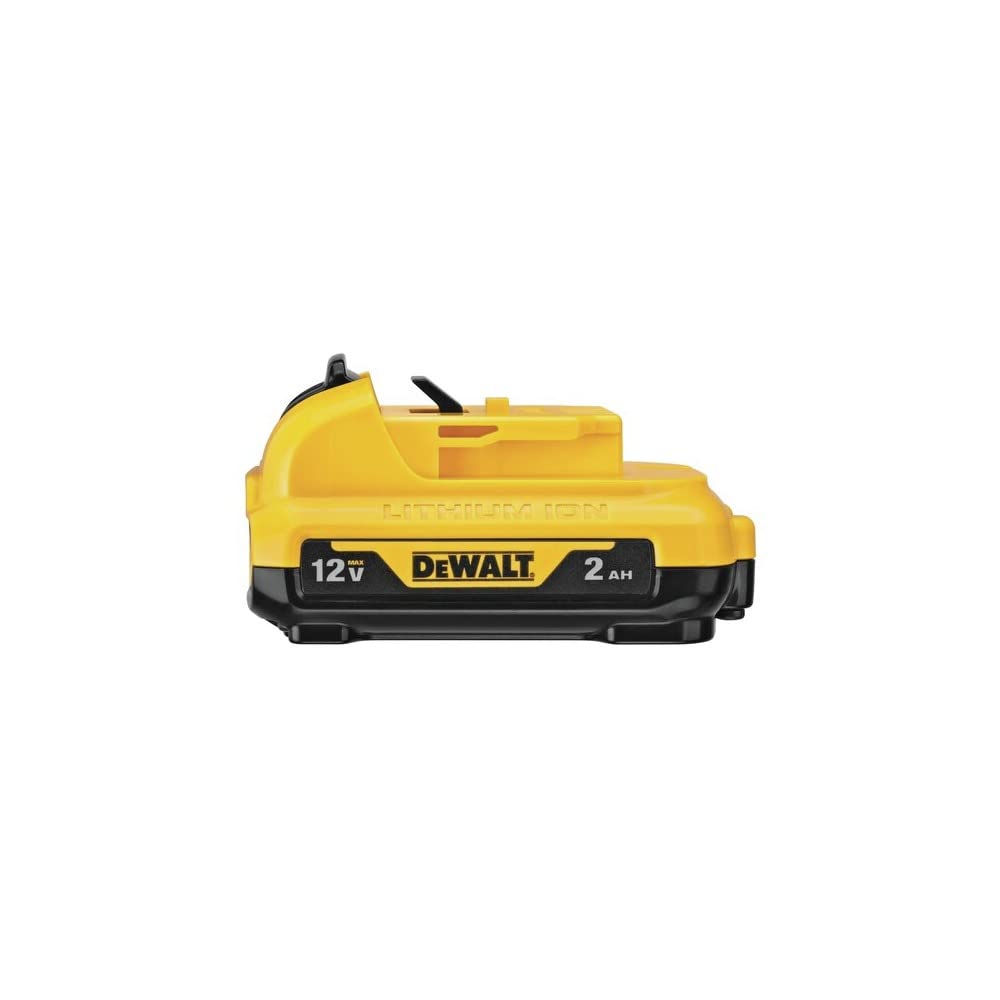
1. DEWALT DCB122 12V MAX 2Ah Lithium Ion Battery
Our pick — over 4.5★ from 850+ verified ratings; the strongest balance of quality and price.
The pocket-sized pack that revives a stalled 12V tool drawer without the bulk.
If you already own a DEWALT 12V MAX tool, this is the replacement you want in the case before the old pack quits mid-project. It runs at 2 amp-hours, which is a small tank next to the Uplus 18Ah block further down the list — but these are two different jobs. The DEWALT is built to slot into a drill or impact driver and recharge fast, not to run an alarm panel for weeks. Because it is lithium ion, it holds its charge between uses instead of self-draining the way an old lead acid pack does.
What works in its favour is how little fuss it causes. Owners describe it as a genuine article — no fire-sale imitation cells — and it weighs just 8 ounces, so it barely adds anything to the tool. Charge it on a 12V charger and it holds steady power through drilling and fastening work right up until it is nearly empty, with no thermal cut-out or noticeable sag. A few buyers have even charged it on a DEWALT 20V charger. The recurring gripe is runtime: heavy all-day framing work will chew through a 2Ah pack quickly, and a handful of units arrive that will not hold charge.
For a direct sizing call, this pack carries a 2 amp_hour rating against the 18 amp_hours of the Uplus AGM — that nine-fold gap is the whole difference between a tool battery and a standby power block. Buy it to feed your 12V MAX tools, not to power a fixture. The honest limit is that it is not intended for continuous high-draw or all-day duty in professional hands; think of it as a spare or a general DIY pack.
What earns its place
- 2 amp_hour lithium ion cell that fits every DEWALT 12V MAX tool.
- Only 8 ounces, so it adds almost nothing to tool weight.
- Charges quickly and holds voltage steady until nearly empty.
- No overheating or drop-off reported in normal drilling and fastening.
Where it stops short
- 2Ah will not cover heavy all-day professional use.
- An occasional unit arrives unable to hold a charge.
- Won’t power a standby system the way a bigger SLA block will.
Reach for this if: you own DEWALT 12V MAX tools and want a genuine spare that charges fast and rides light.
Look elsewhere if: you need a battery to keep a security system or UPS alive through an outage.
2. Yuasa NP7-12 12V/7Ah Sealed Lead Acid Battery
For alarm panels that need the exact same block that came out, brand and all.
The whole point of the Yuasa NP7-12 is that it goes straight back into the bracket the old battery vacated. A 35-year-old security system can swallow this thing in a couple of minutes, no modification, because the F1 terminals match the original tabs and the 7Ah rating mirrors the cell it replaces. It measures 5.94 inches long, 2.56 inches wide, and 3.7 inches high, so if your old block came out at that size, this fills the same slot.
Buyers report this as a fit-first purchase: “Goes in a 35 year old security system. It is satisfying when the replacement fits exactly the same as before. Took me 2 minutes to swap out.” That is the story the review pages tell over and over — alarm panel, gate opener, backup node, in and out fast. The sealed lead acid construction is spill-proof and maintenance-free, so you low-maintenance until the next decade rolls around.
Here is the honest caveat on lifespan. Some of these blocks keep going for the long haul, while others give up around the twelve-month mark. That inconsistency is the most-discussed thing in the reviews, so treat it as a normal variable rather than a defect. It does not stop the Yuasa from being the cleanest drop-in replacement on this page for a security system that already runs a 7Ah lead block.
Drop-in simplicity: the F1 tabs click onto your existing wire harness with no adapter and no fuss.
Size to confirm: 5.94 x 2.56 x 3.7 inches is the footprint — check your battery bay before you order.
Best suited to: anyone swapping a like-for-like 7Ah lead acid block in an alarm panel, gate opener, or backup node.
Think twice if: you need a guaranteed multi-year run — individual units vary and a short life is possible.
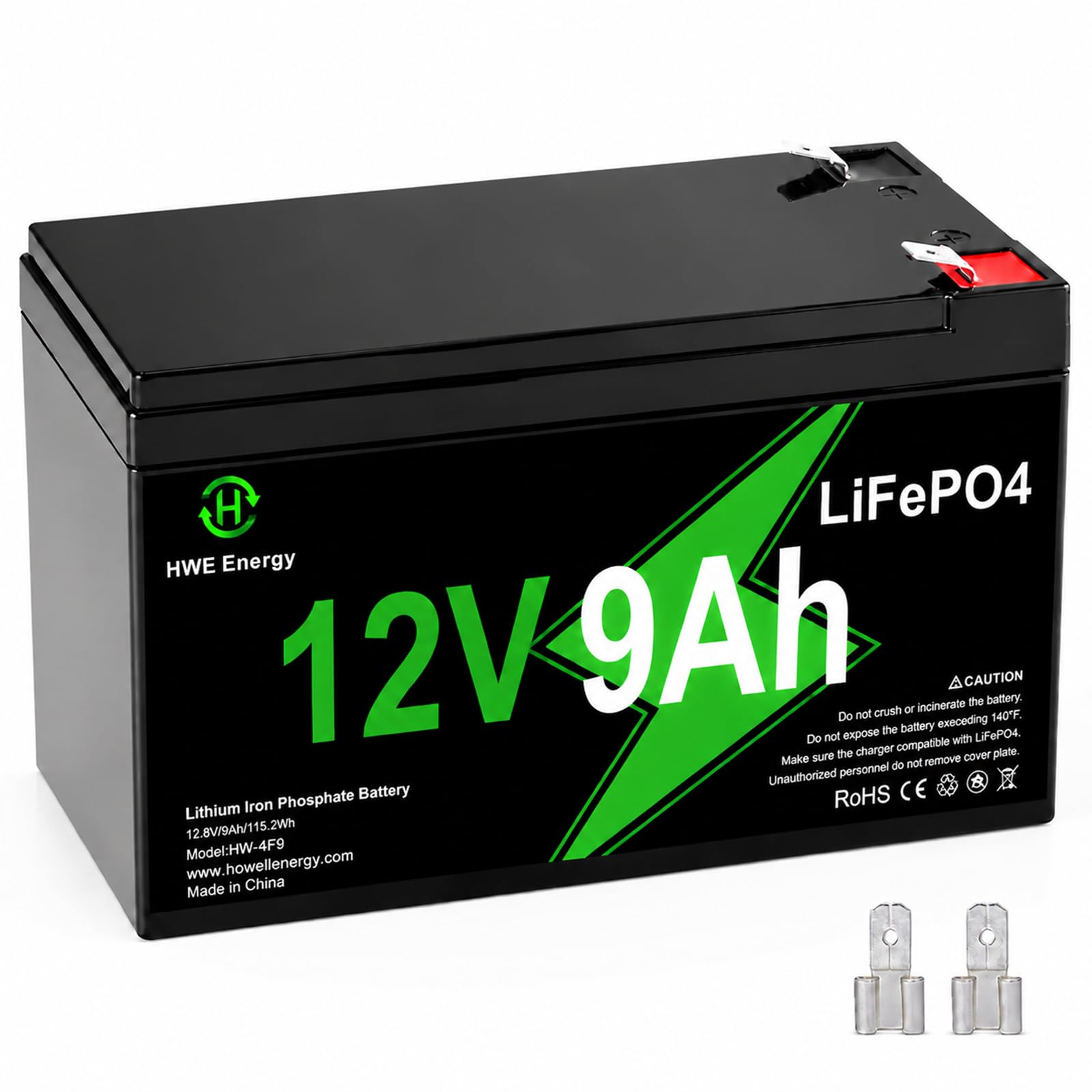
3. HWE Energy 12V 9Ah LiFePO4 Battery
A 2.1-pound lithium block that replaces a five-pound lead brick.
This is the swap that makes you wonder why you waited. The HWE Energy pack runs 12V at 9 amp_hours but weighs only 2.1 pounds, so a battery box that used to need two hands now lifts with one. The manufacturer lists 4000+ deep cycles against the 300-500 that traditional sealed lead acid manages, and the suggested service life is 10 years versus about 3 on the lead side. It is also CE-certified with UN 38.3 and MSDS testing behind it.
The standout detail owners love is the built-in push-button voltage and charge display — you press a button and see the state of charge instead of guessing. It runs a Garmin 10-inch chartplotter on a boat, powers an RV pressure pump for off-grid watering, and two units even drop straight into an APC UPS as replacements under 100W loads. It handles a 100W-ish load in short outages fine. The included F2-to-F1 terminal adapter means it fits either terminal size, and there is a 12-month warranty on top.
The one real limit is discharge current. The 15A Battery Management System (a chip that shuts the battery off before it damages itself) caps how fast it can pour out power. In a 1500VA UPS, for instance, it will realistically support roughly 300VA of load before tripping overcurrent protection, so it is fine for a PC or router and not for a big server rack. It is also not built for engine starting. Buy it for light-to-medium standby duty and it will serve you well.
Standout wins
- Only 2.1 pounds — a fraction of the equivalent lead block.
- Push-button voltage and state-of-charge readout built in.
- 4000+ deep cycles and 10-year suggested life — far beyond SLA.
- F2-to-F1 adapter included for universal fitting.
Factor this in
- 15A BMS limits big-load UPS work to around 300VA.
- Not intended for engine starting.
- Needs a dedicated lithium charger to top up.
Made for: boat and camper owners who want a light lithium block with a live charge readout and a full terminal adapter kit.
Not the one for: driving a 1500VA UPS at full load, or cranking an engine.
4. Uplus 12V 18Ah Rechargeable AGM Battery

The big 18Ah block that wakes up mowers, scooters, and old generators.
When you need staying power rather than light weight, the Uplus 18Ah is the heavyweight pick. Its capacity is 18 amp_hours against the 2 amp_hours of the DEWALT tool pack at the top of this list — that difference is what lets it run a mower or mobility scooter for hours rather than minutes. It uses nut-and-bolt terminals, which means a threaded post you clamp down, not a slide-on tab, and it is sealed AGM so it will not spill or need water top-ups.
What buyers rave about most is quality — the shells are built from AGM with a lead-calcium alloy grid for corrosion resistance, and it slots straight into older machines. It replaces a 17Ah FatMax block, a 15Ah Firman generator cell, mower batteries, and scooter packs, often with a bump in capacity over the original. It also takes a shock-and-vibration beating, and there is an 18-month replacement promise if anything goes wrong.
The recurring gripe is charging and life consistency. Some units hold charge as expected, while others do not, so keeping it on a maintainer when idle is wise. A few owners also note the box does not always include the promised nuts and bolts, and the slim profile can look smaller than the bracket expects — measure before ordering. None of that stops it being the go-to for a higher-capacity lead replacement.
Capacity payoff: at 18 amp_hours it holds up to the machine it is replacing and then some, with enough reserve to turn over older equipment reliably.
Upkeep to remember: it wants a maintainer when sitting idle — a trickle charger left plugged in can overcharge and wear the cells.
Choose this if: you are reviving a riding mower, mobility scooter, or generator with an 18-amp-hour-class bracket and nut-and-bolt posts.
Second-guess it if: you want zero maintenance drift — this lead block rewards a maintainer between uses.
5. GOLDENMATE 12V 10Ah LiFePO4 Waterproof Battery

The splash-proof lithium block built for rain, dust, and the back of a kayak.
If your battery lives somewhere weather happens — a fish finder mount, a camping light, a power wheel in the yard — the IP67 rating here is the headline. IP67 means it is sealed against dust and survives being briefly submerged, so a wet morning or a spray of reservoir water is not the end of the pack. At 10 amp_hours and 3.3 pounds it is light for its capacity, and it uses LiFePO4 cells rated for 5000+ deep cycles with a suggested 10-year lifespan.
Owners put it to work hard and like what they get. It runs a Hummingbird Helix7 ice fishing rig all day with steady voltage, and it recharges easily on a Noco Genius 1-amp charger. One owner tested it and found it delivered more than 11Ah at a gentle 0.1C discharge rate and 10.9Ah at a full 1C rate — close to its claimed capacity. It also includes low-temp cut-off, so in freezing conditions it pauses charging rather than damaging the cells, then resumes when it warms up.
If you want to grow the system later, it can be wired in series or parallel up to four units for a much bigger bank. Know its ceiling before you commit: the continuous discharge tops out at 10A, so it suits fish finders, lights, and ride-on toys, not high-draw motors. And it is energy storage only — never use it to start an engine. Reach for it if you need a light, weather-ready block with a clean 10A envelope.
Why it earns the slot
- IP67 waterproof and dust-sealed for genuinely wet conditions.
- 3.3 pounds for 10 amp_hours — light for the capacity.
- 5000+ deep cycles with a suggested 10-year lifespan.
- Series/parallel expansion up to four units available.
Know before you buy
- 10A continuous discharge ceiling rules out high-draw motors.
- Energy storage only — not for engine starting.
- Needs a lithium charger or MPPT solar setup.
Ideal owner: the angler, camper, or parent running power wheels outdoors who wants light weight, splash protection, and a clean 10A limit.
Wrong tool for: anything needing a big surge of starting current.
6. Miady 12V 7Ah Rechargeable Sealed Lead Acid Battery (2 Pack)

Two 7Ah blocks and four adapters — swap both UPS cells in one go.
When a device runs a pair of batteries, buying one at a time is a false economy, and the Miady two-pack solves that neatly. You get two 12V 7 amp_hour sealed lead acid blocks, each with F2 terminals, plus four F2-to-F1 terminal adapters in the box. That means if your UPS or alarm takes the narrower F1 tabs, you simply clip on an adapter instead of ordering a second set. The AGM construction is spill-proof and maintenance-free, backed by a 12-month support window.
Appreciation for the value here is loud. Owners mention these as excellent replacements that fit and install easily, and the low per-unit cost makes future swaps painless. They slot into UPS units, home alarm panels, emergency lighting, gate openers, kid scooters, and even Halloween prop solenoids. Each block measures 5.94 x 2.55 x 3.74 inches with F2 tabs, matching the common standby footprint.
Battery life is the split verdict — plenty of units hold their charge well, but some only last a couple of months, which is typical of a bargain SLA block. A couple of buyers also find compatibility fiddly if their terminals are an unusual shape. Treat the pair as the budget-friendly route to getting a dead UPS or alarm back online, and keep them topped up between uses to stretch the service window.
Two-for-one practicality: replacing both blocks in a paired UPS or alarm at once means matched cells and a single job instead of two.
Realistic expectation: budget SLA life is a lottery — some last a couple of months, so a maintainer helps them live longer.
Suits: anyone maintaining a twin-battery UPS, alarm panel, or kid scooter who wants adapters and both blocks in one purchase.
Skip if: your device needs premium headline lifespan or a nonstandard connector.
7. ExpertPower EXP12120 12V 12Ah AGM Battery (2 Pack)

A pair of 12Ah AGM workhorses sized for scooters and quick PowerWheels swaps.
Two 12V 12 amp_hour AGM blocks, F2 terminals, and a rugged ABS case make this the practical pick for mobility and toy conversions. Each battery measures 5.94 x 3.86 x 3.98 inches including terminals, so it fits the common scooter and PowerWheels cradle. The absorbent glass mat design is valve-regulated and maintenance-free, so no water topping, and the high-impact case stands up to shock, vibration, chemicals, and heat.
Owners lean on these for exactly those jobs. They drop into adult mobility scooters, replace cells in an old 36V B&D lawnmower, and end up in PowerWheels Brute Force builds — often landing a touch larger than the OEM battery, which many read as more capacity. One owner reused the original connector with crimp-on blade connectors and reported it worked. Customer service draws strong praise, and the matching pair keeps a multi-battery scooter running on even cells.
The size caveat is worth flagging: because these run bigger than some stock PowerWheels packs, they may not tuck under a factory battery holder, though a strap or bungee sorts that out. Long-term staying power is still unproven for most owners here. It is a solid, honest standby block — just measure your bay and check the terminals before ordering this pair over the Mighty Max set below.
Consistent output: the valve-regulated AGM design delivers steady power to standby systems and holds amp draw well in scooter duty.
Fits with adjustment: many PowerWheels cradles need a bungee or a new connector, but it drops into standard scooter bays cleanly.
Pick it for: mobility scooters and PowerWheels conversions where you want a matched 12Ah AGM pair with real mounting options.
Pass if: your equipment has unusually tight brackets that can’t take a slightly larger block.
8. Mighty Max Battery ML12-12 12V 12Ah SLA AGM Deep-Cycle (2 Pack)

The UL-certified deep-cycle pair that shrugs off being bounced around a boat.
Mighty Max builds this as a 12V 12 amp_hour sealed lead acid deep-cycle pair, UL certified, and rated to be mounted in any position — so orientation is not a constraint. The spill-proof AGM design handles high discharge rates and wide temperature swings, and each block measures 5.94 x 3.86 x 3.98 inches with F2 terminals. It ships as batteries only, so you supply your own harness if you need one.
The strength owners keep coming back to is performance under real load, and the reliability holds up. They run it in scooter conversions, Power Wheels, and sump pump UPS backup, where a matched pair of ML12-12 blocks passed a full load test and delivered top output. Install is a genuine five-minute job with a charger that flips from red to green, and the batteries hold steady voltage even after a long test ride. There is a full one-year warranty backing the set.
The recurring caveat lands on the run-time end: some units lose charge quickly, and one complaint centred on a pair giving only about fifteen minutes of use — the flip side being that Mighty Max replaced it promptly under warranty at no charge. A few buyers also find the size is not the universal fit they expected. As a deep-cycle standby pair, it is a dependable, honest workhorse with genuine support behind it.
Where it delivers
- Mounts in any position — no upright-only restriction.
- Deep-cycle AGM built for high discharge and wide temperatures.
- One-year warranty with responsive replacement support.
- Installs in minutes with a standard charger.
Trade-offs to weigh
- Run time is inconsistent — some sets fall short quickly.
- No wire harness or mounting hardware included.
- F2 terminals may need adapters in some bays.
Best for: scooter, PowerWheels, and UPS backup jobs that need a deep-cycle AGM pair with flexible mounting and genuine warranty cover.
Hesitant if: you need predictable all-day run time on a strict budget — expect some variation between units.
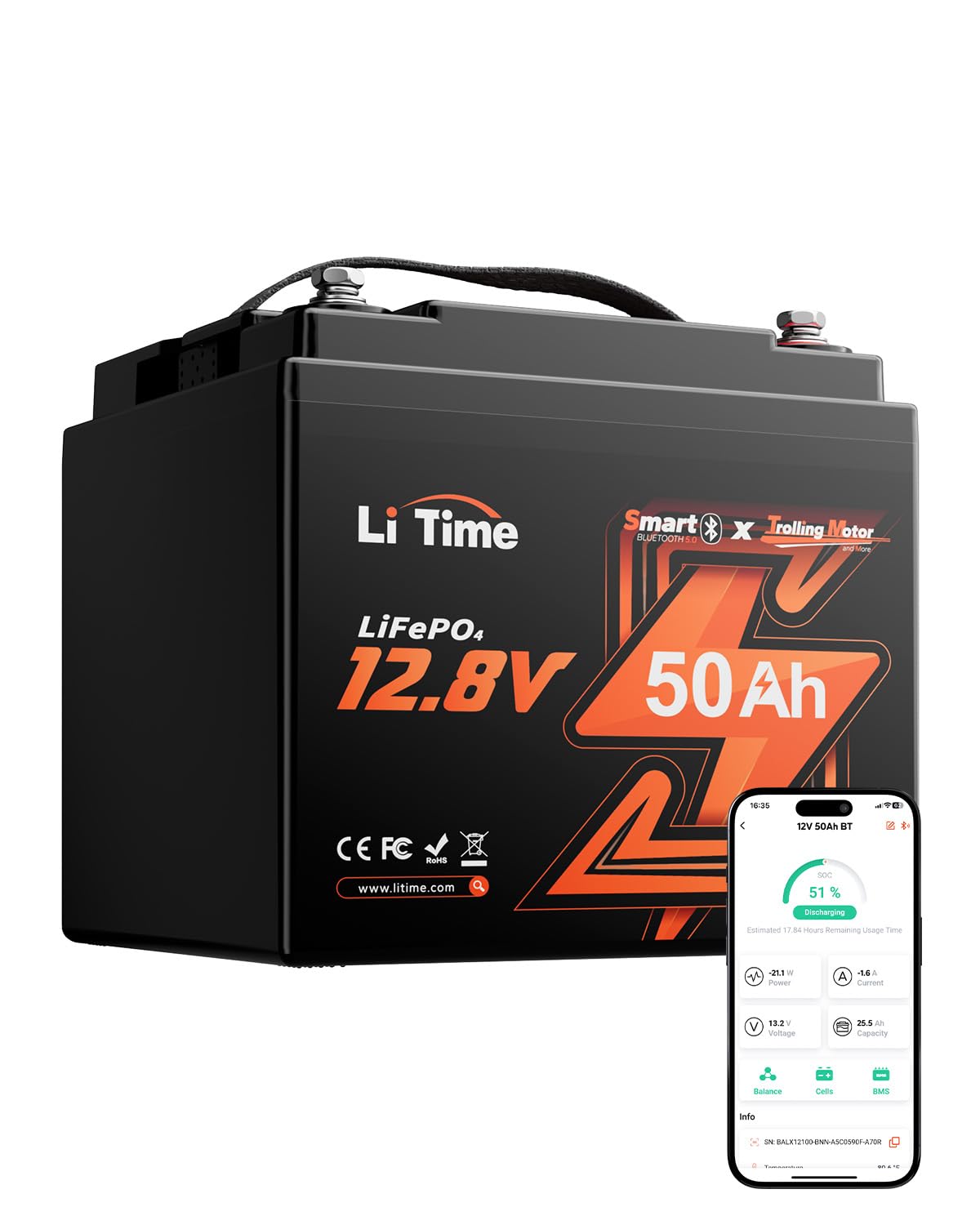
9. LiTime 12V 50Ah LiFePO4 Trolling Motor Battery
A 50Ah lithium powerhouse that weighs less than half what lead would.
For serious 12V pull — trolling motors, RV house banks, long off-grid runs — the LiTime 50Ah is the premium end of this list. At 50 amp_hours it holds far more charge than any lead block here, and it still weighs only 11.3 pounds, a fraction of what a conventional 12V 100Ah lead-acid would tip the scale at. It is rated for 640Wh of energy density and around 4000+ deep cycles, with an IP65 waterproof shell.
What seals the deal for boaters is the smart monitoring. Bluetooth 5.0 pairs to the LiTime app instantly with no pairing menu, so you can watch charge and status from your phone. The 50A Battery Management System with low-temperature cut-off stops the pack from charging in cold conditions and guards against over-charge, over-discharge, over-current, and short circuits. A 12V 55lb trolling motor runs all day on it and still shows more than half charge left, and the pack handles your fish finder and interior lights without complaint.
Just know its boundaries. It is energy storage, so it must not be used to start an engine, run a golf cart, or drive a jack. It needs a lithium-activation or MPPT charger to wake the Bluetooth on first use. The BMS caps continuous draw at 1.2C, which is 60A for 30 minutes — ample for a trolling motor, but not a high-surge application. Buy it for deep, long-running draws and it will outlast several lead swaps.
Big-league strengths
- 50 amp_hours at only 11.3 pounds — light for the capacity.
- Bluetooth 5.0 with instant LiTime app connection for live monitoring.
- 50A BMS with low-temp cut-off and full protection suite.
- IP65 waterproof and rated for 4000+ deep cycles.
Limits to respect
- Energy storage only — no engine starting, golf carts, or jacks.
- Needs a lithium or MPPT charger to wake Bluetooth first time.
- 1.2C (60A) continuous ceiling stops high-surge loads.
Aimed at: anglers and RV owners who want deep 50Ah reserve, live Bluetooth monitoring, and light carry weight for all-day trolling.
Not the answer for: engine cranking or anything needing a big instantaneous surge.
Understanding the Specs
Amp-Hour Capacity (Ah)
Amp-hours measure how much energy a battery holds — think of it as tank size. A 7Ah block runs a light load for a shorter time than an 18Ah block, while a 50Ah lithium pack runs a trolling motor all day. When you replace an OEM battery, match its Ah or step up slightly. Drop too low and you lose runtime; step up too far and the bigger case may not fit your bracket.
Terminal Type (F1, F2, Nut and Bolt)
Terminals are the metal tabs your wires clamp onto, and they are the most common reason a swap stalls. F1 tabs are narrow at 0.187 inches, F2 tabs are wider, and nut-and-bolt terminals take a threaded post. Measure your old battery’s tabs first, or choose a pack that includes an F2-to-F1 adapter so both sizes work.
Battery Management System (BMS)
A BMS is a small chip inside a lithium battery that shuts it off before it damages itself from over-charging, deep discharge, overheating, or a short. Its number — like a 15A or 50A rating — sets the maximum current the pack can safely deliver. A 15A BMS is fine for a router or a fish finder but will trip under a heavy UPS load.
Chemistry: SLA vs LiFePO4
Sealed lead acid (SLA, also called AGM) is the heavy, cheap standby standard with a roughly three-year life and a few hundred cycles. Lithium iron phosphate (LiFePO4) is lighter, holds voltage steadier, and is often rated for thousands of deep cycles and a much longer lifespan — but it needs a matching lithium charger and must never be used to start an engine.
FAQ
How many amp-hours do I need for a 12V trolling motor?
Will a LiFePO4 battery work with my existing lead charger?
What is the difference between an F1 and an F2 terminal?
Can I use a deep-cycle 12V battery to start an engine?
How long does a sealed lead acid 12V battery last?
Do I need a special charger for a lithium 12V battery?
Can I connect two 12V batteries in parallel for more run time?
Is a LiFePO4 battery lighter than a lead acid one?
What does IP67 waterproof mean on a 12V battery?
Can I mount a 12V sealed battery on its side?
Final Thoughts: The Verdict
The crowd favourite here is the DEWALT DCB122 — 4.7 stars across 800+ ratings — and it earns the top spot for anyone feeding DEWALT 12V MAX tools, because a genuine 2 amp_hour pack that charges fast and rides at 8 ounces is exactly what a tool drawer wants. If you are replacing a standby block instead, grab the Yuasa NP7-12 for a clean drop-in fit in an alarm panel, or the HWE Energy 12V 9Ah LiFePO4 when you want lithium lightness with a built-in charge readout. And for serious all-day trolling or RV power, the LiTime 12V 50Ah is the deep-reserve block to reach for. Whatever device you are reviving, check the amp-hours and the terminal type first — get those two right and the rest is easy.
How We Picked
We do not accept paid placement. Every pick is matched to a real buyer and a real use-case; we do not hands-on test units.
Sources & Methodology
Specifications: manufacturer listings and product documentation. Review insights: verified customer reviews, as of September 2026. Pricing: not shown on this page (it changes often); check the current price via the retailer link.
As an Amazon Associate, KitchPrep earns from qualifying purchases. This does not affect which products we feature.
Related Guides
