
If you cook most nights of the week, your skillet is quietly doing more work than almost anything else in the kitchen. Fried eggs, pan-seared salmon, one-pan pastas, crispy tofu, pancakes on Sunday — they usually all happen in the same pan.
A good 12‑inch skillet is that sweet‑spot size: big enough for family portions, small enough to maneuver with one hand, and versatile enough to handle everything from stir‑fries to seared steaks. The wrong pan, though, can mean hot spots, sticking, warping and way too much scrubbing.
This guide is built to help you choose the best 12 inch skillet for the way you actually cook — not just what sounds fancy on a product page. We’ll look at materials (nonstick, stainless, cast iron and hybrids), real‑world durability, how these pans behave on gas, electric and induction, and then walk through fifteen seriously good 12‑inch skillets you can grab on Amazon today.
How to Choose the Best 12 Inch Skillet for Your Stove and Cooking Style
Before you fall in love with a single shiny pan, it helps to zoom out and think about how you really cook. A little planning here saves you from buying something that looks great in photos but drives you nuts on the stove.
1. Start with what actually lives in your pan
Run through a few quick questions:
-
Mostly eggs, veggies and reheats — or full meals?
If you’re mostly making simple breakfasts and reheating leftovers, you don’t need a pro‑grade showpiece, but you will appreciate a forgiving nonstick surface and quick, even heat. -
Do you love big one‑pan dinners?
Stuff like skillet lasagna, chicken thighs with veg, curries or stir‑fries? Look for a 12‑inch skillet with higher sides (2.5–3+ inches), a lid, and at least 4–5 quarts of capacity. -
Do you sear steak, burgers or tofu hard and hot?
For deep browning, stainless steel, cast iron or a hybrid stainless/nonstick surface will tolerate higher heat better than many classic PTFE coatings. -
Who else is cooking?
If kids, roommates or guests are using the pan, simple controls matter: nonstick that releases easily, a handle that feels safe, and a surface that can survive the occasional “oops” with higher heat.
2. Pick your skillet material (and know the trade‑offs)
Most good 12‑inch pans fall into one of four material buckets:
- Classic PTFE nonstick (Teflon‑style) – Super easy release and clean‑up, awesome for eggs, pancakes and sticky sauces. The trade‑off: coatings will eventually wear, especially with high heat, abrasive tools or the dishwasher, so plan to replace every few years.
- “Granite” or ceramic nonstick – Pans like SENSARTE and CAROTE use PTFE‑free coatings that are marketed as more eco‑friendly. They’re very slick out of the box and great with low to medium heat. Overheating or dry‑heating can shorten their life, so they reward gentler cooking habits.
- Stainless steel (tri‑ply or clad) – No coating to wear out, fantastic for browning, sauces and deglazing, induction‑ready, and genuinely long‑term if you take care of them. There is a learning curve: you’ll use more fat, preheat carefully and adjust your technique to avoid sticking.
- Cast iron & hybrid pans – Cast iron gives unmatched heat retention and crusts when preheated well, with a seasoning layer instead of a chemical coating. Hybrid stainless/nonstick pans use a laser‑etched steel mesh over a coating, so you can sear harder while still getting some release. Both are heavier and usually cost more, but they’re brilliant for ambitious home cooks.
3. Match size, depth & weight to your burners
“12 inches” refers to the top rim, not always the flat cooking area. Two 12‑inch skillets can feel very different on the stove.
- Flat base diameter – The truly usable surface is often 8.5–10 inches across. If you crowd food, it steams instead of browning, so a wider, flatter base is a big win for searing.
- Depth and volume – A shallow, restaurant‑style skillet is fantastic for flipping and sautéing. Deep 4–5 quart pans behave more like a sauté pan or small wok, great for saucy dishes and big batches.
- Weight and balance – Heavy‑gauge aluminum or clad stainless feels reassuring but can be tiring if you have wrist or shoulder issues. Look for helper handles on larger pans and check that you can comfortably lift the skillet with one hand when it’s empty.
- Burner size – On a tiny electric coil or induction ring, a huge, heavy pan may heat unevenly. If your largest burner is small, favor pans with slightly thicker bases that help spread the heat.
4. Make sure it works with your stove and oven
Quick compatibility check:
- Induction cooktop? You need a magnetic base. Tri‑ply stainless, most “granite” pans, and hybrids like Yonida are safe bets. Some classic restaurant nonstick pans are not induction‑ready.
- Do you finish dishes in the oven? If you love frittatas, reverse‑searing steak, or baked pastas, check the oven‑safe temperature. Some pans are only comfortable up to 350–400°F, others (like many stainless and cast‑iron skillets) can handle 500–600°F or a broiler.
- Dishwasher or hand‑wash? Nonstick coatings almost always live longer with hand‑washing, even when the box says “dishwasher‑safe”. If you know you’ll toss it in the dishwasher anyway, choose something with a reputation for durability and be realistic about replacing it a bit sooner.
5. Handle, lid and little design details
The small things you touch every day are often what make a pan feel “cheap” or “premium” in daily use:
- Handle shape & grip – A long, gently curved stainless or silicone‑sleeved handle that doesn’t rotate in your hand is safer and less tiring. Helper handles are a big plus on deep or heavy skillets.
- Lid quality – A snug, reasonably heavy glass lid is gold for simmering, shallow‑frying, rice dishes and keeping splatter contained. Several pans here include well‑fitting lids; others are open skillets by design.
- Interior rivets vs. rivetless – Flush rivets (or no exposed rivets at all) make wiping the pan out much easier. Raised rivets can collect browned bits and sauce, which is fine in stainless, but annoying in nonstick.
- Pour spouts – Surprisingly helpful for draining fat, pouring sauces or transferring soup without wearing it.
Once you know what you cook, which material fits your style and what your stove can handle, you’re no longer choosing from “all skillets on Amazon.” You’re choosing from a tight group of pans that actually make sense for you.
Quick Comparison: Fifteen Best 12 Inch Skillet Picks
Here’s a bird’s‑eye view of the fifteen skillets we’ll review. Scan for the material and style that matches your kitchen, then jump down to the detailed review for the ones that catch your eye.
On smaller screens, swipe or scroll sideways to see the full table.
| Model | Material / Type | Oven‑safe? | Best for | Amazon |
|---|---|---|---|---|
| CAROTE 12" Granite Skillet | Granite nonstick | Stovetop‑focused (no high‑heat oven) | Budget everyday eggs & quick meals | Amazon |
| SENSARTE Deep 12" Chef Pan | Granite nonstick | Yes, to ~302°F (lid included) | One‑pan family dinners & stir‑fries | Amazon |
| Tramontina Professional 12" | PTFE nonstick | Yes, up to 400°F | Restaurant‑style searing & daily use | Amazon |
| T‑fal Advanced 12" Fry Pan | PTFE nonstick | Yes, up to 350°F | Beginner‑friendly everyday cooking | Amazon |
| Circulon Radiance 12" Deep Skillet | Hard‑anodized nonstick | Yes, up to 400°F | Deep one‑pan meals & saucy dishes | Amazon |
| Anolon SmartStack 12" Skillet | Hard‑anodized nonstick | Yes, up to 400°F | Small kitchens & organized cabinets | Amazon |
| SENSARTE Ceramic 12" Skillet w/ Lid | Ceramic nonstick | Primarily stovetop (check manual) | Health‑conscious, low‑oil cooking | Amazon |
| Cuisinart 622‑30GP1 12" | Hard‑anodized nonstick | Yes, up to 500°F | High‑heat searing & big sautés | Amazon |
| OXO Enhanced 12" Ceramic | PFAS‑free ceramic | Yes, up to 430°F | Premium nonstick without PTFE | Amazon |
| Cuisinart 722‑30HNS 12" Ceramic NS | Stainless + ceramic NS | Yes (check manual for limit) | Stainless look, slick interior | Amazon |
| Yonida 12" Hybrid Skillet | Hybrid steel + NS | Yes (oven‑safe, see listing) | Hard sears with some nonstick | Amazon |
| Tramontina Tri‑Ply Clad 12" | Tri‑ply stainless | Yes, up to 500°F | First “real” stainless upgrade | Amazon |
| Cuisinart 722‑30G 12" Stainless | Stainless steel | Yes, up to ~500°F | Learning stainless with a lid | Amazon |
| All‑Clad D3 12" w/ Lid | Tri‑ply stainless | Yes, to 600°F (broiler‑safe) | Lifetime stainless for serious cooks | Amazon |
| Cuisiland 12" Nitrided Cast Iron | Cast iron (nitrided) | Oven‑safe with handle removed | Cast‑iron fans & high‑heat searing | Amazon |
In‑Depth Reviews: Fifteen Strong 12‑Inch Skillets
Now let’s zoom in on each pan. Use these reviews to match specific strengths — nonstick ease, high‑heat performance, storage, health considerations or budget — to what actually matters in your kitchen right now.
1. CAROTE 12" Granite Skillet – Shockingly Good for the Price

If you want a forgiving, easy‑to‑clean pan that won’t wreck your budget, CAROTE’s 12‑inch skillet is a standout. It pairs a “granite” style nonstick (PFOA‑free) with an induction‑ready base, so it works on pretty much any stove, including modern induction tops that cheap pans often struggle with.
Real‑world owners consistently rave about how little oil they need for eggs, pancakes and sautéed veggies, and how everything wipes out with a sponge instead of a scrub session. The pan feels lighter than restaurant‑grade aluminum, but still has enough heft that it doesn’t skate around on a flat glass cooktop.
Why you’ll like it
- Very slick surface out of the box – Eggs and cheese releases are almost comical when the pan is new.
- Induction‑compatible base – Not all budget nonstick plays nicely with induction; this one does.
- Thoughtful design details – Rivet‑free interior, comfy bakelite handle that stays cool, and a useful glass lid.
Good to know
- Like most ceramic/stone nonstick, heavy daily use and high heat can shorten its life — think 1–3 years, not forever.
- Several owners note it’s technically rated oven‑safe on some listings, but the brand itself warns against high‑temp oven use, so treat it as stovetop‑only.
- White or light‑colored versions can pick up light staining if you don’t rinse after especially messy dishes.
Ideal for: new cooks, renters, and anyone who wants a friendly, inexpensive workhorse for eggs, veggies, and weeknight stir‑fries without babying stainless or cast iron.
2. SENSARTE 12" Deep Chef Pan – Skillet, Sauté Pan and Small Wok in One

If you love the idea of doing everything in one pan, this SENSARTE deep skillet is a seriously clever shape. At 12 inches wide and 3.2 inches deep with a 5‑quart capacity, it’s big enough for family‑size curry, fried rice, or four to six chicken thighs plus veg — but still shallow enough to sauté and sear without feeling like a stockpot.
The Swiss ILAG granite‑style coating is PTFE‑free, and owners consistently mention that they can slide omelets or sticky sauces right out of the pan. A thick, magnetized stainless base makes it induction‑ready, and the dual pour spouts are more useful than you’d think for draining fat or pouring soups.
Where it shines
- Great depth for one‑pan dinners – Enough sidewall height for simmering, shallow‑frying or tossing pasta with sauce.
- Stay‑cool handle & glass lid – The wood‑look handle stays comfortable, and the lid keeps splatter down while letting you see what’s happening.
- Induction compatible – Performs well on gas, electric and induction, which is not a given in this price range.
Good to know
- Rated oven‑safe only to about 302°F, so it’s fine for keeping food warm but not ideal for blazing‑hot oven finishes.
- The pan is fairly wide; on very small hobs, the outer edges may heat a bit more slowly.
- Like all nonstick, it will last longer if you avoid aerosol sprays and stick to silicone or wooden utensils.
Ideal for: small‑to‑medium families, meal preppers, and anyone who loves big one‑pan dishes but doesn’t want a heavy stainless sauté pan yet.
3. Tramontina Professional 12" – The Classic Line‑Cook Skillet

This is the pan you’ll spot in diner kitchens and busy brunch spots — and for good reason. Tramontina’s Professional series is NSF‑certified for commercial use, built from thick aluminum that heats quickly and evenly, and topped with a robust PTFE nonstick that, when treated kindly, can last for years of daily breakfast duty.
The long stainless handle with a removable silicone sleeve keeps things comfortable on the stove but can go bare into the oven up to 400°F. Owners consistently praise how evenly it browns, how well it releases eggs and fish, and how “restaurant” it feels for the price. If you want a serious performer and accept that all nonstick is ultimately semi‑disposable, this is a sweet spot.
Why cooks love it
- Heavy, stable base – Less prone to hot spots and warping than cheaper pans, and feels rock‑solid on gas or electric.
- Removable silicone grip – Comfortable when you want it, easy to slide off for oven use.
- Dishwasher‑safe (but easy to hand‑wash) – In practice, a quick wipe with a sponge is usually enough.
Good to know
- It’s on the heavier side; fantastic for stability, less ideal if lifting weight is an issue.
- Not induction compatible, since the base is aluminum without a magnetic layer.
- Some users report mild warping after a few years of hard, high‑heat use — pretty normal for any nonstick at this price.
Ideal for: serious home cooks who want a “real” line‑cook pan for eggs, cutlets, quesadillas and quick sautés, and don’t mind replacing nonstick every few years.
4. T‑fal Advanced 12" – Easygoing Skillet with Heat Indicator

T‑fal’s Advanced line is an easy recommendation when you want a straightforward, no‑drama pan. The famous Thermo‑Spot circle in the middle turns solid when the pan is properly preheated, which quietly teaches new cooks not to drop food into a cold skillet (one of the biggest causes of sticking).
The titanium‑reinforced nonstick interior is generous and slippery, and the pan is light enough that flipping pancakes or a big omelet doesn’t feel like a workout. Owners routinely report 2+ years of solid performance with daily use when they avoid metal utensils and extreme heat.
Highlights
- Thermo‑Spot is genuinely useful – It takes the guesswork out of preheating, especially on electric ranges.
- Lightweight but not flimsy – Great for older cooks or anyone with wrist issues.
- Very forgiving – Perfect “first good pan” for kids leaving home or a starter kitchen upgrade.
Good to know
- Oven‑safe only to 350°F, so it’s not the right choice if you frequently finish dishes under a ripping‑hot broiler.
- Some units develop a slight “hump” in the center over time, which can make oil migrate toward the edges — annoying but rarely a dealbreaker for most recipes.
- As with any PTFE pan, aerosol cooking sprays will gunk up the surface faster than you’d like.
Ideal for: new cooks, college apartments, or anyone who wants a forgiving, clearly “ready to cook” skillet for everyday use.
5. Circulon Radiance 12" Deep Skillet – High Sides, Big Batches

Circulon’s Radiance deep skillet is a great answer to “I wish my frying pan were just a bit deeper.” The hard‑anodized body heats evenly, the brand’s signature raised‑circle interior helps protect the coating from wear, and the extra depth plus lid make it feel almost like a short Dutch oven for stove‑top meals.
Reviewers love it for browning ground meat (the tall sides keep splatter down), making big skillet pastas, and sautéing veggies without half of them leaping out onto the stovetop. It’s oven‑safe to 400°F and officially dishwasher‑safe, though many owners still hand‑wash to preserve the finish.
Why it stands out
- Excellent depth – Ideal for family portions, saucy dishes and recipes that need a bit more liquid.
- Reliable nonstick – Food releases cleanly with minimal oil; long‑time users report the coating holds up well.
- Comfortable handle & sturdy lid – Easy to maneuver even when full, and the lid fits snugly.
Good to know
- Not induction compatible — it works great on gas and electric, less so on magnetic cooktops.
- The wide footprint may not fit smaller pan racks; some owners end up storing it flat.
- A few buyers have had shipping issues with missing lids; easy to resolve, but double‑check your box on arrival.
Ideal for: families of 3–5, batch cooks, and anyone who prefers one deep skillet over juggling separate frying and sauté pans.
6. Anolon SmartStack 12" – Premium Performance for Small Cabinets

Anolon’s SmartStack line was designed for people who want high‑end nonstick but don’t have a walk‑in pantry. This 12‑inch skillet slots into the system with a clever interlocking handle design that lets compatible pieces nest without the nonstick surfaces grinding against each other.
Beyond the stacking trick, this is simply a very good pan: hard‑anodized aluminum that’s tougher than stainless, Anolon’s Infinity Slide nonstick (rated to last many times longer than basic coatings), and a completely smooth interior thanks to flat, flush rivets. Owners routinely praise how easily food releases even after months of use, and how simple it is to wipe clean.
Why it feels “premium”
- Ultra‑smooth interior – No raised rivets catching sauce or scrambled eggs.
- Excellent nonstick longevity – Many long‑term users report the coating outlasting cheaper pans several times over.
- Smart storage – If you build out the SmartStack set, you can compress a full cookware collection into two neat stacks.
Good to know
- The stacking “hook” on the handle can feel odd if you never plan to buy other SmartStack pieces, though most users get used to it quickly.
- The metal handle can get warm on gas; keep a towel or mitt nearby if you run higher heat.
- Price is higher than basic nonstick, but in line with how long it tends to last when treated well.
Ideal for: quality‑minded home cooks in apartments, condos or RVs who are short on storage but not willing to baby flimsy pans.
7. SENSARTE 12" Ceramic Skillet with Lid – Non‑Toxic & Deep Enough for Families

This SENSARTE skillet takes the “stone” pan idea and pushes it toward a true do‑it‑all shape. The Switzerland‑made ILAG coating is advertised as free from PFOA, PFOS, lead and cadmium, and real‑world reviewers back up the marketing: food glides around the pan easily with very little oil.
The 5‑quart capacity plus helper handle make it a genuine family pan. People cook everything from stir‑fries and tomato sauces to pan pizzas and shallow‑fried cutlets in it. The induction‑ready base heats quickly and evenly, and the glass lid is sturdy enough for daily use.
Why it’s popular
- Very non‑stick with low oil – Great if you’re trying to cook a bit lighter without sacrificing ease.
- Helper handle makes a difference – Moving a full 5‑quart pan is much easier with two hands.
- Easy cleaning – No interior rivets and a smooth surface mean a sponge and warm water are usually all you need.
Good to know
- The big 13.3" overall span (including walls) can feel oversized on smaller burners; make sure it fits your stove.
- Ceramic coatings generally dislike prolonged high heat or dry‑heating — keep it to low/medium for longest life.
- Hand washing is strongly recommended, even if some sellers mention dishwasher‑safety.
Ideal for: households that want a roomy, non‑toxic pan for everyday cooking, especially if you’re feeding 3–5 people most nights.
8. Cuisinart 622‑30GP1 – Hard‑Anodized Skillet That Loves a Hot Burner

Within cooking nerd circles, Cuisinart’s Chef’s Classic hard‑anodized skillets have a quiet fan club. The Quantanium nonstick interior is PTFE‑based but reinforced with titanium and ceramic particles, and independent testers have praised how well the line handles higher heat compared with many entry‑level pans.
In practice, this 12‑inch version heats quickly and evenly, sears chicken and pork chops nicely, and is one of the few nonstick skillets that’s comfortable in a 450–500°F oven. Owners love using it for big stir‑fries, pan sauces, and even the occasional steak when they don’t feel like dragging out cast iron.
Why it deserves a spot
- Serious heat tolerance for nonstick – Oven‑safe to 500°F and happy on a well‑preheated burner.
- Nice, roomy cooking surface – Sloped walls but a broad flat base for browning.
- Glass lid included – Handy for steaming, simmering and containing splatter.
Good to know
- Not induction compatible; the base is aluminum, not magnetic.
- There’s no vent hole in the lid, so you may want to vent it slightly when simmering to avoid rattling.
- As always, metal utensils and abrasive scrubbers will shorten the coating’s life — treat it like the high‑performance piece it is.
Ideal for: home cooks who want nonstick convenience but aren’t afraid of higher heat and occasional oven finishes.
9. OXO Enhanced 12" Ceramic – Pro‑Level Feel, PFAS‑Free Surface

OXO has a strong reputation for “just smart enough” kitchen gear, and their 12‑inch nonstick skillets have been top‑rated by testing outlets for years. This updated ceramic version swaps traditional PTFE for a diamond‑reinforced PFAS‑free coating while keeping the same thick, hard‑anodized body and comfortable stainless handle.
The result is a pan that feels surprisingly high‑end in the hand, heats evenly, and releases food beautifully with modest amounts of oil. Reviewers who treat it well (no sprays, medium heat, gentle utensils) report excellent performance over time, and many prefer it to much pricier “boutique” nonstick brands.
Why it’s worth the splurge
- Even, predictable heating – Great for delicate foods like fish or crepes where hot spots would ruin your day.
- Premium handle & balance – The stainless handle stays comfortable on the stovetop and feels very secure when lifting.
- Oven‑safe to 430°F – Easy to start on the stove and finish frittatas or thick chops in the oven.
Good to know
- Ceramic coatings still prefer low–medium heat; keep searing duties for stainless, cast iron or hybrids.
- Dishwasher‑safe on paper, but most owners hand‑wash to protect the coating.
- Price lands above basic nonstick but below luxury brands like HexClad or Made In — a nice “smart premium” tier.
Ideal for: cooks who want a slick, PFAS‑free nonstick that feels truly professional without heading into triple‑digit prices.
10. Cuisinart 722‑30HNS – Stainless Looks, Ceramic Nonstick Convenience
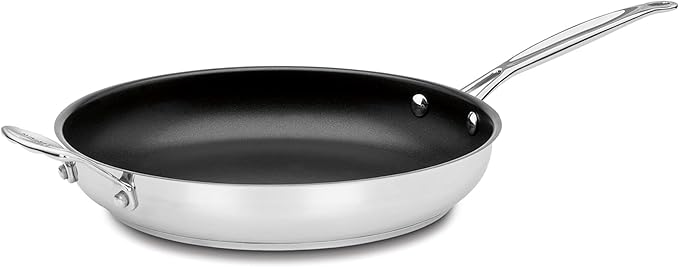
Want the shiny stainless look without giving up easy release? This Chef’s Classic skillet wraps a PFAS‑free PURELYCERAMIC interior in a stainless shell, so it looks at home next to steel pots and pans but behaves more like a nonstick.
The pan has generous, slightly flared sides for tossing food, plus a helper handle that becomes very welcome when the skillet is full. Owners highlight how easily eggs and ground meat slide around, and how the pan isn’t so heavy that it’s annoying to move from burner to burner.
Why it’s interesting
- Stainless exterior, slick interior – Great if you’re building a stainless collection but still want one “easy” pan.
- Helper handle – Makes draining fat or transferring food safer and less awkward.
- Even heating aluminum core – The encapsulated base helps prevent hot spots and warping.
Good to know
- Round foods (like meatballs) can slide around a lot because the interior is so slick; use a gentle hand.
- As with most ceramic nonstick, it will reward lower heat and hand‑washing with a longer lifespan.
- Check the manual for exact oven limits if you plan to bake or broil with it regularly.
Ideal for: people who like the look of stainless but still want a low‑stress, nonstick‑style pan for eggs, pancakes and sautéing.
11. Yonida 12" Hybrid Skillet – HexClad‑Style Searing Without the Price Tag

Hybrid pans like Yonida’s promise the best of both worlds: a laser‑etched stainless “mesh” that can brown and tolerate metal utensils, with nonstick coating nestled in the valleys so food still releases easily. Think of it as a less‑expensive cousin to HexClad and similar brands.
The tri‑ply stainless body feels solid but not brick‑heavy, and the “Snowflake” textured surface both looks slick and gives oil somewhere to hang out, which helps with even browning. Many reviewers are genuinely impressed with how well it sears proteins while still letting eggs and cheesy dishes slide out.
Why it’s compelling
- Better browning than classic nonstick – The exposed steel grid can hit higher heat without scorching a full PTFE surface.
- All‑stove compatible – Works on gas, electric, glass and induction.
- Dishwasher & oven‑safe – Nice to have if you really don’t want to hand‑wash.
Good to know
- There is a learning curve: preheating properly and using enough oil makes a huge difference.
- At least one reviewer found it too sticky for eggs and returned it — technique matters more here than with “forgiving” nonstick pans.
- The textured surface can trap a bit more residue than glass‑smooth nonstick; soak briefly if something bakes on.
Ideal for: adventurous home cooks who want a pan that can actually sear like stainless but still offers some nonstick help for tricky foods.
12. Tramontina Tri‑Ply Clad 12" – All‑Clad‑Level Cooking Without the All‑Clad Price

If you’re ready to learn stainless but don’t want to jump straight into All‑Clad money, this Tramontina is a fantastic bridge. The fully clad tri‑ply construction (stainless–aluminum–stainless) gives you very even heat and seriously good searing, and independent reviewers often call it the best value stainless pan on the market.
It works on all cooktops including induction, feels solid without being overwhelming, and comes backed by an NSF certification for durability. Treat it well and this is the sort of pan that can run for decades, not years.
Why stainless fans love it
- Even, responsive heating – Fantastic for pan sauces, deglazing and steady browning.
- Better price‑to‑performance ratio – You get very close to All‑Clad performance for a fraction of the cost.
- Dishwasher‑safe and oven‑safe – Tough enough for high‑heat roasting and easy clean‑up (though hand‑washing keeps it prettier).
Good to know
- Stainless has a learning curve: you’ll want to preheat until a water droplet “skates,” then add oil and food.
- Food will stick if you try to cook totally dry or constantly move proteins before they naturally release.
- Polishing with Bar Keepers Friend keeps it shiny, but that’s an extra step compared with nonstick.
Ideal for: home cooks who are ready to graduate from nonstick and want a stainless workhorse that can grow with their skills.
13. Cuisinart 722‑30G – Friendly First Stainless Skillet with Lid

This Chef’s Classic stainless skillet is a smart way to dip a toe into stainless cooking without over‑spending. An aluminum‑encapsulated base spreads heat nicely, the stainless interior doesn’t react with acidic foods, and the glass lid is surprisingly handy for simmering and keeping grease in the pan.
Because the walls are thinner than full tri‑ply, it heats up a bit faster and feels slightly lighter than some all‑clad designs. Owners who take the time to learn stainless techniques report that it becomes their default pan for everything from pancakes to pork chops.
What people like
- Good size and depth – Enough real estate for 3–4 chicken breasts or a big batch of fried rice.
- Induction‑ready bottom – Works across gas, electric and magnetic cooktops.
- Flavor‑building fond – Browns bits beautifully for pan sauces and gravies.
Good to know
- The rolled rim can feel a bit sharp to some users when washing; just be mindful when gripping the edge.
- If you’re coming from only nonstick, expect a little sticking while you dial in your heat and oil technique.
- Like most bright stainless, it benefits from occasional polishing if you care about keeping it showroom‑shiny.
Ideal for: cooks who want a reasonably priced, lidded stainless skillet for browning and sauces, and who don’t mind a bit of practice to get eggs to behave.
14. All‑Clad D3 12" with Lid – The Classic “Buy It Once” Stainless Skillet

If you ask professional cooks which stainless skillet they’d buy for life, All‑Clad’s D3 line comes up over and over. This 12‑inch version, bonded all the way to the rim, is an absolute workhorse: fast, even heating, outstanding searing, and no coating to chip or wear out.
You can blast it under a broiler, move from stovetop to a 600°F oven, and deglaze for silky pan sauces without worrying about babying the surface. Plenty of long‑time owners have been using the same D3 skillets for a decade plus — a sharp contrast to the 2–4 year lifespan typical of nonstick.
Why it earns the hype
- Impeccable heat distribution – No obvious hot spots, so you can brown evenly edge‑to‑edge.
- Extremely durable – Handles abrasive scrubbers, metal utensils and high heat far better than coated pans.
- Excellent lid included – Tight‑fitting stainless lid makes braising and finishing dishes effortless.
Good to know
- It’s an investment — but if you cook a lot, cost per year drops quickly compared with repeatedly replacing nonstick.
- There is a learning curve if you’ve only used slick coatings; you’ll adjust how you preheat, oil and move food.
- It’s heavier than aluminum nonstick; if weight is a concern, you may keep a lighter pan for quick egg duty.
Ideal for: serious home cooks and aspiring pros who want a lifetime stainless skillet that can handle almost anything you throw at it.
15. Cuisiland 12" Nitrided Cast Iron – Classic Skillet, Less Rust Drama

If you’re ready to move beyond coatings entirely, this Cuisiland skillet gives you classic cast‑iron benefits with a modern twist. The nitrided treatment hardens the surface and improves rust resistance, so it seasons faster and is a bit less fussy than traditional bare iron.
At 12 inches wide and 2 inches deep, it’s a generous skillet for family meals, smash burgers, steaks and big stir‑fries. The removable beechwood handle stays cooler on the stovetop and makes maneuvering a heavy pan much more pleasant. Once you build up a good seasoning layer, eggs, pancakes and hash browns can slide around surprisingly well.
Why it’s worth considering
- Incredible heat retention – Holds onto heat for searing and keeps food warm at the table.
- Nitrided surface – More rust‑resistant and quicker to season than standard cast iron.
- Works on any heat source – Gas, electric, induction, oven and campfire are all fair game.
Good to know
- It’s heavy — think “two sacks of potatoes” heavy when full. The wooden handle helps, but it’s still a workout.
- Not pre‑seasoned; you’ll need to follow the included seasoning instructions before first use.
- No lid included, and you’ll hand‑wash and dry promptly to protect the seasoning.
Ideal for: cast‑iron curious cooks who want a big, versatile skillet that can last decades and are willing to put in a little seasoning and care up front.
What a 12‑Inch Skillet Actually Does for Everyday Cooking
“12 inches” can sound huge on paper if you’re used to an 8‑ or 10‑inch pan, but for most home kitchens it’s the most useful size you can own. Here’s how that size plays out day‑to‑day, and how to get the most from it.
Why 12 inches is a sweet spot
- Room to brown properly – Spacing out chicken thighs or steak cubes means they sear instead of steaming in their own juices.
- Flexible portions – You can cook one egg in a corner or four portions of salmon without overcrowding.
- Plays well with recipes – Many modern “skillet dinner” recipes are written with 12‑inch pans in mind.
- Still manageable to handle – Even stainless and cast‑iron options are a reasonable lift for most people, especially with helper handles.
Compared to a 10‑inch pan, a 12‑inch skillet can easily feel like it holds half again as much food because of the extra base area. That’s the difference between comfortably cooking for two and comfortably cooking for four.
Tips for cooking smarter with a 12‑inch skillet
- Preheat properly – Especially with stainless, cast iron and hybrids, give the pan a minute or two to heat before adding oil and food.
- Use the right burner – Put your 12‑inch skillet on the largest burner or induction ring you have for more even heat.
- Don’t fear lower heat – Good pans conduct heat well; medium or medium‑low often delivers better browning and less sticking than cranking it to max.
- Work in batches – If food is still crowding the pan, cook in two rounds and combine at the end — faster than fighting pale, soggy results.
- Match tools to surface – Silicone and wood for nonstick/ceramic, metal acceptable for stainless and cast iron (and some hybrids).
Once you get used to the extra breathing room and better browning from a 12‑inch skillet, smaller pans start to feel cramped very quickly.
FAQ: 12‑Inch Skillets, Answered
Is a 12‑inch skillet too big for everyday cooking?
Should I choose nonstick, ceramic, stainless or cast iron?
How long should a good nonstick skillet last?
Can I use metal utensils in these pans?
How do I keep food from sticking in stainless or cast iron?
Final Thoughts: Choosing Your Best 12 Inch Skillet Partner
You don’t buy a skillet for the thrill of it — you buy it so everyday life gets a little smoother. Faster weeknight dinners, fewer stuck eggs, better browning on steak and veggies, and less time scrubbing the sink all add up over months and years.
Here’s a quick way to turn this whole guide into a clear decision:
-
Want an easy, affordable upgrade from a tired old pan?
Go for the wallet‑friendly CAROTE 12" granite skillet or the deeper SENSARTE deep chef pan. Both are forgiving, non‑toxic and great for everyday use. -
Want restaurant‑style performance in a nonstick pan?
Look at Tramontina Professional for a classic line‑cook feel, or Cuisinart’s hard‑anodized 622‑30GP1 if you want higher oven temps and a glass lid. -
Prefer PFAS‑free or “stone” surfaces?
Check out the deep, family‑friendly SENSARTE ceramic skillet or the premium‑feeling OXO Enhanced 12" ceramic. -
Curious about stainless and long‑term pans?
Start with Tramontina’s tri‑ply or Cuisinart’s 722‑30G. If you’re ready to go all‑in, All‑Clad D3 is the “buy it once” classic. -
Want something different from standard nonstick?
The hybrid Yonida 12" skillet offers hard searing with some release, while Cuisiland’s nitrided cast iron gives you a big, modernized cast‑iron pan with better rust resistance.
Any of the fifteen pans above can become your best 12 inch skillet once you match their strengths to your stove, your cooking habits and your budget. If you can, pair one easygoing nonstick with one tough stainless or cast‑iron skillet — you’ll be covered for almost anything a home kitchen can throw at you.
Measure your largest burner, think about how many people you usually feed, decide how much maintenance you’re realistically willing to do, and pick the skillet that fits that reality. After that, it’s just a matter of heating a little oil, hearing that first satisfying sizzle, and letting your new favourite pan quietly upgrade every meal you cook in it.
