
Specs are compiled from manufacturer listings and verified buyer reviews and can change over time — please confirm the key details on the product page before buying.
Dig the trench, run the wire, backfill it — and the wrong cable means doing that whole job twice. The short answer: buy a four-wire aluminum feeder sized for 100 amps, check that it is rated for direct burial or for the conduit you plan to use, and match the ampacity number to what your run actually needs. Every pick below does that job; they differ mainly in wire count, burial ampacity, and how stiff the cable feels bending around a corner.
I’m Mohammad Maruf — the founder and writer behind KitchPrep. This guide is built by comparing the manufacturers’ published specifications and the patterns across verified customer reviews, so you get each pick’s real strengths and trade-offs instead of marketing spin.
Before you scroll, one honest note: these picks use flexible matching for wire rated for 100 amp service, so not every listing is the exact number you typed into the search bar — the nearest same-type size serves the same job. What follows is a straight read on the best 100 amp service wire for subpanels, garages, and shop builds.
Our Picks at a Glance

How To Choose The Best 100 Amp Service Wire
A 100 amp feeder depends on four decisions you can make before you ever open a product page: how many wires you need, whether the run goes underground or through conduit, how many amps the cable can carry in that specific spot, and how much bending you can physically handle.
Count your conductors first
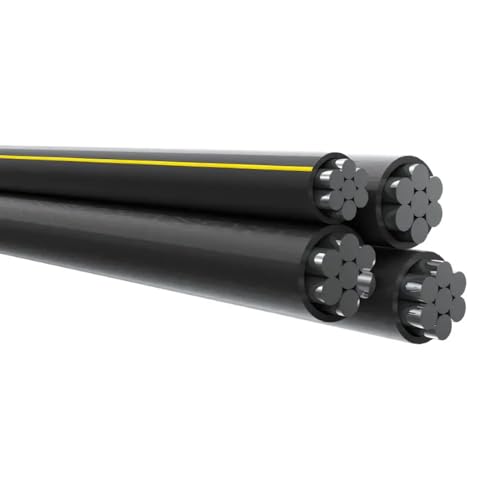
A subpanel fed from a main panel normally needs four wires: two hot conductors, one neutral, and one ground. That is what a “2-2-2-4” designation describes — three conductors sized 2 AWG (American Wire Gauge, the standard thickness scale for wire) and a fourth, smaller conductor for ground. A three-wire triplex cable (three conductors twisted together under one jacket) skips that fourth wire, which suits some direct-burial layouts and not others. Decide which one your inspector or your own plan calls for before you buy, because this is the one spec you cannot adjust after the trench is open.
Burial or conduit changes the amp number
The same cable carries more current sitting in open soil than it does pulled through a pipe. Heat has nowhere to escape inside a conduit, so the rating drops. That is why a cable advertised at 165 amps direct-burial can be listed at 120 amps in-duct. If your run is going inside conduit, size your feeder against the in-duct number, not the burial number on the headline.
Stiffness is a real spec, not a preference
Large-gauge aluminum does not coil like a garden hose. A 100-foot run of 2 AWG quadruplex (four conductors under one jacket) weighs hundreds of pounds and fights you on every tight radius. Buying wire that is too stiff for your layout means kinked conductors and wasted hours. If your path has sharp turns or a small pull box, factor that into which cable you pick — the review pages are full of installers describing exactly this.
Quick Comparison
| Model | Best For | Wires | Direct-Burial Ampacity | Material | Amazon |
|---|---|---|---|---|---|
| NASSAU 100 FT URD Dyke 2-2-2-4 Quadruplex★ Best Overall | Garage and subpanel runs in conduit or soil | 4 | 155 Amps | Aluminum | Amazon |
| Wirenco 2-2-2-4 SER Service Entrance Cable (25FT)Best Value | Short above-ground service drops and RV hookups | 4 | — | Aluminum | Amazon |
| NASSAU 100′ 2-2-2-4 Mobile Home Feeder | Detached garages and workshop 100-amp service | 4 | 100 Amps | Aluminum | Amazon |
In‑Depth Reviews
1. NASSAU ELECTRICAL SUPPLY 100 FT Aluminum URD Dyke 2-2-2-4 Cable Direct Burial Quadruplex Secondary Wire
Our pick — over 4.5★ from 450+ verified ratings; the strongest balance of quality and price.
Four wires in one jacket, so a garage panel gets powered without a second trip to the supply house.
This is the best 100 amp service wire for a detached garage where the run sits in soil in one spot and slips into conduit in another. It carries four wires in a 2-2-2-4 layout — three current-carrying conductors at 2 AWG plus a smaller 4 AWG neutral — so hot, hot, neutral, and ground all arrive in one jacket. Direct burial (rated to sit in soil without a conduit) is 155 amps, and inside a duct (a pipe the cable is pulled through) it drops to 115 amps, because heat cannot escape a pipe as easily as it escapes soil.
Those two ampacity figures are why it lands on top. Against the Stephens triplex further down this list, this Dyke carries 155 amps in direct burial versus the Stephens’ 165, and 115 amps in duct versus the Stephens’ 120. A straight underground shot with no conduit favors the Stephens. What the Dyke does better is give you a genuine fourth conductor, which is what most subpanel layouts want. The build is stout: 7 strands per conductor (seven thin aluminum wires twisted together for flexibility), a 60-mil insulation jacket (60 thousandths of an inch thick), and an overall outside diameter under an inch, so it pulls through ordinary conduit fittings. Weight is the tax. At 367 lbs per 1000 ft, it is genuinely heavy and stiff on the reel — buyers report it pulls smoothly with a little wax on the jacket and preps cleanly at the ends. The honest caveat is identification: the conductors are marked A/B/C rather than by function, so map your hot, neutral, and ground assignments on paper before you terminate anything.
What it does well
- Four conductors in a 2-2-2-4 layout, so hot, hot, neutral, and ground all arrive in one cable.
- 155 amps direct burial and 115 amps in duct gives you a real number for either installation path.
- Runs and terminates cleanly — it pulls with wax and preps easily for subpanel connections.
- 600-volt rated aluminum, which is the standard material for long outdoor feeders.
Where you’ll feel it
- 367 lbs per 1000 ft makes this heavy and stiff — tight bends take muscle and patience.
- The conductors are marked A/B/C rather than labeled by function, so double-check your neutral before you land it.
- You are buying 100 feet whether your run is 60 feet or 95.
Pick this if: you are feeding a subpanel and want a four-wire layout that covers buried and conduit sections of the same run.
Plan around: the stiffness — a sharp corner or a small pull box will cost you extra time.
2. Wirenco 2-2-2-4 SER Aluminum Service Entrance Cable (25FT Cut)
A 25-foot cut rated 100 amps, for the jobs that never touch dirt.
If your run is a short service drop, a panel feed along a wall, or an RV hookup where the cable stays out of the ground, this SER cable is the practical answer. SER stands for Service Entrance Rated — built for exactly that job, the link between your utility feed and your main panel or subpanel. It is rated for 600 volts and 100 amps, listed for wet and dry locations, and it comes as four wires: three conductors plus one bare neutral.
For a genuinely short run, buy the 25-foot cut instead of a 100-foot reel. Where the 100-foot Nassau reels on this list cover a yard, this is a 25-foot cut. Owners mention that “2 2 2 4 aluminum service entrance cable delivered in a couple days free shipping and length was correct” — the cuts come in at the length ordered, and the wire arrives new and undamaged. At 0.359 pounds per foot, one person can position it, unlike the heavier reels. Customers note it running a 70 amp sub-panel and carrying 50 amps on an RV hookup without heat issues. The catch is timing: several buyers mention it “takes a few days to get so don’t be in a hurry for it,” so order before you schedule the install.
Why trades reach for it
- Rated 600 volts and 100 amps for service entrance work, so no derating math needed for a standard panel feed.
- Four wires — three conductors and a bare neutral — in a single jacket.
- Listed for both wet and dry locations, so it handles an outdoor panel enclosure.
- Light enough at 0.359 lbs per foot to position by yourself.
What to plan for
- 25 feet will not reach a detached garage across a yard — measure before ordering.
- Delivery runs a few days, so do not cut it close to your install date.
Right call when: your run is short and above ground, and you want the exact 100 amp rating stamped on the jacket.
Wrong call when: you are trenching to an outbuilding — go with a direct-burial reel instead.
3. NASSAU ELECTRICAL SUPPLY Aluminum 2-2-2 Triplex URD Ramapo 100 AMP Direct Burial Wire Service Cable (100FT)

Four conductors and an honest 100 amp rating, in the lightest reel here to pull.
At 0.343 lbs per foot, this is the reel you can actually move alone. It was built for mobile home service, but the spec sheet reads like a workshop feeder: 2 AWG conductors in a 2-2-2-4 layout, an allowable ampacity of 100 amps, and a 600-volt rating across a full 100 feet. The cable outside diameter is 0.944 inches.
Set it next to the Dyke quadruplex at the top of this list and the difference is weight. The Dyke runs 367 lbs per 1000 ft; this feeder sits at 0.343 lbs per foot — a genuinely different handling experience on the reel. Both are four-conductor 2-2-2-4 cables, so the wiring logic is identical; this one is simply easier to route around tight spots inside a trench or along a foundation. On capacity, 100 amps is exactly what a 100 amp service needs, with no padding and no shortfall. One buyer described installing it for “a 100-Amp service” in a 14×32 workshop, where the job “went very smoothly.” Availability is the quiet reason it lands on schedule: it is stocked and sold by the foot rather than requiring a special order, and buyers appreciate not being told the wire has to be ordered with no delivery date. The trade-off is zero headroom — grow the service later and you buy new wire.
Where it earns its keep
- Four conductors in a 2-2-2-4 layout, so hot, hot, neutral, and ground all arrive in one jacket.
- 100 amp allowable ampacity lines up exactly with a standard 100 amp service.
- 600-volt rating and a 100-foot reel that covers most single-building runs.
- Light handling at 0.343 lbs per foot.
- Sold by the foot, so you are not forced into an oversized special order.
What to keep in mind
- 100 amps is the ceiling, so growing the service later means new wire.
- A few buyers mention shipping delays tied to supply.
Suits you if: you are wiring a workshop, garage, or outbuilding to a standard 100 amp service and want a light, easily routed four-wire reel.
Think twice if: you have growth plans for the panel that need ampacity above 100.
Understanding the Specs
Ampacity: why one cable has two numbers
Ampacity is the amount of current a cable can carry safely before its insulation gets too hot. The same cable is rated higher in direct burial than in duct because soil pulls heat away from the jacket while a conduit traps it. That is why this list shows two numbers for each buried reel — a burial rating and an in-duct rating — and why you should size your feeder against whichever one applies to your actual run.
Aluminum versus copper conductors
Aluminum is the standard material for long outdoor feeders because it costs less than copper at the same current capacity. It does require different handling — you typically treat the terminations (coat the stripped ends to stop corrosion) and tighten to the lug rating on your panel — but for a run of any distance, aluminum is the practical choice. Every cable on this list uses aluminum conductors.
Wire count: 2-2-2-4 versus 2-2-2 triplex
The four-number designation describes how many conductors you get and their sizes. A 2-2-2-4 cable delivers three 2 AWG conductors plus a smaller 4 AWG conductor, giving you two hots, a neutral, and a ground. Triplex cable delivers three conductors and no separate bare ground. Which one you need depends on your subpanel plan, so settle that question before you pick a reel.
Direct burial and XLP insulation
A direct-burial rating means the cable can sit in soil without a conduit, which is what most outdoor feeders do. XLP is a cross-linked insulation type built to handle wet ground conditions over the long term. A burial rating plus XLP insulation is what tells you a cable is genuinely suited to an underground run rather than only to an above-ground drop.
FAQ
Will 2 AWG aluminum wire handle a 100 amp service run?
Do I need four wires or is triplex enough for a subpanel?
What is the difference between direct burial ampacity and in-duct ampacity?
Can I run 100 amp service wire to a detached garage?
How deep does 100 amp service wire need to be buried?
Is aluminum feeder wire as safe as copper for this job?
Why is one 100 foot reel so much heavier than another?
Do I need to mark or identify the neutral conductor myself?
Can I use service entrance cable for a direct burial run?
Should I buy 100 feet or can I get a shorter cut?
Final Thoughts: The Verdict
For most people wiring a 100 amp service to a garage, shop, or subpanel, the NASSAU 100 FT URD Dyke 2-2-2-4 Quadruplex is the one to buy because its four-wire layout and dual ampacity ratings (155 amps direct burial, 115 amps in duct) cover the runs most people actually build. If your run is long, straight, and goes into the ground with no conduit, the NASSAU Stephens 2 2 4 Triplex gives you 165 amps and a marked neutral for easier trench work. And if your job is short and stays above ground, the Wirenco 2-2-2-4 SER is the clean 100 amp answer without buying a reel you cannot use. What the top pick does better than any of them is give you the four conductors and both ampacity numbers you need for a real subpanel — pick it up before you start trenching so it is on-site when the ditch is open.
How We Picked
We do not accept paid placement. Every pick is matched to a real buyer and a real use-case; we do not hands-on test units.
Sources & Methodology
Specifications: manufacturer listings and product documentation. Review insights: verified customer reviews, as of September 2026. Pricing: not shown on this page (it changes often); check the current price via the retailer link.
As an Amazon Associate, KitchPrep earns from qualifying purchases. This does not affect which products we feature.
Related Guides
