
Specs are compiled from manufacturer listings and verified buyer reviews and can change over time — please confirm the key details on the product page before buying.
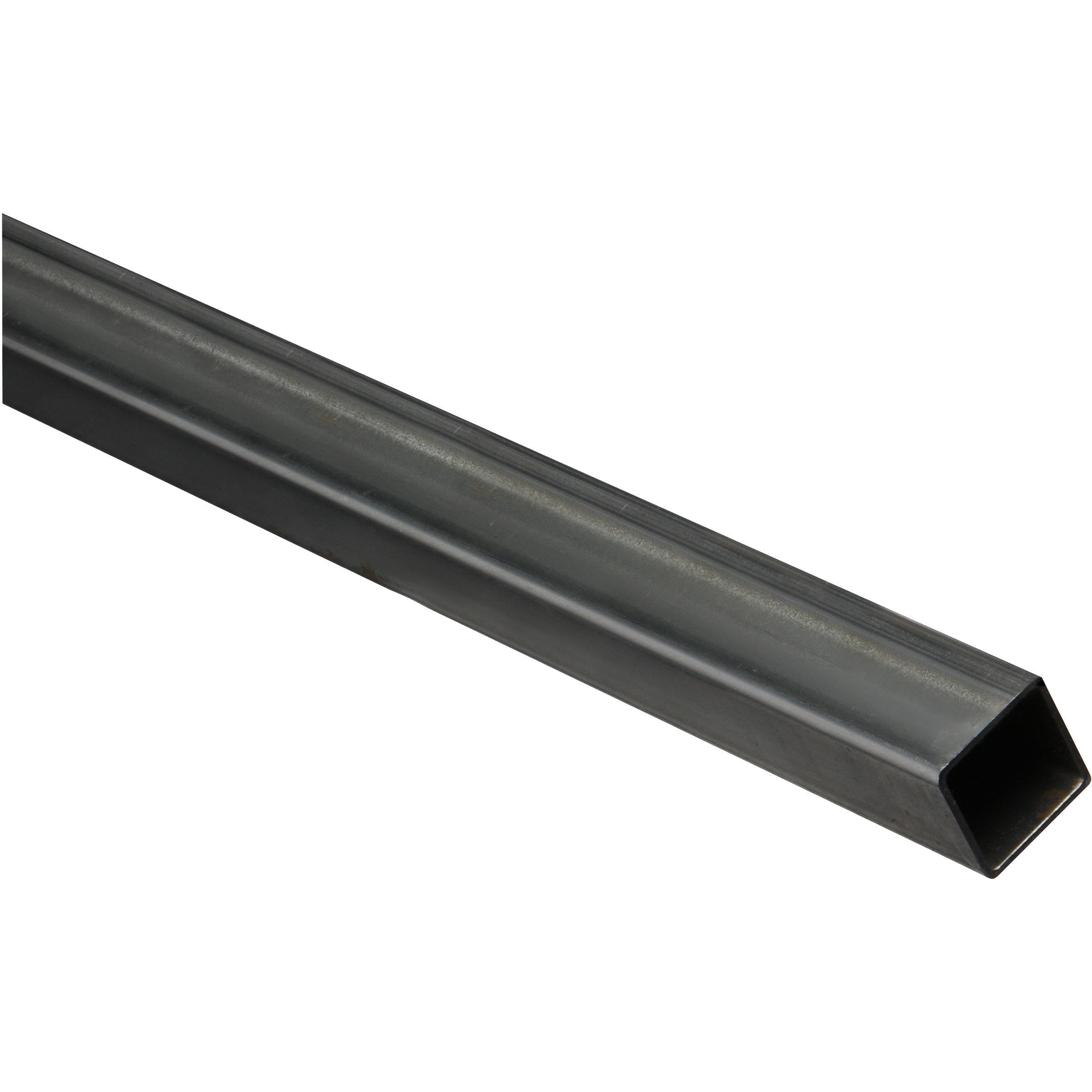
You should not have to overpay at a big-box store or beg a metal shop to sell you just four feet of 1×1 square tubing. This guide sorts through 1 inch by 1 inch steel and aluminum options sold online, so you can find the right tube for welding, racks, rails, and DIY framing without wading through confusing spec sheets. One heads-up before you buy: some listings offer 1×1 as a selectable size, and the actual measurement can vary slightly, so always check the wall thickness and length in the fine print.
I’m Mohammad Maruf — the founder and writer behind KitchPrep. This guide is built by comparing the manufacturers’ published specifications and the patterns across verified customer reviews, so you get each pick’s real strengths and trade-offs instead of marketing spin.
Here is the honest breakdown of the best 1 x 1 square tubing picks, from budget steel to premium aluminum, with real owner insights baked in.
Our Picks at a Glance


How To Choose The Best 1 X 1 Square Tubing
Before you add a tube to your cart, you need to know what you are building. A garage storage rack needs heavy steel with a thick wall. A photo studio rail or a shelf frame needs lighter aluminum that won’t rust. Matching the metal to the job is the difference between a project that lasts a decade and one that sags in a year.
The Wall Thickness Is the Real Spec
The “1×1″ only tells you the outside size — it says nothing about how much material is actually there. The wall thickness (often 0.083″, 0.12″, or 0.125″) determines how much weight the tube carries and how cleanly it welds. A heavier wall is stiffer and stronger; a thinner wall is lighter and cheaper. For structural frames, you want at least a 0.12” wall. For decorative or light-duty use, a thinner wall is fine and much easier to cut.
Steel or Aluminum — Pick the Metal for the Job
Mild steel is the default for welding, garage rails, and anything that needs to take abuse — it is strong, cheap, and easy to weld with a standard MIG or flux-core setup. The trade-off is rust, so it needs paint or oil. Stainless steel resists corrosion so you can skip finishing, but it is harder to weld and costs more. Aluminum is light and never rusts, but it is not as strong as steel at the same size — so you need that thicker wall to make up the difference.
Buying Pre-Cut Lengths Online vs. the Metal Yard
Local metal suppliers often only sell full 20-foot sticks, so you are stuck storing, hauling, and cutting everything yourself. Online sellers cut to specific lengths — 12″, 36″, 48″, even 89″ — and ship them to your door, which is a real advantage for a single project. Just know you are paying a premium per foot for that convenience, and always measure your cut length against the listed length, since some listings show the full stock length and others show a shorter cut piece.
Quick Comparison
| Model | Best For | Material | Wall Thickness | Length | Amazon |
|---|---|---|---|---|---|
| Small Parts 1008-1010 Steel Square Tube★ Best Overall | Welding & garage projects | Low Carbon Steel | 0.083″ | 48 inches | Amazon |
| 1/8″ Mild Steel Square TubeBest Value | Budget structural steel | Alloy Steel | 0.125″ | 48 inches | Amazon |
| Stanley N341-446 Square TubeCompact Pick | Short 36″ repair jobs | Steel | 17 ga | 36 inches | Amazon |
| A500/A513 Carbon Steel Tubing | High-strength small cuts | Alloy Steel | 0.12″ | 12 inches | Amazon |
| Bopaodao 304 Stainless Tubing | Rust-free decorative rails | 304 Stainless Steel | 1.5mm | 11.81 inches | Amazon |
| Evecad 6063-T6 Aluminum Tube | Clean DIY & model frames | 6063-T6 Aluminum | 0.125″ | 48 inches | Amazon |
| 8020 8111 Aluminum Square Tube | 80/20 compatible builds | 6063-T6 Aluminum | 0.125″ | 89 inches | Amazon |
| Gisafai 6061 Aluminum Tubing | Strong 2-pack aluminum | 6061 Aluminum | 0.12″ | 48 inches | Amazon |
In-Depth Reviews
1. Small Parts Unpolished (Mill) 1008-1010 Steel Square Tube
Our pick — over 4.5★ from 350+ verified ratings; the strongest balance of quality and price.
The welder’s favorite — a thick-walled 4-footer that takes flux-core beautifully.
For welding a garage rail, a hanger system, or a go-kart frame, this low-carbon steel tube earns its spot as the crowd favorite — it holds a 4.7-star average across 300+ ratings, the most trusted in this list. The 0.083″ wall feels substantial, and buyers report it cuts and grinds easily, slots into a Kreg guide without fuss, and runs noticeably thicker than the flimsy tube at the hardware store. The standout praise is weldability: owners say it takes flux-core welding beautifully, with no complaints on the bead quality.
What makes this a smart buy is the finish. The ends come rounded and capped with plastic protectors, which one buyer called out as a pleasant surprise when building a rack for their Kubota RTV. The 48-inch length gives you real working material for a project, not just a stub. Owners mention it is cost-effective compared to box-store pricing, and the customer service earns high marks — a missing order was replaced immediately with no questions asked, which matters when you are mid-build.
The honest trade-off is value: opinions split, with some calling it the best deal around and others finding it overpriced for what it is. That is a fair caveat for a single stick of metal. An occasional wrong item slips through packing, as one reviewer noted receiving a rounded tube in a batch of five, so inspect your delivery. But for a weldable, functional steel square tube that works, this is the one most owners reach for again.
What wins owners over
- Flux-core welds cleanly with no spatter issues
- Thicker and stronger than typical big-box store tubing
- Ends come capped with plastic protectors
What to weigh
- Value opinions split — some call it a deal, others pricey
- An occasional tube arrives rounded instead of square
Grab it if: you are welding a structural project and want a dependable 4-foot steel tube with capped ends.
Think twice if: you only need a single short cut and do not want to store 48 inches of metal.
2. 1/8″ x 1″ x 1″ Mild Steel Square Tube, HR Steel, 0.125″ Wall
The beefiest wall in the lineup for the leanest price.
Here is the value play: a 48-inch stick of mild steel with a 0.125″ wall — the heaviest wall in this entire comparison — at a price that undercuts most rivals. That half-eighth-inch wall makes it a genuine structural tube, not a lightweight trim piece, and the 5.7-pound weight tells you exactly how much material you are getting. If your project involves a horizontal band saw, you are in luck: customers note it cuts cleanly and fast, with no binding on the blade.
Quality is the loudest word in the feedback, with owners consistently calling the steel great and durable. It arrives coated in a black rust-preventive grease, which is a sign of proper handling — just plan to wipe it down before you weld or paint. One buyer flat-out said it beat metalsdepot.com on price, and several noted they would repurchase for future builds. The “pick your length” option with a cut tolerance of +/- 1/8″ means you are not locked into a fixed size.
The catch here is that it is hot-rolled mild steel, meaning the surface is rougher and scale-coated compared to cold-rolled or stainless options. That is normal for the material and fine for welding or painting, but if you need a mirror-smooth aesthetic finish for exposed furniture, look at the aluminum picks below. For raw, weldable structural steel at a budget price, this is a hard stick to beat.
Why it ranks high
- Heaviest 0.125″ wall at a budget-friendly price
- Cuts cleanly with a horizontal band saw
- Arrives with rust-preventive grease coating
Know before you buy
- Hot-rolled surface is rougher with mill scale
- Needs grease wipedown before welding or painting
Choose this for: budget structural builds where you want maximum wall strength per dollar.
skip it if: you need a smooth cosmetic finish straight from the start.
3. Stanley National N341-446 Square Tube, 1 in X 3 Ft
The 3-foot fix for when big-box stores leave you empty-handed.
Stanley built its name on hardware that just works, and this electric-resistance-welded, hot-rolled plain steel tube in a handy 36-inch length is no exception. The short length is the whole point — it solves the classic frustration where local metal shops only sell tubes at lengths you do not need, and big-box stores do not carry the size at all. Reviewers point out it fit their bill perfectly and got their project back up fast, with smooth handling and quick turnaround on delivery.
Skateboarders, take note: the reviews call this the “best rail for grinding,” which tells you the 17-gauge wall stands up to repeated hard impacts without denting easily. That is a solid real-world test of durability. At 3.48 pounds for 3 feet, it is manageable to cut and maneuver in a home workshop, and the plain steel finish takes paint or a clear coat well for outdoor use.
The trade-off is that 17-gauge is a thinner wall than the 0.125″ or 0.083″ options elsewhere in this list, so it is not the pick for heavy structural loads. It is also US-made, which some buyers care about. If your repair or rail project needs a modest length of dependable steel, this compact stick is a clean, low-fuss answer — just do not expect it to carry a massive overhead load.
What stands out
- Perfect 36-inch length for small repairs
- Rated a top rail for skateboard grinding
- Electric-resistance welded for consistent strength
Consider this
- 17-gauge wall is thinner than heavy structural picks
- Hot-rolled plain steel needs finishing to avoid rust
Reach for this if: you need a modest 3-foot steel stick for a repair or rail without hauling a long tube.
Look elsewhere if: your build demands a heavy 0.125″ wall for serious load-bearing.
4. A500/A513 Carbon Steel Square Tubing, ASTM A-36, 1″ Height

Certified structural steel from OnlineMetals — the baby stick that punches above its 12 inches.
Do not let the 12-inch length fool you — this A500/A513 carbon steel tube is the most “official” steel in this list, meeting both ASTM-A513 and ASTM-A500 specs (call for availability). That certification matters because A500/A513 is the most common type of steel tubing in North America, used in structural applications in bridges, buildings, automotive, and appliance industries. You are getting genuine structural-grade material, and buyers confirmed the quality, with one noting it was sturdy enough for an outdoor lamp extension.
The clever part is the wall: at 0.12″ thick, it is nearly as heavy as the beefiest picks here despite the short length — a 4-inch gap versus the 48-inch sticks above in raw material per foot. That makes it ideal for precision repairs. The reviews are full of exactly that: one buyer repaired a broken recliner footrest by drilling holes into this tube and saved, while another used it to raise the yarn guide on a circular sock knitting machine. When you need a short, strong, certified piece, this delivers without waste.
The honest caveats are the short length — 12 inches is not enough for most frame builds — and the fact that the tube arrives with trim and shavings inside, so shake it out before use. Shape opinions are slightly mixed in the feedback, meaning an occasional tube may not be perfectly square. Shoppers say it arrived super early, well-packaged, and at the best price around, which counts for a lot on a single specialized cut.
The standout strengths
- Certified to ASTM A-513 and A-500 structural specs
- 0.12″ wall is near-maximum strength in a short cut
- Buyers praise fast delivery and solid packaging
Watch out for
- Only 12 inches long — too short for full frames
- Contains metal shavings inside — shake before use
Pick this for: a short, certified structural repair piece where quality is non-negotiable.
Pass if: you need a full-length stick for a large fabrication job.
5. Bopaodao 304 Stainless Steel Square Tubing, 2 Pack

Polished 304 stainless that never rusts — for rails and vanities that face moisture daily.
When your project lives in a bathroom, on a deck, or anywhere moisture lingers, stainless steel is the answer — and this 2-pack of 304-grade square tubing from Bopaodao brings a polished finish that needs no painting. Each tube measures 25mm x 25mm (right at 1 inch square) with a 1.5mm wall and runs 300mm (11.81 inches) long. The 304 grade means genuine corrosion resistance and a longer service time than plain steel, so it is a natural fit for hand rails, foot rails, queuing rails, and pony rails mounted on walls.
The factory-direct quality shows in the details: buyers report the tubes arrive properly wrapped with no blemishes, a bright surface, and clean interiors with uniform thickness. The edges come neatly chamfered without burrs, which saves you prep time and protects your hands during installation. For shelving systems, bathroom vanities, or any visible decorative application, that polished factory finish is a real time-saver — you can install it straight out of the packaging.
The honest reality is that stainless costs more, and a couple of buyers noted the price feels high for the material. These are also short 11.81-inch pieces, so they suit smaller fittings and accents rather than long railing runs. If you need to span a full staircase, you will want longer stock. But for rust-proof, polished, ready-to-install square tubing in a handy pair, this is the premium route that skips the finishing work entirely.
What justifies the cost
- 304 stainless resists corrosion without any coating
- Polished finish arrives clean with no blemishes
- Chamfered edges free of burrs — safe to handle
Fair warning
- Pricey compared to mild steel per foot
- Short 11.81-inch length limits big railing jobs
Worth it for: moisture-exposed rails and visible fixtures where rust-proof polish is the priority.
Not ideal if: you need long runs of tubing on a tight budget.
6. Evecad 6063-T6 Structural Square Aluminum Tube
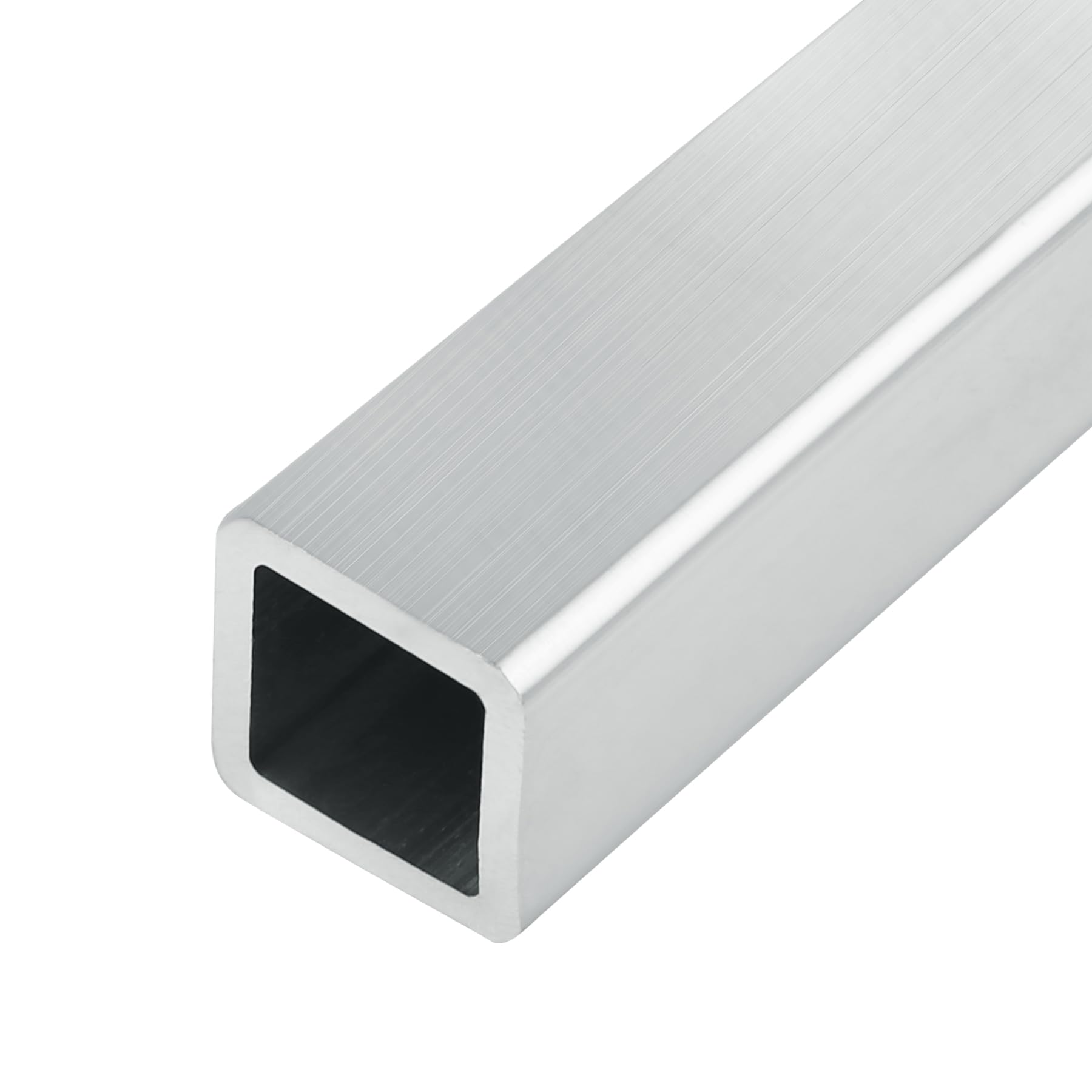
The clean-cut aluminum stick that owners call beautiful — a full 48 inches of scratch-free mill finish.
Aluminum is the answer when you want strength without the rust, and this Evecad tube in 6063-T6 delivers a 48-inch length with a full 0.125″ wall — the thickest aluminum wall available here. The 6063-T6 alloy resists corrosion and cracking, ideal for exposed frames., while the natural mill finish and clean square cuts make handling safe and easy. Owners have literally asked “can square tubing be called beautiful?” after seeing the scratch-free, shiny surface, which arrived well-wrapped and clean.
For furniture frames, photo studio rails, model crafting, or home decor, this tube stands out because it is genuinely thicker and stronger than what the hardware store stocks. One buyer who previously bought square aluminum tubes from other vendors called these “outstanding” and “far nicer” than anything they had purchased before. With a.75-inch inner diameter, you get a real structural profile, and the listing says it supports punching and slotting so you can customize it to your build.
The one recurring gripe is oddly specific: the protective stickers leave sticky residue on the metal if you peel them fast. As owners put it: “peel the stickers off the metal SLOWLY or it gets sticky fast.” A little Goo Gone fixes it, and it is hardly a reason to skip. If you want clean, corrosion-free, thick-walled aluminum that looks good exposed, this 48-inch pick is a serious contender — just budget a minute for careful sticker removal.
Why owners love it
- Thick 0.125″ wall in corrosion-free aluminum
- Bright, scratch-free mill finish looks great exposed
- Full 48-inch length for real project material
Minor annoyance
- Protective stickers leave sticky residue if peeled too fast
Ideal for: visible DIY frames and rails where a clean aluminum finish is part of the design.
Be aware: peel the shipping stickers slowly to avoid sticky residue.
7. 8020 8111 Structural Square Aluminum Tube, 89″ Long

The extra-long 89-inch aluminum tube that snaps right into 80/20 t-slot ecosystems.
Here is the longest single piece of 1×1 tubing in this entire comparison — a full 89 inches of 6063-T6 aluminum with a 0.125″ wall, weighing 3.9 pounds. That length is a genuine advantage for rack systems, solar panel supports, and long frame spans where joining two shorter pieces would add weak points. The real magic, though, is the 80/20 compatibility: this tube integrates with 8020 t-slotted aluminum extrusions and joining brackets or plates, so you can bolt it into an existing 80/20 build with standard hardware.
Strength is the recurring theme in the feedback. One owner who normally reaches for stainless steel said this thick-wall aluminum worked great for their job and would now be their go-to. Another built a rack system and called it a strong piece that worked perfectly, while a third uses it as a support for solar panels. At 0.125″ wall thickness, you are getting genuine structural capacity from a material that will never rust — a combination that is hard to find in a single 89-inch stick.
The trade-offs are simple: aluminum is not as strong as steel at the same dimensions, so skip this for extreme load-bearing industrial duty, and the 80/20 label means you pay a modest premium for compatibility. At 89 inches, you also need space to store it. For DIY framing systems, backyard projects, and builds that might grow later, the ability to extend with standard 80/20 hardware makes this the most future-proof option in the list.
The big advantages
- Full 89-inch length minimizes frame joints
- Compatible with 80/20 t-slot brackets and plates
- Thick 0.125″ wall handles real structural loads
Keep in mind
- Aluminum is lighter-duty than steel for extreme loads
- Need storage space for an 89-inch stick
Best fit for: growable 80/20-style builds and long corrosion-free spans.
Not for: heavy industrial loads that demand steel’s raw strength.
8. Gisafai 2 Pcs 6061 Aluminum Square Tubing, 1″ OD
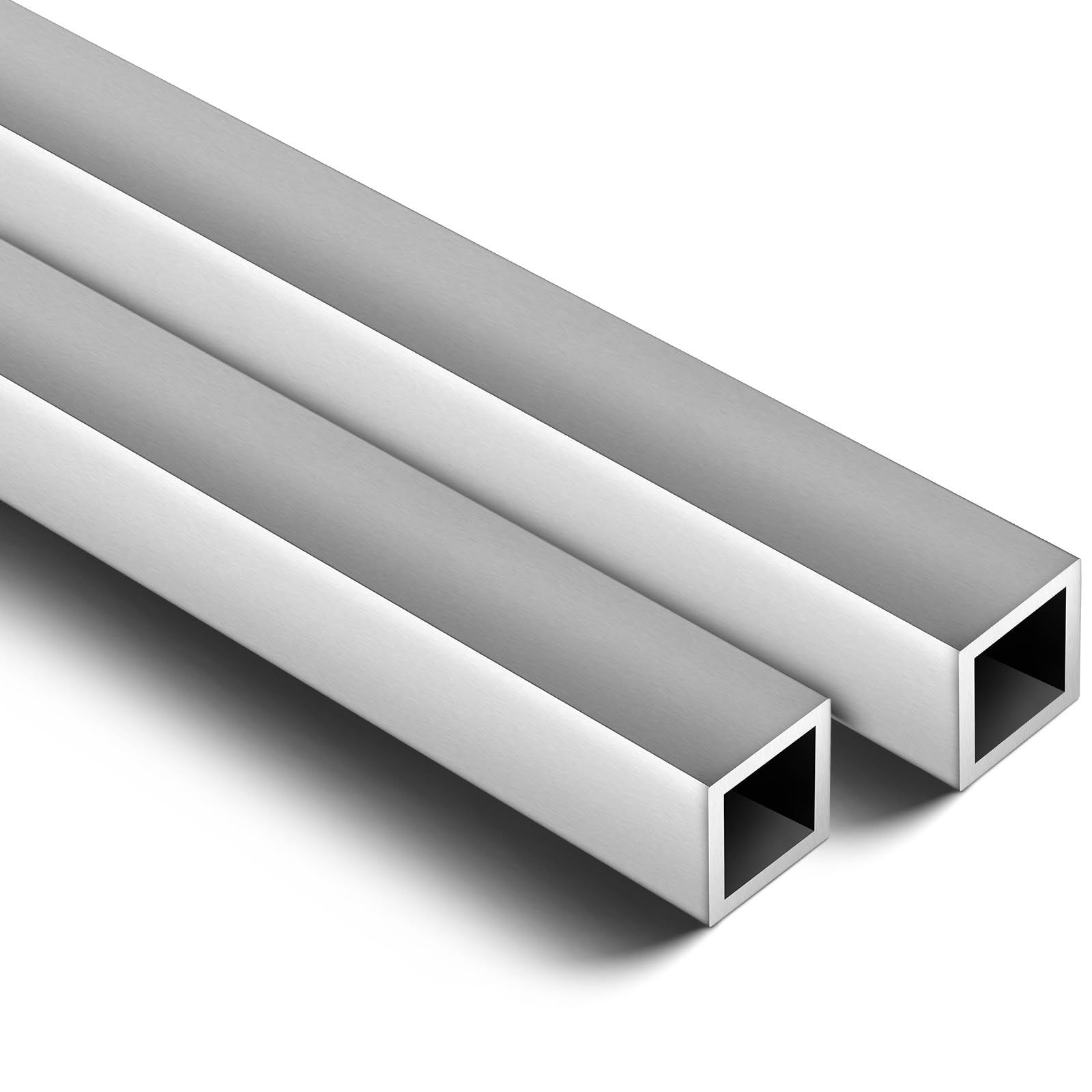
Two 48-inch 6061 aluminum sticks that are light enough for an RV drying rack, strong enough for crash bars.
Here is the two-pack value play: you get two full 48-inch aluminum tubes with a 0.12″ wall for the price of a single premium stick elsewhere in this list. The 6061 alloy is the workhorse of the aluminum world — stronger than the 6063 used in some rivals, with the durability and corrosion resistance to handle everything from wind chimes to machinery. Each tube measures roughly 1 inch (2.5 cm) across, and the silver finish has a bright aesthetic that looks good without finishing.
The review range tells the real story of versatility. At one end, a buyer bent these into two sets of crash bars, calling them top-notch, easy to work with, and strong — while noting they are much lighter than steel. At the other, an RV owner cut them in half to build the arms of a drying rack for towels and swimsuits. In between, a physics enthusiast uses them for a Lenz’s law demonstration, dropping magnets through the conductive aluminum. That spread — from motorcycle hardware to camper storage — shows how adaptable a solid 6061 tube is.
The honest limits are that 0.12″ wall aluminum is not a heavy structural beam, and 6061 is slightly less corrosion-resistant than 6063 in harsh marine environments, though for most uses it is fine. If you want two strong, straight, lightweight aluminum sticks that will not rust and can be welded, stamped, or cut to suit your project, this two-pack gives you the most material per dollar in the aluminum category.
The two-pack payoff
- Two full 48-inch tubes for one budget price
- 6061 alloy is stronger than basic 6063 aluminum
- Light enough for RV gear, strong enough for crash bars
Be realistic
- 0.12″ wall is mid-range, not heavy structural
- Not the top choice for harsh saltwater exposure
Choose this for: maximizing aluminum material per dollar with two usable 48-inch sticks.
Consider steel if: your project needs maximum load-bearing strength over light weight.
Understanding the Specs
Wall Thickness (Nominal)
This is the single most important number on any square tube listing. It tells you how thick the metal is between the outside and the hollow inside — commonly 0.083″, 0.12″, or 0.125″ for 1×1 tubing. A thicker wall means a stronger, stiffer tube that carries more weight without bending, but it also means more material and a heavier, pricier stick. For structural frames and loads, aim for 0.12″ or 0.125″. For light decorative work, a thinner 17-gauge or 0.083″ wall is easier to cut and cheaper to ship.
Outside Diameter vs. Inner Diameter
The “1×1″ on a square tube refers to the outside measurement — the full width across the metal. The inner diameter is smaller because it subtracts the wall thickness from both sides; a 1″ tube with a 0.083″ wall has a roughly 0.834” inner opening. This matters when you plan to slide one tube inside another, or when you need a specific clearance for a bolt or cable running through the center. Always check whether a listing’s dimension refers to the outside or the hollow interior before you order.
FAQ
What does a 0.125 inch wall thickness mean for my project strength?
Will 1 inch square tubing fit inside another 1 inch square tube?
What is the difference between hot-rolled and cold-rolled square tubing?
How long does mild steel square tubing last before rusting?
Is aluminum square tubing as strong as steel square tubing?
Will 1×1 square tubing fit standard 80/20 or t-slot framing systems?
What is the difference between 6061 and 6063 aluminum tubing?
Which wall thickness should I choose for welding a garage storage rack?
Can I cut square tubing with a standard miter saw?
Why is 304 stainless steel tubing more expensive than mild steel?
What length of square tubing should I buy for a typical DIY project?
Does square tubing arrive with the ends protected and ready to handle?
Final Thoughts: The Verdict
The smart money is on the Small Parts 1008-1010 Steel Square Tube — the 4.7-star crowd favorite whose weldability and clean-capped ends make it the most dependable buy in this lineup. If you want maximum wall strength on a budget, the 1/8″ Mild Steel Square Tube delivers a 0.125″ wall at a lean price. And if corrosion-free, future-proof builds are your goal, the 8020 8111 Aluminum Tube gives you a full 89 inches that bolts straight into t-slot framing for projects that can grow later.
How We Picked
We do not accept paid placement. Every pick is matched to a real buyer and a real use-case; we do not hands-on test units.
Sources & Methodology
Specifications: manufacturer listings and product documentation. Review insights: verified customer reviews, as of September 2026. Pricing: not shown on this page (it changes often); check the current price via the retailer link.
As an Amazon Associate, KitchPrep earns from qualifying purchases. This does not affect which products we feature.
Related Guides
