
Specs are compiled from manufacturer listings and verified buyer reviews and can change over time — please confirm the key details on the product page before buying.
Insulating your pipes poorly is practically an invitation for a burst line when the temperature drops. The right 1-inch pipe insulation keeps heat in your hot water pipes and stops cold pipes from freezing, but the problem is that not every roll or tube labeled “1-inch” delivers the same real-world protection, and the wrong choice can leave you doing emergency repairs at 2 AM. This guide cuts through the conflicting measurements to show you which picks actually hold heat, which ones install without frustration, and which ones are worth your money.
I’m Mohammad Maruf — the founder and writer behind KitchPrep. This guide is built by comparing the manufacturers’ published specifications and the patterns across verified customer reviews, so you get each pick’s real strengths and trade-offs instead of marketing spin.
You choose between a flexible fiberglass wrap and a rigid pre-slit foam tube depending on your pipe route, and the reviews below reveal which one actually works as advertised.
Quick Picks
- Foam King Brand Insulating Foam Pipe Covers — Best Overall
- Home Intuition 25 Foot Foiled Back Fiberglass — Flexible Wrap
How To Choose The Best 1-Inch Pipe Insulation
You have two very different ways to insulate a pipe: a fiberglass wrap that you spiral around the pipe, or a rigid foam tube that you slide over it. Each suits a different job, and the decision depends on how much time you want to spend installing it and how thick you need the insulation to actually be.
Wrap vs. Tube — pick the right shape for your pipe
Fiberglass wrap is a long, flexible strip that you wind around the pipe in layers. It is good for tight spaces, irregular pipe runs, or for wrapping pipes that are already cramped against a wall. Foam tube covers come as pre-cut sections, often 3 feet long, with a slit down the side so you can snap them directly onto a straight pipe. They install much faster, but they only work on straight, accessible pipes. Choose wrap for tricky routing; choose tube for fast, clean coverage on straight runs.
Thickness matters — but the label can lie
The whole point of “1-inch pipe insulation” is that 1-inch wall thickness. A full inch of insulation provides meaningful thermal resistance against freezing or heat loss. But some products advertise “1-inch” when the actual material measures well under that. If freeze protection is your goal, you want a product that delivers the full stated thickness — not a wrap that compresses down to half that when you install it.
Installation frustration is real
Fiberglass wrap has no adhesive — you need tape or wire to secure the starting end, and the material can fray, tear, or itch during installation. Foam tube covers slide on in seconds and stay put with zip ties or tape. If you are doing a long run of pipe in a tight crawlspace, ease of installation becomes the deciding factor.
Quick Comparison
| Model | Best For | Material | Length per Unit | Unit Count | Amazon |
|---|---|---|---|---|---|
| Foam King Brand Insulating Foam Pipe Covers | Straight, accessible pipes | Polyethylene (PE) foam | 36 inches | 4 pieces | Amazon |
| Home Intuition 25 Foot Foiled Back Fiberglass Pipe Insulation Wrap | Tight spaces and irregular pipe runs | Fiberglass | 300 inches (25 feet) | 1 roll | Amazon |
In-Depth Reviews
1. Foam King Brand Insulating Foam Pipe Covers
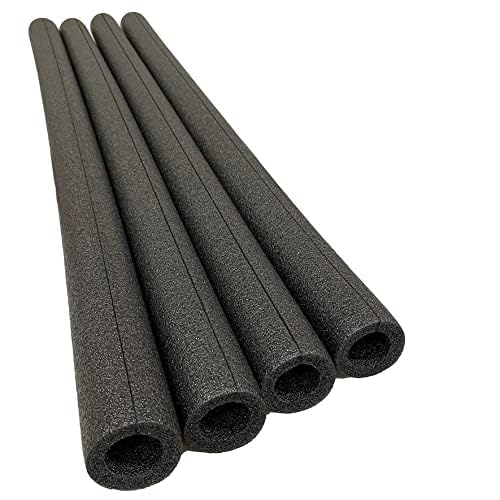
The pre-slit foam tubes that snap onto a pipe in seconds and actually stay put.
If you want to finish the job before lunch, this is your pick. Each foam cover measures 36 inches long and is pre-slit along its length, so you simply open the slit and press it onto copper, iron, or PVC pipes. The material is polyethylene foam — light, durable, and non-irritating — with a nominal inner diameter of 1 inch and a wall thickness of 3/8 inch (note: this is a 3/8-inch wall, which keeps the covers flexible and easy to fit, though thinner than a full 1-inch wall some wraps claim). The pack gives you 4 pieces, covering a total of 12 linear feet of straight pipe.
The thing that wins owners over is how easily it installs. Buyers report being “so happy this arrived NOT rolled up” — it ships flat at full length, so you are not fighting with a coiled memory. A common scene: a homeowner in an unheated basement slides these onto exposed water pipes, secures them with a few zip ties, and calls it done. The pipe stays warm between uses, and the foam holds up well enough that some owners use it alongside heat tape for extra freeze protection. At the same time, a few owners expected a full lengthwise slit and had to cut it themselves — check before you start if that matters to your project.
The gap in coverage is noticeable compared to the fiberglass wrap below: the Foam King covers 12 linear feet total, while the fiberglass roll stretches to 25 feet. But the foam pieces install cleanly on straight runs without tearing or shedding, and that ease makes it the hands-down choice for anyone with accessible basement pipes.
What Owners Love
- Arrives flat and straight — no fighting with rolled-up material
- Pre-slit design snaps onto pipes in seconds with no tools
- Durable polyethylene foam does not fray or itch like fiberglass
- 4-piece pack covers 12 feet of straight pipe at a sensible price
The Trade-Off
- Wall thickness is 3/8 inch, not a full 1 inch
- Some buyers expected a pre-cut slit but got a solid tube that needs a cut
- Only practical on straight, accessible pipe runs — not for bends
Who It Works For: Any homeowner with straight basement or crawlspace pipes who wants a fast, clean install and does not need to wrap around tight corners.
Who Should Look Elsewhere: If you need to insulate around valves, elbows, or tight spaces, the fiberglass wrap below handles those trickier routes better.
2. Home Intuition 25 Foot Foiled Back Fiberglass Pipe Insulation Wrap

The 25-foot fiberglass roll that squeezes into tight spots but tests your patience on install.
This is the wrap you reach for when your pipes run through cramped joists, around corners, or past obstacles where a rigid foam tube cannot go. The Home Intuition insulation is a continuous fiberglass strip 3 inches wide and 25 feet long, with a foil backing that acts as a vapor barrier — that foil layer stops moisture from condensing on cold water pipes and locks heat into hot water lines.
The reality on thickness, however, is where this wrap divides opinion. Owners mention the actual material measures “less than 0.5 inches, not 1 inch as advertised” when unrolled, so the insulating value is lower than a true 1-inch foam tube. Installation is also a mixed bag: you get no adhesive, so you need to tape the starting end, and the fiberglass frays easily. One owner described it as “hard to install” and said it “shreds when rolled around pipes.” The material also irritates skin — standard fiberglass itch — so a mask, gloves, and long sleeves are non-negotiable. On the positive side, it does the job for some: buyers have used it successfully with heat tape to keep pipes from freezing, and the thin, flexible profile lets it fit into very tight spaces that foam simply cannot reach.
The standout advantage over the foam covers is coverage length — 25 feet continuous vs. 12 feet total from the Foam King pack. If you have a long, complicated pipe run with multiple bends, this wrap lets you insulate the whole thing without seams. The catch is the install hassle and the disappointing actual thickness.
Where It Excels
- 25-foot continuous length covers long runs without gaps
- Foil-backed vapor barrier stops moisture and condensation on cold pipes
- Thin and flexible enough to wrap around tight corners and cramped joist bays
- Works well alongside heat tape for freeze protection
What To Know
- Actual thickness reportedly measures under 0.5 inches — much thinner than stated
- Fiberglass frays and tears easily during installation
- No adhesive included; requires tape or wire to secure each layer
- Material causes significant skin irritation; gloves and long sleeves essential
Reach For It When: You need to insulate a long, twisting pipe run in a tight crawlspace or attic where foam tubes cannot fit, and you are willing to spend extra time on a messy install.
Think Twice If: You want a fast, clean project on straight pipes — the foam covers above are far easier, and the Foam King delivers thicker, more consistent insulation without the itch.
Understanding the Specs
Wall Thickness vs. Advertised Thickness
Customers note some wraps measure under 0.5 inches in real use. Foam tubes, by contrast, hold their shape, though their wall may be specified as 3/8 inch rather than a full inch.
Fiberglass Wrap vs. Foam Tube
Fiberglass wrap is a flexible strip you spiral around the pipe — good for irregular routes, valves, and tight corners, but it frays, itches, and needs tape to secure it. Foam tube covers are rigid, pre-slit sections you snap directly onto straight pipes — they install in seconds, do not shed fibers, and hold their full thickness, but they only work on accessible straight runs. A foam tube also ships flat and straight, so it does not fight you with coil memory the way a rolled wrap does.
FAQ
Will 1-inch pipe insulation fit a 1-inch copper pipe?
Which type of pipe insulation is easier to install?
Can I use pipe insulation on hot water pipes?
Does fiberglass pipe insulation really itch?
How do I secure pipe insulation so it stays in place?
Will pipe insulation prevent my pipes from freezing?
How much pipe will a single pack of foam covers cover?
Can I use fiberglass wrap on pipes that have tight bends or valves?
Is the Home Intuition fiberglass wrap really 1 inch thick?
Does pipe insulation need a vapor barrier?
Final Thoughts: The Verdict
For most people, the best 1-inch pipe insulation is the Foam King Brand Insulating Foam Pipe Covers. It delivers a frustration-free install on straight pipes, ships flat without coil memory, and the 4-piece pack covers 12 feet of pipe with no tearing or itching. If your pipe run snakes through tight corners where foam cannot reach, grab the Home Intuition 25-Foot Fiberglass Wrap instead — just budget extra time for the messier installation and the thinner-than-expected material.
How We Picked
We do not accept paid placement. Every pick is matched to a real buyer and a real use-case; we do not hands-on test units.
Sources & Methodology
Specifications: manufacturer listings and product documentation. Review insights: verified customer reviews, as of July 2026. Pricing: not shown on this page (it changes often); check the current price via the retailer link.
As an Amazon Associate, KitchPrep earns from qualifying purchases. This does not affect which products we feature.
Related Guides
