
Specs are compiled from manufacturer listings and verified buyer reviews and can change over time — please confirm the key details on the product page before buying.
You are standing in the plumbing aisle, holding a fitting and staring at two pipes that look identical — and one of them will fail in a wall you cannot open. The 1-inch copper pipe that gets buried in a wall should be Type L, a heavier-wall tube with a true 1-1/8 inch outside diameter (the measurement across the pipe’s outer surface, which is the part every fitting grips). It slides straight into standard sweat fittings and press tools. Type L has a thicker wall than Type M, so it handles higher pressure and lasts longer in buried or concealed runs. Type M is lighter, cuts faster, and costs less for open residential work. Buy Type L when the pipe goes behind a wall, under a slab, or anywhere you cannot easily reopen. Buy Type M for a short, accessible repair where speed matters more than wall thickness.
I’m Mohammad Maruf — the founder and writer behind KitchPrep. This guide is built by comparing the manufacturers’ published specifications and the patterns across verified customer reviews, so you get each pick’s real strengths and trade-offs instead of marketing spin.
Length is the spec that trips up the most shoppers, because a listing photo never shows you the tape measure. This breakdown covers exact outside diameters, wall types, and cut lengths side by side so you can match the tube to the job before you order.
Our Picks at a Glance

How To Choose The Best 1-Inch Copper Pipe
Three mix-ups cause almost every wrong order in this category: wall type, diameter convention, and length. Get those right and the rest is simple. Check each one against the pipe in your hand or the fitting on your workbench.
Match the wall type to where the pipe lives
Type M copper is the thin-wall option — lighter to carry, easier to cut, and fine for exposed residential water lines, hydronic heating (hot-water radiator and floor loops), and gas distribution where you can reach the run later. Type L copper has the heavier wall, so it stands up to higher pressure and holds up better in concealed or buried service. If the tube goes into a slab, behind drywall, or under a driveway, the thicker wall is the safer call. Patching a stub in an open basement in an afternoon? Thin-wall Type M does the job and cuts with less effort.
Know which diameter the fitting actually reads
A “1-inch” copper pipe is a nominal name (a trade-size label), not a measurement. The number that matters at the joint is the outside diameter, because fittings are sized to the OD. On 1-inch nominal tube that OD is 1-1/8 inches (1.125 inches) — so a standard sweat coupling slides right on with no filing or forcing. On the same nominal size, the inside diameter changes with wall thickness. That is why a Type L and a Type M tube of identical nominal size have different flow characteristics. If your fitting is a SharkBite push-to-connect (a push-on fitting that grips the pipe with internal teeth), a Viega ProPress, or an ordinary sweat coupling, what it grips is that 1-1/8 inch outer surface. Measure the OD with calipers before you order and you will never get surprised.
Check the cut length before you commit
Cut lengths in this category range widely — from short 24-inch pieces for a quick stub repair up to full 60-inch and 72-inch runs you can trim on site. A long piece you cut down is almost always the safer buy, because you can shorten a tube but you cannot stretch one. Check the listing’s stated item length and item dimensions. If the two disagree, trust the number that matches a tape measure. Order one length too short and you are looking at a second order and a second wait.
Confirm the certification and the fluid list
ASTM B88 is the published specification that governs smooth copper water tube, and C12200 is the high-purity copper alloy used for potable water (drinking water), natural gas, and propane work. A pipe carrying that C12200 marking is made to a published standard rather than a private guess. Match the fluid list to your job: potable drinking water, natural gas, refrigeration, chilled water, and hydronic heating all show up in this category. Not every tube on the shelf is rated for every one of them.
Quick Comparison
| Model | Best For | Length | Outside Diameter | Wall Type | Amazon |
|---|---|---|---|---|---|
| ICS Industries 1″ Type L Hard Copper, 5 ft★ Best Overall | Concealed and gas-rated runs where wall thickness matters | 60 inches | 1.13 inches | Type L | Amazon |
| 1 Inch Type M Copper Pipe, 24 in | Fast, accessible repairs on hot and cold water lines | 24 inches | 1 inch | Type M | Amazon |
| VENTRAL Copper Pipe Type L, 24 in | Craft, sprinkler, and pool-side work needing thicker walls | 24 inches | 1 inch | Type L | Amazon |
| 1 Inch Type L Copper Pipe, 72 in | Long runs you plan to cut down on site | 72 inches | 1 inch | Type L | Amazon |
In‑Depth Reviews
1. ICS Industries – 1″ TYPE L HARD COPPER 5 FT LENGTH 1-1/8″ OD ASTM B88 C12200
Our pick — over 4.5★ from 40+ verified ratings; the strongest balance of quality and price.
Five feet of true hard-temper Type L with a full 1-1/8 inch outer diameter, cut for people who do not want a second trip.
This piece takes the top spot because a 60-inch length of heavy-wall Type L in one unbent tube is rare at this price tier. The 1.13 inch outside diameter slides into standard 1-inch sweat couplings, press jaws, and push-to-connect fittings without guessing at the joint. Five feet is a working length, not a stub — enough to replace a damaged kitchen-ceiling run in one piece, with no splicing two short sections together.
The heavier Type L wall is why this one wins for concealed runs. It is rated for potable drinking water, natural gas, and propane, plus industrial fluid transfer, all from a single length of C12200 alloy copper made to ASTM B88. Going behind drywall or into a ceiling cavity you would rather not open twice? The medium-wall tube is the one to bury. That same wall thickness is also what makes it stiff. This is hard-drawn temper, so it will not coil around a corner the way soft refrigeration tubing does. Plan your bends around elbows and couplings, because you are not bending this pipe by hand.
Buyers report the pipe arrives well packaged and genuinely new — clean, bright copper rather than shelf-worn stock. One buyer used it to replace a pipe in a church kitchen ceiling after frozen pipes burst, which is exactly the job this length was built for. The gripes are minor and practical: delivery can run slow, and the listing’s diameter label causes an occasional mis-order. Measure your fitting before you buy and neither one will slow you down.
Where this pipe earns its keep
- 60 inches of hard-temper Type L in a single unbent length, so long ceiling and wall runs need no splice
- 1-1/8 inch outside diameter mates with standard 1-inch sweat, press, and push fittings
- Approved for potable drinking water, natural gas, and propane on the same tube
- Made in the USA to ASTM B88 from C12200 copper for corrosion resistance in concealed service
What to plan around
- Hard-drawn temper will not bend by hand, so budget for elbows and couplings on corners
- Delivery can run slower than expected on this listing
- It is still a rigid pipe, not a coil, so plan how you will haul and support a 5-foot length
Reach for this if: your run is going into a ceiling, a wall cavity, or any concealed space where a leak would cost you a repair job twice over.
Look elsewhere if: you need a bend to navigate a tight corner or you only need a couple of feet for an open stub repair.
2. 1 Inch Type M Copper Pipe, Rigid Plumbing Tube for Water, HVAC and Refrigeration, ASTM B88 Certified
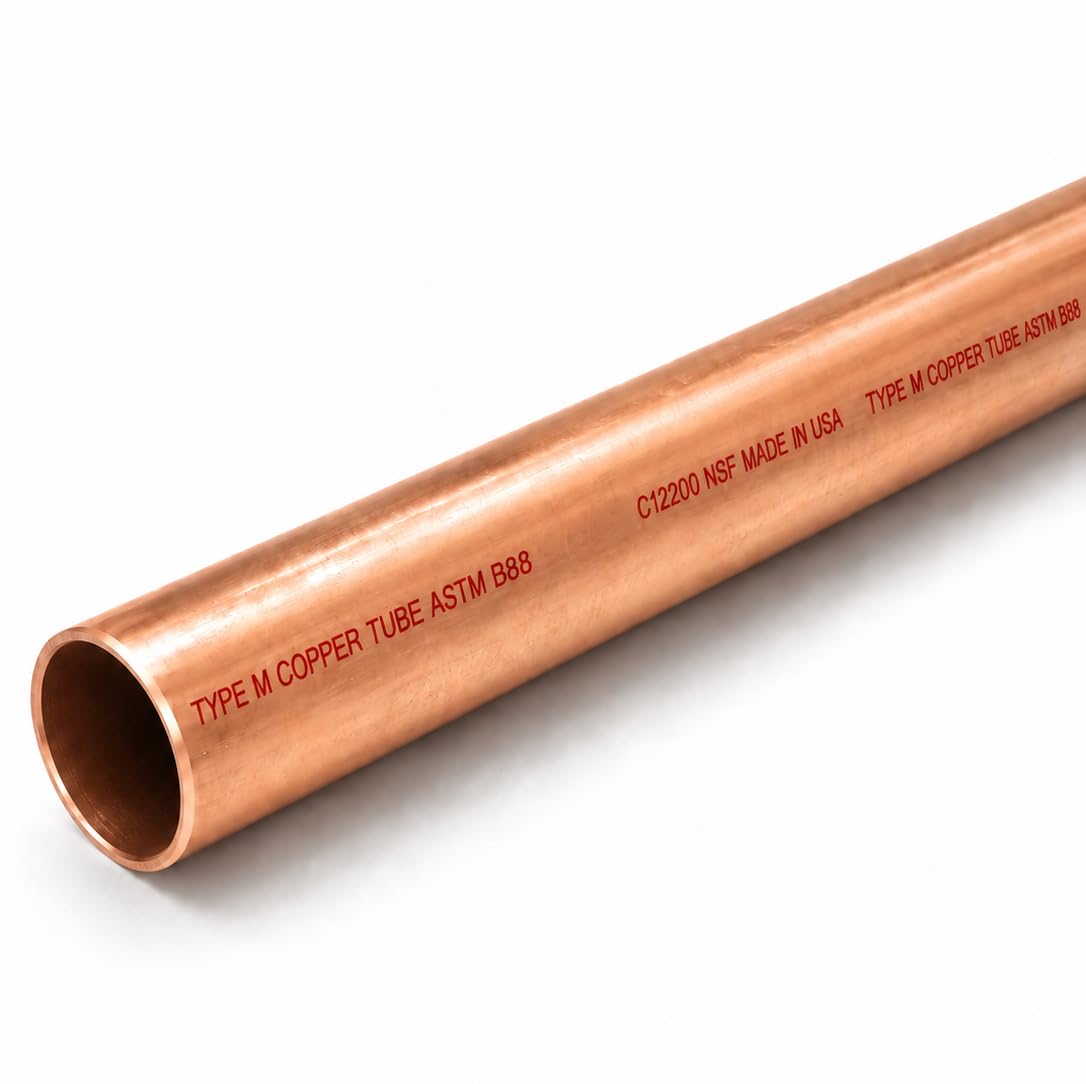
Thin-wall Type M that cuts like butter and costs the least of the four — the smart buy for a reachable repair.
At roughly 24 inches, this is the shorter of the two 24-inch options here, and it is the thinnest-walled tube on the list. Type M is standard-wall rather than heavy-wall, so it feels lighter in your hand and slices far quicker with a tubing cutter. It is rated to a maximum pressure of 750 psi (pounds per square inch, a measure of how much internal water pressure the wall can hold) and carries ASTM B88 certification. That thinner wall is a deliberate engineering choice for medium-pressure water, hydronic heating, and gas distribution — not a shortcut.
It is at its best on an exposed, reachable fixture. The buyers who are happiest with it are joining push-to-connect fittings on a hot water heater, and that job came up directly: owners mention the pipe worked to bridge two connectors when the local hardware store had nothing on the shelf in that size. It also takes ordinary solder and sweat couplings, Viega ProPress and Nibco press-fit systems, and compression or flare fittings, so you are not locked into one joining method. Each piece is precision-cut and deburred (the sharp inner and outer edges are shaved smooth), which means the end is already dressed for a clean seat inside the fitting.
The honest caveat is wall thickness: Type M is the wrong pick for a buried run or a slab. The thinner wall is exactly what makes it easy to cut, and it is also what makes it the wrong pick for a buried run or a slab. One buyer received a spotted, discolored piece loose in the box rather than the clean finish shown in the photos — worth knowing, though it is a shipping-condition note rather than a pattern across the tube itself. Expect roughly 24 inches of 1-inch nominal tube with a 1-1/8 inch OD and 1.055 inch ID, and you have ordered exactly the right thing.
The quick read: among the most affordable tubes in this category can still be the correct one — for an open, accessible repair where you just need the exact size and a clean cut end, not a wall you can bury for decades. The Type L ICS Industries tube outlasts it in any hidden run, because there is simply more copper in the wall.
Where it stops: anything concealed, buried, or high-cycle, where Type M’s thinner wall is genuinely the limiting factor.
Buy this one when: you are patching a hot water heater connection or a reachable stub and want the fastest cut with the lowest spend.
Think twice if: the tube is headed into a slab, a wall cavity, or any run you would hate to reopen.
3. VENTRAL Copper Pipe Type L 1 Inch (1.125 OD), Straight Hard Temper, 24 Inches Long

A short cut length wearing the heavy wall — Type L durability in a 24-inch piece for pools, sprinklers, and outdoor work.
Type L thickness in a two-foot piece is an unusual pairing, and that is this tube’s whole reason for being here. You get the heavier wall — the same family of thickness that resists pressure better than Type M — in a length sized for a repair or a small custom build instead of a full run. Nominal size is 1 inch with a 1.125 inch outer diameter in straight hard temper, so it holds a rigid, professional line across a short span instead of sagging.
Ventral’s own published material list is where this one separates itself from a generic tube. The maker lists irrigation, underground sprinkler systems, drainage, swimming pools and spas, industrial and outdoor use, and cold water supply lines. That is a broader job list than most 1-inch copper you will find, and it leans on the thermal conductivity and corrosion resistance copper is chosen for in the first place. Feeding a sprinkler zone or running a line near a pool? A thick wall plus a tube the maker rates for those environments is genuinely useful.
Two things to know before you order. The feedback flags that the pipe can arrive with transit damage — a long, rigid tube shipped loose in a bag is vulnerable at the ends, and a dented section costs you usable inches. On the flip side, that same feedback notes that Type L at this thickness is a step up in durability over the thinner Type M. This is a 24-inch cut length, so measure your run honestly rather than assuming you can trim around damage. If a piece does show up dented, the return path is straightforward. Order with a little length to spare and you have margin for a rough cut.
Why it stands out: Type L thickness is normally sold in 5-foot and longer cuts, so finding the heavy wall in a 24-inch piece is genuinely convenient for a short outdoor or sprinkler repair.
Order with margin: rigid tube in a soft mailer can pick up a dent at the end, so give yourself a few extra inches before you cut.
Best suited to: sprinkler zones, pool and spa side work, drainage, and outdoor or industrial lines where a thicker wall in a short length is the whole point.
Not your pick if: you need a long continuous run — at 24 inches this is a patch piece, and you will want the longer cuts for anything beyond a stub.
4. 1 Inch Type L Copper Pipe, Rigid Plumbing Tube for Water, HVAC and Refrigeration, 72 Inches
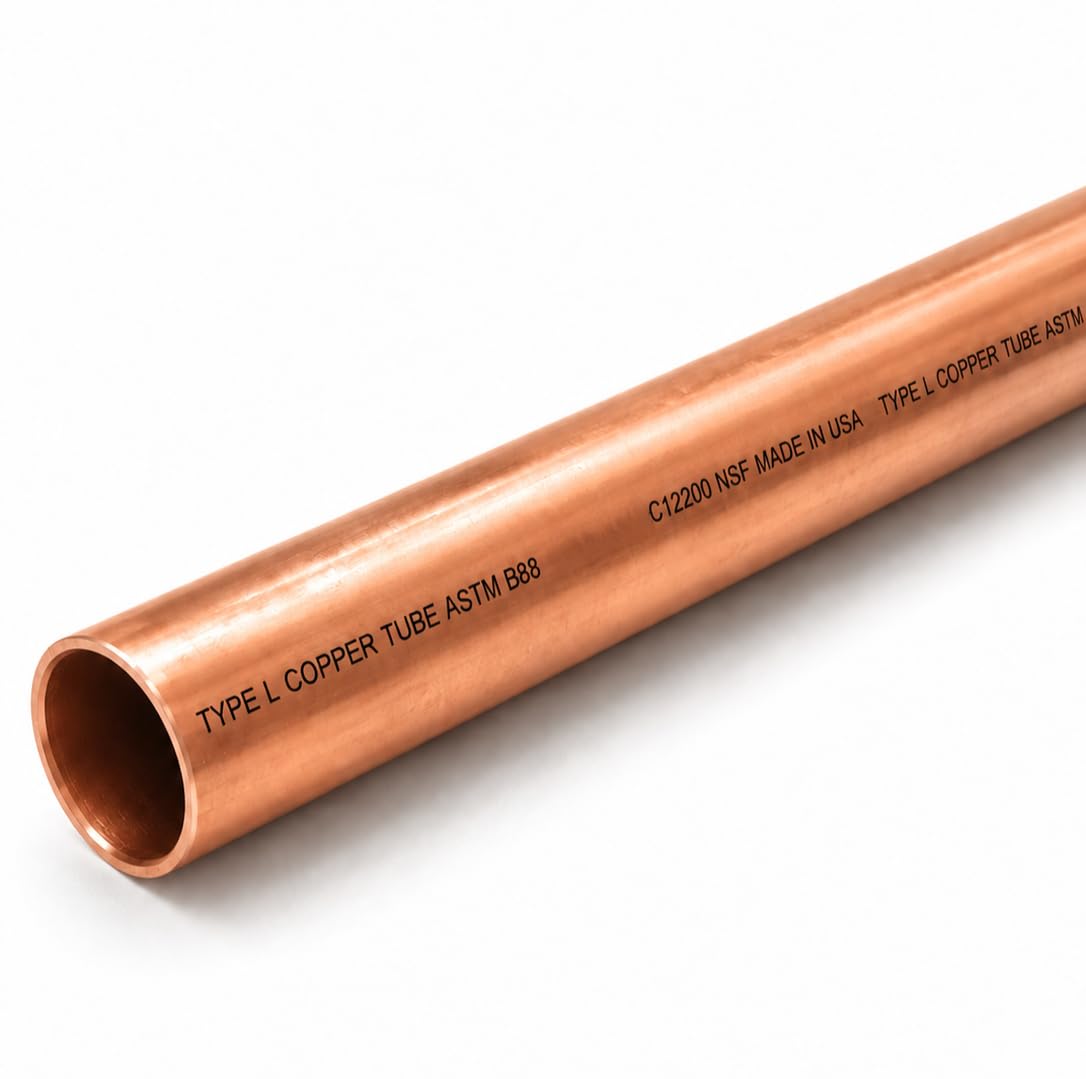
Six feet of heavy-wall Type L — three times the working length of the short cuts, ready to be measured and trimmed once.
At 72 inches this is the longest tube on the list — three times the tube of the 24-inch cuts, which means one piece can span a full wall or a long chase where the shorter options would force two couplings and two chances to leak. It weighs 4 pounds, and you feel that mass when you handle it. Heavy-wall Type L is not a floppy coil of soft tubing; it is rigid hard-temper pipe that holds its line and takes a press fitting or a sweat coupling at either end.
The spec sheet matches the length. This is heavy-wall Type L copper built to ASTM B88, rated to a maximum pressure of 750 psi, and cleared for potable water lines, refrigeration, chilled water, hydronic heating, and vacuum systems at continuous service temperatures up to 400 degrees F depending on size and pressure. It joins with common solder and sweat fittings, Viega ProPress and Nibco press systems, and compression or flare fittings, and it is listed safe for drinking water, air, natural gas, and non-corrosive liquids. For a long concealed water or HVAC run, that is exactly the spec sheet you want.
The catch is that a 72-inch rigid tube is awkward to ship, and the feedback reflects it. The recurring theme among the unhappy notes is a length mismatch on some orders from this listing — several point to a shorter tube than the dimensions they expected — so confirm the item length field reads 72 inches before you buy, and measure the pipe on arrival rather than after you cut. The pleased buyers are the ones joining push-to-connect fittings and extending stubs on a hot water coil, which is precisely the job a rigid 6-foot piece of heavy-wall copper handles well. When the length matches, the tube earns the praise it gets.
Where the value lives: 72 inches of heavy-wall Type L in one piece means fewer couplings and fewer potential leak points across a long run, and you cut to fit on site instead of ordering two shorter tubes.
Verify on arrival: the most common complaint about this listing is length, so keep a tape measure handy before you make your first cut and you avoid scrapping the piece.
Made for: a full-wall or long-chase run in Type L where a single 6-foot piece beats splicing shorter tubes together.
skip it if: you need only a stub repair — you will pay for length you are going to cut off and throw away.
Understanding the Specs
Type L vs Type M wall thickness
Type L is the medium-wall tube and Type M is the thin-wall tube — the only practical difference is how much copper sits between the water and the outside air. That thicker wall on Type L handles higher pressure and holds up longer in concealed or buried service, which is why plumbers reach for it behind drywall and under slabs. Type M is lighter and easier to cut, and for an exposed, reachable residential water line it does the job with less effort. Both are legal potable-water (drinking-water) tube and both carry the same nominal 1-inch name. Rule of thumb: the harder the run is to reopen, the more wall thickness you want.
Nominal size, outside diameter, and inside diameter
A 1-inch copper pipe is not 1 inch across — that number is a nominal name (a trade-size label) inherited from old sizing conventions, not a measurement you can check with a tape. What matters is the outside diameter, because that is the surface every fitting grips. On a 1-inch nominal tube the OD is 1-1/8 inches, or 1.125 inches. The inside diameter is the one that changes with wall type: thicker walls mean a smaller bore and slightly less flow at the same nominal size. When you order fittings or a press jaw, match it to the outside diameter, not the nominal number on the box.
FAQ
Will a 1-inch copper pipe fit standard 1-inch fittings?
Is Type L better than Type M for plumbing?
Can I bend 1-inch copper pipe by hand?
Do I need Type L or Type M for a natural gas line?
What does the 1.125 OD actually measure?
How long does copper pipe last in a wall?
Can I use this copper pipe for drinking water?
Why did my copper pipe arrive dented?
What is the difference between 1 inch and 1-1/8 inch copper pipe?
Can I join 1-inch copper pipe without soldering?
Final Thoughts: The Verdict
For most jobs, the 1-inch copper pipe that gets buried in a wall or run through a ceiling is the ICS Industries 1″ Type L Hard Copper, because its C12200 alloy construction to ASTM B88 and its medium-wall Type L rating are built for the runs you cannot easily reopen. Patching an accessible hot water heater connection and want the fastest cut for the least spend? The 1 Inch Type M Copper Pipe is the practical pick — just keep it out of slabs and concealed chases. For a long continuous run where you would rather cut once on site than splice two short tubes, the 72-inch Type L tube gives you the length and the heavier wall together, and the Type L VENTRAL 24-inch cut covers the short outdoor and sprinkler repairs that need thick metal in a small piece. Match the wall type to where the pipe lives, confirm the 1-1/8 inch outside diameter against your fitting, and order a little extra length — that trio of checks prevents almost every wrong order in this category, and the demand behind these tubes is steady enough that stock moves quickly, so it pays to settle on your spec before you shop.
How We Picked
We do not accept paid placement. Every pick is matched to a real buyer and a real use-case; we do not hands-on test units.
Sources & Methodology
Specifications: manufacturer listings and product documentation. Review insights: verified customer reviews, as of September 2026. Pricing: not shown on this page (it changes often); check the current price via the retailer link.
As an Amazon Associate, KitchPrep earns from qualifying purchases. This does not affect which products we feature.
Related Guides
