
Specs are compiled from manufacturer listings and verified buyer reviews and can change over time — please confirm the key details on the product page before buying.
If your caulk keeps splitting, peeling, or pulling away from the same driveway crack or window gap, the problem usually is not the caulk — it is the empty space behind it. A 1-inch backer rod is a round foam or rubber rope that you press into a gap before you seal it, so the sealant sits at the right depth instead of sinking into a bottomless void. Seat the rod correctly and the repair survives freeze-and-thaw cycles instead of splitting by spring.
I’m Mohammad Maruf — the founder and writer behind KitchPrep. This guide is built by comparing the manufacturers’ published specifications and the patterns across verified customer reviews, so you get each pick’s real strengths and trade-offs instead of marketing spin.
If you’re sealing a sawn concrete joint, a wide window gap, or a rotted expansion-board channel, you need a rod that fills the gap without sagging. These nine rolls all measure a true 1-inch diameter, the size that fits those jobs. The right 1-inch backer rod depends on three things: material, footage on the roll, and how firmly the rod must hold its shape. Match those to your gap depth and cutting patience, and the rod seats flat instead of curling out.
Our Picks at a Glance
How To Choose The Best 1-Inch Backer Rod
A backer rod is a supporting rope that sits inside a joint so your sealant has something to grab and a controlled depth to cure at. Buy the wrong one and you either fight it into the gap or watch it float up through fresh caulk.
Diameter and joint width
The rule of thumb is a rod slightly wider than the gap. A 1-inch rod is the workhorse for sawn concrete control joints, driveway expansion strips, and window or door frames where previous caulk tore loose. If your gap is noticeably narrower than an inch, a 1-inch rod will not compress into it cleanly — measure first, because a rod that curls back out is the single most common complaint across these listings.
Foam versus EPDM rubber
Closed-cell polyethylene or polyester foam is the light, squishy option that presses into shape easily and costs less per foot. EPDM rubber — a synthetic rubber that shrugs off weather — is denser and heavier, which holds its position better in deep joints but resists compression. Neither wins outright; the choice tracks how much your joint moves and how hard you want to work to seat the rod.
How many feet your job needs
Do the rough math before ordering. Walk the driveway cracks, measure each window perimeter, and add it up — then buy a roll comfortably longer than the total, because you will lose a few inches to trimming and mis-cuts. A 50-foot roll covers a typical driveway expansion job with room to spare, while a 16-foot length suits a couple of windows or a single threshold repair.
Quick Comparison
| Model | Best For | Length | Material | Diameter | Amazon |
|---|---|---|---|---|---|
| Sashco 31002 Pre-Caulking Filler Rope★ Best Overall | Driveway and foundation cracks | 50 ft | Closed-cell poly foam | 1 in | Amazon |
| BHUCUTU Foam Backer RodBest Foam Value | Wide cracks and expansion joints | 33 ft | Foam | 1 in | Amazon |
| MYFAMIREA Backer RodBest Rubber Grip | Garage doors and concrete saw cuts | 20 ft | EPDM rubber | 1 in | Amazon |
| PATIKIL Backer Rod | Trim gaps and small interior cracks | 32.8 ft | Expandable polyethylene | 1 in | Amazon |
| Storystore Backer Rod | Countertops and door thresholds | 16.4 ft | EPDM rubber | 1 in | Amazon |
| ToLanbbt 59FT Backer Rod | Long concrete runs | 59 ft | Polyester foam | 1 in | Amazon |
| DGSL EPDM Backer Rod | Sawn slab cracks and walls | 16.4 ft | EPDM rubber | 1 in | Amazon |
| MotiMind Foam Backer Rod | Driveway joints and floorboard gaps | 50 ft | Foam | 1 in | Amazon |
| Gordon Glass Closed Cell Backer Rod | Large construction and paving joints | 100 ft | Polyethylene foam | 1 in | Amazon |
In-Depth Reviews
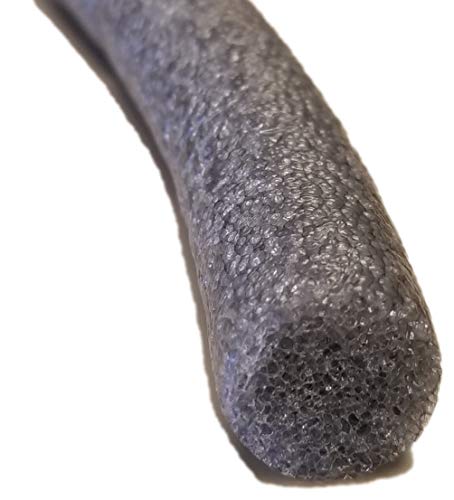
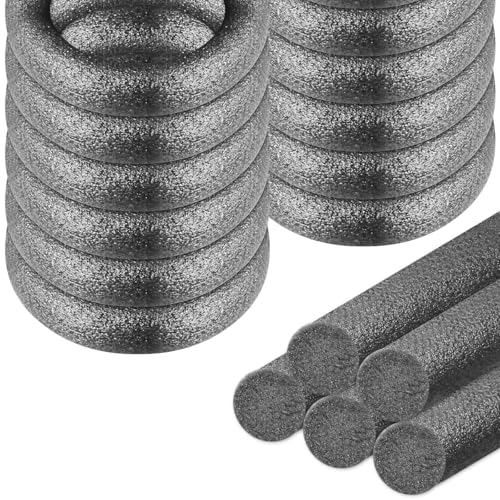
1. Sashco 31002 Pre-Caulking Filler Rope Backer Rod Roll, 50′ Length x 1″ Width, Grey
Our pick — over 4.5★ from 350+ verified ratings; the strongest balance of quality and price.
Sashco’s grey rope has the footage to fix a whole driveway in one afternoon.
For anyone staring at a driveway full of cracked expansion strips, this is the roll that ends the job in a single sitting. Fifty feet of closed-cell poly foam — foam with sealed bubbles that keep water out — is enough for a typical driveway plus a foundation crack or two. The 6.4-ounce roll unspools without tangling, and Sashco rates it to comply with ASTM C 1330, Type C, the standard covering round backer rods used in joint sealing.
Here’s why it works: caulk sticks to the sides of the joint but not to the rope, so the sealant stretches with the concrete instead of tearing away when the slab moves. That’s why driveway repairs done with this rod hold up where a straight caulk fill splits. Owners describe the install as genuinely fast — one Sashco buyer reported replacing 30-40 ft in under 30 min. Most people find the 1-inch diameter seats with a light press and stays put.
What wins people over most is simple function — it does the filling job with no fuss, and it doubles as insulation around newly set windows and doors. The trade-off to know: it tops out at 1 inch of gap fill, so wider openings need a different approach. And the rating does have one soft spot — at least one buyer ordered grey and received black; the rod hides under caulk either way, but check what shows up.
Where it earns its keep
- 50 ft covers a full driveway expansion job with leftovers
- Closed-cell poly foam that water cannot soak through
- Caulk grips the joint walls, not the rope, so seals flex instead of tear
- Light at 6.4 ounces and easy to unspool and press into place
Where it has limits
- Caps out at 1 inch of gap fill — wider openings need a different solution
- Grey is standard, but a mixed-up color has shown up in orders
Go with this if: you’re repairing driveway, sidewalk, or foundation joints and want enough length to finish in one pass.
Consider the alternatives if: you’d rather have a denser rubber rod for a deep single joint, or you only need a few feet.
2. Foam Backer Rod for Gaps Concrete Crack Filler Joints (1 Inch X 33 Feet)
Thirty-three feet of soft grey rope that pushes into wide cracks and garage door gaps.
If your gaps are irregular — a fat driveway crack here, a loose garage-door seal there — this BHUCUTU roll is the forgiving foam you want. It is 33 feet of round grey foam at 1-inch diameter, soft enough to compress but firm enough to hold a seal once caulk covers it. The material is water resistant, so it blocks moisture from working its way down into the joint before you seal.
Installation is about as simple as it gets: cut to length with scissors, twist two strands together for an extra-large opening, and press it in. Cold-weather buyers in the Northeast use it to block drafty air around sliding windows, cut it to fit, and re-use it the next winter. It also handles lighter-duty jobs — one buyer set it between floorboards to kill a draft, and it has a following among crafters who use it for ring holders and earring organizers.
The honest caveat is how the foam behaves under compression. It rebounds slowly — after you squeeze it into a tight spot it can leave a temporary dent — and a few buyers found some sections smashed in spots during shipping. That slow bounce-back is the reason it read as less than five stars for one garage-door user. It still gets the filling job done affordably; just expect the foam to feel softer and slower to spring back than a rubber rod.
The soft-foam advantage: It seats into odd, uneven cracks where a stiff rubber rod fights you, and the 33-foot length handles several small jobs.
What to watch: Dress it gently — the foam can arrive compressed and takes its time returning to full round.
Reach for it when: you have a mix of wide, messy gaps and want a roll that bends and cuts to anything.
Look elsewhere if: you need a dense, stiff rod that springs back instantly inside a tight joint.
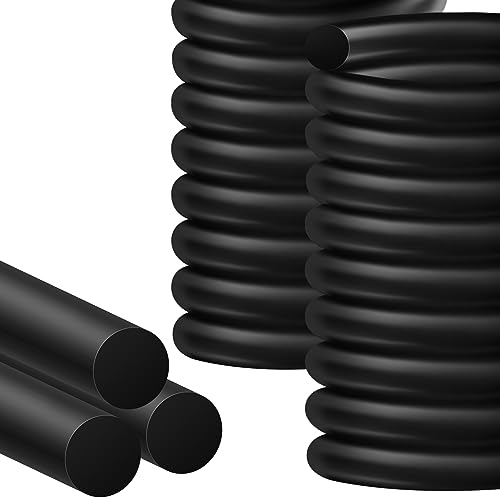
3. MYFAMIREA 20FT Backer Rod 1 Inch EPDM Rubber Caulk Saver Weather Strip Seal
A denser black EPDM rope that holds its round against putty knives and driveway traffic.
This MYFAMIREA roll is for the buyer who wants something sturdier than soft foam. It is 20 feet of closed-cell EPDM rubber — a weather-resistant synthetic rubber — at a 1-inch diameter, and the maker lists it as waterproof with a closed, round, low-density cell structure that will not absorb water. The black surface resists dirt, so it stays looking tidy under a clear or dark caulk line.
Where the foam rods bend freely, this one brings real density. It has enough body that one user reports it takes “a pretty good tug” to break it, which means it will not shred when you shove it into a saw-cut joint. Owners run it through concrete control-joint saw cuts before caulking and note it holds up under poking and tugging with a putty knife. Others use it between floorboards to kill a draft.
Two things to know: this rod is stiffer than foam, so it can resist compression and demand some patience to thread into place. That extra firmness is exactly why it survived the tug test, so it is a trade rather than a flaw. Then there is the length — at 20 feet, it is far shorter than Sashco’s 50-foot roll, so a long driveway will need two rolls while the 50-foot options cover the same run in one.
Why it holds up: The dense EPDM resists tearing, survives putty-knife poking, and shrugs off water and temperature swings.
Set your expectations: Stiffer than foam means you push harder to seat it, and 20 feet goes fast on long jobs.
Best fit for: deep concrete saw cuts and joints where you want a rod that stands up to hard pokes and weather.
Think twice if: you want a soft, fast-seating foam or you have a long run that will eat up 20 feet quickly.
4. PATIKIL 1 Inch x 32.8 Feet Backer Rod for Gaps and Joints, White

A featherlight white rope for trimming out cabinet gaps and small indoor cracks.
When a fat bead of caulk keeps splitting above your kitchen cabinets, the fix is often this simple white rod. It is made from expandable polyethylene — a springy plastic foam — and runs 32.8 feet at a 1-inch outer diameter. It is flexible, light, and easy to trim, so it fills the gap behind a backsplash or window frame and gives the new caulk a firm base to sit on.
Interior work is where owners find it shines. It fills the gap between a ceiling and kitchen cabinet trim far better than a bare caulk line, because the gap is too wide for caulk alone. One user even taped it along window edges to help seal tiny openings and keep bugs out — it stayed in place and left no residue. It works on metal, plastic, rubber, wood, and concrete, so it travels across jobs around the house.
The catch is the foam itself. It is soft and springy, so on an outdoor gap with heavy foot or vehicle traffic it does not hold its round the way a dense rubber rod does. For an indoor trim gap or a sealed window, though, the balance is right. A couple of buyers report it arrives thinner than expected once sliced open, so measure your gap before you cut.
Quiet defender play: It slips into ceiling and trim gaps and window edges, holds a caulk base, and leaves no mess behind.
Choose it for: indoor trim gaps, backsplashes, and window frames where a thin, light rod trims and seats easily.
Pass if: you need a stiff rod for a high-traffic driveway joint or a gap narrower than a true inch.
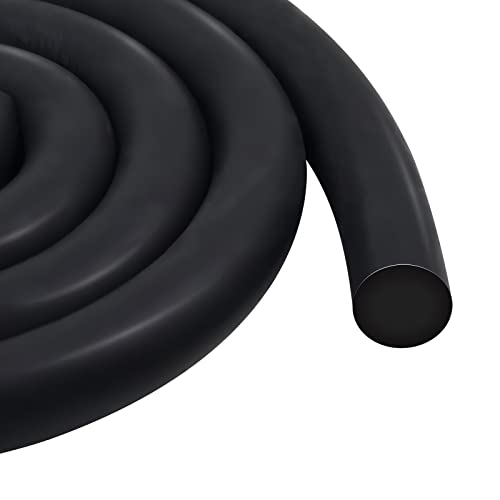
5. Storystore Backer Rod, Foam Backer Rod Caulk Saver EPDM Rubber 1″ x 16.4′
A dense, rubbery 16-foot rod sized for countertops and door thresholds.
Small, tough repairs call for a roll you can store in a drawer, and this Storystore rod is that. It is 16.4 feet of weather-resistant EPDM rubber at a 1-inch diameter, which the maker rates as longer-lasting than plastic or foam. It comes in several widths, so you can match the rod to the gap rather than forcing one size everywhere.
Owners describe a rod with a genuinely solid hand feel — dense, rubbery, and squishy rather than hollow foam. That density is what makes it good for a granite countertop meeting its backsplash trim, where it reduces the depth so the silicone sits at a workable thickness. One user praised exactly that: “Worked really well to reduce depth between our granite countertop and back trim.” The same firmness seals a leaky door threshold against cold air.
The trade-off is that firmness again. A few buyers found it too rigid to compress into the narrow gap they had in mind, and a couple thought it thinner than pictured. The roll is also the shortest here at 16.4 feet — plenty for a couple of spot jobs, but not a whole driveway. Pick it for tight, near-the-house repairs, not for long concrete runs.
Good to grab for
- Dense, rubbery feel that seats firmly and stays put
- Reduces caulk depth between countertops and trim
- Seals door thresholds against drafts and cold air
- Short enough to store easily for spot repairs
Worth knowing first
- So rigid it can be hard to compress into narrower gaps
- 16.4 ft is the shortest roll here — a long run will use it up
Made for: countertop, threshold, and small indoor sealing jobs where a solid, non-foamy rod seals cleanly.
Not your roll if: you need lots of footage or a soft foam that squishes into a tight, uneven gap.
6. 59FT Length Backer Rod Foam Caulk Saver for Concrete Filling, Joints and Gaps
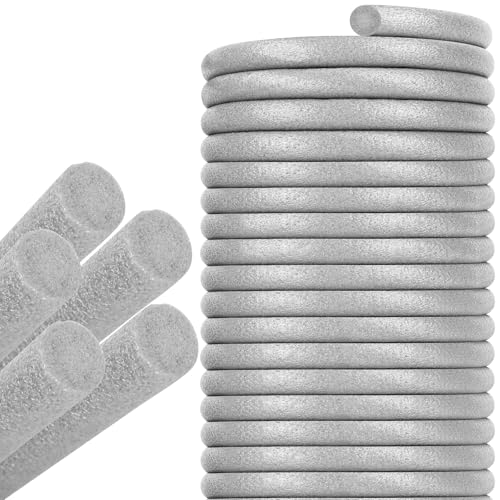
Fifty-nine feet of grey foam that stretches a single roll across a long sidewalk job.
When a job runs long, buy more rope — that is the case for this ToLanbbt roll. It is 59 feet of grey polyester foam at a 1-inch diameter, lighter than a dense rubber rod at 8 ounces. The foam uses a closed-hole design, meaning the bubbles are sealed so rainwater cannot soak through, and the cylindrical rope bends and twists into whatever shape the crack demands.
Owners put that length to work on real concrete. It fills the torn expansion strips in sidewalks and driveways ahead of a crack filler, so you are not buying two rolls for one run. One buyer tapped it for a floating floor installation — pressing it into the gap between laminate and the wall instead of installing round moulding — and had enough left over. The closed-cell foam also blocks a surprising amount of sound and thermal leak once it is in the crack.
Other than its role in repair, buyers find it an easy, economical fill. Soft foam like this does not resist heavy compression as well as rubber, so in a tight joint you may need to seat it carefully, and one user found it simply larger than expected in hand. Neither is a problem as long as you match the rod to a true 1-inch gap.
Why the length matters: At 59 feet it handles a whole sidewalk or driveway run, and the closed-cell foam blocks water, drafts, and noise.
One honest note: Soft foam yields under hand pressure, so seat it firmly in the joint rather than trusting it to fight back.
Most useful when: you have a long run of concrete joints or a big floor gap and want one roll to cover it all.
Skip if: your gaps need the stiffness of rubber, not the soft give of foam.
7. DGSL EPDM Backer Rod, 1″ x 16.4′ Caulk Backer Rod Joint Filler
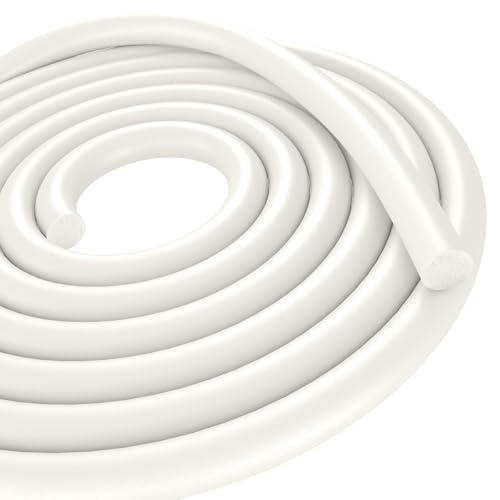
A white EPDM rope built to push into fresh saw cuts without tearing.
If your garage slab was cut into sections and the sawn lines need filling before you seal them, this DGSL rod is the one to reach for. It is 16.4 feet of EPDM rubber at a 1-inch diameter, white, and flexible enough to trim with scissors or a knife. The rubber is strong enough to shove into a tight cut without shredding, which is exactly the behavior a sawn joint demands.
Slab work is its specialty. Owners fill sawn breaks in a new garage slab so sealant has a backing, and they round out the job with enough body that it holds the joint while caulk goes down. It also turns its hand to indoor work — one buyer used it to fill gaps on a rock fireplace and TV wall before caulking the surface flat. On an older house it hides cold-air leaks once applied, and it helps keep bugs out of the same cracks.
The short 16.4-foot length is the biggest thing to plan around. It is a fine match for a single slab or a few wall cracks, but a long driveway will leave you short. A couple of buyers also found it only matched a fair price rather than a great one, though the quality held up. Treat it as the precise, dense rod for tight joints, not the bulk roll for a whole property.
Tough enough for slab work: It pushes into saw cuts without tearing and holds the joint while you seal it.
Size your job first: 16.4 feet suits one slab or several small cracks — not a full driveway.
Ideal for: filling sawn slab cracks, wall gaps, and fireplace or trim joints with a dense, easy-cutting rod.
Look past it if: you need long footage for a driveway run, where a 50-foot roll makes more sense.
8. MotiMind Foam Backer Rod for Gap, 1 Inch X 50 ft, Gray, 1 Roll
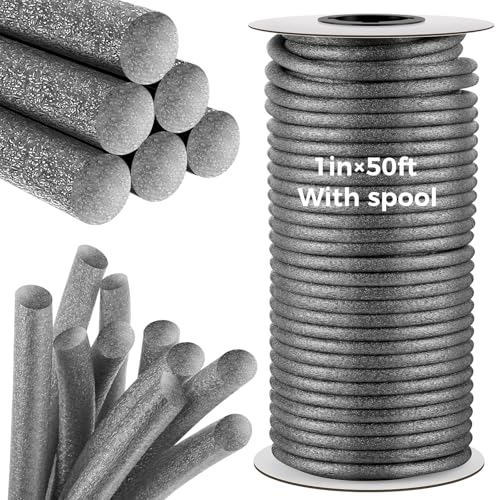
A 50-foot grey roll on a spool that unspools without the tangle fight.
The detail that separates this MotiMind roll from the pack is the spool. Instead of loose coil you have to wrestle straight, the 50 feet of grey foam arrives wound so you can pull it off as you go. The foam rod is a true 1-inch diameter and 50 feet long — enough for a long driveway or batch of window and door joints — and the foam is flexible so it fits almost any gap shape.
What owners notice first is the foam itself: dense, closed-cell material that feels more solid than cheap open foam. That density is why it holds its round in a joint and blocks both water and air once sealed. The 50-foot length lines up nicely with driveway expansion joints and the manufactured gaps between floorboards, where the flexibility lets it press into place. A single roll goes a long way.
One quirk to expect: packaging is tight to survive shipping, so some sections arrive slightly flattened and out of round until they relax. A buyer worked it out by turning each section to seat snugly, and the foam sprang back once in place. Since the compressed foam will not look perfectly circular straight out of the wrapper, give flat spots a little time to round out before you judge the fit.
what separates it
- Spool keeps the 50-foot roll tidy and easy to unwind
- Dense, closed-cell foam that seals against water and air
- 50 ft covers a driveway expansion job or a full floor gap
- Flexible enough to press into uneven, manufactured gaps
The fine print
- Some sections ship slightly flattened and need turning to seat
Pick it when: you want a long, tidy roll with a spool and dense foam that holds a water-tight round.
Look elsewhere if: you need a stiff rubber rod for deep joints, since this is soft foam.
9. Gordon Glass 1″ Closed Cell Backer Rod – 100 ft Roll

A hundred feet of non-absorbent foam for buyers running joints by the yard.
For construction and paving work, a 100-foot roll makes more sense than juggling three smaller ones. This Gordon Glass rod is 1-inch closed-cell polyethylene foam — a non-absorbent material that will not soak up water — and it is listed as nonimpregnated, nonstaining, and nonbleeding, so it will not leave marks on adjacent concrete. It is also inert and does not adhere to sealants, which lets the caulk move independently over it.
That combination is exactly what serious joint work calls for. The foam resists water, the material stays chemically neutral, and 100 feet handles large construction or paving joints in a single order. At 3 pounds it is heavier than the short rolls, but that weight reflects the footage rather than any weakness in the material. Owners on concrete jobs use it to fill large gaps before sealing.
Two things trip up the unwary. First, the roll can arrive in a couple of loose pieces rather than one continuous loop — one reviewer noted the length still worked out once measured, and it measured over the ordered footage thanks to stretch. Second, at least one order came in noticeably shorter than advertised, though the seller made it right quickly. Check the length when it lands, then get sealing.
Built for real joint work: Non-absorbent, nonstaining polyethylene that will not bleed onto concrete and does not stick to sealant.
Measure on arrival: Rolls can ship in pieces or short, so unspool and check the footage before you start.
Right for: construction and paving crews who need 100 feet of clean, non-staining rod in one roll.
Overkill if: you are sealing a single window or a short driveway crack — a small roll covers that.
Understanding the Specs
Closed-cell versus open-cell foam
Closed cell means the air pockets inside the foam are sealed off, so water and cold air cannot travel through the rope. That matters in a driveway or window joint, where an open-cell foam could act like a sponge. The Sashco, ToLanbbt, MotiMind, and Gordon Glass rolls all use closed-cell foam, which is why they are listed as water resistant or non-absorbent.
EPDM rubber versus foam rope
EPDM is a synthetic rubber, and it behaves very differently from foam. Foam compresses easily and is light to handle; EPDM is denser, heavier, and holds its form so it will not float up through fresh caulk. You want the rubber when a joint is deep or sees movement, and the foam when you want a soft rope that seats quickly with light pressure.
Width, diameter, and the gap
A 1-inch backer rod is meant for joints roughly an inch wide — the kind left by a concrete saw cut or a wide trim gap. The general advice is to use a rod a touch larger than the joint so it grips the sides, but only a touch, because a rod that is too fat will curl back out instead of compressing in. Every roll here measures a true 1-inch diameter.
Length and coverage planning
Footage is where these rolls differ most, from 16.4 feet on the compact rolls to 59 and 100 feet on the long ones. A driveway expansion run can easily eat 40 to 50 feet across several strips, so a short roll may leave you ordering again mid-job. Add up your gaps before you pick, and size up rather than down.
FAQ
What size backer rod do I need for a 1-inch gap?
Is foam or EPDM rubber backer rod better for a driveway?
Can I use backer rod without caulk on top?
How many feet of backer rod does a driveway need?
How deep should backer rod sit below the surface?
Does backer rod stop water getting into a crack?
Why does my backer rod keep curling out of the crack?
Can I cut backer rod to size?
Does 1-inch backer rod work for window and door gaps?
How long does backer rod last once installed?
Final Thoughts: The Verdict
For most driveway and foundation repairs, the 1-inch backer rod to buy is the Sashco 31002 Pre-Caulking Filler Rope. Its 50 feet of closed-cell foam covers a full run in one pass, and its caulk-friendly design is what keeps seals from tearing. If you need a denser rod for a deep saw cut, the MYFAMIREA EPDM roll is the tougher choice. And when the job runs long, the 59-foot ToLanbbt foam rod and the 100-foot Gordon Glass roll are the ones that will not leave you short mid-repair. Whichever you pick, measuring your gaps before you buy is the step that decides whether the rod seats flat or fights you the whole way.
How We Picked
We do not accept paid placement. Every pick is matched to a real buyer and a real use-case; we do not hands-on test units.
Sources & Methodology
Specifications: manufacturer listings and product documentation. Review insights: verified customer reviews, as of September 2026. Pricing: not shown on this page (it changes often); check the current price via the retailer link.
As an Amazon Associate, KitchPrep earns from qualifying purchases. This does not affect which products we feature.
Related Guides
