
Selecting a 1-group commercial espresso machine for your home kitchen or small service counter is a significant decision that balances performance, durability, and daily workflow. Getting it right means cafe-quality espresso at your fingertips, while a misstep can lead to frustration and mediocre coffee.
I’m Mohammad Maruf — the founder and writer behind KitchPrep. My process involves deep market research and analyzing culinary specifications, comparing engineering benchmarks and user feedback to cut through marketing claims and highlight what truly matters for your brewing success.
This guide walks you through the critical hardware distinctions and operational nuances. To ensure you invest in a machine that meets your daily demands without compromise, let’s break down the critical elements that define a best 1 group commercial espresso machine.
How To Choose The Best 1 Group Commercial Espresso Machine
The term “commercial” often refers to build quality and component durability rather than just volume. For home or low-volume use, a machine with commercial-grade parts offers reliability and better espresso. Focus on these core aspects.
Boiler Type: Single vs. Dual
A single boiler does both brewing and steaming, requiring a wait between functions. It’s cost-effective but slower for milk drinks. A dual boiler or heat exchange system allows simultaneous brewing and steaming, crucial for efficiency if you make multiple drinks back-to-back. Most home users can manage with a single boiler, but enthusiasts appreciate the dual system’s workflow.
Pump Pressure and Stability
Look for a machine with a vibratory or rotary pump that maintains 9 bars of pressure, the industry standard for proper extraction. Many machines advertise 15-20 bars, but a quality machine will regulate this down. Consistency is key—a pressure gauge or pre-infusion feature helps achieve even extraction without channeling.
Portafilter Size and Material
A 58mm commercial-size portafilter is the professional standard, offering better water distribution and wider accessory compatibility. Machines with smaller, 54mm or 51mm portafilters can still make great espresso but may have a steeper learning curve. Stainless steel or brass construction resists wear and retains heat well.
Temperature Control (PID)
A PID controller digitally manages water temperature to within a degree or two. This prevents sour or bitter shots caused by temperature swings. It’s a premium feature that brings commercial-level precision to your kitchen and is worth the investment for consistency.
Steam Wand Power and Design
A powerful steam wand with a multi-hole tip creates dry, microfoam milk quickly. A commercial-style wand with a ball joint offers precise angling. Consider if you want manual control or an automated frothing system for hands-off convenience.
Quick Comparison
On smaller screens, swipe sideways to see the full table.
| Model | Type | Best For | Key Feature | Amazon |
|---|---|---|---|---|
| Gaggia Classic Evo Pro | Semi-Auto | Espresso purists & durability | Commercial 58mm portafilter | Amazon |
| Breville Barista Express | Semi-Auto | All-in-one convenience | Integrated conical burr grinder | Amazon |
| Breville Barista Touch Impress | Fully Auto | Guided barista experience | Step-by-step guidance with Auto MilQ | Amazon |
| Rancilio Silvia | Semi-Auto | Commercial heritage & build | Commercial-grade components & 3-way solenoid | Amazon |
| Breville Barista Pro | Semi-Auto | Fast, precise espresso | ThermoJet heating in 3 seconds & LCD display | Amazon |
| Ninja Luxe Café Premier | Fully Auto | Multi-drink households | Built-in grinder, frother, & 3-in-1 brewing | Amazon |
| Breville Barista Touch | Fully Auto | Touchscreen convenience | Auto microfoam milk texturing | Amazon |
| Breville Barista Express Impress | Fully Auto | Simplified manual espresso | Impress puck system with auto dosing | Amazon |
| Gevi Dual Boiler | Semi-Auto | Home baristas | Dual boiler with PID & NTC control | Amazon |
| Breville Bambino | Semi-Auto | Quick morning espresso | Ultra-fast ThermoJet heating system | Amazon |
| Gevi Commercial Espresso Maker | Semi-Auto | Home beginners | 20-bar pump with built-in pressure gauge | Amazon |
In‑Depth Reviews
1. Gaggia Classic Evo Pro

The Gaggia Classic Evo Pro represents a time-tested design, offering professional-grade components in a compact frame ideal for dedicated home use. Its solid steel housing and Italian engineering provide a foundation for excellent espresso that can last for years with proper care.
This machine features a commercial 58mm portafilter, a three-way solenoid valve for dry pucks, and a 9-bar pump for authentic extraction. User feedback highlights its durability and the ability to mod it for even better performance, like adjusting the pressure. The steam wand is powerful but requires practice to master, and the single boiler means waiting between brewing and steaming.
For those seeking a no-nonsense, serviceable machine that teaches the fundamentals of espresso, the Gaggia is a standout choice. It forgives little in technique but rewards mastery with exceptional shots.
Why it’s great
- Built with commercial-grade, repairable components.
- Standard 58mm portafilter allows for wide accessory compatibility.
- Produces dense, flavorful crema with proper technique.
Good to know
- Single boiler operation requires a pause between brewing and steaming.
- Has a learning curve for temperature management and steaming.
- Entry-level tamper and accessories may need upgrading.
2. Breville Barista Express
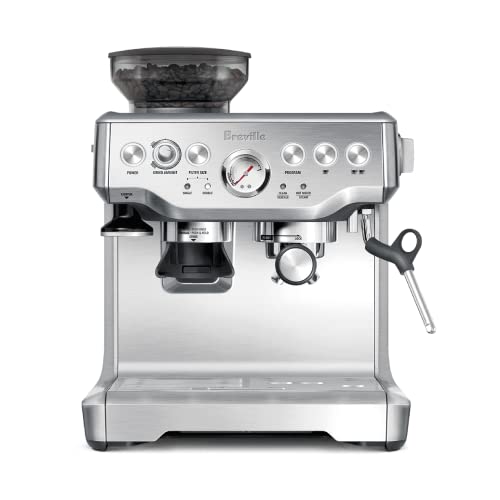
The Breville Barista
The Breville Barista Express combines a capable espresso machine with a built-in conical burr grinder, streamlining the workflow from bean to cup. It’s designed for the home enthusiast who wants control without the clutter of separate appliances, featuring PID temperature control and a pressure gauge for visual feedback.
Users appreciate the all-in-one convenience, noting that it produces consistent, cafe-quality espresso once the grind size and dose are dialed in. The steam wand is powerful enough for good microfoam, though it requires manual skill. Some note the learning curve to master the grinder settings and tamping pressure, but the integrated system reduces guesswork compared to separate components.
This machine is a solid investment for those committed to home espresso, offering a balanced set of features that bridge the gap between appliance and prosumer equipment. It saves counter space and simplifies the process without sacrificing quality.
Why it’s great
- Integrated grinder eliminates the need for a separate, costly appliance.
- PID digital temperature control ensures extraction consistency.
- Pressure gauge provides immediate feedback for dialing in shots.
Good to know
- Grinder has a limited range and may struggle with very light or dark roasts.
- Single boiler design means alternating between brewing and steaming.
- Non-standard 54mm portafilter limits aftermarket basket options.
3. Breville Barista Touch Impress

The Breville Barista Touch Impress represents the pinnacle of user-guided automation, designed to deliver professional results with minimal prior knowledge. Its touchscreen interface and Impress Puck System handle dosing and tamping, while the Auto MilQ technology tailors frothing to your milk type.
Feedback highlights the machine’s ability to produce excellent, consistent espresso and microfoam with incredible ease, making high-end home coffee accessible. Some users report a learning period for the grinder calibration, and a few have encountered technical issues. However, when functioning correctly, it creates a café experience that rivals most coffee shops.
If your priority is a seamless, high-tech experience that removes the technical barriers to great espresso, this machine is a compelling top-tier choice. It’s an investment in convenience and consistency.
Why it’s great
- Step-by-step guidance virtually eliminates the learning curve for beginners.
- Auto MilQ system optimizes frothing for dairy and alternative milks.
- Premium build and responsive touchscreen create a luxurious feel.
Good to know
- Premium price point places it at the top of the home market.
- Complex automation may have more potential points of failure over time.
- Some users desire more manual control over the automated processes.
4. Rancilio Silvia
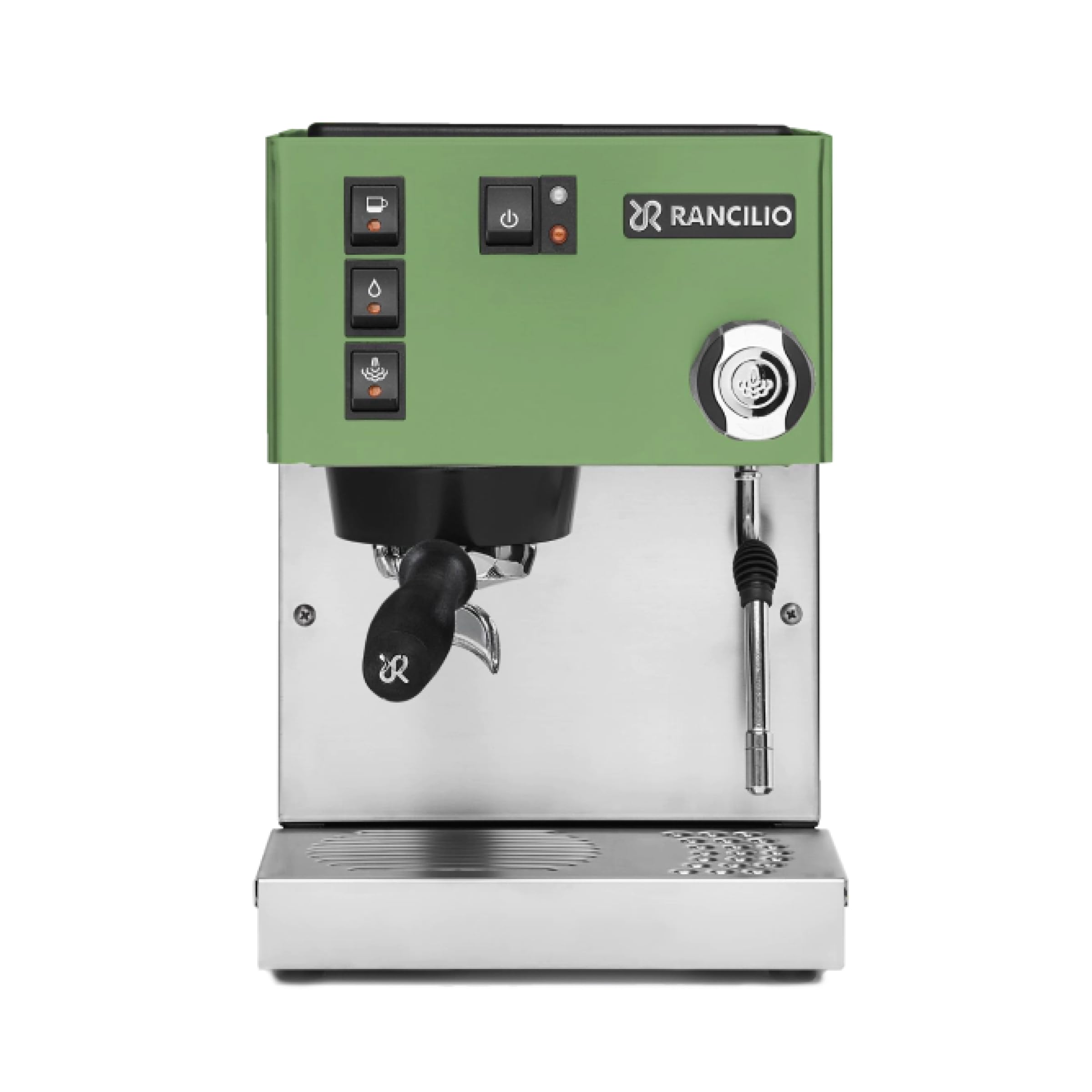
The Rancilio Silvia is a legend in the home espresso world, built with the same robust components as its commercial siblings. Its simple, no-frills design focuses on a massive brass boiler, a commercial 58mm group head, and industrial-grade switches for unparalleled durability.
Users praise its ability to produce steaming hot, richly textured espresso with a perfect crema, noting its steam power is exceptionally strong. The trade-off is a need to “temperature surf” due to the lack of a PID, and its small drip tray requires frequent emptying. It’s a machine that demands practice but rewards with commercial-quality output and legendary longevity.
For the purist who values mechanical simplicity and industrial build over digital aids, the Silvia is a benchmark. It’s a machine you buy for decades, not just years.
Why it’s great
- Over-engineered commercial construction ensures extreme durability.
- Powerful steam capability creates dry, velvety microfoam quickly.
- Standard commercial parts make it easy to service and modify.
Good to know
- Requires temperature surfing technique for consistent shots.
- Notable heat-up time needed for the large brass boiler.
- Very basic design lacks modern conveniences like programmability.
5. Breville Barista Pro

The Breville Barista Pro is an evolution of the Express, focusing on speed and a more intuitive interface. Its standout feature is the ThermoJet heating system that reaches optimal temperature in three seconds, coupled with an LCD screen that displays grind time and shot progress.
Owners love the near-instant readiness, which fits perfectly into a busy morning routine. The grinder is an improved, more precise version, and the steam wand is notably more powerful. The interface provides clearer feedback, making it easier to dial in shots compared to its predecessor. Some note the water tank placement can make level-checking tricky.
This machine is ideal for those who want the convenience of an all-in-one but prioritize speed and a more modern, informative user experience. It’s a significant step up in daily usability.
Why it’s great
- ThermoJet system offers unparalleled heat-up speed for instant coffee.
- Clear LCD interface provides helpful feedback for shot preparation.
- Enhanced steam wand power improves milk texturing efficiency.
Good to know
- Mid-range price point is higher than more basic all-in-ones.
- Water tank at the rear can be difficult to view and fill.
- Still uses a 54mm portafilter rather than the commercial 58mm standard.
6. Ninja Luxe Café Premier

The Ninja Luxe Café Premier is a multi-beverage powerhouse, combining an espresso machine, a drip coffee maker, and a rapid cold brew system in one unit. It’s engineered for households with diverse coffee preferences, offering guided recipes and a hands-free frother.
Users are impressed with its versatility and the quality of each brew type, especially the rich cold brew and espresso. The Barista Assist technology recommends grind sizes and doses, simplifying the process. The main compromise is its size and the fact it’s a jack-of-all-trades rather than a dedicated espresso specialist. Maintenance reminders are helpful but essential to follow.
If your kitchen counter needs to accommodate lovers of espresso, drip, and cold brew without three separate machines, this is an innovative and space-saving solution that performs admirably across categories.
Why it’s great
- Replaces three separate coffee appliances, saving significant counter space.
- Intuitive guided brewing removes guesswork for various drink types.
- Produces genuinely good espresso, drip coffee, and cold brew from one machine.
Good to know
- Larger footprint due to its multi-function design.
- Espresso capability, while good, may not satisfy the most demanding purists.
- More complex system requires adherence to cleaning cycles.
7. Breville Barista Touch

The Breville Barista Touch offers a fully automated milk experience paired with a sleek touchscreen interface. It simplifies the process further than the Express models by automating milk temperature and texture, allowing you to create latte art-quality microfoam at the touch of a button.
Feedback consistently mentions the joy of using the intuitive touchscreen and the consistent quality of both espresso and milk froth. It’s particularly popular with those who love milk-based drinks but don’t want to master manual steaming. The trade-off is less hands-on control, and the machine does require regular cleaning of the auto-frother to maintain performance.
For a premium, user-friendly experience that delivers excellent cappuccinos and lattes with minimal effort, the Barista Touch is a standout choice. It brings café-style automation home.
Why it’s great
- Automated milk frothing creates perfect microfoam for latte art consistently.
- Intuitive touchscreen guides you through every drink type with customizable settings.
- Fast heat-up time and integrated grinder provide a complete, quick workflow.
Good to know
- Automated steam wand requires more diligent and specific cleaning.
- Higher price point for automation features you may not need if you steam manually.
- Like other Breville models, uses a 54mm portafilter system.
8. Breville Barista Express Impress

The Breville Barista Express Impress targets the biggest variables in manual espresso—dosing and tamping—with its innovative Impress Puck System. It automatically grinds the correct dose and provides assisted tamping with consistent pressure, making the process cleaner and more foolproof.
Users find this system incredibly helpful for achieving a level, evenly compacted puck every time, which is crucial for even extraction. It retains the manual steam wand of the original Express for those who want to develop their frothing skills. Some report a break-in period for the grinder’s auto-dosing mechanism, but overall, it adds valuable consistency for beginners and experienced users alike.
This machine is the perfect upgrade for anyone who wants the control of a semi-automatic but appreciates help with the most technique-sensitive steps. It reduces mess and improves shot consistency.
Why it’s great
- Impress system guarantees a perfectly dosed and tamped puck with minimal effort.
- Eliminates the mess and inconsistency of manual grinding and tamping.
- Retains a powerful manual steam wand for learning milk texturing.
Good to know
- The assisted tamping mechanism adds another moving part to the machine.
- May feel overly automated for users who enjoy the full manual process.
- Positioned at a higher price point than the standard Barista Express.
9. Gevi Dual Boiler Espresso Machine

The Gevi Dual Boiler machine brings a premium feature—simultaneous brewing and steaming—to a more accessible price point. It includes a built-in grinder, a commercial 58mm portafilter, and PID temperature control, offering a compelling package for the aspiring home barista.
Early adopters are impressed with the value, noting the ability to pull a shot and steam milk at the same time significantly speeds up drink preparation. The large water tank and PID for stability are appreciated. As a newer entrant, long-term reliability is less documented, and the grinder is seen as functional rather than exceptional. It represents a high-spec option for those willing to explore a value-focused brand.
If your priority is dual-boiler functionality and a complete set of prosumer features without a premium brand price, the Gevi is a noteworthy contender that demands consideration.
Why it’s great
- Dual boiler system allows simultaneous brewing and steaming—a rare feature at this price.
- Includes a built-in grinder and a commercial-size 58mm portafilter.
- PID and NTC temperature control promises stable extraction and steam.
Good to know
- Brand is less established, with a shorter track record for long-term durability.
- Integrated grinder may not match the quality of a standalone unit.
- User manual and customer support experiences can vary.
10. Breville Bambino

The Breville Bambino is the quintessential compact espresso machine for small kitchens and fast mornings. Its ThermoJet heating system reaches temperature in three seconds, and it features an automatic steam wand for effortless milk frothing, all in a remarkably small footprint.
Users rave about its speed and simplicity, making it perfect for a quick single latte before work. The auto-frother is particularly praised for its consistency. The trade-off is a smaller 54mm portafilter and a lower-powered steam wand in manual mode, which may not satisfy those wanting to practice advanced latte art. It’s designed for ease and efficiency above all else.
For anyone with limited space or patience for pre-heating, the Bambino delivers genuine espresso convenience without a steep learning curve. It’s an excellent entry point into quality home espresso.
Why it’s great
- Unbeatable heat-up time gets you from off to brewing in seconds.
- Extremely compact design fits on even the smallest countertops.
- Automatic steam wand produces good microfoam with the push of a button.
Good to know
- Small water tank and drip tray require more frequent refilling and emptying.
- Steam power in manual mode is adequate but not powerful for rapid texturing.
- Plastic construction in some areas feels less premium than higher-end models.
11. Gevi Commercial Espresso Maker
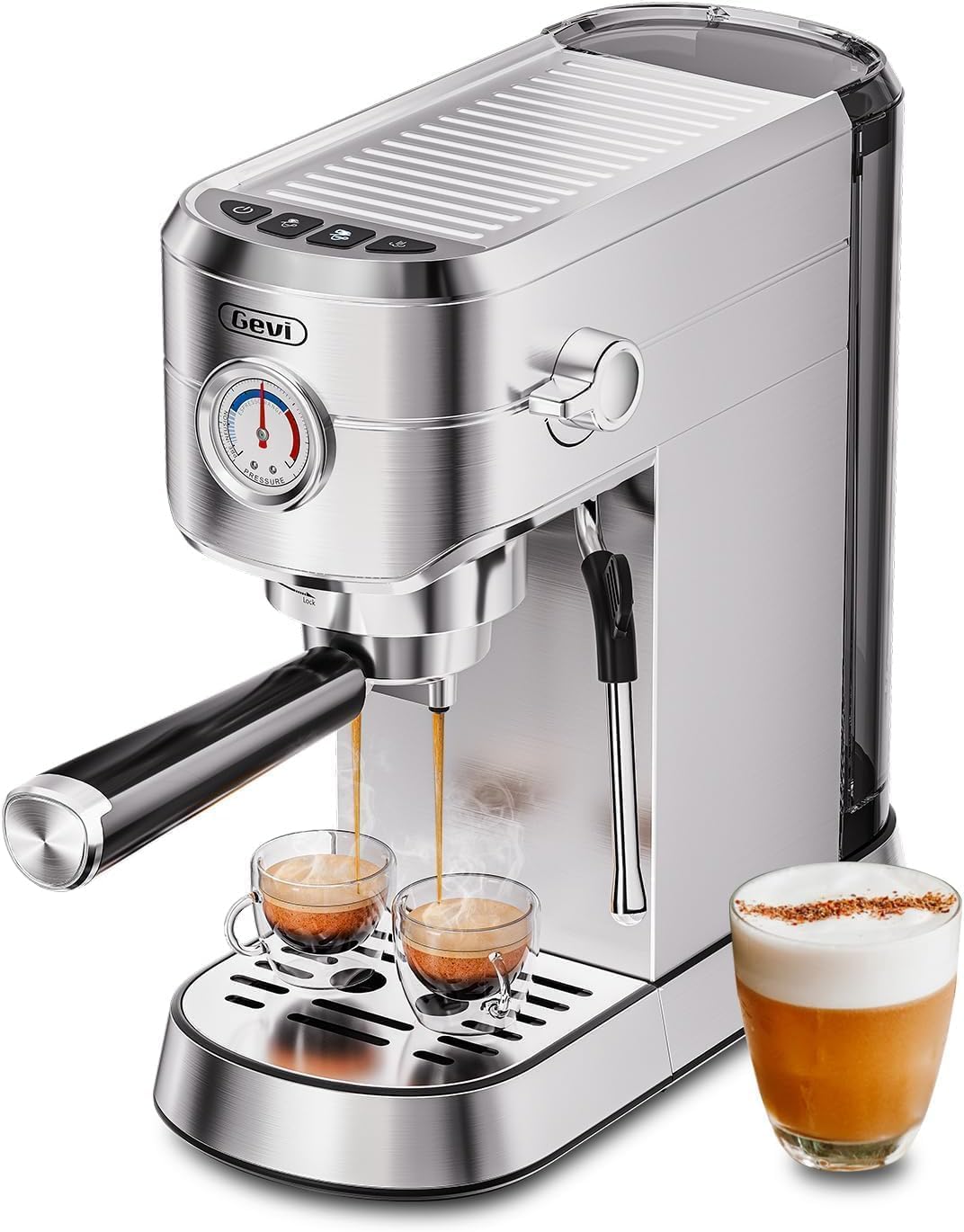
The Gevi Commercial Espresso Maker is an entry-level machine that packs features like a 20-bar pump, a visible pressure gauge, and a stainless steel housing into a budget-friendly package. It’s designed to offer a semi-automatic experience for those testing the waters of home espresso.
Feedback highlights its solid performance for the cost, producing decent crema and featuring a capable steam wand. Users note it’s best for making one or two drinks at a time, as it can require a cool-down period between back-to-back shots. The portafilter basket design can make puck disposal messy. It’s a capable machine for learning the basics without a major financial commitment.
For the casual user or beginner who wants a feature-rich machine to explore espresso making, this Gevi model delivers notable value and a stepping stone to more advanced equipment.
Why it’s great
- Provides essential features like a pressure gauge and pre-infusion at an entry-level price.
- Stainless steel construction offers durability and a classic look.
- Makes a legitimate espresso with good crema for the budget category.
Good to know
- Not built for high-volume use; requires recovery time between multiple shots.
- Portafilter basket design can be messy when knocking out the spent puck.
- Steam wand power is adequate but not as strong as on more expensive machines.
Understanding the Specs
Pump Pressure (9 Bars vs. 15-20 Bars)
While many machines advertise high pressure (15-20 bars), the ideal extraction pressure is 9 bars. Quality machines use an over-pressure valve (OPV) to regulate down to this level. A higher-rated pump doesn’t mean better espresso; consistent pressure at 9 bars does.
PID Temperature Control
A Proportional-Integral-Derivative (PID) controller is a digital thermostat. It maintains water temperature within ±1-2°F, crucial for extracting balanced flavors. Without a PID, boiler temperature can swing, leading to sour (under-extracted) or bitter (over-extracted) shots.
Three-Way Solenoid Valve
This commercial component releases pressure from the group head after a shot is pulled. This results in a dry, easy-to-knock-out coffee puck and prevents messy “portafilter sneezes.” It’s a key feature for clean workflow and is essential for backflushing cleaning cycles.
Pre-Infusion
This function gently saturates the coffee puck with low-pressure water before full pressure is applied. It allows the grounds to expand evenly, reducing channeling (where water finds a path of least resistance) and promoting a more uniform, flavorful extraction.
FAQ
What is the main difference between a commercial and a home espresso machine?
Do I need a separate grinder for a semi-automatic espresso machine?
How important is a 58mm portafilter versus a 54mm one?
How often should I backflush and descale my machine?
Final Thoughts: The Verdict
For most users, the best 1 group commercial espresso machine winner is the Gaggia Classic Evo Pro because it delivers uncompromising commercial-grade components, durability, and authentic espresso craft at a mid-range price. If you want all-in-one convenience with a built-in grinder, grab the Breville Barista Express. And for the ultimate in guided, automated luxury, nothing beats the Breville Barista Touch Impress.
