
Specs are compiled from manufacturer listings and verified buyer reviews and can change over time — please confirm the key details on the product page before buying.
If your basement floods, the pump’s reliability matters more than its price tag. A 1/3 HP sump pump is the standard size for most residential pits, but the real differences hide in the switch type, the housing material, and how much water the unit actually moves at a realistic lifting height. You need a pump that starts every time the water rises and moves enough volume at your lift height to keep your floor dry.
I’m Mohammad Maruf — the founder and writer behind KitchPrep. This guide is built by comparing the manufacturers’ published specifications and the patterns across verified customer reviews, so you get each pick’s real strengths and trade-offs instead of marketing spin.
To pick a reliable unit, you have to look past the horsepower badge and check the float mechanism and housing material. This guide breaks down the best 1/3 hp sump pump options by switch type, housing material, and flow at real lift heights.
Our Picks at a Glance


How To Choose The Best 1/3 HP Sump Pump
Choosing the right pump is about matching the machine to your specific pit and water volume. You do not need the biggest pump on the shelf, but you do need one that handles the vertical lift your discharge pipe requires.
Switch Type And Pit Size
The switch is the part that fails most often. A vertical float switch moves straight up and down, which makes it a good fit for narrow sump pits where a tethered float might get stuck against the wall. A diaphragm switch uses pressure instead of a moving arm, which means there is nothing to snag on the side of the basin.
Housing Material And Heat
Cast iron housings are heavy, but they help dissipate heat away from the motor during long runs. Thermoplastic housings are lighter and resist rust, making them easier to lift out for cleaning. If your pump runs frequently, the heat dissipation of cast iron can be an advantage.
Understanding The Pump Curve
Flow rate drops as the water has to be pushed higher. A pump rated at 3,000 gallons per hour at zero feet might only move half that amount when pushing water up a 10-foot pipe. Always check the flow rate at your specific lift height, not just the maximum rating.
Quick Comparison
| Model | Best For | Max Lift | Flow Rate | Housing | Amazon |
|---|---|---|---|---|---|
| Liberty Pumps 237★ Best Overall | Overall reliability | 21 ft | 44 gpm | Aluminum | Amazon |
| Acquaer 3040GPHHigh Lift | High lift capacity | 29 ft | 50.67 gpm | Plastic | Amazon |
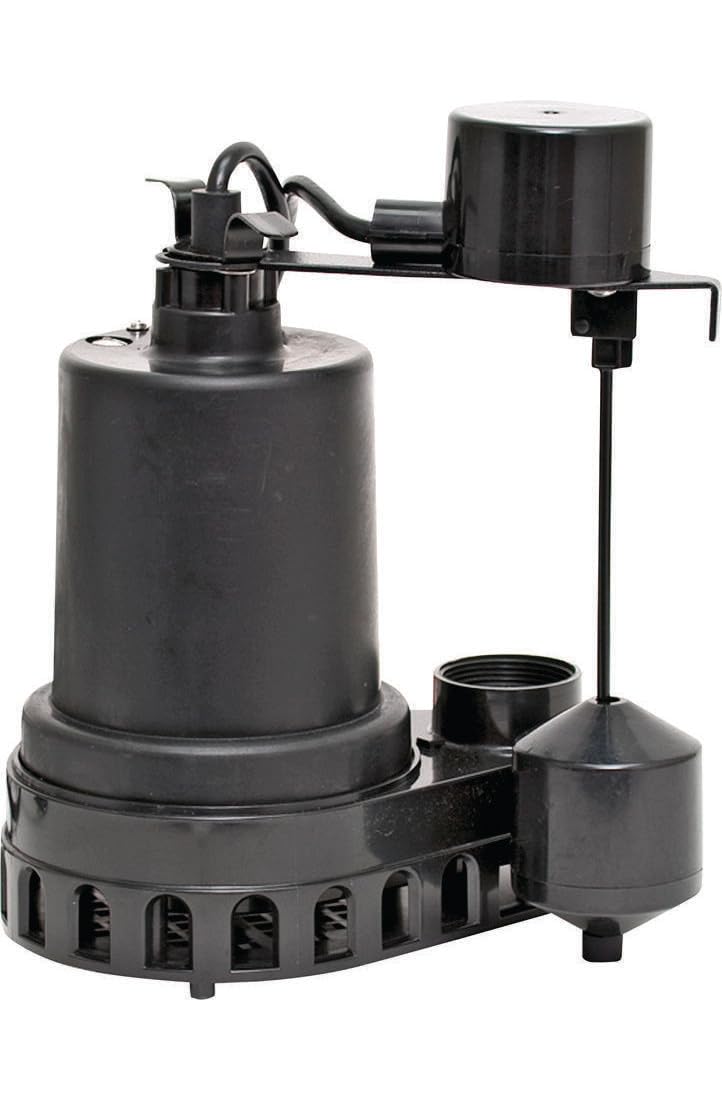
| Superior Pump 92372Best Value | Value performance | 10 ft | 48 gpm | Thermoplastic | Amazon |
| Westinghouse WH33TP | Compact power | 28 ft | 60 gpm | Aluminum | Amazon |
| Wayne SPF33 | Standard replacements | 10 ft | 63 gpm | Coated Steel | Amazon |
| The Basement Watchdog SIT-33D | Narrow pits | 22 ft | 62 gpm | Cast Iron | Amazon |
| Little Giant 6-CIA | Continuous duty | 18 ft | 46 gpm | Cast Iron | Amazon |
| Red Lion RL-SC33V | High volume | 28 ft | 71 gpm | Cast Iron | Amazon |
| Zoeller M57 | Heavy duty cast iron | — | 43 gpm | Cast Iron | Amazon |
In‑Depth Reviews
1. Liberty Pumps 237 1/3 HP Submersible Sump Pump
Our pick — over 4.5★ from 300+ verified ratings; the strongest balance of quality and price.
The lightweight aluminum workhorse that empties a pit in under 30 seconds.
This is the pick for the homeowner who wants a quiet, rust-resistant pump that is easy to lift out of the pit. It uses a vortex-style impeller and a vertical magnetic float switch to reduce clogging and handle solids up to 3/8-inch. The aluminum housing keeps the weight at 11 pounds, which is lighter than many cast iron units in this class.
The vertical magnetic float switch is a key advantage here. Unlike a tethered float that can hang up on the pit wall, this design moves straight up and down. Users frequently report that the pump is inaudible from more than 10 feet away, and it handles heavy rain without issues. One owner noted it ran for 6 hours straight during a flood event and still works perfectly.
While it has a lower maximum lifting height of 21 feet compared to the Acquaer’s 29 feet, it makes up for it with build quality.
What Stands Out
- Aluminum housing resists rust better than cast iron.
- Vertical magnetic float switch prevents sticking.
- Quiet operation during continuous duty cycles.
Worth Noting
- Requires a standard 1-1/2 inch discharge pipe.
- Higher investment than entry-level thermoplastic models.
Ideal for: The homeowner who values a quiet, rust-free pump that is easy to handle during maintenance.
Think twice if: You are dealing with a particularly deep pit needing more than 21 feet of vertical lift.
2. Acquaer 1/3HP Submersible Sump Pump 3040GPH Clean/Dirty Water Pump
The high-lift specialist that can push water further up than almost any other 1/3 HP unit.
If your discharge line runs high up a wall before exiting the house, this pump is the one to beat. It offers a maximum lifting height of 29 feet, which is nearly three times the 10-foot limit of the Superior Pump 92372. This makes it a strong choice for deep basements or complicated drainage runs where a standard pump would struggle to push water out.
It features a top suction design to help eliminate air locks and a thermoplastic body that resists corrosion. The flow rate sits at 50.67 gpm, which is slightly higher than the Liberty Pumps 237 at 44 gpm. The automatic float switch turns the pump on when the water level rises and off when it falls, operating automatically without manual intervention.
While the lift and flow are impressive, the float switch adjustment can be finicky. Some users note that the switch is difficult to set correctly. For most standard residential applications, this pump offers a great balance of flow and lift capability for a mid-range investment.
Power and reach: The 29-foot maximum lift is a significant advantage over the 10-foot lift found on the Superior Pump. It means you can route the discharge pipe high up the wall without losing performance. The 50.67 gpm flow rate also edges out the Liberty 237’s 44 gpm, moving water out of the pit slightly faster.
The trade-off: The float switch mechanism requires careful adjustment to function reliably. It is not a set-and-forget component for every user. You need to ensure the float has clearance in the pit to function without sticking, which is particularly relevant if you are installing it in a tight basin.
Best fit: You need to push water vertically for long distances or high wall runs.
Skip if: You want a simple drop-in replacement that requires no switch adjustments.
3. Superior Pump 92372 1/3 HP Thermoplastic Submersible Sump Pump with Vertical Float Switch
A budget-friendly workhorse that moved water reliably for five years in one reviewer’s pit.
This pump proves you do not need to spend a fortune to get reliable water removal. It uses a vertical float switch that is a better fit for narrow basins than a tethered float because it moves up and down rather than swinging sideways. At 8.7 pounds, it is lighter than the Liberty Pumps 237, which weighs 11 pounds, making it easier to handle during installation or maintenance.
The thermoplastic construction handles acidic or muddy water without rusting, which is a major plus for outdoor or dirty water applications. It moves water at 48 gpm, which is actually higher than the Liberty 237’s 44 gpm. This means it can handle high volumes quickly, even during heavy storms, provided the lift height is within its 10-foot limit.
One advantage of the Superior design is the piggy-back switch plug. The motor and switch cords are separate, so if the switch fails, you can replace just the switch without buying a whole new pump. This kind of repair potential extends the life of the unit and saves money in the long run.
Why It Wins
- Piggy-back switch allows easy replacement of the switch alone.
- Lightweight thermoplastic design resists corrosion.
- Vertical float works well in narrow sump pits.
Keep In Mind
- Maximum lift is limited to 10 feet.
- Thermoplastic housing can be louder than cast iron.
Great for: Budget-conscious buyers who want a reliable pump with a replaceable switch.
Not ideal for: Deep pits or long vertical runs that require more than 10 feet of lift.
4. Westinghouse Sump Pump 1/3 HP 60 GPM Submersible Water Pump
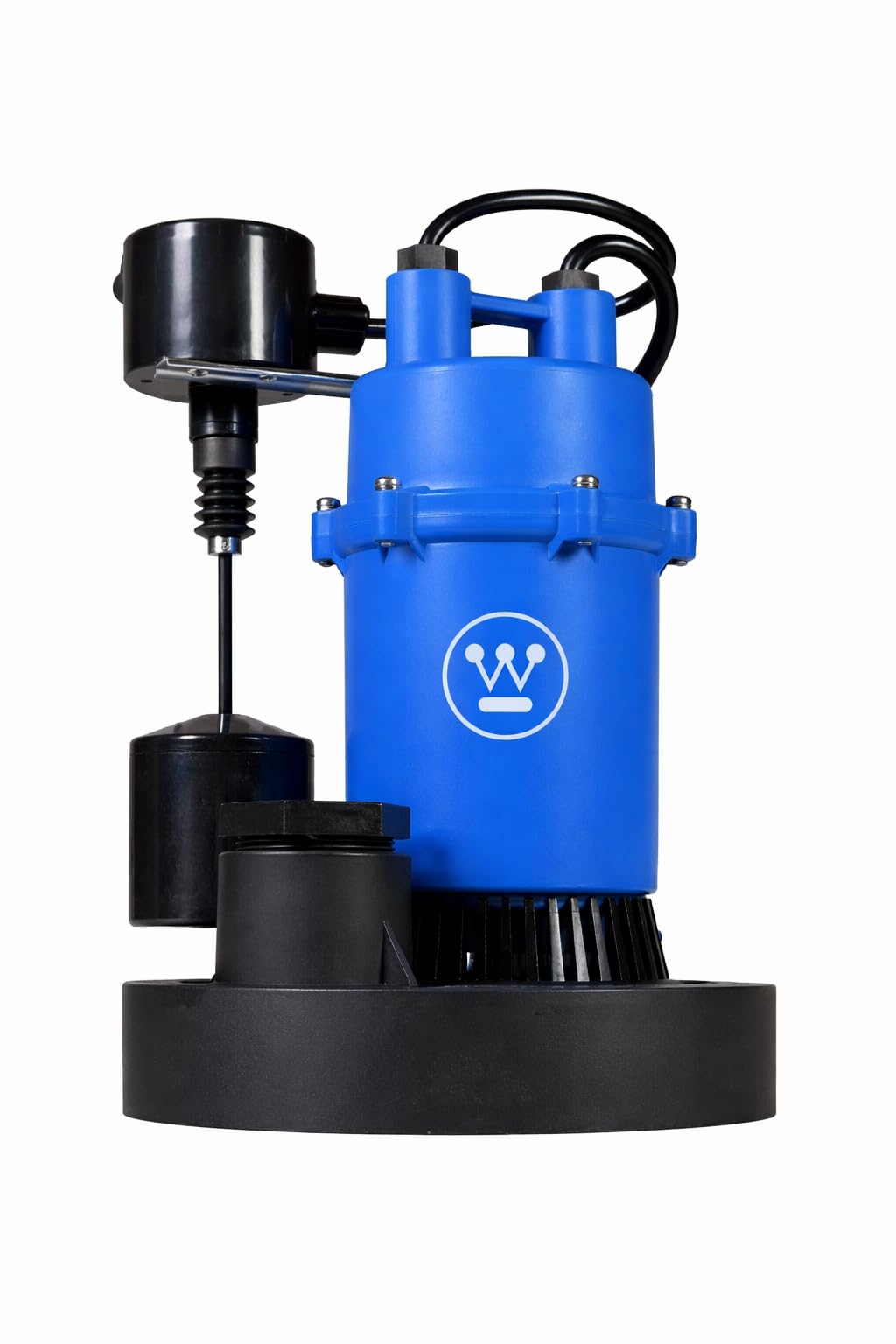
High flow in a small package that keeps running through busy pit cycles.
This pump combines a high flow rate with a compact footprint. It pushes 60 gpm, which is significantly more flow than the Liberty Pumps 237 at 44 gpm, allowing it to clear a pit faster. It also features a maximum lifting height of 28 feet, which is much taller than the Superior Pump 92372’s 10-foot limit, giving you flexibility in how you route the discharge pipe.
The automatic vertical float switch is designed for hands-free operation and stays aligned in tight pits. The intake and discharge are tune for efficient drainage, which helps reduce cycle time. This means the pump runs for shorter bursts, which can reduce the wear on the motor over the life of the unit.
Because it is lightweight and sturdy, it is easy to maneuver into place. The aluminum construction helps resist rust while keeping the weight down. While the brand is known for other appliances, this pump focuses on the core job of moving water efficiently without extra complexity.
Performance read: The 60 gpm flow rate is the standout number here, beating the 44 gpm of the Liberty 237 and the 48 gpm of the Superior Pump. This high flow helps empty the pit quickly, which is crucial during heavy rain. The 28-foot lift also provides a big margin over the 10-foot Superior unit.
Consider this: The high flow rate means the pump cycles quickly, which can be noisy if the pit is near a living space. However, the vertical float switch helps eliminate the common issue of a float getting stuck against the side of the basin, which is a frequent problem with tethered designs in smaller pits.
Choose this for: High-volume water removal where you need to clear the pit quickly.
Look elsewhere if: You need a heavy cast iron housing for maximum heat dissipation.
5. WAYNE 1/3 HP Sump Pump Coated Steel Thermoplastic SPF33

A standard-size replacement pump with a clog-resistant top suction design.
The Wayne SPF33 is a popular choice for replacing old pumps because it fits standard sump basins without modifications. It pumps water at 63 gpm, second only to the Red Lion’s 71 gpm in this comparison. This Wayne unit moves 63 gpm, which is still higher than the Liberty 237’s 44 gpm and the Superior’s 48 gpm.
It features a top suction design that helps prevent clogs from dirt and debris while eliminating air lock. This is a major advantage over bottom-suction pumps that can get clogged with debris from the pit floor. The coated steel and thermoplastic construction is designed to stand up to demanding sump pit conditions.
While the flow rate is high, the maximum lifting height is limited to 10 feet, similar to the Superior Pump 92372. This means it is best for standard basement depth where the water does not need to be pushed too high. It is a solid choice for a primary pump in a typical residential setup.
Key Benefits
- High flow rate of 63 gpm clears water fast.
- Top suction design resists clogging from debris.
- Standard footprint fits most existing basins.
Limitations
- Maximum lift is capped at 10 feet.
- Not designed for dirty water or solids above 3/8 inch.
Ideal for: A direct replacement in a standard basement pit with typical lift requirements.
Consider other options if: Your discharge line requires lifting water more than 10 feet vertically.
6. The Basement Watchdog Cast-Iron ⅓ HP Submersible Sump Pump (SIT-33D)

A heavy-duty cast iron unit built to fit into the tightest sump pits.
This pump is designed specifically for narrow basins where other pumps simply will not fit. Its compact cast iron housing measures just 6.25 inches wide, which is much narrower than the Wayne SPF33’s 9-inch width. The caged dual float switch provides redundancy, so if one float fails, the second one takes over, ensuring the pump still activates.
The motor is a copper-wound PSC (Permanent Split Capacitor) type, which is designed for energy efficiency and long life. It moves water at 62 gpm, which is higher than the Liberty Pumps 237 at 44 gpm and nearly identical to the Wayne SPF33 at 63 gpm. The dual seals protect the motor from water intrusion, which is a common failure point in lesser pumps.
Because it is cast iron, it is heavy at 19.5 pounds. This weight helps dampen vibration and noise, making it a quiet operator. However, the weight and the size of the float cage can make installation a two-handed job, especially in a deep pit.
Built for tight spaces: The 6.25-inch width is the key feature here, allowing it to drop into pits where the 9-inch-wide Wayne SPF33 or the 9.6-inch-wide Liberty 237 would not fit. The caged dual float switch is another distinct advantage, preventing the float from getting tangled with wires or debris, which is a common cause of pump failure.
Energy and noise: The copper-wound motor is designed to use less energy than standard motors. The cast iron housing does a good job of muting the sound of the motor and the water movement, making it one of the quieter options in this list. The trade-off is the 19.5-pound weight, which is noticeably heavier than the 8.7-pound Superior Pump.
Best for: Homeowners with narrow sump pits who need a durable, redundant switch system.
Be aware: The heavy cast iron construction makes it harder to lift out for cleaning compared to lighter thermoplastic units.
7. Little Giant 1/3 HP Cast Iron Submersible Sump Pump, Blue
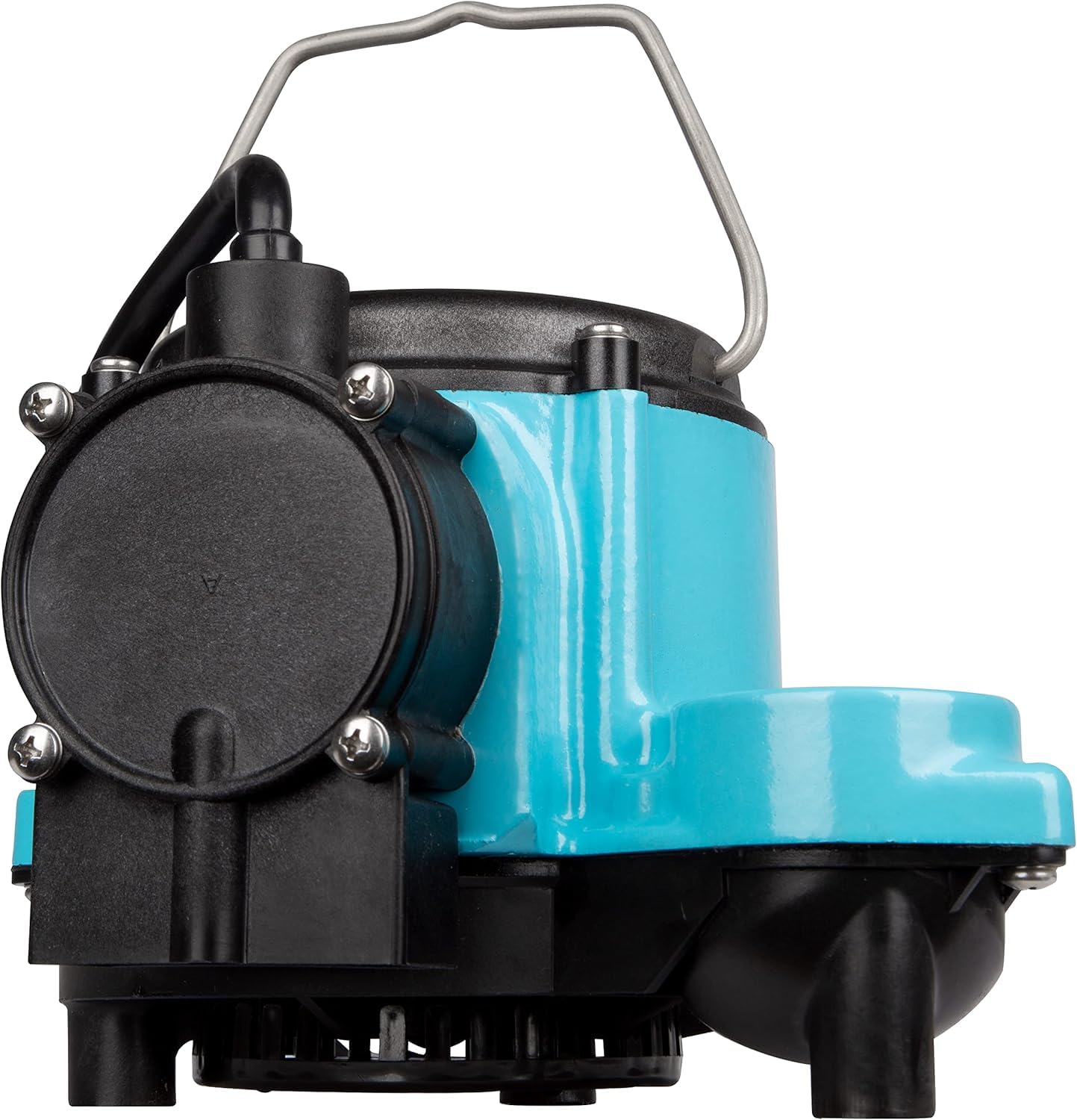
A cast iron classic that uses a diaphragm switch to eliminate float sticking issues.
The Little Giant 6-CIA is a heavy hitter for continuous duty applications. It uses a built-in diaphragm switch that is pressure-activated, meaning there is no float arm to get stuck on the side of the pit or tangled with debris. The cast iron housing and epoxy coating make it durable for long-term use, and the non-clog vortex impeller handles solids up to 3/8 inch.
It moves water at 46 gpm, which is slightly higher than the Liberty Pumps 237’s 44 gpm. While it is not the highest flow rate in this group, it is designed for reliability over time. The motor is thermally protected and rated for continuous duty, meaning it can run for long periods without overheating.
Because it is cast iron, it is heavy at 17 pounds, which helps keep it stable in the pit. The diaphragm switch triggers based on pressure, which is a very reliable method of water level detection. However, the switch is not adjustable, so the pump turns on and off at fixed water levels based on the internal design.
Why It Stands Out
- Diaphragm switch has no moving parts to stick.
- Cast iron housing dissipates heat well.
- Continuous duty rated for long run times.
The Catch
- Switch is non-adjustable and pressure-activated.
- Heavy cast iron construction requires careful handling.
Great for: Basins with high water tables where the pump cycles frequently.
Skip if: You need an adjustable switch to fine-tune the water levels in your pit.
8. Red Lion RL-SC33V, 115V, 1/3 HP, Automatic Sump/Light Effluent Pump

The highest flow rate in the lineup, designed to move serious water volume fast.
When you need to move the maximum amount of water in the shortest time, the Red Lion RL-SC33V is the unit to beat. It pumps at 71 gpm, which is the highest flow rate in this comparison, significantly outpacing the 44 gpm of the Liberty Pumps 237 and the 48 gpm of the Superior Pump 92372. This makes it a strong candidate for high-volume water removal or light effluent applications.
It features a rugged cast iron housing and a clog-resistant impeller that can handle semi-solids up to 3/8 inch. The piggy-back vertical float switch activates the pump when water reaches 7.25 inches and turns it off when water falls to 2.75 inches. This specific range is suitable for narrow sump pits, and the piggy-back design allows you to unplug the switch for easy testing or replacement.
The motor is a PSC (Permanent Split Capacitor) type, which is designed for energy efficiency and thermal overload protection. It also has a 28-foot shutoff, which is much higher than the Superior Pump’s 10-foot limit, giving it the ability to push water high up the wall if needed. This combination of high flow and high lift makes it a versatile performer.
Flow rate leader: The 71 gpm flow rate is the standout feature here. It beats the 63 gpm of the Wayne SPF33 and the 60 gpm of the Westinghouse. If your pit fills quickly during storms, this pump will clear it faster than any other 1/3 HP unit on this list.
Installation note: The pump is heavy due to the cast iron construction, and the short legs can suck up small rocks into the impeller if the pit is not clean. Users report that adding a screen or keeping the pit clear of debris helps prevent jams. The piggy-back switch is a convenient feature that makes troubleshooting easy.
Reach for this if: You need the highest possible flow rate and a rugged cast iron build.
Look elsewhere if: You have a sandy or rocky pit, as the short legs can jam.
9. Zoeller M57 Mighty-Mate Submersible Sump Pump – 3/10 HP Cast Iron -115V
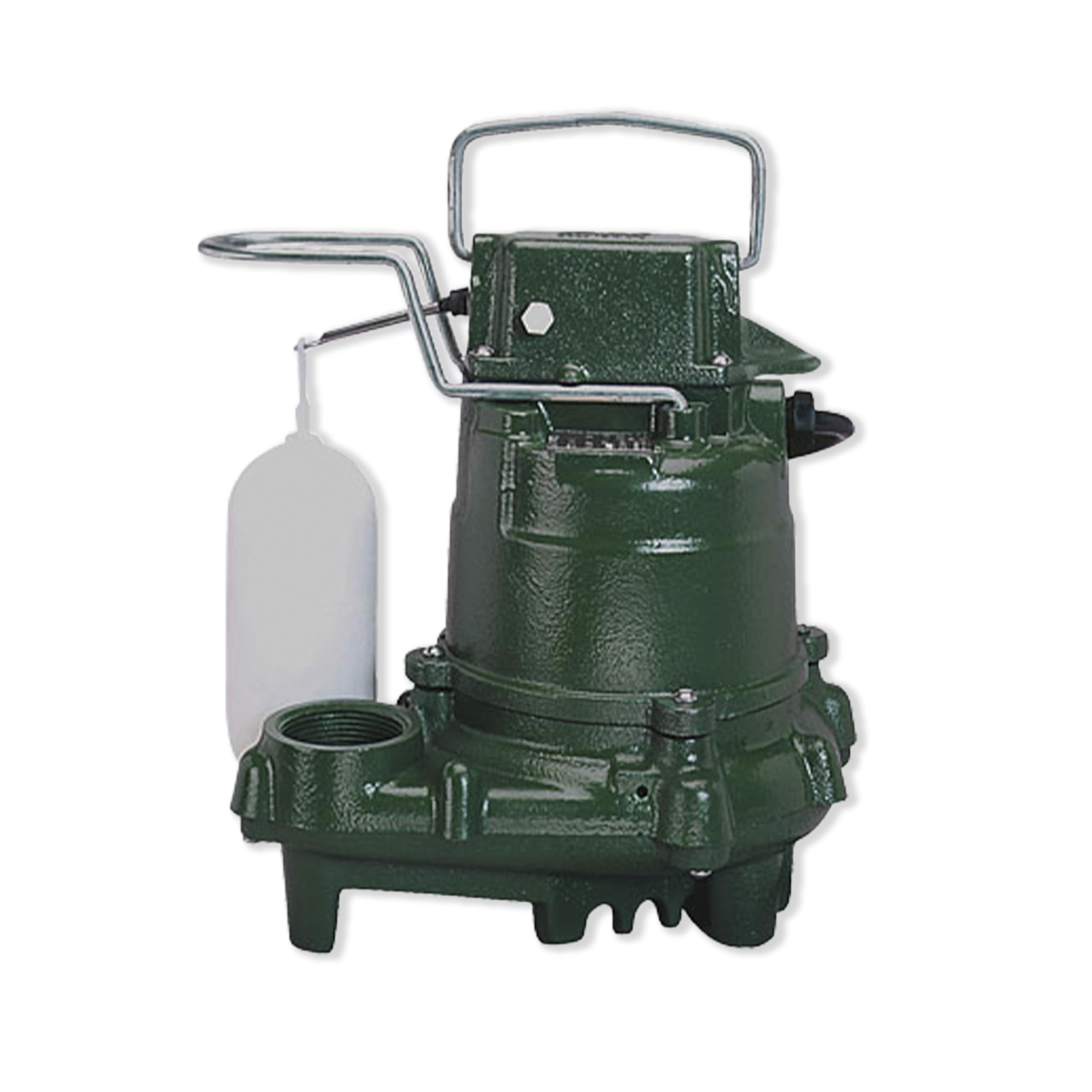
The heaviest pump in this lineup, with an oil-filled motor and cast iron housing built for years of service.
The Zoeller M57 is the most sturdy pump in this lineup. Its oil-filled motor and cast iron housing (a metal shell that pulls heat away from the motor) keep the pump from overheating, so it can last for years. This is the pump for a homeowner who wants a long service life with minimal attention. It handles solids easily with a non-clogging vortex impeller (a spinning fan that passes debris without jamming) made from corrosion-resistant cast iron.
It moves water at 43 gpm, which is lower than the Red Lion’s 71 gpm and the Liberty’s 44 gpm. However, the build quality is the selling point here. It is designed for harsh conditions with stainless steel hardware, a float guard, and a switch arm that resists rust. The polypropylene float is solid, so it will not become waterlogged like some cheaper foam floats.
At 27.1 pounds, it is by far the heaviest pump in this guide. The cast iron construction keeps it steady in the pit and helps it run quietly. The vertical float switch (a built-in lever that turns the pump on and off as water rises) works automatically, so you never have to control it by hand. It is a legacy product that has earned a reputation for durability.
Why It Wins
- Oil-filled motor for superior heat dissipation.
- All-cast iron construction resists corrosion and rust.
- Solid polypropylene float will not waterlog.
Worth Noting
- Heavy weight makes installation difficult.
- Lower flow rate than some competitors.
Choose this for: Long-term reliability in a primary sump pit where you want zero maintenance.
Reconsider if: You need a lightweight pump for easy removal or the highest possible flow rate.
Understanding the Specs
Float Switch Types
The float switch is the part that tells the pump when to turn on. A vertical float moves straight up and down on a rod, which makes it a good fit for narrow pits. A tethered float swings on a cord and needs more space to move. A diaphragm switch uses pressure to sense water level and has no moving parts on the outside, but it is usually not adjustable.
Housing Materials
Cast iron pumps are heavy but quiet and excellent at dissipating heat. Thermoplastic pumps are lightweight and rust-proof, making them easier to handle, but they can be louder. Aluminum is a middle ground, offering rust resistance with less weight than cast iron.
FAQ
How do I know what size sump pump I need?
What is the difference between a vertical float and a tethered float?
Can I install a sump pump myself?
How long does a sump pump last?
Why does my pump run but not pump water?
Do I need a check valve for my sump pump?
What is a piggy-back plug on a sump pump?
Can I use a sump pump for dirty water?
How loud is a sump pump?
What happens if the power goes out?
Final Thoughts: The Verdict
For most people, the 1/3 hp sump pump winner is the Liberty Pumps 237 because it balances a quiet aluminum housing with a reliable vertical magnetic float switch. If you need to push water higher than 10 feet, grab the Acquaer 3040GPH. And for the longest lifespan with minimal maintenance, the Zoeller M57 is the one to reach for.
How We Picked
We do not accept paid placement. Every pick is matched to a real buyer and a real use-case; we do not hands-on test units.
Sources & Methodology
Specifications: manufacturer listings and product documentation. Review insights: verified customer reviews, as of September 2026. Pricing: not shown on this page (it changes often); check the current price via the retailer link.
As an Amazon Associate, KitchPrep earns from qualifying purchases. This does not affect which products we feature.
Related Guides
