
Specs are compiled from manufacturer listings and verified buyer reviews and can change over time — please confirm the key details on the product page before buying.
When a recliner footrest mount snaps or a lamp post needs stiffening, a 3-foot steel bar is the difference between a repair bill and a fix. The catch: “1/2 inch square tubing” can mean the outside width, the inside width, or the wall thickness, and getting that wrong means a useless piece of metal. This guide sorts four proven square-steel tubes by what they actually do in your workshop, garage, or coastal deck project.
I’m Mohammad Maruf — the founder and writer behind KitchPrep. This guide is built by comparing the manufacturers’ published specifications and the patterns across verified customer reviews, so you get each pick’s real strengths and trade-offs instead of marketing spin.
For repairs, frames, and fixtures that demand a rigid rail, here are the most reliable 1/2 inch square tubing options ranked by owner-proven performance and practical value.
Our Picks at a Glance

How To Choose The Best 1/2 Inch Square Tubing
Square steel tubing is a hollow bar with four flat sides, and its job is to resist bending under load. Before you order, you need to confirm three numbers: the outside dimension, the wall thickness, and the length — because two tubes that both claim to be “1/2 inch” can behave very differently.
Outside Dimension vs. Inside Hole
Almost every listing states the outside width. A tube marked 0.5 inches measures half an inch across its outer face. If you plan to slide a smaller bar or a bolt inside it, you actually need the inner dimension, which equals the outside width minus two wall thicknesses. When in doubt, ask the seller whether the stated size is ID or OD before you commit.
Wall Thickness Sets the Strength Ceiling
Thicker walls carry more weight without flexing but also add heft and cost. A 0.065-inch wall suits light frames, jigs, and repair braces, while a 0.12-inch wall is the kind of stock you trust under a hoist or a workbench. Match the wall to the real load, not to what looks impressive in the cart.
Steel Grade and Surface Finish Matter
Hot-rolled A500/A513 steel is the most common structural tubing in North America because it welds cleanly and stays affordable. Plain steel will rust when exposed to weather, so a coastal or outdoor project demands paint, a galvanized alternative, or a stainless option. Inspect the finish on arrival — mill scale and light surface rust are normal and sand off easily.
Quick Comparison
| Model | Best For | Outside Size | Wall Thickness | Length | Amazon |
|---|---|---|---|---|---|
| OnlineMetals A-36 0.5″ Tube★ Best Overall | Recliner & appliance repairs | 0.5 inches | 0.065 inch | 24 inches | Amazon |
| Stanley N346-718 Square Weld | Short one-off fixes | 0.5 inches | 0.0485 inches | 36 inches | Amazon |
| Small Parts 1008-1010 Tube | Outdoor & railing spacers | 0.5 inches | 0.065 inch | 48 inches | Amazon |
| OnlineMetals A36 1.5″ Tube | Heavy frames & hoists | 1.5 inches | 0.12 inch | 36 inches | Amazon |
In‑Depth Reviews
1. OnlineMetals A500/A513 Carbon Steel Square Tubing, 0.5″ x 0.065″
Our pick — over 4.5★ from 250+ verified ratings; the strongest balance of quality and price.
The household fixer’s rail that turns a broken recliner into a bar that works better than before.
You are buying this for the weldable, drillable backbone of a repair, and the crowd favorite — 4.7 stars across 200+ owners — proves it earns that spot. The 0.5-inch square tube has a 0.065-inch wall and runs 24 inches long, enough to brace a footrest motor mount or a knitting machine’s yarn guide. Buyers report drilling clean holes and saving a repair bill on a recliner after the original mount snapped.
What wins people over is the combination of functionality and material quality — the steel is easy to cut and shape without special tooling, and a modest drill press handles it fine. The 2-foot length suits appliance and furniture fixes better than bigger building projects, so measure your span before ordering. As owners mention, “shipped in heavy cardboard tube” and arrived well-packaged and early.
Note that this is hot-rolled plain steel, so it is not rust-proof. For indoor furniture, lamp extensions, and tricep press bars it is ideal; for salt-air decks you would want paint or stainless instead. “Good quality and good price” is the recurring verdict from owners who simply needed a dependable stick of square stock.
Why owners choose it
- Drills cleanly with a standard drill press for quick hole placement
- Sturdy A500/A513 stock that welds and holds under real load
- Fast, well-packaged shipping with protective cardboard tube
Who should look elsewhere
- Plain steel will rust outdoors without paint or coating
- 24-inch length is short for fencing or railing runs
Reach for it when: you have a specific furniture or appliance brace to fix and want proven, drill-friendly stock.
Think twice if: your project lives outdoors near the coast, where plain steel demands immediate painting.
2. Stanley N346-718 Hardware Steel Tube Square Weld, 1/2″ x 3′
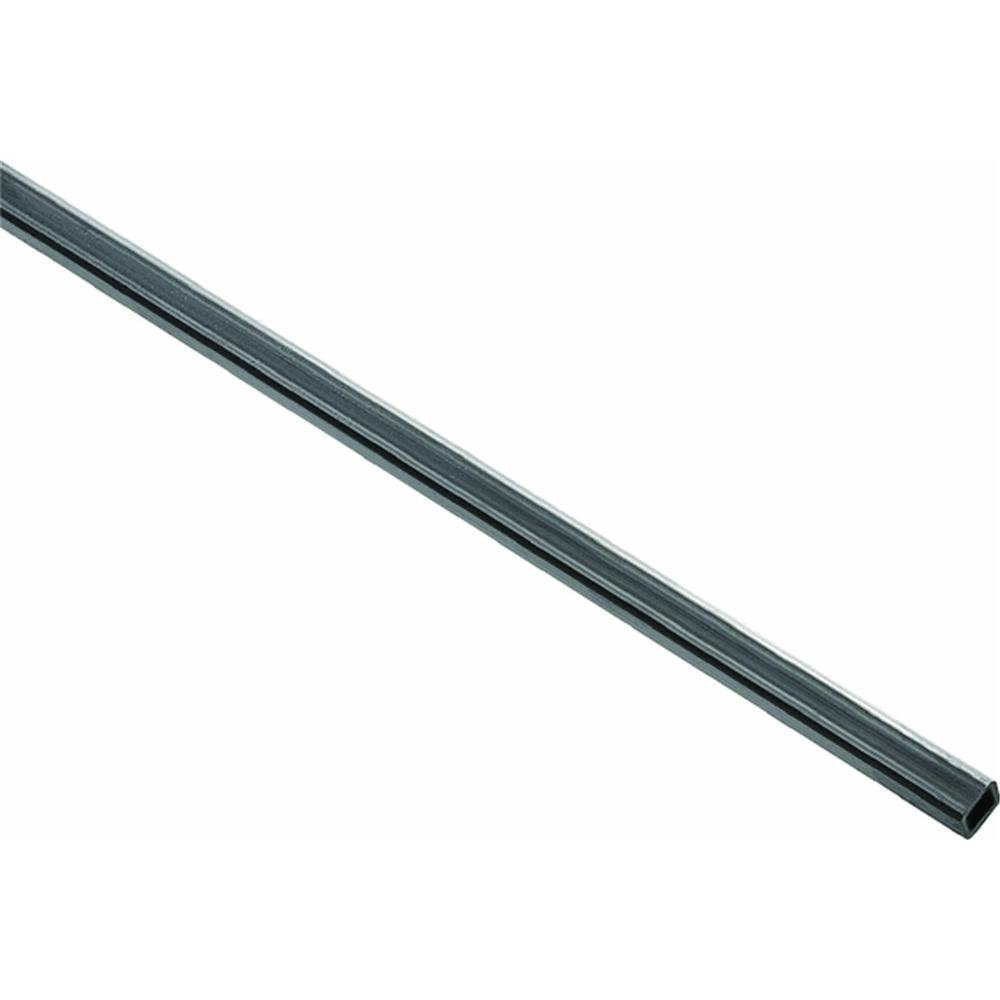
A no-frills 3-foot stick that solves the “I just need a bar” trip to the hardware store.
The Stanley square weld tube measures 0.5 inches outside with a thinner 0.0485-inch wall, and it runs a full 36 inches — a foot longer than the top pick for roughly the same money. Customers note the exact scenario this bar exists for: “I used this bar to fix my wife’s recliner. It was just what I needed.” Electric-resistance welding keeps the seam strong, and the hot-rolled plain steel surface is easy to work with.
If your project is a low-load brace, alignment guide, or hobby jig, this lighter wall suits it better than anything bearing serious weight. One buyer’s honest lesson: confirm if you need the inside or outside dimension before ordering, since the stated 1/2 inch is the outer width. Owners who grabbed it for quick fixes appreciated skipping the hardware-store run entirely.
At just 1 pound, this is the lightest option here, which makes it the easiest to handle for small jobs. It is not the tube you build a workbench from, but for a single repair or a short structural link it delivers exactly what the label promises. “Very good product, not much can be said about a square tube” sums up the practical mood of the reviews.
Where it shines: it is the fastest, cheapest way to finish a one-off furniture fix without hunting through a store rack.
The honest limit: the 0.0485-inch wall caps how much weight you should hang on it.
Grab this if: you need a single 3-foot bar for a repair, not a bulk supply.
skip it if: your project demands a thicker wall for real load-bearing duty.
3. Small Parts 1008-1010 Steel Square Tube, 0.5″ x 4′

The longest single stick in the lineup at 48 inches, made from low carbon 1008-1010 steel that stays workable.
You get a full 4 feet of 0.5-inch square stock with the same 0.065-inch wall as the top pick, but in a low-carbon grade that is noticeably easier to bend, cut, and shape by hand. Owners have used it to reinforce a pull-behind lawn rake’s front edge, attaching it with pop rivets because it was “stiff enough without being too heavy.” The 0.370-inch inner diameter tells you exactly what fits inside for telescoping work.
The mill finish (unpolished) is the trade-off for the price — it is functional but not pretty. A coastal builder using these to maintain 3-inch separation on a stainless steel deck railing in Hawaii reports they need painting near the ocean, “while they are much better than regular steel.” That paints an honest picture: this is smart, strong stock for outdoor framework, but plain steel still demands a topcoat in salt air.
What stands out is the stiffness-to-weight balance at just 1.4 pounds across the full 4 feet. You get noticeably more usable length than the 24-inch OnlineMetals bar (a 2.0x gap) without carrying a heavy bundle. For railing spacers, rack builds, and rake reinforcements, this is the value-per-inch winner among the 0.5-inch tubes.
Best in the lineup for: stretching a single stick across a long span or maintaining even spacing on a railing system.
The catch: the mill surface is rough and will rust fast if you skip painting in wet or coastal conditions.
Choose this when: length per dollar matters more than a polished finish.
Look elsewhere if: you want a ready-to-show surface straight from the start.
4. OnlineMetals A500/A513 Carbon Steel Square Tubing, 1.5″ x 0.12″ Wall

The heavyweight 1.5-inch rail trusted to hold a 2-ton hoist, for builds that outgrow 1/2-inch stock.
If your project has grown past 1/2-inch tubing, this is the upgrade path: a 1.5-inch square tube with a beefy 0.12-inch wall running 36 inches. That is an 85% thicker wall than the 0.065-inch tubes above, which is why owners trust it to hold a 2-ton hoist and build vise-and-anvil carts. The hot-rolled ASTM A36 stock arrives with a light rust-preventative coating, “well packaged” and ready for the welder.
The size jump is the whole story — its outside diameter is 3.0x the 1/2-inch options, so it patterns with structural frames, machine mounts, and gates rather than furniture braces. The smooth mill surface cuts, drills, welds, and grinds cleanly, and repeat reviewers point out the seller’s speed and consistent quality across custom guitar and motorcycle projects. This is shop-grade material for load-bearing layouts.
Naturally, the heavier wall and bigger footprint make this the least nimble pick at 3 feet and the most premium in cost. It is not a “quick fix” bar; it is the raw material for a permanent structure. One dissatisfied review exists among the noise, but the overwhelming pattern from owners is clean cuts, accurate specs, and steel that performs exactly as rated.
What earns the top-performer tag
- 0.12-inch wall carries serious load — hoists and heavy carts included
- Clean mill surface welds and drills without fighting you
- Fast, consistent delivery from a seller trusted for repeat orders
Who this overshoots
- 1.5-inch size is far too big for small furniture or craft projects
- Heavy and premium-priced compared to 1/2-inch repair stock
Buy this for: frames, benches, and mounts where failure is not an option and welding is the plan.
Do not buy it for: a simple recliner brace — the 0.5-inch tube is the right scale for that.
Understanding the Specs
Outside Diameter (OD)
The outer width of the tube across one flat face — a “1/2 inch” square tube measures 0.5 inches outside. If you plan to insert a bolt, rod, or smaller tube inside, you need the inner dimension, which is the OD minus two wall thicknesses. Always confirm whether a listing quotes ID or OD before ordering.
Wall Thickness
The amount of steel between the outer face and the hollow center, stated in inches. A thicker wall, like 0.12 inches, resists bending under heavy loads, while a thinner 0.065-inch or 0.0485-inch wall suits light braces and jigs. Match the wall to the real weight the tube must carry.
FAQ
Does “1/2 inch square tubing” mean the inside or outside width?
Can I drill holes in 1/2 inch square steel tubing at home?
Will plain steel square tubing rust outdoors?
What is the difference between A500 and A36 steel tubing?
How much weight can 1/2 inch square tubing hold?
Can I weld 1/2 inch square steel tubing?
What is the difference between a 24-inch and a 48-inch length for my project?
Is 0.065-inch wall thickness enough for a repair brace?
Why does square tubing cost more per foot than round pipe?
Can I use 1.5-inch square tubing instead of 1/2 inch?
Final Thoughts: The Verdict
For most repair and light-frame jobs, the winner is the OnlineMetals A500/A513 0.5-inch tube because its 0.065-inch wall and 24-inch length strike the proven balance of strength and drillability for furniture fixes. If you want the longest single stick of 0.5-inch stock, grab the Small Parts 48-inch tube for outdoor railing spacers and long spans. And for heavy structural builds that need real load capacity, the OnlineMetals 1.5-inch tube with its 0.12-inch wall is the one to reach for. The whole category depends on one honest rule: measure your outside dimension, match your wall to your load, and paint anything that lives outdoors.
How We Picked
We do not accept paid placement. Every pick is matched to a real buyer and a real use-case; we do not hands-on test units.
Sources & Methodology
Specifications: manufacturer listings and product documentation. Review insights: verified customer reviews, as of September 2026. Pricing: not shown on this page (it changes often); check the current price via the retailer link.
As an Amazon Associate, KitchPrep earns from qualifying purchases. This does not affect which products we feature.
Related Guides
