
Specs are compiled from manufacturer listings and verified buyer reviews and can change over time — please confirm the key details on the product page before buying.
Hooking up a gas range, generator, or grill often boils down to one frustrating choice: wrestle with rigid black iron pipe, or find flexible tubing that actually fits your exact run. A 1/2 inch gas pipe is the standard size for most single-appliance hookups, but “standard” rarely matches your actual measured distance. This guide sorts out the best flexible and rigid fittings for the job, translating the real specs and owner experiences so you can buy with confidence the first time. Please note that this list uses flexible matching for the 1/2 inch nominal pipe size — not every pick is the exact same style, but each serves the same purpose for a typical DIY gas connection.
I’m Mohammad Maruf — the founder and writer behind KitchPrep. This guide is built by comparing the manufacturers’ published specifications and the patterns across verified customer reviews, so you get each pick’s real strengths and trade-offs instead of marketing spin.
For most home gas projects, picking the best 1/2 inch gas pipe means deciding between a precise brass nipple or a bendable stainless steel line that you cut to fit your space.
Our Picks at a Glance
How To Choose The Best 1/2 Inch Gas Pipe
Choosing the right gas line is about safety first, convenience second. You need a product that matches your appliance’s gas type (natural gas or propane), fits the physical space you are working in, and connects with the correct threading for a tight, permanent seal.
Rigid Brass vs. Flexible Stainless Steel
When you need to bridge a short, fixed gap—say, between a wall stub and a tub spout—a solid brass nipple gives you total rigidity, so once it is threaded in, it stays put. For longer runs that twist around corners or through tight joists, you need corrugated stainless steel tubing (CSST), a flexible metal hose that often comes in long coils you can cut down to your exact measured length.
Understanding Thread Standards
Most household gas fittings in North America use NPT (National Pipe Taper) threads, which are designed to wedge tighter as you turn them. This taper creates a metal-to-metal seal that is essential for handling gas under pressure. When you pair two fittings, both must use the same thread standard and the same nominal diameter, usually 1/2 inch, to form a safe connection.
Quick Comparison
| Model | Best For | Length | Outside Diameter | Material | Amazon |
|---|---|---|---|---|---|
| Supply Giant Brass Nipple★ Best Overall | Fixed rigid connections | 5.5 inches | — | Brass | Amazon |
| SweetBin 33FT CSST | Budget long flexible runs | 396 inches | 0.63 inches | SUS304 Steel | Amazon |
| Vruelia 37ft CSST | Thicker steel core runs | 37 feet | 0.52 inches | 304 Stainless | Amazon |
| Dogetgd 37ft CSST | DIY retrofits and new runs | 444 inches | 0.63 inches | Stainless 304 | Amazon |
In‑Depth Reviews
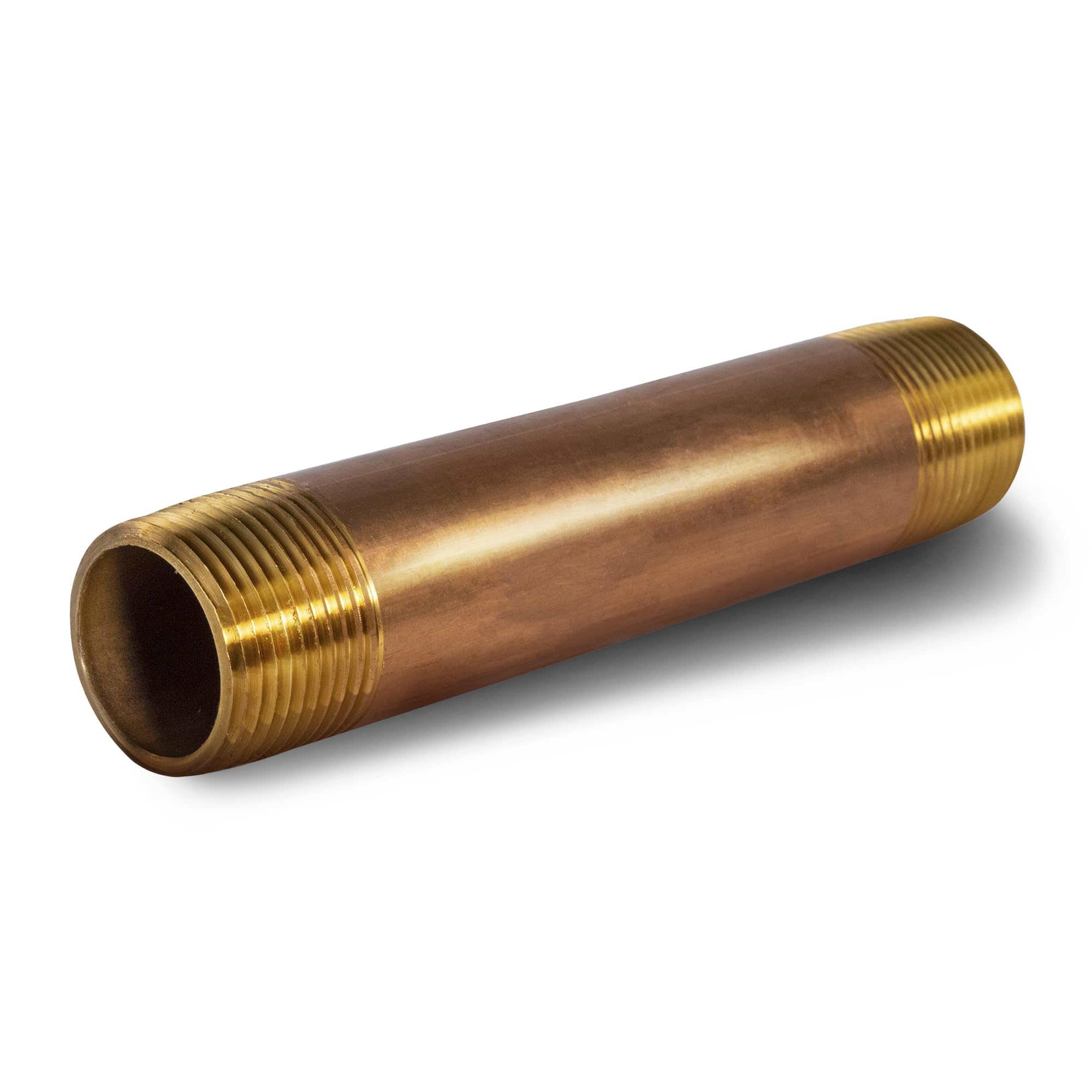
1. Supply Giant 5-1/2″ Brass Nipple Pipe Fitting
Our pick — over 4.5★ from 100+ verified ratings; the strongest balance of quality and price.
The precision-fix brass nipple for exact gaps rigid pipe cannot bridge.
When your connection point is off by a specific measurement, a solid brass nipple cut to a precise length solves the gap. This Supply Giant fitting measures 5.5 inches long with a 1/2″ nominal diameter, giving you the exact reach needed when a standard 4-inch or 6-inch piece just will not line up. It is a rigid metal connector, so it is perfect for a fixed gap like the one between a wall stub and a tub spout.
The brass resists corrosion and withstands high temperatures and pressures for permanent gas or water connections. Both ends use NPT (National Pipe Taper) threads, which is the standard for creating a tight, leak-free seal with other pipe fittings. NSF 61-4 and AB1953 approvals confirm lead-free safety for potable water systems.
Owners repeatedly describe the struggle of finding this exact non-standard length locally, with one buyer noting they were “either off by a half-inch or over by an inch” with other options before this piece “finally worked.” Owners praise this as a reliable choice when precision matters, since quality 5-1/2″ brass fittings are hard to find in stores.
Why It Wins
- Precise 5.5-inch length bridges gaps standard fittings miss
- Lead-free certified brass for safety in gas and water lines
- Corrosion-resistant material stands up to high pressure
Limited Flex
- Rigid design means zero bend for routing around obstacles
- Single-piece fitting is not for long-distance runs
Reach for this if: you need a sturdy, exact-length metal connector for a short, fixed gap and want the confidence of a certified lead-free brass fitting.
Look elsewhere if: your project requires snaking a line around corners — you will need a flexible CSST hose instead.
2. SweetBin 33FT 1/2″ CSST Gas Line Hose

The budget-friendly 33-foot coil that bends around obstacles and cuts to your exact length.
For a long, winding run from a tank to an appliance, this flexible gas line is the economical way to go. You get a full 396 inches of corrugated stainless steel tubing, which is a massive 72 times the length of the rigid brass nipple above. This allows you to cut the hose to any length you need and snake it through corners and tight bends that would be impossible with rigid black iron pipe.
A SUS304 stainless steel interior provides strength, while a UV-resistant yellow PVC jacket shields it from weather. It comes with 1/2″ brass fittings pre-attached on both ends, which are the standard size for connecting to most gas appliances, generators, and grills. The flexible nature of the pipe means you can navigate a complex path without adding multiple leak-prone joints.
Functionality is what owners praise most about this coil — it simply does the job it is meant for. Buyers report it “worked great for connecting my propane tank to the connection point for my generator,” highlighting its real-world usefulness for portable power setups. The main note for improvement is that it should come with better options to secure the line, but the quality of the hose itself receives consistent positive feedback.
Best Value: This is the entry point for long flexible runs — a 396-inch stainless steel hose with standard brass fittings that handles tight corners without the cost of premium upgrades. The trade-off is the thinner PVC jacket and fewer included securing accessories compared to pricier coils.
Pick this for: a cost-effective, cut-to-length solution for connecting outdoor appliances like generators and grills where you need to navigate bends.
Be aware: owners suggest planning your own method to secure the hose, as the included options are limited.
3. Vruelia CSST Flexible Propane Gas Line 1/2” 37 ft
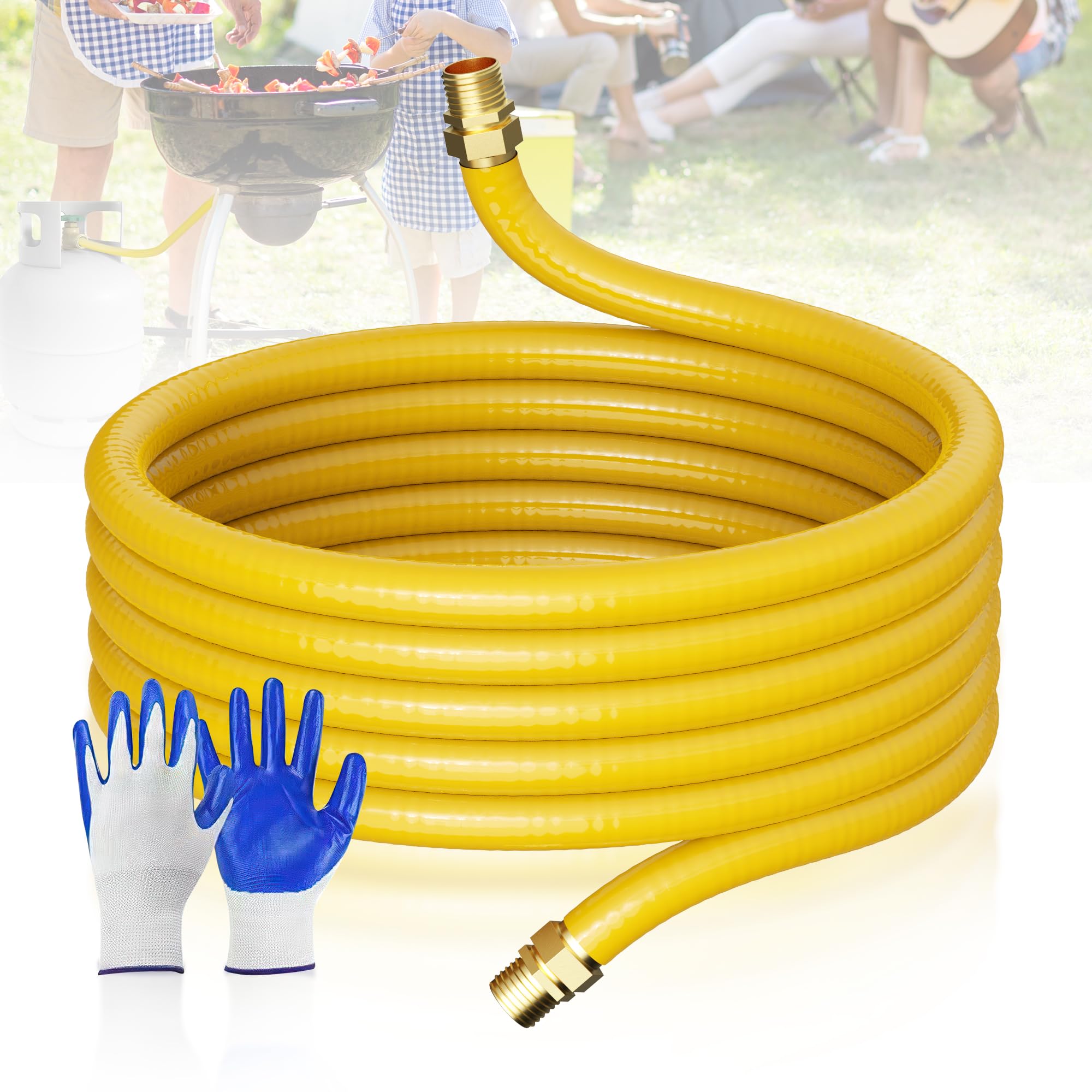
The heavy-duty 37-foot coil with a thicker steel core for demanding permanent installations.
This CSST line is engineered for projects where professional-grade durability matters. Its defining feature is an upgraded 0.012-inch thick 304 stainless steel core, which is notably thicker than cheaper imports and resists the kinking that thinner tubes suffer. A 15 PSI pressure test and ASTM B280 certification meet the standards licensed plumbers and HVAC contractors expect.
The 37-foot length covers most residential runs, and the thick, durable yellow PE jacket is rated for extreme temperatures from -40F to 400F. This makes it suitable for a wide range of scenarios, from burying it underground for a pool heater to running it along an exterior wall for a fire pit. It comes with 2 pre-attached solid brass NPT male connectors, saving you the hassle of sourcing separate fittings.
Quality is the standout feature owners agree on, and this coil offers exceptional flexibility for routing. Buyers specifically praise the ability to “order the exact length I needed instead of trying to make a standard size work,” highlighting the DIY-friendly cut-to-fit design. The caveat to expect is that installation can be tricky for some — it is a gas line, so getting the connections just right takes patience and care.
Pro-Grade Build
- Thicker 0.012-inch steel core resists kinks and damage
- 15 PSI pressure-tested for confidence in permanent setups
- Jacket handles extreme temps from -40F to 400F
Installation Effort
- Some owners find the connections clumsy to assemble
- Higher cost than standard thinner-wall CSST coils
Choose this for: a permanent, high-pressure run where you want a thicker steel core and certified quality you can trust for years.
Be prepared for: a more deliberate installation process — take your time with the fittings and always test for leaks.
4. Dogetgd CSST 1/2″ Gas Line 37ft

The flexible retrofit specialist that whispers through tight spaces without kinking.
If you are adding a gas line to an existing home, this coil is built to minimize drywall demolition. The corrugated design routes through tight joists and behind walls, saving time over rigid pipe assembly. It comes in a 37-foot length that measures 444 inches total, giving you a slightly longer single coil than the Vruelia option while maintaining the same 0.63-inch outer diameter.
A corrosion-resistant 304 stainless steel interior is paired with a 0.079-inch UV-resistant polyethylene jacket. This sturdy outer layer is what allows the line to be embedded directly in concrete or hidden within drywall systems. Both ends come fitted with 100% male brass fittings—the “male” designation prevents any mismatching during installation, as male ends require a female counterpart on your appliance.
Owners frequently highlight how easy this line is to work with, describing it as a “time saver” that is “perfect for retro fit and new run applications.” The material handles well without kinking, and the fittings seal well enough to pass inspection leak-free. The main caveat is sizing—a small number of buyers received a coil that was not true to the labeled size, so measure your connections carefully before cutting the hose, as you cannot return it once trimmed.
DIY Favorite: The combination of supreme flexibility and easy-to-use brass fittings makes this a top pick for retrofits. The risk is the occasional sizing mismatch, so verify the inner diameter against your existing fittings before you make any cuts.
Ideal for: homeowners tackling a weekend retrofit who want a flexible, embeddable line that does not kink while you wrestle it into place.
Double-check: the labeled size against your appliance fittings immediately upon arrival, before you cut the coil to length.
Understanding the Specs
Wall Thickness
This spec tells you how much stainless steel is between the gas and the outside world. A thicker wall, like the 0.012 inches on the Vruelia line, resists dents and kinks better than thinner 0.008-inch imports. It means the hose is less likely to be damaged if something heavy is placed against it.
Outside Diameter vs. Inner Diameter
There are two key measurements on a flex line. The inner diameter determines gas flow — most 1/2-inch lines offer around a 0.47-inch opening. The outside diameter includes the corrugated ridges and is what you measure to fit clamps. The SweetBin and Dogetgd coils both list a 0.63-inch outer diameter, while the Vruelia is slimmer at 0.52 inches.
FAQ
What does NPT mean on a gas pipe fitting?
Can a flexible CSST gas line be buried underground?
How do I cut a CSST gas line to my exact length?
What is the difference between a brass nipple and a CSST coil?
Can I use a gas line rated for natural gas with propane?
How do I check for gas leaks after installation?
Are brass pipe fittings safe for drinking water lines?
What tools do I need to install a CSST gas line?
Final Thoughts: The Verdict
For most people, the ideal 1/2 inch gas pipe boils down to the shape of your project. If you have a short, precise gap that needs a solid, certified connection, the Supply Giant Brass Nipple is the exact-fit winner. If you need to run a long line around corners, the Vruelia 37ft CSST line offers the thickest steel core for a permanent installation, while the SweetBin coil provides the most budget-friendly way to get the same flexibility.
How We Picked
We do not accept paid placement. Every pick is matched to a real buyer and a real use-case; we do not hands-on test units.
Sources & Methodology
Specifications: manufacturer listings and product documentation. Review insights: verified customer reviews, as of September 2026. Pricing: not shown on this page (it changes often); check the current price via the retailer link.
As an Amazon Associate, KitchPrep earns from qualifying purchases. This does not affect which products we feature.
Related Guides
