
Specs are compiled from manufacturer listings and verified buyer reviews and can change over time — please confirm the key details on the product page before buying.
If you are fixing a burst pipe or running a new water line, the right copper pipe depends on three things: the wall thickness (called the “type”), the length you need, and whether the run is straight or has to bend around corners. Get those three right and your repair or install goes smoothly. Get the type wrong and you will either overpay for thickness you do not need or buy pipe that will not hold up where the water pressure runs high. This guide lines up five real 1/2-inch copper pipes, from short rigid cuts to a full 100-foot soft coil, and explains in plain terms which one fits which job.
I’m Mohammad Maruf — the founder and writer behind KitchPrep. This guide is built by comparing the manufacturers’ published specifications and the patterns across verified customer reviews, so you get each pick’s real strengths and trade-offs instead of marketing spin.
Copper is sorted by wall thickness before anything else, and that single choice decides where a pipe is safe to use. Rigid pipe ships straight and hard; soft coil bends by hand. This breakdown walks through both so you can match the metal to the job before you order the 1/2 inch copper pipe that actually fits your project.
Our Picks at a Glance
How To Choose The Best 1/2 Inch Copper Pipe
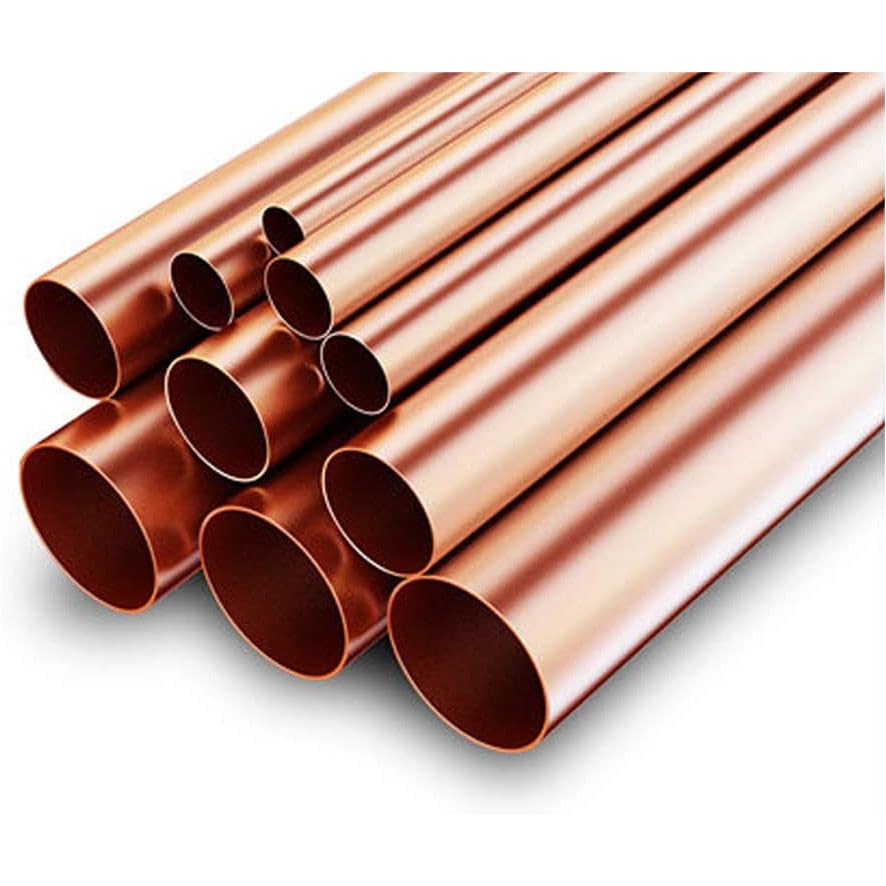
Copper pipe is not one product — it is a family of wall thicknesses and tempers that all get called “1/2 inch.” A 1/2-inch nominal pipe always measures about 5/8 inch on the outside, so the water inside flows through a smaller opening. The thicker the wall, the smaller that opening and the more pressure the pipe can handle. That is the whole decision in one sentence, and everything below expands on it.
Start With The Type: M, L, Or Soft Coil
Type M is the thinnest of the common rigid pipes, which makes it lighter, easier to cut, and the usual pick for residential water lines. Type L has a heavier wall, so it stands up to higher pressure and is the safer match for underground runs, HVAC, and anything that has to last. Soft copper coil is annealed, meaning it has been heated and cooled so it bends by hand — you use it when a single run has to snake around studs and corners instead of running dead straight.
Match The Length To The Run, Not The Other Way Around
Rigid pipe ships in fixed cuts, so you want the length to cover your run with as few joints as possible. Every extra joint is a spot that can leak, which is why a longer single piece often beats two short pieces and a coupling. If your run is short and straight, a compact rigid cut is simpler to handle. If it is long or has bends, a coil removes most of the joints on its own.
Check The Fitting You Will Use Before You Buy
Standard 1/2-inch copper works with sweat (solder) fittings, press-fit systems, and push-on connectors. Match the pipe’s outer diameter to the fitting’s rating and you are fine. If you are joining to an existing line, confirm the existing pipe runs the same nominal size, because a Type M and a Type L of the same “1/2 inch” share an outer diameter but differ in wall thickness.
Quick Comparison
| Model | Best For | Pipe Type | Length | Outside Diameter | Amazon |
|---|---|---|---|---|---|
| VENTRAL Copper Pipe Type M 1/2 Inch★ Best Overall | Short rigid plumbing runs | Type M, hard temper | 36 inches | 0.625 inches | Amazon |
| 1/2 Inch Type M Copper Pipe, Rigid Plumbing TubeBest Value | Small repairs and SharkBite joins | Type M, ASTM B88 | 18 inches | 0.5 inches | Amazon |
| ICS Industries 1/2″ Type L Hard Copper 5 FT | Longer straight runs and gas lines | Type L, hard temper | 60 inches | 0.63 inches | Amazon |
| 1/2 Inch Type L Copper Pipe, Rigid Plumbing Tube | Heavy-wall pressurized lines | Type L, ASTM B88 | 48 inches | 0.5 inches | Amazon |
| ICS Industries Type L Soft Copper Tubing Coil | Long runs that bend around corners | Type L, annealed soft coil | 100 feet | 0.625 inches | Amazon |
In‑Depth Reviews
1. VENTRAL Copper Pipe Type M 1/2 Inch (0.625 OD), Straight Hard Temper, Cut Lengths for Plumbing Water HVAC (36 Inches Long)
Our pick — over 4★ from 80+ verified ratings; the strongest balance of quality and price.
A three-foot rigid cut of Type M that covers the average repair without extra joints.
If your project is a straight run of plumbing, HVAC, or cold water supply line, this is the length that saves you from piecing two shorter sticks together. At 36 inches it gives you real working room — enough to reach across a stud bay or replace a damaged section in one piece. The 0.625-inch outside diameter is the standard measurement for a 1/2-inch nominal pipe, so it drops straight into common fittings without any adapter.
Type M is the thinner wall of the rigid copper family, and that is exactly what makes it the smart everyday pick. Thinner copper cuts faster, bends less stubbornly, and costs less to buy for the same length. Ventral notes the pipe offers good thermal conductivity and corrosion resistance, which is why copper stays the go-to for long-term mechanical installs. It is made and fabricated in the USA, a detail owners in plumbing trades tend to check before ordering a box of pipe.
The part that wins people over is how it shows up at the door. The catch worth knowing: Type M is the lightest-wall option, so if your run sees high pressure or goes underground, step up to Type L instead. And because you are buying one cut at a time, a longer run means ordering more pieces.
What Earns Its Keep
- 36-inch length covers most single repairs without a coupling
- Type M wall cuts fast and stays affordable per length
- Ships padded so it arrives dent-free and ready to sweat
Where It Stops Short
- Thin wall is not the match for high-pressure or buried runs
- One cut per order means longer jobs need multiple pieces
Buy it for: a straight plumbing or HVAC repair where three feet does the job and you want the easier-cutting thin wall.
Think twice if: your line runs underground or carries heavy pressure — a Type L pipe is the stronger match there.
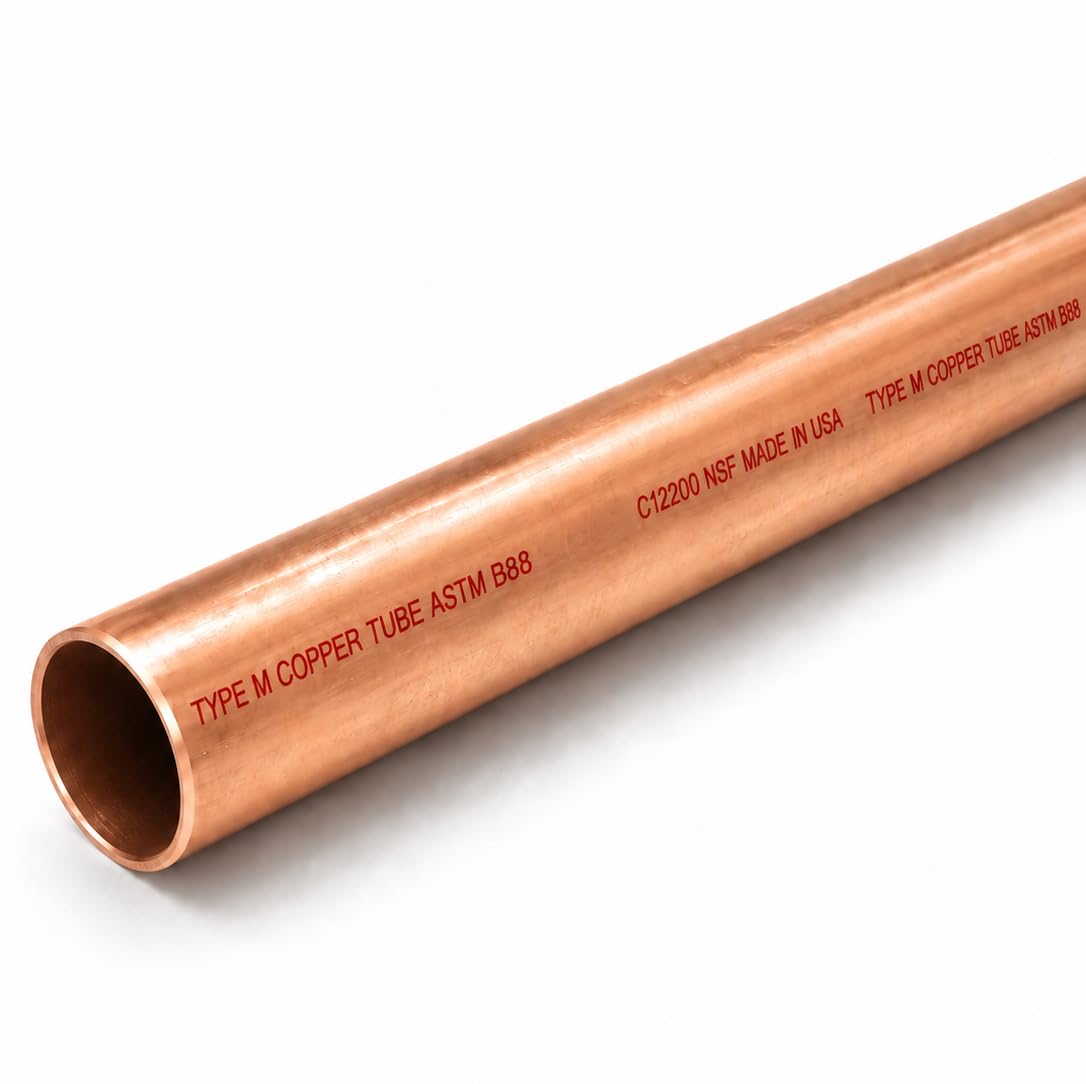
2. 1/2 Inch Type M Copper Pipe, Rigid Plumbing Tube for Water, HVAC and Refrigeration, ASTM B88 Certified, Sweat-Solder Compatible (18 Inches)
The short cut for joining two fittings when the hardware store is out.
This is the pipe for the specific problem of a broken stub between two connectors. At 18 inches it is the shortest piece on this list — the ICS Industries Type L next to it runs 60 inches, so this one suits a tight spot where a three-foot length would just get in the way. It is built to ASTM B88, the standard that governs smooth copper water tube, and it is certified for sweat-solder, press-fit, and compression fittings alike.
Type M copper is the lighter, thinner wall, and that thinness pays off at the cut. It slices cleanly with a standard tubing cutter and takes solder without a fight. It is rated to a maximum pressure of 750 psi, enough for residential potable water and hydronic heating. It is precision-cut and deburred, so the ends are ready to slide into a fitting as soon as it lands.
What owners keep coming back to is the fit. It lines up with standard 1/2-inch copper fittings, and buyers report it working “perfectly to join 2 sharkbite connectors on my hot water heater” when the local hardware store had nothing on the shelf. One caution worth a mention: a lone pipe can arrive with surface discoloration, so inspect the length before you cut it. For a small repair or a short SharkBite extension, that is a minor risk — and the reward is a piece that is exactly the size you need without a special order.
The real draw: A deburred, ASTM B88 Type M cut in a size that solves the exact problem of a missing short stub — no cutting down a longer pipe and wasting the remainder.
Fair warning: Type M is the thin-wall option, so keep it out of buried or high-pressure duty, and give it a look-over for discoloration on arrival.
Reach for this if: you need a short piece to bridge two fittings and want it pre-cut and ready to solder.
Look elsewhere if: you are running a line longer than a foot and a half — a longer cut or a coil will serve you better.
3. ICS Industries – 1/2″ TYPE L HARD COPPER 5 FT LENGTH 5/8″ OD ASTM B88 C12200, FOR INDUSTRY, POTABLE WATER, GAS, DIY

Five feet of hard-drawn Type L for a longer straight run that has to last.
When your run is longer than a repair stub, this is the length that lets you skip a joint. At 60 inches it stretches five feet in one piece, and the hard-drawn temper keeps it dead straight — which is what you want for a clean professional line across a wall or ceiling. It is fabricated from high-purity C12200 copper alloy and built to ASTM B88, the same standard serious trade buyers use to judge a pipe.
Type L is the heavier wall, and that heavier wall is the whole point of choosing it. Medium-wall thickness gives this pipe more pressure tolerance than a Type M, which matters for residential, commercial, and industrial lines that carry more load. The 0.63-inch outside diameter is the true 5/8-inch OD the Type L family uses — noticeably wider than the 0.5-inch figure the two shorter list entries list, so confirm your fittings match before ordering. It is rated for potable drinking water, natural gas and propane lines, and industrial fluid transfer.
Owners put it to work in exactly the tough spots you would expect. It handled a repair where frozen pipes had burst a line — installed, as one buyer described, to replace “damaged pipe in church kitchen ceiling due to frozen pipes.” The recurring note is on delivery: the pipe arrives new and shiny, though shipping can sometimes take its time. For the price tier, you are getting commercial-grade metal in a length that reduces the number of joints on your run, which is where the real savings show up over years of service.
Why it earns the premium slot: Heavy-wall Type L in a full five-foot rigid cut — the heavy metal for gas, potable water, and high-strength DIY where a thin wall would be undersized.
The honest catch: It is stiffer and heavier than Type M, so simple low-pressure jobs do not need this much pipe — and shipping may not be instant.
Pick it when: your run is long and straight, or it carries gas or higher pressure, and you want the reassuring weight of Type L.
Pass it over if: you have a short low-pressure repair — a lighter Type M cut handles that without the extra cost.
4. 1/2 Inch Type L Copper Pipe, Rigid Plumbing Tube for Water, HVAC and Refrigeration, ASTM B88 Certified, Sweat-Solder Compatible (48 Inches)
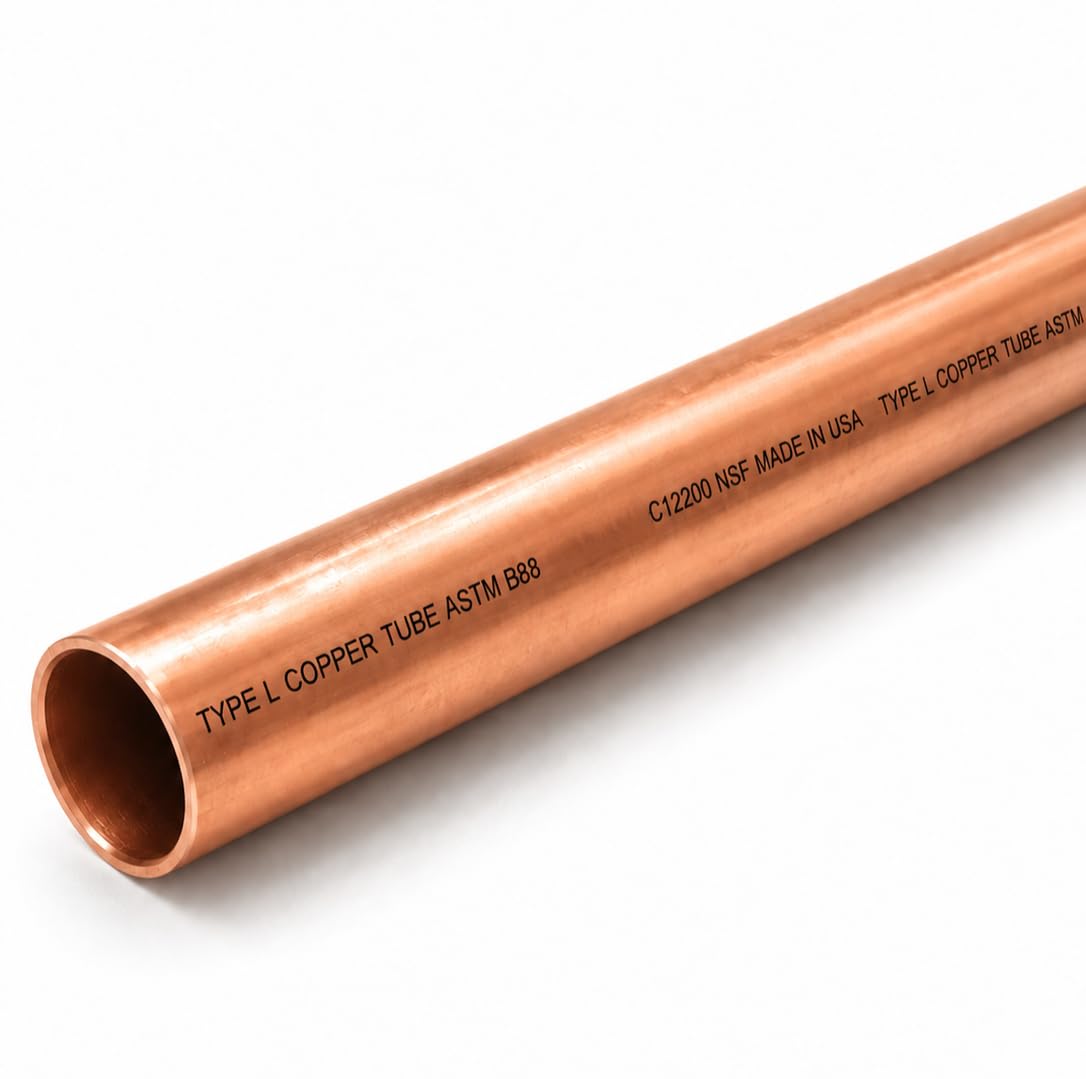
Four feet of heavy-wall Type L for pressurized lines that ask more of the metal.
This pipe is for the job where you want extra wall between the water and a failure. It is heavy-wall Type L, certified to ASTM B88, and rated to a maximum pressure of 750 psi — the same rating as the Type M above, but in a thicker wall that stands up better to sustained load. At 48 inches it splits the difference between a repair stub and a five-foot run, giving you four feet with room to trim.
Like the Type L hard copper from ICS, this one is built for potable water, hydronic heating, and gas distribution where the spec allows, and it takes sweat-solder, press-fit, and compression fittings. It carries a bit of heft — the difference a stronger, heavier pipe makes versus the lighter Type M cuts on this list. That weight is the trade-off for durability, and it is exactly what you reach for on a pressurized or high-strength installation.
Where it shines is joining. It connects two push-on fittings in one clean span, which is how buyers use it — one put it in to extend the stubs on a hot water coil so SharkBite fittings could be installed. A few find the cut runs shorter than an expected twelve inches, and one oversized order came in heavier than wanted. Neither is a deal-breaker for the typical pressurized repair, but it is worth confirming the exact length on the label before you rely on it for a precise fit.
Built for pressure: Heavy-wall Type L with a 750 psi rating, sized at 48 inches for a pressurized run that needs more metal than a thin M cut.
Weigh the trade: The thicker wall means more weight and less flexibility, and a couple of buyers found the delivered length off from what they expected — measure your run first.
The right call for: a pressurized line, an HVAC tie-in, or a four-foot span where a heavier wall is worth the extra weight.
Not your pipe if: you want the lightest, easiest-cutting metal for a low-pressure repair — Type M is the simpler match.
5. ICS Industries Type L Soft Copper Tubing Coil – 1/2″ Nominal (5/8″ OD) x 100 FT (ASTM B88, NSF-61 Certified)

A hundred feet of bendable Type L that snakes around studs without a single joint.
For a long run that has to turn corners, nothing on this list comes close to a soft coil. It is one continuous length of annealed Type L, which means the copper has been heat-treated to stay flexible enough to bend by hand — so you can route it around studs and obstacles instead of cutting and soldering at every change of direction. Fewer joints means fewer spots that can leak.
Its wall is heavier than rigid Type M at a nominal 0.040 inches, and it is built to ASTM B88 with NSF/ANSI 61 and 372 certification for lead-free potable water. It is sized at the standard 1/2-inch nominal with a 0.625-inch outer diameter, so it matches the same fittings the rigid pipes above use. The factory caps the ends to keep the inside clean in transit, and the coil rolls out smoothly for the kind of long interior, underground, or HVAC installation where a straight stick would never fit.
Owners describe the whole thing as trouble-free — arriving well packed and in good shape, and doing its job without fuss. The clear trade-off is that a rigid straight pipe is easier to keep perfectly level for a visible run, while a bendable coil takes a little patience to keep tidy. If your line is short and straight, the five-foot ICS type L rigid pipe is the simpler tool. If it winds through a ceiling or runs underground to a far point, this coil is what makes the job clean.
The standout: 100 feet of continuous bendable Type L with capped ends and NSF-61 lead-free certification — the joint-eliminating choice for long or winding runs.
Know before you buy: A coiled pipe takes more care to keep straight and level on exposed runs, and the premium price tag reflects the sheer length of metal on the spool.
Best suited to: anyone running copper through a ceiling, underground, or a path with bends, where avoiding joints is the priority.
skip it if: your job is a short straight repair — a single rigid cut gets it done for far less metal.
Understanding the Specs
Pipe Type: M vs L vs Soft Coil
The “type” tells you how thick the pipe wall is, and that decides where the pipe is allowed to go. Type M is the thinnest of the common rigid walls — lighter and cheaper, fine for standard residential water lines. Type L is heavier, so it holds up better under higher pressure and in underground or HVAC use. Soft coil is Type L metal that has been annealed so it bends; you pick it when a run has to curve instead of running straight. When in doubt on a load-bearing line, move up from M to L.
Nominal Size vs Outer Diameter
“1/2 inch” is the nominal size, not the outside measurement. A 1/2-inch nominal copper pipe measures about 5/8 inch across the outside — the 0.625-inch OD you see on Type L cuts. The wall thickness then sets the inner diameter, which is the actual channel water flows through. That is why a Type M and a Type L of the same “1/2 inch” share fittings but pass water through slightly different openings. Always match fittings to the outer diameter, and match the pipe type to the pressure the line will see.
FAQ
What is the difference between Type M and Type L copper pipe?
Will 1/2 inch copper pipe work with SharkBite fittings?
What does ASTM B88 mean on copper pipe?
Can I bend rigid copper pipe by hand?
How long should my copper pipe be for a repair?
Is copper pipe safe for drinking water?
What pressure can 1/2 inch copper pipe handle?
Do I need to clean the ends before soldering copper pipe?
Can copper pipe be used for natural gas lines?
Final Thoughts: The Verdict
The easiest pick for most straight repair and install jobs is the VENTRAL Copper Pipe Type M 1/2 Inch, because its padded shipping and 36-inch length let you cover a typical run in one piece without fuss. If you want heavier metal for a pressurized or gas line, reach for the ICS Industries 1/2″ Type L Hard Copper and its full five-foot cut. And when the run bends around corners or stretches far, the ICS Industries Type L Soft Copper Coil is the one that removes the joints — the highest-rated of the group at 4.7 stars, so it is the confident choice for anyone who wants to bend rather than solder.
How We Picked
We do not accept paid placement. Every pick is matched to a real buyer and a real use-case; we do not hands-on test units.
Sources & Methodology
Specifications: manufacturer listings and product documentation. Review insights: verified customer reviews, as of September 2026. Pricing: not shown on this page (it changes often); check the current price via the retailer link.
As an Amazon Associate, KitchPrep earns from qualifying purchases. This does not affect which products we feature.
Related Guides
