
Specs are compiled from manufacturer listings and verified buyer reviews and can change over time — please confirm the key details on the product page before buying.
Buying 1/2 inch conduit is really a decision about three things: how long a run you need, whether it has to survive outdoors or underground, and how easily wire slides through it. Get those three right and the job goes fast. Get them wrong and you are fighting a stiff coil in the cold while your wire refuses to budge. This guide covers eight real options, from a 100-foot American-made PVC roll to short aluminum flex and complete kits with fittings already in the box.
I’m Mohammad Maruf — the founder and writer behind KitchPrep. This guide is built by comparing the manufacturers’ published specifications and the patterns across verified customer reviews, so you get each pick’s real strengths and trade-offs instead of marketing spin.
Runs that need to bend around corners, survive buried soil, or squeeze past a hot tub all come down to picking conduit that matches the job. Whether you are wiring a garage heater or burying a feeder line, this breakdown of the best 1/2 inch conduit shows which roll fits your project.
Our Picks at a Glance

How To Choose The Best 1/2 Inch Conduit
Conduit is the protective tube that carries the wire, not the wire itself. What you are really shopping for is the right jacket for your environment: wet, buried, sun-baked, or indoor-only. The trade size stays 1/2 inch across this whole list, but the material, the wall thickness, and the outside diameter change everything about how the job goes.
Match the material to the weather it will face
Non-metallic PVC is the common pick for yards, decks, and anything that gets wet, because it shrugs off corrosion and water. Aluminum flex is lighter and easier to cut, but it is meant for mechanical protection indoors. If your run sits in morning sun or gets buried, PVC is the safer bet.
Look for a sunlight-resistant jacket and an explicit “direct burial” note if the line goes in a trench. That one label decides whether the tube still looks intact after a few summers or cracks apart.
Check the outside diameter before you buy connectors
The “1/2 inch” here is a trade size, not a measurement you can put a tape on. A liquid-tight 1/2 inch conduit commonly measures 0.83 inches across the outside, while some thinner lines come in around 0.5 inches. Grab the wrong body and your fittings will not seat.
If you already own connectors, measure them first. If you are buying a kit, the straight and angled fittings already match the tube in the box, which removes this whole headache.
Plan for how wire feeds through
Solid, stiff wire is the hard part. A smooth interior lining helps, but the tighter the bend you force, the more friction you create. If your run has several corners, either size up or switch to stranded wire so it slides instead of jamming.
Quick Comparison
| Model | Best For | Length | Outside Diameter | Material | Amazon |
|---|---|---|---|---|---|
| Sealproof Type B Flexible Non-Metallic★ Best Overall | Long buried runs | 100 feet | 0.83 inches | PVC (Plastic) | Amazon |
| Woods Ultratite-Type NMWeatherproof Pick | Wet and outdoor spots | 25 feet | 0.5 inches | Non-Metallic | Amazon |
| Yariwiz Liquid Tight PVC KitBest Kit Value | Small jobs needing parts | 25 feet | 0.83 inches | PVC | Amazon |
| Woods Alflex-Type RWA Aluminum | Indoor cable armor | 25 feet | 0.5 inches | Aluminum | Amazon |
| AISIMEE Liquid Tight Conduit Kit | EV charger wiring | 50 feet | 0.83 inches | PVC | Amazon |
| GEOWAKY Liquid-Tight Conduit Kit | Garage and trench work | 50 feet | 0.83 inches | PVC | Amazon |
| HydroMaxx Flexible Non Metallic | Tight indoor corners | 50 feet | 0.5 inches | PVC | Amazon |
| Feotech Liquid-Tight Conduit and Connector Kit | Big outdoor installs | 100 feet | 0.83 inches | PVC with metal fittings | Amazon |
In‑Depth Reviews
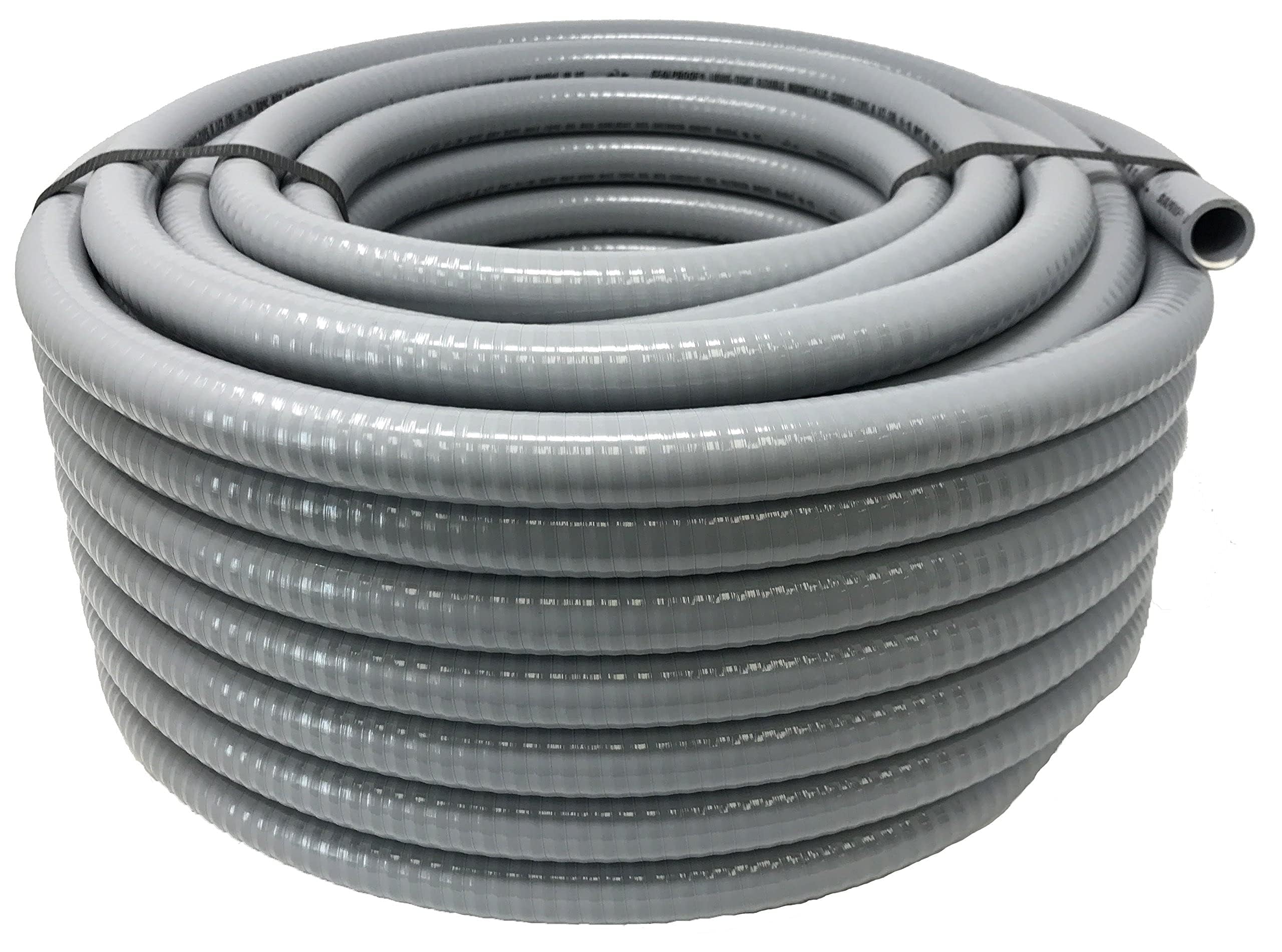
1. Sealproof 1/2-Inch Flexible Non-metallic Liquid-Tight Electrical Conduit Type B, UL Listed, 100 Feet, Made in USA
Our pick — over 4.5★ from 950+ verified ratings; the strongest balance of quality and price.
One hundred feet of American-made, UL-listed PVC rated for direct burial and sunlight.
For a long outdoor run — a yard feeder, a shed circuit, a hot tub feed — this is the roll that ends the shopping trip. It gives you 100 feet of Type B non-metallic liquid-tight conduit with an outside diameter of 0.83 inches, which seals against water while staying flexible enough to curve around obstacles. The 100-foot length is what matters most for anyone going underground. Burying a feeder means fewer splice points, and fewer splice points means fewer places that can take on water. Buyers report it holding up in exactly that role, with one noting: “My needs were 10 gage wire on 75’ run buried 24 inches underground.”
What wins people over is the build quality of the jacket itself. It is made from virgin PVC with an integral rigid-and-flexible construction, and it resists corrosion, abrasion, oil, water, acid, metal shavings, and rough ground contact. It carries a UL listing (Underwriters Laboratories, a national safety-testing certification) under File No. E-129973, with an 80°C dry and 60°C wet temperature rating plus 70°C oil resistance. Because it is 50% lighter than metallic conduit and has no sharp edges or burrs, you can handle it bare-handed and cut it with a utility knife or PVC cutter. The smooth interior is the part that saves your afternoon, since it lets wire slide instead of snagging.
The honest catch is wire pulling when your run has a lot of turns. In the product data’s review feedback, ease of use comes through as the one mixed point in an otherwise positive picture, and the single most-discussed trait across the reviews is quality rather than convenience — the friction of feeding stiff wire through a coiled tube is the recurring gripe, not the tube’s durability. Plan for it by pulling a fish line first, or step up to stranded wire on a run with several corners.
Where it earns its keep
- 100 feet on one roll — 4.0x the length of the Woods 25-foot line, so far fewer splices
- 12.5 pounds total for the whole roll, versus 3 pounds for a 25-foot competitor, yet still 50% lighter than metallic conduit foot for foot
- Made in the USA from virgin PVC with a UL listing and direct-burial, sunlight-resistant rating
- Fits Sealproof straight or right-angle connectors and works with any Type B metallic or non-metallic connector
What to plan around
- Ease of use is the soft spot — feeding wire through takes patience on a corner-heavy run
- At 0.83 inches outside, it is the wider of the two body sizes on this list, so check your fittings
- The coil arrives tight and needs unrolling before it will lie flat
Reach for it when: your run is long enough that a single 100-foot piece beats any stack of shorter rolls.
Think twice when: you only need a few feet for a small indoor job — this is far more tube than that.
2. Woods 55094221 25-Feet Ultratite-Type NM 1/2-Inch Non-Metallic Liquid Tight Flexible Conduit; Gray
A 25-foot UV-resistant roll sized for mini-split whips and exterior outlet runs.
If your project is a mini-split whip, a fence-line power run, or a junction box for an outdoor outlet, the 25-foot length here is sized almost exactly to that task. It is a 0.5-inch outside-diameter non-metallic liquid-tight tube with a UV-resistant jacket rated from -30°C to 80°C, or 60°C for oil contact. That temperature range is the number to care about if the line sits in sun all day: it is the published limit for where this jacket stays intact.
Where it stands out among the shorter picks is sealing. The conduit shuts out water, liquids, abrasives, alcohol, coolants, corrosive fumes and gases, grease, mineral acids, petroleum oils, and salt air and spray, which makes it a natural for coastal yards and wet exterior walls. It accepts standard liquid-tight fittings for LFNC-B use, so the odds are good your existing connectors will thread on. Compare it to the Sealproof above and you get a much more manageable package — 25 feet at 3 pounds against that roll’s 100 feet at 12.5 pounds, so this is the one to grab if 100 feet is overkill.
The trade-off shows up when the tube has been coiled a while. Coil memory is real here: the jacket wants to hold its rolled shape, and getting it to sit straight on a fence or wall can take effort. The conductor-protection job it does is solid, though, and the project data’s summary backs that the waterproof connections are a genuine plus. Buyers have leaned on it for the long haul — as one puts it, “4 years of being blasted by morning Puerto RIco sun and it’s still holding up.”
The sturdiness read: this jacket is thick and tough enough that you would struggle to kink or break it deliberately, which is exactly what you want wrapping romex.
The one annoyance: the roll fights you on straightening, and cold weather makes it worse — unroll it somewhere warm before you mount it.
Picture it for: exterior outlet runs, mini-split whip builds, and gate or underground 12V lines where you want waterproofing without a tool-heavy install.
Skip the fuss on: long straight surface runs, where the coil memory will have you wrestling waves out of the tube.
3. (1/2″ Dia * 25 Feet) Yariwiz Flexible Electrical Conduit Liquid Tight PVC Conduit Kit with 3 PCS Coupling, 3 PCS Elbow and 7 PCS Strap
Twenty-five feet of grey PVC with 3 couplings, 3 elbows, and 7 straps in the box.
Most conduit trips turn into two trips, because the tube is easy to find and the fittings never are. This kit closes that gap. You get 25 feet of 1/2 inch flexible PVC conduit measuring 0.83 inches outside and 0.63 inches inside, along with 3 straight couplings, 3 ninety-degree elbows, and 7 conduit straps — enough hardware to route a small run without a second order. It carries a UL certification, and the material is polyvinyl chloride, which resists corrosion, abrasion, oil, water, acid, metal shavings, and rough environments.
Replacing old metal is the job this one was practically made for. The conduit suits electrical, telephone, cable, HVAC, refrigeration, and landscape lighting work, so it fits a lot of small-home projects. One buyer used just 5 feet of it to swap out 50-year-old rusted metal conduit feeding a well pump and came away pleased with both the tube and the included parts. The 0.83-inch outside diameter also matches the widest body on this list, so it pairs with standard liquid-tight fittings if you already have some.
Feeding wire inside a 0.63-inch inner diameter is where you have to think. Solid THHN is thick and stiff, and it can be a fight to thread through 1/2 inch — the review data flags exactly this, with a buyer noting that 1/2″ is a little tight to feed solid THHN and that next time they would step up to 3/4 inch conduit or switch to stranded wire. The same pattern shows up again on cold days, when the PVC firms up and needs to be warmed indoors or in the sun before it bends willingly.
Why the parts matter: a kit with elbows and straps built in beats a cheaper bare roll once you price the fittings separately.
Work around the friction: use stranded wire, or lubricate and pull in stages, if your route has right angles.
Suits you if: you want one box that covers a compact electric, irrigation, or lighting run end to end.
Look at a wider body if: you are planning to pull heavy solid wire through several elbows.
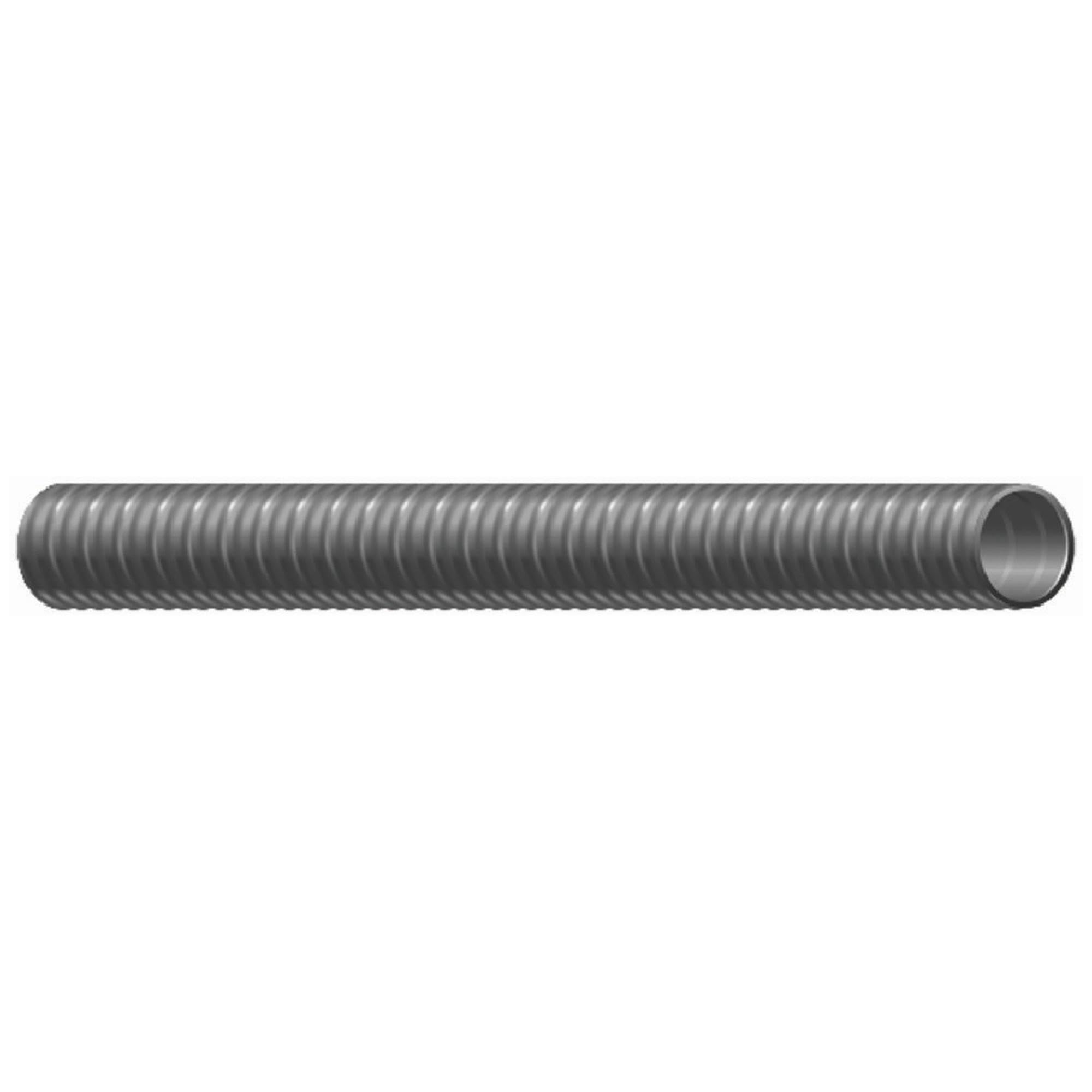
4. Woods 55082121 25-Feet 1/2-Inch Alflex-Type RWA Reduced Wall Metal Aluminum Flexible Conduit

Two pounds of reduced-wall aluminum flex for indoor cable protection.
When the job is armoring a cable indoors, not burying a feeder, aluminum flex does the work with far less heft in your hands. This roll is 25 feet of 1/2 inch reduced-wall aluminum alloy conduit, and it ships at just 2 pounds for the whole thing. Hold it against the stricter, longer liquid-tight rolls here and the difference is obvious — the Woods aluminum flex is lighter than the Woods non-metallic 25-footer above, and dramatically lighter than a full 100-foot run. It is built for use with connectors intended for NEC Type FMC (Flexible Metal Conduit), and the smooth interior keeps wire feeding manageable.
Cutting is where aluminum quietly wins. The manufacturer specs it as cutting 80% faster than steel and 66% lighter than steel, and anyone who has hacksawed galvanized flex will feel that immediately. It also brings superior corrosion resistance and built-in flexibility for positioning, which helps when you are trying to curve it around a water heater or an appliance. Buyers have used it to armor cable against puppy chewing and to wrap odd spots where a rigid tube would not reach.
Its limit is the environment. This is listed as an indoor installation, so it belongs inside walls and cabinets — not in a trench or under a sprinkler. If your run is outdoors, the non-metallic picks above are the better match. Also note it is metal, so it needs a connector rated for metal flex rather than a plain liquid-tight fitting.
Why lighter is better here
- 2 pounds for 25 feet — easy to carry and control overhead or in tight cabinets
- Cuts 80% faster than steel and is rated 66% lighter than steel
- Corrosion-resistant aluminum with a smooth interior for simpler wire pulling
Where it stops
- Listed for indoor installation only, so it is not a burial or wet-location tube
- Needs connectors rated for NEC Type FMC metal flex
- No liquid-tight sealing, so it does not guard against standing water
Go with it for: indoor cable protection where you want metal toughness without the weight of steel.
Pass on it for: any outdoor, buried, or wet-location run.
5. Liquid Tight Conduit 1/2inch 50FT, Flexible Non-Metallic Liquid Tight Flex Electrical Conduit and Connector Kit (AISIMEE)

Fifty feet of 0.125-inch-wall PVC with 5 straight and 3 angled connectors.
Installing a wall charger or a heavy outdoor feed means you want a jacket that will not buckle under sun and rain — and this kit is built around that weight class. You get 50 feet of 1/2 inch liquid-tight non-metallic conduit at 0.83 inches outside and a nominal wall thickness of 0.125 inches, plus 5 straight and 3 ninety-degree connectors. That thicker wall is the reason owners describe it as sturdy enough to stand up to outside elements, and it is made from virgin PVC that resists corrosion, abrasion, oil, water, acid, metal shavings, and rough ground.
The standout use case is EV wiring. A buyer ran 6 AWG wire through it to feed an EV wall charger and reported it fits well and holds up outdoors, which is the heavy-gauge test most conduit fails on flexibility alone. Others have used the kit for an outdoor kitchen, where the all-in-one bundle saved a trip for fittings. It is a user-friendly install, too: the connectors need no tools, since you push the tube onto the ferrule and tighten the dome sealing nut by hand. That one-person, few-minutes setup is the practical benefit the maker leans on, and it holds up in the reviews.
Flexibility is the honest caveat. This is a thick body, and the review summary notes it is not especially pliable — one buyer called it “not so flexible but good enough for what I need.” If your route is long, straight, and mostly outside, that stiffness is a feature. If it snakes through a dozen tight corners, you will feel it.
Thick-wall payoff: a 0.125-inch wall and an 0.83-inch OD give you a jacket that behaves like a rigid tube outside.
The connecting quirk: the kit ships enough connectors for most jobs, though a few owners find they end up with more than they need.
Built for you if: you are running an outdoor charger, kitchen, or heavy feeder and want the fittings included.
Wrong pick if: you need a soft tube that bends easily around many turns.
6. 1/2 Inch 50 FT Liquid-Tight Conduit and Connector Kit (GEOWAKY)
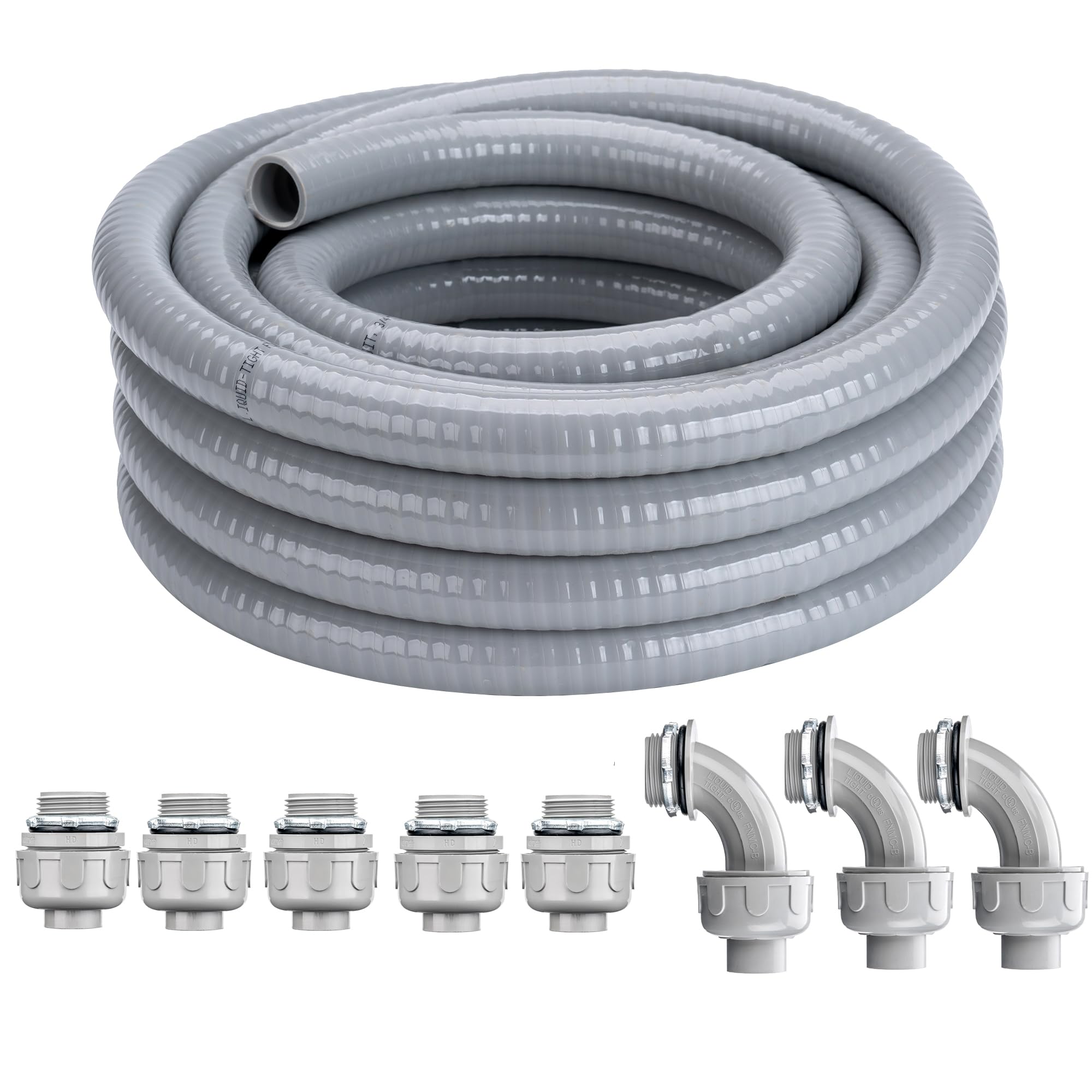
A 50-foot direct-burial roll with a 4.7 mm wall and straight and 90-degree connectors included.
For a feeder that goes in the ground and then comes up into a garage or a heater, this kit is set up for the whole path. It is 50 feet of 1/2 inch non-metallic flexible conduit at 0.83 inches outside with a 4.7 mm wall thickness, and it rates for direct burial, outdoor use, and sunlight resistance. The non-metallic construction removes any risk of conducting electricity with the jacket itself, which keeps you clear of one common worry when running power through a yard. Straight and 90-degree angle connectors are included so the run terminates cleanly at both ends.
What makes it livable on installation day is the interior. The virgin PVC has a smooth lining for easier wire pulling, and the jacket resists corrosion, abrasion, oil, water, acid, metal shavings, and rough conditions while also taking pull and crushing without complaining. One owner tucked it into a trench and found it laid in neatly and cut to size without much fuss, though noting the straight fittings ran slightly oversized — a small thing you can tighten past. Another used it for a heater install in a garage. It is also a long-lasting tube, with a buyer reporting a unit from three years prior still holding up without sun degradation.
The honest note is about the fittings rather than the tube. The connectors are thinner plastic than an older US-made product, and the conduit carries minimal markings, so if your local inspector wants stamped ratings you may want to check first. For low-voltage protection and typical residential D-I-Y runs, that difference rarely bites.
Strength where buried: thick PVC with direct-burial and UV ratings covers the years most trench runs need to survive.
Small fitment note: the straight fittings run a touch oversized, so snug them down carefully when seating.
Choose it for: garage heaters, landscape runs, and any job that spends half its life underground.
Check local code first if: you need conduit with prominent manufacturer markings for inspection.
7. (1/2″ Dia x 50 ft) HydroMaxx Flexible Non Metallic UL Liquid Tight Electrical Conduit

A slim 0.5-inch white tube for routing around equipment and tight corners.
When the line has to thread through a genuinely tight space, a slimmer body helps — and this one is 0.5 inches outside, the same narrow profile as the Woods non-metallic 25-footer. That smaller diameter is the practical edge for routing around equipment and snug corners, where a 0.83-inch tube would rub. It is a 50-foot non-metallic liquid-tight conduit made from PVC, and it carries a UL listing, with the maker focusing on the tight-quarters flexibility that makes it usable where rigid tube will not go.
The jacket resists corrosion, oil, and water, has a smooth interior for easier wire pulling, and takes crushing and stretching without failing — plus it is rated for outdoor, sunlight-resistant use. That combination suits underground feeder lines and gas-line runs. One owner ran 20 feet of it underground to a fire pit and found the PVC tough yet flexible enough to work with comfortably. Another used it for an underground feeder, where it was clearly labeled direct burial.
Like every flexible PVC coil, it does not want to lie flat on its own. The most common experience is a strong memory from the roll, and getting it straight often means hanging it weighted for a few nights before you mount it. Warmer weather helps — the tube is noticeably more pliable when it is warm. There is also a sizing caution in the data: measurements can run to the edge of the listed figures, so verify inner and outer diameter against your fittings on arrival rather than assuming the label tells the whole story.
The slim-body benefit: an 0.5-inch outside diameter is easier to fish through crowded spaces than the 0.83-inch family.
One habit to build in: uncoil and let it relax before installing, or the roll memory will fight your mounting.
A good fit when: clearance is tight and you want a lighter, narrower tube that still seals.
Do not expect: it to uncurl itself — plan a day ahead to let it straighten.
8. Liquid-Tight Conduit and Connector Kit – 1/2 Inch 100 FT Non Metallic Liquid Tight Electrical Conduit with 5 Straight and 5 Angle Fittings (Feotech)
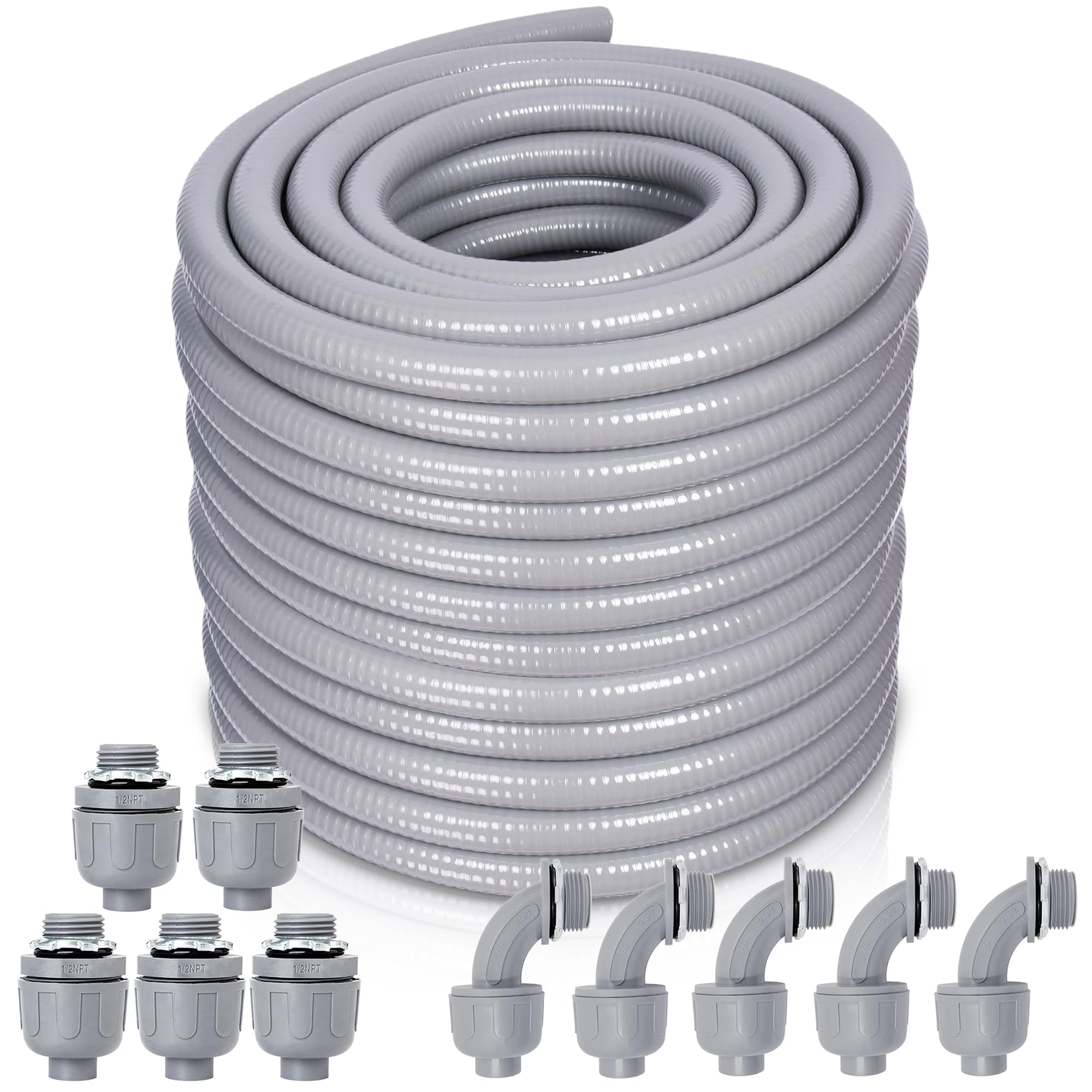
A 100-foot roll with 5 straight and 5 angle connectors for multi-box outdoor runs.
For a large install that spans a yard and terminates at several boxes, buying the biggest roll with the fittings already inside removes the mid-project ordering. This kit pairs 100 feet of 1/2 inch liquid-tight non-metallic conduit with 5 straight and 5 angle connectors — ten fittings in the box. The tube runs 0.83 inches outside with a 3 mm wall and carries a 1200-inch overall length, giving you a lot of coverage before you have to think about splicing. It is built from premium materials for harsh weather, and the flexible body moves around corners, through walls, and across surfaces with the smooth interior doing the wire-pulling work.
The connectors are the quiet star of this kit. They are easy to seat and hold tight, and they are UL listed, which the flexible body itself may or may not carry depending on the variant you receive, so having certified fittings matters. Owners regularly note the whole bundle undercuts the big-box equivalents, and the included assortment means most projects finish without a parts run. A D-I-Y HVAC install using the kit came together with a secure fit and a professional look, and buyers have run three 8 AWG THHN strands through it with room to spare.
Feeding wire solo is the one spot that needs technique. A single person can find it slow to pull 30 feet of wire by hand through a long piece, and the plastic odor comes out strong on a fresh unroll before fading in a day or two. Seasoned buyers have their own trick for it — unroll the tube hours ahead, add a drop of dish soap, and feed the wire in one smooth pass rather than fighting it cold.
The case for the big kit
- 100 feet plus ten fittings in one box — enough tube and terminations for a multi-box outdoor run
- UL-listed connectors that seat securely and hold tight
- Flexible 0.83-inch body that routes around corners and through walls without special tools
- Rated for outdoor use and harsh weather, with a thick 3 mm wall for durability
What you may notice
- Pulling wire alone through 100 feet takes patience — unroll it ahead and use a little lubricant
- A strong plastic smell on a brand-new roll that fades within a day or two
- Body markings are minimal, so keep the box for the connector certifications
Best for: someone running a long outdoor circuit who wants tube and fittings handled in one purchase.
Not for it if: your job is a five-foot indoor patch — this roll is more than that needs.
Understanding the Specs
Trade size vs. outside diameter
The “1/2 inch” on the label is a trade size, not a measurement you can match with tape. The real fit number is the outside diameter, which lands near 0.83 inches on the widest bodies here and around 0.5 inches on the slimmer ones. Buy your connectors to match the body, not the label, or the fitting will not seat.
Why flexible PVC fights you flat
Conduit that arrives coiled keeps the memory of that coil, so it wants to wave and curl rather than lie straight. Warming it indoors or in the sun softens the PVC and helps it relax. A day or two hanging with a little weight often does the rest before you mount it.
FAQ
What size conduit do I need for a 1/2 inch fitting?
Can I bury 1/2 inch liquid-tight conduit underground?
Why is it so hard to pull wire through 1/2 inch conduit?
Is PVC conduit better than aluminum flex for outdoors?
How do I straighten coiled flexible conduit?
Should I buy a kit or a plain roll of conduit?
What is the difference between metallic and non-metallic liquid-tight conduit?
Can I use 1/2 inch conduit for an EV charger run?
How long does flexible liquid-tight conduit last outdoors?
Final Thoughts: The Verdict
For most buyers the 1/2 inch conduit winner is the Sealproof Type B — 100 feet of American-made, UL-listed, direct-burial PVC that turns a long outdoor run into a single piece of tube instead of a stack of short rolls. If your job is short, wet, and outdoor, grab the Woods Ultratite-Type NM instead; its 25 feet and 0.5-inch body are a natural fit for whips and exterior outlets. And for a big install that needs fittings in the same box, the Feotech 100-foot kit is the one to reach for. A final nudge worth acting on: if you only need a few feet for a small indoor patch, the Woods aluminum flex at 2 pounds is the lightest way to get there.
How We Picked
We do not accept paid placement. Every pick is matched to a real buyer and a real use-case; we do not hands-on test units.
Sources & Methodology
Specifications: manufacturer listings and product documentation. Review insights: verified customer reviews, as of September 2026. Pricing: not shown on this page (it changes often); check the current price via the retailer link.
As an Amazon Associate, KitchPrep earns from qualifying purchases. This does not affect which products we feature.
Related Guides
