
Specs are compiled from manufacturer listings and verified buyer reviews and can change over time — please confirm the key details on the product page before buying.
You need a clean 1 1/8 inch hole for a faucet, a door lock, a cable pass-through, or a pipe — and the bit you choose decides whether that job takes minutes or becomes a battle with chipped tile and wandering cuts. This guide covers nine different styles built for specific materials, from diamond-tipped cutters for porcelain to carbide-armed chompers for steel, so you can pick the one that matches your actual project.
I’m Mohammad Maruf — the founder and writer behind KitchPrep. This guide is built by comparing the manufacturers’ published specifications and the patterns across verified customer reviews, so you get each pick’s real strengths and trade-offs instead of marketing spin.
Whatever material you need to cut — tile, wood, metal, or concrete — the right 1 1/8 inch drill bit turns a risky chore into a straightforward, clean cut you can be proud of.
Our Picks at a Glance

How To Choose The Best 1 1/8 Inch Drill Bit
Before you pick a bit, be honest about what you are drilling. A bit that glides through wood will shatter on porcelain, and a diamond core bit made for tile will burn up in steel. Matching the bit style to the material is the single most important decision in this whole process.
Match the bit style to your material
Forstner bits leave a flat-bottomed, splinter-free hole in wood — perfect for hinge boring or decorative work. Diamond hole saws use industrial grit to grind through hard, brittle surfaces like tile, granite, and porcelain without cracking them. Bi-metal hole saws chew through metal and wood, while twist bits and annular cutters are the workhorses for drilling into steel and iron.
Check the shank and your drill’s chuck
The shank is the part that slots into your drill, and it has to match. Most consumer drills accept a 3/8″ or 1/2″ round chuck, which covers standard twist and reduced-shank bits. SDS-Plus bits use a special slotted design that only fits rotary hammer drills — they slide in and lock with a twist. Annular cutters need a magnetic drill press or a special arbor, so they are not for a handheld drill.
Look for features that protect your bit
Pilot bits keep a hole saw centered so it doesn’t wander across the surface. A 135-degree split point tip on a twist bit self-centers and reduces the thrust you need to push. Cooling slots and water lubrication prevent heat from killing a diamond bit mid-job. These small details separate a one-job tool from something you reach for again and again.
Quick Comparison
| Model | Best For | Style | Material | Shank | Amazon |
|---|---|---|---|---|---|
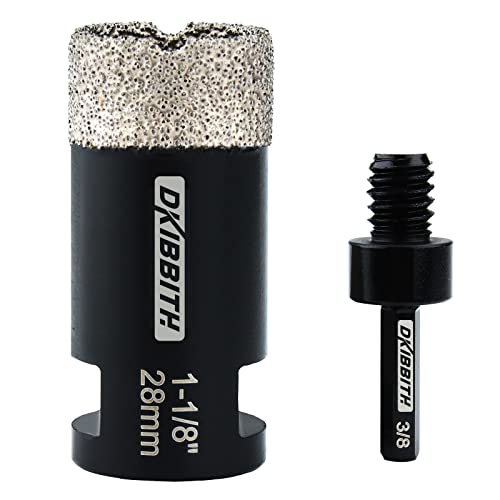
| DKIBBITH Diamond Hole Saw★ Best Overall | Porcelain & granite | Diamond Core | Tile, Stone | 5/8-11 + 3/8″ Hex | Amazon |
| LENOX Bi-Metal Hole SawBest Value | Wood & metal | Hole Saw | Metal, Wood | Arbored | Amazon |
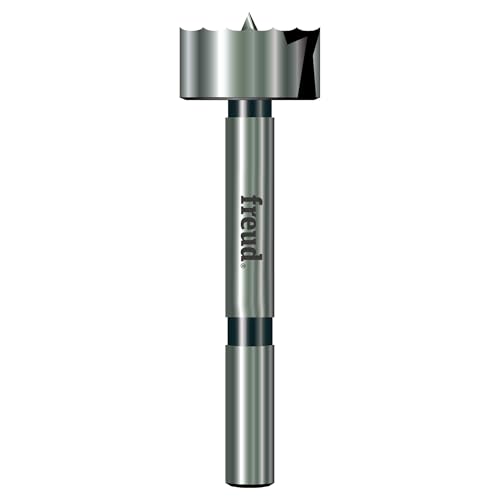
| Freud Forstner BitTop Performer | Clean wood holes | Forstner | Wood | 3/8″ | Amazon |
| DKIBBITH 2pc Diamond Set | Tile & glass | Diamond Core | Tile, Glass | Pilot + Hex | Amazon |
| Bosch Forstner Bit | Hardwoods | Forstner | Wood | Brad Point | Amazon |
| Drill America Twist Bit | Steel & iron | Twist | Metal | 1/2″ 3-Flat | Amazon |
| Sabre Tools SDS-Plus Bit | Concrete & brick | Masonry | Concrete | SDS-Plus | Amazon |
| Klein Tools Hole Cutter | Stainless steel | Carbide Cutter | Steel, Copper | Split Point Pilot | Amazon |
| S&F STEAD & FAST Annular Cutter | Thick steel plate | Annular | Steel | 3/4″ Weldon | Amazon |
In‑Depth Reviews
1. DKIBBITH 1-1/8″ Diamond Hole Saw
Our pick — over 4.5★ from 650+ verified ratings; the strongest balance of quality and price.
The diamond-coated grinder that slips through quartz sink holes without a crack.
This pick solves the scariest DIY moment: putting a hole in your countertop. The vacuum-brazed diamond edge stands 15mm tall, and it handles ceramic, marble, porcelain, and stone with a slow, swiveling motion instead of heavy pressure. Buyers report it cutting a perfect hole in a quartz sink on the first try, and the side slot helps clear debris and heat so the diamonds keep working.
You get two mounting options in the box: a female 5/8-11 thread for an angle grinder and a 3/8″ hex shank adapter for a standard drill. The key is to run it at 10,000 to 14,000 rpm, start at a 45-degree angle to seat it, then straighten up and circle. Its max working depth is 2″, and the maker says to switch hammer action off if your drill has it.
The consensus is that this bit delivers quality far beyond its price for tile work. A few users note that the diamonds can wear faster than premium brands on heavy use, and one mentions a tile crack with a Ryobi drill — water cooling and a steady hand help there. For faucets, grab bars, or sink repairs, this is the tool owners reach for.
Why It Wins for Tile
- Diamond edge cuts porcelain and granite cleanly with light pressure
- Includes both grinder thread and drill shank adapter
- Side slot clears debris to keep the bit cool
Keep in Mind
- Durability is mixed for very heavy use
- Hammer action must be off on your drill
Reach for this if: you’re drilling a sink, countertop, or tile and want a bit that arrives sharp and finishes the job.
Think twice if: you’re cutting through thick concrete — you’ll want a dedicated SDS-Plus masonry bit instead.
2. LENOX Tools Bi-Metal Hole Saw
The wood-and-metal all-rounder whose staircase slot pops plugs out fast.
If your projects bounce between wooden doors and metal frames, this LENOX is the versatile pick that handles both. The bi-metal construction and tune tooth design penetrate metal with ease, while the larger, sharper teeth make quick work of wood. Owners mention drilling through a 2-1/2″ fiberglass transom with no problem, and The bucket trick caught 95% of the shavings.
At just 3.2 ounces, it’s light in the hand, and it’s noticeably lighter than the Freud Forstner at 3.36 ounces. The SPEED SLOT staircase design on the side ejects the cut plug quickly, so you’re not prying it out with a screwdriver after every hole. The included arbor comes with a pilot bit to keep the cut centered.
Customers note it works well on plexiglass and wood, though durability gets mixed feedback — some find the teeth can be fragile on tough metal, and one tip is to use cutting oil and a washer to protect the teeth. For a budget-friendly hole saw that covers your everyday needs, this is the one.
The trade-off: it’s a generalist, not a specialist. For thin sheet metal it earns its keep; for heavy stainless, the Klein below is the better buy.
Best for: mixed wood-and-metal jobs on a budget where you want one solid hole saw in the drawer.
Look elsewhere if: you need a saw that survives daily abuse on thick steel — that strain shows here.
3. Freud PB-008 Forstner Bit
A razor-sharp woodworker’s bit that cuts flat holes with chisel-like curls.
Woodworkers know the machine found on this 1-1/8″ Forstner bit from the moment it touches the wood. The razor-sharp serrated edge and ultra-sharp spur combine for fast, flawless cutting that leaves clean edges with minimal tear-out, even in soft wood. It weighs 3.36 ounces, making it slightly heavier than the LENOX saw, but that mass helps it bore steadily through walnut, ash, or maple.
Freud’s forged construction is built for extended life, and the steep angled cutting edges produce smooth, flat holes with “chisel-like” curls for fast chip removal. Owners describe it going “like a hot knife through butter,” and many say it beats more expensive sets they’ve used. The 3/8″ shank fits most standard chucks, though one user wishes the shank were longer for deeper bores.
The sentiment is overwhelming: “This is the best Forstner bit I have used.” Quality, accuracy, and sharpness are the most-praised traits, with clean, non-burning cuts a consistent theme. If your project is in wood and demands a crisp, flat-bottomed hole, this is the benchmark other bits are measured against.
The verdict: for clean wood boring, no other pick in this list matches the Freud’s edge quality and accuracy, and buyers confirm it’s worth the money over cheaper options.
Who it beats: anyone comparing this against budget Forstner sets will see why Freud commands the premium.
Who it doesn’t suit: projects outside wood — metal, tile, or masonry are not this bit’s job.
4. DKIBBITH 2pc Diamond Hole Saw Set
Two diamond bits with a guiding pilot for dead-center holes in tile and glass.
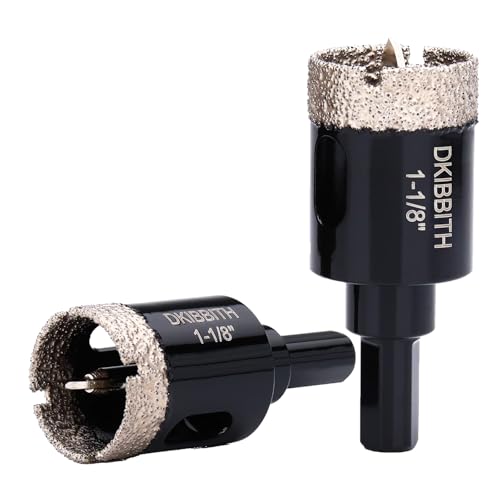
This DKIBBITH set solves two problems at once: you get two 1-1/8″ diamond bits, and each comes with a removable pilot drill bit that keeps the cut from wandering across a slick tile surface. That guiding bit is a genuine advantage for grab-bar installs and faucet holes where precision matters. The bits handle ceramic, porcelain tile, granite, stone, and even glass bottles.
Each bit has a diamond height of 3/8″ and a total length of 2-1/2″, with a cutting depth of 1-3/8″ — enough for most countertops and thicker tiles. The hex wrench lets you remove the pilot bit after seating the hole, then you cut with a wobbling motion. Water cooling is recommended, either a spritzer or dipping the bit, to keep it smooth and clean.
Owners say the bits work well for installing WingIts grab bars and cutting clean holes through a 3/4″ glass tabletop. The review pages note that clearing residue after each hole and checking the center point helps prevent wandering. With 2 pieces in the pack, it’s a value pick — you have a spare when the first diamond wears down.
The Set Advantage
- Pilot bit gives you accurate positioning every time
- Two bits in the set means a ready spare
- Works on glass, tile, granite, and stone
Watch For
- Cutting speed is mixed — go slow with water
- Durability varies on rough stone
Reach for this if: you’re mounting grab bars or faucets on tile and want the accuracy of a pilot bit built in.
skip it if: you need just one hole and don’t want to manage the pilot-bit removal step.
5. Bosch FB018 Forstner Bit

A hard-wood hero that bores through knots and end-grain without burning.
Where the Freud shines on soft wood, the Bosch earns its keep in the hard stuff — walnut, ash, maple, and even end-grain and knots. The chrome-steel alloy construction withstands high temperatures during drilling, which reduces the risk of burning and keeps the hole edge clean. The brad point center bit makes positioning easy right where you want it.
Builders using it for tea light holders in 1-3/4″ walnut, cherry, and maple report it cutting cleanly to depth with no problems. The bit is designed for smooth, flat-bottomed holes with a cleanly cut rim, suitable for both portable drills and stationary machines. It’s a versatile performer for fine woodworking and hinge boring.
Owner feedback is positive but a touch more reserved than the Freud’s — one buyer notes it’s “not as sharp as I would have liked,” though it still “cuts clean” and holds up well in daily-ish hardwood work. If you’re drilling a mix of hardwoods and want a bit that resists heat and stays true, this Bosch is a reliable companion.
The honest read: it’s a very good bit, but next to the Freud it loses a step on out-of-the-box sharpness — prices reflect that gap.
Best for: furniture makers and hobbyists boring clean holes in dense hardwoods at a fair mid-range price.
Not ideal for: anyone expecting the absolute razor edge of the top pick.
6. Drill America KFD3F1-1/8 Twist Bit
A contractor-grade twist bit that refuses to walk on steel and iron.
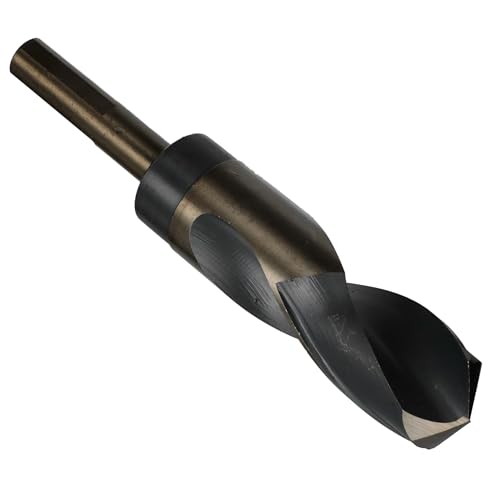
For drilling into aluminum, iron, and steel, this contractor-grade bit from Drill America is built from M1 High Speed Steel. Its 135-degree split point tip is the standout feature — it self-centers immediately and reduces the thrust you need, so the bit won’t “walk” across the surface like a conventional 118-degree tip would. That means accurate holes the first time.
The 3-flat 1/2″ reduced shank creates an extra-secure hold in your chuck, and the common flute length means minimal adjustment when swapping tools. With a 3″ flute length and 6″ overall length, it’s a substantial bit that arrives lightly coated in oil inside a plastic tube case to keep it clean and ready. It has a 6″ overall length and a 1/2″ shank.
Reviews are a mixed bag — some owners say the bit is tough, works for dowel replacement, and stays sharp, while others report it couldn’t finish one hole. The sticky oil coating is a minor gripe that holds debris during the first few holes. For occasional metal jobs, it’s a solid mid-range buy; for heavy production drilling, you may want a pricier brand.
Why It’s a Pro Pick
- Split point tip stops wandering on smooth metal
- Sturdy 3-flat shank grips the chuck without slipping
- Plastic case keeps the bit safe and oiled
The Reality Check
- Mixed owner reports on long-term durability
- Oily coating is sticky and gathers debris
Reach for this if: you’re a DIYer who needs an accurate 1-1/8″ hole in steel or aluminum while staying affordable.
Consider other options if: you’re drilling metal all day, every day — that’s a job for a premium twist bit.
7. Sabre Tools SDS-Plus Rotary Hammer Bit

A long-reach carbide chomper that chews through 14-inch concrete walls fast.
When the wall is brick, block, or poured concrete, you need hammer action — and this SDS-Plus bit from Sabre Tools is built for exactly that. It’s a long bit at 1-1/8″ x 16″ x 18″, giving you the reach to go through thick foundation walls. The 2-flute self-centering carbide tip ensures fast cut speeds and maximum life, even in tough masonry.
The key feature is compatibility: it works with all SDS Plus rotary hammer drills from Bosch, DeWalt, Hitachi, Hilti, Makita, and Milwaukee, among others. The tune design lets material exit the hole quickly while keeping the bit cool. Reviewers point out drilling through a 14-inch rockwall and cutting through a concrete wall “like a sharp knife through butter” for a Starlink cable install.
The water cooling tip is note — spraying water keeps the carbide tip happy, and the spiral design clears debris efficiently. One owner drilled 15 inches of concrete in about 10 minutes with a 6Ah battery. Durability gets mixed marks, with a rare report of bending on first use, but the overall sentiment is that it’s excellent value for masonry work.
The catch: it’s a big bit that demands a rotary hammer — and it will tire your arms in dense concrete, but it gets the job done fast.
Best for: plumbing, electrical, or cable runs through brick and concrete where length and speed matter.
Not for: tile or thin sheet metal — that’s the diamond or carbide cutter’s territory.
8. Klein Tools 31856 Carbide Hole Cutter
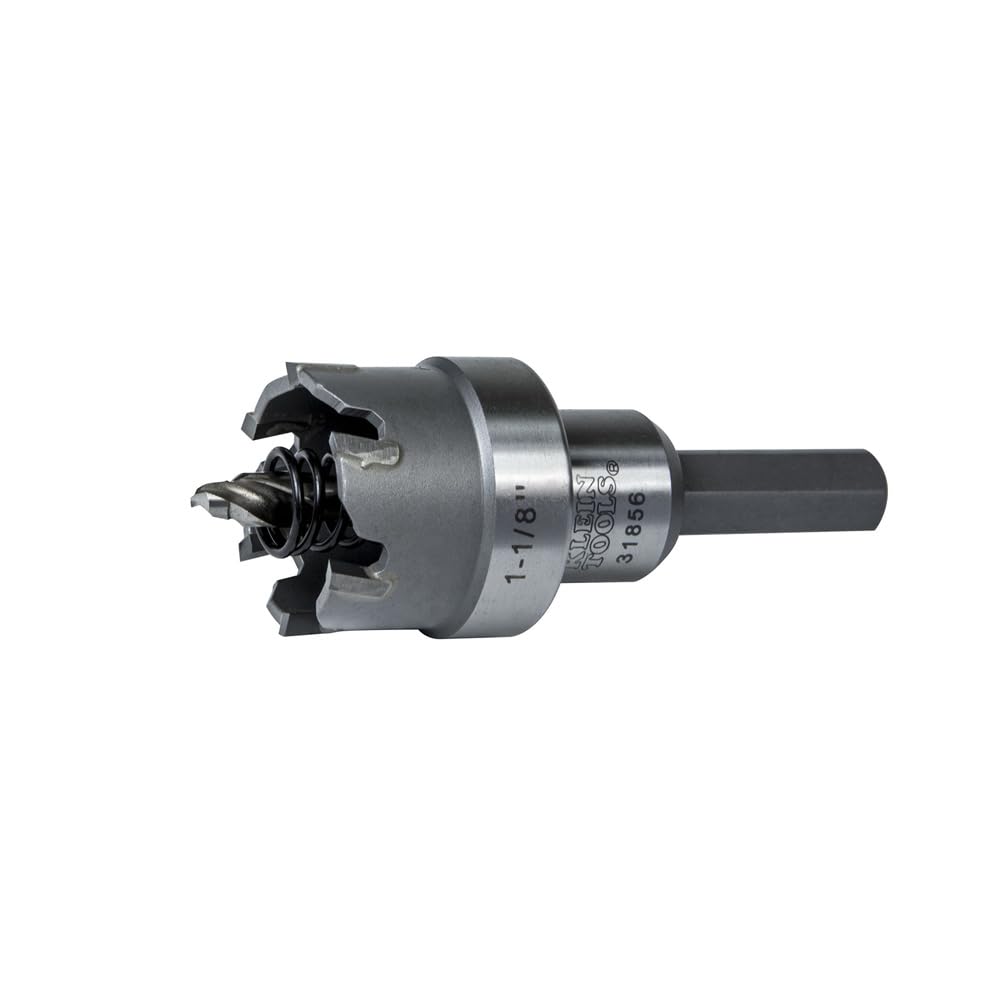
The heavy-duty answer to clean holes in stainless steel without the fight.
Cutting stainless steel is the nightmare of most hole saws, but this Klein Tools cutter is purpose-built for it. The premium carbide construction cuts clean holes in stainless steel, mild steel, iron, copper, and brass sheets up to 3/16-Inch (0.5 cm) thick. It’s heavier than the LENOX at 5.6 ounces, which gives it the muscle for thin-gauge metal.
The split point pilot drill bit prevents wandering on a smooth metal surface, and the built-in flange stops over-drilling on sheet metal — a thoughtful touch that protects whatever is behind the panel. With 3/4-Inch (1.9 cm) conduit and pipe sizes in mind, it’s designed for electrical work. The pilot bit is replaceable (Cat. No. 31874) if it eventually wears out.
Owners are impressed: It drilled 10 holes in 1/4-inch thick steel for marker lights, with the 10th as easy as the first. One user who tried regular twist bits first found this “stellar at cutting clean holes in sheet metal” with only slight deburring needed. A few report teeth breaking on very hard material, so slow speed and cutting oil are the secrets to longevity.
The Steel Advantage
- Carbide edge cuts stainless and mild steel cleanly
- Split-point pilot prevents walking on smooth surfaces
- Built-in flange stops over-drilling
Handle With Care
- Some shoppers say tooth breakage on hard steel without oil
- Designed for sheet metal up to 3/16″ — not thick plate
Reach for this if: you’re cutting conduit or pipe holes in stainless steel sinks and panels and want speed and clean edges.
pass on it if: your material is thicker than 3/16″ sheet — you’ll want the annular cutter below.
9. S&F STEAD & FAST Annular Cutter

The magnetic-drill monster that punches hundreds of holes through thick steel plate.
This is the serious tool for serious steelwork. The S&F STEAD & FAST annular cutter is made from M2AL high speed steel and designed to cut a 1-1/8″ hole with a 2-inch cutting depth in thick plate. It uses a 3/4-inch Weldon shank with two flats for secure clamping in a magnetic drill press, and the 8-flute design pulls out chips for smooth, reamed, burr-free edges.
Compatibility spans major mag drill brands including Alfra, BDS, Dewalt, Fein, Euroboor, Hougen, and Ruko. One important caveat: to use this 2-inch cutter on a regular drill press, you need a separate annular cutter arbor — it is not included. The sturdy plastic case holds the cutter and a pilot pin.
Owners are fiercely loyal, One owner drilled 207 holes through half-inch steel plate, noting it cut as well on the last hole as the first—after a high-dollar competitor died at 26 holes. Another drilled 300 holes in 1/2-inch plate without issues. The recurring advice is to use the right speed, steady feed, and cutting lubricant. It’s the premium pick for pros who measure a bit’s life in hundreds of holes.
The pro verdict: at 6.3 ounces with a 3/4″ Weldon shank, this is built for the mag drill — not for a handheld drill and not for sheet metal.
Who this is for: fabricators and steelworkers who need hundreds of clean, accurate holes in thick plate.
Who should pass: DIYers without a magnetic drill press — a standard drill simply cannot hold this cutter.
Understanding the Specs
Shank Types
The shank is the end of the bit that locks into your drill, and it dictates what tool you need. A 3/8″ hex or round shank fits most standard handheld drills, perfect for twist bits and Forstner bits. An SDS-Plus shank uses a slotted design that only fits rotary hammer drills — it slides in and twists to lock. A Weldon shank with flat sides is made for magnetic drill presses, and a 5/8-11 thread screws directly onto an angle grinder.
Cutting Speed and RPM
Speed matters differently for each bit type. Diamond hole saws need high RPM (10,000 to 14,000) to grind through tile efficiently, and they should be started at an angle then straightened. Forstner bits work best at moderate speed with steady pressure for clean, non-burning wood cuts. Metal-cutting carbide cutters and annular cutters prefer slow RPM with cutting oil to prevent heat damage and tooth breakage.
FAQ
What is the difference between a Forstner bit and a hole saw for 1 1/8 inch holes?
Can I use a diamond hole saw on my standard cordless drill?
Which 1 1/8 inch bit is best for drilling through porcelain tile?
What does SDS-Plus mean and which drill do I need?
How do I stop a hole saw from wandering on a metal surface?
Can an annular cutter be used with a regular drill press?
Why does my drill bit burn the wood instead of cutting it?
How do I know if a 1 1/8 inch bit will fit my drill chuck?
Final Thoughts: The Verdict
For most buyers, the 1 1/8 inch drill bit winner is the DKIBBITH Diamond Hole Saw because it solves the most common and most intimidating job — drilling into tile and stone sinks — with a clean, fast cut. If you want a versatile wood-and-metal option, grab the LENOX Bi-Metal Hole Saw. And for serious steelwork that demands hundreds of holes, the S&F STEAD & FAST Annular Cutter is the one to reach for.
How We Picked
We do not accept paid placement. Every pick is matched to a real buyer and a real use-case; we do not hands-on test units.
Sources & Methodology
Specifications: manufacturer listings and product documentation. Review insights: verified customer reviews, as of September 2026. Pricing: not shown on this page (it changes often); check the current price via the retailer link.
As an Amazon Associate, KitchPrep earns from qualifying purchases. This does not affect which products we feature.
Related Guides
