
Specs are compiled from manufacturer listings and verified buyer reviews and can change over time — please confirm the key details on the product page before buying.
You need a 1 1/2 inch tube that actually measures 1 1/2 inches, and the wrong listing hands you a wobbling, undersized pipe that ruins the fit. Here is the short answer: for exhaust and marine work, buy 304 stainless — it shrugs off rust. For structural fabrication where you weld and machine the piece, carbon and DOM steel give you more strength for the money. Everything below covers both worlds, sized to the exact 1.5-inch outside diameter you searched for.
I’m Mohammad Maruf — the founder and writer behind KitchPrep. This guide is built by comparing the manufacturers’ published specifications and the patterns across verified customer reviews, so you get each pick’s real strengths and trade-offs instead of marketing spin.
Stainless fights rust and takes a weld beautifully. Carbon and DOM steel win on raw strength for frames, shafts, and spacers. What follows is a straight read on the best 1 1/2 inch steel tubing for exhaust, marine, and shop-fabrication jobs alike.
Our Picks at a Glance
How To Choose The Best 1 1/2 Inch Steel Tubing
Decide first which measurement your project hangs on: the outside of the tube, the hole through the middle, or the pipe it slides over. Get that wrong and nothing else matters.
Outside diameter versus inside diameter
Outside diameter (OD) is the measurement across the outside of the pipe — the number you check when the tube has to slip into a clamp, a coupling, or a tailpipe. Inside diameter (ID) is the hole through the center, and it matters when a rod, a bolt, or a smaller pipe has to pass through. A 1.5″ OD tube with a thin wall leaves a nearly 1.5″ ID, while a thick wall of 1/4″ shrinks that hole down sharply — so measure both ends of your project before you order.
Stainless versus carbon versus DOM steel
Stainless steel (like 304 or T304) resists rust, which is why you pick it for exhaust parts, marine rails, and anything that lives outdoors in the weather. Carbon steel is stronger and cheaper, but it will surface-rust without paint or oil. DOM (drawn-over-mandrel) is a smooth carbon tube drawn to a precise bore, so its inside and outside stay concentric — handy for shafts and rollers that spin.
Wall thickness and finish
Wall thickness is the metal between the outside and the inside, listed in gauge or in inches, and it controls how the tube behaves under load. A 16 gauge (0.065″) wall is the everyday standard — sturdy, weldable, and light enough to cut with a saw. A 1/4″ wall is heavy stock for high-stress structural work. Finish matters too: a polished or bright-annealed surface resists oxidation, while a mill finish is left rougher for painting or further machining.
What size pipe fits inside 1 1/2 inch tubing
Measure the ID, not the OD, when you want to slide a pipe inside. At a 0.065″ wall on a 1.5″ OD tube, the bore opens to roughly 1.37″, so a pipe up to about that size drops in. Step up to a 1/4″ wall and the hole closes well under that — enough to change which fittings will pass through.
Quick Comparison
| Model | Best For | Length | Wall Thickness | Material | Amazon |
|---|---|---|---|---|---|
| 1.5″ Exhaust Pipe T304, Flared, 17.3″★ Best Overall | Exhaust tailpipe & adapter | 17.3″ | — | T304 Stainless | Amazon |
| 1.5 Exhaust Pipe, Flared End T304, 12″Builder’s Pick | DIY turbo & intercooler piping | 12″ | — | T304 Stainless | Amazon |
| 1-1/2″ OD 304/304L, 16 Gauge, 3′ | Marine rails & structural work | 36″ | 16 gauge (0.065″) | 304/304L Stainless | Amazon |
| Vigorous 1-1/2″ OD x 1 Ft., 2 Pcs | Short DIY cuts & small builds | 1 ft (each) | 0.065″ | 304 Stainless | Amazon |
| A513 Cold Roll Carbon Round Tubing | Pins, rods & shafts | 12″ | 0.065″ | 1018 Carbon Steel | Amazon |
| Hicarer 1-1/2″ OD 304, 24″ (2 Pcs) | Furniture, frames & rails | 24″ | 0.06″ | 304 Stainless | Amazon |
| 1.50″ OD x 1/4″ Wall DOM smooth | High-stress shafts & rollers | — | 1/4″ | DOM Mild Steel | Amazon |
In‑Depth Reviews
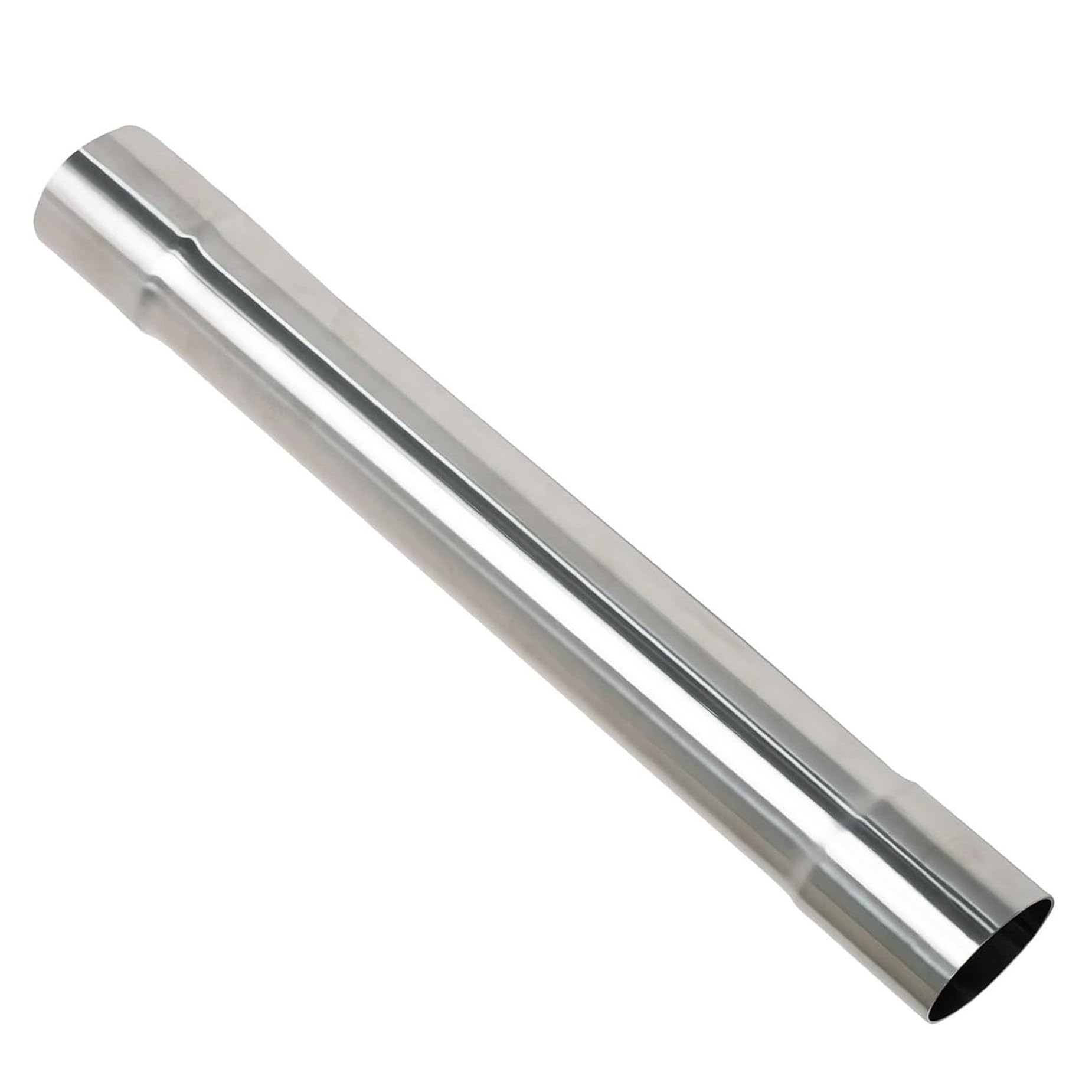
1. 1.5 Inch Exhaust Pipe T304 Stainless Steel Exhaust Tubing (SS Tubo), Tailpipe 1 1/2″ ID Length 17.3″ Straight Tubing, Flared, Polished Finish
Our pick — over 4.5★ from 200+ verified ratings; the strongest balance of quality and price.
A 17.3-inch T304 stainless exhaust pipe with a flared end that slip-fits a factory tailpipe.
This pipe earns the top spot on one detail: 17.3 inches of non-magnetic T304 stainless (a rust-resistant steel that holds up under sustained high heat) that survives road salt and hot exhaust gas. Grab it when you are fixing or extending an exhaust on a car, truck, or motorcycle. The flared end is the part that saves you a headache — it slides into the mating pipe for a leak-proof, slip-fit connection, so number plates and paint stay soot-free instead of blackened by a leaking joint.
Buyers report the steel itself is the real win. Owners mention the material quality first, then how well it functions once installed, and they single out the thick wall for praise. As owners put it: “Great stuff, thick wall and exactly what I needed. Price was good, and should last for quite a while (not forever, but who needs stuff to!).” The polished finish cleans up easily and resists the surface oxidation that eats cheaper mild-steel pipe.
Here is the honest catch. Fit is where the experience splits — some buyers find it spot-on, while a few report it does not line up on specific truck models, so measure your existing pipe before you commit. And this is a bare connector piece: no instructions are included and professional installation is recommended. If you have never worked an exhaust joint before, budget for a shop.
What earns its keep
- 17.3″ length of true T304 stainless that shrugs off rust and high heat
- Flared end delivers a slip-fit that cuts down on leak headaches
- Thick wall and polished finish that owners keep raving about
- Universally sized for cars, trucks, and motorcycles
Where it asks for care
- Fit is hit-or-miss on some truck models — measure first
- No instructions included and pro installation is recommended
- Bare connector piece, not a bolt-on kit
Buy it if: you need a tough, corrosion-resistant exhaust adapter for a car, truck, or bike and want the size pre-set at 17.3 inches.
Look elsewhere if: your rig is a fit-sensitive truck model — confirm the 1 1/2″ ID geometry against your existing pipe first.
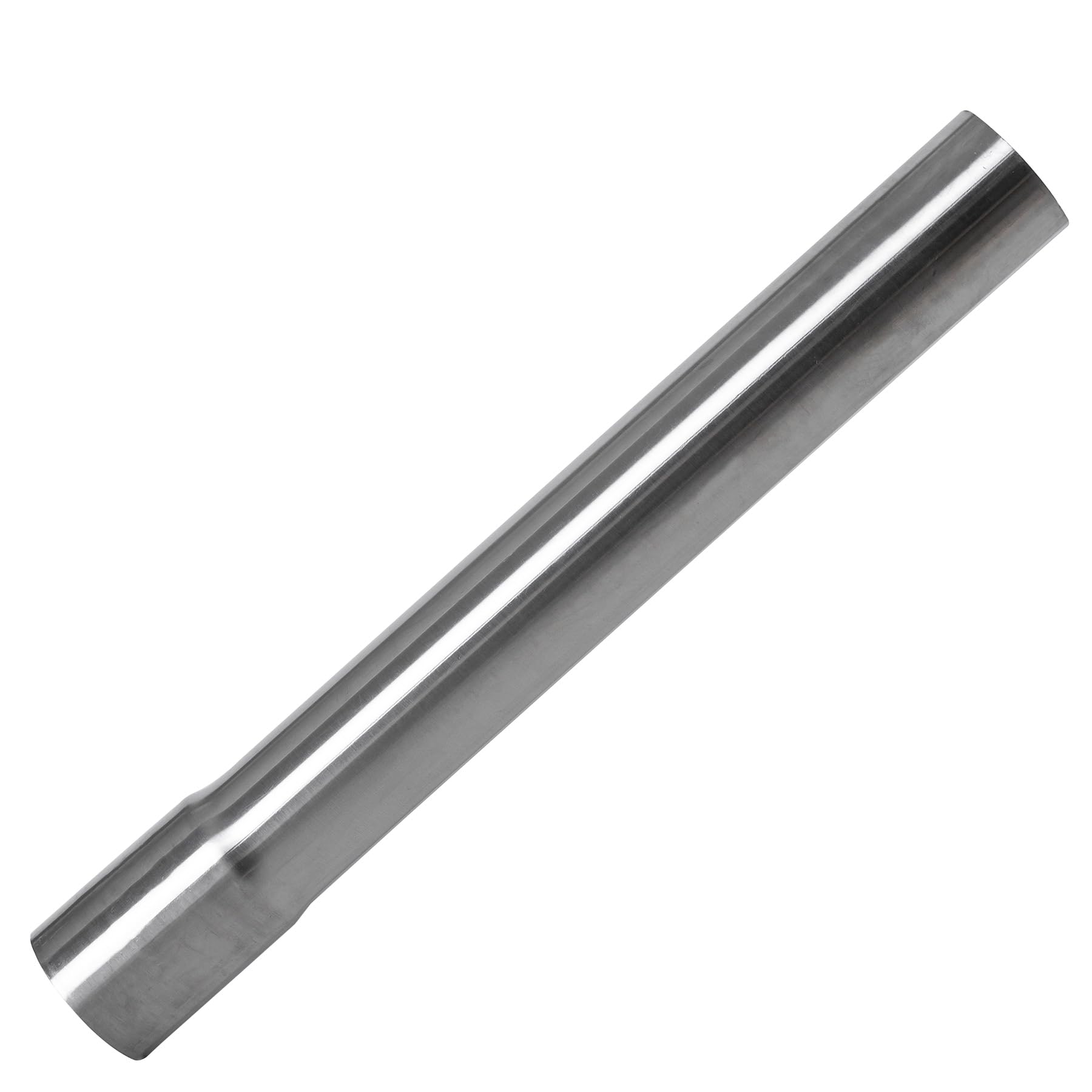
2. 1.5 Exhaust Pipe, Flared End T304 Stainless Steel Straight Tubing, Polished Universal Connector Adapter 1 1/2 Inch ID to OD 1.5″ ss Ailpipe 12″ Length
A 12-inch T304 stainless tube with a mandrel-straight bore that stays true end to end for cutting and welding.
This is raw stock for people who weld their own intake, turbo piping, or tailpipe extension. It runs 12 inches at a 1.5″ outer diameter, and the mandrel-straight construction (a forming method that keeps the bore even) holds the same diameter from one end to the other — no pinch or crushing that would choke flow on a performance build. The flared end slips into a matching joint, and the tube takes either a weld-on or clamp-on setup depending on your tools. Stainless holds the shine, so it resists the oxidation that dulls cheaper steel.
Build quality is what owners come back for. Customers note it welds cleanly, the sizing lands true to the listing, and the wall is thick enough to lay a solid bead on if you know your way around a torch. A number of reviewers push it well beyond exhaust duty — one cut it into link sections for an intercooler system, and another used it as a stack extension on a smoker. That range tells you the steel itself, not the label, is doing the work.
The honest caveat: you get one 12-inch piece, a quarter of the length of the 36-inch 304 tube further down this list, so anyone building a longer run will want to account for that up front. And like most universal pipe, it asks you to measure your own joint before purchase — the flared end needs a mating diameter that matches.
Reach for this if: you are a welder or garage fabricator feeding a turbo, intake, or intercooler project that needs true, consistent bore.
Skip the custom route if: you want a bolt-on fix with no cutting or welding involved.
3. 1-1/2″ OD 304/304L Stainless Steel Tubing, 16 Gauge (.065), Welded, A269, Mill ID, Bright Annealed OD – 3′ Length
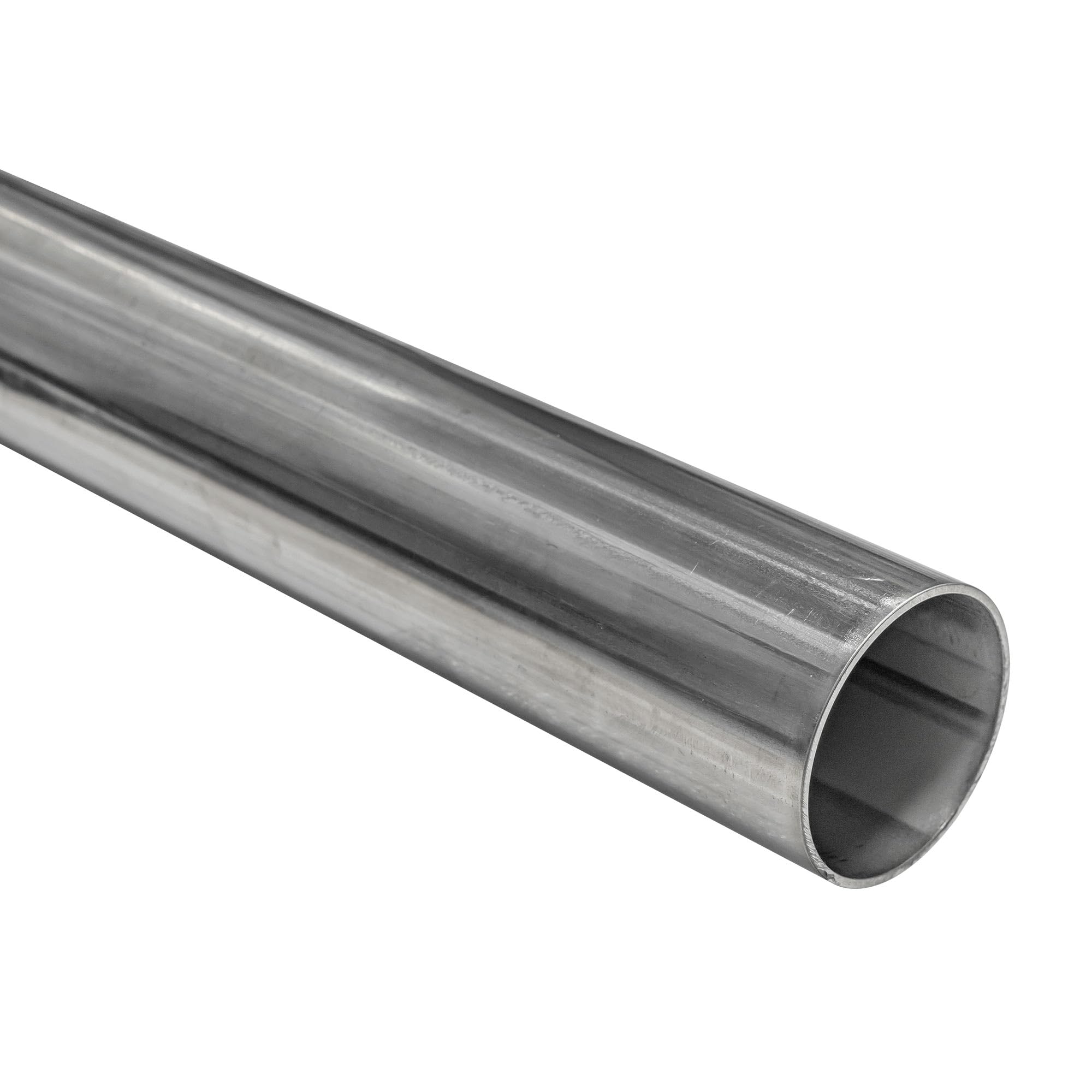
A 36-inch 304/304L stainless tube at 16 gauge — the longest single piece here.
Nobody else in this lineup gives you 36 inches in one piece — that is a full 3.0x the length of the 12-inch carbon tube further down this list — so a boat rail, a frame section, or a Starlink mast gets done in one pass instead of a stack of welded joints. It is welded 304/304L stainless at 16 gauge (0.065″) wall. The maker states it passes a nine-point mill inspection covering tensile, hardness, eddy-current, hydrostatic, and bend testing. The mill-finished inside keeps flow clean while the bright-annealed outside resists corrosion, and the cut tolerance is held to +/- 1/8″ so the piece arrives ready to use.
Owners treat this as a build anchor. Reviewers point out it welds with no fuss, the wall is stiff enough that the pipe will not bend under load, and it is strong enough to double as a drum-set leg upgrade. Reviewers also note the precision: measurements land right where the listing says they will, and the piece shows up clean with no scratches or deformities. High-temperature and corrosion performance come with the 304L grade, and this holds one of the higher marks in the lineup.
What you give up for that length is flexibility in sizing — a 36-inch cut is a lot of tube if your job only needs a few inches, and there is no cutting service, so you trim it yourself. Stainless this hard also takes more effort to drill and machine than mild steel, so plan your tooling before you start.
Best suited to: marine, railing, and structural jobs that want one long, corrosion-proof piece of precision 304 stainless.
Think twice if: your project only needs a short offcut — you will be paying for length you never use.
4. Vigorous 1-1/2″ OD x 1 Ft. 304 Stainless Steel Tube, Welded Stainless Steel Tubing, Round Metal Pipe (2 Pcs)
 Check Price on Amazon
Two 1-foot 304 stainless tubes per pack, each 1-1/2″ OD with a 0.065″ wall.
Short cuts add up fast in a shop, and this pack hands you two 1-foot lengths of 1-1/2″ OD, 0.065″-wall welded 304 stainless instead of one. That is 2.0x the unit count of a single-piece pipe, which means fewer re-orders when a project eats more than one offcut. The 304 stainless resists corrosion and wipes clean easily, and shoppers say the welded build bends without cracking, so it takes shop abuse. Owners lean on it for practical hacks — cheater bars for wrenches are a common one — plus exhaust extensions and frame work.
Material quality is the theme in the feedback. Buyers report it arrives clean and shiny, welds without trouble, and holds its finish. One buyer notes it works as an exhaust extension that keeps the machine running cooler, and the size slots on without fuss. For small DIY crafts, furniture, frames, and shop jigs, having two pieces on hand beats chasing a single length.
On the cost-per-piece angle: a couple of buyers flag the pack as a bit expensive relative to raw steel stock, but the convenience of two ready-cut pieces tends to offset that for hobby work. Nothing here is wrong — it is a value call about if you want pre-cut tube or bulk stock.
Go for it if: your build needs more than one short section, or you like keeping spare 1-1/2″ stainless on the bench.
Leave it if: you need a single long continuous piece — two 1-foot tubes will not cover a 3-foot run.
5. A513 Cold Roll Carbon Steel Round Tubing, Drawn Over Mandrel, ASTM A513, 1 1/2″ Outside Diameter, 1.37″ Inside Diameter, 0.065″ Wall, 12″ Length

An A513 cold-roll carbon tube with a 1.37″ ID for pins, shafts, and spacers that need a true bore.
A tight, true bore is what separates this tube from every stainless pick on the list — it is the one for pins, rods, shafts, spindles, and sprockets, where the hole through the center has to land on a specific number. It is A513 cold-roll carbon steel (a cold-rolled carbon spec used for machined parts), drawn over mandrel (a process that keeps the inside and outside concentric), and it meets the ASTM-A513 spec. The numbers are tight: 1 1/2″ outside diameter, 1.37″ inside diameter, and a 0.065″ wall over a 12-inch length. The high-carbon alloy gives it real strength and rigidity, which is exactly why it lands in machined parts.
Owners put it straight to work. Owners mention it welds well, arrives rust-free and straight, and the fit lands where expected for tractor skid shoes, spacers, and shop projects. The value angle shows up too — one buyer built two skid-shoe sets from it far cheaper than buying finished parts. It holds a solid reputation as a no-drama stock piece for a specific job.
Two honest notes. The inside diameter runs tight for some uses — a few buyers find the bore smaller than the number suggests, so verify your inside fit before you cut. And it is carbon steel, not stainless, so it will want paint or a coat of oil if the part sees weather. This is not the pick for an exhaust run that faces road spray.
Point it at: pins, rods, shafts, and spacers that need a precise concentric bore and high rigidity.
Not your tube if: the part will live outdoors or wet — go stainless instead.
6. Hicarer 2 Pcs 1-1/2″ OD 304 Stainless Steel Tubing 24 Inch Length Thickened Pipe Wall & Weldable Tubing 16 Gauge
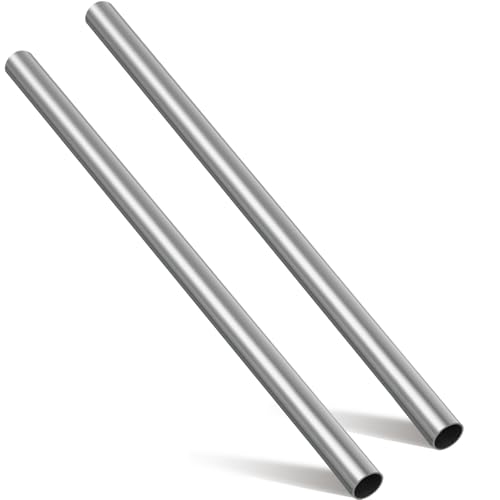
Two 24-inch 304 stainless tubes with a 0.06″ weldable wall for furniture, rails, and marine fittings.
Two 24-inch pieces is the length that splits the difference for furniture, railings, and marine fittings — roughly double the 12-inch options above, and short enough to handle on a bench. Each tube is 1-1/2″ OD, 304 stainless, with a 0.06″ wall that is weldable and sturdy, a bright surface smooth to the touch, and the rust-proof, moisture-resistant 304 grade. You can thread, weld, or machine it depending on the job, and two pieces make it easy to build matched frames or share a set.
Customers note success across a surprising range of uses. Reviewers point out it handles a custom double towel rack with two pipes spaced 2.75″ apart, stands in heavier than an original Bimini tube, and works for cymbal riser clamps. Buyers repeatedly mention it is sturdy compared to stock hardware, and the finish resists changing color and stays bright over time.
The specification note to read carefully: this is produced in the metric system and carries stated tolerances, so verify your own fit if your project demands an exact match. That is a normal heads-up on metric-stock tubing, not a fault — just measure before you cut.
Choose this for: furniture, railings, and marine repairs that want two longer, weldable, rust-proof stainless tubes.
Skip it for: any job needing an exact metric-free fit right from the start — plan for the stated tolerances.
7. 1.50″ OD x 1/4″ Wall DOM smooth Round Tube, Mild Steel Tubing, 1.00″ ID

A 1/4-inch wall DOM smooth mild steel tube with a 1.00″ ID for high-stress shafts and rollers.
A 1/4″ wall is the thickest in this group by far, and that is the whole point — this USA-made 1.5″ OD DOM (drawn-over-mandrel) smooth mild steel tube leaves a 1.00″ ID through the center for maximum stiffness in a compact blank. No seam means the bore stays true and round, so a shaft spins without a wobble. Owners drive it hard: rollers, a motorized bead-roller connector, a drive shaft for a custom shredding machine, and a trailer hitch, with one hitch use reported to hold up without failure.
“Exactly what I needed” is the recurring verdict — shoppers say the OD and wall come in as advertised, and the metal is clean and precisely sized. For anyone who has priced thick-wall smooth tube from a specialty supplier and winced, buying in short convenient quantities is the real draw. That thick wall is also what makes it a blank, not a pipe with usable flow.
Weigh the trade-offs honestly: a couple of buyers report the price runs high and the shipping can sting, and the extreme wall thickness leaves a narrow 1.00″ ID that is too tight for flow-through work. So this is the wrong answer for exhaust or fluid lines — but the right one for load-bearing shafts and rollers.
Reserve it for: high-stress shafts, rollers, and connectors that need maximum stiffness in a compact diameter.
Leave it if: you need airflow or fluid through the middle — a 1.00″ ID will choke that job.
Understanding the Specs
Outside diameter versus inside diameter
Outside diameter (OD) is the full width across the pipe; inside diameter (ID) is the clear hole through it. Wall thickness links the two — a 1.5″ OD tube with a 0.065″ wall opens to roughly 1.37″ ID, while the same OD with a 1/4″ wall closes to 1.00″ ID. Order by whichever measurement your project depends on. If a pipe or rod has to pass through, check the ID; if the tube has to slip into a clamp or coupling, check the OD.
Wall thickness and gauge
Wall thickness is the amount of metal between the outside and the inside, and it shows up as a gauge number (16 gauge equals 0.065″) or as a fraction, like 1/4″. A thicker wall adds strength and stiffness but shrinks the bore and adds weight; a thinner wall keeps flow open and stays light. Match the wall to the load — 16 gauge suits exhaust, railing, and furniture, while 1/4″ is for load-bearing shafts and rollers.
Stainless steel grades
304 and 304L are the standard corrosion-resistant stainless grades (steel grades that fight rust), and T304 is the tubing version of the same family. They resist rust and handle high heat, which is why they go into exhaust, marine, and outdoor parts. 304L is the low-carbon variant, and it keeps welded joints cleaner. These grades cost more than carbon steel but spare you painting or oiling against rust.
Carbon, DOM, and A513 steel
Carbon steel is stronger and more machinable than stainless but needs coating to resist surface rust. DOM (drawn-over-mandrel) is a smooth carbon tube drawn to a precise, concentric bore — ideal for shafts, rollers, and any part that spins. A513 is a cold-rolled carbon spec used for pins, rods, and sprockets. Choose it when strength and a tight ID matter more than weather resistance.
FAQ
Will a 1 1/2 inch exhaust pipe slip inside another 1 1/2 inch pipe?
Do I need 304 or 304L stainless for exhaust work?
What is the difference between DOM smooth and welded tubing?
Can I weld 304 stainless tubing with a standard MIG setup?
How do I cut 1 1/2 inch steel tubing cleanly?
Is carbon steel or stainless steel stronger for a load-bearing build?
Why does my 1 1/2 inch tube seem smaller or bigger than 1 1/2 inch?
Which is better for a car exhaust, a flared end or a straight tube?
Does stainless steel tubing rust over time?
Can I paint carbon steel tubing to stop it rusting?
Final Thoughts: The Verdict
For most exhaust and outdoor jobs, the 1 1/2 inch steel tubing winner is the 1.5 Inch Exhaust Pipe T304 Stainless Steel Tubing — true T304 steel, a flared end that slips into place, and the thick-wall quality that owners keep praising. If you are building a custom run and want consistent bore you can cut and weld, grab the flared-end 12-inch T304 straight tube. And for load-bearing shafts and rollers that need maximum stiffness, the 1/4″ wall DOM smooth tube is the one to reach for.
How We Picked
We do not accept paid placement. Every pick is matched to a real buyer and a real use-case; we do not hands-on test units.
Sources & Methodology
Specifications: manufacturer listings and product documentation. Review insights: verified customer reviews, as of September 2026. Pricing: not shown on this page (it changes often); check the current price via the retailer link.
As an Amazon Associate, KitchPrep earns from qualifying purchases. This does not affect which products we feature.
Related Guides
