
Specs are compiled from manufacturer listings and verified buyer reviews and can change over time — please confirm the key details on the product page before buying.
Choosing a 1 1/2 inch hole saw means picking between a toothed blade for wood and metal, a diamond-grit edge for tile, or a carbide-tipped cutter built for hard steel. The wrong choice stalls your project — or ruins the material you are working on. This guide walks through nine concrete options, each matched to a different job, so you grab the right one first time.
I’m Mohammad Maruf — the founder and writer behind KitchPrep. This guide is built by comparing the manufacturers’ published specifications and the patterns across verified customer reviews, so you get each pick’s real strengths and trade-offs instead of marketing spin.
Whether you are wiring a new room, installing a faucet through granite, or cutting conduit holes in steel studs, the right 1 1/2 inch hole saw makes the difference between a smooth morning and a fight with your drill.
Our Picks at a Glance

How To Choose The Best 1 1/2 Inch Hole Saw
A 1 1/2 inch hole saw is a specific size — just over 38 mm wide — used for everything from running cable through drywall to drilling sink supply lines through a countertop. You match the saw to the material you cut most often.
Bi-Metal: The Versatile All-Rounder
Bi-metal saws weld high-speed steel teeth to a flexible steel body. They cut wood, plastic, metal studs, and thin-gauge sheet metal. The variable tooth pitch on better models reduces vibration and grabbing. This is the blade style you reach for when your job changes day to day.
Carbide-Tipped: Built for Hard Metals and Abrasion
Tungsten carbide teeth (TCT) resist heat and wear far longer than HSS. They handle stainless steel, cast iron, and nail-embedded lumber without losing edge sharpness. The trade-off is that carbide is brittle — hard impacts or high RPM can chip the teeth.
Diamond Grit: The Only Option for Tile and Stone
Diamond hole saws have no teeth. They rely on diamond particles brazed to the rim that grind through porcelain, ceramic, granite, and glass. You must use water or coolant to keep the diamond matrix cool; running a diamond saw dry kills it in seconds.
Arbor and Shank Compatibility
Some saws come as one-piece arbored units (the shank is built in, ready to chuck into any drill). Others are shells that require a separate mandrel. A standard 3/8-inch shank fits almost every drill. If you plan to buy multiple sizes, a mandrel system like Diablo’s Snap-Lock Plus lets you swap shells without swapping the arbor.
Quick Comparison
| Model | Best For | Material Type | Cutting Depth | Construction | Amazon |
|---|---|---|---|---|---|
| LENOX Bi-Metal Speed Slot Arbored★ Best Overall | General wood and light metal | Bi-Metal | Standard | Arbored (built-in) | Amazon |
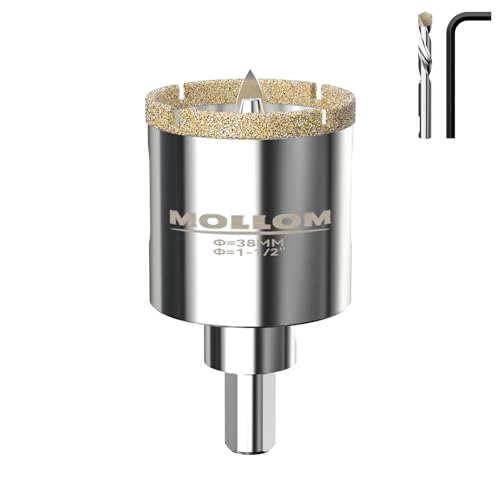
| MOLLOM DiamondTile Master | Porcelain tile and stone | Diamond Grit | 35mm | Hollow shell + 2 pilot bits | Amazon |
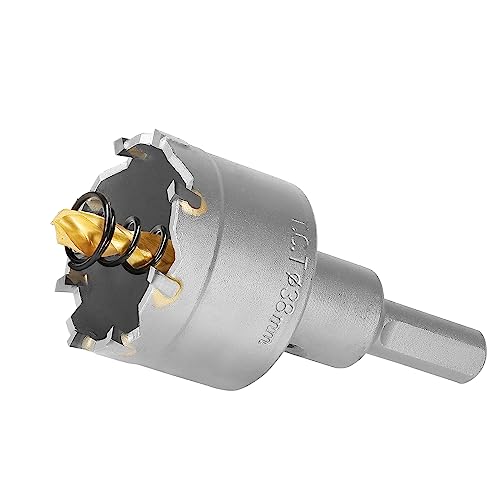
| AOKAIMIAR Carbide TCTMetal Biter | Hard metals, stainless steel | Tungsten Carbide | Standard | Shell with center bit | Amazon |
| Drill America Bi-Metal DMS9 | Wood, aluminum, plastic | High Speed Steel | Standard | Hollow shell (mandrel not included) | Amazon |
| Milwaukee Hole Dozer | Dense hardwoods and metal | Bi-Metal | Standard | Hollow shell | Amazon |
| Vouyar Tungsten Carbide | Hard steel up to 3/16-inch | Carbide | Standard | Complete set with arbor and ejector | Amazon |
| Starrett Fast Cut Bi-Metal | Sheet metal and thin steel | High Speed Steel | 1-5/8-inch | Hollow shell | Amazon |
| Spyder Carbide-Tipped | Cement board, fiber cement, wood | Carbide | Standard | Hollow shell | Amazon |
| Diablo Carbide Teeth | Deep cuts in wood and nail-embedded lumber | Carbide-Tipped | 2-3/8-inch | Shell (Snap-Lock Plus mandrel) | Amazon |
In-Depth Reviews
1. LENOX Tools Bi-Metal Speed Slot Arbored Hole Saw with T3 Technology, 1-1/2″ (1772729)
Our pick — over 4.5★ from 850+ verified ratings; the strongest balance of quality and price.
The go-to arbored saw that sails through wood and steel without demanding a second arbor purchase.
This LENOX uses a bi-metal build with variable-pitch teeth that handle both 2×3 framing and thin steel. Buyers report cutting fifty holes in pine before needing a rest, and others have bored dozens of holes through 1/8-inch steel with a single saw. The Speed Slot staircase design lets you pop out the waste plug with a flat bar instead of prying or hammering — a serious time saver when you are making multiple cuts.
It runs hot after two or three holes in hardwood, so you want to back off and let it cool for about a minute. That is standard for fast-cutting bi-metal saws, but note if you are running production-style work. Unlike the MOLLOM tile saw below, this one is built for wood and metal — do not grab it for porcelain.
What wins people over: It just rips — owners mention getting through 50 holes in pine with the teeth still sharp, and the integrated arbor means no extra parts to buy.
The honest trade-off: It can overheat if you push through continuous cuts without a brief pause to let the teeth cool.
Best for: The home shop or job-site user who cuts wood and metal all day and needs a reliable saw that comes ready to chuck into a drill.
Think twice if: You need to cut tile or glass — this is a bi-metal tooth saw, not a diamond abrasive tool.
2. MOLLOM 1-1/2″ (38mm) Diamond Hole Saw with 2 Pilot Drill Bit
The smooth diamond cutter that glides through porcelain without chipping.
Where toothed saws snag and shatter tile, this MOLLOM uses diamond grain brazed around the rim to grind a clean hole. It comes with two removable pilot bits — a diamond-tipped one and a center bit — so you can start the hole accurately on a slick glazed surface. It measures 35mm deep (1-3/8-inch), which is enough for most single-layer tile and countertop work. You must add water or coolant while drilling to keep the diamond matrix from overheating and glazing over.
It weighs 0.12 kg; the AOKAIMIAR carbide saw weighs 0.21 kg. Buyers have cut onyx light boxes, quartz countertops, and fiberglass without chips. The recurring note is to remove debris between cuts, because two stacked plugs will clog the barrel and make the saw useless. This is not a saw for metal — the data explicitly says so, so keep it to tile, stone, and glass.
The Smooth Cuts
- Cut porcelain tile and quartz without chipping the surface.
- Two removable pilot bits give you a guide on glazed materials.
- Lightweight build at 0.12 kg reduces wrist fatigue on long cuts.
The Care It Requires
- Must be used with water or coolant to avoid damaging the diamond matrix.
- Does not work on metal — strictly tile, stone, glass, and fiberglass.
- Debris removal between cuts is mandatory to prevent clogs.
Reach for this when: You have a tile backsplash, quartz countertop, or glass project where a toothed saw would wreck the surface.
Not your pick if: You are cutting steel, iron, or any metal — it will not do the job.
3. 1-1/2 Inch Carbide Hole Saw with Titanium Plated Center Drill Bit (AOKAIMIAR)
Bites through stainless steel plate without dulling, for a fraction of what premium carbide costs.
The tungsten carbide tip on this AOKAIMIAR saw handles heavy-duty work that ruins bi-metal blades. It weighs 0.21 kg and customers note cutting two-inch holes in quarter-inch steel plate using slow RPM, light pressure, and WD-40 — with the teeth staying razor-sharp afterward. It handles stainless steel, iron, copper, brass, and aluminum, making it a solid pick for plumbing and fabrication jobs.
Compared to the LENOX above, you trade the built-in arbor for a separate center bit with titanium plating. The common buyer feedback is that the pilot bit can snap before the main cutter dulls, so treat it gently. Keep speed low and use cutting oil; this is not a high-RPM tool.
What It Handles
- Tungsten carbide teeth stay sharp after cutting 1/4-inch steel plate.
- Works across stainless steel, iron, copper, brass, and alloy steel.
- Low price for carbide performance — buyers call it a surprisingly high-quality deal.
Where It Can Falter
- The center drill bit can break before the main cutter wears out.
- Requires slow RPM and lubricant; pushing it fast will dull or chip the carbide.
Grab this for: Drilling stainless steel kitchen carts, steel plates, and non-ferrous metals without spending top dollar.
skip it if: You mostly cut wood or drywall — the LENOX bi-metal above costs a few dollars more and cuts faster on those materials.
4. Drill America 1-1/2″ Bi-Metal Hole Saw, DMS9 Series
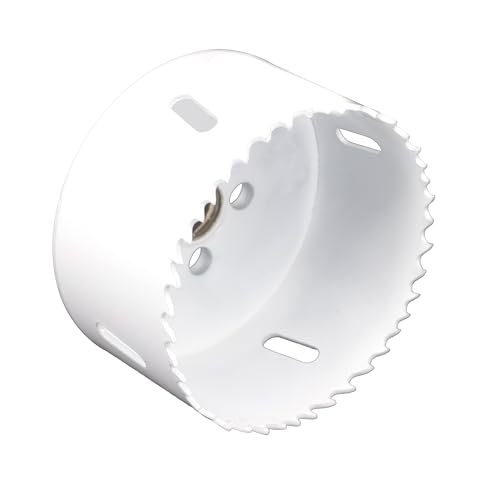
Precision-engineered for light use, it makes a round hole without wandering.
Drill America uses cobalt HSS teeth laser-welded to a steel backing, with a 4/6 variable pitch and positive rake angle that reduces grabbing. The saw cuts wood, plywood, aluminum, sheet metal, and plastic. It does not include a mandrel, so you need a separate arbor. The side cutouts make plug ejection quick — just tap or push.
Buyers call it a quality product for light use, not for daily production. One notes it makes a precise round hole without wandering, which is the main praise here. It falls short of the LENOX on heavy wood cutting because the LENOX is arbored and built for higher volume, but the Drill America is a solid choice for a weekend project where you need one clean hole.
What stands out: Good quality and a precise round cut — it is the reliable option for one-off projects where accuracy matters.
The honest limitation: It is designed for light use, not everyday heavy drilling; a better saw exists for repetitive work.
Best for: DIYers who need one or two clean holes in wood or aluminum without a big investment.
Not for: Contractors cutting dozens of holes per day in steel or thick hardwoods.
5. Milwaukee Hole Dozer Hole Saw, Bi-Metal, 1-1/2 in (49-56-9617)
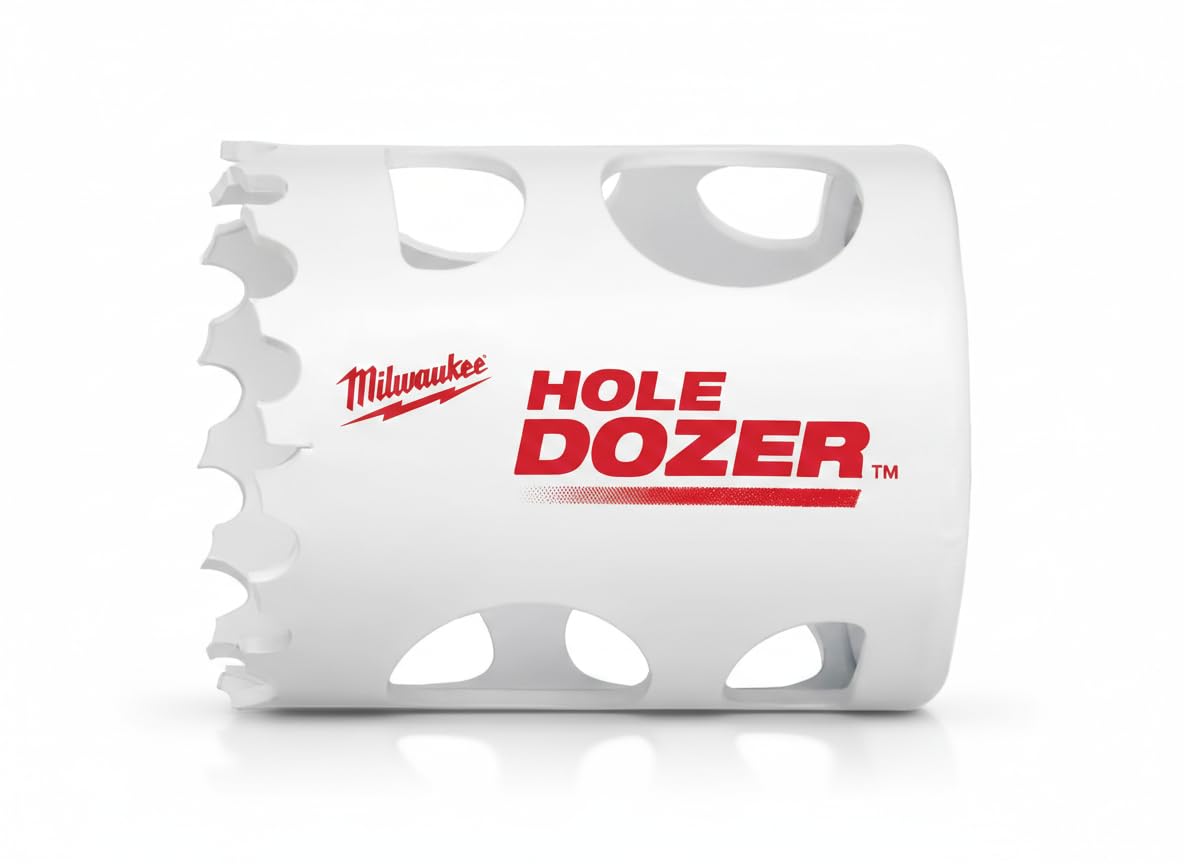
Tackles dense IPE hardwood without bogging down, and the shell swaps out when it wears.
Milwaukee’s bi-metal Hole Dozer cuts alloy steel, metal, plastic, and even IPE — a South American hardwood that destroys cheap blades. It weighs 2.08 ounces and uses four teeth at a wide pitch to clear chips fast. The hollow shell design means you buy a separate arbor once and swap the saw portion when it dulls, reducing waste and cost over time. Reviewers point out it is the fastest and cleanest option they have tried for holes 1/2-inch and larger.
The side cutouts make plug removal simple. One practical trick from the review pages: you can use a removed core as a guide to enlarge the hole with a bigger saw. Unlike the Diablo below, this Milwaukee does not reach as deep — it is a standard-depth saw, not a deep-cut model.
What gives it an edge: Milwaukee’s name and the ability to replace just the outer shell when it dulls, so you are not throwing away a whole arbor.
The one catch: It comes as a shell only; you need a separate Milwaukee arbor (sold elsewhere) to use it.
Reach for this if: You work with dense hardwoods like IPE or need a clean hole in metal and want a system that lets you replace just the saw portion.
Look elsewhere if: You want a complete set with arbor included, or you need a deep-cut saw for thick lumber.
6. Vouyar 1.5″ Tungsten Carbide Tipped Hole Saw Drill Bit for Hard Metal (38.1mm)
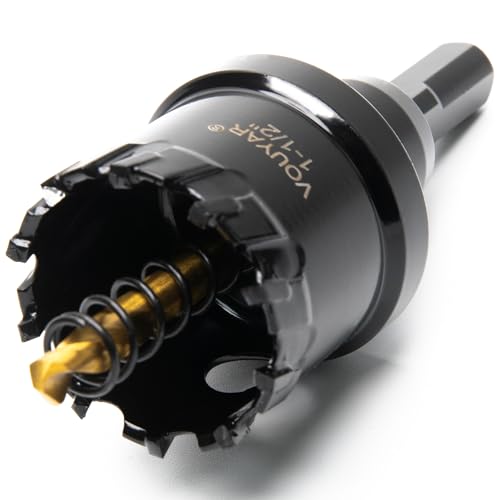
A full kit with arbor, pilot bit, and case that slashes through tough steel for pocket change.
This Vouyar has tungsten carbide cutting teeth and comes with everything: a pilot bit, arbor, Allen key, and a storage case. It includes a pressure-sensitive ring ejector that pushes the scrap plug out once you drill through — no prying. The cutting diameter is 38.1mm, and the instructions say to keep RPM below 500 and use lubrication to prevent overheating. Shoppers say cutting 1-inch holes in 3/16-inch A500 steel tube in about two minutes per hole at 300 RPM with lubricant.
The length of the bit makes it ideal for drilling through studs. Durability is a mixed note in the feedback — the teeth are extremely sharp and aggressive, but if you push too hard or too fast they can chip. Like the AOKAIMIAR above, this is a low-speed tool. It cuts wood quickly, but the LENOX is a safer choice for pure woodcutting given the Vouyar’s aggressive carbide edge.
Full Package
- Includes arbor, pilot bit, Allen key, and case — no extra purchases needed.
- Ring ejector clears the plug automatically when you finish the cut.
- Tungsten carbide teeth cut extremely fast and stay sharp through hard steel.
Use With Caution
- Aggressive bite can be hard to control — a firm grip on the drill is essential.
- Durability is mixed; pushing too hard or running above 500 RPM can chip the carbide.
Perfect for: Anyone cutting into steel tubing, thick plate, or stainless steel who wants a complete kit ready to go.
Not the best fit if: You need a gentle touch on thin materials — the carbide aggressiveness can grab and kick.
7. Starrett Bi-Metal Fast Cut Straight Pitch Hole Saw (1-1/2″ Diameter, 1-5/8″ Depth – FCH0112-G)
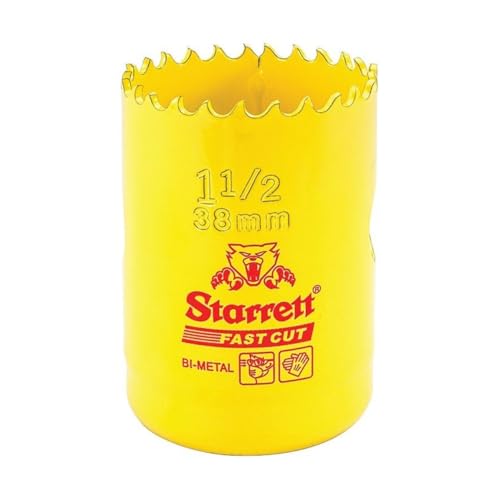
A straight 5.5-pitch saw designed to cut thin sheet metal and corrugated steel without snagging.
Starrett uses a 5.5-pitch tooth pattern — 5-1/2 teeth per inch — that smooths out interrupted cuts in perforated steel and corrugated material. The teeth are hardened HSS on an alloy steel body. With a depth of 1-5/8-inch, it cuts deeper than many standard hole saws, which matters when you are going through a stud or layered material. The set of the teeth is narrow, making an accurate cut, though it can bind in deeper bores if you do not clear chips.
At 0.03 kg, it is extremely light. Buyers report it mows through wood without breaking a sweat and stays sharp. One noted it out-cut a Bosch saw side by side on lug nuts. The mixed durability feedback is present here, as it is with many HSS saws — treat the brittle teeth with care on hard metals. It leads the category in sheet metal work thanks to the fine pitch that prevents grabbing, unlike the wider-pitch Milwaukee above.
Sheet Metal Specialist
- Fine 5.5-pitch teeth minimize snagging on thin and corrugated steel.
- 1-5/8-inch cutting depth handles thicker material than standard saws.
- Starrett quality with accurate, low-vibration cuts.
Things to Watch
- The HSS is hard but brittle, so it can chip if you push too aggressively.
- Narrow tooth set can bind in deep cuts if you do not clear the chips.
Ideal for: Professionals cutting sheet metal, corrugated steel, or perforated panels where a clean edge is critical.
pass on it if: You need a general-purpose wood/metal saw — the LENOX offers more versatility for similar spending.
8. Spyder 1-1/2-In Carbide-Tipped Hole Saw
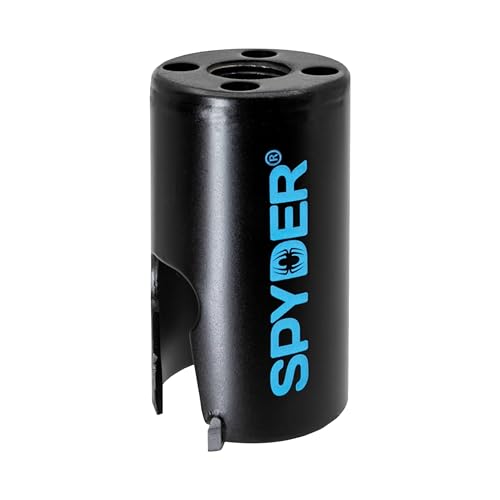
Carbide tipped for cement block and fiber cement, but it demands a gentle hand and cooling water.
The Spyder uses carbide tips brazed onto a steel body to cut through cement board, plaster, lath, and fiber cement like butter — a standout capability that the toothed saws cannot match. It cuts fiber cement quickly, with buyers noting it handles red cement block for an outdoor faucet without issue. It weighs 3.2 ounces and has a cutting diameter of 38.1mm.
The catch is durability. The carbide tips are sharp but brittle; they can jump or break off if the pilot bit is not steady or if you run the saw dry. The honest buyer feedback is to use water when drilling into cement to keep the tip cool and intact. It is a good fit for masonry and tough composite materials, but it trails the LENOX and Diablo for general wood or metal work.
What it does best: Cuts cement board, fiber cement, and plaster/lath where other saws dull instantly — it goes through these like butter.
Where it can struggle: The carbide tips are fragile if you run dry or the drill wavers; steady hands and water are essential for cement work.
Best for: Installing exterior faucets through cement block, cutting fiber cement siding, or renovating old plaster-and-lath walls.
Not the right choice if: You are cutting steel or stainless steel — the Spyder is not designed for hard metals.
9. Diablo Carbide Teeth Hole Saw for Wood and Metal (1-1/2″ Diameter, 2-3/8″ Length – DHS1500CT)
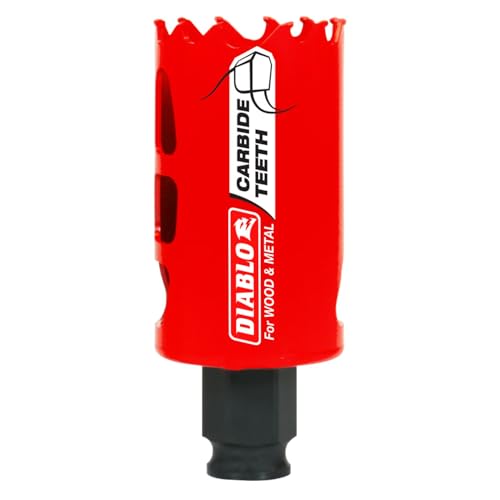
Carbide teeth that cut to a depth of 2-3/8 inches in one pass, making it the choice for nail-embedded and oversized lumber.
Diablo’s carbide-tipped saw delivers a 60mm (2-3/8-inch) cutting depth, letting you bore through 2×4 lumber that has been cut wider than standard without having to flip and cut from the other side. It uses a Snap-Lock Plus mandrel system that allows quick shell changes — the arbor fits all Diablo hole saws from 5/8-inch to 6-inch. The carbide teeth last on wood, metal, plastic, aluminum, cast iron, stainless steel, and nail-embedded lumber.
Buyers call it the best hole saw they have found, noting that it cuts old cut lumber where standard saws fall short. The only recurring weakness is the arbor pilot bit, which can snap off easily — a point shared with the AOKAIMIAR saw above. The Diablo is twice the price of the LENOX, so you pay a premium for that extra depth and the mandrel system. If you work mainly with standard lumber, the LENOX offers similar performance for less.
Deep Cut Advantage
- 2-3/8-inch cutting depth handles thick and oversized lumber in one pass.
- Carbide teeth last through nail-embedded wood, metal, and cast iron.
- Snap-Lock Plus mandrel system changes shells fast without tools.
Cost to Consider
- Higher price than the LENOX and Drill America equivalents.
- The arbor pilot bit is a known weak point — it can snap with rough handling.
Reach for this when: You regularly cut through thick lumber, nail-embedded wood, or need one pass through doubled-up framing.
Overkill for: Standard woodworking or thin metal cuts — the LENOX or Vouyar covers those jobs for far less money.
Understanding the Specs
Tooth Material and Cutting Edge
The material the teeth are made from determines what you can cut. Bi-metal (high-speed steel teeth on a spring-steel body) is the everyday choice for wood, plastic, and thin metal. Tungsten carbide tips (TCT) hold an edge much longer in hard metals and nail-embedded wood, but the carbide is brittle and can chip under shock or high speed. Diamond grit has no teeth — it grinds away tile and stone. Pick the edge material that matches your primary material, not what sounds toughest on paper.
Cutting Depth and Arbor System
Standard hole saws cut about 1-3/8-inch to 1-5/8-inch deep. Deep-cut models like the Diablo go to 2-3/8-inch, letting you bore through a full 2×4 in one pass. Some saws come as one-piece arbored units (the shank is built in), others are hollow shells that require a separate mandrel. If you plan to own multiple sizes, a mandrel system like Diablo’s Snap-Lock Plus or Milwaukee’s interchangeable shell saves money over time — you swap only the toothed portion, not the whole assembly.
FAQ
Will a 1 1/2 inch hole saw fit a standard drill?
Can a bi-metal hole saw cut stainless steel?
What is the difference between a diamond hole saw and a carbide hole saw?
How do I keep my hole saw from overheating?
Why does my hole saw keep binding and stopping the drill?
Can I use a 1 1/2 inch hole saw with a cordless drill?
What RPM should I use for a 1 1/2 inch hole saw in steel?
Do I need a special arbor for a shell-style hole saw?
Final Thoughts: The Verdict
For most buyers, the 1 1/2 inch hole saw winner is the LENOX Bi-Metal Speed Slot because it combines a built-in arbor, a proven bi-metal edge that cuts wood and steel alike, and a Speed Slot design that makes plug ejection easy. If you are cutting tile and stone, grab the MOLLOM Diamond for chip-free holes in porcelain and quartz. And for deep cuts through nail-embedded lumber or oversized studs, the Diablo Carbide Teeth with its 2-3/8-inch depth is the one to reach for.
How We Picked
We do not accept paid placement. Every pick is matched to a real buyer and a real use-case; we do not hands-on test units.
Sources & Methodology
Specifications: manufacturer listings and product documentation. Review insights: verified customer reviews, as of July 2026. Pricing: not shown on this page (it changes often); check the current price via the retailer link.
As an Amazon Associate, KitchPrep earns from qualifying purchases. This does not affect which products we feature.
Related Guides
