
Shopping for a countertop oven sounds simple… until you’ve lived with one for two weeks. Because the real question isn’t “does it air fry?” — it’s: does it make weeknights easier without creating new problems?
Here’s what usually happens: you buy something with big promises, it cooks fast for a few days, and then reality shows up. Grease mist clings to the ceiling of the cavity. Toast comes out pale on one side. A fan screams through the cool‑down cycle. The rack positions don’t match your pan sizes. The door swing steals counter space. Or the “air fry” mode turns your fries crispy… and your salmon dry.
That’s why this guide is built like a real kitchen decision, not a spec-sheet parade. If you’re searching for an air fryer toaster oven combo, you’re usually trying to replace (or stop using) at least two appliances: a pop‑up toaster, a traditional oven, a basket air fryer, maybe even a dehydrator or proofing box. And to do that well, the appliance has to win at the hard things: heat control, airflow control, cleanup control, and workflow.
So below, I’m going deep on what owners consistently notice after the honeymoon period: how evenly it toasts across multiple slices, whether the air fry basket actually crisps without constant shaking, how hot the exterior gets under cabinets, how painful cleaning becomes if you love chicken wings, and whether the controls feel “intuitive” or like a tiny flight simulator.
You’ll find 15 standout options in a smart order: premium “second-oven” machines first, then powerful mid‑range workhorses, then space‑saving and budget picks that still do the job. By the end, you’ll know exactly which model fits your cooking style — and what you’ll love (and hate) about it before you buy.
How to Choose the Right Air Fryer Toaster Oven Combo
A great countertop oven doesn’t win because it has the most presets. It wins because it’s predictable when you’re hungry. That means three things: heat that behaves, airflow that crisps, and a workflow you’ll actually use. Here’s the decision framework I use when helping people pick a model they’ll still like after 200+ meals.
1. Start with your “most frequent” food, not your dream food
Most people buy these ovens imagining the perfect Sunday roast… and then use them for toast, nuggets, reheating pizza, and sheet‑pan veggies. So decide what you’ll do 4–6 days a week, and buy for that.
- If you toast daily: prioritize even browning, predictable toast shade, and a door that doesn’t dump crumbs everywhere.
- If you air fry daily: prioritize fan power + basket design + grease management (or you’ll hate cleaning).
- If you bake weekly: prioritize temperature stability and consistent hot spots (better “oven brains” matter).
- If you host / meal prep: prioritize capacity, rack flexibility, and doors that make it easy to pull trays safely.
2. Know the three designs (and what each one costs you)
Door design is not cosmetic. It changes how you move in your kitchen, how safe tray removal feels, and how much counter depth you need.
- Classic drop‑down door: Traditional, simple, often sturdy. The trade‑off: it creates a horizontal “landing zone” that can block the controls on some models and steals space when open.
- French doors: Amazing for tight kitchens because they don’t swing outward as far. Loading trays feels more natural, and you can peek in easily. The trade‑off: some French door models run hotter externally or can leak a bit of smoke if drippings hit heat elements.
- Flip‑up / flip‑away designs: Space-saving heroes for small counters. The trade‑off: you may accept a shallower interior height and a more “hands-on” cleaning routine (because grease builds in a compact cavity fast).
3. “Air fry” is mostly airflow + spacing (not magic)
In countertop ovens, air fry is essentially high‑convection cooking with a basket or perforated tray. Two ovens with the same wattage can crisp wildly differently because fan geometry and airflow paths matter more than the spec list.
- Better crisping usually comes from: stronger fan, tight airflow path, and a basket that holds food in a single layer.
- Worse crisping usually comes from: weak fan, “dead zones” near corners, and overloaded baskets.
- Your role still matters: pat food dry, don’t crowd, and use a light oil mist for foods that need browning.
If you hate “shaking the basket” life, choose a model known for strong circulation and broad, even heat. If you cook wet marinades often, expect less crunch — countertop ovens are great at browning, but moisture can fight crisping.
4. Temperature stability is the hidden difference between “okay” and “wow”
This is where premium machines justify themselves. Stable, accurate heat makes:
- Cookies bake evenly instead of “dark edges, pale centers.”
- Bread proof and bake more reliably (especially with proof or slow-cook modes).
- Roasts cook predictably without constant babysitting.
- Reheats feel like fresh food instead of dried-out leftovers.
If you bake even a little, prioritize a model with a reputation for holding temperature and distributing heat evenly. In real life, that means fewer mid-cook tray rotations and fewer “why is it darker on the right?” moments.
5. Cleaning is not optional — so choose the kind you can tolerate
Air frying creates grease aerosol. That fine mist lands on the ceiling, the fan cover, the back panel, and the door glass. Some ovens are designed to accept this reality with accessible panels, dishwasher-safe accessories, and smart drip management. Others “work great” but become cleaning projects.
- Look for: removable crumb tray, easy-wipe interior, accessible back panel, and roomy corners (less gunk trapping).
- Bonus points: dishwasher-safe baskets and racks, and a drip tray that catches fat before it hits heating elements.
- Small habit, huge payoff: after greasy cooks, wipe the door glass and the bottom surface while it’s still slightly warm (not hot). You’ll prevent hard varnish buildup.
6. The “controls” problem: simple knobs vs smart automation
People underestimate this. The best oven in the world can still annoy you if the controls feel like work. There are two personalities:
- Knob people: You want tactile dials, quick setting changes, and no menus. Great for daily toast + fast dinners.
- Smart people: You want presets, guided cooking, notifications, and precision control. Great if you cook a lot and want repeatable results.
Neither is “better.” But mismatching your personality is a guaranteed regret. If you know you’ll never open an app to cook, don’t pay for app features. If you love step-by-step guidance, smart automation can genuinely remove mental load.
7. Counter space and cabinet clearance are non-negotiable
Countertop ovens vent heat — often out the back and up. Some models stay relatively cool to the touch; others heat the exterior during high-temp cooking. Before you buy, choose where it will live and plan for:
- Rear clearance for ventilation.
- Top clearance under cabinets (especially for high heat and air fry modes).
- Door clearance so you can actually open it fully without fighting your backsplash or coffee machine.
Quick Comparison: 15 Air Fryer Toaster Oven Combo Picks
Use this table to narrow your shortlist fast, then jump to the full reviews for the real-life details — like how each oven behaves with toast, how annoying cleanup becomes, and which ones feel like a true second oven.
On smaller screens, swipe or scroll sideways to see the full table.
| Model | Style | Standout strength | Best match | Amazon |
|---|---|---|---|---|
| Breville Smart Oven Air Fryer Pro (BOV900BSS) | Premium drop‑down | True “second oven” feel: stable heat, strong convection, versatile modes | Home cooks who want consistent results across toast, bake, roast, and air fry | Amazon |
| Ninja Double Stack XL (DCT651) | Dual-oven | Cook 2 meals at once + thermometer-driven doneness control | Busy families who want dinner to finish together without batch cooking | Amazon |
| Breville Joule Smart Oven Air Fryer Pro (BOV950BSS) | Premium smart | Guided cooking + app control + multi-stage automation | People who want “autopilot” help and repeatable results | Amazon |
| CHEF iQ MiniOven | Smart touchscreen | App guidance + soft-close door + higher-temp range for crisping | Anyone who wants “coaching” without feeling overwhelmed | Amazon |
| Ninja French Door Premier (FO101) | French door | Dishwasher-safe accessories + PFAS‑free surfaces + fast preheat | People who value easy cleanup and daily convenience | Amazon |
| Beelicious Pro 28QT (12‑in‑1) | Large convection | 3‑layer cooking + rotisserie + even heat approach | Meal preppers and families who need space without a giant footprint | Amazon |
| Ninja Prestige Smart XL (DT501) | XL drop‑down | Even cooking on 2 levels + fast preheat + family capacity | Households that cook full meals often and want speed + consistency | Amazon |
| Emeril Lagasse Extra Large French Door (26QT) | French door | Big cavity + lots of presets + accessory-heavy versatility | Hosts and families who want “one oven that does it all” | Amazon |
| Midea Flexify French Door (26.4QT) | French door | Fast airflow style + precise time/temp increments + sleek controls | Value-minded buyers who still want a modern, capable oven | Amazon |
| Cuisinart TOA‑70 (Air Fry + Grill) | Analog drop‑down | Knob simplicity + grill/griddle plate + strong everyday versatility | People who want tactile controls and cooking flexibility | Amazon |
| Ninja Flip Toaster Oven (SP151) | Flip‑up | Stores upright to reclaim counter space + fast cooking | Small kitchens that need power without permanent sprawl | Amazon |
| Ninja Foodi Digital Air Fry Oven (SP101) | Flip‑up | Proven classic: fast preheat, big pan area, easy-access cleaning panel | People who want a long-running favorite with strong performance | Amazon |
| Gourmia French Door Air Fryer Oven (25QT) | Budget French door | Big capacity for the counter + easy digital presets | Families who want space and simplicity without premium pricing | Amazon |
| Gourmia Digital Air Fryer Toaster Oven (10QT) | Compact digital | Small footprint + quick heat + simple presets | Apartments, offices, dorms, and snack-heavy households | Amazon |
| BLACK+DECKER Crisp ’N Bake (TO1787SS) | Ultra‑simple | Basic toast/bake/broil + light air-fry support in a compact body | Small households who want a simple countertop helper | Amazon |
In‑Depth Reviews: 15 Air Fryer Toaster Oven Combo Models Worth Buying
Now we’ll go model by model. I’m focusing on the stuff that actually changes daily life: toast consistency, airflow behavior, noise, cleanup reality, tray access, and whether the oven feels predictable when you’re cooking on autopilot after a long day.
1. Breville Smart Oven Air Fryer Pro (BOV900BSS) – The “Real Second Oven” You’ll Use Daily

If you want one countertop oven that behaves like a dependable, scaled-down wall oven, this is the one. The Breville BOV900 isn’t “cute.” It’s not trying to be a gadget. It’s built to cook with control — and that’s why people end up using it for everything: toast, weeknight chicken, cookies, roasted vegetables, reheated pizza that stays crisp, even slow cooking.
The reason it feels premium isn’t just the stainless body. It’s the way heat behaves inside the cavity. A lot of ovens blast heat and hope for the best. This one feels more like it’s actively managing heat placement and stability. That matters most in baking and roasting: fewer hot-spot surprises, fewer mid-cook rotations, fewer “why is that corner overdone?”
Air frying is strong here, but I want to set expectations like an expert would: this kind of oven excels when you treat air fry like “high-speed convection with good technique.” Use the air fry basket, keep food in a single layer, and don’t underestimate preheating. Do that and you’ll get the kind of crisping that replaces a lot of basket air fryer use — while also giving you a real oven for the rest of your week.
Now the honest part: you’re buying power, capacity, and control — and that comes with real heat output. This is the kind of oven you give breathing room. If your cabinets sit low and tight, plan placement like you mean it. If you’re the type who hates any cleaning, build a “wipe while warm” habit early because this can become a grease-mist collector if you run heavy air fry modes without basic maintenance.
Why you’ll love it
- Predictable results – Toast, bake, roast, and reheat feel consistent once you learn your timing.
- Versatility that’s actually usable – Settings aren’t just filler; they’re modes you’ll reach for.
- Capacity that changes your cooking – Big pans, bigger meals, less batch cooking.
- Feels like an oven, not a toy – Stable, confident, “I can cook anything in here” energy.
Good to know
- Give it cabinet clearance; it can radiate heat during high-temp cooking.
- Air fry works best when you respect spacing — crowded food = softer food.
- Like all powerful ovens, it rewards a simple cleaning routine to prevent baked-on buildup.
Ideal for: home cooks who want one premium countertop oven that can realistically replace most full-size oven tasks for everyday meals.
2. Ninja Double Stack XL (DCT651) – Two Ovens, One Counter, Zero Batch Cooking

This is the “busy family” dream scenario: an appliance that lets you cook two different foods at two different temps — and finish them together. That’s not a minor convenience. It’s the difference between dinner feeling smooth… or feeling like you’re running a tiny restaurant.
The biggest real-world win is how it changes your kitchen rhythm. Instead of doing chicken first, then veggies, then reheating something because it got cold — you can run an entrée in one oven and a side in the other. Or do “adult food” on top and “kid food” below without flavors mingling, thanks to the separated-oven concept. That’s a genuinely practical feature, not marketing fluff.
The other standout is the doneness system with a thermometer. When it’s used correctly, it turns stressful proteins (steak, thick chicken, salmon) into repeatable results. You stop guessing, and you stop overcooking “just to be safe.” If you’ve ever served a dry chicken breast because you didn’t trust timing, this feature is a real upgrade.
Now the truth: two ovens means more airflow hardware. That can mean more fan noise than simpler units. It also means you’re dealing with more accessories (pans, racks, basket) and a bigger physical footprint than a classic toaster oven. If your kitchen is tiny, you’ll want to plan placement and storage. And if you’re the type who hates handwashing large trays, be honest with yourself — this is a high-performance setup that asks you to keep up with it.
Why it’s a game changer
- Two-zone cooking – Real parallel cooking that reduces dinner chaos.
- Better timing control – Finish two dishes together without juggling.
- Thermometer-driven confidence – Especially strong for proteins and doneness precision.
- Flavor separation concept – Helpful when cooking very different foods at once.
Good to know
- Expect a learning curve for the thermometer and dual-oven workflow (worth it, but real).
- It can be louder than simpler toaster ovens during high-airflow modes.
- Accessories are substantial — plan for storage and cleaning habits.
Ideal for: families who cook full meals often and want “dinner finishes together” without batch cooking or stress.
3. Breville Joule Smart Oven Air Fryer Pro (BOV950BSS) – Guided Cooking for People Who Want Certainty
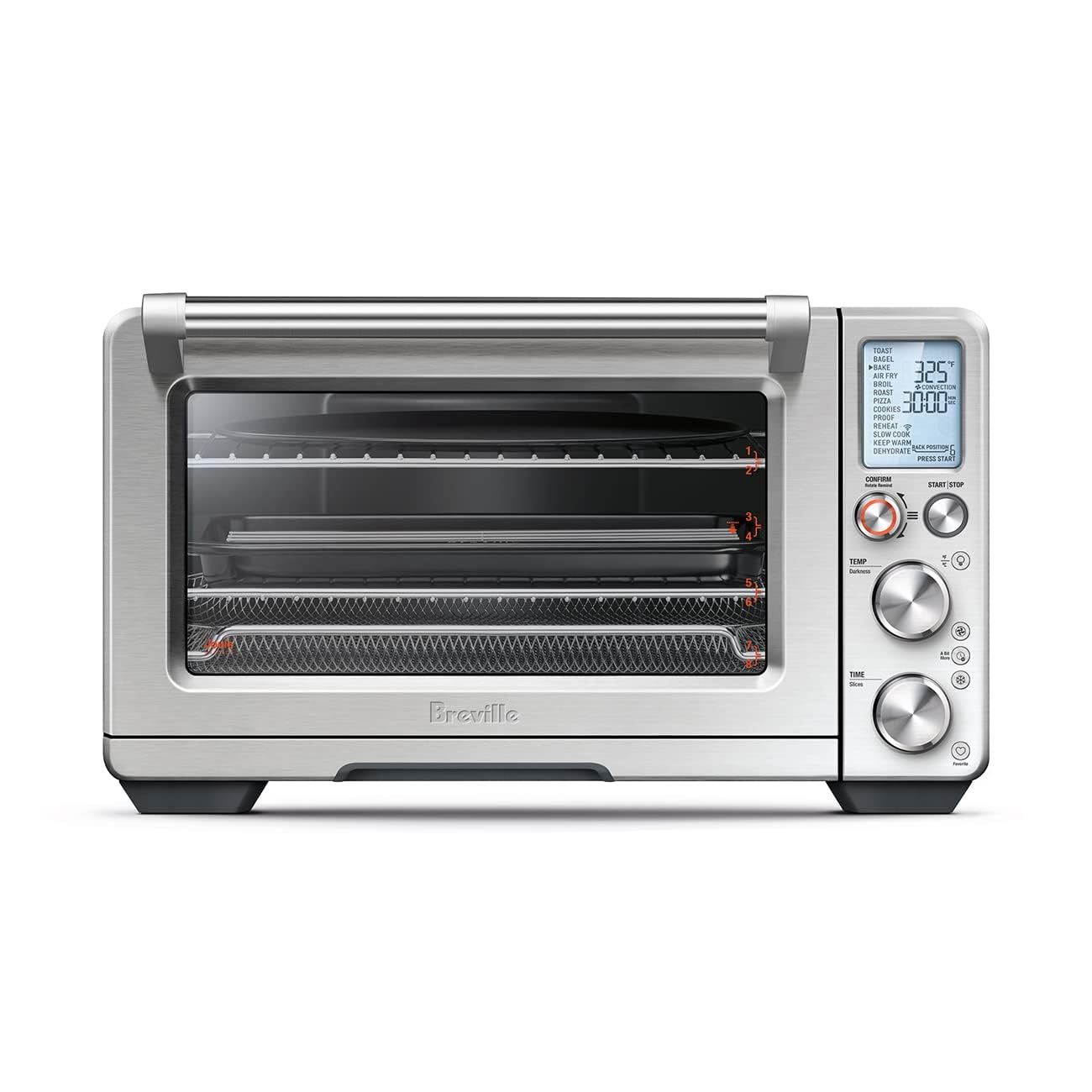
This is for a very specific buyer: the person who wants the oven to do the thinking. Not because you can’t cook — but because life is busy, mental energy is limited, and you want repeatability. The Joule experience is essentially “guided cooking plus oven control,” and when that clicks with your personality, it can feel like cheating (in the best way).
The practical advantage of smart cooking isn’t just remote monitoring. It’s the multi-stage logic: the oven can move between modes and temps with less manual babysitting, and you get prompts when attention is needed. For people who cook while doing ten other things, that structure reduces mistakes. It’s the difference between “I’ll just wing it” and “I know this will land.”
Performance-wise, you’re still getting a strong Breville-style cooking platform: reliable heating, powerful convection capability, and a build that feels like it’s meant to live on the counter long-term. Where it really shines is when you want consistent outcomes with less trial-and-error — especially if you like cooking proteins, baked goods, or “multi-part” meals that usually involve switching settings.
The honest trade-offs: smart features can occasionally feel like extra steps if you’re a knob-and-go person. If you hate using apps, you’ll resent what you paid for. And like most high-performance ovens, you’ll want good placement and basic cleaning habits to keep it feeling premium. Think of it like buying a luxury car: it’s amazing when you use the features, and a waste when you ignore them.
Why it’s worth it
- Guided cooking reduces mistakes – Great for repeatable results without guesswork.
- Multi-stage support – Helps with meals that require mode/temperature changes.
- Strong oven fundamentals – This isn’t “smart but weak”; it’s smart and capable.
- Great for busy households – Notifications and monitoring match real life.
Good to know
- If you never use app guidance, you won’t feel the full value.
- Smart features can occasionally require a little patience to learn.
- Like other powerful ovens, it benefits from consistent wipe-down habits.
Ideal for: people who want an oven that “coaches,” reduces decision fatigue, and delivers repeatable results with structure.
4. CHEF iQ MiniOven – Smart Coaching Without the “Tech Overwhelm” Feeling

If you like the idea of smart help but don’t want a “complicated” appliance, this one is worth a close look. The MiniOven is built around guided cooking, clear touchscreen control, and thoughtful usability details — like a soft-close door that feels premium and reduces the slam-and-jolt moment that can shift trays.
What makes it feel different from generic touchscreen ovens is the workflow: it’s designed to walk you through cooking in a practical way. That matters most when you’re cooking things that usually require judgment calls: “is it done yet?” “did I over-brown it?” “should I flip now?” The oven doesn’t eliminate cooking skills, but it reduces the number of tiny decisions you have to make.
Another real advantage is the accessory ecosystem: baskets, trays, and racks that are designed for how people actually cook — including crisping foods and keeping cleanup manageable. It’s the kind of oven that tries to minimize dishes by making the included gear useful, not just included.
The honest trade-off with any app-supported oven: connectivity can be imperfect. If your Wi‑Fi is unstable, you may occasionally see features de-sync or need a quick reset. If you’re okay with that (and you still want the touchscreen to work well on its own), it can be a very satisfying daily-use oven.
Why people choose it
- Guided cooking support – Helps you cook better without “studying” the oven.
- Soft-close door – Small detail, big daily satisfaction.
- Strong crisping potential – High heat + airflow design supports crunchy results.
- Accessory set is practical – Built to cook meals with fewer extra dishes.
Good to know
- App-connected features may occasionally need a quick re-sync depending on your setup.
- Touchscreen cooking still benefits from a short learning period to feel “automatic.”
- As with all air-fry ovens, crowding the basket reduces crispness.
Ideal for: people who want smart help and modern control, but still want the oven to feel approachable and easy day-to-day.
5. Ninja French Door Premier (FO101) – Easy Access, Easy Cleanup, Strong Everyday Performance
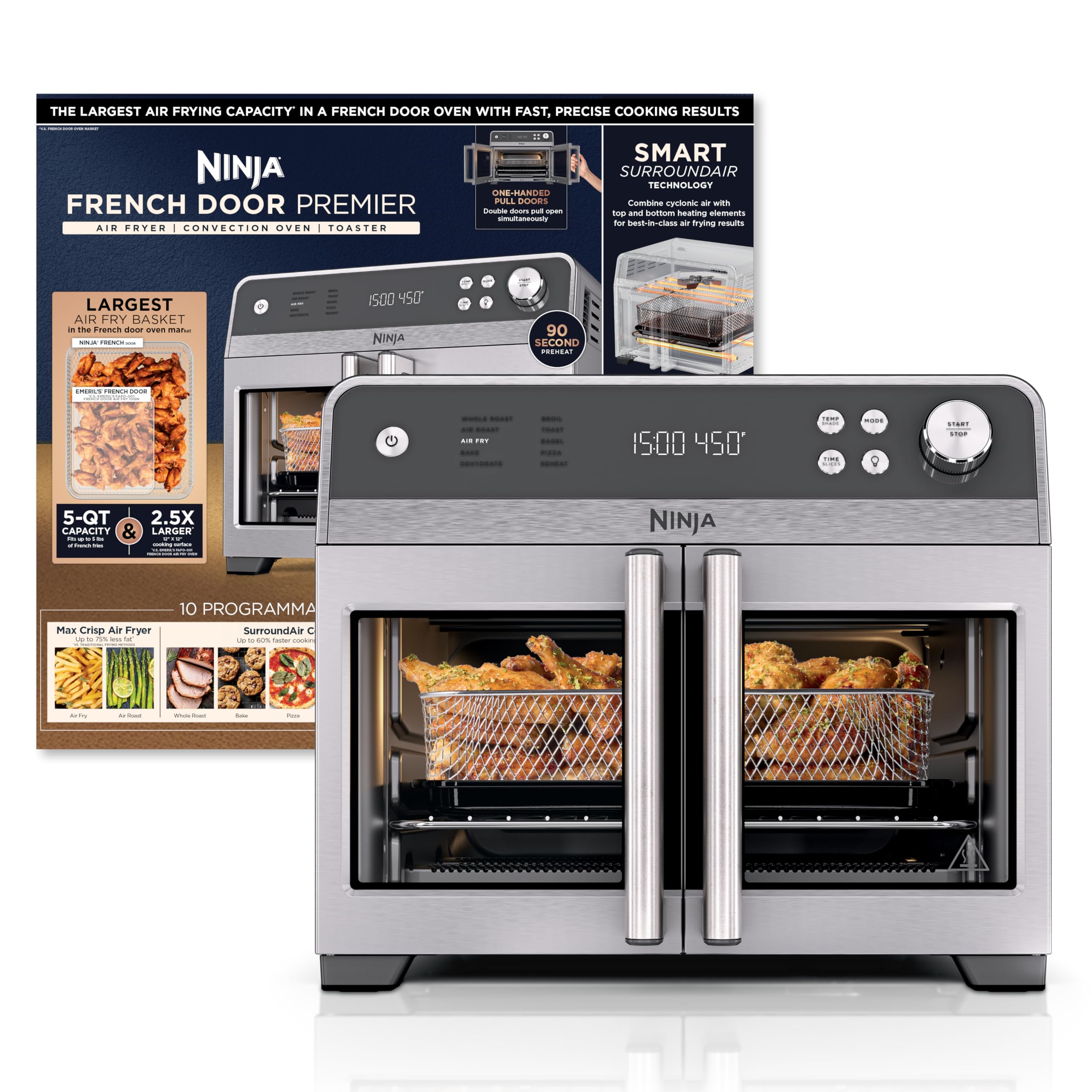
French doors aren’t just pretty — they’re a workflow upgrade. This Ninja is built for people who cook often and want tray access that feels smooth and safe. One-handed door operation is genuinely useful when you’re holding a tray with the other hand, and the wide opening makes it easier to check food without awkward angles.
Where this model shines in real-life use is the cleanup philosophy. Dishwasher-safe accessories plus removable trays reduce friction, and that matters because high-airflow cooking creates grease mist. If you dread cleanup, you don’t cook — and that’s the biggest reason countertop ovens get abandoned. This one is built to stay in rotation.
Performance-wise, it’s a strong everyday machine: quick preheat, capable crisping, and solid baking/roasting results when you use the right rack position. It’s the kind of oven that can handle pizza nights, toast mornings, sheet-pan dinners, and snack chaos without feeling delicate.
The honest limitation is capacity management when you try to do “everything at once.” Large baskets and pans are great, but tall foods can make multi-level cooking tricky. If your dream is roasting a tall bird while also crisping fries at the same time, you may need to run in stages. The good news: the oven is fast, so staged cooking isn’t as annoying as it sounds.
Why it works so well
- French door access – Easier loading, easier checking, less counter interference.
- Cleanup-friendly design – Dishwasher-safe accessories reduce friction.
- Strong everyday versatility – A true “daily driver” for busy kitchens.
- Materials mindset – PFAS‑free surfaces appeal to people who prioritize cookware choices.
Good to know
- Large/tall foods can limit true “two things at once” cooking in some configurations.
- Like all powerful ovens, the sides can warm during use — plan placement.
- Best results come from learning the rack positions for each mode (easy after a week).
Ideal for: people who want French door convenience, easy cleanup, and a dependable oven that gets used constantly.
6. Beelicious Pro 28QT (12‑in‑1) – Big Meals in a Countertop-Friendly Footprint
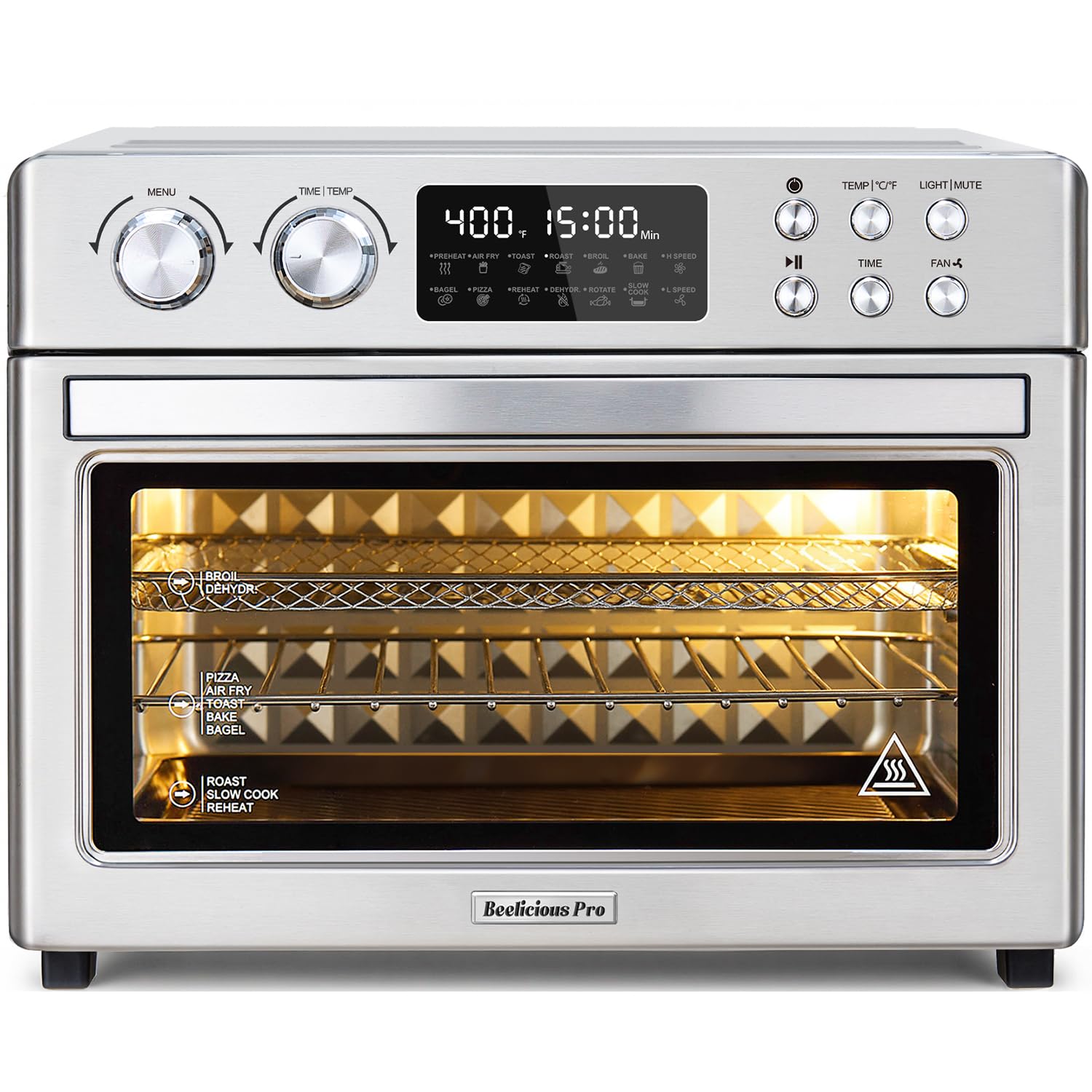
This is the type of oven that surprises people: it looks compact, but it cooks like it has ambition. The big advantage is the internal layout — multiple rack levels that let you stack food in a way that actually feels like meal prep, not like “I can barely fit a pizza.”
Owners who buy ovens like this usually have the same pain point: they’re tired of heating a full-size oven for a small meal, but they still want the ability to cook real food — not just snacks. This model is designed for that “real dinner” life: wings, pizza, roasted vegetables, baking projects, and multi-tray holiday cooking. When the airflow and heat are distributed well, it’s the kind of appliance that starts stealing work from your main oven.
The most practical feature isn’t even a preset — it’s the combination of rack flexibility, included accessories, and the ability to watch your food through the lighted cavity without opening constantly. That’s one of those things that sounds small until you realize how often you crack the door “just to see,” dump heat, and then wonder why timing changes.
The honest trade-off with larger-capacity ovens is grease management. Bigger cavity = more surface area for grease mist to land. If you air fry frequently, you’ll want a drip strategy and a quick wipe habit. Do that and it stays pleasant. Ignore it and it becomes a scrub project.
Where it shines
- Large usable space – Feels like a real oven, not a toaster with a fan.
- Three rack levels – Legit meal-prep potential when used wisely.
- Accessory set is generous – Rotisserie + baskets + trays make it versatile.
- Good “family dinner” workflow – Less batch cooking, more “one-and-done.”
Good to know
- More cooking surface means you should be proactive about cleaning.
- Best multi-rack cooking happens when foods have similar timing/temperature needs.
- Like many convection ovens, crispness improves when you avoid crowding.
Ideal for: families who want big capacity and multi-rack cooking without paying premium-tier pricing.
7. Ninja Prestige Smart XL (DT501) – Fast, Even Cooking When You’re Feeding Real People

This oven is built for the “we cook most nights” household. Fast preheat, strong convection, and a layout that supports real portions make it feel like a weekly workhorse. The core promise is even cooking — not just “it cooks,” but “it cooks without babysitting.”
In real kitchens, even cooking on two levels changes everything. You can roast vegetables and cook protein without constantly swapping rack positions. You can bake multiple trays with less rotation drama. And you can get a whole meal out faster — which is exactly why people buy countertop ovens in the first place.
Another design detail people love is the rack guidance concept. When the oven tells you which rack position matches a function, it reduces user error. It sounds basic, but it prevents the #1 countertop oven failure: using the wrong rack, getting uneven browning, and blaming the machine. A good oven teaches you how to use it.
The honest drawback: these powerful fan ovens can be louder than a simple toaster oven. Not “unbearable,” but noticeable — especially if your kitchen opens into a living area. Also, like many countertop ovens, toast performance can be “good” rather than “pop-up toaster perfect,” so toast-first households may still keep a slim toaster around.
Why it’s loved
- Fast weeknight workflow – Quick heat + strong convection = dinner moves faster.
- Two-level even cooking – Less rotation and tray shuffling.
- Simple to operate – The controls and guidance reduce learning pain.
- Great for big batches – Handles family portions without feeling cramped.
Good to know
- Fan noise can be noticeable during high-airflow modes.
- Toast may be good but not always “perfect toaster replacement” for every household.
- Plan a quick cleaning routine if you air fry frequently (grease mist is real).
Ideal for: families who want speed, even cooking, and an oven that can handle real dinner volume without drama.
8. Emeril Lagasse Extra Large French Door (26QT) – Big, Versatile, and Surprisingly Easy to Use
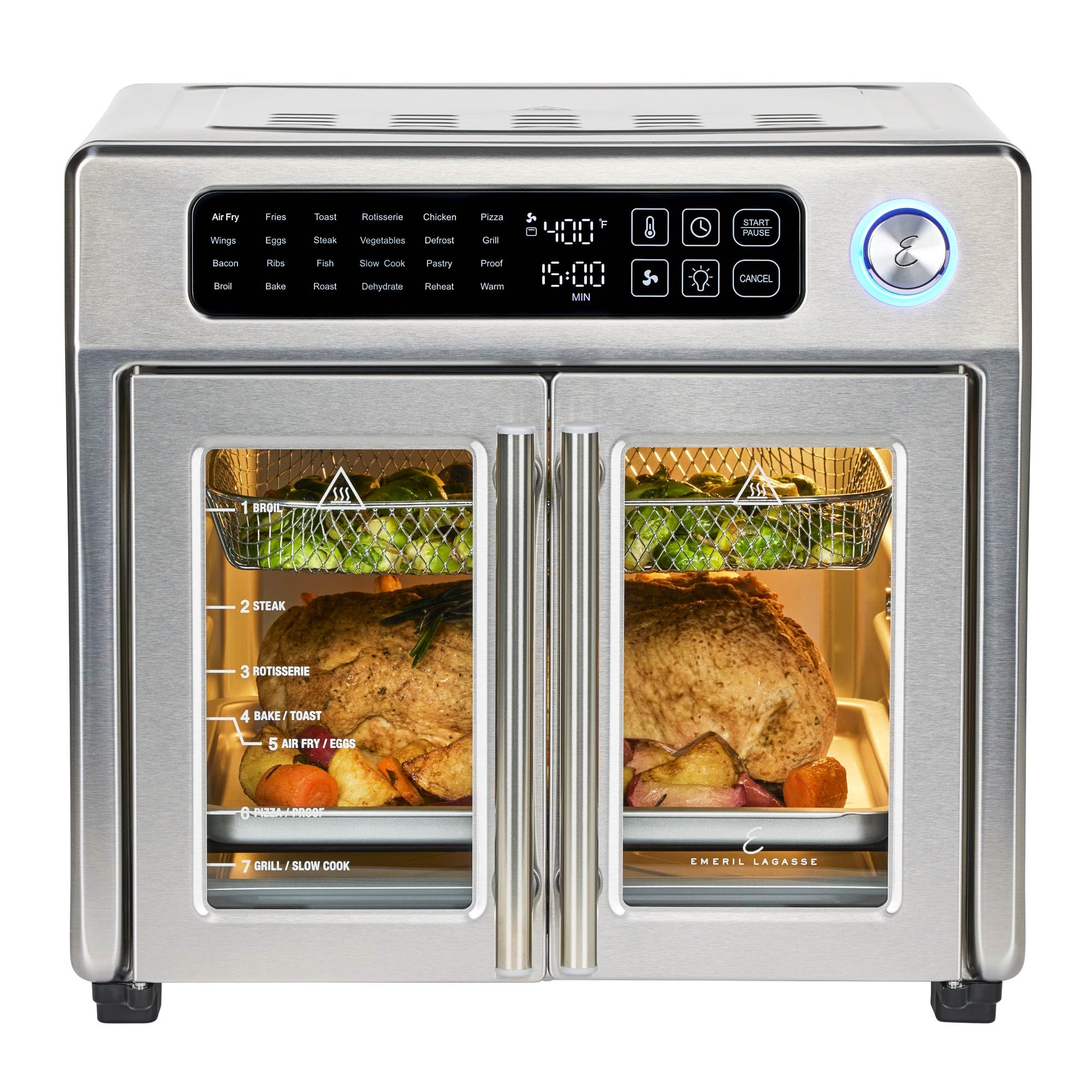
This model is popular for a reason: it hits a sweet spot of capacity, convenience, and “I can do a lot in here” versatility. French doors make it feel more premium than many ovens in its category, and the interior light plus digital controls create an easy, modern workflow.
In real-world use, it shines when you’re cooking for more than one person. You can do larger portions, multi-item meals, and party-style cooking without feeling like you’re playing Tetris with trays. The accessory bundle is also a genuine value for people who want rotisserie, baskets, racks, and trays ready to go without extra hunting.
A detail owners call out often is how much they end up using it. That’s a strong signal: countertop ovens only become “multiple times a day” appliances when they’re easy to operate and deliver consistent food. This one tends to earn that status in households that like quick snacks, quick roasts, and quick reheat that doesn’t turn food soggy.
The honest issues are classic French-door realities: doors can slam if you don’t open them fully (more of a habit thing than a defect), and the exterior can run hot — meaning you should treat placement as a safety choice, especially with kids around. If you respect clearance and use the drip tray to prevent drips hitting hot elements, it’s a very satisfying “do-it-all” machine.
Why it’s a crowd favorite
- Large cavity – Great for family meals and hosting.
- French doors improve access – Easier loading and checking food.
- Preset variety – Simple, one-touch workflow for daily cooking.
- Accessory bundle – Strong value for people who want options immediately.
Good to know
- Plan safe placement — exterior heat can be noticeable during high-temp cooking.
- Doors need a full-open habit to avoid slamming shut.
- Use the drip pan smartly to reduce smoke from drippings.
Ideal for: families and hosts who want a roomy French door oven with lots of cooking modes and a practical included accessory set.
9. Midea Flexify French Door (26.4QT) – Sleek, Capable, and Built for Bigger Portions
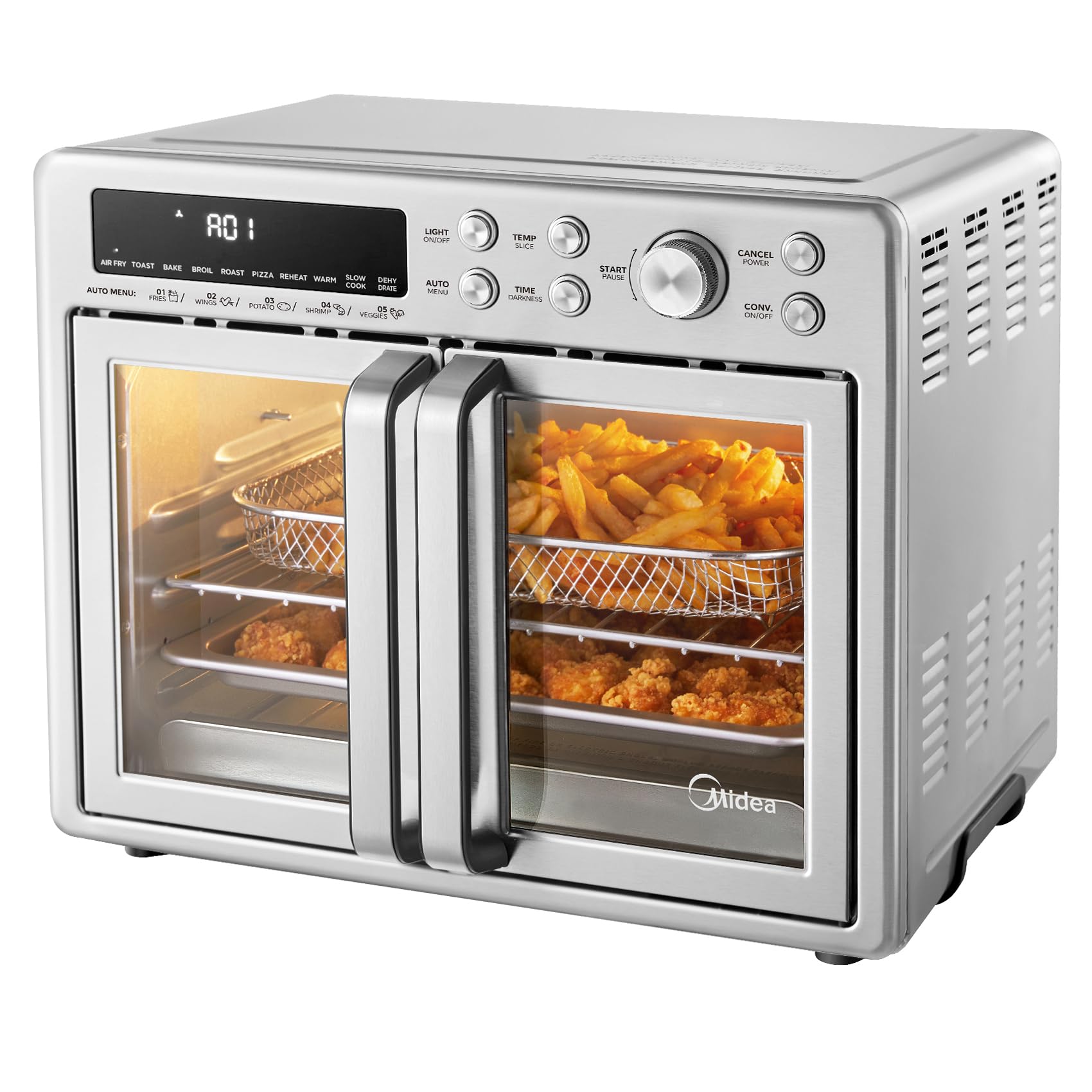
If you want a modern French-door oven that handles real family portions without feeling like a “budget compromise,” this is a strong contender. The best part is the day-to-day usability: clear digital display, practical cooking modes, and the kind of capacity that fits the meals people actually make — pizza, wings, roasted vegetables, baked dishes, and reheat that doesn’t turn into microwave sadness.
A real-world advantage here is control precision. When you can adjust time in small increments and dial temperature in a predictable way, you can actually fine-tune recipes instead of guessing. That matters because countertop ovens often cook faster than full-size ovens — and small timing changes are the difference between perfect and overdone.
The French doors aren’t just aesthetic. They reduce swing clearance, make tray access easier, and feel safer when you’re pulling heavier pans out. If your counter space is tight, French doors can feel like you gained room even before you start cooking.
One thing to expect with ovens like this is a cool-down fan that may run after cooking. That’s normal behavior — it protects internal components — but it can be louder than you expect if you’re new to convection ovens. If noise is your biggest sensitivity, a simpler analog toaster oven can feel calmer. If performance and capacity matter most, this one delivers.
Why it’s a smart buy
- Modern French-door workflow – Easy access, easy monitoring.
- Large usable capacity – Built for real meals, not just snacks.
- Precise control – Small temp/time adjustments help you dial in perfect outcomes.
- Versatile cooking modes – Covers most daily cooking needs without complexity.
Good to know
- Fan cooldown can be noticeable after cooking.
- Best crisping still depends on spacing and using the right accessories.
- As with all larger ovens, placement and ventilation clearance matter.
Ideal for: buyers who want a modern, roomy French-door oven that feels capable for daily meals and family cooking.
10. Cuisinart TOA‑70 (Air Fry + Grill) – For People Who Want Dials, Not Menus

This is the oven for people who want cooking to feel simple again. No scrolling. No hunting for a submenu. Just turn a dial and get on with your day. That’s why the TOA‑70 has such loyal fans — it delivers “daily usefulness” without making you feel like you’re operating software.
One underrated strength is the grill/griddle plate. Most countertop ovens stop at “air fry and toast.” This one gives you another cooking surface that can change how you use the appliance: searing vegetables, grilling sandwiches, doing breakfast-style cooking — all without pulling out extra pans.
Performance-wise, it’s a strong all-rounder when you respect what it is. It can crisp, bake, toast, and broil effectively, and many owners love how quiet it feels compared to some high-powered fan ovens. It’s also the kind of oven that can live in an apartment or small kitchen and genuinely replace the big oven for most tasks.
The honest complaint is cleaning. Air fry + poultry + skin-on anything = grease aerosol. This oven can spread oil inside the cavity, and if you cook greasy foods often, you’ll be wiping nooks and crannies. If you’re willing to maintain it, it’s a terrific daily tool. If you want “low cleaning forever,” pick a model with more dishwasher-safe parts and easier-access panels.
Why it’s a favorite
- Dial simplicity – Fast, intuitive, no learning curve.
- Grill/griddle flexibility – More cooking styles than most ovens in its class.
- Strong daily performance – Great for toast, reheat, bake, and crisping.
- Feels “kitchen practical” – Not a gadget, a workhorse.
Good to know
- Cleaning can be a chore if you air fry greasy foods frequently.
- Like many ovens, the top can get warm — don’t store meltable things above it.
- Best results come from learning which rack level matches each cooking style.
Ideal for: anyone who wants tactile controls, everyday versatility, and a no-fuss kitchen workflow — and doesn’t mind basic maintenance.
11. Ninja Flip Toaster Oven (SP151) – Power When You Need It, Counter Space When You Don’t

Flip‑up ovens exist for one reason: counter space is a real problem. If you love the idea of a powerful countertop oven but hate the idea of it dominating your kitchen, this design solves that tension. You cook, you eat, you flip it up — and suddenly your counter feels usable again.
In everyday use, the big wins are speed and efficiency. These ovens heat fast, cook quickly, and can handle a surprising amount of food for their footprint. They’re especially popular in small kitchens, RV setups, and households that cook for one to four people regularly.
Now let’s talk about the lived reality: design choices. On some flip models, the control panel placement can become awkward when the door is open. Also, some units don’t automatically pause cooking when you open the door — meaning you may have to develop a “pause first” habit if you flip food frequently. Those are not dealbreakers, but they are the kind of things that separate “I love it” from “it annoys me.”
Cleaning is another honest trade. Compact airflow machines can accumulate grease quickly, so your best strategy is short, frequent wipe-downs. If you wait until it looks dirty, it’s harder. If you treat it like a pan you clean after cooking, it stays easy.
Why it’s perfect for tight kitchens
- Flip-up storage – Reclaims counter space in a way traditional ovens can’t.
- Fast cooking – Quick heat and strong airflow shorten meal time.
- Great for small households – Efficient for daily meals and snacks.
- Strong crisping potential – Works well when you don’t crowd the basket/tray.
Good to know
- Control placement can feel awkward if the door covers the panel when open.
- Some workflows require a “pause first” habit during mid-cook flipping.
- Best kept clean with frequent quick wipe-downs (grease mist builds fast).
Ideal for: small kitchens that need power without permanent counter sprawl, and cooks who value speed and space efficiency.
12. Ninja Foodi Digital Air Fry Oven (SP101) – The Flip-Up Favorite That Earned Its Reputation

The SP101 has been around long enough to prove something important: people keep using it. That’s a bigger compliment than any marketing line. In practice, it’s fast, efficient, and has a surprisingly generous usable pan area for a flip-up design. It’s the kind of oven that can genuinely handle daily toast, quick bakes, and crisping duties without slowing you down.
A major “expert” advantage here is cleanability access. Many countertop ovens hide grime behind panels that are annoying to reach. This model is designed to be cleaned more deeply when you need to, which matters if you air fry often. The removable crumb tray and accessible back area make it easier to keep performance strong over time.
People love it for quick meals because it preheats fast and cooks with intensity. That’s especially good for frozen foods, wings, roasted vegetables, and reheat that doesn’t turn limp. For many households, it replaces both the toaster and the basket air fryer — at least most of the time.
The trade-offs are the same ones flip-up ovens often carry: the door and panel layout can be a little awkward if you’re constantly opening mid-cook, and the interior height can limit very tall foods. If your cooking is mostly flat foods, trays, toast, pizza, and crisping — it’s excellent. If you want tall roasts regularly, a bigger cavity model fits better.
Why people stick with it
- Fast preheat + fast cooking – Great for busy weeknights and snack-heavy homes.
- Space-saving design – Stores upright to free the counter.
- Better deep-clean access – Built for real maintenance, not “good luck.”
- Big usable pan area – Great for pizza, toast, and sheet-pan style foods.
Good to know
- Interior height limits very tall foods.
- Mid-cook access can feel awkward depending on how you work in the kitchen.
- Best crisping still depends on spacing (don’t crowd the basket/tray).
Ideal for: people who want a proven flip-up design with fast cooking, strong crisping, and cleaner long-term maintenance potential.
13. Gourmia French Door Air Fryer Oven (25QT) – Big Capacity Without the Premium Price Vibe

This is a great example of “budget doesn’t have to feel flimsy.” Gourmia’s French door design gives you an upscale workflow at a value-friendly level, and the capacity is the real story: it fits the kind of foods families actually cook — pizza nights, toast mornings, roasted chicken, and big tray reheats.
Owners tend to love the easy digital presets and the general practicality. It’s the kind of oven you can put on the counter and start using immediately without learning a complex system. And for shared households (families, roommates), simplicity matters because everyone can operate it without instructions.
The most important “expert” insight with French door budget ovens is grease and smoke management. Some models don’t seal as tightly as premium units, so if you let drippings hit hot elements you can see a little smoke sneak out. The fix is simple: always use the included tray to catch drips and keep the bottom area clean. Do that, and the oven stays pleasant. Skip it, and you’ll think the oven is “smoky” when it’s really just drip management.
It’s also worth noting exterior heat. Budget ovens can run hot on the outside during high-temp cooking. That’s not automatically a flaw — it’s physics — but it should affect placement if you have kids or limited clearance.
Why it’s a strong value
- French door convenience – Easy access, easy tray handling.
- Large capacity – Great for family cooking and bigger foods.
- Simple presets – Easy for shared kitchens and busy days.
- Accessories help a lot – Baskets/trays/racks cover most everyday tasks.
Good to know
- Use the drip tray to reduce smoke and keep the interior clean.
- Exterior can get hot during high-temp cooking; placement matters.
- Best crisping still depends on spacing and not overloading the basket.
Ideal for: families who want a roomy French door oven with simple operation and strong value — as long as they use a smart drip/cleanup routine.
14. Gourmia Digital Air Fryer Toaster Oven (10QT) – Small Footprint, Big Convenience
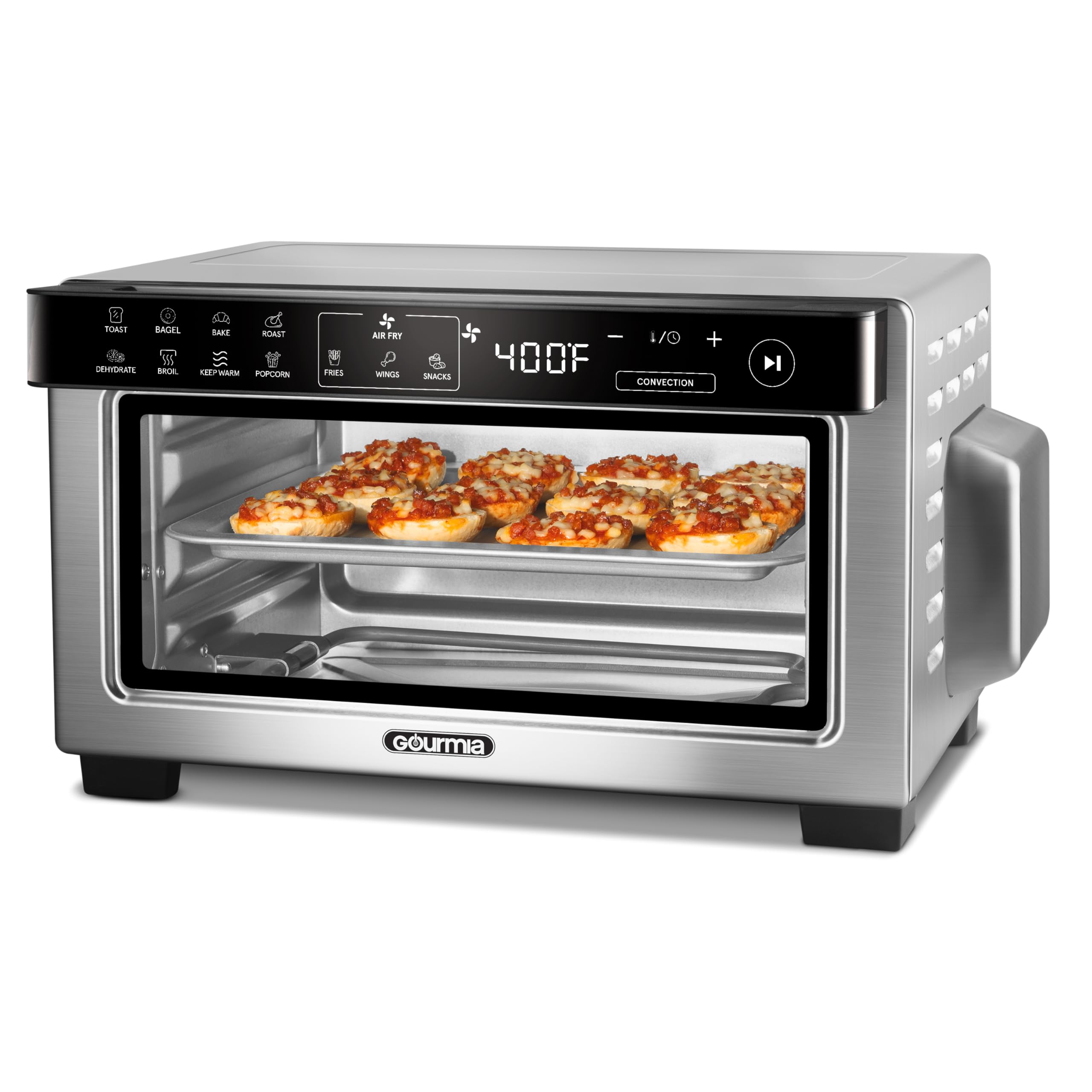
Not everyone needs a giant countertop oven. Sometimes you just need a reliable daily helper for toast, snacks, quick bakes, and lunch reheats. This compact Gourmia is built for that exact role — and it shines in places where counter space is a scarce resource: apartments, offices, dorm-style living, break rooms, and small household kitchens.
Where it wins is speed and simplicity. Preset buttons reduce thinking, convection-style airflow crisps better than a basic toaster oven, and the rack positions give you flexibility without making the machine feel complicated. For many people, this type of oven becomes the “default cooking box” for anything that isn’t a full roast.
Because it’s compact, it also tends to heat quickly — which is great — but it means you must learn timing fast. Small ovens can go from “not done” to “overdone” faster than you expect. Once you learn your personal timing for toast shade and snack crisping, it becomes effortless.
The honest limitation is the same one many compact models have: fewer luxury features. Some people miss an interior light. Some people want bigger tray capacity. If you’re cooking for a family, go bigger. If you’re cooking for one or two (or need a shared-space oven), this is a very practical pick.
Why it’s useful
- Small counter footprint – Fits where big ovens can’t.
- Quick heat – Great for snacks, lunch, and daily reheats.
- Preset simplicity – Easy for shared kitchens and busy schedules.
- Flexible rack positions – More control than a basic toaster oven.
Good to know
- Compact ovens require tighter timing; they can cook faster than expected.
- Capacity is best for small households, not big family dinners.
- Fewer premium extras; it focuses on core performance and convenience.
Ideal for: small-space kitchens and snack-heavy households that want quick, easy cooking without a large appliance footprint.
15. BLACK+DECKER Crisp ’N Bake (TO1787SS) – The No-Frills Countertop Helper That Still Delivers

This is the practical “I just need something that works” option. It’s not trying to compete with premium smart ovens. It’s trying to handle the daily basics: toast, bake small items, broil sandwiches, reheat snacks, and give you a simple air-fry style crisping mode. For many households, that’s exactly enough.
Owners who like this oven tend to have one thing in common: they don’t want a complicated appliance. They want quick heat, simple knobs, and a compact box that can crisp food better than a microwave — without heating the entire kitchen like a big oven. It’s especially popular for small households and seniors who want easy operation.
The air fry function is best viewed as “light crisping,” not a full replacement for a powerful basket air fryer. Some foods will crisp nicely (especially lighter, breaded frozen items), while thicker fries or very wet foods may not reach that deep crunch. The good news: even when crisping isn’t perfect, it’s still better than microwave sogginess for most snacks.
One safety note from real-life users: because it’s a compact oven, airflow and heat can interact strongly with loose liners. If you use parchment, use it correctly and never allow it to float into heating elements. A simple tray-and-rack habit prevents most issues and keeps the oven enjoyable.
Why it’s a smart simple buy
- Very easy controls – Knob simplicity for daily use.
- Compact footprint – Great for small kitchens and quick meals.
- Even toasting – Consistent results without fuss.
- Great for reheating – Crisps better than a microwave for snacks and leftovers.
Good to know
- Air fry mode is more “light crisping” than “power air fryer” performance.
- Compact ovens require attention to liners (use parchment safely).
- Not designed for big family portions — better as a helper than a second oven.
Ideal for: small households that want a simple, reliable countertop oven for toast, small bakes, and better-than-microwave reheats.
How Crisping Actually Works (and Why Airflow Beats Hype)
Most disappointment with countertop “air fry” comes from a misunderstanding: air frying is not a magical cooking method — it’s a combination of dry heat, high airflow, and smart food spacing. When you get those three right, you get crisp edges and browned surfaces with much less oil. When you miss them, food turns dry, pale, or uneven.
The three crisping levers you control
- Spacing: food needs room for air to hit it. A single layer beats a mountain every time.
- Surface moisture: wet surfaces steam. Pat food dry, especially veggies and marinated proteins.
- Heat timing: preheat matters more than most people think. Hot metal + hot air = faster crisping.
If you want fries that actually crunch, treat the basket like a baking sheet: spread, don’t pile. If you want wings that brown, use the basket/rack and let air get under the skin. If you want roasted vegetables that don’t go mushy, don’t crowd and don’t overdress with oil.
Why some ovens crisp better than others
- Fan power and geometry: strong fans move more air; smarter airflow paths reduce dead zones.
- Basket design: perforations and elevation help air wrap around food.
- Heat element layout: even heating prevents “one side brown, one side pale.”
That’s why premium ovens feel easier: they reduce your need to micromanage. But even budget ovens can crisp well when you use the right accessories and spacing.
Pro habits that make any oven cook better
- Use a drip strategy: always catch grease before it hits heating elements to reduce smoke and burnt smells.
- Rotate when it matters: if your oven has a known hot spot, a single rotation halfway through fixes 90% of unevenness.
- Choose the right rack level: higher racks brown faster; lower racks bake more gently.
- Reheat like a chef: a short blast of convection reheat keeps pizza crisp instead of rubbery.
- Clean the “grease glass” early: wiping door glass while slightly warm prevents stubborn baked-on haze.
If you build these habits, you stop blaming the oven — because your results become repeatable. And repeatability is the true definition of a great countertop oven.
FAQ: Buying and Using a Countertop Air Fry Oven Like an Expert
Do these ovens replace a basket air fryer?
What should I prioritize if I toast every day?
Why does my oven sometimes smoke during air fry?
Are French doors actually better?
How do I get crisp fries without drying everything out?
What’s the best “set it and forget it” option?
Final Thoughts: Buy the Oven That Matches How You Actually Live
The best countertop oven isn’t the one with the most features. It’s the one that makes you cook more because it’s easy, predictable, and satisfying to use.
Here’s how to turn this guide into one confident purchase:
- Want the most balanced “do everything well” pick? Choose the Breville Smart Oven Air Fryer Pro (BOV900BSS). It’s the closest thing to a real second oven on your counter.
- Need two meals finishing together without chaos? Go for the Ninja Double Stack XL (DCT651). It’s built for parallel cooking and busy-household reality.
- Want smart coaching and guided cooking? Pick the Breville Joule Smart Oven Air Fryer Pro (BOV950BSS) or the CHEF iQ MiniOven, depending on whether you want luxury-level automation or a more approachable smart workflow.
- Want French doors + easier cleanup habits? The Ninja French Door Premier (FO101) is built for daily use and lower cleanup friction.
- Need big capacity without premium pricing? The Beelicious Pro 28QT and Emeril Lagasse 26QT French Door are excellent “feed real people” choices.
- Want fast cooking in a small kitchen? The flip-up Ninjas — SP151 and SP101 — are designed to reclaim counter space without giving up performance.
- Want the simplest dial-based daily tool? Go with the Cuisinart TOA‑70 for “turn the knob and cook” simplicity.
- Want a budget-friendly French door or compact option? Choose the Gourmia 25QT French Door or the Gourmia 10QT Compact Digital based on your space.
- Want a simple starter for toast + small meals? The BLACK+DECKER Crisp ’N Bake is the straightforward “just works” helper.
The best decision is the one that matches your actual routine. Pick the air fryer toaster oven combo that fits your space, your cooking style, and your tolerance for cleanup — and you’ll end up with a countertop machine that doesn’t just “cook”… it actually upgrades your week.
