
Most buyer guides talk about presets, toss in a few buzzwords, and call it a day. But pizza is picky: crust crispness is a heat-transfer problem, cheese melt is a top-heat problem, and sogginess is a moisture-management problem. So for this guide, I focused on what real owners keep repeating: what browns evenly, what runs loud, what’s easy to live with, and what quietly becomes the appliance you reach for every day.
Air Fryer Pizza Oven: 17 Picks That Actually Nail the Crust
If you’re shopping for an air fryer pizza oven, here’s the truth: most “pizza settings” are just convenient shortcuts, not magic. The models that deliver consistently great pizza have three things working together: strong top heat, reliable bottom browning (often via rack placement or a stone), and airflow that doesn’t turn your toppings into a wind tunnel. Below, you’ll get a clear, confidence-building path to the right pick—plus the small technique tweaks that make any good unit taste like a better one.
Ninja Prestige Smart XL Countertop Oven (DT501)
For most homes: strong convection, roomy interior, and a pizza mode that’s genuinely practical for weeknights.
Gourmia Indoor Pizza Oven Air Fryer Toaster (Pizza Stone)
For the “I want real pizza night” crowd: very high heat potential, dual top/bottom control, and a stone built for crisp bottoms.
Emeril Lagasse Dual Zone 360 French Door (Pizza Stone)
When you want pizza + sides done together, or two foods cooked differently without playing “kitchen Tetris.”
Cuisinart 15-in-1 Extra-Large Digital Oven (TOA-112)
For families and batch cookers: larger cavity + probe-driven protein accuracy + great “second oven” energy.
Comparison table (scan-first, then dive deep)
On smaller screens, swipe or scroll sideways to see the full table
| Model | Best for | Pizza “sweet spot” | What owners tend to notice | Link |
|---|---|---|---|---|

Ninja DT501
Best Overall
|
Balanced “do-everything” oven that still treats pizza seriously | Great for frozen pies, reheat slices, and family-size weekend bakes | Fast preheat, roomy racks, strong convection; some owners add a small toaster for perfect toast | Check Price on Amazon |

Gourmia Indoor Pizza Oven
Best for True Pizzeria Heat
|
High-heat pizza nights with a stone and dual top/bottom control | Thin crust, New York style, fast frozen pizza upgrades | “Crispy crust without drying the cheese” is a recurring theme; baking has less vertical space than big toaster ovens | Check Price on Amazon |
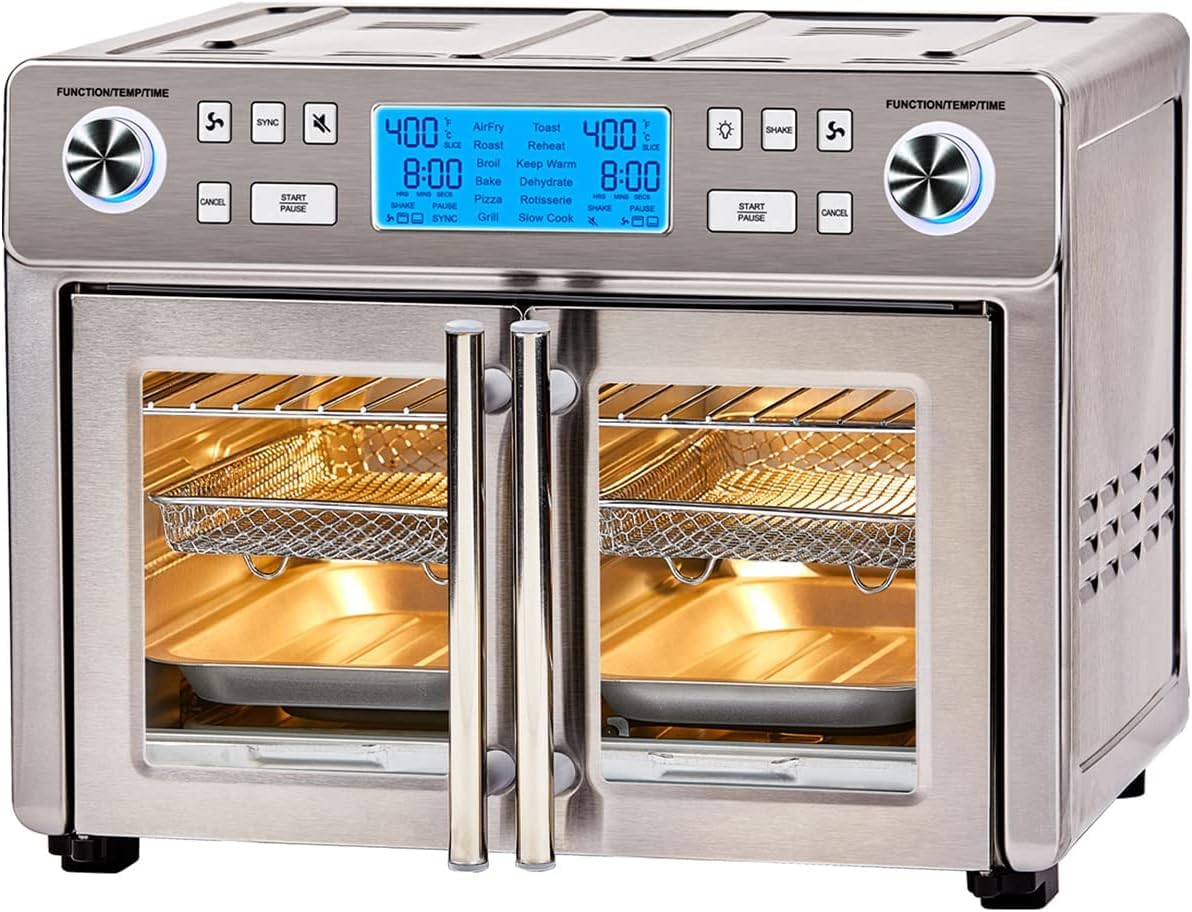
Emeril Dual Zone 360
Best Dual-Zone
|
Two foods, two styles, one finish time | Pizza on stone while wings/veg run in the other zone | Praised for versatility and quieter-than-some competitors; watch tray coatings if you’re avoiding them | Check Price on Amazon |
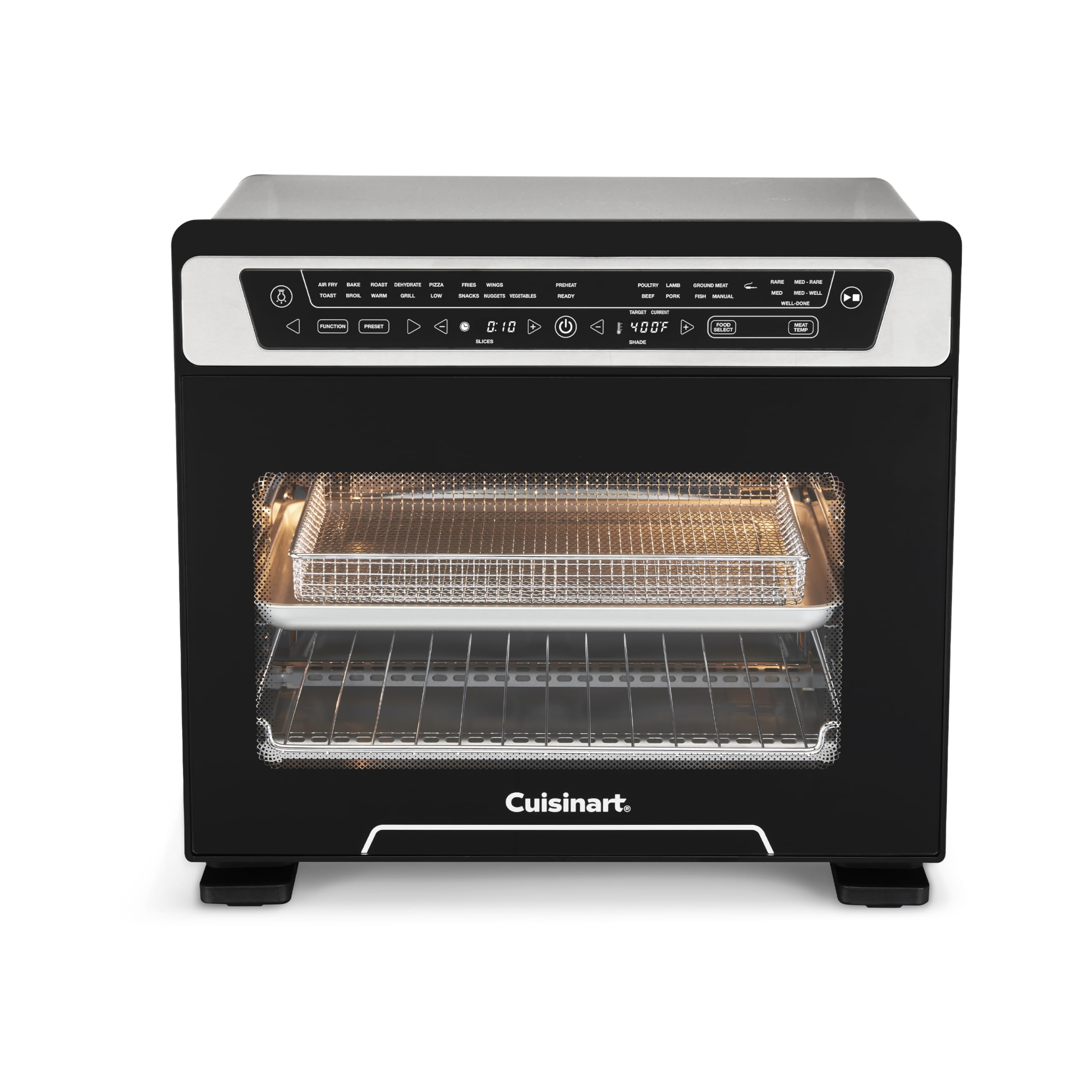
Cuisinart TOA-112
Big Capacity + Probe
|
Big meals, batch cooking, “second oven” performance | Family pies, sheet-pan pizza, thicker crust that needs steadier heat | Owners love build quality and quietness; a few mention it cooks faster than expected until you learn timing | Check Price on Amazon |

Emeril Everyday 360
Workhorse + Rotisserie
|
Daily cooking with lots of functions (and rotisserie on tap) | Personal pizzas, reheating slices, crisping leftovers | People use it constantly; rotisserie works but can be messy to clean if you don’t plan for drips | Check Price on Amazon |
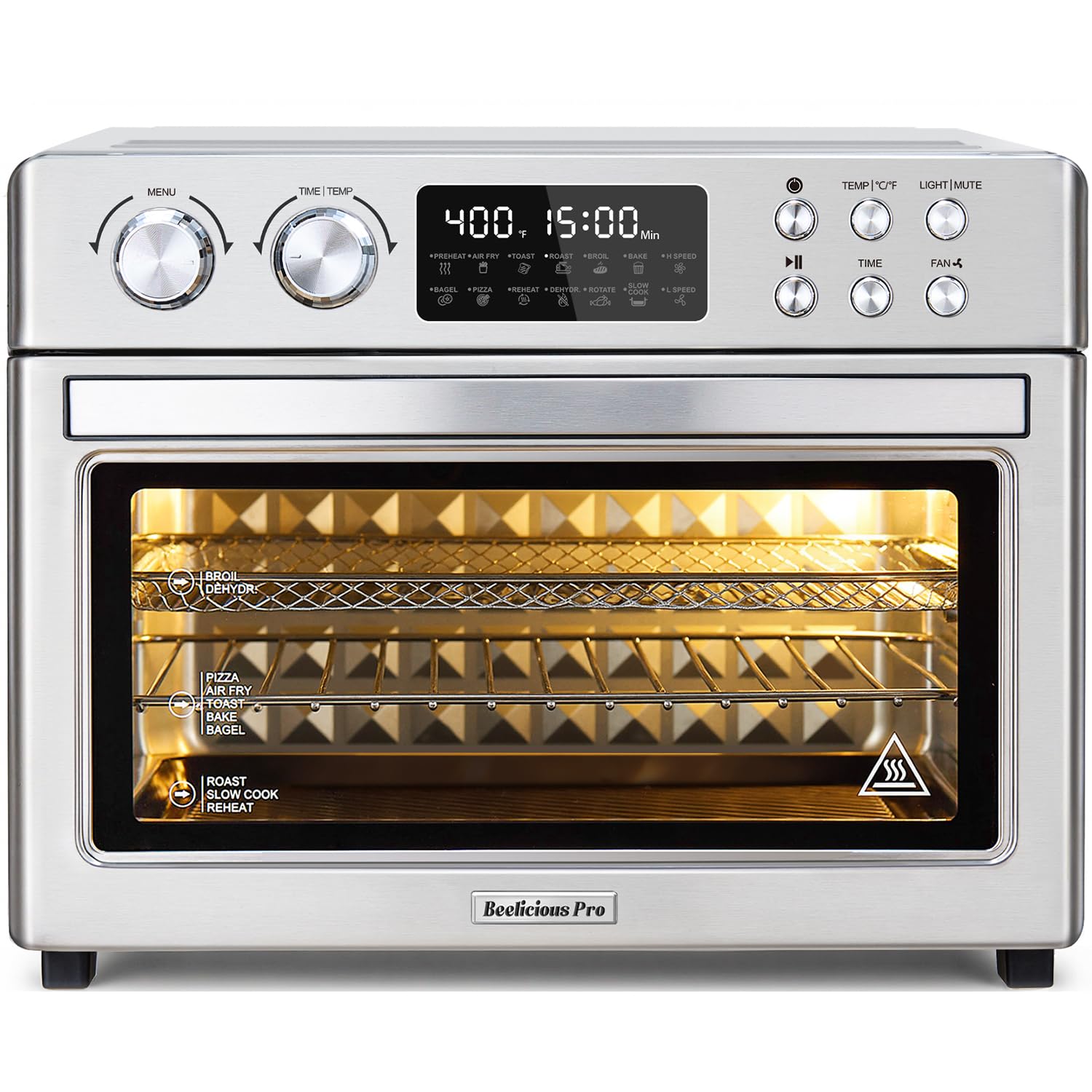
Beelicious Pro 28QT
Feature-Heavy Value
|
Accessories + multi-rack meals for a busy kitchen | Frozen pizza, snack spreads, sheet-pan style pizza builds | Owners love even heating and “actually cooks frozen food fast” vibes | Check Price on Amazon |
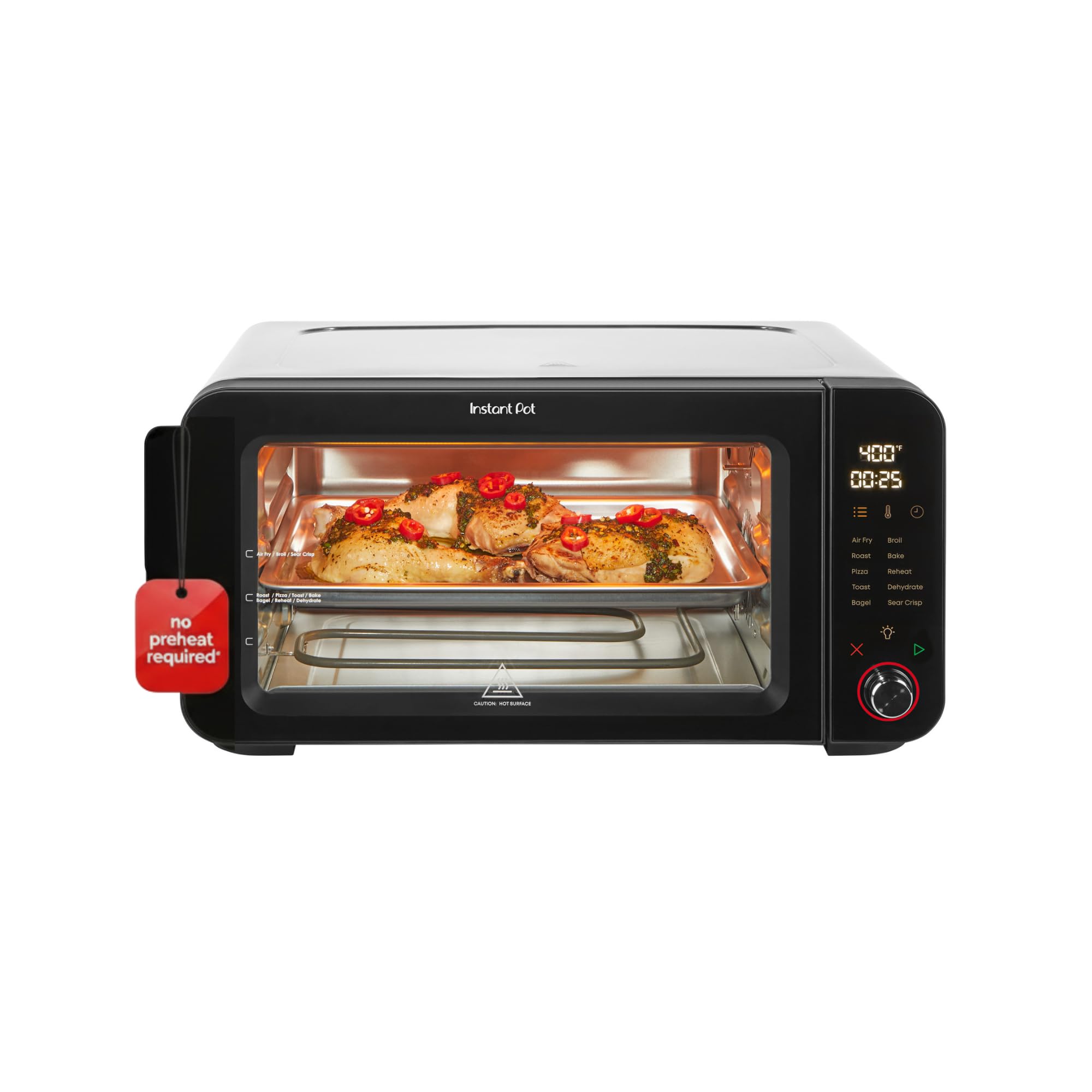
Instant Pot InstantHeat
Speed King
|
Fast weeknights, quick reheat that beats a microwave | Reheating slices, frozen pizza, crisping toppings fast | Loved for minimal preheat and window; a minority find fan noise too much | Check Price on Amazon |

BLACK+DECKER French Door 12-in-1
Family-Friendly French Door
|
One appliance replacing multiple gadgets | Big frozen pizza nights, snacks for kids, quick toast cycles | “Works like a tank” reliability vibe; dial can feel touchy to select presets | Check Price on Amazon |
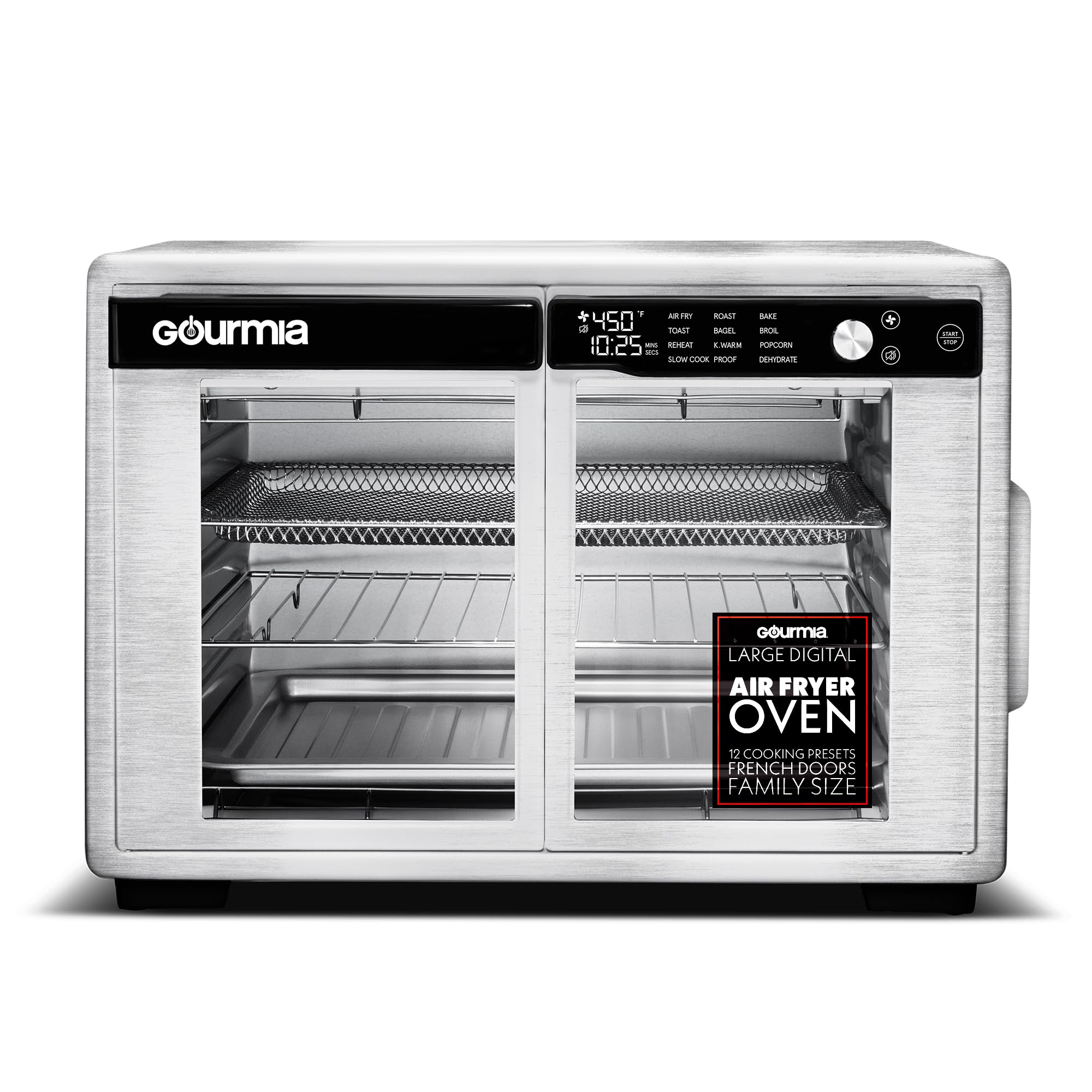
Gourmia French Door 37 Qt (Stainless)
Big + Quiet
|
Large capacity without a “jet engine” vibe | Family pies, multiple trays, big appetizer spreads | Owners love quieter alarms and dishwasher-safe accessories; note exterior can run hot | Check Price on Amazon |
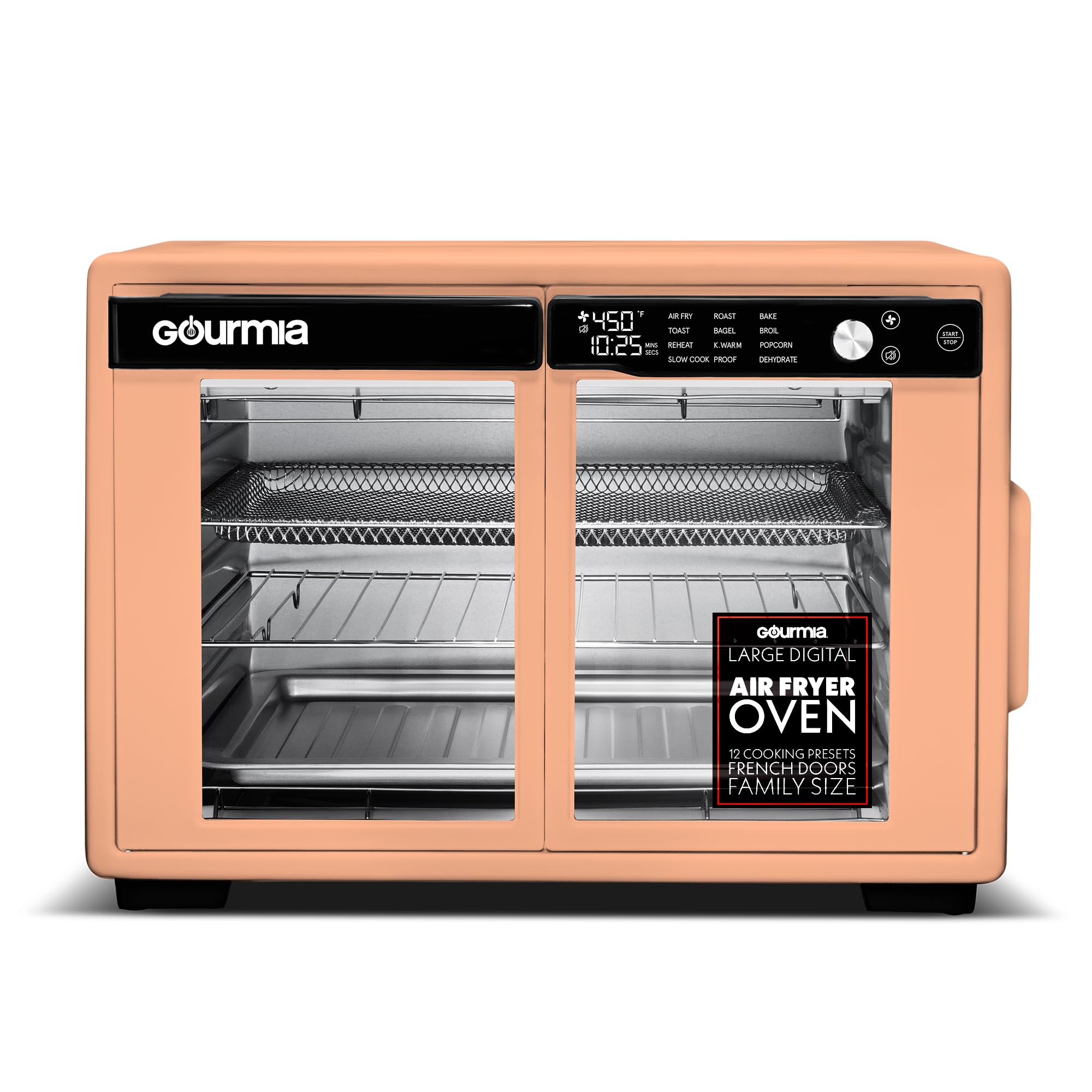
Gourmia French Door 37 Qt (Peach)
Same Power, Less Fingerprints
|
Big capacity + cute finish for visible countertops | Family pizza, multiple racks, meal prep | Praised for quiet operation and “silence alarms” option; doors can swing/close quickly | Check Price on Amazon |
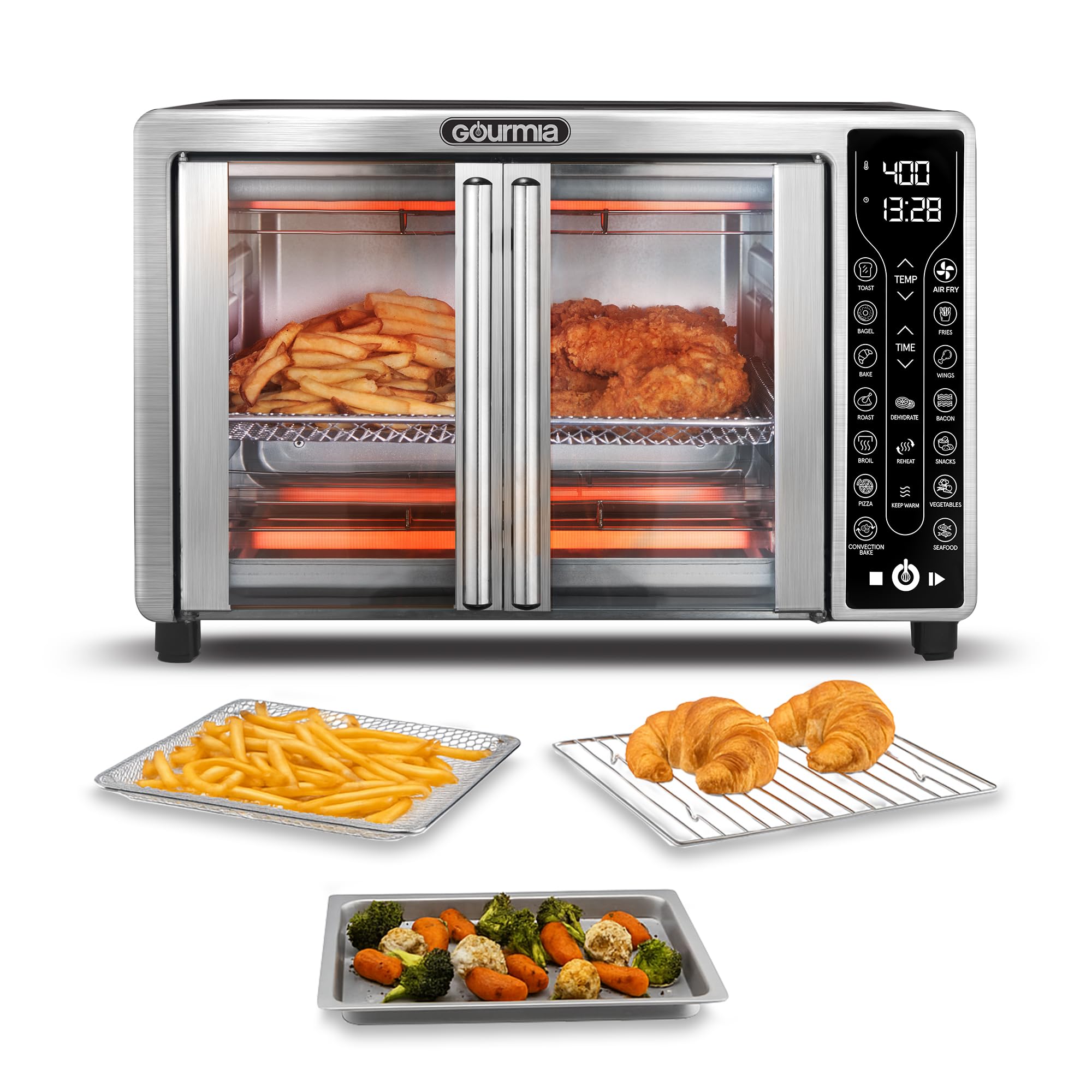
Gourmia 25 Qt (17 presets)
Balanced Mid-Size
|
Compact-ish French door with lots of presets | Frozen pizza, toast/bagel, family snacks | People like it as a toaster replacement; watch drips to avoid smoke | Check Price on Amazon |

BLACK+DECKER 6-Slice 5-in-1
RV / Small Space Favorite
|
Dependable basic oven that keeps going | Family frozen pizza, toast cycles, broil melts | Owners like the simpler electronics approach; one-off build issues (like a foot) show up occasionally | Check Price on Amazon |

Hamilton Beach Roll-Top
Door Design Winner
|
Tight counters and safer access (roll-top door) | Frozen pizza, thin crust, cracker-style crusts | Roll-top reduces burn risk; interior clearance matters for thick items | Check Price on Amazon |

BLACK+DECKER 4-Slice 5-in-1
Small-Batch Upgrade
|
Quick crispy tasks when a microwave won’t cut it | Personal pizzas, open-face melts, crisp reheats | Simple mechanical timer feel; air fry mode has limits (like fewer adjustments) | Check Price on Amazon |
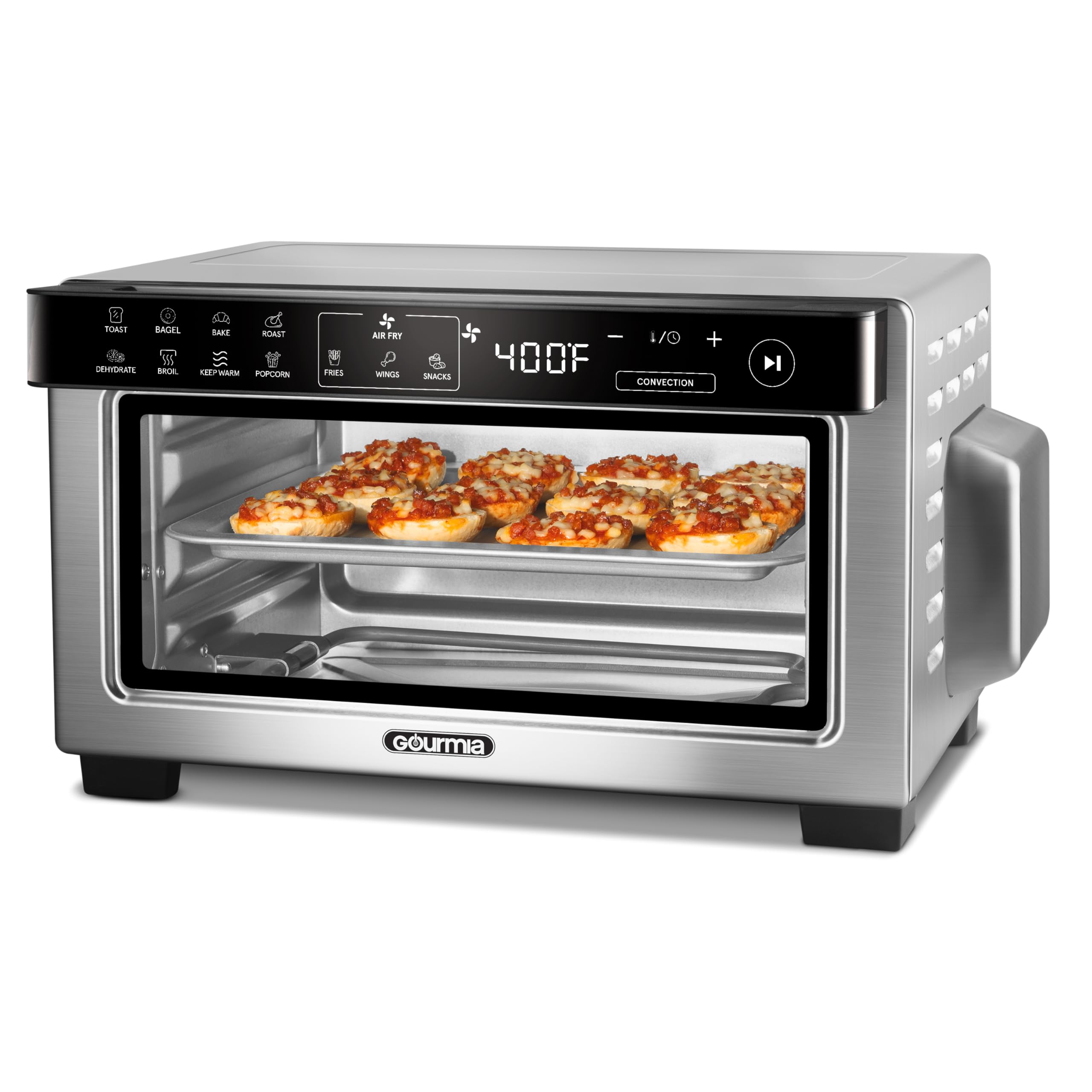
Gourmia Digital 4-slice (Fits 9")
Office / Studio Friendly
|
Small footprint, simple presets, quick snacks | Mini pizzas, reheating slices, bagels and toast | Praised for fast heat-up and even cooking; “tiny in all the right ways” comes up | Check Price on Amazon |
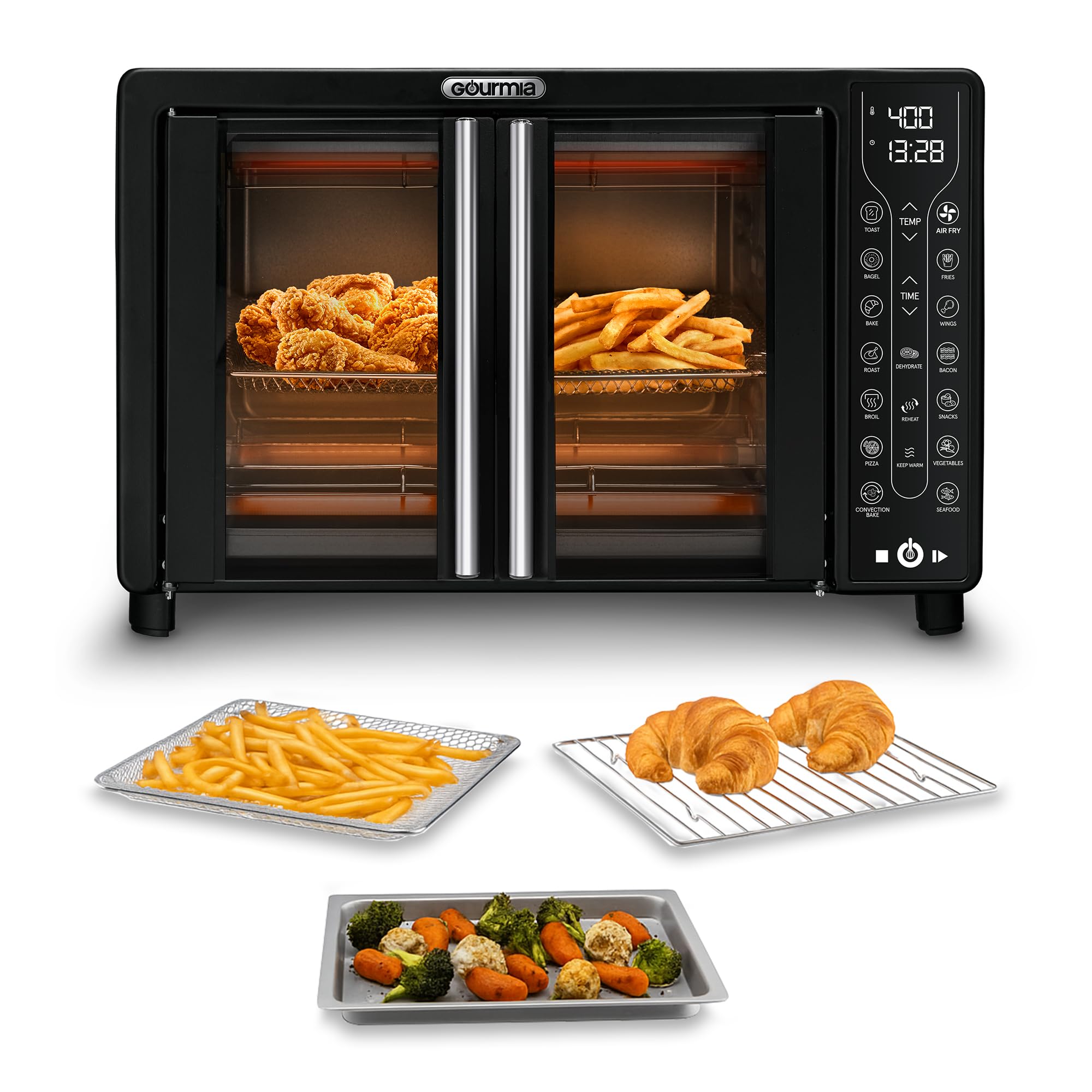
Gourmia GTF7460 (French Door)
Simple, Proven Layout
|
Everyday meals, toaster replacement vibes | Frozen pizza, quick roasts, easy toast | Owners like the look and simplicity; dual-layer cooking needs thought for even results | Check Price on Amazon |
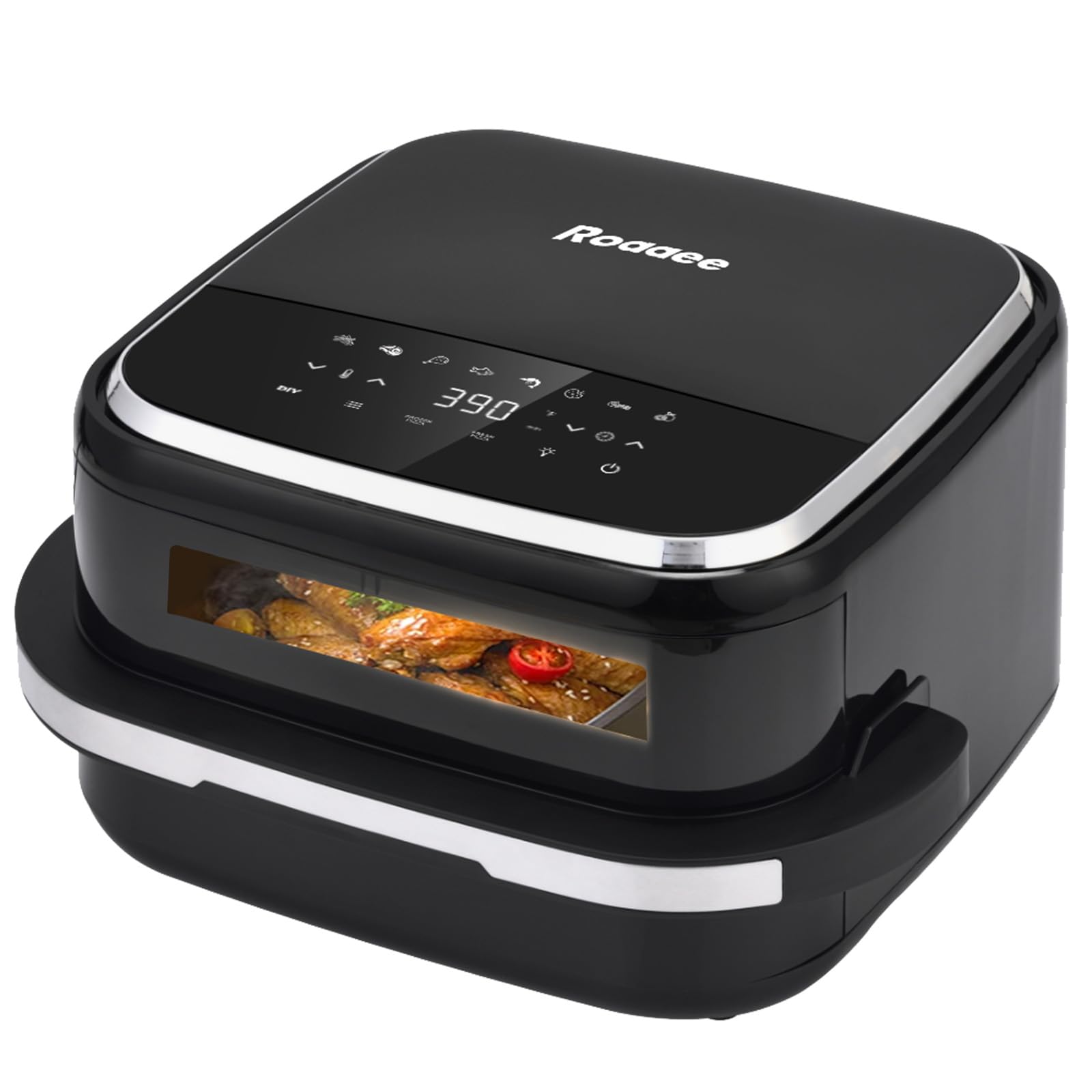
Roaaee Flat Pizza Oven & Air Fryer
Budget Pizza Experiment
|
Flat “pizza pan” style air frying with top + bottom airflow | Thin crust, wings, bacon, crispy reheat slices | Even cooking and low flipping needs get mentioned; first-use burn-in smell is common with many new heaters | Check Price on Amazon |
How to Choose an Air Fryer Pizza Oven (Without Getting Burned)
Let’s make this ridiculously practical. Ignore “how many presets” for a moment. Pizza success comes down to how the oven moves heat and moisture. Here are the factors that actually change what lands on your plate.
1) Top heat power: the cheese-melt and browning engine
A pizza can look “done” from above while the bottom stays pale and soft—or it can crisp underneath while the cheese never gets that bubbly, browned finish. Strong top heat is what gives you the “pepperoni cup crisp,” the golden cheese freckles, and the browned edges on thick toppings. If your household loves loaded pizzas, prioritize models that can run hotter up top, run broil confidently, or let you move the rack closer to the top element.
2) Bottom browning: rack strategy matters more than marketing
Bottom browning can come from a pizza stone, a conductive tray, or simply the right rack position. Here’s the big trick: for frozen pizza, you often want slightly lower rack placement than you’d think (to push heat into the crust), while for fresh dough you may want a middle rack first (to set structure) and a short finish lower. The best ovens give you easy, repeatable rack placement—so you can “dial in” your personal crust.
3) Airflow: great for crisping… until it messes with toppings
Convection airflow makes food crisp faster—awesome for wings, fries, and reheating slices. But for pizza, too much direct airflow can dry the cheese, over-toast the rim, or push light toppings around. The sweet spot is airflow that circulates heat evenly without blasting the surface. Practically, that means: a) use a rack or stone that protects the bottom from pure fan-drying, and b) don’t be afraid to lower fan intensity (or switch modes) for thicker pies.
4) Recovery time: the hidden reason “second pizza” fails
Many ovens can cook one pizza well. The question is: what happens when you load the second one? Recovery time is how quickly the oven returns to temp after you open the door and drop in a cold pizza. Bigger heating power, smarter airflow, and better insulation all help—especially if you’re feeding people and don’t want the first pizza to be “amazing” and the second to be “fine.”
5) Interior height: the “topping dome” problem
Some combo ovens are excellent at pizza but limited vertically. That matters if you love thick crust, tall toppings, or deep-dish style pies. For high-profile pizzas, look for ovens with more headroom and multiple rack positions. For thin crust and New York style, a lower-profile cavity can actually be a plus (faster heat saturation).
6) Cleaning reality: plan for drips before they smoke
Owners say this over and over: smoke is usually not the oven’s fault—it’s grease hitting a hot element. The fix is simple: use the included tray (or a sacrificial pan) under anything greasy. When you bake pizza, think about where cheese might drip. In many ovens, one small technique shift can turn “smoky and annoying” into “clean and calm.”
7) Noise, beeps, and daily comfort
Some people don’t care about fan noise. Others absolutely do. If your house has “beep haters” (including pets), pay attention to owner feedback about alarm volume and fan tone. A slightly quieter machine can be the difference between using it occasionally and using it every single day.
My Pizza-First Testing Checklist for an Air Fryer Pizza Oven
- Frozen pizza test: Can it crisp the bottom without drying the cheese? Does it need weird hacks?
- Slice reheat test: Does the crust re-crisp or turn cracker-hard? (Reheat should revive, not punish.)
- Moisture handling: Does steam escape cleanly, or does the pizza sweat?
- Rack logic: Are rack positions easy to understand and repeat?
- Second-run consistency: Does the next pizza cook like the first, or does it sag?
- Grease management: Are drips easy to catch with the included trays?
- Everyday usability: Controls you’ll enjoy touching, not tolerate touching.
Pizza techniques that make any decent oven taste like a better one
- Preheat the surface, not just the air: If you’re using a stone or tray, give it time to get hot. That’s where crisp bottoms come from.
- Use rack position like a dial: Higher = top browning faster. Lower = crust browning faster. Most pizza “problems” are rack problems.
- Finish with intention: For thick pies, bake to set, then short high-heat finish to brown the top. For thin pies, go hotter, shorter.
- Catch the drips: A pan underneath saves you from smoky surprises and makes cleanup painless.
- Respect airflow: If toppings are drying, swap to a less aggressive mode or move the pizza away from direct fan blast.
In-depth reviews: the 17 models, ranked by real-life fit
The order below is intentional: I start with the models that deliver the “best overall life” (pizza performance + daily usefulness), then move toward more specialized picks and small-space/budget options. No prices mentioned—just what you actually get.
1) Ninja Prestige Smart XL Countertop Oven (DT501)
Why it wins: it’s the rare “big enough, fast enough, and consistent enough” combo that keeps pizza, air fry, and baking all in a happy place.
What it does better than most
Owners repeatedly describe this as a “primary oven replacement” more than a side gadget—and that’s exactly what you want if pizza night is frequent. The standout advantage is how confidently it handles size: multiple rack levels, strong convection, and enough room to avoid cramming food right against a heating element. That spacing matters because pizza doesn’t just need heat—it needs the right distribution of heat.
Pizza reality check (the way you’ll actually use it)
For frozen pizza, this is one of the easiest ovens to live with: it’s spacious, it heats fast, and it doesn’t make you “babysit” hot spots constantly. If you cook on two levels, give the top pizza a little more attention (top heat naturally wins up there), and plan on slightly longer cook time for even doneness. For reheating slices, use the rack position that crisps the underside without blasting the cheese into dryness—once you find that sweet spot, it becomes incredibly repeatable.
Best for
- Families who want pizza + air fry + baking without compromises
- People who hate rotating trays every five minutes
- Homes that cook multiple foods back-to-back
Watch-outs
- Toast results can be “good, not perfect” for some (a few owners supplement with a slim pop-up toaster)
- Like most convection ovens, it vents heat—give it breathing room
- It can cook faster than you expect until you learn your timing
Pro tips (make pizza night feel effortless)
- Frozen pizza: start on the manufacturer’s temp/time, then judge the crust. If top is done early, move down a rack for the last few minutes.
- Slices: reheat on a rack, not a solid pan, so the bottom re-crisps instead of steaming.
- Cleanup hack: keep one sheet pan as a “catch pan” on a lower rack when cooking greasy foods—this keeps the bottom cleaner long-term.
2) Gourmia Indoor Pizza Oven Air Fryer Toaster (Pizza Stone)
Why it shines: pizza-first design—stone + high heat + dual heating control—built to chase that crisp bottom and fast bake.
The “pizza physics” advantage
A pizza stone changes the game because it stores heat and transfers it directly into the crust—meaning you get browning without waiting forever. On many combo ovens, pizza is “okay” because the bottom never quite gets the direct heat it needs. This unit flips that script by treating the bottom crust like a first-class citizen, not an afterthought.
What owners praise (and what they’re really saying)
When people say it “crisps the crust without drying the cheese,” they’re describing a balance of bottom conduction and top radiant heat. That’s a rare combo at the countertop level. And because it’s designed around pizza, the controls feel less like “a toaster oven pretending” and more like a purpose-built setup.
Where it’s not trying to be everything
This is a pizza-forward cooker that also air fries and toasts. That means vertical clearance is not as generous as some big multi-rack ovens. If you love towering casseroles or very tall roasts, you may prefer a larger cavity model for those jobs. But for pizza night, quick reheat, and crispy snacks, this one feels like it’s in its element.
Buy it if you want…
- Fast, high-heat pizza with a legit stone base
- Better crust texture than typical toaster-oven pizza modes
- Simple presets that make sense for pizza styles
Skip it if you need…
- Maximum interior height for tall bakes
- A “one oven for everything” family mega-cavity
- Ultra-quiet fan operation (most pizza-capable units move air)
Pizza pro moves (tiny tweaks, huge payoff)
- Preheat the stone fully: give it time. Stone heat is what crisp bottoms are made of.
- Cheese browning: if top browns too fast, lower the top heat slightly and add a minute—avoid scorched cheese with pale crust.
- Frozen pizza upgrade: reheat slices on the stone for a “revived crust” effect that feels restaurant-y.
3) Emeril Lagasse Dual Zone 360 Air Fryer Oven Combo (French Door)
Why it’s special: two independent cooking zones + syncing tech = pizza and sides that land together, hot.
What dual-zone really means in real kitchens
Dual-zone is not just a gimmick—it’s a workflow upgrade. One zone can run pizza (or reheat slices) while the other handles wings, fries, or roasted veggies. That solves the biggest home pizza-night problem: the “everything’s ready at different times” shuffle. Owners often describe this unit as more versatile than drawer-style air fryers because it feels like a mini oven system instead of a single basket.
The pizza stone angle
When a model includes a stone, it signals serious intent for crust texture. The stone helps the bottom crisp faster and more evenly. For people who like a firm bite and a dry, crisp underside (not soft and steamy), stone cooking is the shortest path to that result—especially with frozen pizzas.
What to watch (so you love it long-term)
A few owners note tray materials and coatings (especially if you’re aiming for “all stainless everything”). If coatings matter to you, plan on using a stainless rack plus a compatible stainless sheet or stone approach. Also: like many ovens, it can get warm near the door/top during operation—treat it like an oven, not a toaster.
Perfect for
- Families who want complete meals done together
- Snack nights: pizza rolls + fries + wings without batching
- People upgrading from basket air fryers
Consider another if…
- You need a single huge “one cavity” bake space every time
- You’re extremely sensitive to tray coating choices
- You prefer minimal controls and zero presets
Dual-zone strategy (the cheat code)
- Sync the finish: start the slower item first, then use sync to align end time with pizza.
- Keep pizza crisp: avoid steaming by giving pizza a rack/stone surface, not a solid pan.
- Use a drip plan: if one zone is cooking greasy food, keep a tray under it—smoke usually comes from drips, not “bad ovens.”
4) Cuisinart 15-in-1 Extra-Large Digital Air Fryer Oven (TOA-112)
Why people love it: big cavity energy + stainless interior + precision probe option for proteins.
When “bigger” actually helps pizza (and when it doesn’t)
Bigger ovens aren’t automatically better for pizza—sometimes they take longer to saturate with heat. But this style of extra-large countertop oven shines when you’re doing multiple items at once, bigger pans, or family-scale cooking. With pizza, the advantage is simple: you can position the rack with more breathing room, which helps avoid scorching the top before the crust is ready.
The quiet confidence factor
Several owners call out build quality and even cooking. A recurring pattern is that it can cook faster than expected at first—meaning your first few sessions should be “learn the oven” sessions. Once you calibrate your personal timing, it becomes very repeatable, which is what you want for consistent pizza nights.
Practical pizza guidance for this style of oven
- Thin crust: go hotter and shorter, middle rack to avoid over-browning the bottom too early.
- Thicker crust: slightly lower temp, longer time, and a finish closer to top heat for browning.
- Reheat slices: use airflow to re-crisp; pull early once cheese is melted to avoid over-drying.
You’ll love it if…
- You want a true “second oven” on the counter
- You cook for a family and hate batching
- You want a stainless interior that wipes down easily
Think twice if…
- You want the smallest footprint possible
- You prefer ultra-simple knobs over digital controls
- You want pizza-stone-first design above all else
5) Emeril Lagasse Everyday 360 Stainless Steel Air Fryer Oven (9-in-1)
Why it sticks around: owners use it constantly—toast, roast, pizza, reheat—because it’s a practical all-rounder.
What it’s really good at
This is one of those ovens people don’t just “own”—they rely on. The consistent story is daily convenience: quick meals without heating a full-size oven, a lot of cooking functions, and a rhythm that becomes second nature. For pizza, it’s particularly good as a “crisp-up and reheat” machine: slices come back to life, and frozen foods can regain texture.
The cleaning truth (and the easy fix)
Owners who love it long-term tend to plan for cleanup. Rotisserie is great, but it can splatter oils. If you do rotisserie, protect the bottom tray and be ready to wipe interior walls. For pizza and general baking, drips are manageable—especially if you use the drip tray strategically.
How to get better pizza results on this style of oven
- Use “pizza” as a starting point: then tweak rack position for crust vs top browning.
- Reheat slices: airflow is your friend—short time, watch the cheese, pull when bubbly.
- Avoid soggy bottoms: use a rack or perforated surface so steam can escape.
Perfect for
- Two-person households that cook constantly
- People who want lots of functions in one footprint
- Anyone who loves crisping leftovers
Watch-outs
- Rotisserie cleanup can be messy if you don’t plan for drips
- Air frying can be “good, not basket-level turbo” for some foods
- Like most ovens, it runs hot—give it space to vent
6) Beelicious Pro 28QT Air Fryer Toaster Oven Combo (12-in-1)
Why it’s compelling: multi-rack cooking + rotisserie + strong heating layout, with owners reporting surprisingly “legit” frozen-food performance.
Where it wins in real life
This is the kind of oven people buy when they want one appliance to handle chaos: snacks for kids, quick dinners, and batch cooking without running multiple devices. Owners talk about even heating and the ability to cook multiple things at once without constant babysitting. For pizza, that “even heat” theme matters because uneven cooking is usually what causes the dreaded combo: burnt cheese + pale crust.
Pizza approach that works best here
Think of this as a “reliable countertop convection oven” that can also air fry. For frozen pizza, use the rack position that pushes heat into the crust. For homemade pizza, give yourself a short high-heat finish near the top to brown cheese and toppings. The included accessories make it easy to run a drip tray underneath, which keeps the oven cleaner if your pizza is heavy on cheese or meats.
Best for
- Small kitchens that still cook full meals
- People who want lots of accessories included
- Anyone replacing an older, weaker toaster oven
Watch-outs
- Multi-rack cooking always needs a little learning (top browns faster)
- Give it ventilation space—it’s a true oven, not a toaster
- Keep a consistent rack routine to avoid guessing every time
Owner-style “why I kept it” tip
Use the interior light and window like a tool: check crust color before time runs out. Pizza is visual—once you learn what “perfect” looks like for your brand/dough, you’ll nail it every time.
7) Instant Pot 6-Slice InstantHeat Air Fryer Toaster Oven
Why it matters: if your main pain is “I don’t want to wait,” this one’s built around fast heat-up and quick weeknight cycles.
What owners love (and why it’s meaningful)
The consistent praise is “we use it constantly”—bagels in the morning, crisp reheats at night, fast dinners without preheat drama. The viewing window sounds small, but it changes behavior: you check food visually instead of opening the door and dumping heat. That alone improves pizza consistency because opening the door mid-bake often leads to a soggy middle or uneven finish.
The honest downside (so you’re not surprised)
Noise. Some owners find the fan loud, while others say it’s expected for an air fryer style appliance. The takeaway: if you’re extremely noise-sensitive, prioritize models repeatedly described as quieter. But if speed is your top priority, this one is a serious contender.
Pizza best practices for this unit
- Reheat slices: it shines here—crisp edges, better texture than a microwave.
- Frozen pizza: watch the first run closely; fast heat can brown faster than box timing.
- Loaded pizza: if cheese browns early, move the rack down a notch to protect the top while the crust finishes.
Perfect for
- Busy families and fast meal prep
- People who want “no-preheat” vibes
- Homes that reheat leftovers a lot
Watch-outs
- Fan noise varies by sensitivity
- Learn your timing (it can cook faster)
- Give it airflow space behind/around
8) BLACK+DECKER Crisp ’N Bake Air Fryer Oven (French Doors, 12-in-1)
Why families like it: replaces multiple appliances, handles snack chaos, and the French door access feels genuinely convenient.
What “French doors” changes (more than you’d think)
French doors reduce the “big hot door swing” problem. That makes it easier to load pizza, pull trays, and check doneness without awkward wrist angles. In real households—especially with teens making snacks—this kind of access design gets used more and feared less.
Pizza performance: where it fits best
This oven is a strong choice for frozen pizza nights, reheating, and quick bakes. It’s built around convenience, so your best results come from a simple routine: pick a rack position that browns the bottom crust, then finish closer to top heat for a minute if you want extra cheese browning. Owners often describe it as “replacing an air fryer and toaster oven” without losing everyday performance.
The one recurring annoyance to know
Some owners dislike the dial selection sensitivity—meaning it can feel touchy to land on exactly the preset you want. That’s not a dealbreaker if you mostly use a few favorite modes. But if you love constant micro-adjustment, you may prefer button-driven interfaces.
9) Gourmia French Door Air Fryer Oven (37 Qt, Stainless)
Why it’s loved: big capacity, clear controls, and owners repeatedly mention it’s quieter (including softer alarms).
Where it fits in a pizza-focused kitchen
This is the “feed people without drama” option. The large interior makes pizza night feel calmer: less crowding, more even airflow, more room to avoid scorching. It also helps for snack spreads—wings, fries, and pizza rolls—because you can run more at once instead of batching.
Owner warnings worth listening to
- Exterior heat: multiple owners mention it gets very hot outside during operation—give it clearance and treat it like an oven.
- Door behavior: French doors can close quickly; keep a hand on them while closing.
- Controls-on-handle: a few owners worry about long-term wear where controls are integrated—handle gently, don’t yank.
Pizza tips that match this oven’s personality
- Use the space: don’t crowd the pizza against the back wall—let air circulate.
- Catch drips: if you load up cheese/meats, use a tray underneath to keep the oven clean and smoke-free.
- Quiet-home bonus: if you hate loud beeps, this is one of the more comfort-focused choices in this list.
10) Gourmia French Door Air Fryer Oven (37 Qt, Peach)
Same cooking platform, different vibe: people who dislike stainless fingerprints often prefer the painted finish.
Why color can be a real feature
This sounds trivial until you live with it: a visible countertop appliance that constantly shows smudges becomes an “I should clean that” stressor. Owners who dislike stainless often love that this one feels easier to keep looking nice—especially in busy kitchens or shared spaces.
Performance highlights from owner patterns
People describe it as fast, even, and easy to clean with dishwasher-safe accessories. It’s also commonly described as “quiet” for an air fry oven, and the ability to reduce/silence alarms is a comfort win. The only real caution is heat output: it runs hot on the outside—so it needs space and respect.
Pizza use-case sweet spot
- Big frozen pizza and family snack spreads
- Wings + pizza nights where you want a second cooking zone (in one cavity via racks)
- Reheat that keeps texture crisp
11) Gourmia French Door Air Fryer (25 Qt, 17 Presets)
Why it fits: a more compact French-door footprint that still handles pizza, toast, air fry, and dehydrating.
Real-life strengths
Owners often talk about using it as their main appliance for day-to-day cooking: toast, muffins, fries, chicken, and yes—pizza. The French doors make access easy, and people like that the trays can be washed without a fight. It also heats faster than a big oven, which encourages more frequent use (and fewer “ugh, I don’t want to preheat” moments).
Pizza: what it does well
This model is great for frozen pizza and snack pizza nights. Its convection airflow gives you crisp edges and faster cooking. The biggest tip is drip management: if you place greasy items directly on a rack, drips can smoke—so use the supplied pan underneath when needed.
Who it’s for
- Homes that want French-door convenience without the biggest footprint
- People who want lots of presets (but still like manual control)
- Anyone replacing both a toaster and a small toaster oven
12) BLACK+DECKER Crisp ’N Bake (Large Capacity, 6-Slice, 5-in-1)
Why it’s a staple: simpler controls, dependable performance, and the interior size that fits real pizza nights.
The “less can be more” reliability vibe
One standout review perspective comes from someone with electronics repair experience who basically says: heat kills electronics, and over-complicated toaster ovens can fail early. This model’s simpler approach is part of its appeal—especially if you want something you can use daily without anxiety.
Pizza performance in plain terms
It’s an easy frozen-pizza machine. It also does toast and broil melts well, which matters because most people don’t use pizza mode alone. For crispier crusts, place the pizza slightly lower. For more top browning, move it up near the end. This rack strategy is the difference between “good” and “why did I ever use the big oven?”
Good to know
- Knobs are simple and easy for shared spaces (offices, RVs, family kitchens)
- Occasional small build issues can happen (like a foot/leg)
- Owners often say it’s more economical than using a big oven for small meals
13) Hamilton Beach Easy Reach Sure-Crisp (Roll-Top Door)
Why it’s different: the roll-top door changes how safe and easy this feels when you’re pulling pizza in/out of a hot box.
Roll-top door: small design, big comfort
Traditional drop-down doors can crowd a small counter and put your wrists right in the hot zone. The roll-top approach keeps access open and reduces the “burn hazard choreography,” which matters if you cook often or have kids/teens using the oven.
Pizza: what it’s best at
Owners report thin and ultra-thin crusts cook especially well on air fry/convection settings, with toppings finishing around the same time as the crust. For thicker crust, you’ll want to lower temperature and extend time a bit—because in compact ovens, height and proximity to heating elements can cause “outside done, inside not.”
Daily use notes (straight from owner patterns)
- Great for hot climates when you don’t want to heat the whole kitchen
- Dial labeling can be small (not a performance issue, just usability)
- Door glass can be harder to clean because of the roll mechanism—plan on wiping more often
14) BLACK+DECKER Crisp ’N Bake (Medium Capacity, 4-Slice, 5-in-1)
Why it’s lovable: it’s a “crispy tasks” machine—quick melts, crisp snacks, and small pizza work without taking over your counter.
What it’s built for
This is for people who don’t need to roast a turkey on the counter. It’s for the moments when a microwave disappoints: you want crispy, browned, and hot—fast. Owners often describe it as simple, “retro timer” vibes, and effective for daily small jobs.
Pizza: realistic expectations
It’s best for personal pizzas, English muffin pizzas, French bread pizzas, and crisp reheats. For full-size frozen pizzas, size can be a question depending on the exact pie. But for the common “snack pizza” world, it performs well. One smart owner warning: avoid parchment paper misuse—light paper can move and contact heating elements in compact ovens.
Who it fits
- Two-person households
- Small kitchens and “I need my counter back” people
- Anyone who values simplicity over fancy screens
15) Gourmia Toaster Oven Digital Air Fryer (Fits 9" Pizza)
Why it’s charming: compact, easy presets, and owners call it “tiny in all the right ways.”
Why small ovens can be surprisingly great for pizza
Smaller cavities heat quickly and saturate with heat faster. That’s why owners often say this type of unit “heats up fast” and “cooks evenly.” For mini pizzas, reheating slices, and crisping snacks, that quick heat is a real advantage.
Best use-case for pizza lovers
- Reheating slices without rubbery crust
- Mini pizza nights (kids, dorms, office lunch)
- Bagels/toast breakfast + quick snack baking
Owner-loved details
Owners mention simple controls (good for shared spaces), quick cleanup, and the feeling that it replaces multiple small appliances. If you want a compact unit that still feels like a “real oven,” this is a strong pick.
16) Gourmia French Door Air Fryer (GTF7460)
Why it’s a safe choice: French-door convenience + multi-function cooking in a size many people can actually fit on a counter.
What owners keep repeating
The consistent theme is “it does it all” as long as you’re realistic about batch size and layering. Some owners mention that dual-layer cooking can be uneven—this is common in many countertop ovens. The solution is simple: rotate racks mid-cook only when you truly need to, and put the item that needs more browning on the top rack.
Pizza: how to get the best result
- Frozen pizza: set up a “crust-first” rack position (slightly lower).
- Cheese browning: finish higher for a minute or two if you want deeper color.
- Drip prevention: if toppings are heavy, use the pan underneath to catch cheese drips.
Who should choose it
- People who want French doors and straightforward digital controls
- Homes using it as a toaster replacement
- Anyone who wants easy cleanup and a familiar layout
17) Pizza Oven & Air Fryer Flat Airfryer (Roaaee, 11-in-1)
Why it’s interesting: top + bottom airflow in a flat “pizza-first” format that aims for even cooking without flipping.
What makes this style different
Flat air fryers are built around surface area rather than depth. That’s great for pizza and wings because you’re not stacking food. Owners mention even cooking and that flipping/tossing isn’t as crucial as with basket models, thanks to airflow above and below the food.
Important “first use” reality
Several owners talk about running burn-in cycles because of initial smell. That’s common with new heating elements and coatings in many appliances. Practical move: ventilate and run a few empty cycles before your first pizza night.
Pizza sweet spot
- Thin crust and frozen pizzas that benefit from crisp underside airflow
- Reheating slices when you want a revived crunch
- Wings, bacon, fries—foods that do well with surface-level airflow
Who should buy it
If you want a compact, flat format that focuses on pizza capacity and crisping—and you’re okay learning its quirks—this is a fun, practical pick. If you want a “do everything like a full oven” appliance, choose a larger cavity model higher in this list.
- Best overall “one oven”: Ninja DT501
- Best for high-heat pizza nights: Gourmia Indoor Pizza Oven (with stone)
- Best for full meals + timing: Emeril Dual Zone 360
- Best for big batches + precision cooking: Cuisinart TOA-112
- Best comfort design (tight counters): Hamilton Beach Roll-Top
- Best small-batch crisping: BLACK+DECKER 4-slice 5-in-1
FAQ
Can a countertop oven really make pizza better than a regular oven?
Yes—mostly because it heats faster and often circulates hot air more aggressively. For frozen pizza and reheating slices, that’s a huge advantage. The main oven still wins for very large batches and tall bakes, but for pizza night, countertop ovens often feel faster and more consistent.
What’s the single best trick for a crisp bottom crust?
Heat the surface that touches the crust. That means a properly preheated stone, a hot pan, or the right rack position that pushes heat into the bottom. Many “soggy crust” complaints disappear with one rack adjustment.
Why do some ovens smoke during air frying?
Usually because grease drips onto a hot element. Use the included tray under greasy foods. For pizza, catch cheese drips with a pan underneath if needed. That’s not a “bad oven” problem—it’s a setup problem.
Do I need a pizza stone?
You don’t need one, but it’s the fastest way to improve crust texture—especially if you love crisp bottoms and faster bake times. If you’re mostly reheating slices and cooking thin frozen pizzas, a stone can feel like an upgrade you notice immediately.
Final thoughts
The right air fryer pizza oven is the one you’ll actually use on busy nights—because it’s fast, predictable, and doesn’t punish you with cleanup. Pick your “main mission” (pizza-first heat, dual-zone meals, big-batch cooking, or small-space crisping), then use rack position and drip planning like your secret weapons. Once you lock in your routine, pizza night stops being a gamble and starts being a flex.
