
Specs are compiled from manufacturer listings and verified buyer reviews and can change over time — please confirm the key details on the product page before buying.
You need a 1/2 inch PEX pipe that won’t kink, burst in a freeze, or fight you during installation—and the right plastic type makes all the difference. This guide compares PEX-A (more flexible, kink-resistant) versus PEX-B (stiffer, often cheaper) across nine coils that fit real jobs: re-piping a bathroom, running radiant floor heat, or burying a line to a shed. You’ll see which brands stay coiled neatly and which lay flat, so you pick the one that matches your project without overspending.
I’m Mohammad Maruf — the founder and writer behind KitchPrep. This guide is built by comparing the manufacturers’ published specifications and the patterns across verified customer reviews, so you get each pick’s real strengths and trade-offs instead of marketing spin.
Every coil here was checked for its length, pressure rating, and flexibility so you can confidently choose the best 1/2 inch pex pipe for your plumbing project and avoid kinks and leaks.
Our Picks at a Glance


How To Choose The Best 1/2 Inch PEX Pipe
PEX is the flexible, freeze-resistant, non-corrosive plastic tubing that replaced copper in most modern homes. Your first choice is the letter: PEX-A, PEX-B, or PEX-C. The letter indicates the cross-linking method, which determines flexibility and connection type.
PEX-A vs PEX-B: which flexibility do you need?
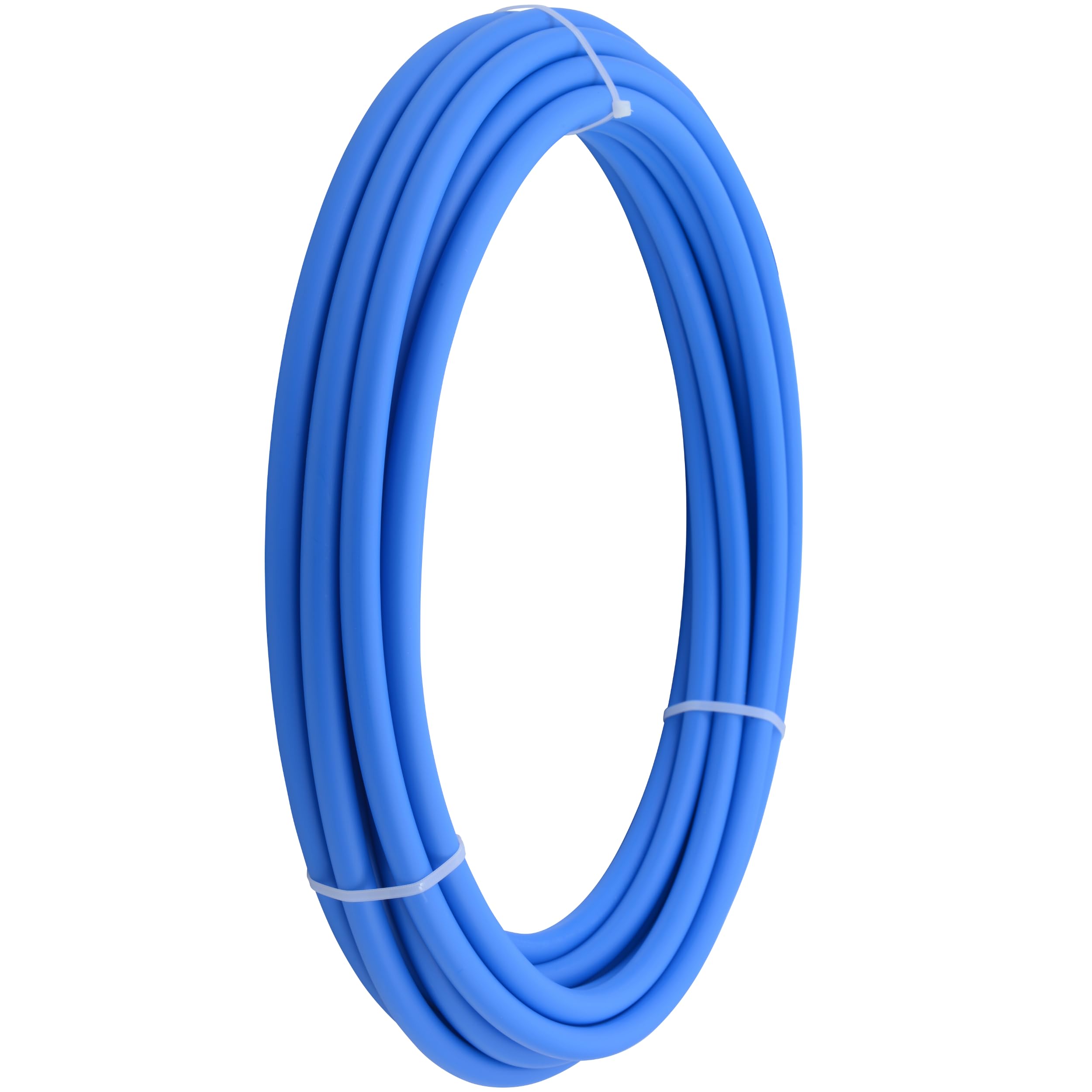
PEX-A is the most flexible, expanding with a special tool so fittings grip from the outside. PEX-B is stiffer but cheaper, working with crimp rings or push-to-connect fittings. Choose PEX-A for tight corners in finished walls; choose PEX-B for long, straight runs on a budget.
Read the pressure and temperature ratings
All coils are rated for potable water, but pressure and temperature ratings matter for hot lines. A typical 1/2 inch PEX pipe handles 160 psi at cooler temperatures and less pressure as the water heats up. Check that the rating covers your water heater output, especially for recirculating hot water systems where the pipe faces constant heat.
Match the fittings to the pipe
Buying pipe is only half the job. PEX-A requires expansion fittings, while PEX-B accepts crimp rings and push-to-connect fittings. If you already own a crimp tool, stick with PEX-B to avoid buying a new tool. If you are starting fresh, PEX-A’s expansion system creates a tighter seal but costs more for the tool.
Quick Comparison
| Model | Best For | Type | Length | Max Pressure | Amazon |
|---|---|---|---|---|---|
| Likeem 2-Roll PEX-B★ Best Overall | Whole-house refits on a budget | PEX-B (EVOH) | 100 ft (2 rolls) | 160 psi | Amazon |
| SharkBite PEX-B 50 ftBudget Champion | Small repairs and fixture runs | PEX-B | 50 ft | 160 psi | Amazon |
| SharkBite PEX-B 100 ftTop Performer | Whole-house re-pipes | PEX-B | 100 ft | 160 psi | Amazon |
| EFIELD PEX-B | Drinking water lines | PEX-B | 100 ft | 160 psi | Amazon |
| Supply Giant PEX-A | Tight-radius rerouting | PEX-A | 100 ft | 160 psi | Amazon |
| VEVOR PEX-A 2-Roll | Large jobs needing flexibility | PEX-A | 100 ft (2 rolls) | 160 psi | Amazon |
| Happybuy EVOH PEX-B 500 ft | Radiant floor heating | PEX-B (EVOH) | 500 ft | 160 psi | Amazon |
| Supply Giant PEX-B 500 ft | Long outdoor and underground runs | PEX-B | 500 ft | 160 psi | Amazon |
| ZELCAN PEX-B 2×300 ft | Massive projects with leftovers | PEX-B | 300 ft (2 rolls) | 160 psi | Amazon |
In‑Depth Reviews
1. Likeem PEX Pipe 1/2 Inch 100ft 2 Rolls
Our pick — over 4.5★ from 550+ verified ratings; the strongest balance of quality and price.
The two-roll bundle that hands you a full 200 feet of tubing and the tools to cut it on day one.
What wins people over here is the sheer value: two 100-foot coils in red and blue give you 200 feet total, and the box also throws in a pipe cutter and two clamp rings. You get hot and cold lines covered without a second order, and the savings add up fast. Buyers report the bundle ran “over half off box stores,” and one owner sums up a full home refit by saying they “Saved + on home refit.”
This is PEX-B with an EVOH oxygen barrier, so it suits drinking water and radiant heat alike. It handles 160 psi at 70°F, and the spec sheet claims cold tolerance down to -40°F and heat resistance past 200°F. The pipe measures 0.63 inches outside diameter, which is a touch larger than some rival coils, so confirm your fittings match before you crimp everything shut.
Quality is the most-mentioned praise in the review data, and the install feedback is overwhelmingly DIY-friendly. The honest trade-off is stiffness: a few owners found it firmer than expected, and for tight 90-degree turns they recommend a push-to-connect fitting rather than fighting the bend. When you spread the cost across 200 feet, this is the coil to beat for a whole-house project.
What the bundle delivers
- 200 feet total across two color-coded coils
- Includes pipe cutter and clamp rings
- EVOH barrier suits radiant heat and potable water
What to know before you buy
- Stiffer than some competitors, so plan for 90° turns
- Fittings sold separately
Reach for this if: you are repiping a home or camper and want one order to cover hot and cold lines with tools included.
Think twice if: you need a coil that lays perfectly straight for long rigid runs, since the firmness shows on straightaways.
2. SharkBite 1/2 Inch x 50 Feet Blue PEX-B
The go-to 50-foot coil for a weekend repair that needs to be done once and done right.
SharkBite’s blue 50-foot coil is the easiest way to start with the brand’s push-to-connect fittings (fittings that snap onto the pipe without glue or soldering), and owners mention the payoff in pro terms: “Every time I use a shark bite product I end up looking like a professional plumber.” You get the brand’s signature quality without committing to a huge coil, making it ideal for a single bathroom re-pipe or a first DIY project—but if you’re planning a whole-house job, you’ll likely need the 100-foot option below.
This PEX-B tubing is rated for 160 psi and handles temperatures from 33°F up to 200°F, with freeze-tolerant behavior that lets the pipe expand slightly when water freezes inside. It is built for direct burial, including under concrete, which makes it handy for a frost-proof outdoor spigot or a line to a garage. The 50-foot length is the catch for bigger jobs, but it is exactly right for a shower, a water heater, or a single fixture run.
Ease of use is the most-cited praise in the review data, with functionality right behind it. The pipe is flexible enough to bend around corners without elbows, cutting down on the fittings you need to buy. If you are a first-time DIYer who wants a forgiving material, this coil is the low-risk way to start.
Perfect starter coil: the 50-foot length keeps the cost low while the SharkBite system makes your first crimp or push-fit feel professional.
Watch the length: whole-house re-pipes will exhaust this quickly, so measure your runs before you order.
3. SharkBite 1/2 Inch x 100 Feet Blue PEX-B
Double the length of the budget pick, with the same push-to-connect simplicity and a 25-year warranty.
When a 50-foot coil isn’t enough, this 100-footer is the natural step up, and it carries a limited 25-year warranty (a promise that covers manufacturing defects for a quarter-century). Owners have used it to re-pipe entire homes; as customers note, one trailer owner replaced all their plumbing with this coil and it “Survived the freezes last winter with no issues and had more than enough left over to use for another project.” That freeze tolerance is a real plus if you live in a cold climate, but note the warranty only covers the pipe, not the fittings you’ll need to buy separately.
This is the same PEX-B construction as the 50-foot version, rated to 160 psi with a temperature range of 33°F at full pressure up to 200°F. The 100-foot coil supports longer runs with fewer connections, which means fewer potential leak points and less time spent fitting. It is also certified for continuous hot water recirculation, so it holds up in systems where hot water constantly cycles through.
Ease of use leads the review data again, with functionality close behind, and versatility earns mention from owners who used the leftovers for side projects. Flexibility gets mixed feedback, with some finding it perfectly pliable and others noting a little stiffness in the coil. For a serious DIY re-pipe or a new addition, this is the coil that covers the distance.
Why owners choose it
- 100 feet supports whole-house runs
- 25-year limited warranty
- Certified for hot water recirculation
Fair warning
- Coil memory can make straight runs need a little persuasion
- Fittings sold separately
Best for: a full re-pipe where you want a proven brand and a warranty behind the plastic.
skip it if: you only need a short fixture run, where the 50-foot coil saves you money.
4. EFIELD 1/2 Inch x 100 Ft PEX-B

A 100-foot NSF-certified coil that keeps drinking water clean and installs without kinks.
If your water comes from a well or you are replacing aging galvanized pipes, this EFIELD coil is built for potable water with NSF approval, meaning it meets American drinking water standards and adds no smell or taste. Owners have used it to replace 60-year-old galvanized pipe and reported better performance, and the coil handled an underground install with “no kinks/recoil” and passed inspections.
This PEX-B pipe is rated to 160 psi and resists chlorine and chloramine, the additives common in municipal water that can degrade lesser plastics. A quality pipe cutter comes in the box, which owners note is a genuine tool rather than a throwaway. The coil holds its 100-foot length with an outside diameter of 0.5 inches, a standard size that pairs with most crimp and push-fit fittings.
Quality is the most-praised aspect in the review data, with installation earning the second spot. The recurring caveat is coil memory: several owners found the pipe “will never straighten out,” even when warmed, which makes it tricky for short rigid runs. It is a great choice when the line will be buried, secured, or run through a floor cavity, but less ideal for exposed straightaways.
Clean-water pick: NSF certification and chlorine resistance make this the sensible upgrade for drinking lines.
The catch: stubborn coil memory means it hates being straightened for short, exposed runs.
5. Supply Giant PEX-A Tubing 1/2 Inch x 100 Ft
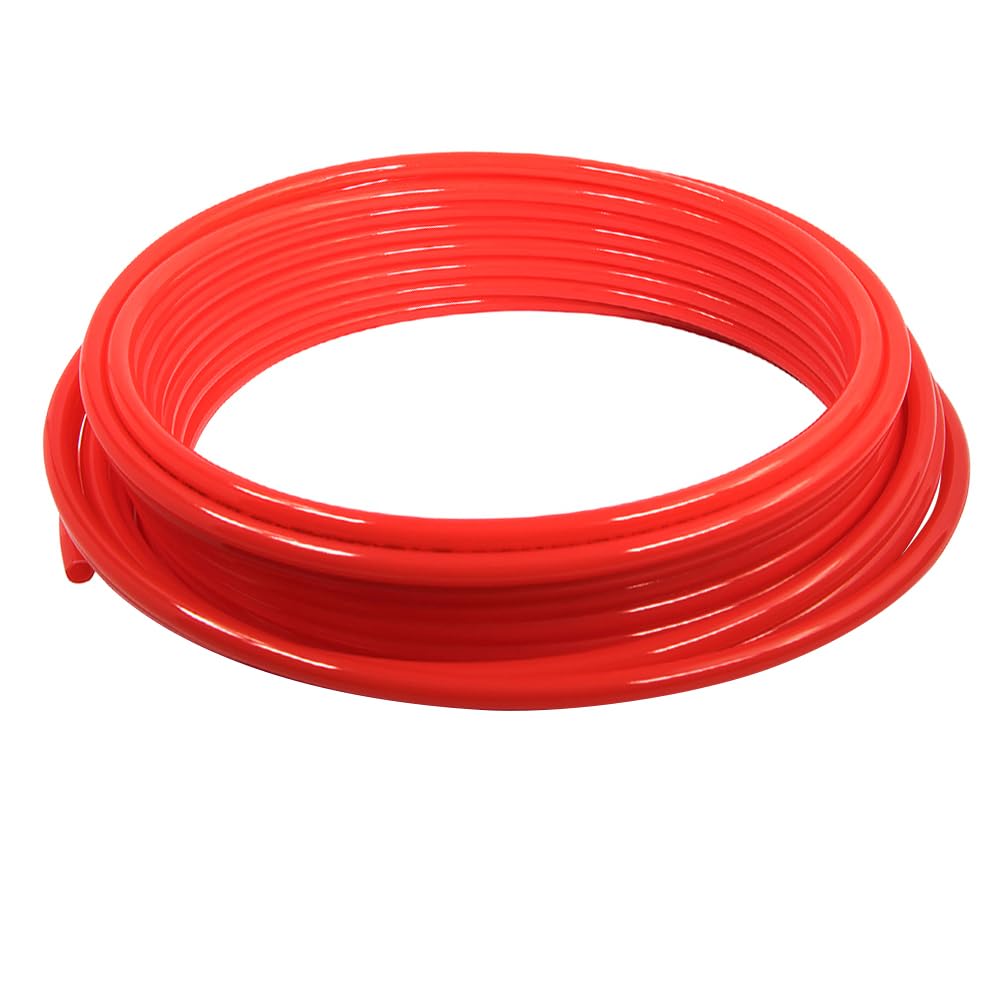
The most flexible pipe of the bunch, bending to a tight 3-1/2 inch radius so you skip fittings entirely.
This red coil is PEX-A, the most flexible type of PEX, and it earns its premium status with a bend radius as tight as 3-1/2 inches for 1/2 inch tubing. In practice, that means you can route it around studs and obstacles that would force a PEX-B coil to use an elbow. Owners who replaced old galvanized lines under a mobile home noticed an immediate improvement in water pressure, noting the pipe is easy to work with and less messy than copper or CPVC.
The specs back up the flexibility: this pipe is rated to 160 psi and handles temperatures from 73°F at full pressure up to 200°F. It is approved for burial, including under concrete, and the material can expand and shrink back when frozen, which is the freeze-resistance that protects a line in an unheated crawlspace. Standards and ratings are printed every 5 feet along the tubing, so you can verify what you are installing.
Owners note the one added cost with PEX-A: you need an expansion tool to install the fittings, which is an extra purchase if you are not already equipped. The payoff is a tighter, more reliable joint that does not rely on a crimp ring squeezing the pipe. If flexibility and joint integrity matter more than tool cost, this coil is the upgrade.
The flexibility payoff
- Tight 3-1/2 inch bend radius reduces fittings
- Freeze-resistant material springs back to shape
- Markings printed every 5 feet
The added cost
- Requires an expansion tool for installation
- Premium price over PEX-B coils
Choose this when: rerouting through tight framing where fittings are a hassle, and you are willing to invest in the expansion tool.
Look elsewhere if: you already own a crimp tool and want to keep using it — that points you back to PEX-B.
6. VEVOR PEX Pipe 1/2 Inch, 2 x 100 Feet PEX-A

Two 100-foot PEX-A coils with imprinted markings that make this the flexible option for big, cold-weather builds.
VEVOR brings PEX-A flexibility in a two-roll bundle, giving you 200 feet total in blue and red, plus a pipe cutter in the box. The PEX-A material bounces back to shape after bending, which owners praise for making insulation and curving around obstacles easier in new builds. The specification list goes further than most, with a temperature range from -40°F to 203°F and pressure ratings of 160 psi at 73°F.
What sets this coil apart is the imprint markings on the pipe body, which tell you the type, diameter, size, standards, and production date right on the tubing. That is a small detail that saves real time on the job when you are grabbing the right line out of a bundle. The same expansion-fitting system applies here as with other PEX-A, so you need the compatible tool.
Quality leads the review data, with value for money close behind, and owners note it is easy to crimp, cut, and connect. The honest advice from the reviews: swap the included cutter for a good-quality one of your own, since the bundled tool is the weak point. For a large job needing flexibility and cold-weather resilience, this bundle performs like the premium picks at a friendlier cost.
Big-build flexible pick: 200 feet of PEX-A that bends and springs back, with markings that keep your runs organized.
Small gripe: the free cutter is best replaced with your own quality tool for clean square cuts.
7. Happybuy Oxygen Barrier PEX Tubing 1/2 Inch x 500 Ft

A 500-foot EVOH-barrier coil engineered to keep oxygen out of your radiant heating loop.
This red coil is built specifically for radiant floor heating, and the defining feature is the EVOH oxygen barrier. That thin layer stops oxygen from entering the tube and corroding the metal components in your heating system, which extends the life of the whole setup. Owners used it for radiant flooring in their homes and for running water to a pier, and the feedback is consistent: durable, flexible, and easy to install around corners.
The specs suit heating duty: outside diameter of 0.625 inches, inner diameter of 0.475 inches, and a temperature range from -47°F to 230°F, which is wider than most potable-water coils. Pressure ratings run 160 psi at 73°F, 100 psi at 180°F, and 80 psi at 200°F, covering the heat a boiler system produces. The 5-inch bend radius lets you staple it between joists or lay it in a concrete slab without fighting the material.
Owners do note the coil holds its memory, so it benefits from a hot day and a helper to straighten. The color runs closer to orange than a true red, which matters only if you rely on color-coding to tell hot from cold lines at a glance. For a whole-house radiant system, this is the purpose-built coil that protects the investment under your floor.
Why it earns its place
- EVOH barrier protects heating system components
- 500 feet covers large floor areas
- Wide temperature range for boiler heat
Fair notes
- Coil memory needs warmth to relax
- Color is more orange than red
Reach for this if: you are installing or expanding radiant floor heat and want the oxygen barrier that keeps metal parts safe.
Pass on it if: you only need potable water lines, where the EVOH layer adds cost you do not need.
8. Supply Giant PEX-B Pipe 1/2 In x 500 Ft Blue

A 500-foot workhorse for long runs to pools, gardens, and outbuildings that need one continuous line.
Some projects are measured in hundreds of feet, not dozens, and this blue PEX-B coil covers them without splicing. Owners have used it for hoop houses as a sturdier alternative to PVC, and for DIY plumbing where the advice is to use 1/2 inch for fixtures and leave 3/4 inch for mains. The cost per foot works in your favor at this length, making it the economical choice for a big outdoor project.
This pipe is made with the silane method of cross-linking, a streamlined process that keeps PEX-B more budget-conscious than PEX-A. It withstands temperatures up to 200°F and pressures up to 160 psi, with UV resistance that lets it work both indoors and out. The coilable design means you can run a line to a fountain, sprinkler, or water filter as a single piece.
Functionality leads the review data, with leak-proof and durability close behind. The one honest note from a buyer: not all PEX is created equal, and this coil’s wall thickness differs slightly from some SharkBite pieces, so a crimp ring does the snug work at the fitting. If you have a long, straight run where a single coil beats multiple joints, this is the one to grab.
The distance king: 500 feet of UV-resistant line means fewer joints and fewer places for a leak to start.
Know before you buy: slight wall-thickness differences mean your crimp ring does the final sealing work.
9. ZELCAN PEX PIPE Tubing 1/2 Inch, 2 Rolls of 300ft

A massive 600 feet of PEX-B across two color-coded coils for the project that refuses to end.
If you are plumbing a two-story house, a camper, and a radiant system all at once, this bundle of two 300-foot coils delivers 600 feet total in red and blue. Owners praise the value for money and quality, and the measurements printed right on the tubing make cutting and planning easier. This is the coil for people who would rather buy once than make three separate trips.
This PEX-B handles the standard pressure demands, rated to 160 psi at 70°F and 80 psi at 200°F, with cold tolerance down to -40°F. The 5-inch bend radius lets you run a single line to fixtures without adding junctions, which cuts down on the maintenance problems that come with extra fittings. It accepts copper crimp fittings, stainless steel clamps, and compression fittings, so it works with the tools you likely already own.
Reviewers lead with value-for-money praise, and quality follows closely—so if you’re re-piping a two-story home, this coil’s per-foot cost is hard to argue with. Those who installed it found it easier to work with than straight PVC piping (which requires glue and rigid joints), especially for routing around corners. Some owners were still waiting to install when they reviewed, so long-term durability isn’t proven yet—but if you need 100 feet, the price per foot beats the SharkBite 50-footer above.
The bulk advantage
- 600 feet total covers massive projects
- Measurements printed on the tubing
- Works with crimp, clamp, and compression fittings
Consider this
- Overkill for small repairs
- Storage space needed for two large coils
Best for: the ambitious owner with multiple projects queued up who wants one order to cover all of them.
pass on it if: your job is a single fixture — a 50 or 100-foot coil keeps things manageable.
Understanding the Specs
PEX-A vs PEX-B
The letter tells you how the plastic molecules are cross-linked. PEX-A uses the most flexible method, so it bends tighter and can be installed with an expansion tool that makes a very secure joint. PEX-B uses a silane method that is slightly stiffer but cheaper to produce, and it works with standard crimp rings. For most homeowners, PEX-B is the budget-friendly default, while PEX-A is worth the extra cost when you are routing through tight spaces.
Pressure and temperature ratings
Every coil lists a maximum pressure, usually 160 psi, but that number only applies at cooler temperatures. As water heats up, the plastic softens and the safe pressure drops — many coils rate 80 psi at 200°F. A standard home water heater runs around 120°F to 140°F, so even the lower hot-water rating leaves plenty of margin, but the number matters for recirculating systems that constantly push hot water through the pipe.
Oxygen barrier (EVOH)
Radiant floor heating systems circulate water through metal pumps and valves, and oxygen in that water causes corrosion. An EVOH layer on the pipe blocks oxygen from entering the tube, protecting those metal parts and extending the system’s life. Potable water lines do not need this barrier, so buying EVOH pipe for drinking water just adds cost without real benefit.
Coil memory and bend radius
PEX arrives coiled, and it wants to stay coiled. The bend radius tells you the tightest curve the pipe can take without kinking, and the coil memory tells you how stubbornly it resists lying flat. PEX-A generally springs back to a straight line more easily, while PEX-B holds its curve longer. If your run is exposed and straight, coil memory matters; if it is buried or secured, you can ignore it.
FAQ
What is the difference between PEX-A and PEX-B pipe?
Can I use the same fittings for PEX-A and PEX-B?
Will 1/2 inch PEX pipe fit my existing copper or CPVC pipes?
How long does PEX pipe last in a home?
Can PEX pipe be used for radiant floor heating?
Is 1/2 inch PEX pipe safe for drinking water?
How much water pressure can 1/2 inch PEX handle?
What tools do I need to install PEX pipe?
Can I bury PEX pipe underground or under concrete?
Why does my PEX coil not lay straight after I unroll it?
Final Thoughts: The Verdict
Across the board, the 1/2 inch pex pipe winner is the Likeem 2-Roll PEX-B because 200 feet of EVOH-barrier tubing with cutting tools included delivers the best balance of coverage, flexibility, and cost for a whole-home refit. If you want maximum flexibility for rerouting around tight corners, grab the Supply Giant PEX-A, which bends to a tight 3-1/2 inch radius. And for radiant floor heating, the Happybuy 500-foot EVOH coil is the one to reach for, protecting your system’s metal components from corrosion.
How We Picked
We do not accept paid placement. Every pick is matched to a real buyer and a real use-case; we do not hands-on test units.
Sources & Methodology
Specifications: manufacturer listings and product documentation. Review insights: verified customer reviews, as of August 2026. Pricing: not shown on this page (it changes often); check the current price via the retailer link.
As an Amazon Associate, KitchPrep earns from qualifying purchases. This does not affect which products we feature.
Related Guides
