
Specs are compiled from manufacturer listings and verified buyer reviews and can change over time — please confirm the key details on the product page before buying.
Acoustic caulk is the affordable, often-overlooked hero of any soundproofing project. Unlike regular caulk, it stays flexible to stop vibrations and seals every tiny gap where noise bleeds through — around outlets, baseboards, and ceiling corners. The wrong one dries hard or stays too thin to block noise, a common beginner mistake. This guide compares the four most effective acoustic sealants you can buy right now, from a budget-friendly 2-pack to a pro-grade 12-pack.
I’m Mohammad Maruf — the founder and writer behind KitchPrep. This guide is built by comparing the manufacturers’ published specifications and the patterns across verified customer reviews, so you get each pick’s real strengths and trade-offs instead of marketing spin.
Whether you’re soundproofing a home theater, a bedroom ceiling, or a shared wall in an apartment, you need the best acoustic caulk that stays flexible, adheres strongly, and actually blocks noise transfer through every gap you seal.
Our Picks at a Glance
How To Choose The Best Acoustic Caulk
The biggest mistake is using standard latex caulk, which dries hard and cracks, letting noise back through. For soundproofing, choose a sealant that stays permanently flexible, bonds without primer, and fills gaps completely.
Flexibility & Movement Capacity
Sound waves create constant subtle vibrations. A rigid caulk that dries rock-hard will eventually separate from the wall or drywall, creating a new air gap for noise to travel through. Look for a sealant that boasts high joint movement capability, measured as a percentage — the higher the number, the more it can stretch and compress without losing its seal. A sealant that moves with the building is the only one that will still be blocking sound a year from now.
Adhesion Without Primer
Most acoustic caulk jobs involve sealing between different materials — wood framing to drywall, metal studs to concrete, or aluminum window frames to masonry. A great acoustic caulk sticks directly to all those surfaces without needing a separate primer. If you have to prime every surface before application, the job gets slower and more expensive. The best picks here are formulated to bond immediately to clean surfaces.
Cure Time & Odor
You cannot paint over or disturb acoustic caulk until it has fully cured. Some formulas dry in 24 hours, while others need up to 7 days to reach full strength. If you are soundproofing a room you need to use soon, a fast-curing, low-odor formula is a real advantage — you can keep working in the space without being driven out by fumes. Check the cure time before you start, and plan your project around it.
Quick Comparison
| Model | Best For | Tube Size | Count | Material | Amazon |
|---|---|---|---|---|---|
| MasterSeal NP1 12‑Pack★ Best Overall | Pro contractors & big jobs | 10.1 fl oz | 12 | Polyurethane | Amazon |
| Green Glue 6‑Pack | DIY whole‑room soundproofing | 28 fl oz | 6 | Sealant | Amazon |
| TMS Acoustical Caulk | Budget single‑tube jobs | 28 fl oz | 1 | Synthetic Rubber | Amazon |
| Donseal GA777‑AC 2‑Pack | Small, quick repairs on a budget | 9.5 fl oz | 2 | Acrylic | Amazon |
In‑Depth Reviews
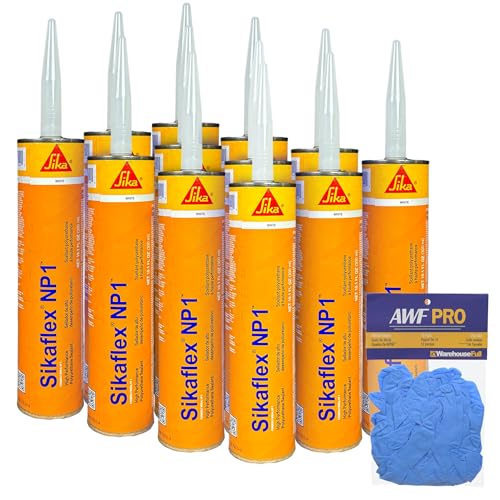
1. MasterSeal NP1 Stone 10.1oz Polyurethane Sealant – Pack of 12
Our pick — over 4.5★ from 100+ verified ratings; the strongest balance of quality and price.
The professional-grade polyurethane that sticks like crazy and flexes with the building itself.
This is the sealant contractors reach for when a job needs to hold up for years. The MasterSeal NP1 is a moisture-cured polyurethane (a type of rubber-like sealant that hardens by reacting with moisture in the air) that bonds to clean concrete, wood, metal, tile, and drywall without any primer. Buyers report it “works great and is holding up great after months” even on exterior concrete cracks.
What wins people over is the sheer quality of the seal: it is a premium-grade, elastomeric (stretchy rubber-like) formulation that resists aging and weathering and even passes a 4-hour fire and hose stream test when used with mineral wool. It comes in a pack of 12 ten-point-one-ounce cartridges plus a pair of gloves, because cleanup is difficult — buyers strongly recommend you tape off the area first. The crowd favorite — 4.7 stars across 100+ owners — proves this is the one everyone trusts for serious work. The trade-off is that it is not a beginner’s caulk; it is stubbornly adhesive and hard to smooth, so practice on a scrap board if you are new to a caulking gun.
Built to Last
- Superior adhesion to most construction materials without primer — saves time on prep work
- Highly flexible with joint movement capability of +/- 35% — handles building shifts without cracking
- Suitable for water immersion and green concrete applications — works in damp basements and new foundations
- UL Listed and passes fire and hose stream test for fire-rated assemblies
Know Before You Buy
- Cleanup is very difficult; you must use tape to keep lines neat
- Not for beginners — the polyurethane is aggressively sticky and hard to tool smoothly
Perfect for the pro or serious DIYer who: needs a sealant that outlasts the drywall and sticks to anything. Grab this if you are soundproofing a whole house, sealing concrete foundations, or working on fire-rated walls.
Think twice if you: are a complete beginner who wants an easy, cleanable caulk for a single small gap — the learning curve is real and cleanup is messy.
2. Green Glue Noiseproofing Sealant Caulk – Pack of 6 Tubes
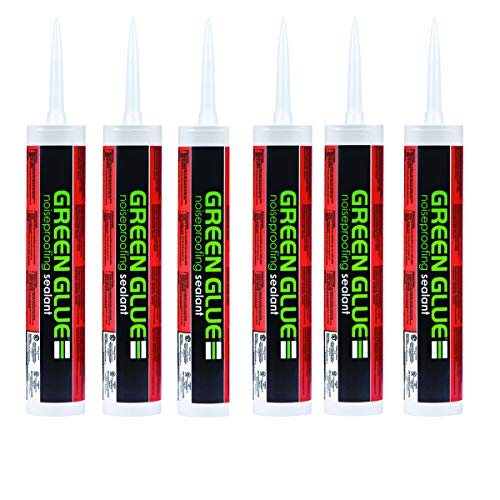
The soundproofing specialist that comes in giant tubes for big, whole-room projects.
Green Glue is a name you hear in every serious soundproofing discussion, and this six-pack of twenty-eight-ounce tubes is the volume you need to seal an entire room in one go. Each tube covers approximately 60 linear feet — so six tubes handle a full room’s worth of perimeter ceiling, baseboard, and outlet gaps. The sealant dries to a pliable, peelable consistency that stays flexible, which is essential for maintaining the STC rating (Sound Transmission Class — a number that tells you how well a wall blocks airborne noise) of your assembly. Yes, Green Glue holds a 4.4-star average across 300+ owners who confirm it significantly reduces HVAC vibration and footsteps.
The thing everyone raves about is how well it works as part of a multi-tactic soundproofing plan — combined with putty pads and rockwool, it effectively fills the air gaps that make or break a quiet room. The full cure time is 7 days, which is longer than most alternatives; owners note it takes about 30 days to achieve maximum noise-blocking results. The nozzle tip can pop off under pressure, and these large tubes require a caulk gun designed for 30 oz cartridges — your standard hardware-store gun will not fit.
Room-Sized Efficiency
- Large 28 oz tubes cover roughly 60 linear feet each — one 6-pack handles a whole room
- Dries to a flexible, pliable consistency that maintains STC ratings of the wall assembly
- Includes specialty cleanup wipes and an installation guide for DIY soundproofing
- Very few air pockets in the tube, making for smooth, easy application
The Fine Print
- Full cure takes 7 days, and maximum results take about 30 days — not for instant results
- Requires a specialized 30 oz caulk gun, not a standard 10 oz gun
- Priced at the premium end; some owners feel the cost is high for a single-project material
Reach for this if: you are soundproofing a whole bedroom ceiling, a home theater, or a recording studio and need enough caulk to do the job in one purchase. The 6-pack is the most efficient way to buy acoustic sealant at this scale.
Look elsewhere if: you only need to seal a few small gaps around a single window or door — the giant tubes and 7-day cure are overkill for a weekend patch job.
3. TMS Acoustical Soundproofing Caulk – Premium Sound Proofing Acoustic Sealant

A single, affordable tube that does the job for small-to-medium soundproofing tasks.
If your project is a single room or a handful of noisy gaps, the TMS Acoustical Caulk is the sensible pick. This latex-based sealant comes in a twenty-nine-ounce tube (packing 28 fluid ounces) and covers roughly 60 linear feet, just like the Green Glue tube, but at a much lower entry price. It is formulated to meet ASTM-E90 and E84 standards (tests that measure how well a material blocks sound and how flammable it is — this one achieved a Class A, 20 Flame Spread rating, meaning it is very fire-resistant). Owners note that “it takes about 24 hours to dry and the smell isn’t bad at all so you don’t have to leave when you’re done,” which is a big plus if you are working in a lived-in space.
The synthetic rubber material stays thick and applies well, and buyers find it helps dampen noise from in-ceiling speakers and upstairs bedrooms. The biggest recurring note is that the tube often ships without a nozzle — several owners had to make do or buy a separate nozzle. The consistency gets mixed feedback: some find it ideal and thick, while a few report it is too thin and watery to effectively block sound transfer on walls. At 4.1 stars across 150+ owners, it clearly works for most people who understand it is a latex-based sealant best used on standard drywall, wood, and concrete surfaces. It is lighter and less durable than the polyurethane MasterSeal, but for a typical home soundproofing job, it is more than capable.
Easy & Fast
- Dries in just 24 hours with very low odor — you can stay in the room while it cures
- Class A fire rating (20 Flame Spread) — safe for use in walls and ceilings
- Covers approximately 60 linear feet per tube, matching the coverage of more expensive brands
- Adheres well to drywall, wood, concrete, and metal studs without primer
Know Going In
- Does not include a nozzle — you may need to buy a separate applicator tip
- Some owners find the consistency too thin for effective sound blocking on vertical wall gaps
Grab this if: you need one tube for a weekend soundproofing project like sealing speaker boxes or a single bedroom ceiling, and you value fast drying time and low odor over industrial-grade durability.
skip it if: you are sealing large gaps or exterior walls where a thicker, more flexible polyurethane sealant would hold up longer against movement and weather changes.
4. Donseal GA777-AC 2-Pack Acoustic Caulk 9.5 fl. oz. for Soundproofing
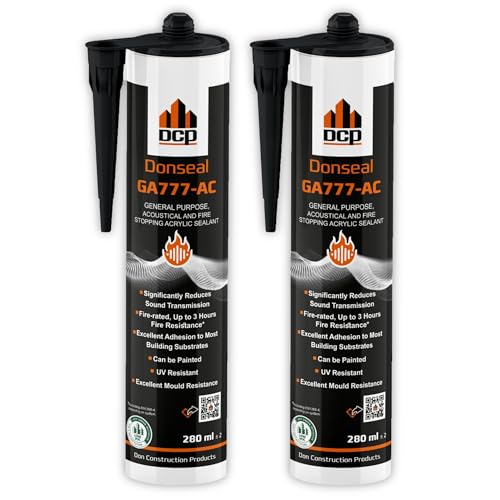
The low-cost, low-VOC option for small gap sealing and quick fixes.
When you just need to seal a few gaps around an AC unit, a window frame, or some electrical boxes without spending much, the Donseal GA777-AC is the entry-level choice. This is a water-based acrylic sealant (a type of caulk that cleans up with water and has very low volatile organic compounds, making it safer for indoor air quality) that claims to block noise transfer up to 49 dB. It comes as a two-pack of 9.5 fluid ounce cartridges — noticeably smaller than the 28-ounce tubes above, with 9.5 fl oz per tube versus 28 fl oz. It is LEED-compliant (Leadership in Energy and Environmental Design — a green building certification that rewards low-emission materials) and paintable, so it blends into walls smoothly after application.
The quality story here is honest but mixed. Owners mention when it works, it is “the best acoustic caulk [they’ve] used”— it applies smoothly, seals gaps effectively, and stays flexible after curing. However, quality control is a real issue: some tubes arrive already dried out and hardened, including one owner who reported the “first tube was defective (hardened, blocked), but Donseal quickly sent a replacement and full refund.” Others describe it as difficult to extrude from the tube initially, and note it has a noticeable smell that requires ventilation during application. If you need acoustic caulk for a small repair and want to keep the project cost low, the Donseal is worth a try — just open both tubes immediately when they arrive so you can test the consistency within the return window.
Easy & Green
- Low-VOC and LEED-compliant — a safe, environmentally friendly choice for indoor use
- Adheres to concrete, wood, aluminum, marble, and stone without primer — versatile for many surfaces
- Maximum gap fill of 1.18 inches — can handle wider cracks than many standard caulks
- Paintable and cleans up with water, making finishing work simple
Inconsistent from the start
- Some tubes arrive already dried out and unusable; quality control is inconsistent
- At 9.5 fl oz per tube, this set holds much less volume than the competition — not for big jobs
- Extrusion can be stiff, and the product has a noticeable odor during application
Best suited for: very small projects like sealing a single window frame, a drafty door, or an AC unit cutout. If you need a single-tube purchase for a targeted repair, the price is right.
Not the pick if: you are soundproofing an entire room or wall — the small tube size and inconsistent quality make it unreliable for large-scale work. Choose the TMS or Green Glue instead for confidence on bigger jobs.
Understanding the Specs
Joint Movement Capability (%)
This number tells you how much the cured caulk can stretch or compress before the seal breaks. A caulk rated for plus-or-minus 25% can handle a quarter-inch of movement on a one-inch gap. For soundproofing, you want 25% or higher — buildings constantly expand and contract with temperature and humidity, and a caulk that cannot move will crack open an air gap that lets noise right back through. Polyurethane sealants like the MasterSeal NP1 are the best in this category, boasting +/- 35% movement.
STC Rating (Sound Transmission Class)
STC is a single-number rating that measures how well a wall, floor, or ceiling blocks airborne noise. A standard wall might rate 30-35 STC; a good soundproofed wall hits 50+. Acoustic caulk alone does not give you an STC number — it is the sealant that closes the air gaps in an assembly so the wall can achieve its designed rating. Professional-grade caulks reference standards like ASTM-E90 (the lab test for airborne sound transmission) and ASTM-E84 (surface burning characteristics) so you know they are certified for use in rated assemblies.
Water-Based (Acrylic/Latex) vs Polyurethane
Water-based acoustic caulks, like the Donseal GA777-AC, clean up with soap and water, have very low odor, and contain fewer VOCs (volatile organic compounds — chemicals that evaporate into the air and can cause headaches or respiratory irritation). They are great for indoor DIY use. Polyurethane caulks like the MasterSeal NP1 are solvent-based, cure by reacting with moisture in the air, and form a much tougher, more rubber-like seal that bonds aggressively to almost any surface. They are harder to work with and difficult to clean up, but they outlast water-based caulks on exterior walls, concrete foundations, and high-vibration areas.
Cure Time
This is the time the caulk needs to sit undisturbed before it reaches full strength. Water-based latex formulas often cure within 24 hours, while polyurethane blends might take 24 hours to set but continue hardening for days. Green Glue’s sealant requires a full 7 days to cure, and owners note it takes about 30 days to reach maximum sound-dampening performance. Plan your project timeline around this — you cannot paint over or disturb uncured caulk, and you certainly cannot close up a wall with drywall until the sealant is fully set, or you will trap moisture and lose the acoustic seal.
FAQ
Can I use regular caulk instead of acoustic caulk for soundproofing?
How many tubes of acoustic caulk do I need for a typical room?
Is acoustic caulk paintable?
Will acoustic caulk completely block all noise?
What is the difference between acoustical caulk and standard latex caulk?
How long does acoustic caulk last before it needs replacing?
Can I apply acoustic caulk over old caulk?
Does acoustic caulk meet fire code requirements?
Can acoustic caulk be used on exterior walls?
Why does acoustic caulk feel sticky even after it dries?
Final Thoughts: The Verdict
For most buyers, the best acoustic caulk winner is the MasterSeal NP1 12-Pack because it combines industrial-grade polyurethane adhesion, a 35% joint movement capacity, and proven fire resistance in a bulk pack that contractors rely on. If you are soundproofing an entire room and want the most volume for your money, grab the Green Glue 6-Pack — its 28-ounce tubes are tailor-made for sealing the full perimeter of a room. And for a single-tube, budget-friendly fix on a small project, the TMS Acoustical Caulk offers fast 24-hour curing with low odor that lets you keep working in the space. Pick the one that matches the scale of your job, and you will finally stop hearing everything that happens in the next room.
How We Picked
We do not accept paid placement. Every pick is matched to a real buyer and a real use-case; we do not hands-on test units.
Sources & Methodology
Specifications: manufacturer listings and product documentation. Review insights: verified customer reviews, as of July 2026. Pricing: not shown on this page (it changes often); check the current price via the retailer link.
As an Amazon Associate, KitchPrep earns from qualifying purchases. This does not affect which products we feature.
Related Guides
