
Selecting the correct mixing valve is a critical decision for home safety and comfort, directly impacting water temperature stability in showers, sinks, and appliances.
I’m Mohammad Maruf — the founder and writer behind KitchPrep. My expertise involves deep market research and technical analysis of plumbing specifications, focusing on material integrity, safety standards, and long-term performance data from user installations.
This guide analyzes construction, compatibility, and real-world feedback to simplify your choice. Choosing the best 1 inch mixing valve is essential for maintaining safe water temperatures and preventing accidents in homes with children or elderly residents.
How To Choose The Best 1 Inch Mixing Valve
Focusing on a few core specifications will ensure you get a reliable valve that matches your plumbing system and safety requirements.
Identify Your Primary Application
Point-of-use valves for individual sinks or showers differ from whole-house tempering valves. Consider if you need scald protection for a specific fixture, temperature stabilization for an appliance, or system-wide safety.
Verify Thread Type and Connection
This is the most common installation hurdle. National Pipe Tapered (NPT) threads are standard in the US and seal with tape or dope. National Pipe Straight (NPS) threads require a sealing washer and specific fittings. Mismatching these will cause leaks.
Prioritize Material and Build Quality
Solid, lead-free brass or bronze bodies offer the best corrosion resistance and longevity. Avoid valves with internal plastic components in critical areas, as they may degrade with heat and pressure over time.
Evaluate Safety and Performance Features
Look for integral check valves to prevent cross-flow, a failsafe shutoff for cold water failure, and an adjustable temperature range with a tamper-resistant lock. A wider flow rate range ensures consistent performance under different demands.
Quick Comparison
On smaller screens, swipe sideways to see the full table.
| Model | Type | Best For | Key Feature | Amazon |
|---|---|---|---|---|
| Watts USG-B-M2 | Point-of-Use | Under-sink safety | Compression fittings, tamper lock | Amazon |
| Cash Acme 24511 | Whole-House | Whole-system tempering | 3/4″ NPT, union connections | Amazon |
| Taco 5004-HX-C3 | Heating System | Hydronic heating | 1″ union sweat, high flow | Amazon |
| Zurn 12-ZW1070XL | Point-of-Use | Multi-fixture control | FNPT tailpieces, low-lead | Amazon |
| Cash Acme HG110-D Sweat | Whole-House | PEX/Copper systems | Sweat connections, integral checks | Amazon |
| Cash Acme HG110 Crimp | Whole-House | PEX crimp systems | Barb connections, easy install | Amazon |
| Cash Acme HG110-D SharkBite | Whole-House | Tool-free installation | SharkBite push-fit | Amazon |
| Taco Forged Brass | General Purpose | High-flow applications | Forged brass, 20 GPM | Amazon |
| Fyeer 3-Way Valve | Point-of-Use | Bidet, appliance feed | Budget-friendly, thermostatic | Amazon |
| Atmama Thermostatic Valve | Point-of-Use | Shower, sink safety | Solid brass, Fahrenheit scale | Amazon |
| TreMax Thermostatic Valve | Point-of-Use | Temperature stabilization | NPT threads, brass body | Amazon |
In‑Depth Reviews
1. Watts USG-B-M2 3/8″ Under Sink Guardian Thermostatic Mixing Valve

This mid-range valve from Watts is engineered for precise point-of-use temperature control, ideal for installing under bathroom or kitchen sinks to prevent scalding.
Its lead-free brass and bronze construction ensures durability, while the compression fittings simplify connection to standard 3/8″ supply lines. User feedback highlights its effectiveness in households with children, providing consistent tempered water even when the faucet is turned fully to hot. The tamper-resistant locking nut prevents accidental adjustment, a critical safety feature.
For reliable, code-compliant scald protection at a specific fixture, this valve offers an excellent balance of performance, safety, and build quality.
Why it’s great
- Tamper-resistant design prevents unsafe adjustments.
- Compression fittings allow for straightforward installation without special tools.
- Consistently maintains set temperature, praised by daycare and salon owners.
Good to know
- Does not include a mounting bracket; you’ll need to secure it independently.
- Best suited for individual fixtures, not whole-house applications.
2. Cash Acme 24511 Thermostatic Mixing Valve HG110-D
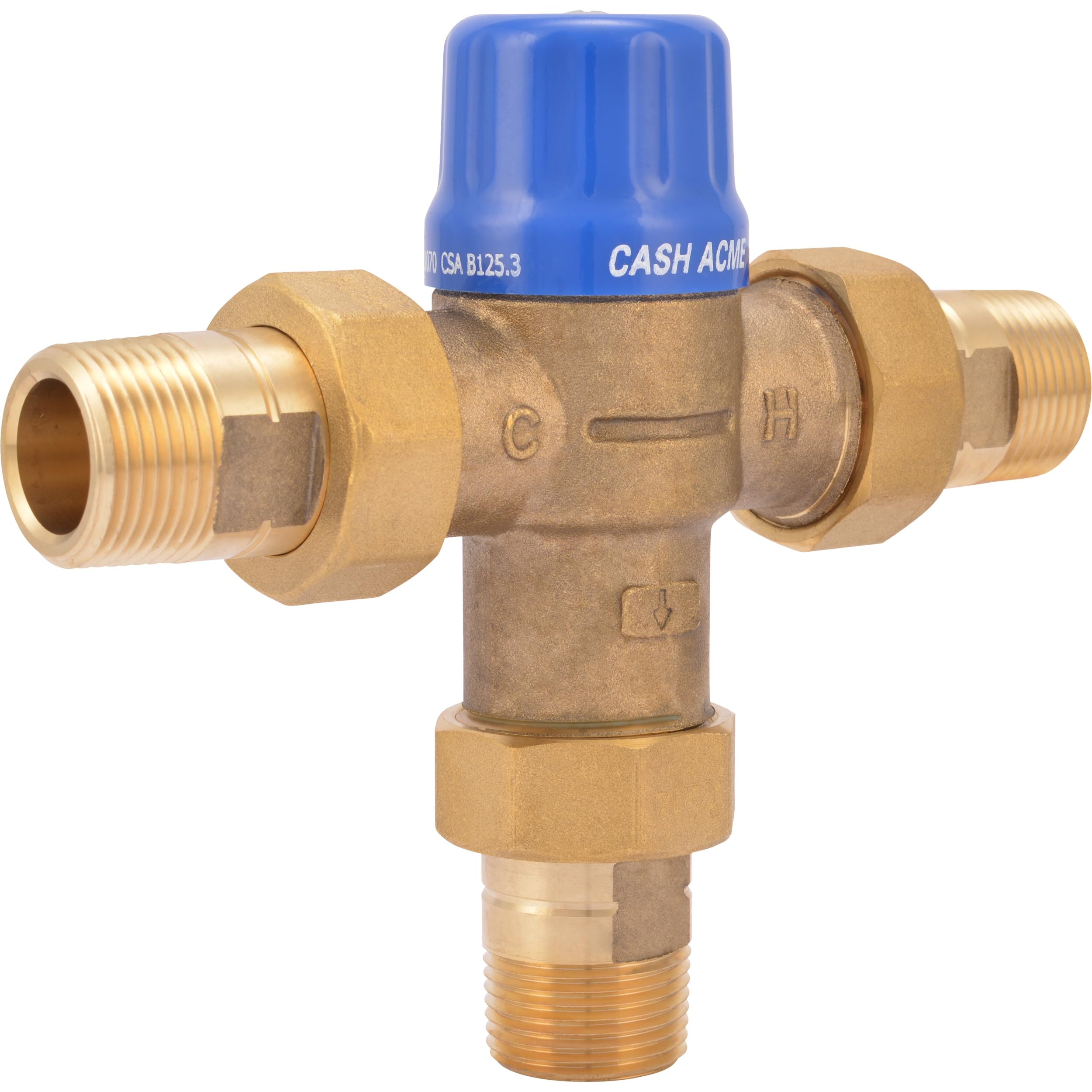
A robust whole-house tempering valve designed to deliver safe water temperatures throughout your plumbing system, allowing for a higher water heater setting.
Its triple-listed certification and lead-free brass build meet stringent safety standards. The union sweat connections facilitate a clean, professional installation or easy replacement of an existing unit. Users report it effectively extends hot water supply by allowing a higher tank temperature while outputting a safe 120°F, with stable performance in heat pump water heater setups.
This is a professional-grade solution for comprehensive home water temperature management and safety.
Why it’s great
- Union connections make installation and future service straightforward.
- Effectively increases usable hot water capacity by enabling a higher tank temperature.
- Triple-listed for compliance with major plumbing codes.
Good to know
- May require careful threading to prevent leaks, as noted in some feedback.
- Designed for 3/4″ line sizes, not for smaller point-of-use lines.
3. Taco 5004-HX-C3 Heating Only Mixing Valve 5000 Series

This premium valve is built for hydronic heating systems and high-demand domestic water applications, featuring a large 1″ port size for substantial flow.
The union sweat connections ensure a secure, leak-free fit with copper piping. It handles a wide temperature range and up to 20 GPM, making it suitable for commercial or large residential settings. While customer reviews are limited, its specifications align with professional heating system requirements.
If you need a mixing valve for a boiler-based system or high-volume tempering, this Taco model is a capable and durable choice.
Why it’s great
- Large 1″ ports support high flow rates for whole-house or commercial use.
- Robust construction designed for integration into heating systems.
- Union fittings provide installation flexibility.
Good to know
- Premium price point reflects its specialized application and build.
- Installation requiressweating copper, which is a more advanced skill.
4. Zurn 12-ZW1070XL Thermostatic Mixing Valve

A commercial-grade point-of-use mixing valve designed for precise temperature control at a single fixture or group of fixtures, commonly used in institutional settings.
It comes with three female NPT (FNPT) tailpieces and union nuts for straightforward installation. The low-lead brass construction complies with safety standards. Feedback notes its effectiveness, though some users have reported receiving units that appeared used or had mineral deposits, so inspecting upon arrival is advised.
For a durable, code-compliant valve suitable for a sink or shower in a high-use environment, this Zurn model is a solid professional option.
Why it’s great
- Includes necessary FNPT tailpieces and nuts for a complete installation.
- Low-lead brass construction meets current safety regulations.
- Designed for reliable performance in commercial or high-demand residential use.
Good to know
- Check the unit upon delivery for signs of prior use or packaging issues.
- Primarily for point-of-use, not for tempering an entire home’s water supply.
5. Cash Acme 3/4 Inch HG110-D Sweat Thermostatic Mixing Valve
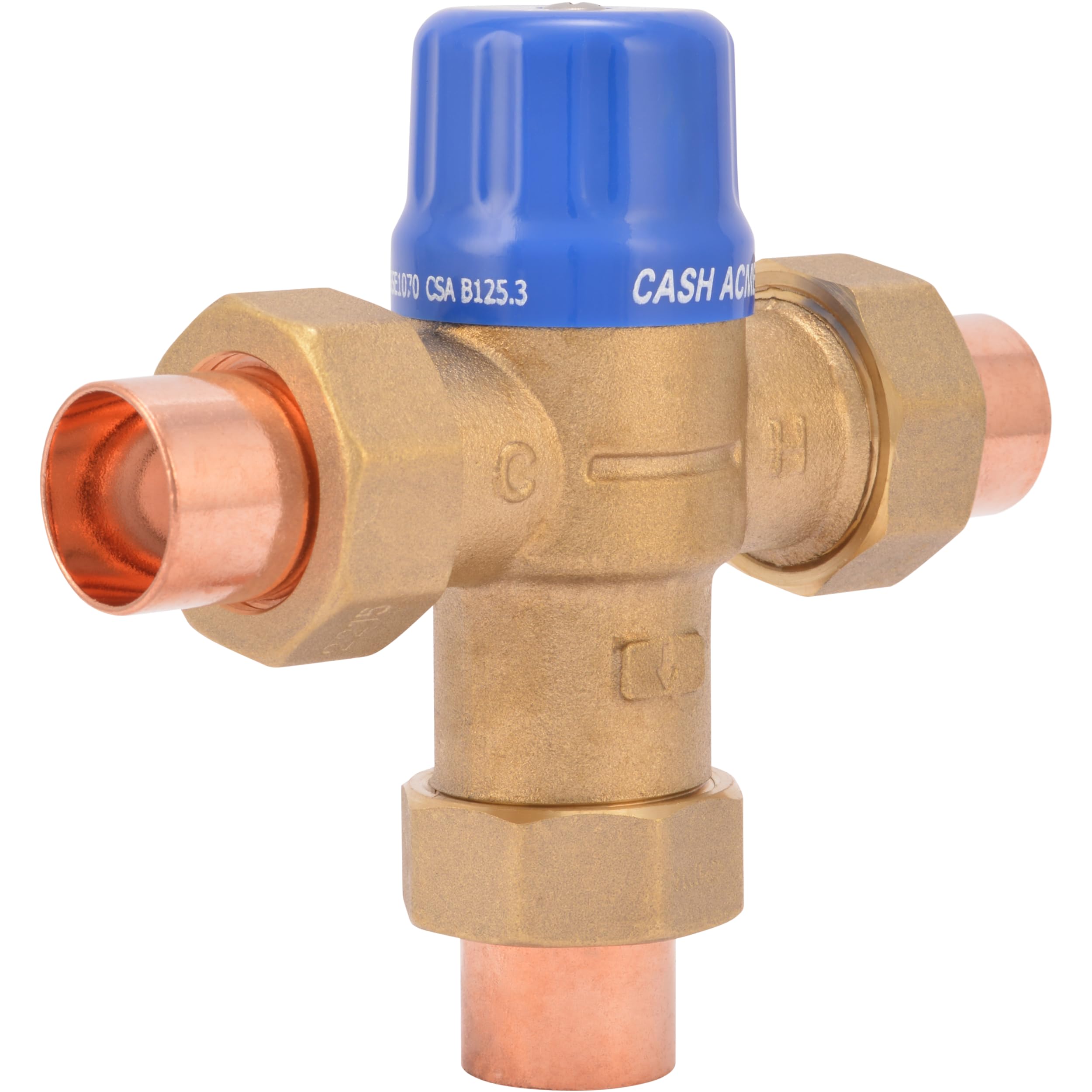
This mid-range valve is built for integration into copper piping systems using standard sweat (solder) connections, offering whole-house temperature moderation.
Its integral check valves prevent unwanted migration between hot and cold lines, and the adjustable temperature range (85-130°F) is factory set to a safe 120°F. Users report it effectively solves issues with excessively hot water from combi-boilers and provides consistent tempered output, extending the effective capacity of the water heater.
If you’re comfortable with soldering and need a reliable whole-house valve, this Cash Acme model is a proven performer.
Why it’s great
- Integral check valves enhance system safety and efficiency.
- Durable lead-free bronze construction for longevity.
- Adjustable temperature setting with a secure factory default.
Good to know
- Installation requires soldering skills and tools.
- Designed for 3/4″ piping, which is standard for whole-house mains.
6. Cash Acme 3/4 Inch HG110 Crimp Thermostatic Mixing Valve
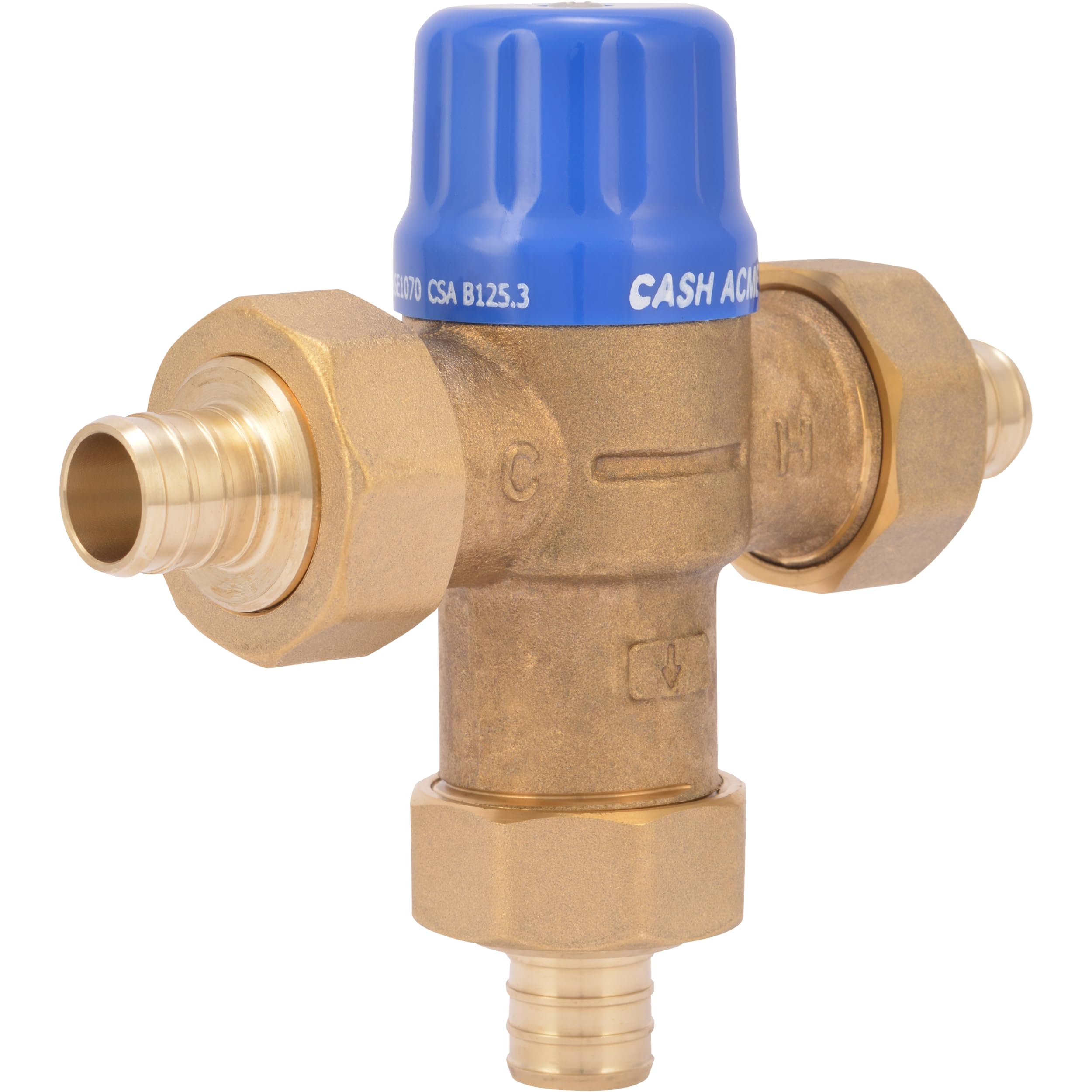
Similar to its sweat-connection sibling, this valve is tailored for PEX plumbing systems using crimp ring connections, simplifying installation for those with the proper tooling.
The barbed inlets and outlet accept 3/4″ PEX tubing, and the valve body is constructed from durable bronze. It’s praised for enabling safer hot water for children and for use with outdoor hose connections. A note from feedback: it may not perform ideally with hot water recirculation systems due to minimum flow requirements.
For PEX-based plumbing where you want integrated whole-house temperature control, this crimp version is an excellent fit.
Why it’s great
- Designed specifically for reliable integration into PEX crimp systems.
- Allows for a higher water heater setting without risk of scalding.
- Same robust construction and safety features as the sweat version.
Good to know
- Requires a PEX crimp tool for proper installation.
- May not be suitable for systems with a hot water recirculation loop.
7. Cash Acme HG110-D Thermostatic Mixing Valve with SharkBite Connections
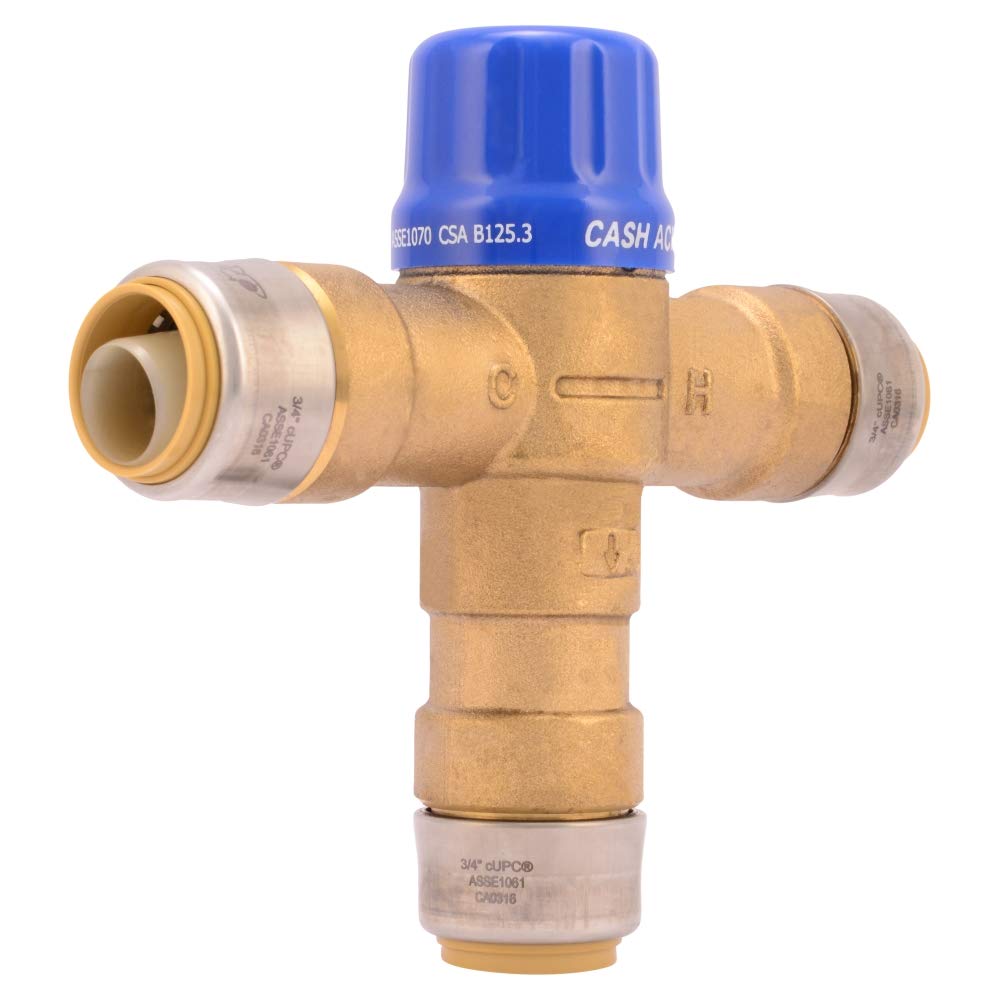
This valve offers the ultimate in installation convenience, featuring SharkBite push-to-connect fittings on all three ports for a tool-free, solder-free, and crimp-free setup.
It provides the same whole-house tempering performance as other Cash Acme HG110 models. Users confirm it works flawlessly for extending hot water supply by allowing a higher tank temperature. Be sure to verify upon receipt that all three SharkBite fittings are included, as early shipments occasionally missed one.
For DIYers or quick installations without specialized tools, this SharkBite version is a fantastic, time-saving solution.
Why it’s great
- SharkBite fittings allow for remarkably easy installation and future modifications.
- Ideal for working in tight spaces or for those without soldering/crimping tools.
- Delivers consistent, safe outlet temperature to protect against scalds.
Good to know
- Verify the package contains all three SharkBite connectors upon arrival.
- SharkBite fittings are a premium connection method, reflected in the cost.
8. Taco Forged Brass Mixing Valve, 1 to 20 gpm

A heavy-duty, general-purpose mixing valve built from forged brass, capable of handling high flow rates up to 20 gallons per minute for demanding residential or light commercial applications.
It uses standard sweat connections. Feedback is mixed; many users report decades of reliable service as a replacement part, while others note temperature control can be erratic or that it may not include necessary gaskets. It’s a traditional design best suited for those familiar with Taco’s product line.
For high-flow needs where robust construction is paramount, this valve is a contender, but ensure you have the components for a proper seal.
Why it’s great
- Forged brass body offers exceptional durability and pressure tolerance.
- High flow rate suitable for large homes or multiple fixtures.
- A known entity with a long history in the market.
Good to know
- May require separate purchase of sealing gaskets or flange kits.
- Some users report inconsistent temperature stability compared to newer thermostatic designs.
9. Fyeer 3-Way Thermostatic Mixing Valve, DN15

An entry-level thermostatic valve that provides basic temperature mixing functionality for point-of-use applications like bidets, pet washing stations, or preventing toilet tank condensation.
It features G1/2″ BSPP straight threads, which are not standard NPT. This is the source of most installation challenges—it requires specific washers or adapters for a leak-free connection in US plumbing. Savvy users who understand this distinction report good performance and value.
This valve offers core thermostatic safety at a very accessible point, but be prepared to manage the thread compatibility.
Why it’s great
- Extremely budget-friendly introduction to thermostatic mixing.
- Includes a failsafe feature that reduces flow if cold water supply fails.
- Effective for specialized tasks like controlling bidet water temperature.
Good to know
- Uses G1/2″ BSPP (straight) threads, not US NPT (tapered) threads, requiring adapters.
- Thread sealing can be finicky and may require extra tape or sealant.
10. Atmama Thermostatic Mixing Valve, 1/2 NPT

A value-oriented valve marketed with US-standard 1/2″ NPT threads, constructed from solid brass for durability in residential bathroom and shower applications.
It features a clear Fahrenheit scale and a safety button to access temperatures over 100°F. User experiences vary; some report perfect NPT threads and easy installation, while others found the threads to be straight (NPS), causing leakage unless heavily tightened or sealed. Performance is generally praised for temperature stability.
This is a capable valve if you verify thread compatibility during installation and are prepared to use robust sealing methods.
Why it’s great
- Solid brass one-piece body promises good longevity.
- Easy-to-read Fahrenheit markings and safety override button.
- Effective for creating a safe water temperature for children’s baths.
Good to know
- Thread type may not be consistently true NPT; be prepared for potential sealing challenges.
- Long-term durability in some installations has been questioned after several months.
11. TreMax Thermostatic Mixing Valve, Solid Brass
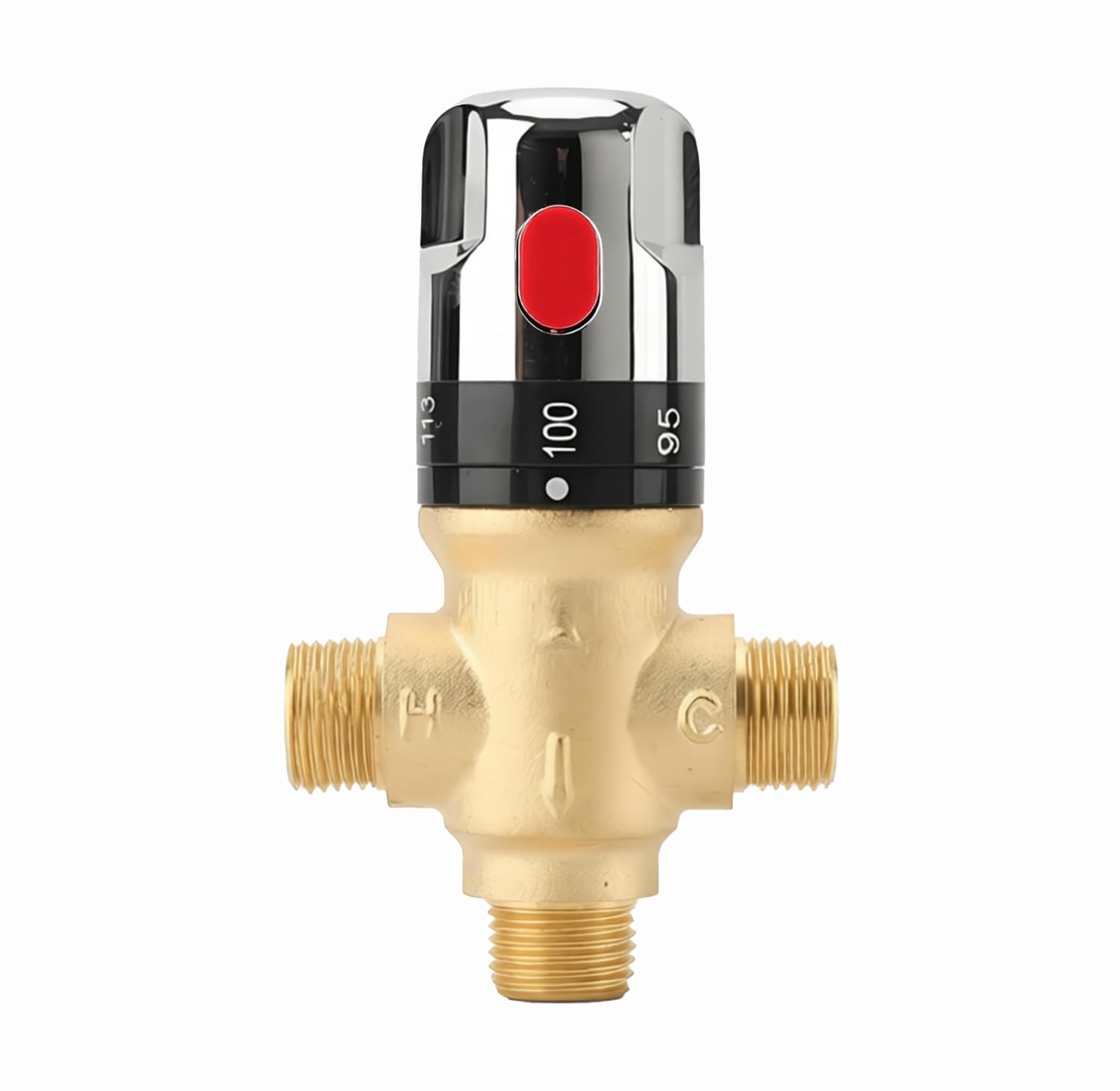
Another solid brass valve positioned in the value segment, explicitly advertising US Standard 1/2″ NPT threads for easier compatibility with common fittings.
It performs well for stabilizing washing machine water temperature in cold climates and for pet grooming stations. Users note it can be slow to respond to sudden temperature changes (2-3 seconds) and, like others, may experience reduced water pressure. It represents a step up from the most basic models with clearer US threading claims.
For straightforward residential applications where NPT compatibility is a priority, the TreMax valve is a sensible mid-tier choice.
Why it’s great
- Advertises true US NPT threads, reducing adapter headaches.
- Effective at providing a constant warm water supply for appliances and animal washing.
- Solid brass construction at a competitive price point.
Good to know
- Some users report a noticeable drop in water pressure after installation.
- Thermostatic response time is not instantaneous; there’s a slight lag.
Understanding the Specs
Thread Type: NPT vs. NPS/BSPP
This is the most critical spec for installation. NPT (National Pipe Tapered) threads are the US standard and seal via thread interference with tape or dope. NPS (National Pipe Straight) or BSPP (British Standard Pipe Parallel) threads are common internationally and seal via a washer compressing against a flat face. Using the wrong fitting will cause leaks.
Thermostatic vs. Pressure-Balancing
A thermostatic mixing valve regulates output temperature by sensing and adjusting the mix ratio, compensating for fluctuations in inlet temperatures. A pressure-balancing valve only reacts to pressure changes. For scald prevention and temperature stability, a thermostatic valve is superior and is what’s reviewed here.
Integral Check Valves
These are small, internal one-way valves that prevent hot water from migrating into the cold line (thermosiphoning) and vice-versa. They protect your plumbing system, maintain temperature accuracy, and are a key feature in quality whole-house valves.
Temperature Range & Adjustment
Valves have an adjustable output range, typically from about 85°F to 130°F. Many have a tamper-resistant lock or a limiting screw to prevent accidental adjustment beyond a safe maximum, which is crucial for child safety and code compliance in many areas.
FAQ
What is the main purpose of a 1 inch mixing valve?
Can I install a mixing valve myself?
Why does my new mixing valve leak at the threads?
Do mixing valves restrict water flow?
How often should a mixing valve be replaced?
Final Thoughts: The Verdict
For most users, the best 1 inch mixing valve winner is the Watts USG-B-M2 because it delivers reliable, code-compliant scald protection with easy installation for a critical point-of-use fixture. If you want whole-house tempering with professional ease, grab the Cash Acme HG110-D with SharkBite Connections. And for budget-conscious projects where you can manage thread compatibility, nothing beats the value of the Fyeer 3-Way Thermostatic Valve.
