
Buying a refrigerator in the “mid-size sweet spot” sounds simple… until you’re standing in your kitchen with a tape measure, a door that can’t swing fully open, and a delivery team asking, “Where do you want it?”
Because here’s the truth: the number on the listing is rarely the hard part. The hard part is everything the number doesn’t tell you—how the shelves actually fit your meal-prep containers, whether the freezer stays cold enough for ice cream (and stays that way), how noisy the compressor feels at night, and whether the “stainless look” hides fingerprints or highlights them.
This guide is built around real-life friction points that show up again and again in owner feedback: delivery dents, confusing dimension listings, freezers that “kind of freeze,” doors that need to be reversed (and why that’s often a two-person job), and the sneaky little reason some fridges feel spacious while others feel cramped with the same stated capacity.
Below, you’ll find 8 carefully chosen options that cluster around that sweet spot—from compact ADA-friendly top-freezers that feel made for apartments and RVs, to tall convertible upright units that can flip between fridge and freezer mode for bulk storage, garage overflow, and seasonal needs.
In this article
- How to choose the right close-capacity fridge for your space and habits.
- Quick comparison table of 8 standout models.
- In-depth reviews of each refrigerator, with pros and cons.
- How fridge capacity feels in real life (and how to make it feel bigger).
- FAQ: fit, freezer performance, noise, and setup—answered clearly.
How to Choose the Right 13 Cu Ft Refrigerator (Without Getting Tricked by “Specs”)
Let’s set expectations the smart way: a refrigerator isn’t “good” because it has a long bullet list. It’s good because it fits your space, keeps food consistently cold, freezes the way you expect, and stays pleasant to live with day after day. In this size range, you’re typically buying a fridge for one of three lives:
- Everyday kitchen life: the main fridge for an apartment, small home, studio, or basement kitchen.
- Overflow life: a second unit for bulk buys, holiday prep, beverages, or extra freezer space.
- Special-space life: an RV, boat, workshop, office, or a tight niche where full-size fridges don’t fit.
1. Start with the “real fit” checklist (this prevents most regret)
Before you fall in love with a finish or a feature, make sure the fridge can physically live where you need it—comfortably. The reason so many appliance returns happen isn’t because the fridge is “bad.” It’s because it’s wrong for the space. Here’s the fit checklist that avoids 90% of problems:
- Width and height: measure the opening at multiple points. Floors and cabinets are often not perfectly square.
- Depth (the big one): measure from the wall to the edge of your counter, then decide what you can tolerate. A few extra inches can change how a kitchen walkway feels.
- Door swing clearance: a fridge that fits “closed” can be miserable “open.” If you can’t open the door wide enough, you can’t slide shelves out or fully use crispers.
- Hinge and handle clearance: hidden hinges can help a fridge look seamless, but you still need space above and beside it.
- Ventilation breathing room: even frost-free units need airflow. Tight installations trap heat, and trapped heat makes cooling work harder.
A tiny but powerful habit: measure the space, then write the numbers down and keep them in your notes app. That way you’re comparing models against your space, not against your memory.
2. Understand “usable space” (this is where the best choices separate)
Two refrigerators can claim similar capacity and feel completely different inside. Why? Because usable space isn’t just volume—it’s geometry. These are the layout details that make a fridge feel either effortless or irritating:
- Shelf count and shelf style: adjustable glass shelves can feel more stable and easier to wipe, while wire shelves can allow more airflow in freezer zones.
- Crisper shape: two crispers usually means better produce organization, but check whether you’ll have to crouch deeply to access them.
- Door bin “truth”: door storage is convenient, but it’s also the warmest zone. Great for drinks and condiments—less ideal for things that spoil easily.
- Freezer proportion: a top freezer can be a blessing or a frustration depending on how you eat. If you’re an “ice cream and frozen meals” household, freezer performance and space matter more than you think.
If your grocery routine is heavy on tall bottles, meal prep containers, and leftovers, prioritize adjustability and door storage. If your routine is heavy on frozen items, prioritize a freezer that truly freezes and stays stable.
3. Top-freezer vs. convertible upright: pick the “life strategy” first
In this guide you’ll see two main shapes:
- Top-freezer refrigerators (two-door): These feel like “a real fridge” in a compact form. They’re familiar, intuitive, and typically the easiest for daily kitchen use. They also tend to do well in RV or office use because the layout is simple and the footprint can be manageable.
- Convertible uprights (freezer ↔ refrigerator mode): These are the problem-solvers for overflow life. They’re tall, vertical, and built to store a lot without digging through a chest. The big advantage is flexibility: freezer in winter bulk-buy season, fridge in summer party season, and switch when your needs change.
The tradeoff is important: a convertible upright is usually a single-zone machine. It’s either a refrigerator or a freezer—not both at once. That’s perfect for many households, but it’s not a replacement for a classic fridge/freezer combo if you truly need both zones daily.
4. Temperature control: “easy” beats “fancy” (but precision matters)
Owners consistently reveal the same reality: controls only matter if they help you maintain stable temps without drama. In this size range, controls usually fall into two types:
- Electronic controls: usually easier to fine-tune and repeat. Many people love the “set it and forget it” feel and the quick feedback.
- Dial or simple sliders: can work beautifully, but they require a little more patience and testing—especially if your freezer is sensitive. A manual dial often needs small adjustments and time to stabilize.
If you’re the kind of person who wants confidence without fiddling, prioritize models with electronic controls. If you don’t mind a bit of tinkering, a simpler control can be totally fine—just plan to verify temps with a fridge thermometer for the first week.
5. Freezer performance: the “ice cream test” is more revealing than any spec
A recurring theme in real-life reviews for compact top-freezer models is this: the refrigerator section can feel excellent, but the freezer can be inconsistent—especially for ice cream and other items that demand a deep, stable freeze. Here’s the practical way to predict and manage freezer happiness:
- If you store mostly frozen meat and boxed foods: you may be fine even with a modest freezer, because those items are less sensitive than ice cream.
- If you store ice cream, premium frozen desserts, or lots of frozen meals: treat freezer performance as a primary buying factor.
- If your freezer feels weak: check how full it is (empty freezers warm faster), how often you open it, and whether the airflow vent is blocked.
One advanced tip that feels “too simple” but works: keep a few freezer-safe ice packs in the freezer. They add thermal mass, helping the freezer hold temperature better during door openings and normal defrost cycles.
6. Delivery reality: dents happen—plan for it like a pro
Multiple owners across brands report the same thing: appliances can arrive with scratches or dents even when the outer box looks fine. This isn’t just annoying—it changes your decision making. So here’s the checklist:
- Inspect immediately: focus on door corners, edges, and the front face (common impact zones).
- Check the door seal: a strong seal matters more than cosmetics because it affects cooling efficiency and frost control.
- Let it settle: if a fridge has been moved or tilted, many experienced owners let it rest before powering on. This helps avoid early headaches.
- Keep packaging until it runs cold: don’t toss everything until you’ve confirmed stable temperatures.
If you treat delivery as part of the purchase—not an afterthought—you’ll make better decisions and avoid regret.
Quick Comparison: 8 13 Cu Ft Refrigerator Alternatives That Actually Make Sense
Use this table to quickly match your needs to the right style, then scroll to the reviews for the “real life” details— like freezer strength, noise impressions, delivery risk, and what owners love (or complain about) after weeks of use.
On smaller screens, swipe or scroll sideways to see the full table.
| Model | Type | Best match | Real-life strength | Amazon |
|---|---|---|---|---|
| Frigidaire 11.6 Cu. Ft. Compact ADA Top Freezer (Brushed Steel) | Top freezer | Main kitchen fridge for apartments, studios, offices, RV builds | Stable everyday cooling feel + electronic controls + frost-free convenience | Amazon |
| BLACK+DECKER 14.6 Cu. Ft. Top Mount Refrigerator (Black) | Top freezer | Families who want “bigger than compact” without going full giant | More breathing room for weekly groceries; simple, classic two-door living | Amazon |
| Galanz 12.0 Cu. Ft. Retro Dual Door Top Freezer (Red) | Style pick | Design-first kitchens, party fridges, “statement piece” shoppers | Retro look that earns compliments—when you want personality, not plain | Amazon |
| Upstreman 11.0 Cu. Ft. Upright Convertible Freezer/Refrigerator (UP11) | Convertible | Overflow storage, garage backups, organized bulk food zones | Door bins + shelves make upright storage easy to see and easy to grab | Amazon |
| BLACK+DECKER 14 Cu. Ft. Convertible Freezer Refrigerator (BUC1400XB) | Convertible | Bulk buyers, meal preppers, seasonal freezer-to-fridge switching | Big vertical storage + frost-free convenience + easy mode switching | Amazon |
| BLACK+DECKER 12.1 Cu. Ft. Top Mount Refrigerator (White) | Top freezer | Smaller kitchens that still want a “real fridge” layout | Compact footprint feel with frost-free convenience and familiar layout | Amazon |
| Frigidaire 10.1 Cu. Ft. Compact ADA Top Freezer (Black) | Top freezer | Smallest-space solutions, RV replacements, tight kitchen cutouts | Compact, frost-free, easy controls—popular “fits where others won’t” pick | Amazon |
| Upstreman 11.6 Cu. Ft. Double Door Top Freezer (Stainless) | Value pick | Value shoppers who still want frost-free + quiet operation | “Feels bigger than expected” storage, quiet running, strong space-to-footprint ratio | Amazon |
In‑Depth Reviews: 8 Close‑Capacity Refrigerators That Feel Good to Live With
Now we’ll go model by model. This is not a “copy the listing” situation. I’m focusing on what matters in real kitchens: fit friction, freezer truth, noise vibe, delivery risks, and the small details that quietly decide whether you love your fridge—or tolerate it.
1. Frigidaire 11.6 Cu. Ft. Compact ADA Top Freezer (Brushed Steel) – The “Just Works” Daily Driver

If you want a refrigerator that feels like a grown-up appliance—without demanding full-size space—this Frigidaire is the most balanced choice in the group. It’s compact, but it doesn’t feel like a dorm fridge pretending to be something else. The layout is classic top-freezer, the controls are electronic, and the “frost-free” reality means you’re not signing up for a weekly defrost ritual just to keep it performing well.
What pushes this into “best overall” territory is how consistently it fits real use cases that punish weaker fridges: office kitchens that open all day, studio apartments where the fridge sits near living space, and RV or mobile builds where people need steady cooling and simple operation. Owners using it in non-traditional setups praise the way it holds temperature without freezing everything in the back—an underrated win. That “no surprise freezing” detail is not just comfort; it’s less wasted produce, fewer weird texture changes, and less frustration.
This model also highlights something most buyers learn too late: the listing dimensions matter, but the real dimensions matter more. One owner reported that the listed depth and width were effectively swapped compared to what they received, which changed how it fit next to cabinetry. That’s not a small issue—it’s the difference between “perfect fit” and “now it blocks the walkway.” The practical takeaway: measure your space, then double-check orientation (depth vs width) before you commit your kitchen layout to a spec sheet.
Inside, the key strengths are organization and repeatability. Adjustable shelves let you build your own “food rhythm” (meal prep week, holiday week, snack-heavy week), while crispers create a predictable zone for produce. The freezer has its own shelf and door bins, which sounds basic—but the ability to keep frozen items from becoming a collapsed pile is the difference between a freezer you use and a freezer you avoid.
Where this fridge can disappoint certain shoppers is not cooling—it’s expectations. If you’re coming from a giant kitchen refrigerator with wide shelves, you’ll feel the difference. It can also require bending or kneeling for lower shelf access, and one owner noted that “more door space” doesn’t always mean more shelf space, depending on what you store. This isn’t a flaw so much as a reminder: compact fridges reward organized habits.
Why you’ll like it
- Balanced “daily driver” feel – A compact fridge that still feels like a real kitchen appliance.
- Electronic control confidence – Easier to dial in consistent temps than pure knob-only designs.
- Frost-free convenience – Less maintenance, fewer performance surprises over time.
- Real-world versatility – Works for apartments, offices, and space-conscious builds where stability matters.
Good to know
- Double-check dimensions – Some buyers have flagged listing dimension confusion; verify depth vs width before planning your installation.
- Compact shelves may feel smaller than expected if you store wide platters or oversized containers.
- Lower compartments can require bending—plan your daily-use items on middle shelves.
Ideal for: shoppers who want a dependable, frost-free, compact top-freezer fridge that behaves predictably and fits real daily life without drama.
2. BLACK+DECKER 14.6 Cu. Ft. Top Mount Refrigerator (Black) – The Space Upgrade Without the Giant Footprint

This BLACK+DECKER is for the buyer who’s thinking: “I don’t need a luxury refrigerator. I need room.” It’s a classic two-door top-freezer layout, sized to feel more like a primary household fridge than a “backup” unit, with adjustable temperature control and frost-free operation that removes the constant maintenance loop.
Owners who like it tend to describe it with one phrase that matters: basic, not fancy—reliable. That’s a mindset match. If you’ve ever owned a “feature-heavy” fridge that created problems, you understand the appeal of a simpler appliance that does the job without acting like a project. And for many households, this size is the comfort zone: enough room for weekly groceries, leftovers, and real freezer storage, without the massive footprint that can dominate a kitchen.
The biggest reason this model needs an honest, expert-style review is freezer expectations. Multiple owners report a pattern: the refrigerator section can be excellent at keeping food cold, but the freezer can struggle to freeze certain items solid—especially ice cream. That’s not a small complaint. Ice cream is a freezer stress test: it reveals whether your freezer is maintaining a deep, stable freeze or just hovering in “almost frozen” territory.
If you’re considering this fridge, here’s the practical decision filter:
- If you mainly use the freezer for ice cubes, frozen vegetables, boxed foods, and occasional meat: you may be happy—especially if the refrigerator side is the main priority.
- If you’re an ice cream household: or you store premium frozen desserts, expect to do more temperature tuning—or choose a different model known for stronger freezing.
Now for the “why.” In many top-freezer designs, the freezer temperature and refrigerator temperature are connected through airflow and venting. Owners describe vents or sliders that adjust how much cold air moves from freezer to fridge. If that airflow isn’t tuned correctly—or if the freezer is constantly opened, or if the unit is in a warmer environment—the freezer can be the first place you notice disappointment. The good news: tuning and stabilization often improve results. The bad news: some buyers want a freezer that’s perfect without any tinkering.
There’s also a very real niche benefit buried inside owner comments: this unit has been used in tight-access living situations (like a boat), where moving it in and out is physically difficult. One owner shared that removing doors and shelves can reduce weight and make tricky installs possible. That’s not marketing copy—that’s real-life problem solving. If your space has narrow stairs, tight hallways, or awkward turns, that’s useful knowledge.
Why it works for many homes
- More breathing room – Feels closer to a full household fridge than many compact alternatives.
- Classic layout – Two-door top freezer design is intuitive and easy to organize.
- Frost-free convenience – Less upkeep; fewer ice build-up headaches.
- Simple “reliable” vibe – Appeals to people who are tired of finicky appliances.
Good to know
- Freezer complaints exist – Some owners report ice cream doesn’t freeze solid; if that’s your must-have, choose carefully.
- Controls may feel “crude” to some users—functional, not fancy.
- As with many appliances, delivery condition matters; inspect immediately.
Ideal for: shoppers who want a bigger, classic top-freezer refrigerator for everyday kitchen use, and who prioritize refrigerator performance and overall space more than perfect ice-cream-grade freezing.
3. Galanz 12.0 Cu. Ft. Retro Dual Door Top Freezer (Red) – The “It Makes the Room” Refrigerator

Some people buy refrigerators like they buy washing machines: “Please be invisible and reliable.” Other people want a kitchen with personality. If you’re in the second group, the Galanz Retro is the kind of fridge that changes the mood of the room. Owners describe it as “awesome,” “gorgeous,” and an “eye candy” piece that gets compliments from guests. And honestly? That matters—especially in small kitchens where every object is visible.
But a design-first refrigerator deserves a design-first review style: you must know what you’re trading for the vibe. Owner feedback shows a split experience. Some buyers love it and feel it gives them the space they needed in a smaller kitchen, especially when local stores don’t stock mid-size models. Others report serious issues: cooling failures after a short period, a frustrating warranty experience, and delivery damage like cracked plastic or broken parts. That doesn’t mean every unit fails—but it does mean you should treat this purchase with more “inspection discipline” than average.
Let’s talk about the thermostat dial, because this is where many buyers get tripped up. A manual dial is not “bad,” but it’s less direct than electronic controls. It often requires small adjustments and time. One owner mentioned a sweet spot where one setting seemed too cold (freezing items in a corner), while a lower setting felt too warm. That’s the nature of a dial: you’re tuning a system, not selecting a precise number. If you’re patient and willing to learn the fridge’s personality, it can be totally workable. If you want precision without thought, a dial can feel like effort.
Noise is another real-life factor. The product info suggests a low-noise target, but owners mention a humming sound or fan rubbing in the freezer area in some cases. Here’s the expert take: occasional hums, clicks, and “breathing” sounds can be normal in modern refrigeration (especially during defrost cycles or compressor changes). But persistent rubbing or rattling isn’t something you should accept as “normal.” It can often be related to shipping shifts, panel alignment, or parts not seated correctly. In other words: if it sounds wrong, check it early.
The freezer space is also worth framing correctly. In a fridge like this, the freezer is functional—but not massive. If you’re a heavy freezer user, you may crave more freezer volume. If the freezer is for ice, a few staples, and occasional frozen meals, it can be a fun and satisfying compromise.
Why people love it
- Retro style that pops – A genuine “statement piece” refrigerator for small kitchens and design-first homes.
- Feels like a mid-size unicorn – Some buyers choose it because local stores don’t stock this size range.
- Functional top-freezer layout – Familiar organization with door storage and shelves.
- Compliment magnet – Guests notice it; owners enjoy it.
Good to know
- Quality experience can vary – Some owners report cooling failure or frustrating warranty interactions.
- Manual dial tuning can take patience; it’s less “set it and forget it” than electronic controls.
- Delivery damage reports exist—inspect carefully and early.
Ideal for: shoppers who want a bold retro look and are willing to inspect on arrival, tune settings patiently, and prioritize style as part of the value.
4. Upstreman 11.0 Cu. Ft. Upright Convertible Freezer/Refrigerator (UP11) – The “Everything Has a Shelf” Solution
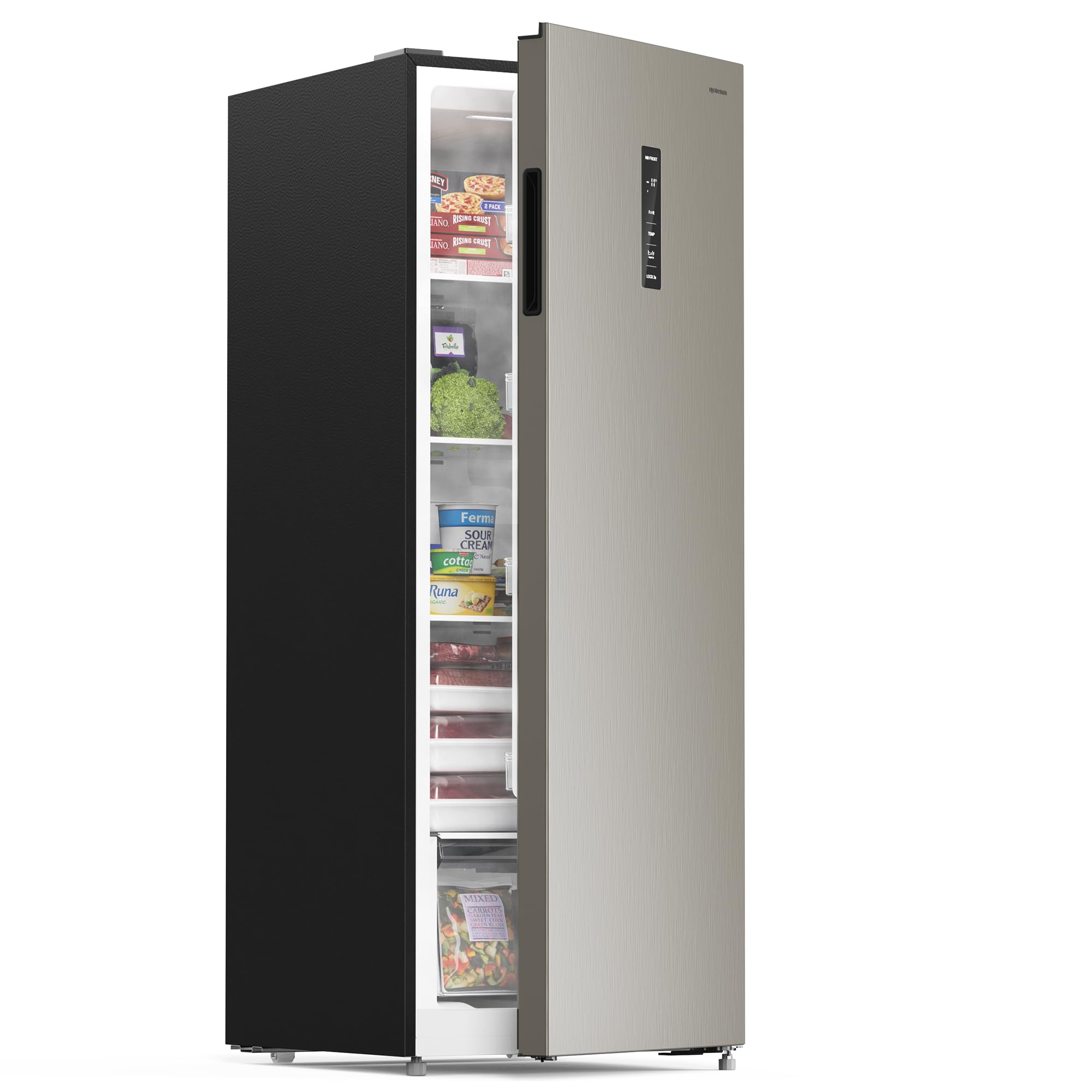
A tall upright convertible unit is not a “kitchen fridge replacement” for most people. It’s a storage strategy—and when you pick the right one, it feels like you unlocked a new level of calm. The Upstreman UP11 is built for that calm: shelves plus full-width door bins that make it easy to categorize food and avoid the classic bulk-storage problem—buying lots of food, then forgetting you own it.
The biggest benefit of this style is visibility. Chest freezers win on raw capacity, but they lose on usability. People bury items. Items get freezer-burned because they fall to the bottom and disappear. With an upright, you’re working with shelves, not layers. You can build zones:
- Top shelf: the “use this week” zone (leftovers, prepped ingredients).
- Middle shelves: daily staples you reach for regularly.
- Lower shelves: bulk items you don’t need often.
- Door bins: small and light items that get lost elsewhere (butter, frozen bread, smaller packages—depending on mode).
Now the expert nuance: door bins are incredibly convenient, but they’re also the most temperature-exposed area because they move with the door. In refrigerator mode, that’s usually fine for drinks and condiments. In freezer mode, it’s still useful— but it’s smarter for boxed goods and less-sensitive items than for high-fat desserts (which soften faster). This is how you get the best out of the design: use the bins for organization, not for your most fragile frozen foods.
Upstreman emphasizes smart electronic control and tight temperature adjustment, and the unit includes a temperature lock to prevent accidental changes. That matters more than it seems in a garage or family setting: people bump buttons, kids press things, and suddenly your carefully set temperature shifts. A lock is a small feature that prevents big frustration.
Because owner reviews on newer models can be limited, the most meaningful real-life feedback so far is about fit, finish, and delivery condition. One buyer loved the size and color but reported a dent across the door from delivery strapping. That’s not a performance flaw, but it’s a reality: tall uprights are more vulnerable to delivery pressure points. If cosmetic condition matters to you, this is a model where “inspect on arrival” is non-negotiable.
If you want overflow storage that can adapt across seasons—freezer during holiday bulk buys, refrigerator for summer beverages—this is the kind of product that makes your main kitchen fridge feel bigger without replacing it.
Why it’s useful
- Convertible mode flexibility – Switch between fridge and freezer mode as your seasons and habits change.
- Door bins + shelves – Organization that prevents the “lost food” problem common in bulk storage.
- Frost-free convenience – No manual defrost routine to keep performance stable.
- Control lock – Helps prevent accidental temperature changes in busy homes.
Good to know
- Delivery dents have been reported—inspect immediately, especially the door face.
- Convertible units are typically single-zone: it’s fridge or freezer, not both simultaneously.
- Door bins are great for organization, but store your most sensitive frozen items deeper inside in freezer mode.
Ideal for: households that need organized overflow storage and love the idea of switching between fridge and freezer mode depending on the season.
5. BLACK+DECKER 14 Cu. Ft. Convertible Freezer Refrigerator (BUC1400XB) – The “Garage MVP” With a Big Caveat
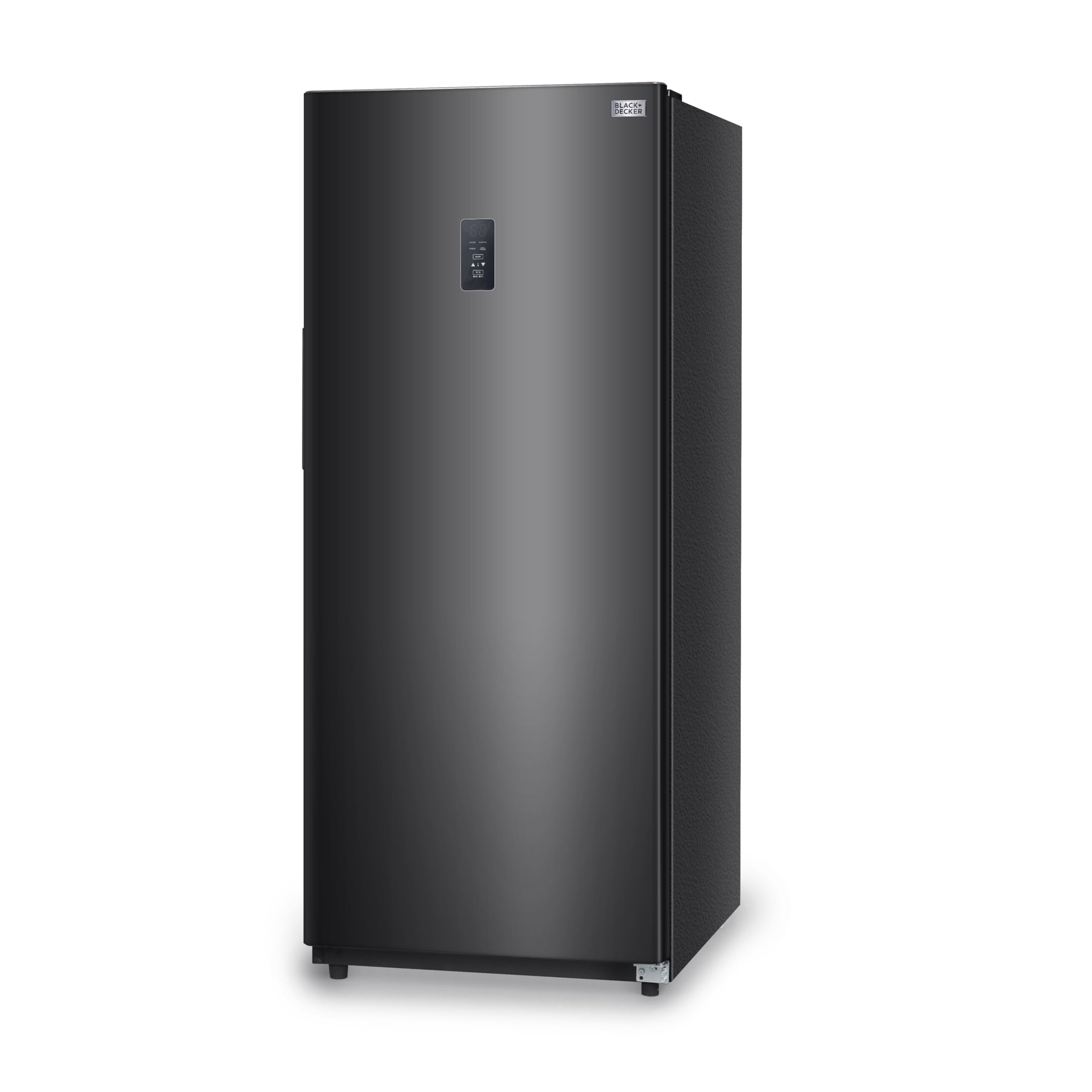
When convertible upright units are good, they are life-changing for bulk storage. They take the chaos out of “extra food life” by making everything visible and reachable. This BLACK+DECKER is designed to do exactly that: switch between freezer mode and refrigerator mode, stay frost-free, and give you shelves (not piles) so you can stop losing food to the bottom of a chest freezer.
The strongest positive owner feedback is about the “first impression performance”: fast temperature pull-down, even after being transported in hot weather, quiet operation with a low hum, and a strong door seal that feels substantial. Owners who bought one and loved it sometimes go back for a second unit—which is one of the most meaningful compliments in appliance buying. It suggests the product solved a real lifestyle problem, not just a temporary need.
The vertical form factor also solves a hidden problem: food visibility reduces waste. A tall upright makes it easier to see what you own. That encourages rotation: you use older items first, you notice what’s running low, and you avoid “mystery bags” that turn into freezer-burned garbage. If you’ve ever thrown away food because you forgot it existed, this style can pay for itself in reduced waste and stress.
Now the caveat—and it’s important. One owner bought a similar-style convertible unit specifically to store breastmilk and needed a stable deep-freeze temperature. They reported confusing temperature fluctuations even without frequent opening, and also reported poor customer support access. That is not a casual complaint. It highlights the key truth about convertible units: they are excellent for everyday bulk storage, but if you’re using the freezer for highly temperature-sensitive, high-stakes storage, you should verify stability with a dedicated freezer thermometer and give the unit time to prove itself.
Here’s the expert framework to decide if this unit fits your risk tolerance:
- Low-stakes freezer use (most households): bulk meats, frozen vegetables, boxed foods, prep ingredients, party ice—this is where a convertible upright shines. Even small fluctuations usually don’t matter in a meaningful way for these use cases.
- High-stakes deep-freeze use: if you need consistent deep-freeze behavior (medical storage, strict long-term preservation, highly sensitive items), you must verify with thermometers, and you may prefer a dedicated freezer-only unit built specifically for that purpose.
Also note the physical reality: this unit is tall. Owners emphasize “measure first.” And while the upright form makes food access easy, it can still allow “burying” if you overload it. The best way to avoid that is to treat shelves as categories: protein shelf, veg shelf, ready meals shelf, breakfast shelf—simple labels in your head create order quickly.
Why it’s a bulk-storage favorite
- Convertible mode flexibility – Switch between fridge and freezer depending on your needs.
- Upright visibility – Easier to see what you have; less waste than deep pile storage.
- Frost-free convenience – No manual defrosting, less maintenance stress.
- Strong seal + quiet hum – Owners often mention solid build and unobtrusive noise.
Good to know
- Temperature stability matters for sensitive use – If you need strict deep-freeze consistency, verify with a thermometer and test before trusting it fully.
- It’s tall—measure height clearance and planned placement carefully.
- Overloading can still “bury” items; organization habits maximize the benefit.
Ideal for: bulk buyers and meal preppers who want a flexible, frost-free upright that can act as a seasonal fridge or freezer—especially for garage overflow and second-unit life.
6. BLACK+DECKER 12.1 Cu. Ft. Top Mount Refrigerator (White) – Clean Look, Compact Feel, Mixed Freezer Stories
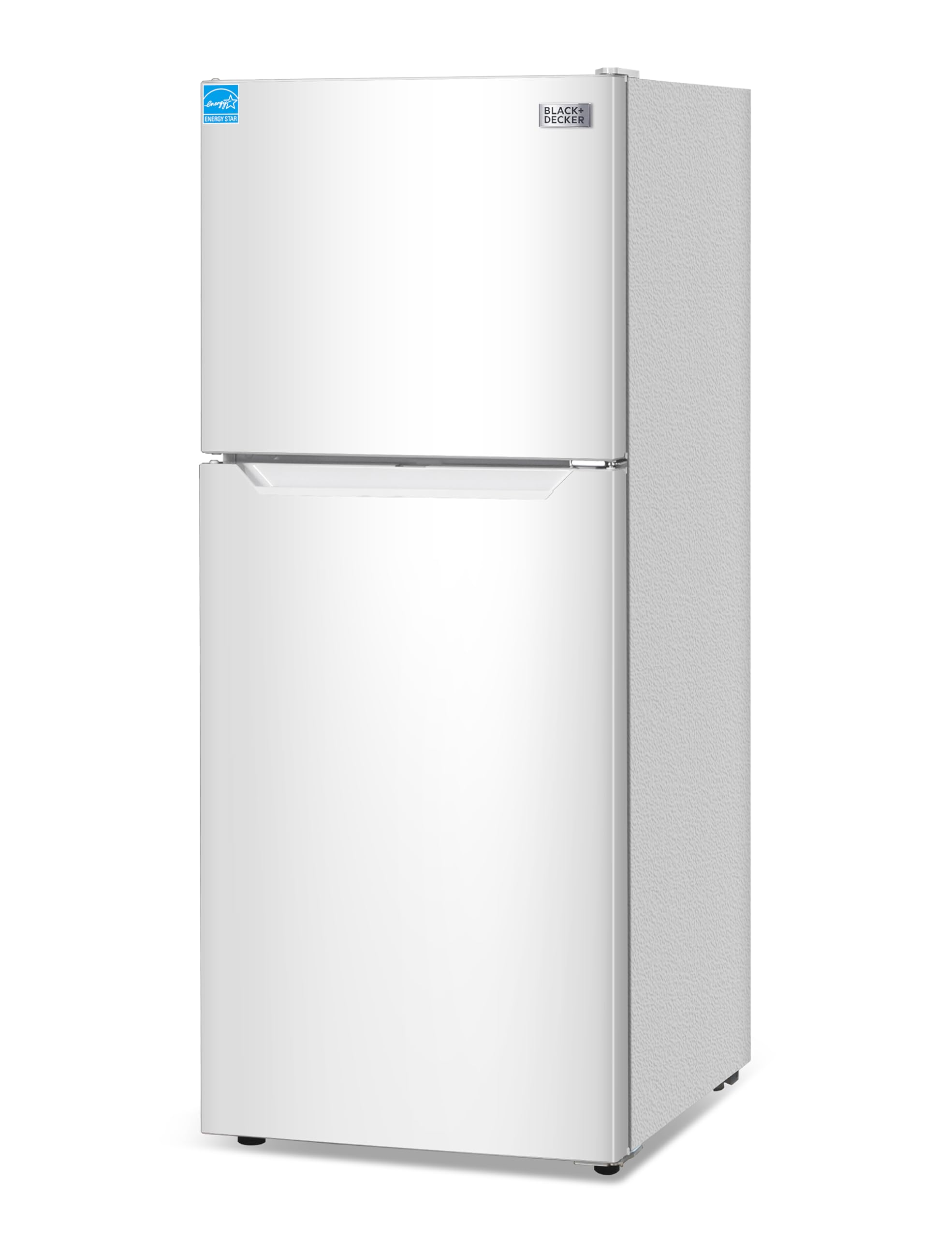
If you want a refrigerator that looks clean, blends into a bright kitchen, and gives you a familiar two-door layout without dominating the room, this 12.1 cu. ft. BLACK+DECKER is an appealing candidate. The footprint is designed for “smaller spaces,” but it still gives you a true top freezer and separate refrigerator storage—meaning it feels more like a household fridge than a mini fridge.
Owners who like it tend to like it for the exact reasons you’d expect: it looks good, it’s spacious relative to its footprint, and it’s quiet enough for non-kitchen placements (one owner described it as whisper quiet, with only clicks at night). That’s valuable for apartments and studio-style living where the fridge noise can become part of your daily soundtrack.
However, this is another model where owner feedback shows a consistent tension: the refrigerator compartment can be very good at keeping food cold, while freezer performance can be more divisive—especially for ice cream. Some owners report ice cubes eventually freezing but ice cream staying soft. Others feel the controls are crude or limited and that the freezer never reaches “deep freeze” confidence.
Here’s how to read that feedback like an expert instead of a frustrated shopper:
- Freezer dissatisfaction often comes from expectations + use style. If you open the freezer frequently, store high-fat desserts, or keep it underfilled, you’ll notice weakness faster.
- Some environments are harder. Units placed in hotter rooms or enclosed spaces may struggle more.
- Control simplicity can feel limiting. If you want precision tuning, a simpler control system can feel like you’re guessing.
There is also a very practical gem in the owner ecosystem: some users pair smaller refrigerators with a surge protector designed for fridges that includes a delay function after power fluctuations. That’s not required for everyone, but in regions with frequent surges or brownouts, it can help protect compressors and prevent short-cycling stress.
So who should buy this? It’s best for shoppers who want a clean white top-freezer fridge with frost-free convenience and a compact footprint, and who treat the freezer as a “normal freezer” rather than a deep-freeze vault. If your freezer needs are heavy—or you’re sensitive to the idea of “maybe it freezes ice cream, maybe it doesn’t”—choose one of the Frigidaire models or pair this with a dedicated freezer strategy.
Why it fits many homes
- Clean white look – Bright, simple, and easy to blend into many kitchens.
- Familiar two-door layout – A real top-freezer experience in a smaller footprint.
- Frost-free convenience – Less maintenance and fewer ice build-up headaches.
- Quiet impression (for many) – Some owners describe it as whisper quiet in normal rooms.
Good to know
- Freezer performance is mixed – Some owners report soft ice cream and weaker deep-freeze behavior.
- Controls may feel basic; this is a “simple appliance” experience, not a tech-forward one.
- Inspect on delivery—cosmetic issues can happen even when boxes look fine.
Ideal for: smaller kitchens that want a clean, compact top-freezer fridge and prioritize everyday refrigeration more than deep-freeze performance.
7. Frigidaire 10.1 Cu. Ft. Compact ADA Top Freezer (Black) – The “Fits Where Others Don’t” Winner

This Frigidaire 10.1 is the refrigerator you buy when your space is the boss. If you’re replacing a built-in RV fridge, trying to solve a tiny kitchen cutout, or building a compact living setup, this model stands out because it behaves like a real two-door refrigerator—just scaled down thoughtfully.
Owners who install it in RVs and trailers often describe the experience with relief: “perfect fit,” “cooled faster,” and “more space than the old built-in.” That matters because RV living punishes weak appliances. Heat buildup, airflow limitations, constant movement, and frequent door openings expose flaws quickly. When people report stable performance in those conditions, it’s a meaningful vote of confidence.
In a home or apartment, the appeal is simple: it’s frost-free, it has electronic controls, it includes adjustable shelves and crispers, and it avoids the “manual defrost misery” that turns small fridges into chores. And because it’s compact, it can fit in rooms where a larger unit would force compromises—like moving cabinets, shrinking walkways, or sacrificing storage.
The biggest real-life risk with this model isn’t function—it’s delivery condition. Owners note that units can arrive scratched or dented even when the packaging looks normal. That’s not unique to this brand, but it shows up often enough in compact appliance buying that it’s worth repeating: inspect immediately, especially the front and corners.
Here’s the expert way to maximize happiness with this size:
- Use the freezer for “smart staples,” not everything. Keep it organized with categories so it doesn’t become a pile.
- Put daily-use items at eye level. Save lower shelves for heavier items you don’t reach for constantly.
- Use door bins for low-risk storage. Drinks and condiments thrive here; delicate dairy and ultra-sensitive items prefer deeper interior shelves.
In other words: if you treat this fridge like a compact system and organize around how you actually cook and eat, it can feel surprisingly capable—and it’s one of the best answers when “normal fridges don’t fit.”
Why it’s a smart small-space choice
- Fits tight cutouts – A popular pick for RV replacements and compact kitchens.
- Frost-free convenience – Less maintenance, fewer annoying ice problems.
- Electronic controls – Easier to dial in consistent temps than pure dial-only designs.
- True two-door layout – Feels like a real fridge/freezer setup, not a mini fridge compromise.
Good to know
- Delivery scratches/dents are reported—inspect immediately.
- This is compact: organization matters more than ever for satisfaction.
- If your freezer needs are heavy, consider pairing with an overflow freezer strategy.
Ideal for: the buyer with tight space constraints who still wants a frost-free, two-door top-freezer fridge that behaves like a “real appliance.”
8. Upstreman 11.6 Cu. Ft. Double Door Top Freezer (Stainless) – Quiet, Spacious, and Surprisingly Practical

This is the pick for shoppers who want strong day-to-day performance without paying extra for a famous badge. The Upstreman 11.6 double-door top freezer earns praise for something that matters more than marketing: it feels spacious for its width, runs quietly, and holds temperatures steadily in both fridge and freezer zones. That “quiet + consistent” combo is exactly what small-home and apartment buyers want.
Owners describe fit and finish as excellent, packaging as solid, and the unit as very quiet—especially important if your kitchen is near your living space. Several buyers mention that it’s a great fit for smaller kitchens, arrived without dents or scratches, and simply did the job without drama. When people buy two of the same refrigerator in a short time and report “absolutely no problems,” that’s a powerful sign that the unit met expectations in real life.
You also get frost-free convenience, which is not a small deal in this size category. Frost-free systems reduce maintenance and keep the freezer usable without turning into an icy mess. And because the freezer area is described as deeper and well-sized relative to the overall unit, it’s a practical choice for households that want a balanced split: enough freezer for daily life, enough refrigerator for weekly groceries, and enough organization to prevent chaos.
Now the tradeoffs. The most common “effort complaint” is door reversal. One owner called it “a pain” and emphasized that it’s a two-person job. That’s not unique to this model—reversing doors often involves aligning hinges, managing door weight, and keeping seals aligned. But it’s important because shoppers sometimes assume “reversible door” means “easy door reversal.” It often doesn’t. If you need a specific door swing direction, plan the reversal on day one, before the fridge is fully loaded and settled in.
Another practical note: one owner wished the freezer had an internal light. That’s a tiny detail until it isn’t. If you use the freezer at night or in a dim kitchen, a freezer light is surprisingly comforting. The good news: the owner solved it cheaply with a small rechargeable motion-sensing light strip. In other words: the fridge doesn’t have to be perfect to be excellent—you just need to know what you’re willing to add or adapt.
Delivery experience is mixed, which is true across the appliance world. One owner loved the product but disliked the delivery experience. That’s a reminder to treat delivery as part of the purchase: inspect, document, and confirm stable temperatures early.
Why it’s a value standout
- Quiet operation – A major win for apartments and open-plan living.
- Spacious for the size – Owners often feel the storage “punches above its footprint.”
- Frost-free convenience – Less maintenance, fewer long-term headaches.
- Consistent temperature feel – Stable cooling is repeatedly praised in real use.
Good to know
- Door reversal can be work – Often best as a two-person job; plan it early if needed.
- No freezer light is a common wish (easy to solve with a simple motion light).
- Delivery experience can vary—inspect and confirm performance early.
Ideal for: buyers who want quiet, frost-free, reliable daily performance and strong storage efficiency—especially in smaller kitchens—without paying extra for brand prestige.
How Mid‑Size Fridge Capacity Actually Feels (and How to Make It Feel Bigger)
The biggest myth in refrigerator shopping is that cubic feet directly predicts happiness. In reality, happiness comes from three things working together: layout, temperature stability, and your habits. Here’s how to make a mid-size refrigerator feel calm, spacious, and “easy” in daily life.
Make the inside feel bigger with “zone thinking”
- Build a top-shelf “grab zone”: keep breakfast and daily items at eye level so the fridge feels friendly, not cluttered.
- Use one shelf as a “leftovers runway”: when leftovers live in a consistent spot, they get eaten instead of forgotten.
- Don’t waste the door: put drinks, condiments, and non-fragile items in door bins. It frees interior shelf space immediately.
- Reserve crispers for produce only: mixing random items into crispers makes them harder to use and easier to ignore.
- Freeze smarter, not bigger: group freezer food by category (meat, veg, snacks, meals). A categorized freezer feels twice as large.
This is why top-freezer layouts remain popular in compact kitchens: they give you predictable zones that are easy to maintain. And it’s why upright convertible units can be such a win as overflow storage—they let you build category shelves instead of frozen piles.
Make performance feel better with simple stability habits
- Let it stabilize after setup: once installed, give the fridge time to settle into its temperature rhythm before judging it.
- Use thermometers if you’re serious: a small fridge thermometer removes guesswork and helps you tune settings calmly.
- Don’t block airflow vents: frozen airflow needs pathways. A blocked vent can make freezers feel weak and fridges feel inconsistent.
- Add thermal mass to the freezer: ice packs or a few frozen water bottles help the freezer hold temp during door openings.
- Respect defrost cycles: frost-free fridges can make occasional sounds and temp swings; what matters is the average stability over time.
The goal isn’t perfection. The goal is predictability—because predictable fridges reduce food waste and reduce your daily mental load.
FAQ: Mid‑Size Refrigerators (Answered Like a Human)
Is “around 13 cubic feet” enough for a main kitchen refrigerator?
Why do some freezers “kind of freeze” but not freeze ice cream solid?
How long should I wait before plugging in a refrigerator after delivery?
What’s the most common reason a “perfect on paper” fridge feels wrong in a kitchen?
Are convertible upright freezer/refrigerator units a good replacement for a normal fridge?
What should I do the moment my fridge arrives?
Final Thoughts: Buy the Refrigerator That Fits Your Space and Your Habits
Here’s the simplest way to choose confidently: don’t pick based on “most features.” Pick based on the life you’re buying it for. When you match the fridge to your space and habits, you stop thinking about your refrigerator—because it just quietly does its job.
Quick “best fit” recommendations from this list:
- Want the best overall balance for daily kitchen life? Start with the Frigidaire 11.6 Compact ADA Top Freezer. It’s the most well-rounded blend of frost-free convenience, usable organization, and “predictable” ownership energy.
- Want more room without jumping to a giant appliance? Look at the BLACK+DECKER 14.6 Top Mount. It’s the “bigger kitchen feel” option—just go in with realistic expectations about freezer sensitivity for ice cream.
- Need overflow storage that can switch roles seasonally? Choose a convertible upright like the Upstreman UP11 or the BLACK+DECKER 14 Cu. Ft. Convertible. These shine when you want upright visibility and flexible storage strategy.
- Shopping with style as a real priority? The Galanz Retro 12 Cu. Ft. is the statement pick—best for buyers who value aesthetics and are willing to inspect, tune, and treat delivery as part of the purchase.
- Working with the tightest spaces (RV builds, small cutouts, compact kitchens)? The Frigidaire 10.1 Compact ADA Top Freezer is the “fits where others don’t” solution that still feels like a real two-door fridge.
- Want the best value “quiet + spacious” vibe? The Upstreman 11.6 Double Door is a strong pick for smaller kitchens where daily comfort matters more than brand status.
- Need a clean white top-freezer look in a compact footprint? Consider the BLACK+DECKER 12.1 Top Mount (White), especially if your freezer needs are moderate and your priority is everyday refrigeration convenience.
If you came here searching for one clear answer, here it is: pick the model that matches how you live, not how the listing looks. And if you’re aiming for the practical sweet spot that people mean when they search for a 13 cu ft refrigerator, these eight close-capacity picks are the smartest starting line—because they’re chosen for real kitchens, real habits, and real-life reliability expectations.
