
If you’ve ever tried to dice an onion with a dull “mystery drawer knife,” you already know the truth: a chef’s knife doesn’t just cut food… it sets the mood for your whole cooking life.
The magic of an 8-inch chef’s knife is balance. It’s long enough to slice melons, carve roasts, and portion big veg, but still nimble enough for garlic, herbs, and everyday weeknight prep. When the shape, weight, and edge geometry match your grip and cutting style, you work faster, safer, and with way less fatigue. That’s why most cooks searching for the Best 8 Inch Chef’s Knife aren’t really chasing a brand name—they’re chasing that “this feels like an extension of my hand” moment.
This guide pulls together 20 standout 8-inch kitchen knives on Amazon—from iconic German forged workhorses to lightweight Japanese blades and budget-friendly surprises that punch above their weight. I cross-checked manufacturer details, long-term owner patterns (sharpness, comfort, edge retention, chipping, rust, handle feel), and independent test-kitchen style feedback to focus on what actually changes your day-to-day results: how the knife moves through dense foods, how easy it is to maintain, how the handle behaves when wet, and how forgiving the edge is if your technique isn’t “chef perfect” yet.
How to Choose the Best 8 Inch Chef’s Knife for Your Kitchen
Before you fall in love with Damascus patterns, famous logos, or a “this looks like a movie knife” vibe, let’s get you a blade that actually makes prep easier every single day. The right choice is less about what looks cool, and more about how the knife behaves in motion: how it enters food, how it releases food, and how stable it feels in your hand.
1. Start with how you cut: rock, push, or pull
Different knives shine with different techniques. This is the most overlooked part of buying, and it’s why one person calls a knife “perfect” and another person calls it “awkward.”
- Rock-choppers: You want a gently curved belly. German-style profiles like WÜSTHOF and many forged Western knives feel natural here. They’re great for herbs, onions, garlic, and fast board work.
- Push-cutters: You drive the edge forward and down (think: clean slices through carrots). Many Japanese-style blades excel here because they’re often thinner behind the edge and feel “glidey.”
- Pull-slicers: You draw the knife toward you (common for proteins and delicate produce). A knife with a keen edge and good “food release” feels amazing.
If you don’t know your style yet, that’s totally normal. A forgiving, all-purpose profile (think: classic German chef’s knife shape) lets you learn without fighting the blade.
2. Decide what you value most: toughness vs precision
Here’s the warm, honest truth: the sharper and thinner a knife is, the more it behaves like a precision tool. Precision tools are incredible—until they’re used like crowbars.
- Forgiving workhorses (often mid-hardness steel, slightly thicker edges): better if you’re learning, share the knife with family, or occasionally run into tougher jobs (dense squash, lots of onions, busy weeknights).
- Precision slicers (often thinner, harder steel, steeper angles): feel effortless through tomatoes and herbs, but demand better habits: softer boards, no twisting, no bones, no glass, no “I’ll just scrape the board with the edge.”
If you cook daily and want less anxiety, lean workhorse. If you love knife skills and want that “laser” feel, go precision.
3. Handle comfort beats almost everything else
A chef’s knife is not like a blender. It’s not “press a button and done.” You hold it, steer it, and repeat the motion hundreds of times. That means handle shape matters more than people expect.
- Pinch grip friendly: If you pinch the blade (thumb + index on the blade, not the handle), you’ll love knives with a comfortable choil and spine (rounded or at least not sharp).
- Small hands: Slim handles (Global, some Victorinox) can feel great. Thick handles can feel bulky.
- Wet hands / greasy sessions: Textured, non-slip handles (Victorinox Fibrox, Mercer Genesis) can feel safer and more confident.
- Hand fatigue: Balance matters. A knife that’s too handle-heavy can feel odd; too blade-heavy can tire you out faster—unless you like the power.
If you can only “get one thing right,” get the handle feel right. A slightly less fancy steel that feels perfect in your hand will beat a premium blade you hate holding.
4. Bolster style changes sharpening (and your relationship with the heel)
The “bolster” is the thick area between blade and handle on many Western knives. It can be a safety feature—and also a sharpening headache.
- Full bolster: Great finger protection and a very traditional feel. The trade-off: it can block sharpening all the way to the heel over time unless you maintain it properly.
- Half bolster / short bolster: Easier to sharpen, easier to use the full edge, often feels more modern and pinch-grip friendly.
- No bolster: Common in many Japanese-style knives and stamped designs. Often lighter, more nimble, and simpler to maintain.
If you plan to sharpen at home (or want a knife that stays “even” along the whole edge), half/short bolsters are your friend. If you love the classic German feel and want maximum finger-guard confidence, a full bolster can be a win.
5. Maintenance reality check (what you will actually do)
Let’s be real: most people don’t want a high-maintenance knife. So choose a knife that fits your habits:
- If you will hand wash + dry immediately: You can pick almost anything here (including more “premium” edges) and be happy.
- If someone in your house “soaks” knives in the sink: choose a more forgiving, rust-resistant, lower-drama workhorse—and set a house rule.
- If you want easy sharpening: slightly softer steels often sharpen faster and more easily. Harder steels can hold longer but take more patience.
- If you hate sharpening: pick a knife with great real-world edge retention and add a simple routine: a few light honing passes or a quick touch-up schedule.
A “perfect knife” that you’re afraid to use is not perfect. Choose the one you’ll confidently reach for every day.
6. A simple shopping checklist (use this before you buy)
- Do you rock-chop a lot? Pick a gentle belly and comfortable heel.
- Do you slice delicate produce daily? Pick thin geometry, a keen edge, and good handle control.
- Do you cook with family? Pick forgiving steel and a handle that stays grippy when wet.
- Do you want “one knife to rule them all”? Choose a balanced 8-inch workhorse with easy maintenance and proven reliability.
- Do you want a gift? Packaging and looks matter, but don’t ignore comfort and edge behavior—bad geometry can’t be “gift-wrapped” away.
Quick Comparison: 20 Best 8 Inch Chef’s Knife Picks
Here’s a bird’s-eye view of the 20 chef’s knives we’ll be reviewing. Use the table to spot your “lane” (classic forged, lightweight Japanese, pro-value, or giftable Damascus), then jump to the full review for the real-world details.
On smaller screens, swipe or scroll sideways to see the full table.
| Model | Knife style | Build focus | Best match | Amazon |
|---|---|---|---|---|
| WÜSTHOF Classic 8″ Chef’s Knife | German forged | Full bolster, all-purpose workhorse | Most home cooks who want “buy once” confidence | Amazon |
| WÜSTHOF Classic IKON 8″ Chef’s Knife | German forged | Half bolster, premium ergonomics | Comfort seekers who prep a lot | Amazon |
| Shun Premier 8″ Chef’s Knife | Japanese Damascus | Hammered finish, keen edge | Precision slicers who want a “wow” blade | Amazon |
| Shun Classic 8″ Chef’s Knife | Japanese Damascus | Iconic thin feel, VG-MAX core | Home cooks who want Japanese sharpness | Amazon |
| Global G-2 8″ Chef’s Knife | Japanese stainless | Lightweight speed + balance | Fast prep, low fatigue, pro-style agility | Amazon |
| WÜSTHOF Classic Tasty Sumac 8″ Chef’s Knife | German forged | Classic blade, color-forward handle | WÜSTHOF performance + statement style | Amazon |
| WÜSTHOF Gourmet 8″ Chef’s Knife | German made | Stamped, lighter, high value | WÜSTHOF feel without the heft | Amazon |
| Misen 8″ Chef Knife | Hybrid style | AUS-10, modern balance | “One knife” buyers who want a smart middle ground | Amazon |
| Mercer Renaissance 8″ Chef’s Knife | Forged value | Short bolster, sturdy feel | Culinary-student energy at home | Amazon |
| Mercer Genesis 8″ Short Bolster | Pro grip | Non-slip handle, workhorse grind | High-volume prep with wet hands | Amazon |
| Victorinox Fibrox Pro 8″ Chef’s Knife | Pro staple | Easy control, easy upkeep | Best “no drama” daily driver | Amazon |
| Victorinox Swiss Classic 8″ Chef’s Knife | Home friendly | Lightweight, easy handling | Comfort-first everyday cooking | Amazon |
| Oxford CHEF Kiritsuke 8″ Damascus VG10 | Japanese-style | 67 layers, lifetime sharpening policy | Precision cutters who want support | Amazon |
| KYOKU Shogun 8″ VG10 Damascus | Damascus look | Sheath + case, gift-ready | Stylish daily use + safe storage | Amazon |
| SHAN ZU 8″ Damascus Chef Knife | Damascus value | 67 layers, bold feel | People who want “premium look” without premium stress | Amazon |
| HENCKELS Classic 8″ Slicing Knife | Carving tool | Long slicer profile | Roasts, brisket, salmon, clean protein slices | Amazon |
| Atumuryou JPCK 8″ VG10 Damascus | Luxury gift | Black forged look + sheath | Gift buyers who want drama + sharpness | Amazon |
| imarku 8″ Japanese Chef Knife + Paring | Gift set | Comfort grip, boxed | New cooks who want a complete starter pair | Amazon |
| MOSFiATA 8″ Chef Knife Bundle | Beginner kit | Finger guard + sharpener | Learning knife skills with extra safety | Amazon |
| PAUDIN 8″ Chef Knife | Budget pick | Easy sharpening, gift box | First upgrade from a dull block set | Amazon |
In‑Depth Reviews: 20 Best 8 Inch Chef’s Knife Contenders
Now let’s zoom in on each knife. I’ll keep this practical: how it feels, what it’s best at, what to watch out for, and who should confidently choose it.
1. WÜSTHOF Classic 8″ Chef’s Knife – The “Do Everything” Workhorse

If you want one knife that can carry your kitchen for years, the WÜSTHOF Classic is the safe, satisfying answer. It’s the kind of blade that makes you feel instantly more capable because it’s stable, predictable, and strong—especially when you’re moving fast on a cutting board.
Here’s the expert angle: this knife wins because it’s forgiving. The geometry and toughness balance lets you chop mountains of onions, portion chicken, and tackle dense vegetables without treating the edge like fragile glass. It’s also a true all-purpose profile that loves rock-chopping, which is how most home cooks naturally cut.
Why you’ll like it
- Confidence-building stability – It feels planted on the board, so your cuts feel more controlled (and safer).
- Classic belly profile – Excellent for rocking through herbs, garlic, and fast prep.
- Forgiving edge behavior – Great for real-life kitchens where not every cut is “perfect technique.”
- Feels like a lifetime tool – A true “buy once, cook forever” kind of investment.
Good to know
- The full bolster can make heel sharpening trickier over many years unless you maintain it correctly.
- It’s not a featherweight; if you prefer ultra-light knives, Global may feel more agile.
- Like all quality knives, it deserves hand washing and drying (don’t let it soak in the sink).
Ideal for: most home cooks who want one reliable “main knife” that handles 90% of kitchen tasks without drama.
2. WÜSTHOF Classic IKON 8″ Chef’s Knife – Smoother, Sharper, More Ergonomic

Think of the Classic IKON as the Classic’s more refined sibling: same German workhorse DNA, but tuned for comfort and long prep sessions. The handle shape tends to feel more “locked in” for many hands, and the half bolster makes life easier when it’s time to sharpen all the way to the heel.
Expert insight: the IKON shines for pinch-grip cooks. A comfortable choil, balanced weight, and cleaner access to the heel can make your cuts feel smoother—and your sharpening routine feel less annoying. If you cook often and want a premium daily-driver that still feels sturdy and forgiving, this is a strong “upgrade pick.”
Why it stands out
- Ergonomic feel – Great for longer sessions without hot spots or grip fatigue.
- Half bolster practicality – Easier sharpening and easier access to the full edge.
- German workhorse stability – Powerful through dense veg while staying controlled.
- Premium daily-driver vibe – Feels like a serious tool the moment you pick it up.
Good to know
- It’s a premium buy; if you want value-first, Victorinox or Mercer can deliver excellent results for less fuss.
- If you love ultra-thin “laser” knives, Shun or Global may feel faster through delicate produce.
- Still a “hand wash and dry” knife if you want it to look and perform its best long term.
Ideal for: frequent cooks who want German durability with better ergonomics and easier long-term maintenance.
3. Shun Premier 8″ Chef’s Knife – Precision Slicing with a Hammered Finish

This is the “I want cooking to feel special” knife. The Shun Premier is made for clean, confident slices—tomatoes that don’t squish, herbs that don’t bruise, onions that fall into tidy cubes. It’s sharp out of the box, visually striking, and genuinely fun to use when your technique leans toward push-cuts and controlled slicing.
Here’s the real pro perspective: this is not the knife you abuse. It’s a precision tool with a keen edge and thin cutting feel. Treat it like a sports car—proper board, no twisting, no bones, no scraping the edge to move food—and it will reward you with that “why does prep feel so easy?” experience. Also, Shun’s sharpening support is a big confidence boost if you don’t want to become a whetstone hobbyist.
Why it’s a standout
- Effortless slicing – Fantastic through delicate produce and fine prep.
- Hammered finish helps release – Less sticking on foods like potatoes and squash compared to flat sides.
- Feels “high-end” in hand – A real pride-of-ownership knife you’ll want to use.
- Sharpening support – Reassuring for owners who want help keeping performance consistent.
Good to know
- Not for bones, frozen foods, or prying—this edge rewards good habits and punishes shortcuts.
- If you prefer heavy, wedge-through-anything German knives, WÜSTHOF may feel more natural.
- Hand wash and dry immediately; don’t let water or acidic residue sit on the blade.
Ideal for: cooks who love precision slicing, want a “wow” knife, and are willing to care for a sharper, thinner edge.
4. Shun Classic 8″ Chef’s Knife – The Iconic Thin, Sharp Feel

The Shun Classic is one of the most recognizable Japanese-style chef’s knives for a reason: it delivers that clean, refined cutting feel that makes prep quieter, smoother, and more precise. If you want a knife that makes thin slicing feel effortless, this is a top contender.
Expert guidance: pay attention to the handle shape. Many people love the D-shaped profile because it encourages a consistent, secure grip. Some cooks—especially if they’re particular about handle symmetry—prefer to try it in hand first. When it fits, it’s a joy. When it doesn’t, it can feel “off” even if the blade is excellent.
Why people love it
- Keen, precise cutting feel – Excellent for vegetables, herbs, and proteins.
- Beautiful Damascus cladding – A “show it off” knife that still performs.
- Great for technique growth – Rewards clean push-cuts and controlled slicing.
- Brand reputation – A widely trusted line with long-standing popularity.
Good to know
- Thin edges can chip if twisted through hard foods or used on the wrong surfaces.
- The handle shape isn’t everyone’s favorite—comfort is personal here.
- Needs respectful care: hand wash, dry, and store safely.
Ideal for: cooks who want a classic Japanese-style chef’s knife and enjoy a lighter, sharper, more precise cutting experience.
5. Global G-2 8″ Chef’s Knife – Fast, Nimble, “Pro Prep” Energy

If German knives feel like powerful trucks, the Global G-2 feels like a sharp, nimble bike: light, quick, and surprisingly capable. It’s famous for being easy to maneuver and comfortable for long prep sessions—especially if you love quick, repetitive board work like onions, herbs, and vegetable-heavy cooking.
Here’s the insight most listings don’t tell you: this knife teaches you good habits. Because it’s light and agile, it rewards proper technique rather than brute force. If you slice and push-cut with intention, it feels amazing. If you try to muscle through hard materials or twist the edge, you’ll feel it. Also, the handle is slimmer—some people love that, some want more girth.
Why it’s special
- Low fatigue – Great for longer prep sessions because it’s so agile.
- Clean, precise control – Feels accurate for fine slicing and quick dicing.
- Easy to clean – One-piece design means fewer places for grime to hide.
- Distinct “pro” feel – A knife that makes you want to practice your cuts.
Good to know
- The metal handle can feel slick if your hands get very greasy—wipe and reset your grip often.
- People who like heavy knives may find it “too light” at first.
- As with any sharp knife, storage matters—use a block, magnet, or sheath to protect the edge.
Ideal for: cooks who want speed, agility, and a lighter knife that still handles everyday kitchen tasks confidently.
6. WÜSTHOF Classic Tasty Sumac 8″ Chef’s Knife – Classic Performance, Bold Color

Want WÜSTHOF Classic performance but also want something that feels personal and a little bit “you”? The Tasty Sumac edition keeps the same iconic all-purpose role while adding a vibrant handle that looks incredible on a magnet strip or during prep.
Pro tip: if you gift knives, this is a smart way to buy premium performance without gifting something that feels generic. The handle color makes it memorable, and the brass rivets develop character over time. If you already know you love the Classic, this is an easy “same knife, better vibes” choice.
Why it’s appealing
- Same all-purpose Classic role – A true do-it-all chef’s knife.
- Stands out – Looks gorgeous displayed, not hidden in a drawer.
- Gift-worthy – Premium tool that feels special the moment it’s unboxed.
- Confidence in the cut – Stable, predictable, and very comfortable for most cooks.
Good to know
- Brass rivets can naturally change color over time (a patina is normal).
- Still a full-bolster classic feel—excellent, but not as sharpening-friendly as a half-bolster design.
- Color is personal; if you like stealth tools, the standard Classic may suit you better.
Ideal for: anyone who wants a premium German workhorse and also cares about the look and personality of their tools.
7. WÜSTHOF Gourmet 8″ Chef’s Knife – Lighter, Simpler, Still Very Serious

The Gourmet line is the “no-nonsense” doorway into WÜSTHOF ownership. It’s lighter than the forged Classic series, which can be a relief if heavy knives tire your wrist. And because it’s simpler in construction, many people find it easy to maintain and comfortable for everyday tasks.
Here’s the expert take: stamped doesn’t automatically mean “worse.” It usually means “lighter and more economical.” If you want a WÜSTHOF-made knife for daily cooking—but you’d rather spend your energy on dinner than obsessing over knife nerd details— Gourmet is an honest, practical choice.
Why it’s smart
- Lighter feel – Great for small hands or anyone who dislikes heavy knives.
- Simple daily utility – Does the job well without demanding perfect technique.
- German-made build – Solid brand reputation and consistent quality.
- Easy to live with – Practical, straightforward, and familiar on the board.
Good to know
- Doesn’t have the same “heft and luxury” feel as forged Classics.
- Edge retention and feel can vary compared to thicker forged siblings depending on how you sharpen and what you cut.
- Still deserves respectful storage—don’t toss it bare in a drawer.
Ideal for: cooks who want WÜSTHOF reliability in a lighter, simpler, more budget-friendly package.
8. Misen 8″ Chef Knife – Balanced, Modern, and Built for Daily Cooking

Misen’s chef knife is designed to sit right in the “sweet spot” between German toughness and Japanese precision. It’s sharp enough to make tomatoes feel easy, but built to handle the everyday reality of home cooking without feeling fragile or fussy.
The expert nuance: this knife often wins because of balance and “neutral handling.” For many cooks it just feels right—neither too blade-heavy nor too handle-heavy. That said, some testers and owners note the heel/choil area can feel a little different than classic German knives (especially if you use a deep pinch grip). It’s not a dealbreaker, but it’s why I recommend this as a “smart hybrid” rather than “the only knife for every hand.”
Why it’s a strong pick
- Balanced, modern feel – A comfortable middle ground for many cooks.
- Sharp enough for delicate work – Tomatoes, herbs, and onions feel clean and controlled.
- Versatile profile – Works for both rocking and push-cuts once you learn the blade.
- Great “one-knife” value – A credible primary knife for everyday cooking.
Good to know
- If you’re extremely sensitive to handle/choil shape, try to compare with your current knife style.
- Like most sharp knives, it performs best with soft boards and gentle technique (no twisting).
- Hand washing keeps the handle and edge happiest over the long haul.
Ideal for: home cooks who want a modern, balanced daily driver that feels “premium” without demanding ultra-precise knife habits.
9. Mercer Renaissance 8″ Chef’s Knife – Forged Feel Without the Flash

Mercer’s Renaissance line is one of those “quietly great” picks. It’s built to work, not to pose. The knife feels sturdy, has that familiar Western chef’s knife profile, and tends to satisfy people who want a solid forged-style experience without overthinking brand prestige.
Expert insight: the shortened bolster is a real quality-of-life feature. It makes sharpening easier and keeps the full edge usable over time—especially near the heel, where many home knives slowly lose performance. If you’re learning knife skills, this is a nice platform because it doesn’t punish you for being a normal human.
Why it earns a spot
- Forged-style confidence – Stable feel through dense produce and everyday prep.
- Sharpening-friendly bolster – Easier to maintain than many full-bolster knives.
- Comfortable for pinch grip – Often feels secure for controlled board work.
- Excellent “real kitchen” reputation – Popular with students and serious home cooks alike.
Good to know
- It can feel thicker behind the edge than ultra-thin Japanese-style knives, especially on very delicate slicing.
- Some users note occasional quality-control issues (always inspect on arrival).
- Hand washing and drying helps preserve the edge and handle fit over time.
Ideal for: cooks who want a sturdy, sharpening-friendly Western chef’s knife that feels serious but not fussy.
10. Mercer Genesis 8″ Short Bolster – The Wet-Hands Workhorse
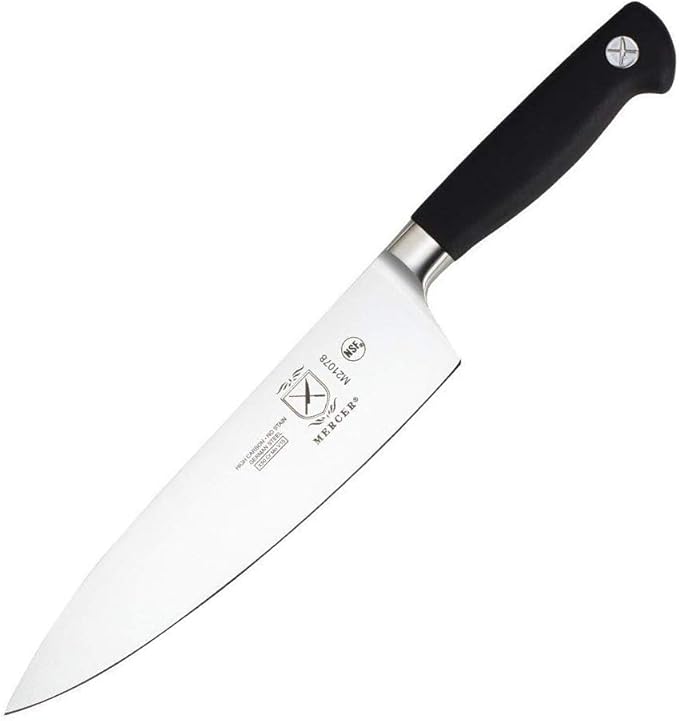
If you ever chop with wet hands (washing produce, working with proteins, moving fast), handle traction becomes a safety feature— not a nice-to-have. The Mercer Genesis is built with that reality in mind. It’s a practical knife that feels confident in the hand even when your kitchen is busy and messy.
The expert angle: a grippy handle lets you hold lighter and cut cleaner. That sounds small, but it reduces fatigue and improves control. This is a “prep cook” style knife—built for repetition. If you want a knife that doesn’t care whether you’re chopping cabbage or breaking down a pile of onions, it’s a strong pick.
Why it’s reliable
- Non-slip confidence – Great for wet, fast, real-life prep sessions.
- Comfortable grip – Helps reduce hand strain because you don’t have to squeeze as hard.
- Sturdy everyday geometry – Handles dense produce without feeling delicate.
- Sharpening-access bolster – Designed to make maintenance more approachable.
Good to know
- It’s more utilitarian than “pretty.” If you want showpiece aesthetics, look at Shun or Damascus-style options.
- Like many workhorses, it benefits from periodic honing to keep it feeling lively.
- Store it properly—grippy handles don’t protect the edge from drawer damage.
Ideal for: high-volume home cooks and practical buyers who value safety, grip, and reliable performance over looks.
11. Victorinox Fibrox Pro 8″ Chef’s Knife – The “Just Works” Legend

This is the knife people buy, then quietly buy again for their sibling, their best friend, and their “I cook but my knife is terrible” neighbor. The Victorinox Fibrox Pro is famous because it delivers real performance without demanding that you become a knife expert. It’s sharp, comfortable, easy to control, and easy to maintain.
Here’s the truth from an experienced cook: geometry matters more than marketing. The Fibrox Pro tends to cut cleanly because the blade is thin enough to move through food efficiently, while still being tough enough for everyday use. It’s also an excellent sharpening learner knife—if you mess up a little, you don’t feel like you ruined a museum piece.
Why it’s loved
- Fantastic control – Easy to steer, easy to trust, even for beginners.
- Non-slip comfort – A secure grip, especially helpful when hands are wet.
- Low-drama maintenance – Easy to hone, easy to sharpen, easy to keep in rotation.
- Unbeatable practicality – It’s a tool, not a trophy—and that’s the point.
Good to know
- Not a “showpiece” knife—if aesthetics matter, look at Damascus-style options.
- Like many thinner knives, it benefits from routine honing to keep the edge feeling crisp.
- If you crave heavy heft, a forged German knife may feel more satisfying.
Ideal for: anyone who wants a truly reliable everyday chef’s knife that performs far above what most people expect.
12. Victorinox Swiss Classic 8″ Chef’s Knife – Light, Friendly, Efficient

If you want something light, comfortable, and easy to control, this Swiss Classic option is a friendly everyday choice. It tends to feel approachable for newer cooks and for anyone who dislikes heavy knives or thick handles.
Expert note: “light” does not mean “weak.” Light knives can actually feel safer because you’re not fighting inertia. The key is using a stable cutting board and letting the edge do the work. If you keep up with basic maintenance (quick hone or occasional touch-up), this style of knife can stay impressively useful.
Why it makes sense
- Easy handling – Comfortable for everyday chopping and slicing.
- Great for small hands – Often feels less bulky than forged German handles.
- Practical performance – Covers most daily cooking tasks efficiently.
- Low intimidation – A knife you’ll actually reach for.
Good to know
- It won’t have the “heirloom heft” of premium forged knives.
- Edge feel depends on maintenance—light knives shine when you keep them tuned.
- Store carefully; a light knife still needs edge protection.
Ideal for: comfort-first cooks who want a lightweight chef’s knife that feels natural and easy for daily prep.
13. Oxford CHEF Kiritsuke 8″ VG10 Damascus – Sharp, Bold, Backed for Life

This is a bold knife: striking Damascus appearance, very keen edge potential, and a shape that encourages precise, intentional cuts. If you love the idea of a Japanese-style “scary sharp” experience but also want a safety net, Oxford CHEF’s lifetime policies and sharpening support can be genuinely reassuring.
Expert guidance: pay attention to weight and balance. Many owners love the substantial feel—especially for controlled slicing and clean, straight cuts. But if you have smaller wrists or prefer featherweight agility, this can feel like “a lot of knife.” It’s best for cooks who enjoy deliberate technique rather than frantic chopping.
Why it stands out
- Very sharp potential – Excellent for precision slicing and clean vegetable work.
- Premium materials vibe – Feels like a serious upgrade from entry-level knives.
- Lifetime backing – Policies around support/sharpening can reduce ownership anxiety.
- G-10 handle stability – Durable and less sensitive to moisture than many wood handles.
Good to know
- Heavier feel can fatigue some users over long sessions.
- Not a “hack through anything” blade—avoid bones, frozen foods, and twisting.
- Kiritsuke-style shapes can feel different if you’re used to round-belly German profiles.
Ideal for: cooks who want a striking Damascus-style knife with serious sharpness and long-term support.
14. KYOKU Shogun Series 8″ Chef Knife – Stylish, Protected, and Daily-Usable

KYOKU’s Shogun Series is popular for a reason: it gives you that dramatic Damascus look, a sharp cutting feel, and—crucially— a sheath and case so you can store it safely without wrecking the edge. That’s a bigger deal than people think, because many “new knife” owners accidentally dull blades just by tossing them in a drawer.
My expert take: this is a great choice for someone who wants a “nice knife” experience but still plans to use it as a daily tool. The sheath/case combo lowers the barrier to good habits, and the overall feel tends to be satisfying for slicing, chopping, and general prep. Just remember: pretty knives still need proper boards and gentle technique.
Why it’s a smart gift
- Protective storage included – Helps keep the edge sharp and safe.
- Great visual appeal – Damascus look that feels “special.”
- Strong everyday versatility – Handles most kitchen jobs comfortably.
- Confidence booster – Many users report a satisfying “wow, my prep got easier” upgrade.
Good to know
- As with many Damascus-style value knives, quality consistency can vary—inspect on arrival.
- Thin edges don’t like twisting; keep cuts straight and controlled.
- Hand washing and drying keeps the blade looking clean and performing best.
Ideal for: gift buyers and style-conscious cooks who want a sharp-looking knife that still makes sense for daily use.
15. SHAN ZU 8″ Damascus Chef Knife – Heavy, Sharp, and Surprisingly Capable

SHAN ZU tends to surprise people: it arrives very sharp, looks far more expensive than many entry-level knives, and has a satisfying, weighty feel that makes chopping feel powerful. If you like knives that feel substantial, this one often lands well.
Expert nuance: weight is a double-edged sword. It can help the blade fall through food with less effort, but it can also tire your wrist if you’re doing long sessions of fine chopping. My advice is to think about your cooking routine: if you do big meal-prep batches, weight may feel helpful; if you do lots of delicate mincing and quick weeknight prep, lighter knives may feel faster.
Why it’s popular
- Very sharp out of the box – A common owner highlight, especially for produce.
- Premium look – Damascus aesthetics without the “too precious to use” feeling.
- Comfortable, sturdy handle – G10-style handles tend to feel stable and durable.
- Powerful feel – Weight can help with confident chopping.
Good to know
- Heavier knives can fatigue smaller hands or wrists during long sessions.
- Like all hard, sharp edges: avoid twisting, bones, frozen foods, and hard boards.
- Hand wash only if you want the pattern and edge to stay looking fresh.
Ideal for: shoppers who want a sharp, good-looking Damascus-style knife with a heavier, more “substantial” feel.
16. HENCKELS Classic 8″ Slicing Knife – Cleaner Carving, Better Plates

Quick reality check: a slicing knife is not the same job as a chef’s knife. And that’s exactly why this one earns a spot in this roundup. If you regularly cook roasts, brisket, turkey, salmon sides, or even big watermelon, a slicer gives you cleaner cuts with less sawing and less torn texture.
Expert move: pair a chef’s knife with a slicer. Use your chef’s knife for board work (veg, herbs, garlic, onion) and use the slicer for long protein cuts. You’ll get nicer slices, better presentation, and you’ll keep your chef’s knife edge happier because you’re not forcing it into long carving jobs it wasn’t optimized for.
Why it’s worth having
- Cleaner protein slicing – Less tearing and jagged cuts on roasts and fish.
- Better “thin slice” control – Helps with consistent portions for serving.
- Good complement knife – Makes your main chef’s knife last longer by splitting tasks.
- Comfortable carving feel – Designed for smooth draw cuts.
Good to know
- This is not your main board-chopping knife—don’t try to replace a chef’s knife with it.
- Long, thin blades still need careful storage to protect the edge.
- Hand wash and dry keeps performance and finish consistent long term.
Ideal for: home cooks who roast often and want cleaner, more professional-looking slices without tearing meat or fish.
17. Atumuryou JPCK 8″ VG10 Damascus – Gift-Box Drama, Serious Sharpness

If your priority is gifting something that looks expensive, feels special, and still performs like a real kitchen tool, this knife checks the “presentation” box hard. The black-forged aesthetic and unique handle materials make it feel like a collector piece that also happens to be very sharp.
Expert advice: with newer or less universally-known brands, your best friend is inspection and good habits. When it arrives, check the tip, edge straightness, and handle fit. Use a soft board, avoid bone contact, wash/dry immediately, and consider a light wipe of oil if you store it for long periods. Do that—and knives like this can be very rewarding.
Why it’s a head-turner
- High “wow” factor – Looks and feels like a premium gift.
- Comfortable ergonomic grip – Designed to reduce fatigue during prep.
- Sheath included – Helps protect both the edge and the user.
- Sharp, precise cutting vibe – Excellent for controlled slicing and clean prep.
Good to know
- With gift-style knives, consistency can vary—inspect carefully on arrival.
- Not for abuse: avoid twisting, bones, frozen foods, and hard surfaces.
- Keep it clean and dry to prevent staining or corrosion over time.
Ideal for: gift buyers who want something dramatic and premium-looking that can still be used as a serious chef’s knife.
18. imarku 8″ Japanese Chef Knife + Paring Knife – A Practical Two-Knife Upgrade
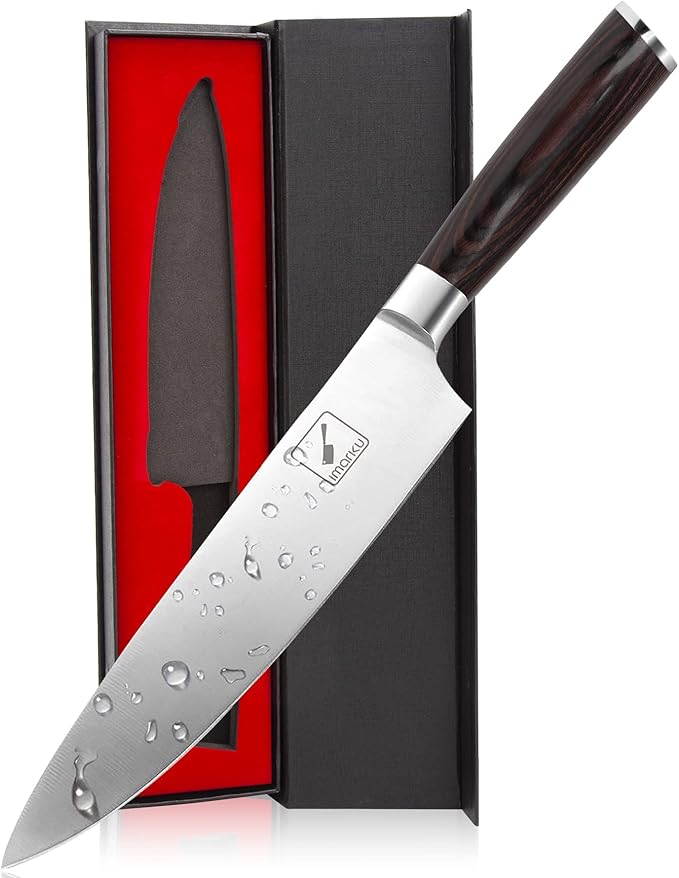
A lot of people don’t need a full knife block—they need two knives they actually use: a chef’s knife for board work and a paring knife for in-hand tasks. That’s why this imarku set is a solid gifting idea. It creates an instant “my kitchen tools got better” moment without forcing someone to store 12 knives they don’t understand.
Expert angle: sets are usually a trap, but a two-knife set can be a win. Most home cooks do 90% of prep with a chef’s knife and finish with a paring knife. If the chef’s knife is comfortable and the paring knife is genuinely useful, it’s a practical upgrade. Just remember to teach (or include a note): hand wash, towel dry, store safely.
Why it’s a great “starter pair”
- Two knives you’ll actually use – Chef + paring covers most home cooking.
- Comfortable grip – Many owners praise balance and hand feel.
- Gift-ready packaging – Feels like a real present, not a random Amazon box.
- Solid everyday sharpness – Great for veggies, meats, herbs, and basic prep.
Good to know
- It’s not meant for bone chopping—use proper tools for heavy tasks.
- Handle size can feel large for very small hands; comfort is personal.
- Sharpening habits still matter; even good knives need maintenance over time.
Ideal for: gift buyers and new cooks who want a practical upgrade that covers both board prep and precision tasks.
19. MOSFiATA 8″ Chef’s Knife – Safety Extras for Learning Knife Skills

If you’re stepping up from dull knives and you’re a little nervous about handling something truly sharp, MOSFiATA’s bundle approach is smart. The knife itself is designed as a general-purpose all-rounder, and the included finger guard and blade guard nudge you toward safer habits.
Pro advice: treat the included sharpener as “emergency only” unless you know exactly what type it is and how it affects edges. Many bundle sharpeners are pull-through styles that can remove more metal than needed. If you want to keep your knife performing for years, a simple whetstone or reputable guided sharpener is often kinder. That said—this kit is a confidence booster for beginners.
Why it’s beginner-friendly
- Safety-minded extras – Finger guard and blade guard are genuinely useful for learning.
- Comfortable grip – Ergonomic handle helps reduce fatigue during prep.
- Strong everyday versatility – Handles veg, herbs, and meats with ease.
- Gift-ready bundle – Feels like a complete upgrade kit.
Good to know
- Bundle sharpeners vary—use with care to avoid chewing up the edge.
- Laser-engraved patterns are decorative; focus on sharpness and comfort, not the look alone.
- As always: hand wash, dry, and store safely to protect the edge.
Ideal for: new knife owners who want a safer learning experience and an all-purpose chef’s knife that feels like a major upgrade.
20. PAUDIN 8″ Chef Knife – Sharp, Giftable, and Easy to Maintain

PAUDIN is the kind of knife that makes people say, “Wait… why is this so good for the money?” It often arrives impressively sharp, feels comfortable in the hand, and comes in a gift box that makes it a very easy present. For many households, it’s the first step from “random knives” to “I actually enjoy cooking now.”
The expert truth: budget steels can be a blessing if you value easy maintenance. Softer, more forgiving steels usually sharpen quickly and respond well to regular honing—meaning you can keep the knife performing without fancy tools. The pattern is a style element, not true Damascus, so judge it on performance and comfort rather than the design.
Why it’s a great first upgrade
- Very sharp out of the box – A frequent owner highlight, especially on tomatoes and onions.
- Comfortable, light handling – Feels easy to use for everyday cooking.
- Easy to maintain – Sharpening tends to be straightforward compared with harder premium steels.
- Giftable presentation – Box and sleeve make it feel like a real upgrade gift.
Good to know
- Budget knives can need more frequent touch-ups to keep them razor sharp.
- Don’t leave it wet or toss it in the dishwasher—good habits prevent rust and handle wear.
- Performance improves dramatically with a proper cutting board (avoid glass and stone).
Ideal for: shoppers who want an affordable upgrade from dull knives, plus easy maintenance and a gift-ready unboxing experience.
How Chef’s Knives Actually Cut (and Why “Sharp” Isn’t a Single Thing)
Most people think sharpness is just “how pointy the edge is.” In real kitchens, sharpness is a combination of geometry, steel behavior, and maintenance habits. That’s why two knives can feel totally different even if both are “sharp.”
The 5 things that control cutting feel
- Edge angle: A tighter angle can feel laser-like, but can be less forgiving if twisted or abused.
- Thickness behind the edge: This is the hidden secret. Thin behind-edge geometry slips through food; thick geometry can wedge and crack produce.
- Blade profile: Curvier bellies love rock-chopping; flatter profiles love push-cutting and slicing.
- Steel hardness vs toughness: Harder can hold longer; tougher can tolerate rougher handling. There’s always a trade-off.
- Handle + balance: Comfort and control affect safety and speed more than most people expect.
So when you’re choosing a knife, don’t just ask “is it sharp?” Ask: “Does it stay sharp in my routine? Can I keep it sharp easily? Does it cut the foods I actually cook?”
How to keep your knife sharp longer (simple, realistic habits)
- Use the right board – Wood or quality plastic. Never glass, marble, granite, or plates.
- Hand wash and dry – Dishwashers and sink soaking are edge killers.
- Don’t scrape with the edge – Flip the knife and use the spine to move food.
- Hone lightly when needed – A few gentle passes can keep edges feeling crisp between sharpenings.
- Sharpen before it’s dead dull – Touch-ups are faster and preserve more blade than “rescue sharpening.”
If you do nothing else: switch boards and stop scraping with the edge. Those two changes alone make most knives feel “new” longer.
FAQ: 8-Inch Chef’s Knives, Answered
What’s the real advantage of an 8-inch chef’s knife?
How do I choose between German and Japanese styles?
Do I need to sharpen, or is honing enough?
Can I put my chef’s knife in the dishwasher?
What’s the biggest mistake people make with a new sharp knife?
Final Thoughts: Picking the Best Knife for Your Hands
A chef’s knife is the single tool that touches almost every meal you make. When you choose well, cooking gets faster, safer, and honestly more fun. And when you choose poorly, you end up fighting your ingredients—then blaming yourself when it’s really the tool.
Here’s the shortest path to a confident decision:
- Want the simplest “buy once” recommendation? Start with the WÜSTHOF Classic 8″ Chef’s Knife. It’s a classic for a reason: stable, forgiving, and built for daily use.
- Cook a lot and care about comfort? Go for the WÜSTHOF Classic IKON. It’s a premium daily-driver that’s easier to maintain long term.
- Want precision slicing and a “wow” experience? Look at Shun Premier or Shun Classic if you’re ready to treat your edge with respect.
- Prefer lightweight speed? The Global G-2 is a fast, agile blade that many cooks fall in love with.
- Want maximum practicality without overthinking? Grab the Victorinox Fibrox Pro. It’s one of the easiest knives to own, maintain, and trust.
The “right” answer is the knife that fits your hand, matches your cutting style, and fits your maintenance reality. Choose a knife you’re excited to use, treat it well, and it will reward you for years. When you do that, you don’t just buy a blade— you finally land your Best 8 Inch Chef’s Knife for the way you cook.
