
If your frying pan basically lives on the stovetop, you’re in good company. A versatile 10‑inch skillet can handle weekday eggs, crispy chicken thighs, seared salmon, grilled sandwiches and one‑pan pastas without hogging storage space. For most home cooks, it quietly becomes the default pan that does almost everything.
This guide is here to help you choose a Best 10 Inch Frying Pan that actually fits your life: the right material for how you cook, safe and healthy surfaces you can feel good about, and smart details like handles, lids and induction compatibility that make daily use easier.
We’ll walk through what really matters when you’re choosing a 10‑inch skillet, talk about nonstick vs stainless vs hybrid surfaces in plain language, and then dive into twelve standout pans you can order on Amazon today—from affordable PFAS‑free options to restaurant‑grade workhorses and heirloom‑level stainless steel.
In this article
How to Choose the Best 10 Inch Frying Pan for Your Kitchen
Before you fall in love with any single skillet, it helps to zoom out and think about how this pan will work in your kitchen day‑to‑day. A little planning here saves you from buying something that sounds fancy but never becomes your go‑to.
1. Start with how you really cook
Run through a few quick questions:
-
What lives in this pan most of the time?
If it’s eggs, pancakes, grilled cheese and reheating leftovers, a forgiving nonstick surface will keep mornings calm and clean‑up easy. -
Do you love deep browning and pan sauces?
For crisp chicken skin, steak with a deep crust or deglazing for pan sauces, stainless steel or a hybrid pan gives you more heat tolerance and better fond (those tasty browned bits). -
How many people are you usually feeding?
A 10‑inch frying pan is a sweet spot for 1–3 servings—big enough for a few chicken thighs or a couple of salmon fillets, compact enough to maneuver easily. Larger families may still want a 12‑inch pan as well, but a 10‑inch is the workhorse size in most kitchens. -
Dishwasher devotee or happy hand‑washer?
Stainless steel and some hard‑anodized nonstick pans handle the dishwasher better. Ceramic and traditional nonstick perform longest with gentler, hand‑wash care.
2. Pick your main pan material
Most contenders for a Best 10 Inch Frying Pan fall into four buckets:
-
Classic PTFE nonstick (T‑fal, All‑Clad HA1, Tramontina Professional, Calphalon hard‑anodized)
These give you the slickest release with the least effort—perfect for eggs, pancakes and sticky sauces. The trade‑off: the coating is a consumable part. Even good nonstick typically lasts about 2–5 years before performance drops, and it’s not meant for repeated screaming‑hot searing. -
Ceramic / PFAS‑free nonstick (SENSARTE ceramic, Cuisinart FusionPlus’ PURELYSEAR surface)
These skip PTFE and other PFAS entirely, which appeals if you’re trying to avoid “forever chemicals.” They can be beautifully slick when new, but are more sensitive to overheating and rough utensils, so low‑to‑medium heat and soft tools are key for long life. -
Stainless clad (tri‑ply or 5‑ply) (All‑Clad D3, Tramontina Tri‑Ply, Made In, Calphalon Stainless)
Here, stainless steel sandwiches an aluminum core to spread heat evenly. There’s no coating to chip or wear out, you can go from stove to oven, and they handle high heat beautifully. The trade‑off is a small learning curve to prevent sticking, but once you get it, these pans can last for decades. - Hybrid stainless / nonstick (HexClad, Cuisinart FusionPlus ArmorGuard)
These build tiny stainless “peaks” over nonstick or ceramic “valleys,” so you can use metal utensils without shaving off the coating as quickly. They’re durable and versatile, but often pricier and still benefit from a little oil or butter to feel truly nonstick.
3. Check your stove, oven & ventilation
-
Induction vs gas / electric:
If you have induction, look for “induction compatible” in the specs. In this guide, the Sensarte pans, Calphalon Stainless, Tramontina Tri‑Ply, Made In, Cuisinart FusionPlus, both Calphalon and All‑Clad nonstick sets, HexClad and All‑Clad D3 all work on induction. T‑fal Ultimate and the Tramontina Professional nonstick pan are not induction‑ready. -
Oven use:
Ask yourself how often you actually finish food in the oven. Stainless and hybrid pans generally tolerate higher oven temps (up to 500–600°F) than many nonstick coatings, which are happiest at 400–450°F or below. -
Handles & lids:
If you bake frittatas or finish steaks in the oven, metal handles (or removable silicone sleeves) are your friend. Lids aren’t essential for a frying pan, but they’re surprisingly nice when you want to gently steam, melt cheese or keep oil splatter down.
4. Think about safety & “forever chemicals”
PFAS (a big family that includes PTFE and older chemicals like PFOA) are under increasing scrutiny for their environmental and health impact. Stainless steel, cast iron and carbon steel are naturally PFAS‑free, while ceramic coatings like SENSARTE’s and Cuisinart’s PURELYSEAR are marketed as PFAS‑free as well.
Regulators still consider modern PTFE coatings safe at normal cooking temperatures, but experts recommend avoiding overheating, discarding heavily scratched pans and reserving nonstick for lower‑to‑medium heat tasks.
5. Decide: One pan or a mini lineup?
-
Just one pan?
Pick a forgiving nonstick like the SENSARTE Granite or T‑fal Ultimate if you mostly cook eggs and quick weeknight meals, or a stainless workhorse like Tramontina Tri‑Ply, Made In or All‑Clad D3 if you’re excited to learn classic technique. -
Two‑pan dream team:
Many cooks are happiest with one great stainless pan for searing and sauces plus one inexpensive nonstick just for delicate foods. It spreads your budget and dramatically extends the life of your coated pan.
Quick Comparison: Twelve Best 10 Inch Frying Pan Picks
Here’s a bird’s‑eye view of the twelve skillets we’ll be reviewing. They’re sorted roughly from lowest price to highest, so you can skim for pans that match your budget, then jump down to their full reviews.
On smaller screens, swipe or scroll sideways to see the full table.
| Model | Surface / Material | Best match | Amazon |
|---|---|---|---|
| SENSARTE Swiss Granite 10" Skillet | Nonstick – PFAS‑free | Budget everyday nonstick with deep sides | Amazon |
| Calphalon Stainless Steel 10" Fry Pan | Tri‑ply stainless | Affordable intro to stainless cooking | Amazon |
| SENSARTE Ceramic 10" Pan with Lid | Ceramic – PFAS‑free | Non‑toxic pick with glass lid included | Amazon |
| Tramontina Professional 10" Nonstick | Restaurant nonstick | Pro‑style pan for eggs & sautéing | Amazon |
| Tramontina Tri‑Ply Clad 10" Stainless | Tri‑ply stainless | Value alternative to premium stainless | Amazon |
| Made In 10" Stainless Clad Frying Pan | 5‑ply stainless | Serious home cooks & aspiring pros | Amazon |
| T‑fal Ultimate 10" Hard‑Anodized | PTFE nonstick | Low‑stress workhorse for busy kitchens | Amazon |
| Cuisinart FusionPlus 10" Skillet | Hybrid ceramic | PFAS‑free hybrid with metal‑safe surface | Amazon |
| Calphalon Hard‑Anodized 8" & 10" Set | Nonstick set | Two‑pan starter set for new cooks | Amazon |
| All‑Clad HA1 8" & 10" Fry Pan Set | Nonstick set | Premium‑feeling nonstick, induction‑ready | Amazon |
| HexClad Hybrid 10" Frying Pan | Hybrid stainless / PTFE | One‑pan solution for varied cooking | Amazon |
| All‑Clad D3 10" Stainless Fry Pan w/ Lid | Tri‑ply stainless | Lifetime stainless workhorse | Amazon |
In‑Depth Reviews: Find Your Best 10 Inch Frying Pan Match
Now let’s zoom in on each skillet. Use these reviews to match specific strengths—like easy eggs, high‑heat searing, or PFAS‑free cooking—to what actually matters most in your kitchen.
1. SENSARTE Swiss Granite 10" Skillet — Everyday Nonstick on a Budget
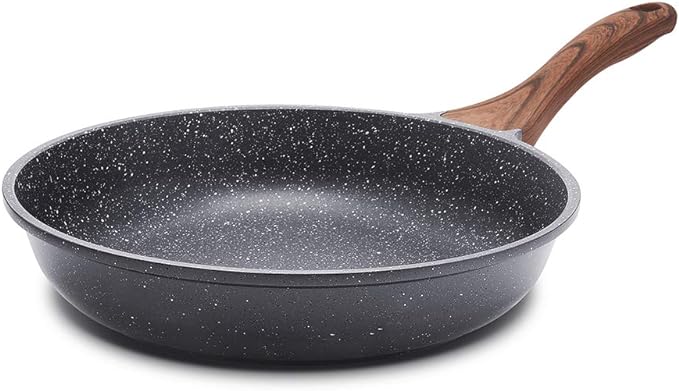
If you want a pan that makes sticky foods easy without spending a fortune, this SENSARTE Swiss‑granite skillet is a strong starting point. It uses an ILAG‑branded nonstick coating from Switzerland that’s PFOA‑free and advertised as free of intentionally added PFAS, layered over a thick cast‑aluminum body for fast, even heating.
In real‑world use, owners praise how pancakes, omelettes and stir‑fries slide around with just a little oil, and how the slightly deeper sides keep vegetables and sauces from jumping ship when you toss. The wood‑look bakelite handle stays cool and comes with a tiny screwdriver in the box so you can snug it up if it ever loosens—an oddly delightful detail you rarely see at this price point.
Why you’ll like it
- Genuinely slick surface that makes eggs, cheese and sugary sauces surprisingly low‑stress.
- Deep, gently sloped sides give you a bit more capacity than many 10" pans.
- Works on induction and traditional stoves thanks to the magnetic stainless base.
- Light enough to flip one‑handed but still feels sturdy and well balanced.
Good to know
- Like all coated nonstick, it’s happiest at low to medium heat—high heat will shorten its life.
- Ceramic and “stone” style finishes can lose some slickness faster than PTFE if overheated or scraped.
- No lid included; if you steam a lot, SENSARTE’s lidded ceramic pan (next pick) may suit you better.
Ideal for: renters, students and busy families who want a forgiving, inexpensive nonstick that looks nicer than its price tag suggests.
2. Calphalon Stainless Steel 10" Fry Pan — First Stainless You’ll Actually Use

If you’re ready to get away from disposable nonstick but don’t want to jump straight into premium pricing, Calphalon’s 10" stainless fry pan is a very smart bridge. It uses a three‑layer construction—stainless steel wrapped around an aluminum core—for faster, more even heating than thin department‑store steel, and it’s been highlighted by healthy cooking outlets as a solid, PFAS‑free alternative to coated pans.
Owners who switched from classic nonstick often remark on two things: food browns noticeably better (hello, golden potatoes and deeply seared chicken), and cook times drop because the pan simply gets hot faster. There is a learning curve—preheat first, add oil, then add dry food and let it release on its own—but once you’ve got that rhythm, it feels oddly liberating to scrub this pan clean with a scrubber and not worry about harming a coating.
Why you’ll like it
- Tri‑ply build and aluminum core heat quickly and evenly for better browning.
- Fully PFAS‑free: no coating to scratch, flake or replace.
- Sturdy, stay‑cool handle with a shape that’s easy to grip even with a towel.
- Oven‑safe to 450°F, so you can sear on the stove and finish in the oven.
Good to know
- Food will stick if you rush the preheat, skimp on fat or try to move it before it releases.
- Stainless shows rainbow discoloration over time—totally cosmetic and easily polished with a stainless cleanser.
- Heavier than nonstick, so not the best match if wrist strength is an issue.
Ideal for: home cooks who want to practice stainless technique without committing to top‑shelf prices yet.
3. SENSARTE Ceramic 10" Frying Pan with Lid — PFAS‑Free and Pretty Enough to Leave Out

This is the pan people buy after reading one too many articles about PFAS. The SENSARTE ceramic series uses a light natural‑ceramic coating over cast aluminum and is advertised as free of intentionally added PFAS, PTFE, PFOA, lead and cadmium. Even overheated, the brand claims it won’t release toxic fumes, which is a big part of its appeal for health‑focused cooks.
In practice, owners rave about how completely scrambled eggs and delicate fish slide off with almost no oil, and how the glass lid plus tall sides make it a handy little braiser for saucy dinners. The flip side: ceramic coatings demand a bit of babying. They don’t like metal utensils, they dislike sudden temperature shocks, and they’ll last much longer if you stick to medium heat and hand‑washing. That’s true for most ceramic cookware, not just this one.
Why you’ll like it
- PFAS‑free ceramic coating for peace of mind around “forever chemicals.”
- Truly slippery release when new—perfect for eggs, crepes and sticky sauces.
- Includes a vented glass lid, which many skillets skip at this price.
- No rivets inside the pan, so food and gunk have fewer places to hide.
Good to know
- The pan is fairly heavy for its size; some users find one‑handed tossing harder.
- Ceramic will slowly lose slickness over years, especially if overheated or scrubbed hard.
- Only use wood, silicone or nylon utensils—metal can scratch the smooth white surface.
Ideal for: cooks who care deeply about non‑toxic cookware and mostly cook at gentle to medium heat.
4. Tramontina Professional 10" Nonstick — The Restaurant‑Style Workhorse

Tramontina’s Professional line is one of those “if you know, you know” pans. It’s an NSF‑certified restaurant skillet that’s also widely recommended as a best‑value nonstick pan by Serious Eats and Food & Wine, thanks to its heavy‑gauge aluminum body, reinforced coating and extremely comfortable handle.
In actual kitchens, this pan tends to become the egg, hash brown, quesadilla and stir‑fry pan. The long, slightly upswept handle with removable silicone sleeve stays cooler and gives you real control while flipping. Because it’s restaurant‑ grade aluminum rather than stainless, it heats quickly and evenly—just remember it won’t work on induction.
Why you’ll like it
- Excellent nonstick performance that many testers say rivals far pricier pans.
- Thick aluminum base distributes heat extremely evenly for pancakes and delicate foods.
- NSF certification and “pro kitchen” design at a very approachable price.
- Dishwasher‑safe (if you remove the silicone grip), though hand‑washing will extend its life.
Good to know
- Not induction compatible; best on gas, electric coil or glass‑ceramic stoves.
- As with any PTFE nonstick, expect a 2–5 year lifespan before performance fades.
- The removable red grip is comfy but can loosen slightly over long use; most owners still prefer it on.
Ideal for: anyone who wants restaurant‑style nonstick performance without paying restaurant‑supply prices.
5. Tramontina Tri‑Ply Clad 10" Stainless — 95% of the Performance for a Fraction of the Price

If you’ve drooled over All‑Clad but can’t quite justify the price, Tramontina’s tri‑ply clad series is the go‑to alternative many pros and passionate home cooks quietly recommend. It uses the same basic architecture—an aluminum core sandwiched between stainless inside and out—for very even heating and excellent searing.
In side‑by‑side comparisons, many reviewers say this pan delivers roughly “95% of the All‑Clad experience” for a lot less money: great heat distribution, a flat base that doesn’t warp easily, and a comfortable, hollow‑core handle that stays cooler than a solid steel bar. It’s also NSF‑certified and induction‑ready, which is rare at this price.
Why you’ll like it
- Outstanding value: full‑clad tri‑ply construction at an accessible price.
- Even heat and responsive control make it a joy for searing, sautéing and pan sauces.
- Oven‑safe to 500°F, so it’s happy finishing frittatas, steaks or skillet desserts.
- Stainless interior means no coatings to baby or replace.
Good to know
- Like all stainless, it demands proper preheating and enough fat to act “nonstick.”
- A few users note minor cosmetic staining over time; Bar Keepers Friend cleans it up easily.
- Slightly heavier than cheaper tri‑ply, which is great for stability but a bit more to lift.
Ideal for: home cooks who want lifetime‑capable stainless performance but don’t want to pay full All‑Clad pricing.
6. Made In 10" Stainless Clad Frying Pan — Five‑Ply Control for Serious Home Cooks
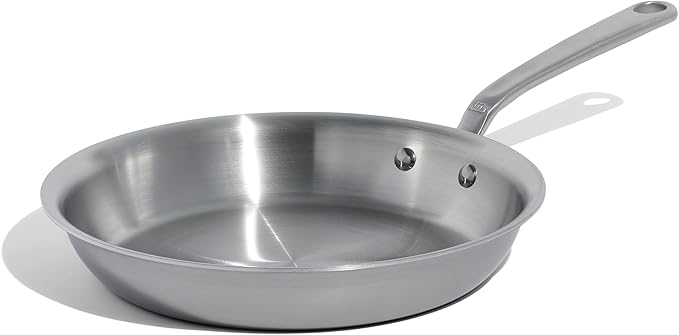
Made In built its reputation by selling restaurant‑quality stainless clad pans directly to consumers, and their 10" frying pan is now a favorite in a lot of serious home kitchens and cookware reviews. Five layers of metal—including a responsive aluminum core and induction‑ready outer stainless—give you impressive heat control and retention for searing, sautéing and shallow‑frying.
Compared with cheaper stainless, this pan lets you use lower burner settings for the same browning and doesn’t drop in temperature as dramatically when you add cold food. Owners gush over how evenly it sears steaks and salmon, how easy it is to deglaze into silky pan sauces, and how surprisingly simple it is to keep looking new with a stainless cleanser. There is a learning curve if you’ve only ever used nonstick, but once you adjust, it feels borderline addictive.
Why you’ll like it
- 5‑ply construction provides elite heat distribution and responsiveness.
- High oven‑safe rating opens up roasting, broiling and baking possibilities.
- Thoughtfully shaped, stay‑cool handle that balances the pan nicely in the hand.
- Backed by a company that’s become a go‑to recommendation for stainless in recent years.
Good to know
- Costs more than entry‑level stainless; feels like an “investment piece.”
- Like other stainless, it will show surface scuffs and patina over time—normal, not damage.
- Some induction users report that you should still preheat gradually to avoid warping any clad pan.
Ideal for: enthusiastic home cooks who want a pan that can keep up as their skills grow, and aren’t afraid of a little technique.
7. T‑fal Ultimate 10" Hard‑Anodized Fry Pan with Lid — Set‑and‑Forget Weeknight Champ
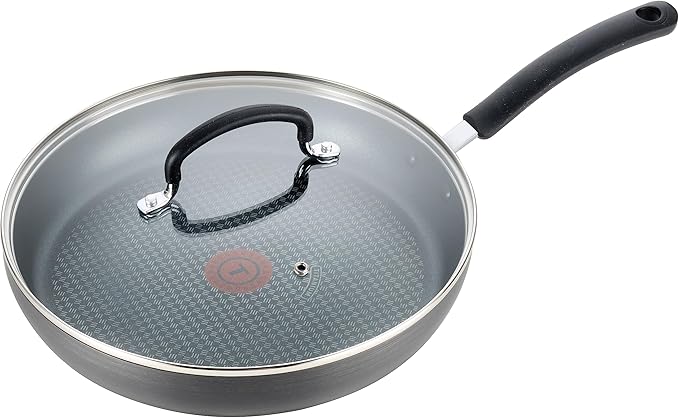
The T‑fal Ultimate line shows up constantly in independent tests as a “why spend more?” nonstick option. A hard‑anodized aluminum body for durability, a titanium‑reinforced PTFE coating for slick release, and the famous Thermo‑Spot that turns solid red when the pan is properly preheated—together they make this a very forgiving everyday pan.
Real‑world owners love that it heats evenly, needs only a small amount of oil and shrugs off daily use for eggs, sautéed vegetables and skillet meals. Seniors and new cooks call out that it’s light enough to maneuver, yet feels more solid than bargain nonstick. The included glass lid is a bonus if you simmer, steam or cook splattery foods often.
Why you’ll like it
- Thermo‑Spot heat indicator takes the guesswork out of preheating.
- Titanium‑reinforced coating stays slick longer than many budget pans.
- Hard‑anodized body resists warping and distributes heat evenly.
- Dishwasher‑safe, though hand‑washing will still prolong the coating’s life.
Good to know
- Not induction compatible; works best on gas and standard electric stoves.
- PTFE‑based coating means you should avoid high heat and discard the pan once the surface is badly scratched.
- Handle is silicone‑wrapped and very comfortable, but won’t love a broiler.
Ideal for: busy households that want a reliable, low‑maintenance nonstick pan for everyday dinners and weekend breakfasts.
8. Cuisinart FusionPlus 10" Skillet — PFAS‑Free Ceramic Meets Stainless Armor
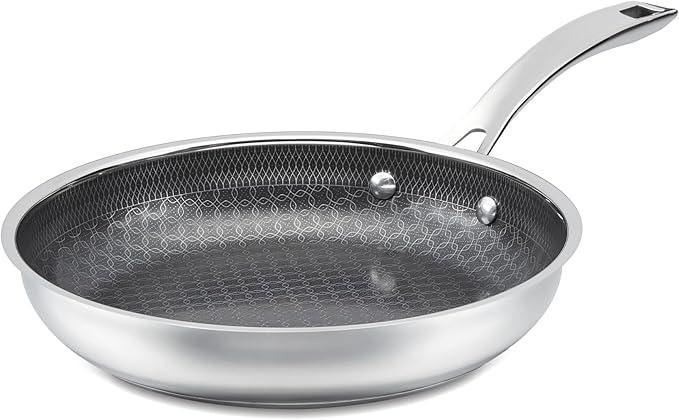
FusionPlus is Cuisinart’s answer to “I want PFAS‑free nonstick, but I’m tired of babying fragile ceramic.” The solution: a PFAS‑free ceramic coating (PURELYSEAR) protected by raised stainless “peaks” so utensils and scrubbers contact steel more than the ceramic itself. The result is a metal‑utensil‑safe surface that’s also induction compatible and dishwasher safe.
Early owners say it heats quickly and evenly, with eggs and delicate foods releasing well once the pan is preheated and lightly oiled. Some reviewers who expected “no‑oil” cooking found eggs could still stick if they skipped the preheat or used very high heat—pretty standard behavior for ceramic‑leaning coatings. Follow the brand’s instructions (2 minutes on medium‑low, then add fat and food) and it behaves much more like the hybrid it’s designed to be.
Why you’ll like it
- PFAS‑free ceramic nonstick with stainless “ArmorGuard” protection for extra durability.
- Metal‑utensil‑safe surface (though silicone still extends the life further).
- Dishwasher‑ and induction‑friendly, rare for a ceramic skillet.
- Cool‑Grip stainless handle stays comfortable on the stovetop.
Good to know
- No lid included; you’ll need a universal lid if you braise or steam often.
- Like all ceramic, it prefers medium heat and a bit of oil for best nonstick feel.
- A few users report a learning curve for omelettes—don’t treat it like Teflon and you’ll be happier.
Ideal for: cooks who want a PFAS‑free pan with more toughness than typical ceramic, plus induction and dishwasher compatibility.
9. Calphalon Hard‑Anodized 8" & 10" Frying Pan Set — Everyday Duo for New Kitchens
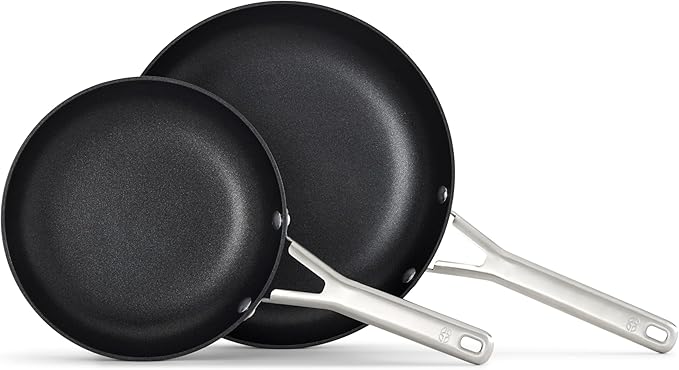
If you’re kitting out a new kitchen—or helping someone move into their first apartment—this Calphalon duo is a very efficient way to cover most stovetop tasks. You get an 8" pan for single eggs, grilled sandwiches and small sides plus a 10" for mains and one‑pan meals. Both use hard‑anodized aluminum for even heating and a modern nonstick that Calphalon has tested to stay slick through over 100,000 cycles.
What people notice most is the balance: these pans feel more substantial than cheap nonstick, but they’re not so heavy that flipping pancakes becomes a workout. Handles are stainless and stay cool when you match pan size to burner size. They’re technically dishwasher‑safe, though owners who want to maximize lifespan still prefer a quick hand‑wash.
Why you’ll like them
- Two extremely useful sizes that cover 90% of everyday cooking jobs.
- Hard‑anodized construction for better durability and warp resistance.
- Nonstick coating that stands up to a lot of real‑world use if you avoid metal utensils.
- Great price‑to‑performance ratio if you need more than one pan anyway.
Good to know
- Like most PTFE pans, they’re not PFAS‑free—stick to medium heat and replace when scratched.
- Handles on the small pan can run warm if you park it on an oversized burner.
- Quality is a notch below Calphalon’s legacy U.S.‑made lines but still very solid for the price.
Ideal for: new cooks and busy households looking for an affordable, do‑almost‑everything nonstick duo that doesn’t feel flimsy.
10. All‑Clad HA1 8" & 10" Fry Pan Set — Nonstick That Feels a Little Luxurious

If you love the idea of All‑Clad but prefer the ease of nonstick, the HA1 line is the brand’s flagship coated option. You get heavy‑gauge hard‑anodized aluminum, a stainless base that makes the set induction‑friendly, and a three‑layer PTFE coating that testers consistently describe as very slick and impressively durable for a nonstick surface.
Compared with cheaper pans, HA1 skillets feel more planted on the burner and distribute heat a bit more evenly—handy for large omelettes or delicate fish. Owners appreciate that the handles feel like classic All‑Clad (solid, secure, a bit “pro kitchen”) and that the pans can handle up to 500°F in the oven, which is higher than many nonstick competitors.
Why you’ll like them
- Serious, even heating and sturdiness without the full maintenance of stainless.
- Induction‑ready base, so they’ll keep working if you change stoves later.
- Higher oven‑safe rating than many nonstick pans.
- Backed by a big, reputable brand that’s been focusing on safer, PFOA‑free coatings.
Good to know
- Still PTFE‑based—avoid overheating or dry‑preheating at full blast.
- Heavier than many budget nonstick pans; some users love the heft, others find it a bit much.
- Costlier than basic sets, but many owners feel the performance and feel justify it.
Ideal for: home cooks who want nonstick convenience, induction compatibility and a more premium feel without jumping all the way to stainless.
11. HexClad Hybrid 10" Frying Pan — Stainless Meets Nonstick in a Single Pan

HexClad’s honeycomb pans are everywhere right now, thanks to splashy marketing and chef endorsements. Under the hype, what you’re getting is a tri‑ply stainless/aluminum/stainless body topped with a laser‑etched hex pattern of raised steel “peaks” and PTFE nonstick “valleys.” The idea: get stainless‑style browning and durability while protecting the coating so you can use metal utensils and scrub a little harder without wrecking the surface.
Long‑term reviewers generally agree on a few points: HexClad is durable, heats evenly and makes it easier to get a good sear than many classic nonstick pans, especially for chicken and pork. At the same time, it’s not a magic pan—you still need oil or butter, and eggs won’t usually glide around like they do in a brand‑new Teflon pan. Some testers also note that for ultra‑high‑heat steak searing, a bare stainless or cast‑iron pan still wins.
Why you’ll like it
- Hybrid surface lets you use metal utensils with less anxiety about scratching.
- Tri‑ply body and induction‑ready base deliver very even heating.
- Dishwasher‑friendly and oven‑safe to extremely high temps (much higher than most nonstick).
- Great “one‑pan” solution if you don’t want separate stainless and nonstick skillets.
Good to know
- Still uses PTFE nonstick in the valleys—if you want fully PFAS‑free, choose stainless or ceramic instead.
- Significantly pricier than many other pans; you’re paying partly for hybrid tech and branding.
- Nonstick feel is real but not as glassy‑slick as a fresh Teflon pan; think “easy release” more than “no oil needed.”
Ideal for: cooks who like the idea of a single pan that can sear, sauté and still handle eggs decently, and who are okay paying for convenience and durability.
12. All‑Clad D3 10" Fry Pan with Lid — The Classic You Keep for Decades

If you ask professional chefs and long‑time home cooks which stainless skillet they’d keep if they could only have one, All‑Clad’s D3 10" is the name that comes up again and again. It’s made in Pennsylvania, fully clad with an aluminum core to the rim, and built to handle serious heat, abuse and decades of use. Food & Wine and other outlets regularly point to All‑Clad’s D3 line as a benchmark for stainless performance.
In use, this pan is all about control: it sears like a dream, transitions seamlessly from stove to oven, and builds the kind of fond that makes restaurant‑style pan sauces almost foolproof once you know the basics. The included stainless lid is genuinely useful for finishing thicker cuts gently or steaming vegetables without dirtying another pot. For many people, this isn’t just a pan; it’s the start (or centerpiece) of a long‑term cookware upgrade.
Why you’ll love it
- Iconic, American‑made tri‑ply construction with exceptional durability.
- Handles high heat, deglazing and metal utensils with ease.
- Includes a well‑fitting lid, which many stainless skillets sell separately.
- Backed by a limited lifetime warranty and a long track record of real‑world use.
Good to know
- Significantly pricier than value stainless; you’re paying for build quality and origin.
- The classic All‑Clad handle is secure but a bit angular; some people love it, others find it less comfy.
- Stainless isn’t nonstick—expect to practice preheating and fat use if you’re coming from coated pans.
Ideal for: anyone ready to invest in a true lifetime skillet that can handle everything from weeknight chicken to dinner‑party main courses.
Heat, Materials & Care: Getting the Most from a 10‑Inch Pan
Once you’ve picked your pan, a few simple habits make a huge difference in how it cooks and how long it lasts. Think of this as your quick start guide to making any 10" frying pan feel more “pro.”
How material changes the way you cook
-
Stainless clad loves preheating.
Start on medium, wait a couple of minutes, then add a splash of water—if it beads and skitters, add your oil and start cooking. This helps prevent sticking and gives you more even browning. -
Classic nonstick prefers gentle heat.
Most PTFE coatings are happiest at low to medium heat. High heat or empty preheating can damage the surface and, at very high temps, release unpleasant fumes. Save screaming‑hot sears for stainless, cast iron or carbon steel. -
Ceramic needs a patient touch.
Ceramic‑coated pans reward you when you preheat slowly, avoid sudden temperature shocks and use a bit of oil or butter for eggs and delicate foods. Treat them gently and they’ll stay slick much longer. -
Hybrids sit in the middle.
Pans like HexClad or Cuisinart FusionPlus want you to think “stainless technique with a little nonstick help.” They can take higher heat than many coatings but still benefit from oil and sane temperatures.
Simple tricks for better results
- Let food release on its own. With stainless and hybrid pans, proteins will stick at first, then naturally release when the surface crust has formed. Poking too early is the fastest way to tear your food.
- Use the right fat. Butter tastes great but burns at lower temps. For high‑heat searing, reach for oils with higher smoke points or clarified butter/ghee.
- Don’t shock a hot pan. Going straight from blazing hot to cold water can warp any pan over time, especially clad stainless and aluminum. Let it cool a bit first.
- Retire nonstick at the right time. When food starts sticking noticeably or you see deep scratches, it’s time to replace that coated pan—typically every 2–5 years depending on quality and use.
A good 10" skillet plus a few of these habits can easily become your best 10 inch frying pan for almost every night of the week.
FAQ: 10‑Inch Frying Pans, Answered
Is a 10‑inch pan big enough as my main skillet?
Should I buy nonstick or stainless first?
Are ceramic and PFAS‑free pans really safer?
How long should a good frying pan last?
Can I use metal utensils on these pans?
Final Thoughts: Turning One Skillet into a Daily Upgrade
You don’t buy a frying pan just to admire it—you buy it so breakfast, lunch and dinner feel smoother. A good 10" skillet means fewer stuck eggs, better browning, easier clean‑up and one reliable piece of cookware you instinctively reach for every single day.
Here’s a quick way to translate this whole guide into a decision:
-
Want the most affordable no‑drama nonstick?
Look at the SENSARTE Swiss Granite 10" or the restaurant‑tested Tramontina Professional 10" Nonstick. -
Want PFAS‑free nonstick with a clean, modern look?
Choose the lidded SENSARTE Ceramic 10" or hybrid Cuisinart FusionPlus 10". -
Ready to learn stainless and cook like the pros?
Start value‑forward with Tramontina Tri‑Ply 10" or Calphalon’s 10" Stainless, or go straight to long‑term investments with Made In’s 5‑ply or the classic All‑Clad D3 10" with lid. -
Want a nonstick set that covers most meals?
Pick the value‑driven Calphalon Hard‑Anodized 8"/10" duo or the more premium‑feeling All‑Clad HA1 set, especially if you cook on induction. -
Want one “do‑almost‑everything” hybrid?
Consider the HexClad 10" hybrid skillet for a single pan that can sear, sauté and still make respectable eggs.
Any of the twelve pans above can become your personal best 10 inch frying pan once you match their strengths to your budget, your stove and your cooking style. Measure your burners and storage, decide how much maintenance you’re willing to take on, and choose the one that you’ll be excited to reach for tomorrow morning. After that, it’s just a matter of preheating, adding a little fat and letting your new favorite skillet quietly upgrade every meal you cook in it.
