
Specs are compiled from manufacturer listings and verified buyer reviews and can change over time — please confirm the key details on the product page before buying.
If your radiators clang, hiss, or stay cold at the top, trapped air is almost certainly the cause — and an automatic air vent is the part that quietly releases that air for you. The short answer: the Amtrol 700-C is the safest all-around pick for a hot-water boiler, the Maid O’ Mist No. 67 is the common drop-in replacement for older systems, and the Gisafai 6-pack is the smart buy if you run steam radiators. This guide walks you through exactly how each one connects, what pressure and temperature it can handle, and which one matches your system.
I’m Mohammad Maruf — the founder and writer behind KitchPrep. This guide is built by comparing the manufacturers’ published specifications and the patterns across verified customer reviews, so you get each pick’s real strengths and trade-offs instead of marketing spin.
Air trapped inside a hydronic heating system (a boiler loop that circulates hot water through pipes and radiators) blocks the water and makes the whole system noisy and uneven. An automatic air vent sits at the high points of that loop and lets the air out on its own. Below you’ll find the seven strongest options for automatic air vent duty, ranked by build quality and real-world feedback.
Our Picks at a Glance

How To Choose The Best Automatic Air Vent
To pick the right vent, you need to match four things: your thread size, your system’s pressure and temperature, whether you have a hot-water loop or a steam radiator, and how many units you need to replace at once. Get those four right and the brand choice becomes simple.
Match the thread size first
The thread is the part that screws into your boiler or pipe, so it has to match exactly. Most residential float vents use a 1/8″ NPT connection (a tapered pipe thread standard that seals without a gasket), while some larger float vents step up to a 3/4″ NPT inlet for higher-flow systems. If you are not sure which you have, measure the old fitting or take a photo of it before ordering.
Check the pressure and temperature rating
Every vent lists a maximum working pressure in psi and a maximum temperature in °F. A residential hot-water boiler typically pushes well under 100 psi, so a vent rated to 150 psi gives you comfortable headroom. Steam radiator vents are a different world — they are rated around 10 psi maximum because steam systems operate at very low pressure. Installing a high-pressure float vent on a steam radiator, or a low-pressure steam vent on a hot-water loop, is the most common DIY mistake.
Decide between one vent or a multi-pack
If only one vent is failing, buy a single vent. If you are replacing several at once, a multi-pack saves you money and trips — each radiator and high point needs its own vent, and having a spare on hand means you avoid a second trip to the supply house when one starts weeping. Buyers who run multi-zone systems often order several at a time for exactly that reason.
Quick Comparison
| Model | Best For | Connection | Max Pressure | Max Temp | Amazon |
|---|---|---|---|---|---|
| Amtrol 700-C Automatic Air Vent★ Best Overall | Hot-water boilers | 1/8″ NPT male | 150 psi | 230°F | Amazon |
| Maid O’ Mist No. 67 Auto-VentBest for Old Boilers | Restoring older systems | 1/8″ NPT male | 50 psi | — | Amazon |
| Saillong 2 Pack Brass Air Bleed Valve | Replacing several vents | 1/8″ NPT | 150 psi | 240°F | Amazon |
| Watts DUOVENT 1/8″ Boiler Valve | Glycol and dual-vent systems | 1/8″ NPT female | 100 psi | 140°F | Amazon |
| Watts FV-4M1-3/4 Automatic Air Vent Valve | Larger 3/4″ ports | 3/4″ NPT | 150 psi | 240°F | Amazon |
| Gisafai 6 Pack Steam Radiator Valves | Steam radiators | 1/8″ NPT | 10 psi | — | Amazon |
| Bzcovac 400-4 Float Air Vent 4-Pack | High-capacity multi-replacement | 1/8″ NPT | 150 psi | 240°F | Amazon |
In‑Depth Reviews
1. Amtrol 700-C Automatic Air Vent
Our pick — over 4.5★ from 100+ verified ratings; the strongest balance of quality and price.
A bronze-bodied 1/8″ NPT float vent rated to 150 psi and 230°F for hot-water boilers.
If your hot-water boiler gurgles, bangs, or heats unevenly, this is the vent most repair techs reach for first. It threads in with a 1/8″ male NPT connection, so it drops straight into the standard boiler port without adapters. The brass body is finished in bronze, and the whole unit is small enough to fit tight against an expansion tank.
What wins people over is functionality — it simply vents the air it is supposed to vent. The 150 psi pressure rating and 230°F temperature ceiling clear any residential hydronic loop with comfortable headroom. One reviewer noted it replaced a 30-year-old leaking vent with no further leaks. Other buyers report air bubble noises gone about 20 minutes after installation. That is the whole point of a float vent — it keeps bleeding air so your circulator pump is not fighting a bubble.
The catch is leakage. Some owners get a dry, trouble-free season and a few report weeping from the cap, so check the thread seal carefully and do not overtighten. Installation itself is straightforward for anyone comfortable draining a boiler and shutting off the intake line overnight. If you are squeamish about opening a heating system, this is a job to hand to a tech.
What earns its keep
- 1/8″ NPT male thread drops into standard boiler ports
- 150 psi and 230°F ratings cover residential hydronic loops
- Bronze-finished brass body resists corrosion
- Owners mention air bubble noise gone about 20 minutes after install
Where it asks for care
- Leakage feedback is mixed — seal the threads properly
- Requires draining the boiler and shutting off the intake line
Buy it if: you run a hot-water hydronic boiler and want the vent with the strongest track record.
Think twice if: you want a no-drain swap — this one needs the system opened up.
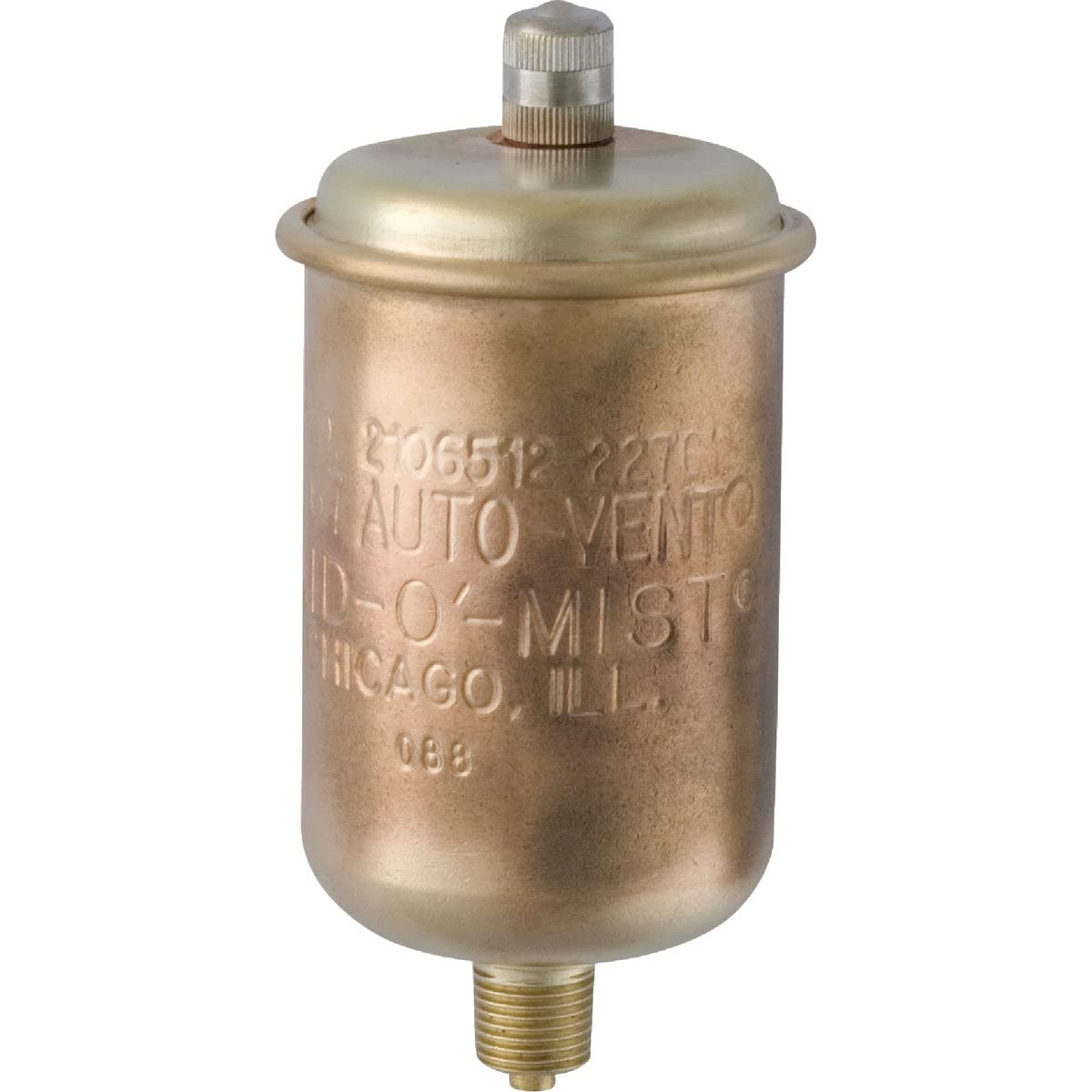
2. Maid O’ Mist No. 67 Auto-Vent
A 1/8″ I.P. male vertical-mount vent sized to match the fitting on older boilers.
Plenty of homes still run a boiler installed before most of us were born, and the No. 67 is the vent that matches those systems thread-for-thread. It mounts vertically with a 1/8″ I.P. male connection and handles up to 50 lbs. of pressure. The copper-bodied unit wears a polished brass cover and weighs just 91 g, so it threads in easily by hand before you snug it down.
What draws buyers is the drop-in fit on aging equipment. As one owner put it, this is the “Exact replacement for the valve that was in my 40+ year old boiler.” The other reason people come back is straightforward function — restoring hot water to every zone, including a 500 ft radiant floor run, after a failed vent left the system airlocked.
Here is the honest part: this vent is not built for the long haul like the originals were. The recurring theme is that deposits shorten its life, so keeping a spare on the shelf is smart. A couple of units arrive looking used or crusty, and the shut-off fitting shown in the listing is sold separately. If you have a modest-pressure residential boiler, though, it does the job it was designed for.
Why it stays on the shortlist: the 1/8″ I.P. male thread is the exact size most older residential boilers use, so it removes the guesswork of matching a legacy fitting.
What to plan around: mineral deposits shorten service life compared with the originals, so budget to replace rather than rebuild.
The right call for: anyone nursing an older vertical-mount boiler back to life.
Look elsewhere if: you need a vent rated above 50 psi or a high-capacity commercial unit.
3. Saillong 2 Pack 1/8″ Automatic Air Bleed Vent Valve, Brass
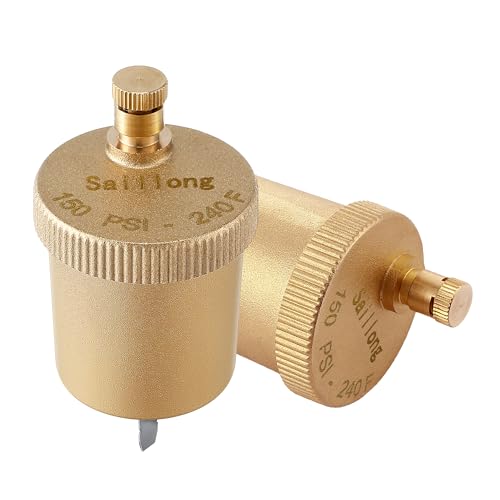
Two full-brass vents in one box, sized to swap the whole house in a single afternoon.
When several vents are weeping at once, buying a two-pack beats running back to the supply house. This Saillong set gives you 2 brass automatic air vents, each with a universal 1/8″ connection that fits hot-water radiators, unit heaters, and boilers. Both are rated to 150 psi and 240°F, and they must be installed vertically to bleed properly.
The value story holds up. What owners praise most is that the vents function exactly as designed, and the value-for-money math works in their favor — as one buyer summed it up, they are “full brass, sturdy, work.” They drop into the same high points and boiler ports the originals used, so an experienced DIYer can swap the whole set without hiring anyone.
Now the flaw that will not go away: the packaging. The vents ship in a flimsy paper box, and owners routinely find the bottom pin bent on arrival — one had to straighten the stems in a vise before installing. Order with that in mind, and inspect the pin the moment the box lands. The brass itself is fine; it is the shipping that lets it down.
Reasons buyers keep these
- 2 vents per pack, sized for whole-system replacements
- 150 psi and 240°F ratings suit most residential hydronic loops
- Full brass construction, not a plated imitation
- No plumber required for a confident DIYer
The honest catch
- Flimsy paper packaging bends the bottom pin in transit
- Vertical installation is mandatory — check your mounting angle first
Best match for: multi-zone systems needing two or more fresh vents now.
skip it if: you can only mount horizontally, or you want factory-sealed packaging.
4. Watts DUOVENT High Capacity Air Vent Boiler Valve 1/8″ Female NPT

Two ways to vent in one valve: automatic for daily duty, manual for a fast refill.
This one earns its spot by giving you options. The Watts DUOVENT carries both an automatic vent under a black cap and a manual vent under a red cap, so you can let it self-bleed or force air out with a screwdriver when you refill the system. The body is lead-free brass with a silicone rubber seal and a polyethylene float, and the female NPT connection screws onto a 1/8″ male fitting. It is glycol-compatible too, which matters if your loop runs antifreeze.
Against the higher-pressure options here, this one trades ceiling for flexibility: it handles a maximum of 100 psi and temperatures up to 140°F. Owners with airlocked lines often find it settles a problem that repeated manual bleeding could not — the kind of fix that solves months of uneven heating in one install. The 9-year-old Duo Vents that get replaced by this exact model are a telling detail.
Set expectations on the manual side. In a flooded-basement air scoop, the manual vent offers little benefit — it earns its keep at high points when you are refilling and want a quick purge. And the bottom flapper tab is plastic where brass would be better, so handle it gently during install. Note that the 100 psi rating sits below the 150 psi the Amtrol and Saillong vents carry, so if your system runs hot and high, look there instead.
The stand-out feature: pairing automatic and manual venting in a single brass body means one part covers routine bleeding and emergency purging.
Where it gives ground: at 100 psi and 140°F it is the coolest-rated float vent here, so pressurised commercial loops may want more headroom.
Reach for this if: you want manual override and glycol compatibility on a residential system.
Look to the Amtrol instead if: your loop runs closer to its pressure limit.
5. Watts Automatic Air Vent Valve, 3/4 In, Brass

A 3/4″ inlet for bigger lines where an 1/8″ fitting just will not thread.
Most residential vents here use a small 1/8″ connection; this Watts unit steps up to a 3/4″ male NPT inlet for systems that plumb through larger pipe. The brass body is rated to 150 psi and 240°F, so it clears the same hot-water duty as the 1/8″ crowd. It meets the ASME B16.34, ASTM, and MSS SP 72 specifications — three published standards that cover valve pressure ratings and thread dimensions — and it casts a compact 3-3/8″ H x 1-1/4″ W profile.
For the right application, it is a no-drama part: buyers confirm it was delivered exactly as ordered and that the valve worked properly for their setup, and the threads engaged cleanly without leaks. The NPT tapered connection is where the value sits — a mismatched thread size is the number one reason a vent will not seal, and buying the correct 3/4″ body solves that outright.
Two things to weigh before ordering. First, this model has a smaller user base than the popular 1/8″ picks, so there is less long-term feedback to lean on. Second, it is a single unit at the highest price point of the smaller vents, so if you are replacing four or five ports at once, the multi-packs below deliver more vents for the same layout job. Confirm your port size with a tape before committing.
Why it stands out
- 3/4″ NPT inlet for larger plumbing runs
- 150 psi and 240°F ratings cover hot-water boilers
- Meets ASME B16.34, ASTM, and MSS SP 72 specs
What to consider
- One unit only — no spare if you run a multi-port system
- Fewer owner reviews than the mainstream 1/8″ models
Right for: anyone whose system plumbing takes a 3/4″ male NPT connection.
Not for: standard 1/8″ ports — you will need an adapter or a different model entirely.
6. Gisafai 6 Pack Steam Radiator Valves 1/8 In. Npt Angle Mount
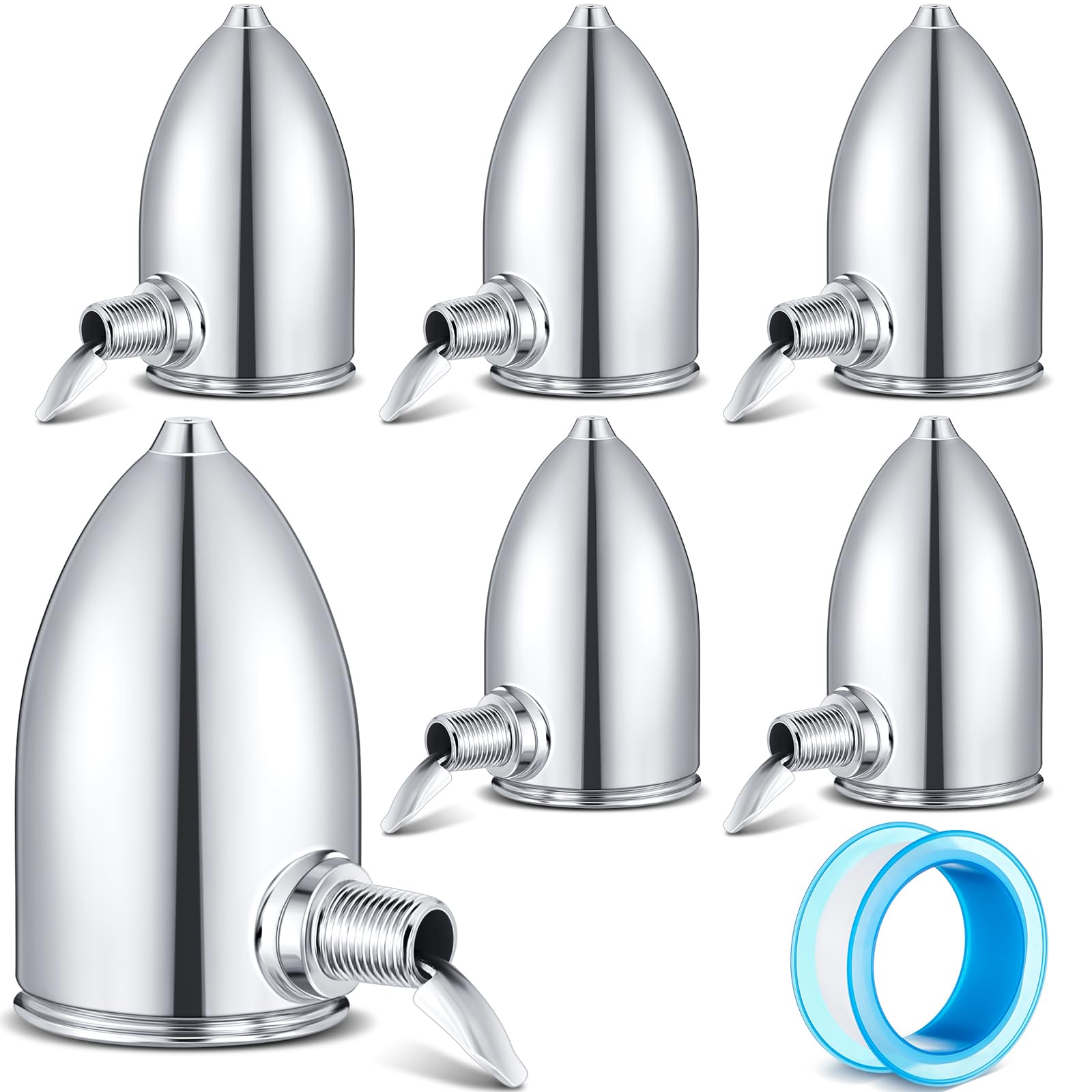
Six 1/8″ NPT steam radiator vents rated to 10 psi max, with sealant tape included.
Steam radiators need a very different vent than a hot-water boiler, and this six-pack is built for exactly that job. Each valve uses a float and stem design with a 1/8″ NPT thread (National Pipe Tapered — a tapered thread standard that seals as it tightens), a maximum pressure of 10 psi (pounds per square inch) and a working pressure of 5 psi, and a vent hole of roughly 0.0935″ that releases air in small, controlled amounts. The set also includes a roll of industrial sealant tape to seal the threads and stop weeping connections.
The size of that vent hole is the clever bit. A smaller hole means the vent releases only tiny amounts of cool air while a radiator heats slowly — the opposite of a larger-hole vent that blasts steam out and drags the boiler water level down. Owners on steam systems confirm these close quietly once steam reaches them: the tink of the valve shutting is a sound people actually look forward to. Replacing vents that never closed removes the constant hiss for good.
The realistic limit is how long they last. Durability looks fine so far, but steam service is hard on any float vent, and there is no adjustment for air-release speed — you get what the hole size gives you. For a steam system with six or more radiators, the math is simple: one box covers the whole house at a fraction of buying single valves, and the copper chrome plating resists the rust and corrosion steam throws at it.
The defining spec: a maximum pressure of just 10 psi keeps these matched to low-pressure steam, where a 150 psi hot-water vent would be the wrong tool entirely.
What to size up: steam wears through float vents, so treat these as a consumable set with a spare corner in the toolbox.
Best for: steam radiator owners replacing five or more vents in one go.
pass on it if: you run a hot-water loop — a 10 psi rating will not do that job.
7. Bzcovac 400-4 1/8-Inch NPT Automatic Float Air Vent, 4-Pack
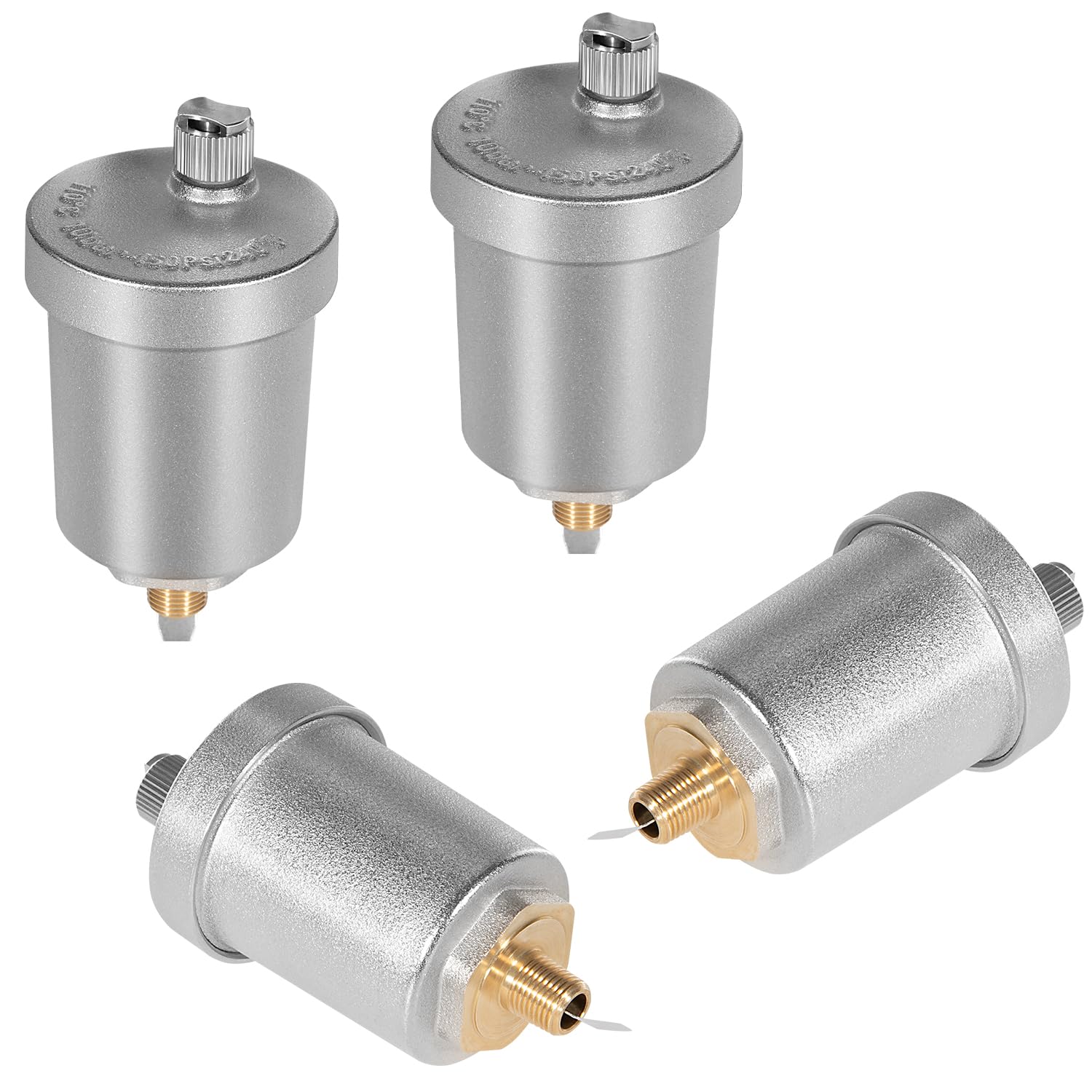
Four 1/8″ NPT float vents rated to 150 psi and 240°F, each with a screw-off cap for cleaning.
Four vents in one box, each built with heavy-duty brass and a corrosion-resistant nickel finish so they shrug off the scale that ruins cheaper units. Every vent carries a 150 psi and 240°F rating, matching the pressure headroom of the best 1/8″ picks here. The connection is 1/8″ NPT, so they drop into radiators, baseboards, convectors, and other hydronic heating points.
Two features set this four-pack apart. First, the internal baffle — a bubble breaker that splits up microbubbles and gathers air for faster venting, so the system clears itself in less time. Second, the threaded top cap unscrews for cleaning, which means you can clear scale and keep the same valve working rather than buying a replacement. Owners who used to swap a Taco-style vent every few seasons describe keeping these as their longer-life option.
The trade-off is a smaller track record than the Amtrol or Maid O’ Mist. There is less long-term feedback to draw on, so treat that as an unknown rather than a red flag. The included one-year warranty and 30-day return policy do give you a safety net on the early failures. If you want four cleanable high-capacity vents to cover a multi-zone system in one order, this is the set to buy.
what separates it
- 4 vents per pack with 150 psi and 240°F ratings
- Bubble breaker baffle speeds up air removal
- Threaded top cap can be unscrewed for cleaning
- Nickel-plated brass resists scale and corrosion
The open question
- Shorter real-world track record than the established brands
- Fail mode, if it comes, is water dribbling from the top
The pick for: multi-zone hydronic systems replacing several vents at once.
Consider the Amtrol if: you would rather have the brand with the longest proven reputation in hot-water service.
Understanding the Specs
Pressure and Temperature Ratings
The psi and °F numbers tell you which systems a vent can safely sit on. A hot-water boiler usually stays well under 100 psi, so a vent rated to 150 psi leaves safe headroom. Steam radiator vents are a different species — they are rated around 10 psi because steam systems run at low pressure. Putting a high-pressure float vent on a steam radiator, or a steam vent on a hot-water loop, is the mistake that ruins both the part and your afternoon. Alongside pressure, the 230°F and 240°F temperature ceilings on the popular vents clear typical hot-water duty.
Thread Size and Mounting Angle
The thread is what screws into your pipe, so it has to match exactly. Most residential float vents use a 1/8″ NPT connection (National Pipe Tapered — a tapered thread standard that seals as it tightens), while some larger vents, like the Watts 3/4″ model, use a bigger 3/4″ NPT inlet for heavier plumbing runs. Mounting angle matters too: this category’s float vents generally need to sit vertically to let the float rise and fall freely. Check both the thread size and the required mounting direction before ordering, because the wrong one will simply not seal.
FAQ
Will a 1/8″ automatic air vent fit my boiler?
How do I know if my automatic air vent has failed?
Can I use a hot-water boiler vent on a steam radiator?
Do I need to drain the boiler to replace an automatic air vent?
How long does an automatic air vent typically last?
Why does my radiator hiss even with a new vent?
Do I need a separate vent for each radiator?
What is the difference between a manual and automatic air vent?
Will an automatic air vent reduce noise in my heating system?
Can I clean an automatic air vent instead of replacing it?
Final Thoughts: The Verdict
For most hot-water systems, the automatic air vent worth buying first is the Amtrol 700-C — a 150 psi, 230°F bronze vent with the strongest reputation for quieting a noisy boiler. If you are reviving an older system, the Maid O’ Mist No. 67 is the drop-in replacement that matches the fitting already on your boiler. And for a house full of steam radiators, reach for the Gisafai 6-pack — six low-pressure vents and a roll of sealant tape to silence the whole set in one afternoon.
How We Picked
We do not accept paid placement. Every pick is matched to a real buyer and a real use-case; we do not hands-on test units.
Sources & Methodology
Specifications: manufacturer listings and product documentation. Review insights: verified customer reviews, as of September 2026. Pricing: not shown on this page (it changes often); check the current price via the retailer link.
As an Amazon Associate, KitchPrep earns from qualifying purchases. This does not affect which products we feature.
Related Guides
