
Specs are compiled from manufacturer listings and verified buyer reviews and can change over time — please confirm the key details on the product page before buying.
If you want the short answer: buy a frost-free model, match the cubic feet to how many people you actually feed, and skip anything with a defrost system you have to think about. A top-freezer fridge puts the frozen section above the fresh section, which keeps the coldest air where you need it and lets the fridge compartment stay steady below. Everything below is sorted by how well each one handles that job in a real kitchen, garage, or dorm room.
I’m Mohammad Maruf — the founder and writer behind KitchPrep. This guide is built by comparing the manufacturers’ published specifications and the patterns across verified customer reviews, so you get each pick’s real strengths and trade-offs instead of marketing spin.
You will see capacity in cubic feet, the defrost system, and annual energy use in kilowatt hours explained in plain words for each pick. What follows is an honest look at the basic top-freezer refrigerator options worth your counter space.
Our Picks at a Glance

How To Choose The Best Basic Top-Freezer Refrigerator
You want a fridge that keeps food cold without fuss, but you don’t want to pay for features you’ll never use. A top-freezer refrigerator puts the freezer on top and fresh food below — the classic American layout. The best ones are simple in the right way, not stripped down in the wrong way. Here is what actually decides whether you’ll be happy with yours in month three.
Defrost system: the one spec that changes your weekends
A manual-defrost model means ice slowly coats the freezer walls, and you have to empty it and chip the buildup away by hand. A frost-free (auto-defrost) model runs a heating cycle that melts that ice on its own, so the freezer never turns into a glacier. If you have ever spent an afternoon with a hairdryer and a butter knife, you already know which one you want. Every model that calls itself frost-free in the list below earns that label for a reason — it is the single feature that separates a fridge you forget about from a fridge you fight with.
Capacity in cubic feet: match it to your household
Capacity is measured in cubic feet, which is simply how much food volume the interior holds. A 7 cubic foot unit feeds one or two people comfortably, while a 20 cubic foot unit handles a family and a weekly grocery run with room to spare. The freezer half matters just as much: a 2 cubic foot freezer section holds a few frozen pizzas and a tub of ice cream, while a 5 cubic foot section takes bulk meat and stacked leftovers.
Energy use and where the fridge will live
Annual energy consumption is quoted in kilowatt hours, which is the unit your utility company bills you in — lower is better, and the gap between models can be large. Frost-free fridges tend to use more than manual ones because of that defrost cycle. Where you place it matters too: a garage gets far hotter and colder than a kitchen, so a model with a built-in temperature sensor rated for wide conditions will hold steady where a standard fridge struggles. Check the door swing direction as well, since a reversible door can save you from blocking a hallway.
Quick Comparison
| Model | Best For | Capacity | Defrost System | Annual Energy Use | Amazon |
|---|---|---|---|---|---|
| Frigidaire EFR756 Retro★ Best Overall | Dorms and one-person kitchens | 7.5 cubic feet | Manual | 20 kwh | Amazon |
| Avanti 7.0 cu.ft.Best for Small Spaces | Small-space cooling with a big freezer | 7 cubic feet | Automatic | 393 kilowatt hours per year | Amazon |
| Frigidaire Frost Free 10 CU FTMost Energy-Efficient | Overflow storage and garage use | 10 cubic feet | Frost Free | 300 kwh | Amazon |
| BLACK+DECKER 12.1 Cu. Ft. | Two-person homes and small apartments | 12.1 cubic feet | Frost Free | 316 kilowatt hours per year | Amazon |
| BLACK+DECKER 14.6 Cu. Ft. | Garage drinks and bulk food storage | 14.6 cubic feet | Frost Free | 333 kilowatt hours per year | Amazon |
| Galanz GLR12TS5F | Small offices and roomy apartments | 12 cubic feet | Frost Free | 346 kilowatt hours per year | Amazon |
| Kenmore 18.1 cu. ft. | Single-person full-size kitchens | 18.1 cubic feet | Automatic | 367 kilowatt hours per year | Amazon |
| Kenmore 20.2 cu. ft. | Families and garage-ready second fridges | 20.2 cubic feet | Automatic | 382 kilowatt hours per year | Amazon |
In‑Depth Reviews
1. Frigidaire EFR756, 2 Door Apartment Size RETRO Refrigerator with Top Freezer, Chrome Handles, 7.5 cu ft
Our pick — over 4★ from 300+ verified ratings; the strongest balance of quality and price.
The retro fridge that sips electricity while holding a surprising amount of food.
This fridge keeps your electric bill low because it uses just 20 kwh of annual energy consumption (kwh is the unit your power company bills you in). That’s the lightest draw in this entire roundup — the Frigidaire Frost Free 10 CU FT model below runs 300 kwh, a 15.0x gap that shows up on your bill every single month. For a fridge in a dorm, office, or spare room, that difference is real money over a year of ownership.
What wins people over is the build, closely followed by how the interior is laid out for its size. The 7.5 cubic feet of space includes removable glass shelves, a transparent crisper, and a full-width door bin, with four door shelves in total — the Frigidaire Frost Free model below carries just one. Owners say the 7.5 cubic feet holds a dorm or office grocery run, and the freezer section swallows four to five wholesale club boxes, frozen pizzas, and half-gallon ice cream tubs. It runs quietly and the chrome trim gives it a look you would not expect at this tier.
The honest trade-off here is the manual defrost. Freezer ice builds up over time, and buyers report needing to defrost roughly every nine months to keep it running at its best. That is a chore you do by hand, not something the fridge handles for you. It is also sized for one or two people in daily use, so it works as a backup fridge or a dorm unit rather than a primary family appliance. Sizing it to the right job is the whole trick with this one.
What earns its keep
- 20 kwh annual energy use — the leanest here by a wide margin
- 7.5 cu ft with removable glass shelves and a full-width door bin
- Four door shelves versus one on the Frigidaire Frost Free 10 CU FT
- Reversible door and two castors on the back for easy repositioning
Where it asks for patience
- Manual defrost means clearing freezer ice roughly every nine months by hand
- Sized for one or two people, not a full family as a primary fridge
- Rounded corners and matte finish hide scuffs but the door bin is a single full-width piece
Reach for this if: you want the lowest running cost in the group and a fridge that fits a dorm, office, or as a backup unit.
Look elsewhere if: you refuse to defrost by hand — the frost-free models further down solve exactly that.
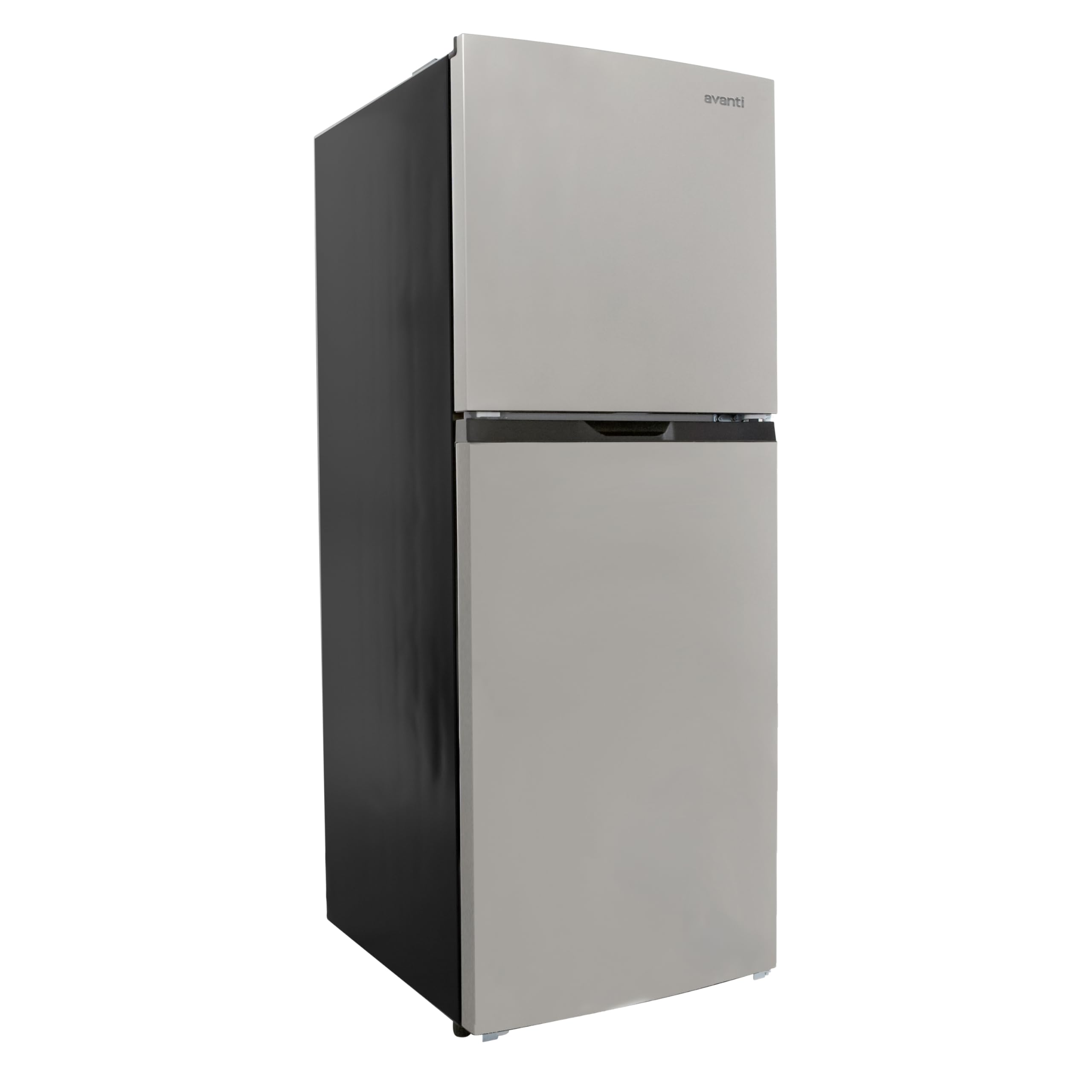
2. Avanti 7.0 cu.ft. Apartment Size Refridgerator, Compact Fridge with Top Freezer with Temperature Control and Adjustable Shelves and Crisper Drawer, 7.0 cu.ft., Stainless Steel
A small footprint paired with a freezer that punches well above its size.
The Avanti splits its 7 cubic feet into two clear halves: 5.1 cubic feet of fresh food space and a 1.9 cubic foot top-mount freezer. That freezer split is what buyers talk about most — the compartment is described as very big for the overall size, big enough to stack frozen goods without playing Tetris. The fridge side takes adjustable glass shelves and a crisper drawer, and the freezer gets an adjustable wire shelf you can pull out when you need room for a taller box.
What makes daily life easy here is the automatic defrost system. Ice never builds into a glacier, so you never chip it out — a real difference from the Frigidaire EFR756 above, which asks for a manual defrost roughly every nine months. Temperature control is adjustable, and the stainless steel door is reversible, so it fits both left- and right-opening kitchen layouts. It also runs quiet enough that owners mention it by name.
One thing to know before you buy: the cooling is strong enough that some owners mention the fresh section running cold enough to keep milk, juice, and vegetables at a steady chill rather than freezing them. It is a machine with 23 ratings and a mixed picture on longer-term reliability, so treat it as a solid choice for a bedroom or small apartment rather than a heavy-duty family fridge. Where it earns its place is the freezer-to-fridge ratio in a compact body.
Freezer-first thinking: if frozen storage matters as much as fresh, this is the compact fridge built around that priority.
Setting it up: level it on the adjustable legs and give the compressor a rest before loading it up on day one.
Who it fits: small apartments and bedrooms where you want a real freezer and no defrost chores.
Who should look on: heavy daily users who want a longer track record — the Kenmore models below carry more history.
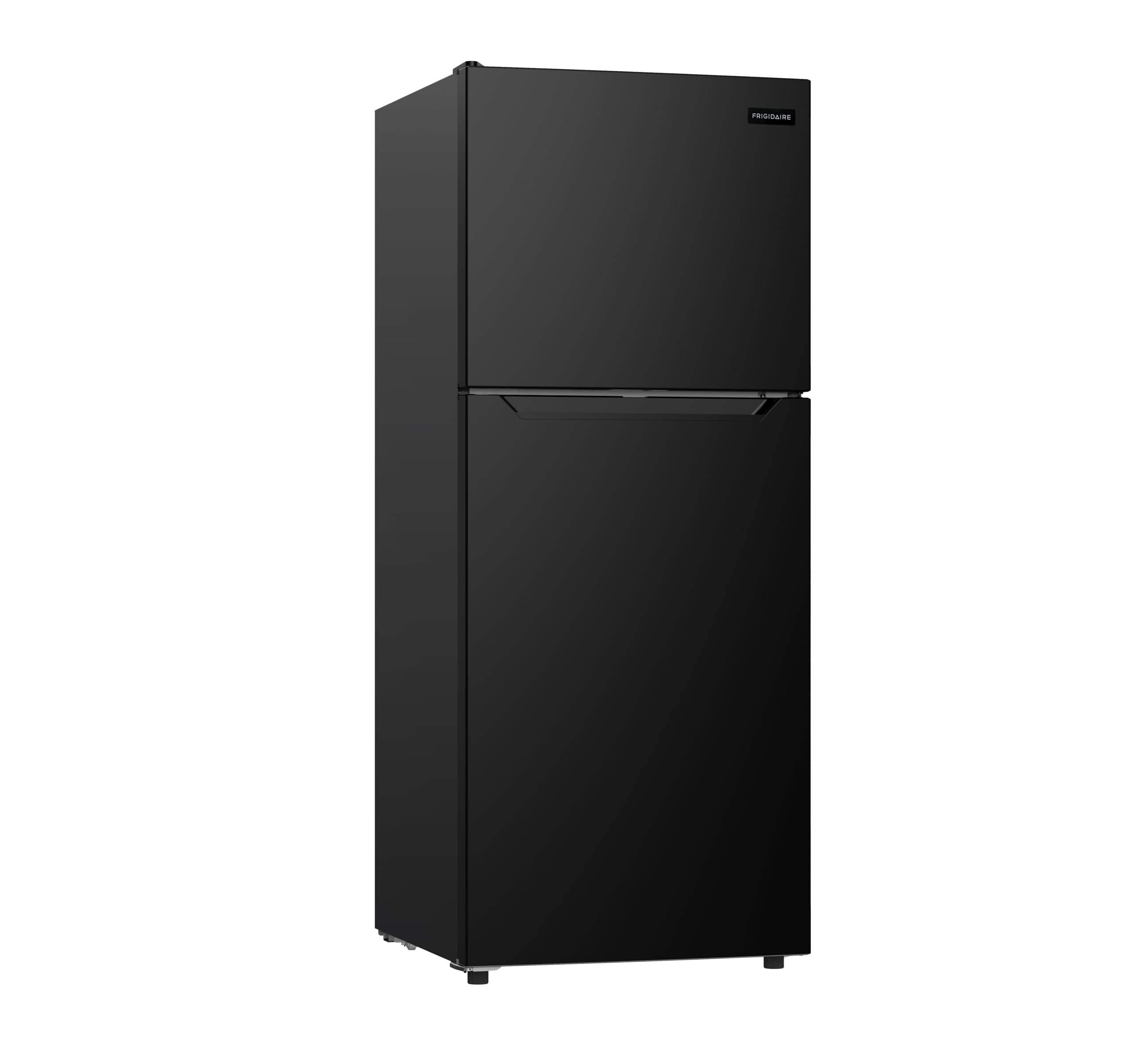
3. Frigidaire, Frost Free Top Mount 2 Door Apartment Size Refrigerator with Freezer, 10 CU FT
Ten cubic feet of frost-free space, with a freezer that gets a 2 cubic foot section to itself.
Ten cubic feet is the headline here, and it divides cleanly: 8 cubic feet in the fresh-food compartment and 2 cubic feet in the top freezer. That is big enough to hold a family shop without a second run to the store, and owners consistently describe it as fitting one or two people with room to spare. The frost-free system means no manual defrost ever, which is the whole point of moving up from a basic unit. Adjustable feet and removable shelves let you reshape the interior to fit whatever you bring home.
For a mid-tier fridge, the 300 kwh annual energy figure is the part that holds its head up. The manual-defrost Frigidaire EFR756 above sips just 20 kwh, but it makes you chip ice — this one gives you frost-free operation and still keeps consumption moderate. Reversible door, built-in interior lamp, and a compact footprint that suits garages and overflow spaces. Reviewers who bought it for a garage location or an overflow spot report it doing exactly that job well.
The catch is the door seal. Some customers note the gaskets not closing tight all the way around, which needs a firm push to seat properly, and one report flags gasket mold as a consequence of that. It is a real characteristic to check on arrival, not a universal failure — plenty of reviewers point out clean, correct temperatures. Treat the door seal as the thing you inspect first thing when the unit lands.
On sizing it right: 10 cubic feet gives you enough room for a garage fridge or a small apartment that still needs real capacity.
On setup: give the door seal a firm push closed and check it seats evenly before you trust the temperature.
Reach for this if: you want frost-free convenience with 10 cubic feet at a fair tier.
Look elsewhere if: you need a fridge that closes gently on its own — the seal here wants a firm push.
4. BLACK+DECKER 12.1 Cu. Ft. Top Mount Refrigerator, BR1210HW, White
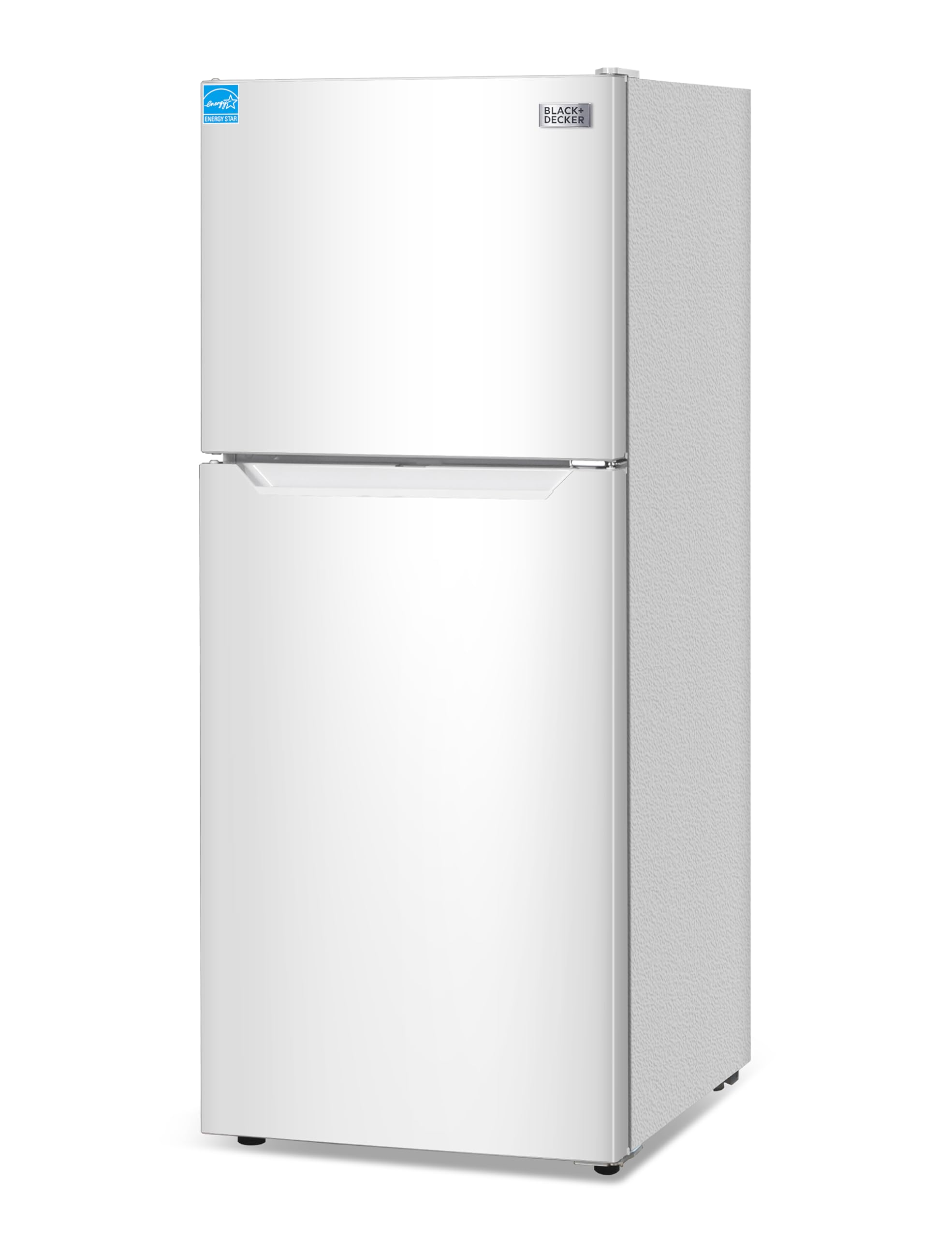
The white box that measures right for a couple — 3.4 cubic feet of that capacity is freezer.
Split the 12.1 cubic feet and you find 3.4 cubic feet of it sitting in the top freezer, which is the number to focus on here. That freezer section has a removable wire shelf, so it handles frozen meals, packaged meats, and a stacked run of leftovers without digging. The fresh section runs on adjustable temperature control and frost-free auto-defrost, which means no ice chipping, no planning around a defrost weekend. It is also Energy Star certified, so it carries a rated efficiency claim attached to it.
Owners in two-person apartments report the 12.1 cubic feet fits exactly as advertised, with steady temperatures that keep everything nicely chilled. Four door shelves give you room for tall bottles and condiments without crowding the main shelves. It also adds Sabbath Mode, which pauses settings and sounds for religious observance — a feature you rarely see at this tier, and one that matters to buyers who need it. Frost-free plus Sabbath Mode in one box is the specific combination that sets this apart.
Track down one wrinkle: the door seal needs a firm push to seat, and a few reports flag the door occasionally working loose on its own. A refrigerator stays at its best when it is firmly closed, so check the seal on arrival and give it a push if the magnet feels weak. Long term this one lands at middle-tier reliability: it does the basic job reliably, and the fit-to-two-people sizing is the reason most buyers pick it.
What you get for the size
- 3.4 cu ft freezer with a removable wire shelf
- Frost-free auto-defrost so there is no ice to chip
- Energy Star certified compressor
- Sabbath Mode pauses displays and sounds for observance
Keep an eye on
- Door seal needs a firm push to seat; check it on arrival
- The 12.1 cu ft size fits two, not a bigger household, as a primary fridge
- Some owners add a stand to raise it for taller users
Best matched to: a two-person apartment that wants frost-free operation and Sabbath Mode in a mid-size body.
Think twice if: you are feeding more than two — the 3.4 cu ft freezer fills fast.
5. BLACK+DECKER 14.6 Cu. Ft. Top Mount Refrigerator, BR1460HS, Stainless Look

A garage-ready fridge with 11.4 cubic feet of fresh space and a stainless-look finish that reads premium.
Start with the volume: 14.6 cubic feet total, split into 11.4 cubic feet of fresh-food space and a 3.2 cubic foot top freezer. That is the biggest split on this side of the Kenmore models further down, and it is the reason owners pick this one for a garage or a bulk-food overflow spot. The 3.2 cubic foot freezer means you can store a serious run of frozen goods alongside your weekly shop, not just a couple of pizza boxes.
Shoppers say the 11.4 cubic foot fresh section and 3.2 cubic foot freezer are easy to organize, with both compartments holding temperature steadily. If you’re putting it in a tight one-car garage, unbox it outside before moving it in; getting packaging off once it’s wedged in is the real challenge. Frost-free auto-defrost (a system that stops ice from building up) keeps it clean, Energy Star certification covers efficiency, and Sabbath Mode (a setting that keeps the fridge running without you needing to adjust it on certain days) is present for buyers who need it.
Being straight about it: this one runs at 4.3 stars across a smaller pool of ratings, and there are isolated reports of a unit overheating with unusual sounds that needed replacing. It is not the pattern — most owners describe well-made construction and stable temperatures. The trade-off here is finish versus durability track record: the stainless-look door is the nicest surface in the mid-range tier, but the reliability story is shorter than the Kenmore models below.
The garage angle: 11.4 cu ft of fresh space plus a 3.2 cu ft freezer makes this the natural second-fridge pick for drinks and bulk storage.
The honest caveat: a smaller ratings pool than the Kenmore lineup, so long-term durability is the open question rather than the known answer.
Best for: a garage, basement, or workshop setting where frost-free convenience and a big freezer matter.
Skip if: you want the longest-running reliability record — the Kenmore models carry more history.
6. Galanz GLR12TS5F Refrigerator, Dual Door Fridge, Adjustable Electrical Thermostat Control with Top Mount Freezer Compartment, 12.0 Cu.Ft, Stainless Steel, 12

Twelve cubic feet of stainless-clad space that owners describe as genuinely roomy inside.
The angle here is interior volume against footprint. At 12 cubic feet, this Galanz takes up minimal room in a dorm, RV, apartment, garage, camper, or basement while still giving you space for a full load of groceries. Buyers single out the size as the reason they bought it — plenty of room, not too big, not too small, and one-man movable when it comes time to shift it around. The stainless steel door finish gives it a cleaner look than its price tier would suggest.
Racks and shelves are all removable glass, and there is a slide-out shelf plus a vegetable crisper, so you can reshape the interior around tall pitchers or a big shop without fighting fixed rails. The R600a compressor is a high-efficiency, low-energy type that cools quickly with lower draw, and there is an interior light plus bright LED lighting for the fresh section. Adjustable electrical thermostat control splits the two sections so you can tune each one independently.
Here is where you need to be clear-eyed: the frost-free system does not defrost reliably on all units. Reports describe the freezer over-chilling and not defrosting properly, which means ice can still build up despite the frost-free label. There are also reports of door closure drift that needs attention. This is the pattern worth weighing before you buy — owners like the space and the looks, and the cooling story is split. If you want rock-solid defrost behavior, the Kenmore and Avanti models further down track more consistently.
On roominess: for 12 cubic feet, the interior layout and removable glass shelves make it feel bigger than the number suggests.
The real watch-point: frost-free is the label, but buyers report the freezer not always defrosting cleanly — check the freezer compartment once a month.
Best for: buyers who prize interior room and a stainless finish at a mid-tier size.
Think twice if: you want hands-off frost-free operation — this one may still need occasional attention.
7. Kenmore 18.1 cu. ft. 30″ Wide Top Mount Refrigerator – White
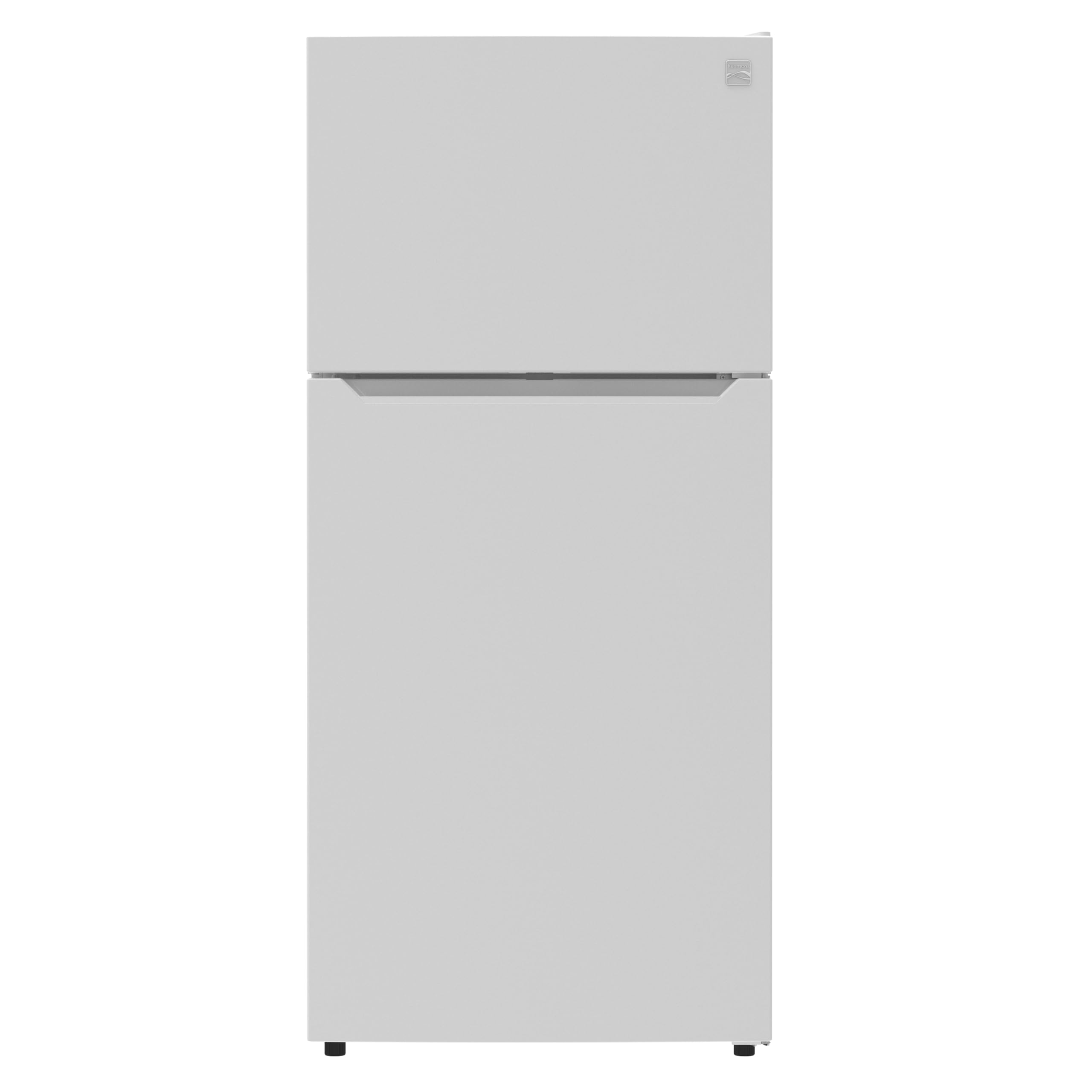
A full-size white fridge that hides its bulk behind a 30-inch-wide footprint.
Eighteen point one cubic feet is the capacity, and the split is a 4.77 cubic foot top freezer plus the rest in the fresh section. That freezer number is the highest you get except for the 20.2 model below, and it changes how you shop — you can stock a real freezer run instead of a token few items. The fridge slides edge-to-edge tempered glass shelves that adjust to fit party trays and sheet cakes, and there is a gallon-size door bin plus four clear door bins, so bulk beverage jugs have a home. Frost-free automatic defrost keeps maintenance off your hands entirely.
For a fridge this size, the 367 kilowatt hours per year is a moderate figure, and the inverter compressor quietly holds a steady temperature rather than running in hard cycles. That is the reason owners describe the temperature as accurate after a few hours of settling in, and why delivery and setup reviews are frequently glowing. Two humidity-controlled crispers and long-lasting LED lighting round out the practical package. It is also note the white finish and standard-depth design — the model is built to slide into a 30-inch kitchen slot without crowding the room.
Two trade-offs to size up. First, several owners flag the fridge compartment cooling as slow to recover after the door is opened repeatedly, and one report describes the temperature falling short of target. Second, the bottom door has no floor clearance, and there are mentions of it striking toes. Neither is a universal complaint — the vast majority report strong performance — but they are the two things to be aware of.
Why owners keep it
- 18.1 cu ft with a 4.77 cu ft freezer and 5 door shelves
- Inverter compressor holds steady temps with less noise and wear
- Energy Star certified with long-lasting LED lighting
- Fits a 30-inch kitchen slot without crowding the room
The details to weigh
- Complaint pattern centers on slow temperature recovery after repeated door openings
- Bottom door has no floor clearance and can catch a toe
- No freezer light on the interior lamp setup
Best for: a single-person or two-person kitchen that wants full-size capacity in white.
Not for: a large family — 4.77 cu ft of freezer is generous for one household, tight for many.
8. Kenmore 20.2 cu. ft. 30″ Wide Top Mount Refrigerator – Black
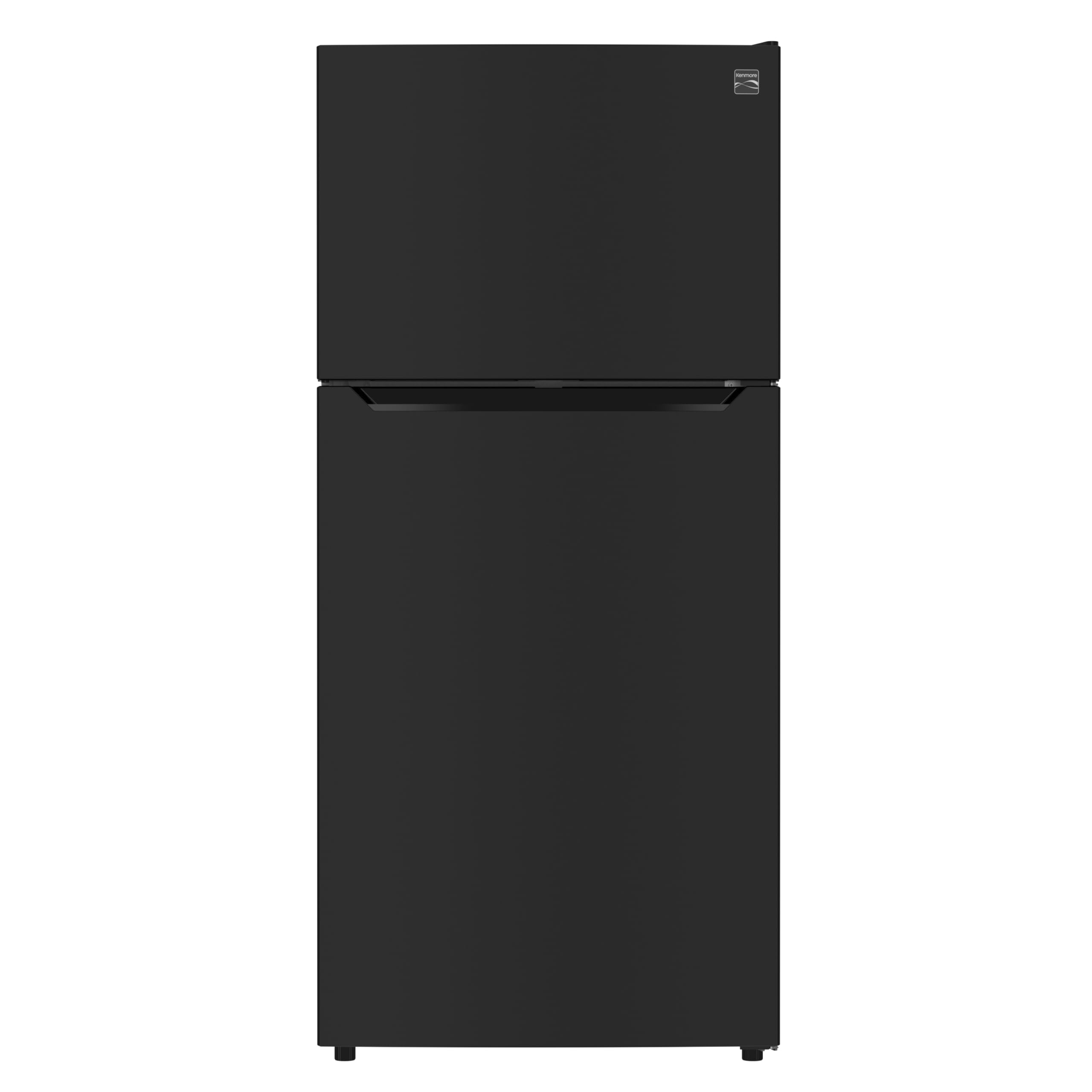
The biggest interior on the list, with a garage-ready sensor built for hot and cold rooms.
This fridge holds the most food in this roundup at 20.2 cubic feet, and its 5.09 cubic foot freezer is the biggest freezer section here by a clear margin. For a family, that means a weekly shop plus a real frozen-goods run fits without a second trip. The interior has tempered spill-proof adjustable shelves and six clear bins including a gallon bin — that’s the highest door shelf count in this article, and it matters when you’re loading up for four people. Frost-free automatic defrost (a system that stops ice from building up) keeps it maintenance-free, and Energy Star certification covers the efficiency question.
Garage use is a specific strength here, and it is the reason owners reach for this one as a second fridge. The built-in temperature sensor is rated to hold steady in environments from 45°F to 110°F, which is exactly the range a garage swings through between winter and summer. Owners describe the 20.2 cubic feet as well organized and spacious enough for a family of four, with even temperature distribution and a quiet inverter compressor. The black finish is the design detail most buyers mention admiring.
On the honest side, the durability story is mixed. The dominant theme is solid build quality and reliability, but there are reports of units arriving dented, and a small number describe freeze problems down the line. The pattern to watch is delivery condition rather than the refrigerator itself — inspect the box on arrival. Weighing the 20.2 cubic feet of space with the garage-ready sensor against that caveat, this one still earns its spot at the top of the size range.
The capacity case: 20.2 cubic feet with a 5.09 cubic foot freezer is the biggest pair of numbers here.
Worth checking: deliveries have arrived dented on some units — inspect it before signing off.
Best for: a family or a garage setting that needs the largest interior and freezer here.
Go smaller if: you are feeding one or two people — the Kenmore 18.1 above carries less weight and less cost.
Understanding the Specs
Annual energy consumption in kilowatt hours
This is the unit your utility bills you in, so lower means more savings over the year. The Frigidaire EFR756 draws 20 kwh annually, which is the lightest here because it uses a manual defrost cycle that skips the heated-defrost power draw. Frost-free and larger-capacity models sit higher — the Avanti 7.0 runs 393 kilowatt hours per year, which is the highest on this list. That single number tells you more about long-term cost than any other spec on the box.
Defrost system: manual versus automatic
Manual defrost means you clear freezer ice yourself, typically every nine months on a small model. Automatic defrost and frost-free systems run a heating cycle that melts the ice for you, so you never pick up a scraper. The Frigidaire EFR756 and the Frigidaire Frost Free 10 CU FT model mark the two ends of that spectrum clearly: one asks for attention, the other does not. Whichever you pick, know which side you are on before you buy.
FAQ
What is the difference between frost-free and manual defrost?
How many cubic feet do I need for a household of two?
Can these refrigerators go in a garage?
What does the cubic feet number actually measure?
Do top-freezer refrigerators use more energy than side-by-side models?
Is a retro fridge like the Frigidaire EFR756 as reliable as a standard white fridge?
Do these fridges come with a reversible door?
What is Sabbath Mode on a refrigerator?
How long does the compressor usually last?
Do these refrigerators arrive with damage from shipping?
Final Thoughts: The Verdict
The basic top-freezer refrigerator winner is the Frigidaire EFR756 — it draws just 20 kwh against the Frigidaire Frost Free model’s 300 kwh, gives you 7.5 cubic feet with four door shelves, and wears the retro look that people actually want to look at. The trade is a manual defrost roughly every nine months, which is the honest price of that efficiency. If defrosting by hand is not for you, grab the Avanti 7.0 for its automatic defrost and generous 1.9 cubic foot freezer. And for a garage-ready second fridge that swallows a family shop, the Kenmore 20.2 Cu. Ft. with its 5.09 cubic foot freezer and 45°F to 110°F rated sensor is the one to reach for.
How We Picked
We do not accept paid placement. Every pick is matched to a real buyer and a real use-case; we do not hands-on test units.
Sources & Methodology
Specifications: manufacturer listings and product documentation. Review insights: verified customer reviews, as of September 2026. Pricing: not shown on this page (it changes often); check the current price via the retailer link.
As an Amazon Associate, KitchPrep earns from qualifying purchases. This does not affect which products we feature.
Related Guides
