
Specs are compiled from manufacturer listings and verified buyer reviews and can change over time — please confirm the key details on the product page before buying.
If you need steel that holds a frame square and shrugs off a load, the answer is simple: buy quarter-inch thick angle and stop worrying. Anything thinner flexes under a weld or a bolt; this thickness is where brackets, braces and trailer corners start feeling permanent. This guide sorts five real angle iron listings by what they are actually good at, so you can pick the right cut length and leg width in one pass.
I’m Mohammad Maruf — the founder and writer behind KitchPrep. This guide is built by comparing the manufacturers’ published specifications and the patterns across verified customer reviews, so you get each pick’s real strengths and trade-offs instead of marketing spin.
One thing to know upfront: not every listing below is exactly a quarter-inch thick in every size option, so match the thickness and leg length to your job before checkout. Here is the honest shortlist of the 1/4 inch angle iron worth ordering for brackets, frames, and repair work.
Our Picks at a Glance

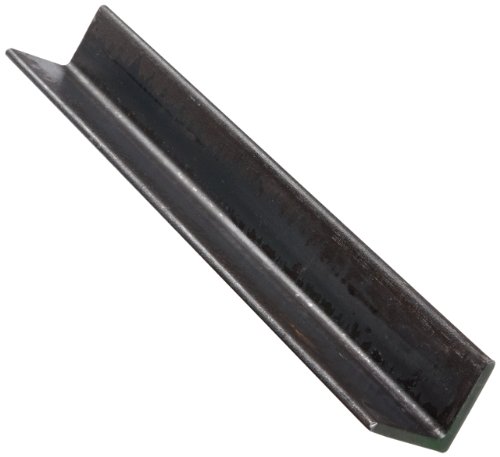
How To Choose The Best 1/4 Inch Angle Iron
Angle iron shopping goes wrong in one of two ways: you buy a leg too narrow to carry the load, or you buy a cut length you have to re-cut at home. Nail down three things — thickness, leg length, and steel grade — and the choice gets easy.
Thickness decides whether it holds or bends
Quarter-inch thickness is the wall of the L-shaped profile, and it is what resists bending once you load the piece. On a bracket that carries a shelf, a hitch, or a gate, quarter-inch steel stays put where thinner stock dishes under the same weight.
Leg length sets how much it can span
Leg length is the width of each side of the L, so a 4-inch leg spreads a load wider and bolts flatter than a 2-inch leg. Wider legs are heavier and bulkier, which matters if the piece has to tuck into a tight frame.
Mild steel versus stainless
A36 mild carbon steel is the everyday structural choice: strong, easy to weld, and happy indoors or under paint. Stainless 304 costs more, but it resists rust where a grill, a boat, or a wet shop will eat through plain steel.
Quick Comparison
| Model | Best For | Thickness | Leg Size | Material | Amazon |
|---|---|---|---|---|---|
| 2TwentyTwo Steel 2″ x 3″ Pick Your Length★ Best Overall | Custom-length brackets | 1/4″ | 2″ x 3″ | A36 Hot Rolled Steel | Amazon |
| OnlineMetals A36 Steel Angle 2″Top Performer | Grill and fabrication projects | 0.25″ | 2″ equal legs | A36 Hot Rolled Steel | Amazon |
| 2TwentyTwo Steel 2″ x 2″ Pick Your Length | Square-corner frames | 1/4″ | 2″ x 2″ | A36 Hot Rolled Steel | Amazon |
| MSP Metals 4″ Equal Legs | Heavy structural braces | 0.25″ | 4″ x 4″ | A36 Hot Rolled Steel | Amazon |
| OnlineMetals 304 Stainless Angle | Rust-proof outdoor work | 1/4″ | 4″ equal legs | 304 Stainless Steel | Amazon |
In‑Depth Reviews
1. 1/4″ Steel Angle x 2″ x 3″, Pick Your Length, Mild Steel, Angle Iron, Hot Rolled A36 (40)
Our pick — 4.5★ from 50+ verified ratings; the strongest balance of quality and price.
An unequal-leg A36 angle that arrives already cut to the length you asked for.
This pick’s advantage is its unequal-leg shape. Instead of two matching sides, it gives you a 3-inch leg and a 2-inch leg on the same quarter-inch-thick bar, which is exactly what you want when one face bolts flat to a surface and the other stands up to carry the load. Ordering it in your own length means the piece shows up ready to drill rather than waiting on a chop saw. Buyers report it plainly: “The parts arrived 3 days early.” The cut sizing stays inside a tolerance of plus or minus one-eighth of an inch, so give yourself a little room if your frame is already welded.
The 2″ x 3″ leg profile splits the difference between the 2″ x 2″ and 4″ x 4″ bars. It is far more rigid than the 2″ x 2″ bar below it, yet nowhere near the bulk of a 4″ x 4″ leg — the MSP Metals 4″ x 4″ runs a full 4 inches on both sides, double the leg length, and that extra width is weight you may never need. This one welds cleanly because A36 is a low-carbon steel with forgiving weld characteristics, and hot rolling means the faces stay flat rather than warped. Expect the piece to feel substantial in the hand; the same owner who loves the price also called it “a little heavier than what I needed,” which is the trade-off of quarter-inch stock.
Where this earns its spot is custom fabrication — gate corners, repair plates, machine skids, a one-off bracket nobody sells. The 53-strong review pool sits at 4.5 stars, and the recurring theme is simple: what showed up matched what was ordered, cut square, packed tightly, and often early. The 40 in the listing title is a listing marker, not a length, so confirm the cut you need before you check out. If you want steel that saves you a cut and cannot twist under load, this is the one to start with.
Why Fabricators Grab It
- Quarter-inch (0.25″) thickness resists flexing under load
- 2″ x 3″ unequal legs suit surface-mount brackets
- Comes cut to your specified length, tolerance +/- 1/8″
- A36 hot rolled steel welds cleanly and stays flat
Before You Click Buy
- Heavier in the hand than thinner stock, so plan for it
- Cut length lands inside +/- 1/8″, not a perfect bolt-on fit
Buy it for: one-off brackets and repairs where you want the cut already done and the leg profile unequal on purpose.
Leave it if: your frame is already measured to the sixteenth and you cannot absorb a small cut variance.
2. A36 Steel Angle, Unpolished (Mill) Finish, ASTM A36, Equal Leg Length, 2″ Leg Lengths, 0.25″ Wall Thickness, 12″ Length, OnlineMetals
A compact 12-inch A36 bar that keeps earning its keep in grill and fabrication work.
Twelve inches, two matching 2-inch legs, quarter-inch wall. That small format is the reason this bar turns up in so many shop projects — it is short enough to work on a bench and light enough to handle one-handed, yet it still carries a genuine quarter-inch of steel where it counts. At 3.2 pounds it is far easier to move around than the 6.6-pound stainless bar further down this list, and that weight gap is exactly what makes it the friendlier piece for a job you are doing by hand. The mill finish and rounded corners keep the bar comfortable to grab and easy to clamp.
Its most-praised trait is that the piece matches the listed dimensions. The single most-praised trait across its review pool is that the piece matches the described dimensions, and it follows through with a steady drumbeat of notes about how well it functions, how durable it feels, and how fair the value is. The grill-basket trick is where it shines: owners mention using it in a PK 360 grill as an organizing wall that “consolidates/spreads charcoal,” calling it more flexible than the grill’s own basket. Elsewhere in the pool it becomes a door strike plate — mortised into trim, bolted into studs from two directions, with deadbolt and latch holes drilled and shaped to fit.
The sensible default: if you are new to cutting steel, a 12-inch bar with equal 2-inch legs is the least fussy piece on this list — small enough to hold steady, thick enough to weld without blowing through.
Know the honest catch: 12 inches is 12 inches. Anything that spans a doorway or a truck bed will need more bars joined together, so order accordingly rather than assuming one piece does the whole job.
Reach for this when: you want a bench-friendly bar for small brackets, grill work, or a security plate, and you would rather pay for a known mill spec.
Look elsewhere when: you need a long run in one piece — this bar is deliberately short.
3. 1/4″ Steel Angle x 2″ x 2″, Pick Your Length, Mild Steel, Angle Iron, Hot Rolled A36 (48)

A square-cornered bar that shows up in four-foot lengths, ready to cut down.
When you want one long piece instead of a stack of short ones, this is the pick. It runs 48 inches in the listing — four times the 12-inch cut on the OnlineMetals A36 bar above — and that extra reach is the whole difference between patching a frame and building one. The legs are 2″ x 2″ in equal width, so the piece sits perfectly square in a corner, and the quarter-inch nominal wall thickness is what lets it hold that square under a weld without pulling in. Customers note a slightly different angle on value: “Good price, good quality, low price.”
Two details to weigh before ordering. First, the listing color is described as rusty, which is normal for hot-rolled mild steel that sat in the mill and has no bearing on strength — a wire brush and a coat of paint handles it. Second, if speed matters, one owner admitted needing a little patience: description, quoted directly, reads “If you are not in a big rush to get the job done, this is a great option.” The cut sizing also carries the same plus-or-minus one-eighth-inch tolerance as the other 2TwentyTwo pick, so leave yourself slack on a precision frame.
For a square-cornered project — a door frame, a bench leg, a trailer rail — the equal 2-inch legs here are the cleanest fit. Pair it with the 2″ x 3″ Best Overall bar when you want one leg flush and one leg standing, and you have both styles covered. At 4.9 stars across its review pool, the pattern is consistent steel, honest description, and lengths that land where you expect. Reviewers point out “material as described” and “perfect fit” more than once, which tells you the shop is cutting to the spec it advertises.
The four-foot advantage: one continuous piece at 48 inches cuts your welding and joining in half compared with chaining short bars, and equal 2″ x 2″ legs keep the corners dead square.
The patience tax: hot-rolled steel arrives with mill scale and a rusty tint, and the shipping on a long bar is not instant — plan for a little cleanup and a few days of wait.
Best fit for: frame and rail work where a single long piece beats three short ones and square corners matter.
Think twice if: the piece has to be finish-ready from the start — this bar needs a brush and a paint coat first.
4. Hot Rolled Steel ASTM A36 Angle 4″ x 4″ x,0.25″ Wall Thickness, 12″ Cut Length, Equal Legs, Mild Carbon for Structural Supports, Frames, Braces, and Fabrication
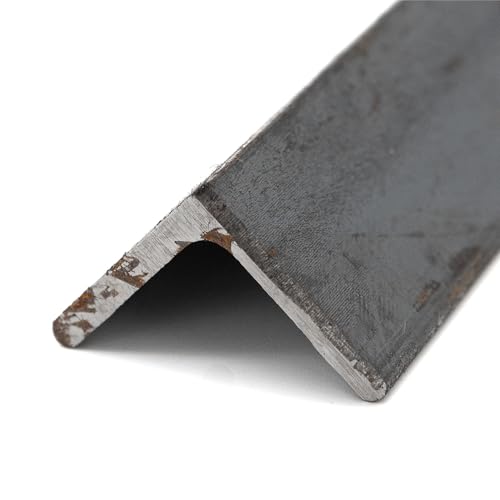
Double-wide legs for the brace that has to swallow a serious load.
Four inches on both legs is the headline here, and it is double the leg width of the 2″ x 2″ bar above. That extra reach means bolts sit further from the corner, the load spreads across a wider footprint, and the piece feels like a genuine structural member rather than a bracket. The quarter-inch (0.25″) wall thickness matches the rest of this list, so the thickness is not the upgrade — the width is. Shoppers say it simply and often: “Very heavy duty perfect for the 4 brackets I made.”
The 12-inch cut length keeps it practical to ship and handle, and the low-carbon A36 composition is what makes it weld so willingly. Owners describe it as “perfect for medium duty applications” that “weld very nicely,” which lines up with the hot-rolled process keeping the material consistent and dimensionally stable across the bar. Equal 4-inch legs mean it is symmetrical, so there is no right way up to track when you are fitting it into a frame or a set of braces.
Here is the one caveat worth flagging plainly: the product photo shows two bars, but the listing is for a single piece, and that mismatch has drawn sharp words — a couple of reviewers felt misled by the picture and called the per-piece cost high. Read the quantity line carefully before you buy, and treat this as a one-bar purchase. If you cannot buy steel in bulk locally, the convenience still justifies the order; the recurring note is that it is an easy way to get heavy angle without a trip to the yard. The review pool sits at 4.4 stars, mostly lifted by the weld quality and the sheer mass of the thing.
What It Delivers
- 4″ x 4″ equal legs carry a wide, stable load footprint
- 0.25″ wall thickness holds rigidity under weight
- Low-carbon A36 welds cleanly and stays dimensionally stable
- 12″ cut length keeps shipping and handling manageable
The Fine Print
- Listing is one bar, though the photo shows two
- At this width and thickness, the piece is heavy and the per-piece value splits buyers
Pick this for: structural braces, machine skids, and any bracket that needs wide legs and a weld you can trust.
Pass if: you want multiple bars from one order — this ships as a single piece, so buy the count you need.
5. 304 Stainless Steel Angle, Unpolished (Mill) Finish, Annealed, ASTM A276, Equal Leg Length, Rounded Corners, 4″ Leg Lengths, 1/4″ Wall Thickness, 12″ Length, OnlineMetals

The stainless bar you buy once, for the job that sees weather and grease.
This is the only pick on the list made from stainless steel, and that single change is what you are paying for. Grade 304 resists corrosion where plain A36 will rust, which is why it belongs in outdoor frames, grill repairs, and wet-shop brackets that just eat mild steel alive. The dimensions are serious too: 4-inch equal legs, a quarter-inch wall, and a 12-inch cut length, matching the leg width of the MSP Metals bar above but in a corrosion-resistant alloy instead of carbon steel.
The 6.6-pound weight tells the other half of the story — it is roughly double the mass of the 3.2-pound OnlineMetals A36 bar, and that density is a sign of just how much steel is in the piece. Owners appreciate the stiffness, with one buyer using it to reinforce a hinge point on a windshield and calling it stiffer than expected. Others mention it will not rust, which is the whole reason to choose 304 over A36 for anything that lives outside. The mill finish arrives annealed and even — a few owners found it better than the listing photos suggested.
There is a real trade-off, and it is worth knowing before you order. Stainless 304 is tough to drill and cut compared with mild steel, and one buyer found it a genuine chore — their best bits went dull after a few cuts, and the piece fought back at every step. Plan for sharp tooling, slow speeds, and a bit of patience, and the work goes fine; rush it with dull bits and stainless will win. The review pool sits at 4.0 stars, with the mix of praise for corrosion resistance and stiffness against honest notes about the machining effort. For a job where a rusted-out bar will fail in a year, the extra work is a fair price.
Why stainless wins here: Grade 304 shrugs off water, grease, and weather where carbon steel rusts, and the 4-inch equal legs and 1/4″ wall give you the same structural heft as the heaviest mild-steel pick.
The real cost of 304: stainless is harder to machine than mild steel — budget for sharp drill bits and slower cutting, and do not be surprised if a bit dulls on a long job.
Choose it when: the bar will face rain, grill heat, or a wet shop floor and you cannot afford rust to eat the joint.
Skip it for: hidden indoor brackets where mild A36 does the same structural job with far less drilling grief.
Understanding the Specs
Leg Length and Thickness
Leg length is the width of each side of the L, and thickness is the wall of steel in that profile. A 4-inch leg with a quarter-inch wall spreads a load wide and holds its shape, which suits structural braces. A 2-inch leg with the same quarter-inch wall is lighter and handier for brackets and grill work. Match the leg to the span, not the other way around.
Steel Grade: A36 Versus 304
A36 is a low-carbon structural steel chosen for its strength and easy weldability, and it is the standard for indoor brackets and frames. Grade 304 stainless adds corrosion resistance, so it survives weather, moisture, and grill heat where A36 would rust. The trade-off is labor: 304 is tougher to drill and cut, so choose it only when rust is the real enemy.
FAQ
What does 1/4 inch angle iron actually mean?
Can I weld A36 angle iron at home?
Is 304 stainless angle worth it over mild steel?
How much does a 12 inch piece of quarter-inch angle weigh?
What does the plus or minus 1/8 inch length tolerance mean for my project?
Which leg size should I choose, 2 inch or 4 inch?
What is the difference between equal leg and unequal leg angle iron?
Will quarter-inch angle iron rust if I leave it outdoors?
Can I cut quarter-inch angle iron with a standard hacksaw?
How do I keep the corners square when I build a frame?
Final Thoughts: The Verdict
For most buyers, the 1/4 inch angle iron winner is the 2TwentyTwo Steel 2″ x 3″ Pick Your Length bar because its unequal 2″ x 3″ legs bolt flat and stand tall on the same quarter-inch-thick piece, and it arrives already cut to length. If you want a bench-friendly bar with known mill spec for grill and small fabrication work, the OnlineMetals A36 2″ equal-leg angle is the one to reach for. And for anything facing weather or grill heat, the 304 stainless angle is the rust-proof answer — the harder-to-drill piece you buy once and never replace.
How We Picked
We do not accept paid placement. Every pick is matched to a real buyer and a real use-case; we do not hands-on test units.
Sources & Methodology
Specifications: manufacturer listings and product documentation. Review insights: verified customer reviews, as of September 2026. Pricing: not shown on this page (it changes often); check the current price via the retailer link.
As an Amazon Associate, KitchPrep earns from qualifying purchases. This does not affect which products we feature.
Related Guides
