
Specs are compiled from manufacturer listings and verified buyer reviews and can change over time — please confirm the key details on the product page before buying.
If you are tracking down soft copper tubing for a fridge repair, an HVAC hookup, or a shop-compressor project, the short answer is simple: buy tubing that is actually pure annealed copper, sold in the diameter you asked for, and wound loosely enough that it does not arrive kinked. Get those three right and the install goes smoothly. Get them wrong and you will be fighting a crushed coil, chasing a leak, or brazing a line that never should have been that stiff.
I’m Mohammad Maruf — the founder and writer behind KitchPrep. This guide is built by comparing the manufacturers’ published specifications and the patterns across verified customer reviews, so you get each pick’s real strengths and trade-offs instead of marketing spin.
Half-inch soft copper coil is measured by its outside diameter, and that single number is where most of the confusion starts. Below you will find eight real coils, sorted by fit and finish, so you can match the right 1/2 inch copper tubing to your exact project the first time.
Our Picks at a Glance
How To Choose The Best 1/2 Inch Copper Tubing
Soft copper coil is sold by outside diameter, not by the inside hole you can see. A tube labeled 1/2 inch is roughly half an inch across the outside, and its inside opening is smaller by twice the wall thickness. That gap is exactly why two coils that look identical on the shelf can behave completely differently once you cut into them. Here is what actually decides whether a coil earns its place in your toolbox.
Match the outside diameter, then check the wall
The outside diameter is the fixed, standard size that your flare nuts, compression fittings, and solder couplings were built around. A true 1/2 inch OD tube seats in those fittings without shims or adapters. The wall thickness is the variable, and it is what you feel when you bend the tube by hand. A thinner wall bends with less effort but collapses more easily under a thumb, so a bender becomes a requirement rather than a nicety. A slightly heavier wall shrugs off a clumsy bend but asks more from your hands and your tools.
Read the grade before you trust the label
C12200 is a copper alloy designation, and you will see it stamped on nearly every quality refrigeration coil. ASTM B280 is the specification written for air-conditioning and refrigeration tube, so a coil that names both is telling you it was made for refrigerant lines rather than for water. Pure copper is also the honest test against a copper-coated steel knock-off: copper stays soft, bends smoothly, and will not rust after a season of wet weather, while a coated steel line will eventually show rust the moment the coating is breached.
Longer coils mean fewer joints and fewer leak points
Every additional coupling on a refrigerant or air line is another place a leak can develop, so length is a real quality feature, not just quantity. A longer continuous run lets you route from one end of a system to the other without stopping to braze a splice. For a standard hookup, a shorter coil is plenty and keeps waste low. For a long run through studs or across a shop, the longer continuous coil is worth the difference because it removes joints you would otherwise have to seal and re-check.
Quick Comparison
| Model | Best For | Outside Diameter | Length | Wall Thickness | Amazon |
|---|---|---|---|---|---|
| BELLA BAYS Copper Tubing 10 ft★ Best Overall | All-around refrigeration and DIY repair | 0.5 inches | 10 feet | 0.028 in / 0.7 mm | Amazon |
| XIFOWE 99.9% Copper Tube 5 ftCompact Pick | Short antenna and compressor builds | 0.5 inches | 60 inches | 0.03125 inches | Amazon |
| GOORY Copper Tubing 10 ftTop Performer | HVAC installs and custom runs | 0.5 inches | 120 inches | 0.028 in / 0.7 mm | Amazon |
| SHASKOKOEN Pure Copper Tubing 10 ft | Budget-friendly coil and fridge repairs | 0.5 inches | 120 inches | 0.7 millimeters | Amazon |
| YullSorom Copper Tubing 10 ft | Flaring and shaping by hand | 0.5 inches | 10 feet | 0.028 inches | Amazon |
| YuJingKey Copper Tubing 10 ft | Heat-exchanger and cooling-coil projects | 0.5 inches | 10 feet | 0.25 inches | Amazon |
| Yaocom Copper Tube 10 ft | Fountain, radiator, and recirculating lines | 0.5 inches | 10 feet | 0.7 millimeters | Amazon |
| ICS Industries 50 ft Soft Coil | Long continuous ACR runs and repairs | 0.500 inches | 50 feet | 0.18 inches | Amazon |
In‑Depth Reviews
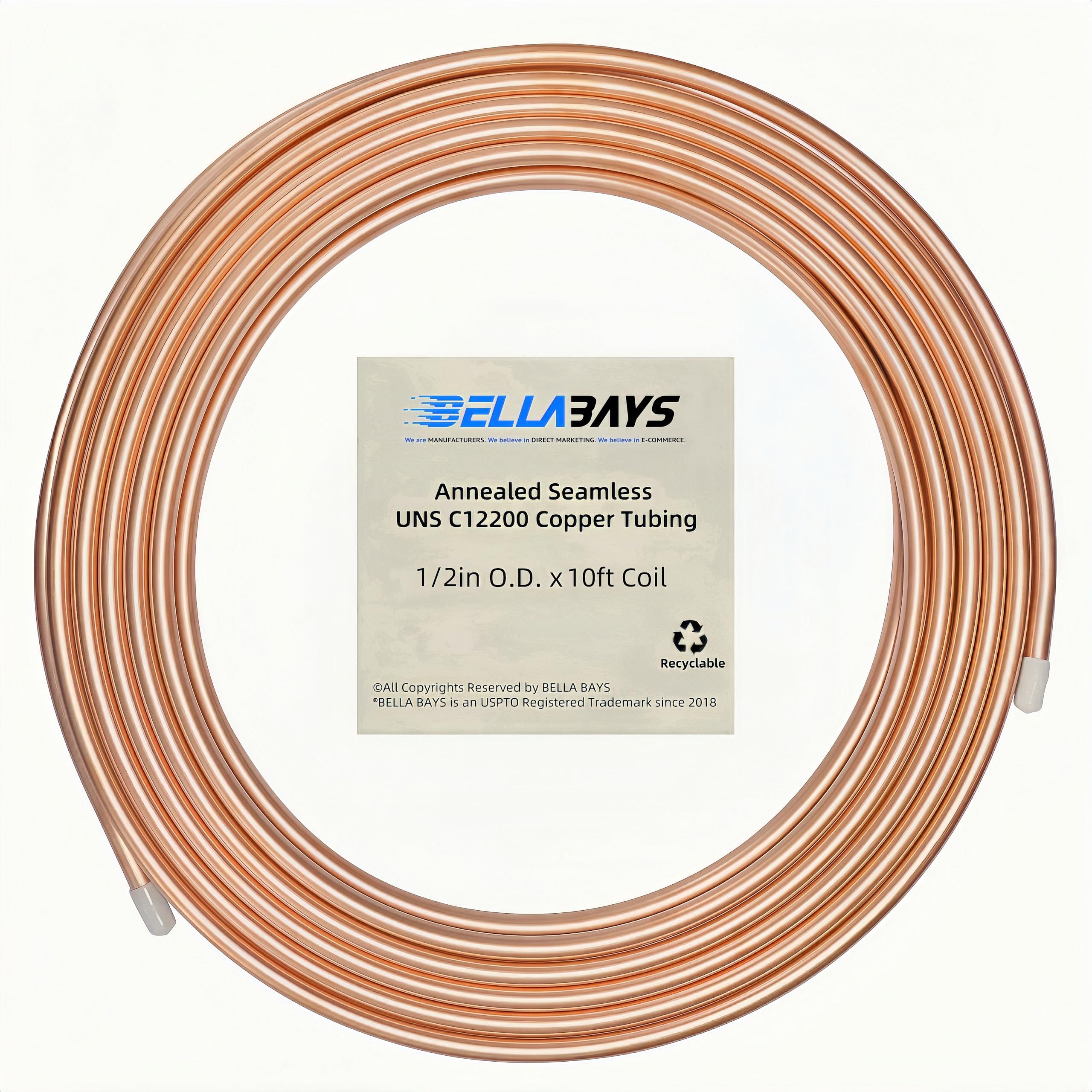
1. BELLA BAYS Copper Tubing 1/2″ OD x 0.445″ ID x 10 ft, 99.9% C12200 ASTM B280 Refrigeration ACR Tubing
Our pick — over 4.5★ from 500+ verified ratings; the strongest balance of quality and price.
The loose-wound coil that comes off the roll straight and stays workable
Buyers consistently report it does exactly what it was bought for. This is a 10-foot coil of C12200 T2 pure copper, checked against the ASTM-B280 refrigeration specification, in a 0.5 inch outside diameter with a 0.028 inch (0.7 mm) wall. Practical translation: it is a real refrigerant-grade tube, sized to drop straight into standard flare and solder fittings, and long enough to cover a full repair run without a splice. It has also been nitrogen-charged during manufacturing, a process that pushes oxidation and trapped moisture out of the tube so the inside stays clean and ready to braze.
What makes this the top pick over the other ten-foot coils is the winding. As owners put it: “they don’t use a very tight winding – others use too tight a winding and cause work hardening. This one unwound beautifully!” A tightly wound coil bends cold and stiff, and copper that has been mechanically worked hard is harder to shape cleanly. The generous coil wind means the tube comes off closer to straight and stays soft enough to bend at the angles you actually need. If you have ever fought a coil that wanted to stay in a corkscrew, you know exactly why that matters.
The honest catch is the wall. A 0.028 inch wall is thin by design — that is what makes soft refrigeration coil bendable — and thin walls crush if you push a tight radius by hand. Keep a tubing bender on the job, and plan your bends before you start rather than improvising one in a tight space. The coil can also pick up minor dents in transit depending on how it lands. That is a shipping quirk more than anything else, and for a swamp-cooler or appliance repair where you were going to cut sections anyway, it rarely costs you anything.
Where This Coil Delivers
- 10 continuous feet in one coil cuts out splice joints and their leak points
- C12200 T2 pure copper with ASTM-B280 spec means it is built for refrigerant lines
- Nitrogen-charged construction keeps the interior clean and ready to braze
- Loosely wound so it unwinds without the work hardening that stiffens tight coils
Where It Asks For Care
- A 0.028 inch wall bends easily but will kink without a bender, so budget for one
- Some coils show minor dents from shipping, so inspect on arrival
- Thin-wall soft tube is not the right choice for a rigid high-pressure run
Best fit: anyone doing a one-and-done refrigerator, freezer, swamp-cooler, or HVAC repair who wants a clean bend instead of a fight.
Look past it: if you need a long continuous run or a heavy wall for a permanent rigid line — the 50-foot ICS coil covers that job better.
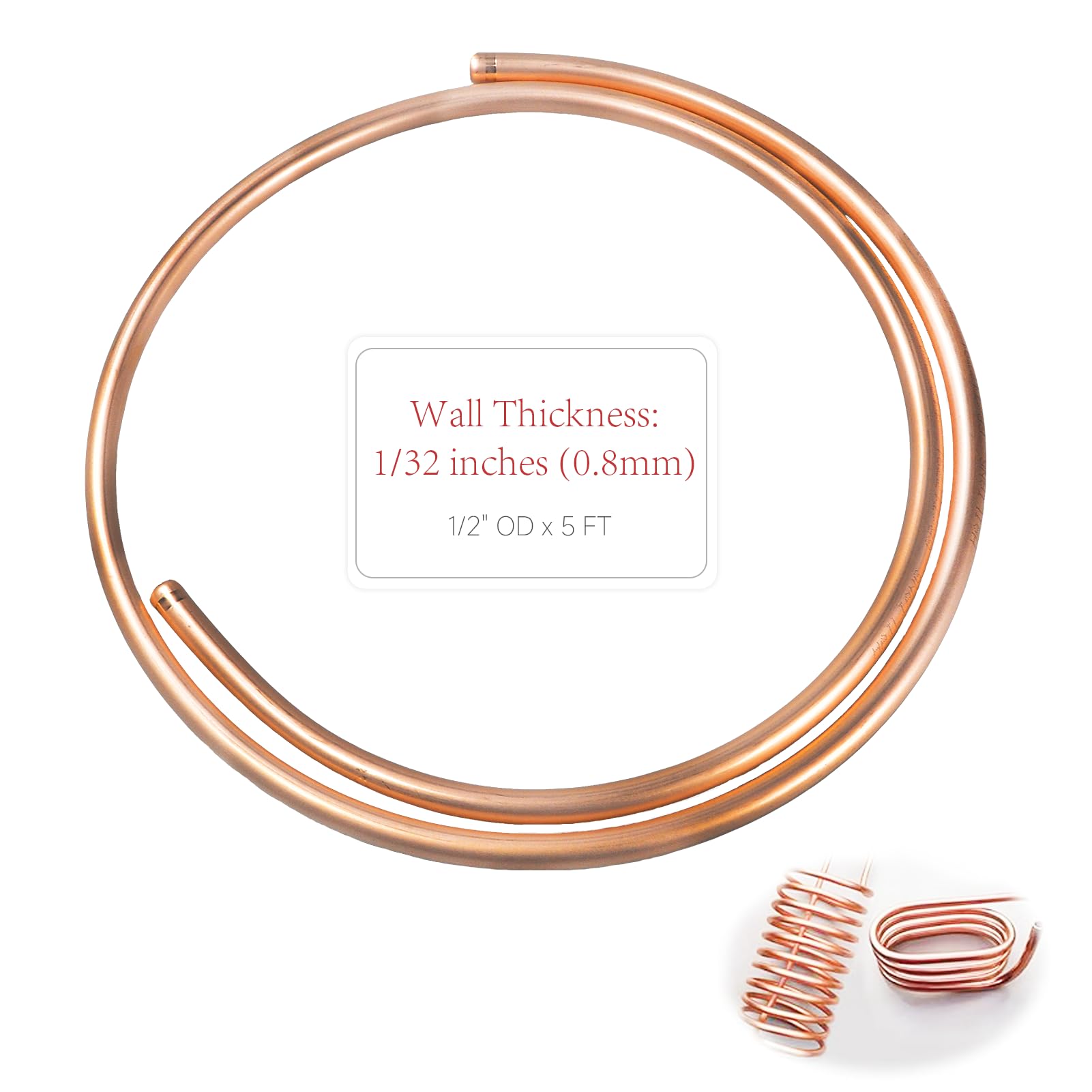
2. XIFOWE 99.9% Copper Tube 1/2″ OD x 7/16″ ID 5 Ft, Tube Wall 1/32″ Refrigeration smooth Round T2 Pure Copper Tube
Five feet of heavier-wall copper for the short run that has to hold pressure
This one is the choice for a high-pressure short run. The wall is listed at 0.03125 inches — that is a 1/32 inch wall — which is the thickest wall in this whole roundup on a 1/2 inch OD tube. A thicker wall is stiffer to bend, but it takes more pressure and more accidental abuse before it deforms, which is exactly what you want on an air-compressor line. It is C12200 copper, and buyers report it works well on a shop setup: “Used this on a Derale after-cooler and Milton filter setup on my big shop air compressor.”
At 60 inches it is the right size when you want to avoid buying ten feet of tube to use four. This is exactly the length for antenna work too — a buyer building their own six-meter and VHF antennas called it easy to work with. The water analogy is off the table here, by the way: 60 inches of coil from this brand runs far shorter than the 120 inches you get off a 10-foot BELLA BAYS coil, so check your run length before you order. I also like that they leave a little extra length past the machine-pinched ends, so you cut off the crimped section and still have your full measurement intact.
Two honest notes. Some owners say the measured thickness does not match the spec sheet exactly, and a few would rather have a heavier, stiffer feel for pressure work. It is still real, confirmed copper — one buyer’s read, that says it plainly, is just “real copper.” If you want a tube you can shape into a convoluted bend with your hands alone, the thicker wall here makes that harder, not easier. That is the trade-off for pressure capability.
What earns it a slot: the 1/32 inch wall is the heaviest here, so it shrugs off pressure and rough handling better than the thin-wall coils.
What to plan around: it is a short 5-foot run at a stiffer stiffness, so it is not the pick for a long flexible routing job.
Reach for this if: your project is a short, pressure-loaded line — shop compressors, antenna builds, tight hookups — and you want the extra wall.
Skip the pairing if: you need leniency on bends or enough tube for a long install: a heavier wall plus a shorter coil works against both.
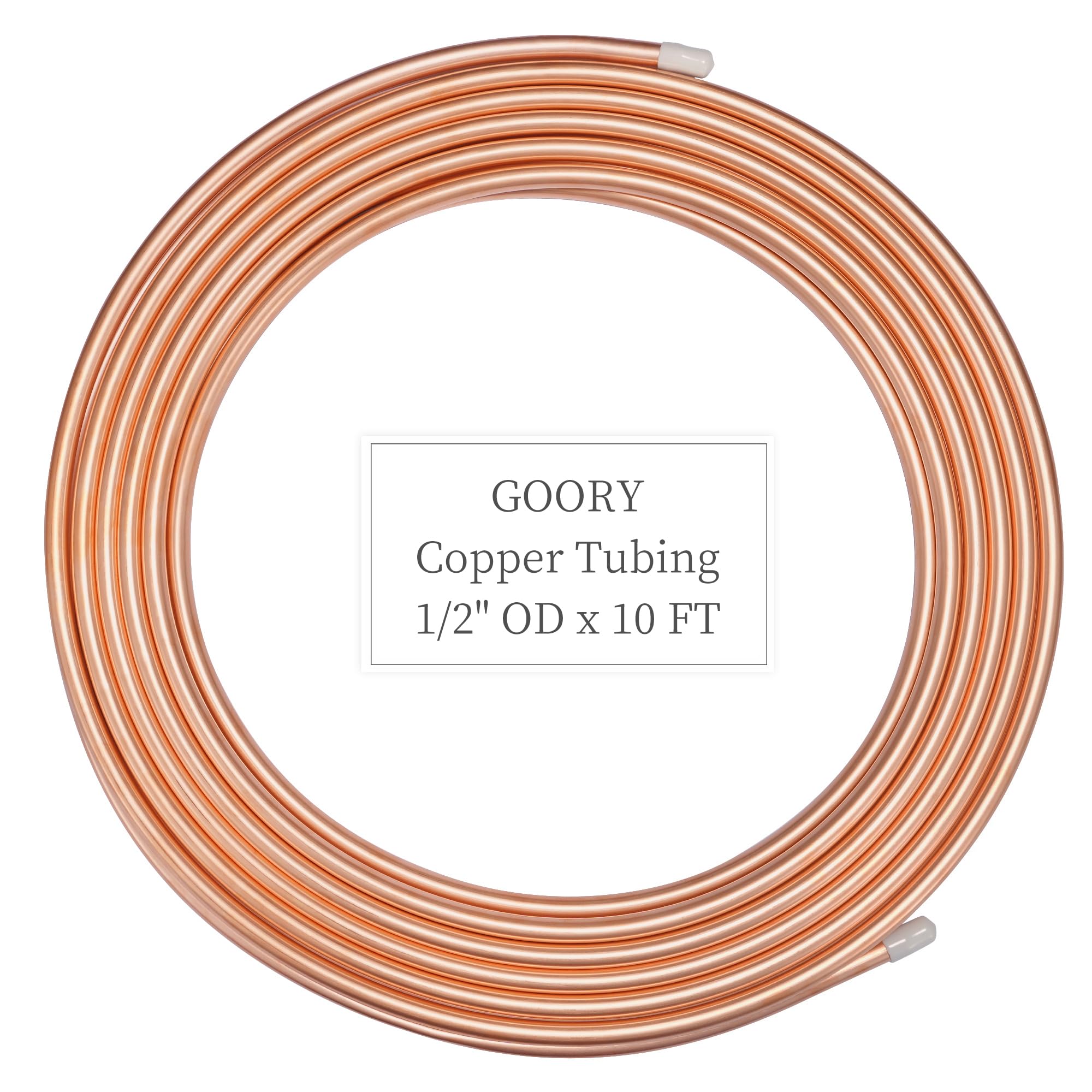
3. GOORY Copper Tubing 1/2″ OD x 0.445″ ID x 10 FT, 99.9% C12200 Pure ACR Tube, ASTM B280 Refrigeration T2 Copper Tube
Ten feet of pure ACR copper built for HVAC installs and custom repair runs
Where the BELLA BAYS coil is the value all-rounder, this one leans toward the pro install. It is the same 10 feet of C12200 T2 copper with a 0.028 inch (0.7 mm) wall and a 0.5 inch outside diameter, made to the ASTM-B280 refrigeration spec, and nitrogen-charged during production to keep the interior clean. The difference buyers notice is the packaging and transit protection: HVAC installers report it ships in a strong box that arrives undamaged, with the coil intact and ready to bend, flare, and plumb into a system.
Kink resistance is a genuine strength here. Standard practice — bend it with a bender, flare it at the ends, and it holds up. Owners describe it as durable and flexible, and even a non-plumber reviewer using it for a specific job called the copper strong. There is a real warning worth reading, though: it ships tightly wound, and like any tightly coiled soft copper it can take effort to work a bend into it, so a bender is not optional on a tight radius. One review reports the coil arriving with some crush damage, and the takeaway is simple — open the box and lay the coil out before you start cutting, and send it back if a section is pinched.
One thing to keep straight: a stray review here complains the diameter measured too small, but that listing is for a quarter-inch tube, not the half-inch coil described above. Treat it as a fluke that does not line up with what this product actually is, not a knock on the 1/2 inch coil. When you buy the right diameter, the size is where it should be.
The case for it: pro installers get a nitrogen-charged, ASTM-B280 tube in a box that survives shipping, which matters when a crushed coil stalls a job.
The catch to know: it arrives tightly wound, so plan for a bender and a little patience on the first bend of each run.
Made for: contractors and serious DIYers doing HVAC or refrigeration installs who want transit-protected pure copper and do not mind working around a tight coil.
Pick the alternative if: you want a coil that unwinds almost flat with minimal effort — the loose winding on the BELLA BAYS coil suits that better.
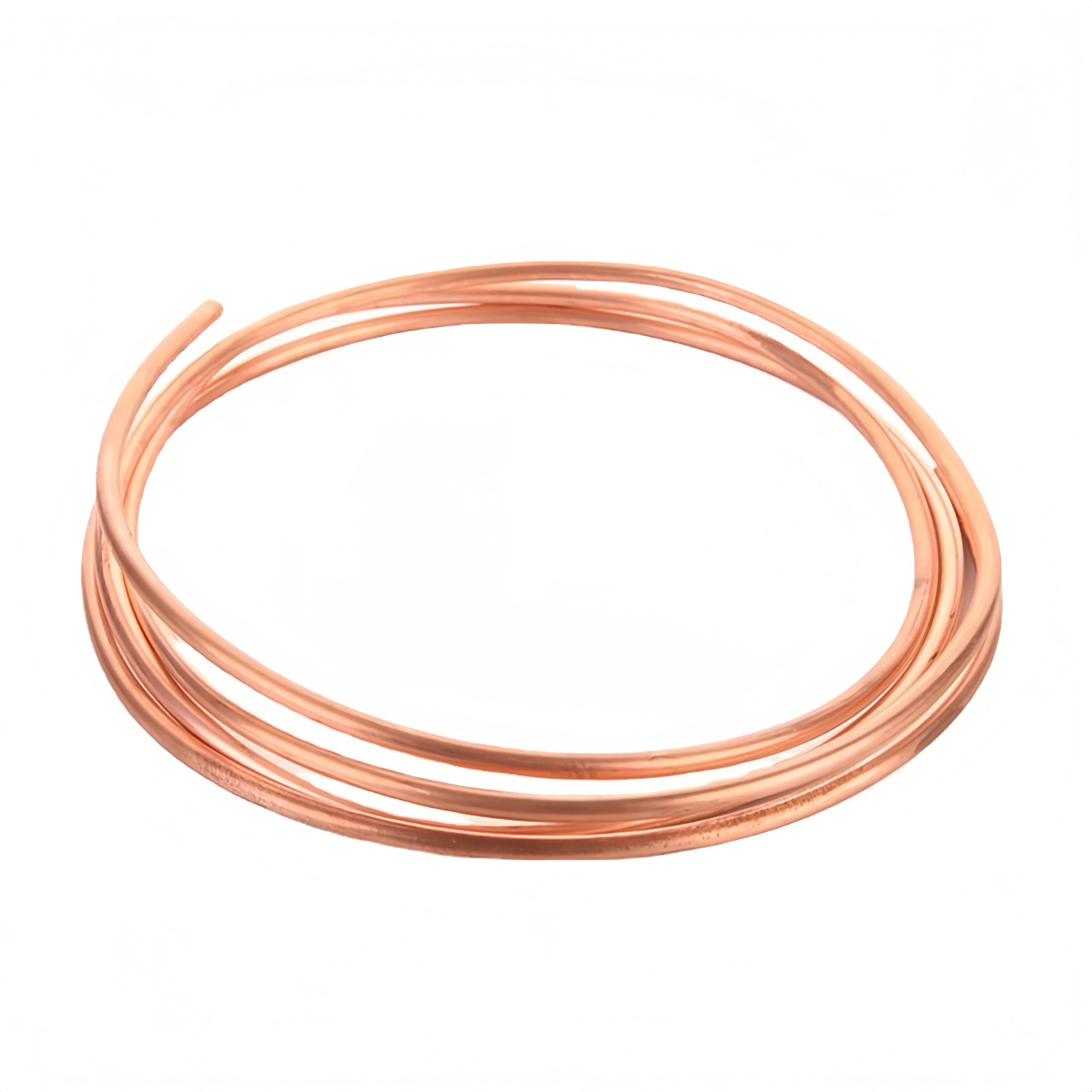
4. SHASKOKOEN Pure Copper Tubing 1/2″ OD x 7/16″ ID x 10 FT, Tube Wall 0.7mm
A no-drama ten-footer for cooling coils and quick capillary-tube repairs
Start with the standout, because it is the reason this coil earns a spot. It is a 10-foot smooth tube in T2 copper, and it bends in both hot and cold weather without turning brittle. That matters when your workspace swings between a cold garage and a warm basement — soft copper that stiffens in the cold is a nuisance, and this one stays workable. It is an entry-level pick in the refrigeration-coil class, but the copper itself reviews as nice-quality with good extensibility and conductivity.
The most impressive single use case here is a capillary-tube repair. A buyer cut a one-inch section out of a leaking refrigerator line, inserted four inches of this tubing, left a one-inch gap, pinched the ends, and brazed it with a propane/oxygen torch and 15 percent silver rods. The repair held and saved a 26-year-old fridge from the landfill. That repair held, which tells you this tube takes a braze cleanly. It also makes a good cooling coil, whether you are building one for a project or replacing an existing run.
Two things to check before you buy. First, this coil draws some notes that the outside diameter lands slightly large, so if your application is a snug fit inside a tight ferrule, measure and test-fit rather than assuming. Second, it ships in a bag rather than a rigid box, so it can arrive with a little flattening depending on the trip. Both are easy to work around if you order with a small margin and inspect the coil when it lands.
Why it earns a place: smooth T2 copper that bends in hot or cold conditions and brazes cleanly — ideal for cooling coils and quick fridge-line repairs.
Order with margin: the OD can run slightly large and the bag packaging is soft, so confirm the fit and check for transit flattening.
Good match: the budget-minded fixer doing a capillary-tube splice, a cooling-coil build, or a quick repair who wants a full ten feet of bendable copper.
Better elsewhere if: you need tight dimensional precision or rigid-packaging protection for a delicate run.
5. YullSorom Copper Tubing 1/2″ OD x 0.45″ ID x 10 Ft, 99.9% C12200 Pure ACR Copper Tube

A flaring-friendly ten-footer that stays soft and takes a bend at any angle
For anyone who shapes tubing by hand and wants it to cooperate, this is the friendly one. It is a 10-foot coil of 0.5 inch OD copper with a 0.028 inch (0.7 mm) wall, nitrogen-charged to keep the interior clean, and it is built to be cut and bent around the shapes your project needs. Buyers rave about how it handles: “Soft and easy to flare” is the recurring theme, and that is exactly the trait that makes a coil pleasant to work with instead of a wrestling match.
Overall the reviews read as exactly what was ordered — soft, easy to flare, and smooth to bend. If your plan is to form elbows and joints by hand and route tubing around obstacles, this coil is up for it. It also shares the family traits of the class: excellent thermal conductivity, corrosion resistance, and a smooth surface, so it fits refrigeration, freezer, and air-conditioner work just as readily as a custom DIY run. For a coil used this way, a 10-foot length gives you room for mistakes without buying a second roll.
The one practical wrinkle is packaging. This one arrives in a box with no inner padding around the coil, and one buyer notes that a heavy package stacked on top could crush it. Soft copper with a 0.028 inch wall is genuinely tough stuff at this diameter, so in practice it usually arrives fine, but do not leave the box sitting under a stack of tile in the garage before you open it. Pull it out, lay it flat, and check the length you need before you cut.
Where it shines: it is soft and easy to flare, so it is the pick for hand-shaping, elbows, and fittings rather than tight-radius power bends.
One thing to watch: no padding in the box, so store it flat and unpack it before anything heavy lands on top.
Suits you if: you flare and shape copper by hand and want soft, cooperative ten-foot tubing for a refrigeration or DIY project.
Pass on it if: you need a coil that arrives double-boxed for storage, or you plan to force tight bends without a bender.
6. YuJingKey Copper Tubing 1/2″ OD x 10 Ft, 99.9% C12200 ASTM B280 Copper Pipe, T2 Pure Copper Tube
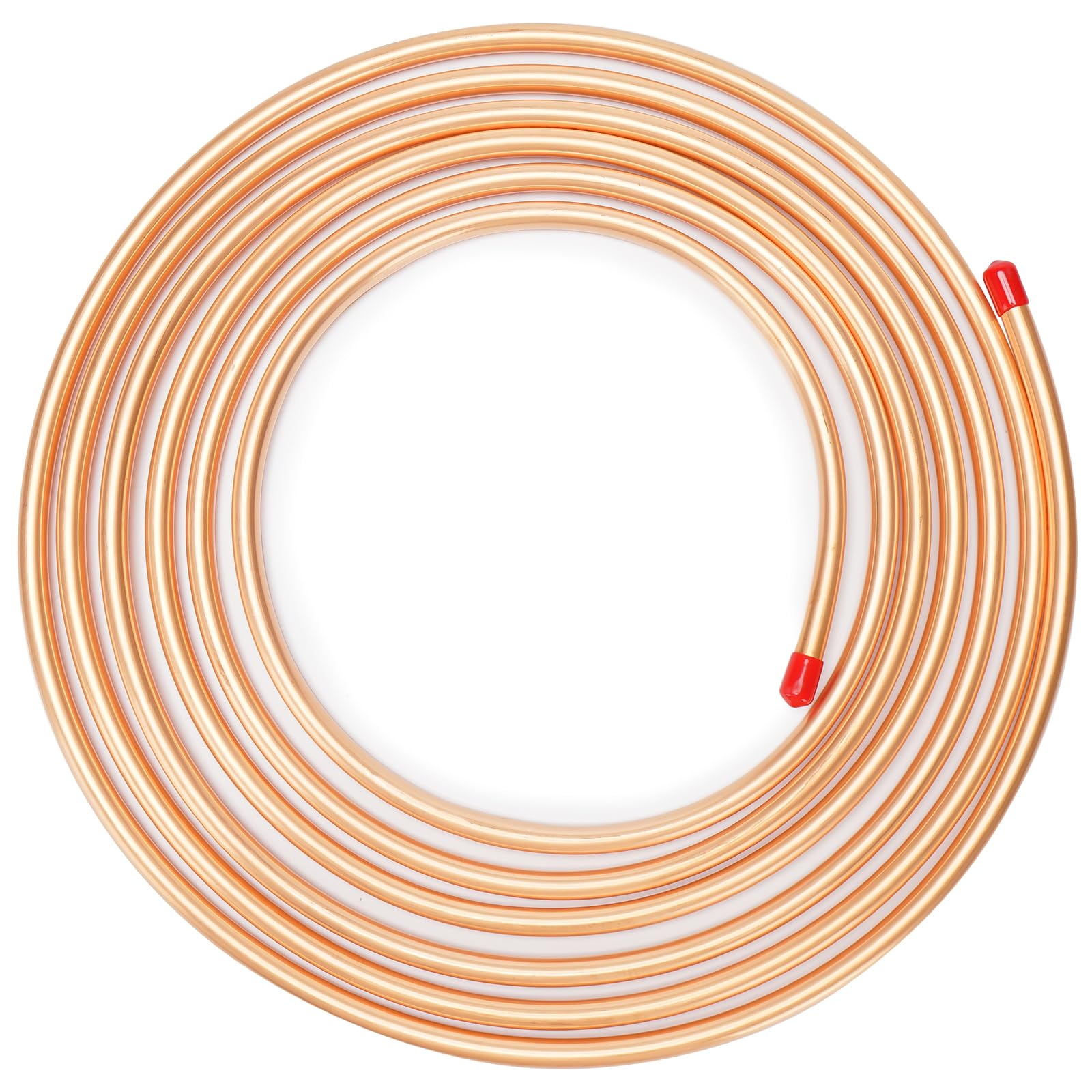
The heat-exchanger favorite that coils small and holds its shape
This one is here for the builders. It is a 10-foot coil of C12200 copper made to the ASTM-B280 specification, with a 0.5 inch outside diameter, and it is small enough to coil tightly and route into a compact space. That combination is why it shows up in custom heat-exchanger work. One buyer is building a cooling coil for an air-conditioner compressor discharge line by coupling it with a water source through an orifice flow-rate controller — a project that leans on the tube’s small, easy-to-coil profile. The listing also leans on the classic soft-copper traits: corrosion and scaling resistance, high mechanical strength, and the flexibility to follow contours and corners.
Value reads as a strong point. Buyers describe it as nice tubing, good value, and something they would buy again, and for a 10-foot C12200 coil that covers a lot of small-project ground. If you are sizing tubing for a fabricated coil or a short custom run rather than a factory hookup, the length and the coilability are the two things working in your favor.
Two things to keep honest. Some users find this tube takes a bit more effort to bend cleanly without kinking than familiar brands, so if you are hand-bending a tight radius, work slowly and keep a bender handy. And a few readings of the spec sheet may have you raising an eyebrow at the wall figure — the practical rule with any soft copper coil is to trust the outside diameter and the feel of the tube in your hand, and confirm your own fit before a final braze. Confirm the fit before you braze.
Built for: heat-exchanger and cooling-coil projects where a small, tight coil you can shape matters more than a long continuous run.
Take it slow: it can kink if you force a bend, so guide it rather than muscle it on tight radii.
For the builder: anyone fabricating a cooling coil, heat exchanger, or small custom run who needs C12200 copper that coils compactly.
Consider a different coil if: you want the most forgiving bend on the first try, or you are working in tight quarters where a kink would set you back.
7. Yaocom Copper Tube 1/2″ OD x 7/16″ ID x 10 Ft Refrigeration T2 Copper Tubing

A ten-foot roll that fits recirculating-pump and fountain jobs cleanly
Look at the length first, because that is the practical hook. This is a 10-foot roll — roughly 3 meters — of T2 copper with a 0.7 mm (0.03 inch) wall and a 0.5 inch outside diameter, and the manufacturer notes the actual length may run slightly over 10 feet due to hand measurement. For a job where you want a little cushion past the listed length, that overage is a small but real benefit. It is sold as a single convenient roll, and it displays the thermal conductivity and corrosion resistance you expect from copper tube.
The use cases in the reviews are exactly the small, water-moving projects this coil suits. A recirculating pump in a fountain was the job on one project, and it worked perfectly. Another used it as a radiator line and noted it delivered just the right amount with very little waste — a nice callout, because ten feet is enough for a short line without leaving a pile of scrap. It shapes into elbows and joints without breaking, per the listing, and bends at any angle for the specific fit you need. For a fountain, a radiator run, or a similar light line, that combination is right on target.
One thing to know up front: copper surfaces oxidize and discolor over time, and the listing says so plainly. That is normal for the material, not a defect, and it polishes back with sandpaper. The bigger point to keep in mind is the rare report of a coil rusting after being left in the rain, which suggests checking the coil is genuinely all-copper rather than copper-coated if yours has sat outdoors. The surface finish is a cosmetic detail — the metal itself is what does the work.
Why it stands out: a 10-foot roll that may run slightly long, ideal for fountain recirculation and radiator lines where a little extra length is welcome.
Normal to expect: the surface oxidizes and discolors with exposure, so plan to polish it back if appearance matters.
Right for you if: your project is a fountain pump, radiator line, or similar light water-moving run and you want a full ten-foot roll.
Look past it if: you need a tube stored outdoors for a long stretch and want zero concern about surface discoloration.
8. ICS Industries 1/2″ OD x 50 FT Soft Refrigeration Copper Tubing Coil, ASTM B280 Certified

Fifty continuous feet of US-made ACR tubing for the run that cannot stop
This is the long-haul option, and it is in a class of its own here. The length is the headline: this is a 50-foot continuous coil, where the BELLA BAYS and Yaocom coils run 120 inches each. If your project needs an uninterrupted run across studs or through a conduit, this is the coil that gets you there, and it does so without the extra couplings that a joined run would require. Every joint you avoid is a leak point you never have to seal and re-check, so length is a quality feature when the job is long. It is made in the USA from high-purity copper, built to the ASTM B280 ACR specification for air-conditioning and refrigeration, and sized at a standard 0.500 inch outside diameter to drop into standard flare fittings, solder couplings, compression joints, and brazing alloys. Factory end caps seal out moisture and jobsite debris until you cut in.
The soft-annealed build is what makes the length usable. It routes by hand or bender through tight spaces, so a long run does not fight you, and the smooth construction is designed to handle the pressures and thermal cycling of a modern refrigerant system. That combination — length plus the softness to route it — is what separates this from the shorter coils. At this length you are buying convenience and fewer failure points as much as you are buying copper.
If you only need to patch a capillary tube or replace a short section, a five- or ten-foot coil is the smarter buy and you keep the rest in reserve. But when the run is long and you cannot afford a splice, this is the coil that finishes the job in one piece.
Where The Length Wins
- 50 continuous feet minimizes couplings, and fewer couplings mean fewer leak points
- ASTM B280 ACR spec and soft-annealed build handle refrigerant pressures and vibration
- Made in the USA from high-purity copper with factory end caps to seal the coil
- Standard 0.500 inch OD fits standard flare, solder, compression, and brazing fittings
What It Costs You
- Far more tube than a short repair needs, so it is the premium pick in the group
- You are paying for length and fewer joints, not for a heavier wall
- A single roll this size is overkill for patch work
Made for: long, uninterrupted ACR runs and repairs where a splice would mean another leak point you have to chase.
Overkill for: a quick capillary-tube fix or a short section replacement — that is a job for a five- or ten-foot coil.
Understanding the Specs
Outside Diameter and Wall Thickness
Soft copper coil is named by its outside diameter — the measurement across the whole tube, not the hole in the middle. A 1/2 inch tube is roughly half an inch across the outside, so it drops into standard flare nuts and solder couplings built for that size. The inside opening is smaller, and how much smaller depends on the wall. A thicker wall leaves a narrower inside channel but handles more pressure and resists crushing; a thinner wall bends more easily but kinks under a hard thumb. For a bendy, hand-shaped coil, the thin wall is the point; for a pressure line, you want the thicker one.
C12200 and ASTM B280
C12200 is a copper alloy designation, and the T2 pure copper you see on these listings is the same family. When a tube also names the ASTM-B280 specification, it means the tube was made for air-conditioning and refrigeration lines rather than for water plumbing. Some of these coils are additionally nitrogen-charged during manufacturing, a step that pushes oxidation and trapped moisture out of the interior and leaves a clean surface inside for brazing. Together those labels tell you the tube is meant for a refrigerant or cooling system, and they are your best defense against a copper-coated steel counterfeit.
FAQ
What does 1/2 inch mean for soft copper tubing?
Will 1/2 inch copper tubing fit my existing fittings?
What is the difference between C12200 and plain copper tubing?
Do I need a tubing bender for 1/2 inch soft copper?
How long does soft copper tubing last in a refrigeration line?
Can I use 1/2 inch soft copper for a water line?
How much length do I need for a typical repair?
Does soft copper tubing come in different wall thicknesses?
What happens if the coil arrives kinked or dented?
Final Thoughts: The Verdict
For most people, the 1/2 inch copper tubing winner is the BELLA BAYS Copper Tubing 10 ft because it pairs real C12200 T2 copper with an ASTM-B280 rating and a coil that unwinds without work hardening — the exact combination that makes a repair go smoothly instead of becoming a fight. If you need a short, pressure-loaded line, the XIFOWE 99.9% Copper Tube brings the heaviest wall on a 1/2 inch OD tube in this group. And for a long, uninterrupted ACR run, the ICS Industries 50 ft Soft Coil is the one to reach for, with 50 continuous feet that keep your joints and leak points to a minimum.
How We Picked
We do not accept paid placement. Every pick is matched to a real buyer and a real use-case; we do not hands-on test units.
Sources & Methodology
Specifications: manufacturer listings and product documentation. Review insights: verified customer reviews, as of September 2026. Pricing: not shown on this page (it changes often); check the current price via the retailer link.
As an Amazon Associate, KitchPrep earns from qualifying purchases. This does not affect which products we feature.
Related Guides
