
Specs are compiled from manufacturer listings and verified buyer reviews and can change over time — please confirm the key details on the product page before buying.
If you are building a home backup bank or wiring a cabin off-grid, the battery you choose decides whether you get years of quiet power or a shelf of dead cells. The short answer: a 48-volt rack battery gives you the most storage per box, while a pair of 12-volt 100-amp-hour units (each rated to hold 100 amps of charge for one hour) is the cheapest way in — and both will run a fridge, lights, and a router if you size the bank right.
I’m Mohammad Maruf — the founder and writer behind KitchPrep. This guide is built by comparing the manufacturers’ published specifications and the patterns across verified customer reviews, so you get each pick’s real strengths and trade-offs instead of marketing spin.
Capacity, voltage, chemistry, and the battery management system decide everything here. This guide walks through the battery for electricity storage options that real buyers keep recommending.
Our Picks at a Glance
How To Choose The Best Battery for Electricity Storage
Start with watt-hours, not amp-hours. Watt-hours is the real measure of stored energy: a 48-volt 100-amp-hour battery holds far more usable energy than a 12-volt 100-amp-hour unit, even though both say “100Ah” on the label. Multiply volts by amp-hours and you know what your bank can actually run.
Match the voltage to your inverter
Your inverter’s input voltage has to match your bank. A 48-volt rack battery suits large home inverters, a 24-volt unit fits mid-size solar and trolling-motor setups, and 12-volt batteries are the building block for RV and trailer systems. Wiring batteries in series raises voltage, and wiring in parallel raises capacity.
Check the BMS amp rating against your load
The BMS (battery management system — the internal circuit that shuts the battery off before it is damaged) has an amp limit that caps how much power you can pull at once. A 100A BMS suits lighter loads, while a 200A or 250A BMS is what you want for a whole-home inverter or a big appliance start-up.
Decide on cold-weather protection
LiFePO4 cells should not be charged below freezing, so many batteries now include low-temperature cut-off that halts charging automatically and resumes when it warms up. If your bank lives in an unheated shed or a winter camper, that feature matters more than a slightly higher capacity.
Quick Comparison
| Model | Best For | Capacity | Voltage | BMS Rating | Amazon |
|---|---|---|---|---|---|
| ECO-WORTHY Cubix100 48V 100Ah Server Rack★ Best Overall | Whole-home backup and expandable solar banks | 100Ah (5.12kWh) | 48V (51.2V) | 100A | Amazon |
| 2-Pack 12V 100Ah LiFePO4 Group 31Best Value | First-time trailer and solar upgrades | 100Ah each | 12V | 100A | Amazon |
| Elefast 24V 100Ah LiFePO4Best for Trolling Motors | Trolling motors and RV house power | 100Ah (2560Wh) | 24V | 100A | Amazon |
| 2-Pack 12V 150Ah Max LiFePO4 | Growing RV and tiny-home banks | 150Ah each (300Ah total) | 12V | 100A | Amazon |
| 24V 100Ah LiFePO4 (yeagulch) | Mid-size solar and marine systems | 100Ah (2.56kWh) | 25.6V | 100A | Amazon |
| 12V 300Ah LiFePO4 (Rvpozwer) | High-capacity single-battery builds | 300Ah (3840Wh) | 12.8V | 200A | Amazon |
| HumsiENK 4 Pack 12V 200Ah | Large off-grid banks and power walls | 200Ah each (2560Wh each) | 12V | 250A | Amazon |
| 48V 300Ah LiFePO4 Wall-Mount | Commercial-scale home energy storage | 300Ah (15.36kWh) | 48V | 200A | Amazon |
In-Depth Reviews
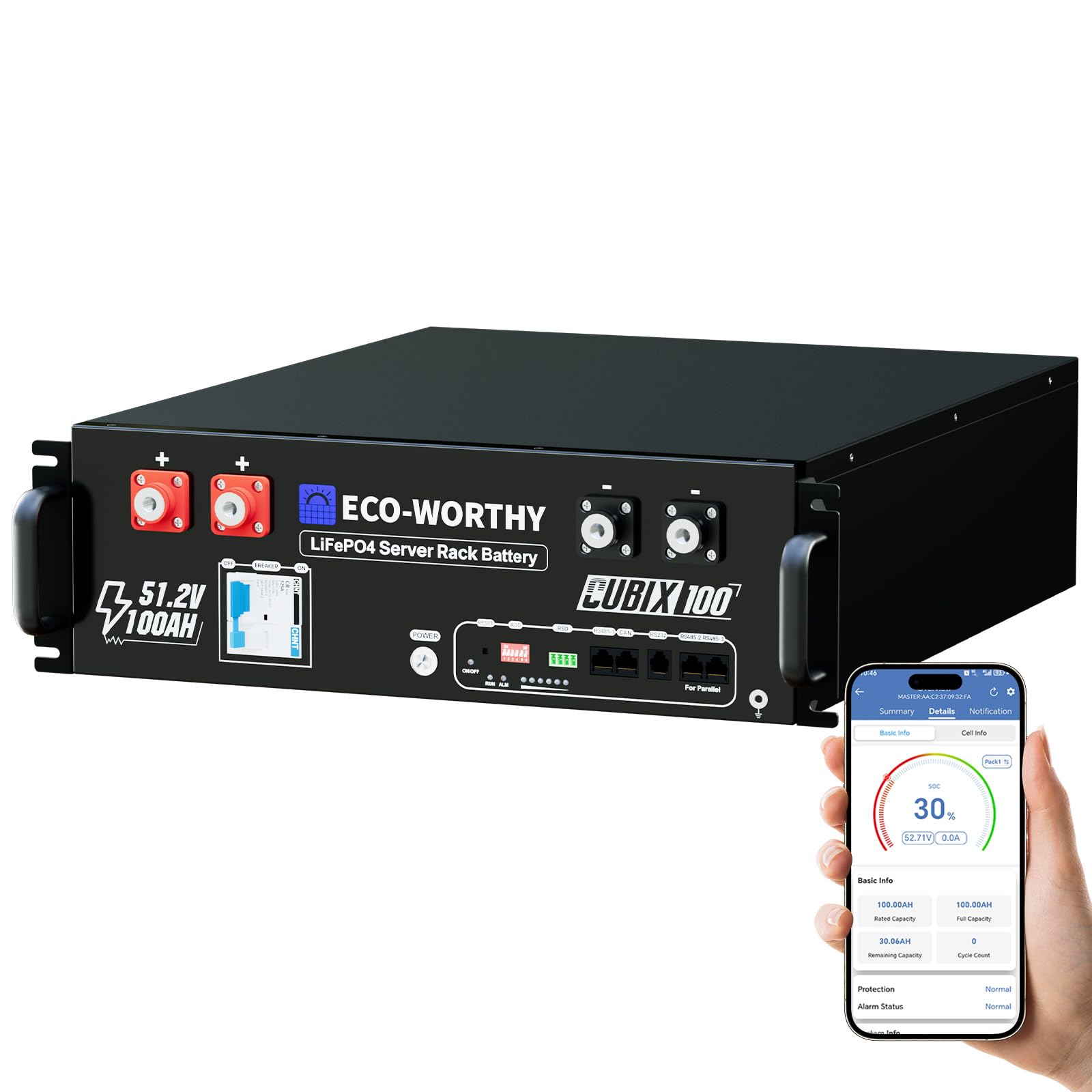
1. ECO-WORTHY Cubix100 48V 100Ah LiFePO4 UL9540 Server Rack Battery
Our pick — over 4.5★ from 300+ verified ratings; the strongest balance of quality and price.
A 48V 100Ah rack battery that stores 5.12kWh and parallels up to 32 units for 163.8kWh.
If you are planning a real home energy setup rather than a weekend trailer, this 48-volt 100-amp-hour unit is the one to beat. It stores 5.12 kilowatt-hours of usable energy — enough to keep a fridge, lights, and router alive through an evening outage. The 100A BMS (the internal circuit that cuts power before the cells are damaged) handles the load, and the 10-year limited warranty backs the build.
Deployment is where it shines. Owners parallel up to 32 units for up to 163.8 kilowatt-hours, and with Victron and Sungold inverters the CAN/RS485 ports let the battery talk directly to the system. Buyers report running a 3-bedroom off-grid home on a Sungold 10kW inverter with “zero issues in one month.” At 103 pounds it is the anchor in this group — but it earns that weight.
What owners flag first is the lack of an on-unit screen, and the app is basic — state of charge but no time-left or charge-time readout. First-time users have hit occasional CAN detection issues, though support has been responsive with prepaid returns.
Turns heads on install day
- UL9540, UL1973, and CEC Listed — three North American safety certifications for home placement.
- 5.12kWh per unit, expandable to 163.8kWh across 32 parallel batteries.
- Bluetooth and WiFi monitoring through the ECO-WORTHY app.
- Closed-loop CAN/RS485 talk with leading integrated solar inverters.
Where it asks patience
- 103 pounds is a two-person lift, no question.
- No on-unit screen — you rely on the app for status.
- A few units have arrived with CAN handshake quirks against Victron gear.
Reach for this if: you want a UL-listed 48V rack bank that scales with your solar build.
Look at a lighter pick if: you need something you can move solo or read status without an app.
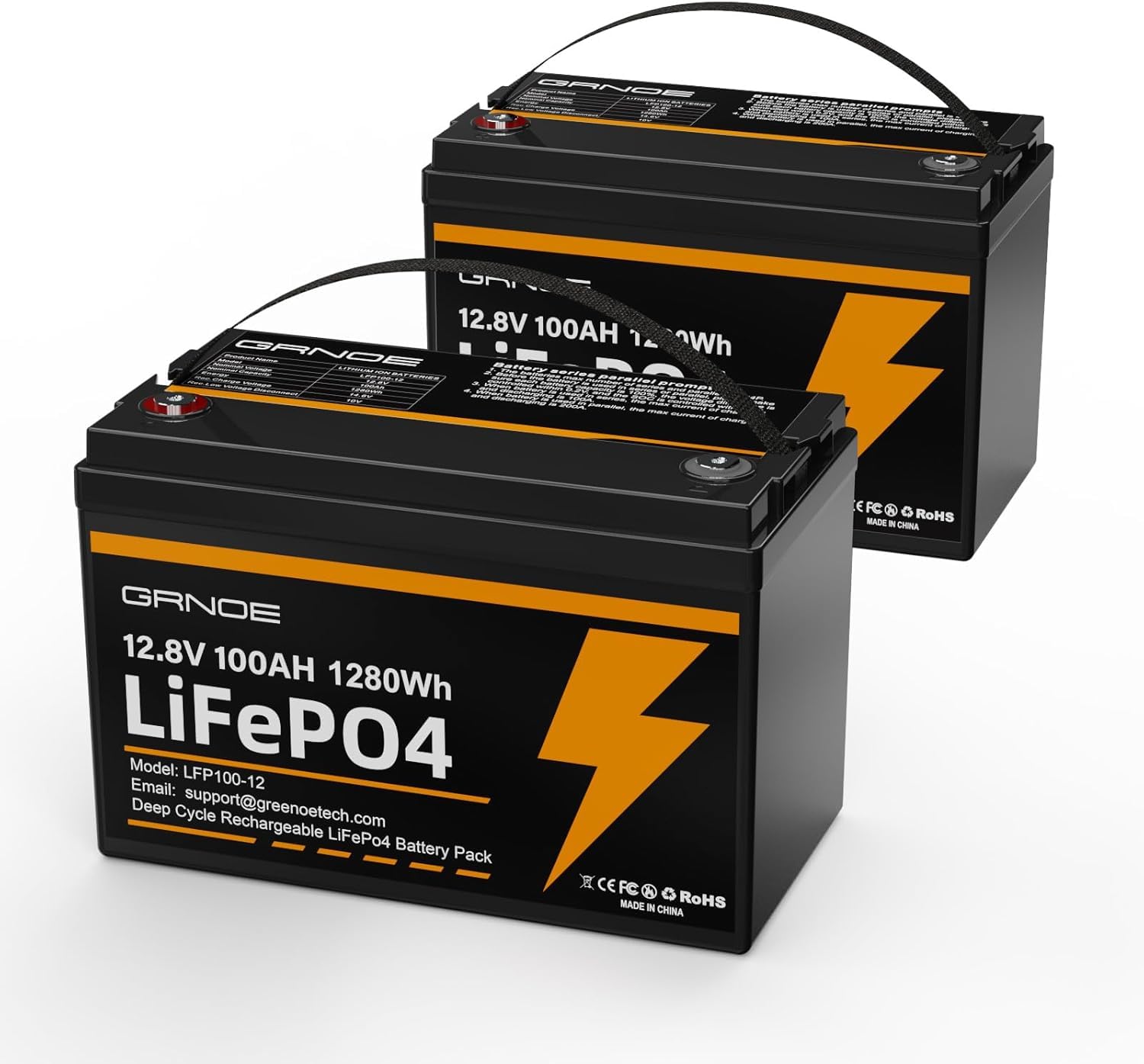
2. 2-Pack 12V 100Ah LiFePO4 Lithium Battery Group 31 with 100A BMS
Two 12V 100Ah batteries at 22.4 pounds each that drop into a Group 31 tray.
If your trailer, van, or small solar shed is running on tired lead-acid batteries, this pair is the cheap on-ramp to lithium. Each battery weighs 22.4 pounds, so you can lift one out by hand instead of wrestling a heavy lead-acid block. One owner summed up the swap this way: the pair replaced a lead-acid bank at a fraction of the heft, and a 5-week trailer trip including 3 nights of dry camping ran the fan, lights, and chargers without a hiccup. Cold-weather folks get low-temp protection (a circuit that halts charging below freezing and resumes when it warms up), so a winter night in the van will not wreck the cells.
Two things to know before you buy. Group 31 is a bigger footprint than a Group 24 — one owner found the new batteries ran an inch longer than the ones they replaced and had to switch sizes. And these are deep-cycle storage batteries, not engine starters. Grinding a starter motor through them will trip the BMS.
The trade-off is more cable work and more terminals to maintain.
Smart match: this is the right first lithium bank for a trailer or small RV — two 100Ah units wired in parallel give you 200Ah of usable storage and 100A of BMS headroom.
Heads up on charging: these need a 14.6V lithium charger, not a standard 12V lead-acid charger. Get the charger before the batteries arrive or you will be bench-testing nothing.
Best for: replacing a 12V lead-acid house bank in a trailer, van, or small off-grid shed.
Skip if: you need cranking amps for an engine or golf-cart propulsion.
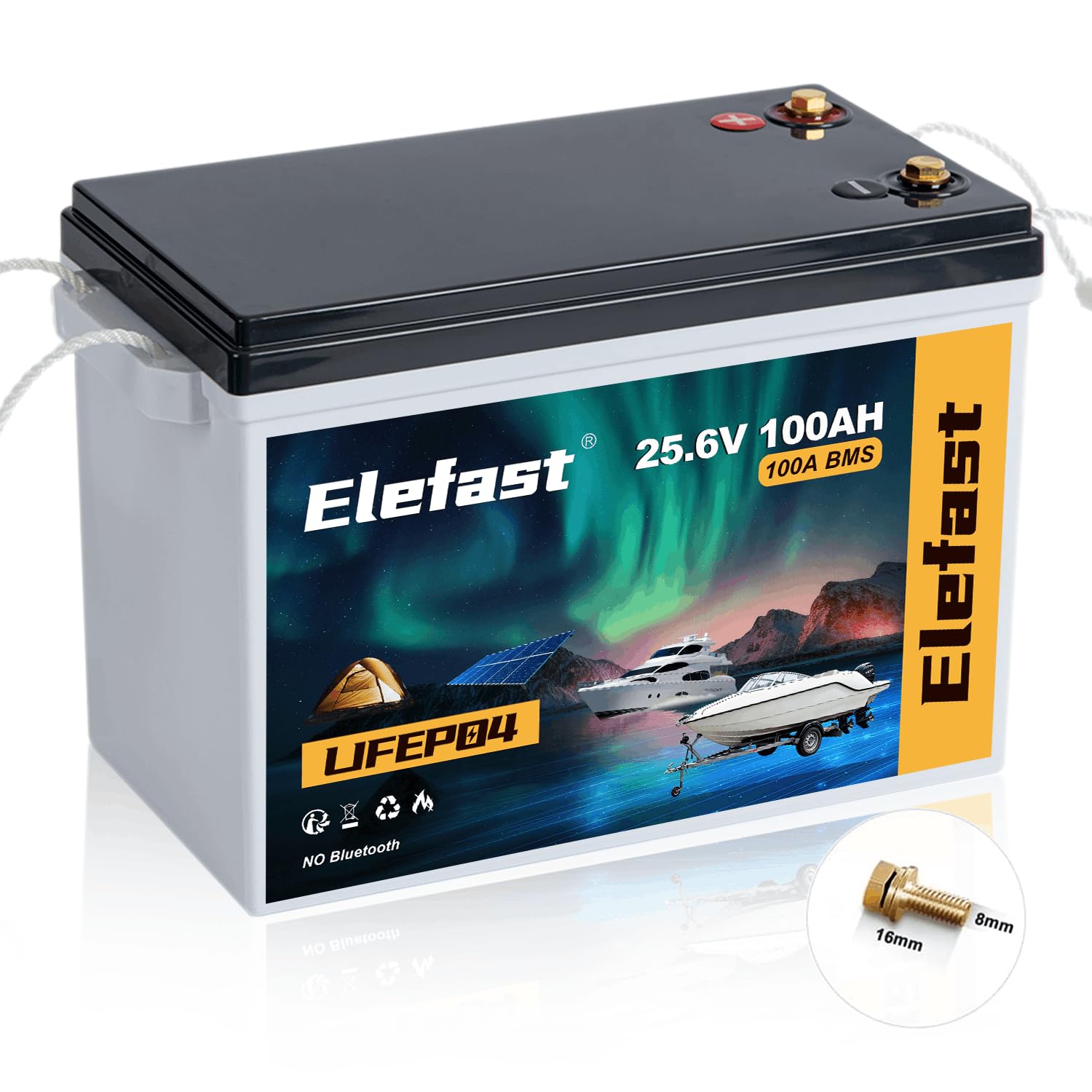
3. Elefast LiFePO4 Battery 100AH 24V Lithium Battery Built-in 100A BMS
A 24V 100Ah pack rated for 300A for one second and 1.2C discharge for 3 minutes.
The Elefast 24V 100Ah is built around one specific pain: motor start-up. When a trolling motor spins up, it pulls a huge surge, and lesser batteries trip into protection. This one handles 300A for one second and holds 1.2C discharge for up to 3 minutes, then auto-recovers from overload in 30 seconds. That is the difference between a full day on the water and a stalled motor with a dead battery five miles from the ramp.
Two 12V 100Ah batteries weigh 52 pounds as a pair, but a single Elefast 24V sits at 42.5 pounds — one owner measured an actual 103Ah on a capacity test, above the advertised 100. At 2560 watt-hours it doubles the usable storage of a 12V pack without the extra wiring, and the A+ grade cells are rated for 20,000+ deep cycles.
The honest catch: compatibility. A handful of buyers have reported units that would not take a charge from the start, and one noted the battery “should’ve gotten one for the trolling motor battery sooner.” With a limited sample size, test the first unit before wiring it into a full bank. The 5-year warranty covers it if something goes wrong.
Where it earns its keep
- 3-minute 1.2C discharge covers heavy trolling motor surges.
- 2560Wh doubles the storage of a single 12V 100Ah unit at 42.5 pounds.
- 20,000+ deep cycle rating with low-temperature protection built in.
- UL, IEC, CE, and RoHS tested, with a 5-year warranty and 24-hour support.
What to watch
- Compatibility has been mixed — test the first unit before scaling.
- Needs a 29.2V lithium charger to reach a full 5-hour top-up.
- 42.5 pounds is real weight to move into a boat locker.
Nail the wiring first: this solves the surge problem that kills lesser 24V packs, but a dedicated 29.2V charger is not optional.
Pair it with a plan: buy one, cycle it hard, and only then decide whether to add a second to your bank.
4. 2 Packs 12V 150Ah Max LiFePO4 Battery With 100A BMS 15000+ Deep Cycles
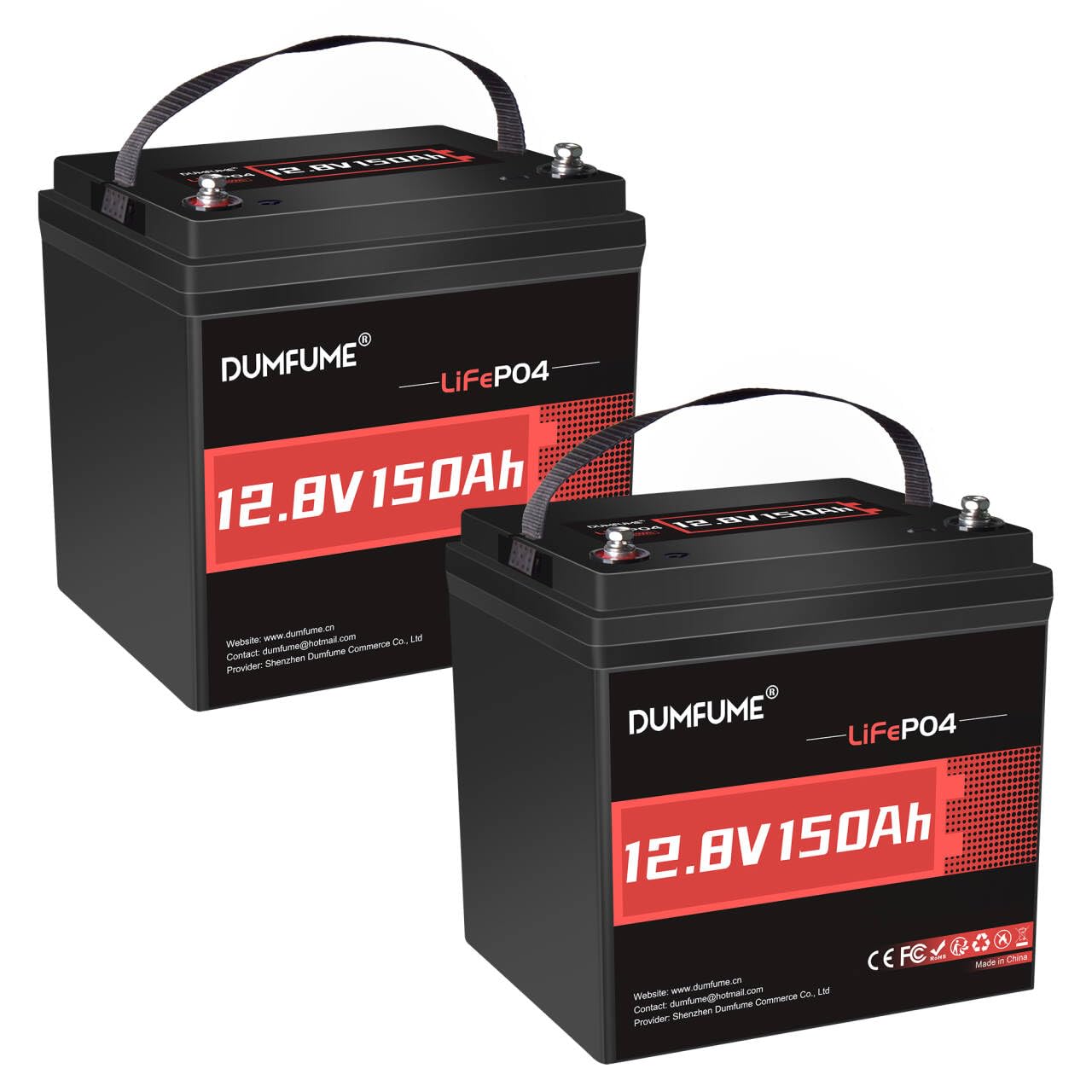
Two 12V 150Ah batteries that parallel to 300Ah and scale to a 4S4P 48V bank.
Two 12V 150Ah batteries in this pair, wired in parallel, give you 300 amp-hours — roughly triple the storage of a single 100Ah unit at a fraction of the price. Each one runs its own 100A BMS with independent low-temperature cut-off, so cold-weather charging halts below 32°F and resumes automatically when the temperature rises.
The expansion math is what makes this pair interesting. The series supports up to 4S4P configuration with 16 units total, opening the door to a 48-volt, 30.72 kilowatt-hour bank at 19.2 kilowatts of load power. Start with two for a tiny home or solar shed and grow the bank in the same footprint. The manufacturer’s build quality is well regarded — buyers frequently cite its internal construction.
The recurring gripe is on the mixed side: some units arrive at low voltage and will not accept a charge without a jump from a charged battery first. One owner who bought four noted the two that arrived via Amazon sat at 12.2 and 12.4 volts and needed a parallel jump to wake up. Buy a cheap jump source before you plug these in.
The upside: for the money you get 300Ah of LiFePO4 storage — more usable energy than two premium 100Ah lithiums — plus real room to expand to a full 48V home bank later.
The catch: an occasional pair arrives partially depleted and will not charge without a wake-up jump. Have a charged 12V battery and a 20A charger on hand for the first top-up.
Built for growth: perfect if you want to start small on a solar shed or RV and scale to a 48V system later.
Be ready to wake them up: have a charged 12V source handy for the first charge of any unit that arrives depleted.
5. 24V 100Ah LiFePO4 Lithium Battery with 100A BMS 2560Wh
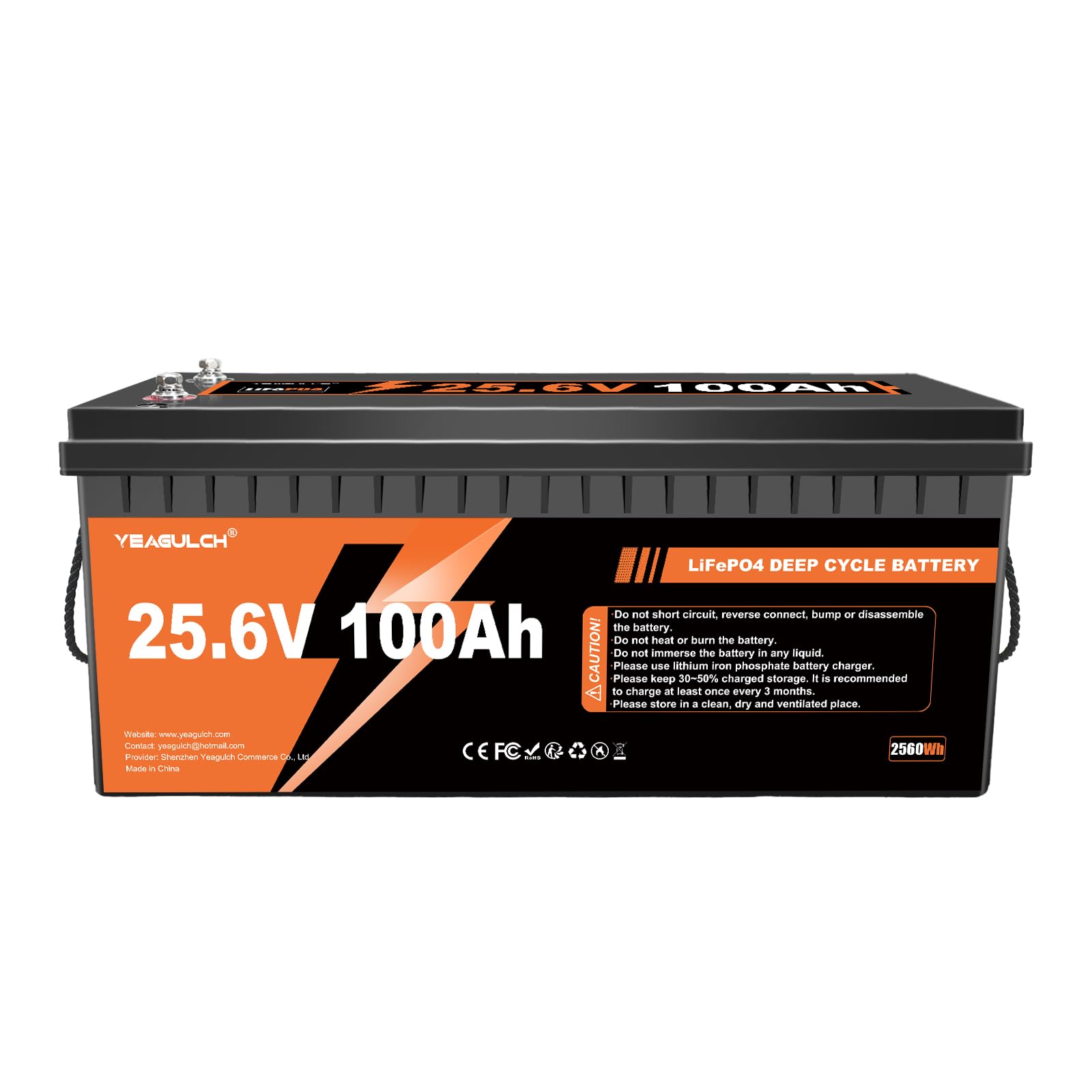
A 24V 100Ah battery rated for 4,000 cycles at 100% depth of discharge.
Swap out a heavy 12-volt flooded bank and the runtime jump is immediate. One upgrade story sticks: a camper replaced a 5-battery 12V setup that lasted about half a day each with this 25.6V unit and got 1.5 days per battery — nearly triple the usable runtime per box. The 2.56 kilowatt-hour capacity and 100A BMS handle fridge, modem, router, and security gear through a hot garage day without strain.
What holds up year over year is the chemistry. LiFePO4 is rated for roughly 4,000 cycles at 100% depth of discharge and up to about 15,000 cycles at 60% DoD, translating to around 10 years of daily use under normal conditions. The voltage is also higher than a 12V pack, which means lower current draw and less wiring loss on the way to your inverter.
Charging speed draws split feedback — some owners top up fast with a 40A charger, while others see up to 10 hours to fill. That is charger-driven, not battery-driven, so match the charger to the pack. It is also energy storage only; do not use it as a starter battery or standard golf cart drive battery unless your system is specifically configured for that.
What keeps it running
- 2.56kWh usable at 25.6V — real overnight runtime for a camper or small cabin.
- Approximately 4,000 cycles at 100% DoD and up to 15,000 at 60% DoD.
- Higher voltage than 12V means less current draw and lower wiring loss.
Points to weigh
- Charging speed depends heavily on your charger — some builds see 10 hours to full.
- Not a starter battery; keep it on storage duty only.
Best fit: campers and marine owners stepping up from a 12V flooded bank who want longer per-battery runtime.
Plan the charger: a fast 40A unit transforms the experience; a small trickle charger will make it feel slow.
6. 12V 300Ah LiFePO4 Battery, 3840Wh Lithium Battery with 200A BMS

A 12V 300Ah battery with 3840Wh and a 200A BMS in one Group 31 case.
For buyers who want one battery instead of a wall of them, this 12V 300Ah delivers 3840 watt-hours in a single Group 31-sized case. The 200A BMS gives you double the amp headroom of a 100A unit, which is what makes it happy on a big RV inverter or a power-hungry stereo. Wired in parallel you can hit 1200Ah; wired in series the series tops out at 51.2 volts.
Owners with heavy loads get the most out of it. One configuration ran a stereo with dual 5000W amps and barely moved the voltage over a full day — from 13.4 to 13.1. Another ran four of these in series-parallel for a 24V system and reported over a year with no problems at all, with battery balancers in place.
Cold-weather ready to 65°C at the top and -20°C at the bottom, with a nylon handle making it movable for a 55-pound class battery. The catch is delivery: some units arrive dead-on-arrival, and the seller has replaced those quietly. Test each battery on arrival — this is not a set-and-forget purchase in the first week.
Why it earns its spot: 3840Wh at 12.8V means you build a bank without stacking six batteries, and the 200A BMS handles the surge of a big inverter without tripping.
Note on arrival: some units have arrived at 0 volts with a suspected BMS fault. Inspect and voltage-check each battery within the return window before you bolt anything down.
Ideal for: RV owners who want a 300Ah bank from one box and a 200A BMS for heavy appliances.
Test first, install second: verify each battery voltage on arrival — the seller replaces dead units but you have to ask.
7. HumsiENK 4 Pack 12V 200Ah LiFePO4 Lithium Battery with 250A BMS
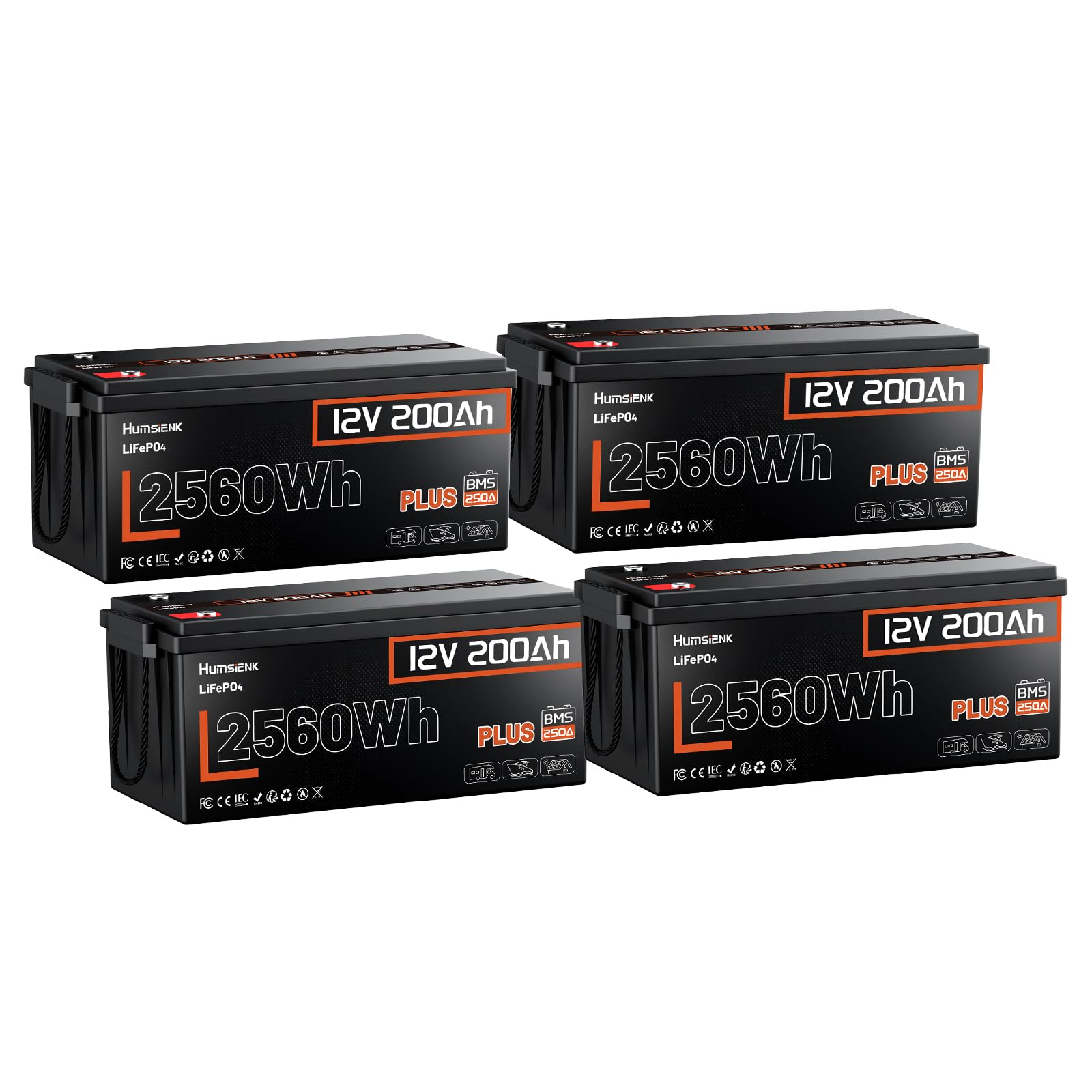
Four 12V 200Ah batteries at 2560Wh each, with a 250A BMS for 3200W continuous.
Four 12V 200Ah batteries, each holding 2560 watt-hours. Stack them in 4S4P and the total system stretches to 40.96 kilowatt-hours, which is whole-home-off-grid territory. The 250A BMS is the highest amp rating in this group, and it drives up to 3200 watts of continuous output — enough to run an air conditioner and a fridge at the same time.
What makes it work as a building block is internal consistency. A+ grade EV cells, IP65 waterproofing, and operation from -4°F to 140°F mean the same battery handles a hot shed and a cold cabin without changing behavior. Fast charging fills one in 3.33 hours with a matched charger. At 58.2 pounds apiece these are heavier than a 100Ah unit but far lighter than the lead-acid they displace.
The wiring is the work here — a four-battery 4S4P setup needs clean cabling and matched voltage between units. That is standard for any parallel-sealed bank, but it means you cannot treat this like two batteries in a trailer. Budget the cable and bus work into your plan.
What sets this up for scale
- 250A BMS supports 3200W continuous — inverter-heavy loads welcome.
- 4S4P configurable, up to 40.96kWh total bank size.
- IP65 waterproof with a -4°F to 140°F operating range.
- Fills one battery in 3.33 hours with a matched charger.
What to plan for
- 58.2 pounds each — four of these is over 230 pounds of battery.
- A 4S4P wiring job needs careful voltage matching and clean cabling.
The pick for real off-grid homes: four batteries, 40.96kWh maximum bank, and a 250A BMS that can run an air conditioner.
Skip if: you only need a small trailer bank — start with the value 100Ah pair instead.
8. 48V 300Ah LiFePO4 Lithium Battery Bluetooth with Active Balancing
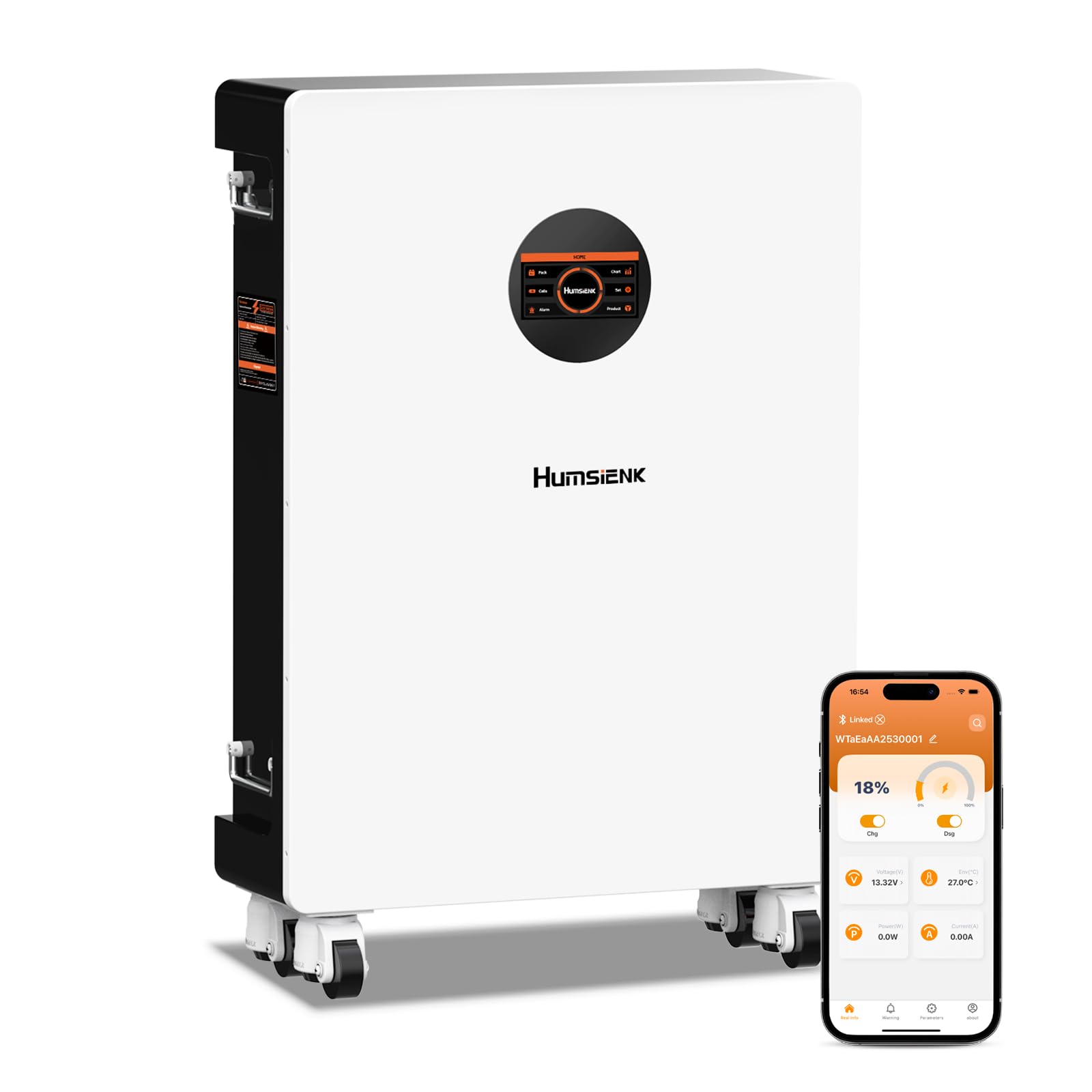
A 48V 300Ah wall unit with 15.36kWh, a 200A BMS, and built-in casters.
One wall-mounted unit matches what used to take three 48V 100Ah batteries in parallel — 15.36 kilowatt-hours in a single chassis. The 200A BMS supports 7-10kW inverters, and active balancing triggers at a 15mV cell difference to keep cell consistency tight over years of cycling. Automotive-grade A cells are rated for more than 6000 deep cycles at 80% DoD.
Setup is the part buyers brag about. Weighing 260 pounds, the battery ships on a pallet by freight, but the built-in heavy-duty casters let you roll it into position without a crew. Bluetooth and an LCD screen show real-time status. Communication ports (CAN, RS485, RS232) talk to Victron, Growatt, and SRNE inverters, and one unit supports parallel expansion to 230.4 kilowatt-hours.
Customer service has been the weak point: an occasional buyer reports chasing an issue without a reply, though Amazon’s A-Z guarantee has covered refunds in those cases. On the hardware side, one unit shipped defective and drained in 20 minutes — a reminder to keep the return window open until you have cycled it once under load.
Why capacity junkies pick it: one chassis equals three 48V 100Ah batteries, with casters for placement and a communication suite that plugs straight into the inverters most home setups already run.
Keep receipts ready: the hardware quality is strong, but a small number of owners mention slow seller responses. Cycle the unit under load inside the return window to be safe.
Serious home backup: reach for this if you want a single-chassis 15.36kWh wall unit that scales to 230.4kWh and rolls into place.
Then look elsewhere for: a portable, small-footprint bank — this is a whole-home installation, not a camper battery.
Understanding the Specs
Watt-Hours: The Real Storage Number
Watt-hours tell you the actual energy your battery holds, and it is simply volts times amp-hours. A 12V 100Ah pack stores 1280 watt-hours, while a 48V 100Ah pack stores 5120 — same amp-hour label, four times the energy. When you are sizing a backup bank to run a fridge overnight, work from watt-hours, not amp-hours. Otherwise you will buy twice as many batteries as you need.
BMS Amp Rating: The Load Ceiling
The BMS amp rating is the maximum current the battery will pass before it shuts off to protect itself. A 100A BMS handles everyday RV and marine loads; a 200A or 250A BMS is what you want if you plan to run a whole-home inverter or start a heavy appliance. Pick your battery’s BMS to match the continuous draw of your biggest load, not the total capacity of your bank. A massive bank under a small BMS is still a small system.
FAQ
How do I know what size battery bank I need for a small home backup?
Can I mix new and old LiFePO4 batteries in the same bank?
Do LiFePO4 batteries really last longer than flooded or AGM lead-acid?
Will my existing inverter work with a 48V LiFePO4 battery?
What happens if I charge a LiFePO4 battery below freezing?
Do these batteries need a special charger?
How much weight can I save switching from lead-acid to lithium?
Can I use these batteries to start an engine?
How should I store a LiFePO4 battery when I am not using it?
Will a LiFePO4 battery work with solar panels from the start?
Final Thoughts: The Verdict
For most home backup and off-grid builds, the battery for electricity storage winner is the ECO-WORTHY Cubix100 48V 100Ah Server Rack because it carries the three North American safety listings home insurers look for, scales to 163.8 kilowatt-hours (enough to run a typical home for days), and talks to the inverters most solar owners already own. If you are replacing a dead lead-acid bank in a trailer or van, grab the 2-Pack 12V 100Ah LiFePO4 Group 31. And for a whole-home power wall that rolls into place on casters, the 48V 300Ah LiFePO4 Wall-Mount is the one to reach for. Anything you buy here, remember the pattern: charge fully, inspect on arrival, and match the BMS amp rating (the battery management system’s current limit) to your biggest load — that is how a battery bank ages gracefully.
How We Picked
We do not accept paid placement. Every pick is matched to a real buyer and a real use-case; we do not hands-on test units.
Sources & Methodology
Specifications: manufacturer listings and product documentation. Review insights: verified customer reviews, as of September 2026. Pricing: not shown on this page (it changes often); check the current price via the retailer link.
As an Amazon Associate, KitchPrep earns from qualifying purchases. This does not affect which products we feature.
Related Guides
