
Specs are compiled from manufacturer listings and verified buyer reviews and can change over time — please confirm the key details on the product page before buying.
If you need 1-inch square tubing that arrives straight, cuts clean, and matches the size you ordered, the deciding factor is almost always the wall thickness and the actual outside dimension — not the brand. Thin-wall tube is easy to drill and weld but flexes under load; thick-wall tube holds weight but adds pounds and costs more per foot. This guide covers seven real options across steel and aluminum, explains what each one is genuinely good at, and points you to the one that fits your build.
I’m Mohammad Maruf — the founder and writer behind KitchPrep. This guide is built by comparing the manufacturers’ published specifications and the patterns across verified customer reviews, so you get each pick’s real strengths and trade-offs instead of marketing spin.
Steel welds and takes threads; aluminum stays rust-free and light. Same nominal size, two very different jobs. Start by matching material and wall thickness to whether your project carries weight or just needs a frame, then use our breakdown of the 1-inch square tubing that holds up best.
Our Picks at a Glance


How To Choose The Best 1-Inch Square Tubing
Square tubing is a stock material, so the shopping question is narrower than it looks. You are picking a material, a wall thickness, and a length — and one of those three usually eliminates the wrong options fast.
Steel Or Aluminum
Mild and carbon steel tubing is the pick when you plan to weld with common processes, drill and tap threads, or carry real load. It is heavier per foot and will surface-rust without a coating, which is why so much of it ships with a grease film or arrives with scale. Aluminum tubing is the pick when weight and corrosion matter more than raw stiffness. It resists rust on its own, cuts and machines easily, and is a natural match for framing systems and brackets. It is also softer and thinner-walled in most listings, so it is not the material for a heavy load path.
Match The Wall To The Job
Wall thickness, not the outside size, decides how much a tube can take. A heavier wall raises stiffness and thread depth but shrinks the inside opening and raises the weight. A lighter wall keeps the part easy to drill and handle but bends sooner under a load. Cut tolerance matters too — tubing is often sold as a fixed length with a stated allowance, so a piece sold at 48 inches can measure just under that once the cut is squared.
Quick Comparison
| Model | Best For | Material | Wall Thickness | Length | Amazon |
|---|---|---|---|---|---|
| Small Parts Unpolished 1008-1010 Steel Square Tube★ Best Overall | Welded garage and go-kart frames | Low Carbon Steel | 0.083 inches | 48 inches | Amazon |
| 1/8″ x 1″ x 1″ Mild Steel Square Tube, HR SteelBest Value | Load-bearing repairs and base lifts | Alloy Steel | 0.125 inch | 48 inches | Amazon |
| 8020, 8111 Structural Square Aluminum Tube | Long-span racks and solar supports | Aluminum | 0.125″ | 60 inches | Amazon |
| Gisafai 2 Pcs Aluminum Square Tubing | Cut-down DIY arms and light frames | Aluminum | 0.12 inches | 24 inches | Amazon |
| Evecad 1″ x 1″ x 48″ Structural Square Aluminum Tube | Clean-finish home improvement builds | Aluminum | 0.125 inches | 48 inches | Amazon |
| A500/A513 Carbon Steel Square Tubing | Structural steel in short sections | Alloy Steel | 0.12 inch | 12 inches | Amazon |
| Zonon 6063 Aluminum Square Tubing | Load-bearing shelf and furniture frames | Aluminum | 0.125 inches | 48 inches | Amazon |
In‑Depth Reviews
1. Small Parts Unpolished (Mill) 1008-1010 Steel Square Tube, 1″ Square Tube, 0.083″ Wall
Our pick — over 4.5★ from 350+ verified ratings; the strongest balance of quality and price.
A 48-inch, 0.083-inch-wall low-carbon steel tube that welds with common processes and arrives cut square with capped ends.
For the jobs most people actually have—a garage rail, a go-kart frame, a basketball goal repair—this tube is the one to grab. It measures 1 inch square with a 0.083-inch wall and runs 48 inches long. What wins people over is that it simply does what it says: it welds with common processes, and it arrives with rounded ends and plastic caps already on, so it shows up ready to use instead of needing a cleanup pass.
It holds up as the top pick because it covers the widest range of projects. The 0.083-inch wall is thicker than the hardware-store stock most buyers are replacing, which is exactly why it feels stiffer in hand. Compare it to the 12-inch A500 steel tube below and you get four times the length in one piece, so you are not buying six short offcuts to build one frame. Cut it with a grinder and clean up the edge, and a Kreg-style drill guide sits flush on it for hardware.
The honest note is the value question. This is a single tube, and the steel shows up with a protective scale film on the surface, so plan on wiping or sanding before paint. If you need threads or want a rust-free finish without extra work, the 6063 aluminum options further down skip that step entirely — but they will not take the same weld heat this steel will.
Why It Earns The Top Slot
- Takes flux-core and standard welding without fuss
- 0.083-inch wall is heavier than typical big-box stock
- Rounded, capped ends arrive ready to handle
- Cuts clean with a grinder and cleans up fast
What To Keep In Mind
- Single tube, so multi-piece builds need more than one order
- Surface scale needs wiping or sanding before paint
- May ship in batches, so a large order can arrive in stages
Buy it if: you are welding a frame or rail and want steel that cuts, drills, and welds without surprises.
Think twice if: your project needs a rust-free finish with zero prep — an aluminum tube will save you the cleanup.
2. 1/8″ x 1″ x 1″ Mild Steel Square Tube, HR Steel, 0.125″ Wall (48)
A 0.125-inch-wall hot-rolled steel tube — the heaviest 48-inch piece here at 5.7 pounds.
Reach for this when the part actually carries weight. The wall here is 0.125 inch — a full eighth, thicker than the 0.083-inch Small Parts steel — and the 48-inch piece weighs 5.7 pounds, versus 2.6 pounds for the 60-inch 8020 aluminum tube below. That heft is the point: two-and-a-half times the wall makes a real difference when you are lifting a table base or holding a footrest under a recliner.
The quality reputation here is genuine. Buyers cut it on horizontal band saws, and it slices cleanly with pre-cut parts fitting together as measured. The seller keeps cut tolerance to plus or minus 1/8 inch, and A500 grade steel is soft enough to drill and slide over existing legs without fighting you. It shows up well packed and coated in a heavy black grease — that film is the rust preventative, so wipe it down and you have clean stock underneath.
Two things to plan around. First, the outside measurement runs a little larger than plain 1 inch, so check your mating fit before you cut everything to length. Second, if you only need one short piece, buying a 48-inch length is more steel than the job asks for. For anything small, the short 12-inch A500 tube below makes more sense.
Where The Money Goes: a full 1/8-inch wall in a 48-inch length is the reason this costs what it does — you are paying for steel, not a brand name.
The Fit Note: measure before you cut, because the outside dimension is not a bare 1 inch.
Pick this if: your build holds real weight and you want the stiffest steel tube in the lineup.
Pass if: you need a rust-free finish or only a single short offcut.
3. 8020, 8111 Structural Square Aluminum Tube, 1″ x 1″, 60″ Long

A 60-inch 6063-T6 aluminum tube — the longest single piece in this lineup.
Length is the whole reason this one exists. At 60 inches, it runs two-and-a-half times the reach of the 24-inch Gisafai pair, which means you can span a rack, a solar panel support, or a long shelf stiffener in one piece instead of joining two. It is 1 inch square with a 0.125-inch wall, made of 6063-T6 aluminum — a heat-treated alloy known for a good strength-to-weight balance — and it lands at 2.6 pounds.
This tube integrates cleanly with 8020 t-slotted extrusions (a framing system with slots for connectors), adding a plain, smooth structural piece to a system you are already building. The natural mill finish comes with clean square cuts, and the tube is drawn from a strong aluminum that resists corrosion without a coating. Builders love it for exactly that modular quality—it slots into a rack design and sets up as a no-fuss support.
One real-world catch: the 0.125-inch wall eats into the inside dimension, and for some buyers that put the interior opening under the size their fittings needed. Return shipping made replacing it impractical, so if your project depends on a specific inside measurement, verify it against your hardware before ordering. The lighter aluminum also will not match the 5.7-pound steel tube above for raw stiffness.
What Builders Get
- 60 inches — the longest single piece in this list
- 6063-T6 aluminum with a natural mill finish
- Integrates with 8020 t-slotted extrusion systems
- Corrosion-resistant without any coating
Know Before You Order
- Thick wall shrinks the inside opening
- Softer than steel under heavy load
- Confirm inside dimensions against your fittings
The one to grab for: long-span racks and solar supports where you want one continuous tube.
Look elsewhere for: tight-tolerance joinery that hinges on a specific inner dimension.
4. Gisafai 2 Pcs Aluminum Square Tubing, 1″ OD 0.12″ Wall x 24″

Two 24-inch 6061 aluminum tubes with a 0.12-inch wall — cut each in half for four 12-inch pieces.
This is the pick when you need lighter parts, not longer ones. You get two tubes, each 24 inches, which is exactly half the length of the 48-inch steel options. Cut each in half and you have four 12-inch arms — the move one RV owner made to build towel and swimsuit drying rack arms for a camper. The aluminum is 6061 grade with a 0.12-inch wall, and it is substantially lighter than steel of the same profile, so a finished frame carries far less weight.
what separates it is the pairing of strength and low weight. Built into crash bars for a motorcycle, these tubes came out strong and easy to work with while running much lighter than steel, and the buyer ordered extras to keep a stash. The bright silver finish resists corrosion. If you are building a decorative frame, a set of arms, or anything that has to stay portable, the weight savings are the reason to choose aluminum over the steel tubes higher up.
The trade is reach and wall. Two 24-inch pieces do not span what a single 48- or 60-inch tube does, so a long frame means butt-joining sections. And a 0.12-inch aluminum wall, while sturdy, will not carry the load a 0.125-inch steel wall handles. Match it to light-to-medium jobs and it performs.
The Weight Case: these run much lighter than steel of the same profile, which is why portable frames and RV builds favor them.
Fit Note: at 24 inches each, plan for joinery on anything long.
Best for: light frames, cut-down arms, and any build where lower weight beats maximum length.
Skip if: your span needs one continuous 4- or 5-foot tube.
5. Evecad 1″ x 1″ x 48″ Structural Square Aluminum Tube, 1/8″ Wall
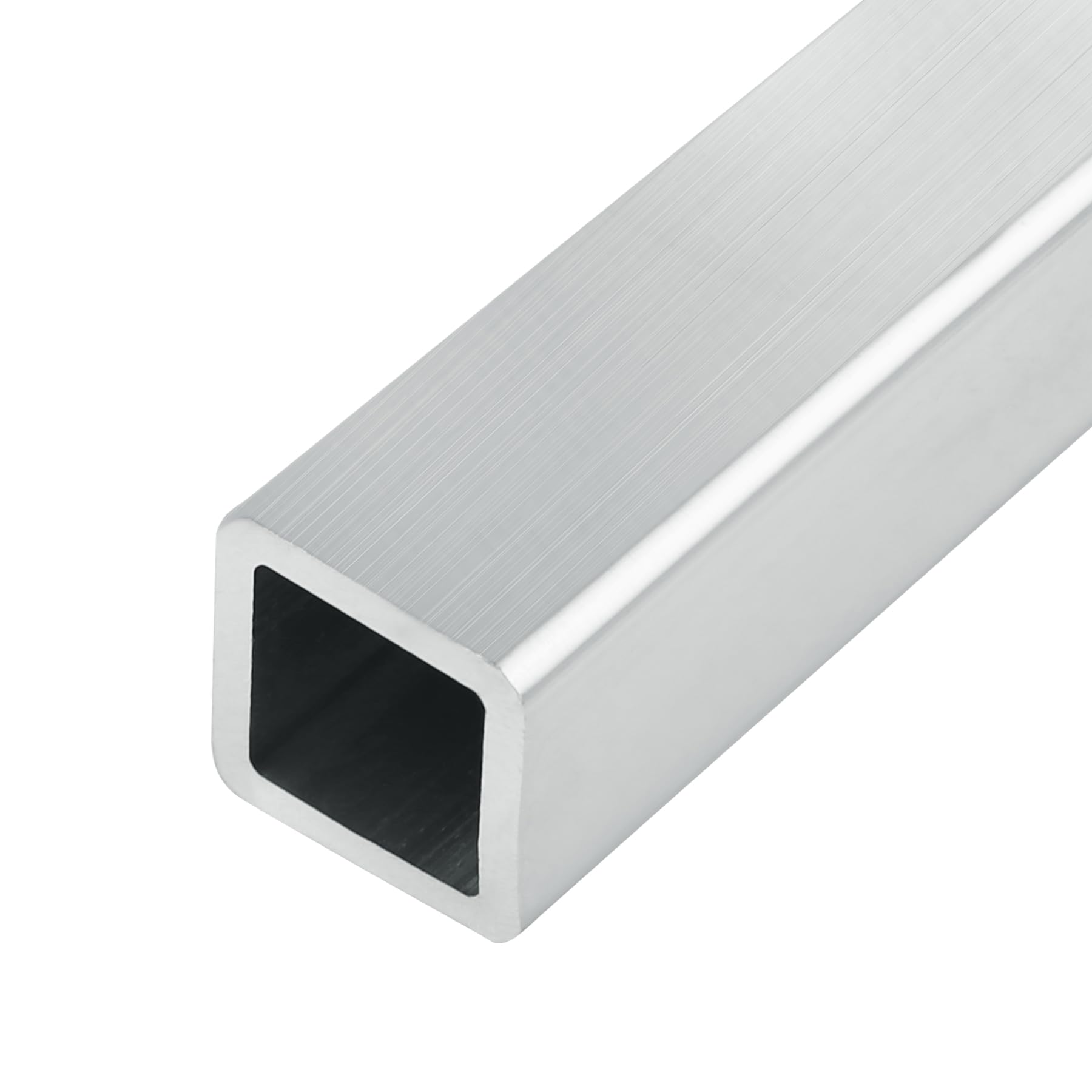
A 48-inch 6063-T6 aluminum tube with a 0.125-inch wall that arrives wrapped, straight, and scratch-free.
If the finish matters as much as the dimensions, this is the one. It is 1 inch square, 48 inches long, with a 0.125-inch wall in 6063-T6 aluminum. The seller markets the natural mill finish and clean square cuts as the feature, and that holds up: the tube arrives well-wrapped, straight, and free of the scratches that bare hardware-store stock tends to wear. Multiple builders note it looks nothing like the thin, scratched lengths they were used to pulling off the shelf.
The strength is real for its class. Buyers have used it for dock tread supports and found it sturdy and heavier than expected in the hand — the 1/8-inch aluminum wall reads more solid than the price level suggests. It also resists corrosion on its own, so outdoor and damp installs do not demand a coating. If you want 6063 aluminum in a 4-foot length but want it to look good coming from the start, this is the cleanest of the picks.
Where it gives ground is raw stiffness against the steel options. A 0.125-inch aluminum wall is strong, but it will flex under a heavy point load where the 5.7-pound steel tube above stays rigid. For framing, supports, and home improvement builds, though, the combination of clean edges and light weight is hard to argue with.
What You Unbox: a scratch-free, straight, well-wrapped 6063-T6 tube — no prep needed before you build.
The Honest Limit: lighter and less rigid than the steel picks when a load really has to hold.
Reach for this if: you want a clean, corrosion-resistant aluminum tube that needs no cleanup.
Look elsewhere if: your load path demands the stiffness of steel.
6. A500/A513 Carbon Steel Square Tubing, 1″ Height, 0.12″ Wall, 12″ Length

A single 12-inch A500/A513 carbon steel tube with a 0.12-inch wall for small repairs.
When the job is small, this is the sensible buy. It is a single 12-inch piece of A500/A513 carbon steel—the standard structural steel tubing used across North America for its strength, weldability, and low cost—with a 0.12-inch wall. That 12-inch length is a quarter of a 48-inch tube, which makes it the right size for repairing a recliner footrest, raising a yarn guide, or shoring up a small bracket without leaving three feet of leftover steel on the shelf.
Because A500 grade is soft and weldable, it takes drilling and threading with ordinary tools, and it bolts or welds into repairs that would otherwise mean buying a whole new assembly. The material quality reads well in the hand, arrives well packed in a heavy cardboard tube, and ships quickly. One quirk to expect: the tube can arrive with trim or shavings inside, so shake it out before you install. Also check the outside dimension, since some buyers report the shape and fit vary slightly from a bare 1 inch.
The catch is simply the length. Twelve inches will not build a frame — this is a repair-and-reinforce pick, not a project pick. If you need span, the 48- and 60-inch options above are the ones to order.
Where It Shines: a spec-grade A500 steel cut in a short length is the clean way to fix one small thing without overbuying.
The Length Limit: at 12 inches, it reinforces and repairs rather than builds.
Buy this if: you have a small steel repair or reinforcement and want exactly the length you need.
Pass if: you are framing anything — go longer.
7. Zonon 6063 Aluminum Square Tubing, 1″ x 1″ x 1/16″ Wall, 48 Inch
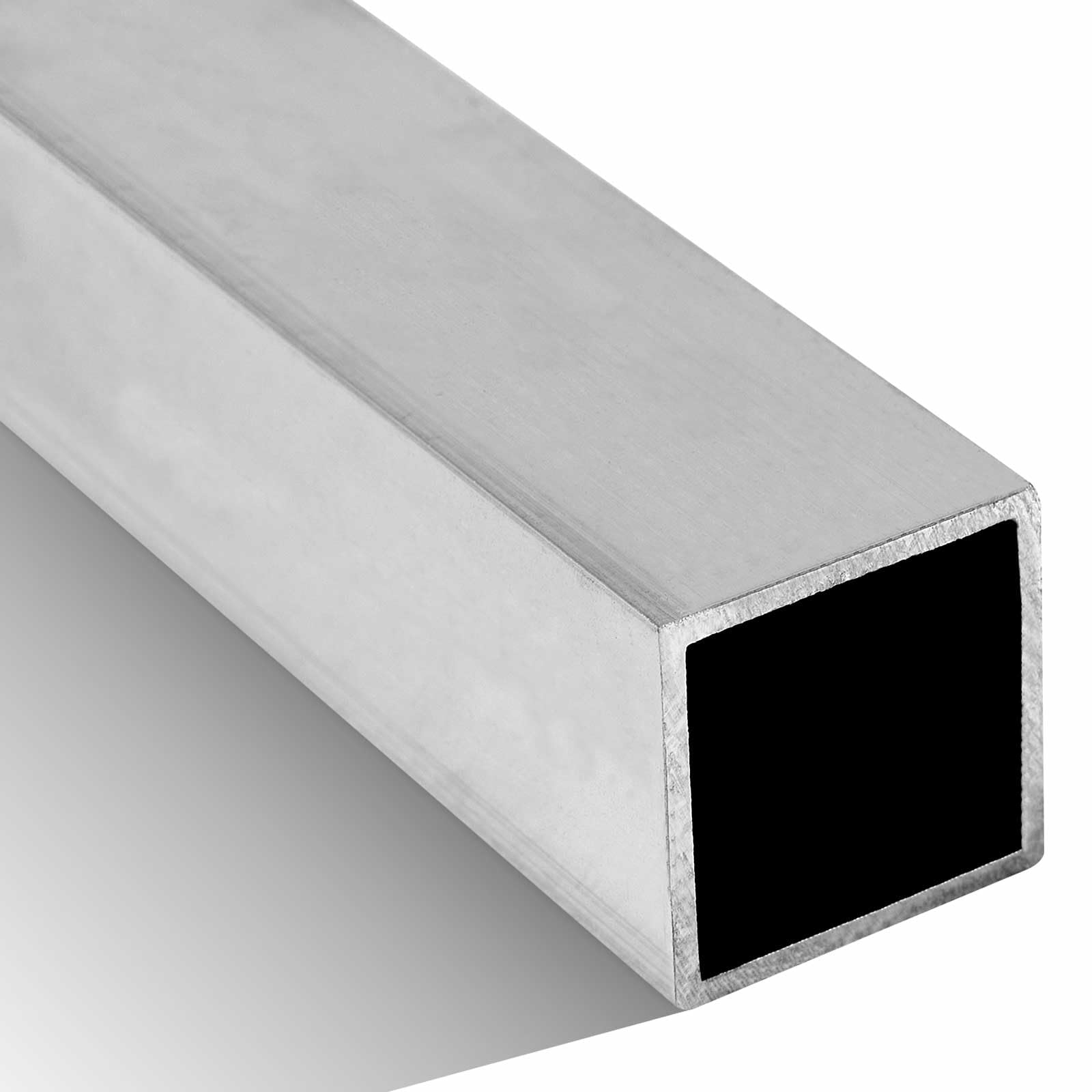
A 48-inch 6063 aluminum tube with a 1/16-inch wall, weighing 2.1 pounds for shelf and frame stiffening.
This one is for the builder who needs an aluminum stiffener that stays light. It is 1 inch square and 48 inches long in 6063 aluminum, weighing 2.1 pounds. That makes it the lightest 48-inch tube here — lighter than the steel options by a wide margin — and it machines easily with standard cutting, drilling, and welding tools. Its natural corrosion resistance keeps it stable indoors and in protected outdoor installs.
The clearest real use: holding up a long shelf. Built as a stiffener for an 11-foot shelf, this tube takes paint and scuffs well and holds up under the job. Because the wall is heavier than commodity stock, it resists bending at length, and the stock arrives straight and true with no bends. For furniture frames, shelving supports, and display racks, it is a sound aluminum choice.
Two honest cautions. The sizing runs metric in practice—the tube sold as 1 inch measures 25 millimeters—so if your project needs a true 1-inch outside dimension or a specific inside fit for 3D-printed parts or tight connectors, verify before you cut. And the finish can arrive with mill marks and scratches, so a piece destined to stay visible may want a quick sanding.
What It Does Well
- Light 48-inch tube for shelf and frame stiffening
- 6063 aluminum resists corrosion without coating
- Straight, true stock that holds threads and cuts clean
- Paints and scuffs well for visible surfaces
Plan Around This
- Sizing runs metric, so measure before ordering
- Surface can arrive scratched with mill marks
- Not the tube for a tight-tolerance or precision fit
Go with this for: light load-bearing stiffeners where you want aluminum at a lower carry weight.
Choose another if: your design depends on a true 1-inch dimension down to the millimeter.
Understanding the Specs
Wall Thickness And Inside Diameter
Wall thickness is the number that decides strength, weight, and how much room is left inside the tube. A 0.083-inch wall leaves more interior space and cuts and drills easily; a 0.125-inch wall raises stiffness and thread depth but narrows the inside opening. That inner dimension — the inside diameter — is what your fittings, rods, or inserts have to slide into, so it often matters more than the outside size. When a tube is called 1 inch square, that is the outside measurement, and a thick wall quietly shrinks what fits inside.
Material: Steel Versus Aluminum
Steel tubing is the choice for welding and load, while aluminum is the choice for weight and corrosion resistance. Mild and carbon steel carries real stiffness and takes common weld processes; it is also heavier per foot and will surface-rust without a coating, which is why some steel arrives with a grease film or a scale layer. Aluminum in 6061 or 6063 grades resists rust on its own and machines easily, but it is softer and generally thinner-walled, so it flexes sooner under a heavy point load. Pick steel for structure and aluminum for frames you have to keep light.
FAQ
Can I weld 1-inch square aluminum tubing the same way I weld steel?
Will a 1-inch square tube fit standard 1-inch connectors and brackets?
How much weight can 1-inch square tubing hold?
Does 1-inch square tubing come pre-cut or do I have to cut it?
Which is stronger for a frame, 1-inch steel or 1-inch aluminum square tube?
Will the inside opening of a 1-inch square tube be exactly 1 inch?
Does aluminum square tubing rust outdoors?
Is a 1/8-inch wall too thick to drill and thread?
Can I paint square tubing and will it stick?
Why does the listed size not match what I measure?
Final Thoughts: The Verdict
For most welders and builders, the winner is the Small Parts 1008-1010 Steel Square Tube—it takes common welding without fuss, arrives cut square with capped ends, and its 0.083-inch wall is heavier than typical hardware-store stock, which is why it holds the top spot among the steel picks here. If your build carries real load and you want the stiffest tube, grab the 1/8″ Mild Steel Square Tube with its full 0.125-inch wall. And for long, rust-free spans where weight matters, reach for the 8020 8111 Structural Aluminum Tube—60 inches of 6063-T6 that slots straight into a framing system.
How We Picked
We do not accept paid placement. Every pick is matched to a real buyer and a real use-case; we do not hands-on test units.
Sources & Methodology
Specifications: manufacturer listings and product documentation. Review insights: verified customer reviews, as of September 2026. Pricing: not shown on this page (it changes often); check the current price via the retailer link.
As an Amazon Associate, KitchPrep earns from qualifying purchases. This does not affect which products we feature.
Related Guides
