
Specs are compiled from manufacturer listings and verified buyer reviews and can change over time — please confirm the key details on the product page before buying.
Water pooling in the seam where your tub meets the floor is the fastest way to rot a subfloor, and the fix is a flexible quarter round trim that bends around the curve instead of cracking. The honest answer up front: the strongest all-rounder here is the Risunpet 3/4 in x 10 ft White, because its 120-inch length, rubber build, and reported hold along a garden tub base cover the exact place leaks start. Below are eight peel-and-stick trims that actually wrap a curved tub apron, ranked by how well each one survives water, corners, and time.
I’m Mohammad Maruf — the founder and writer behind KitchPrep. This guide is built by comparing the manufacturers’ published specifications and the patterns across verified customer reviews, so you get each pick’s real strengths and trade-offs instead of marketing spin.
Most of these trims fail at the same spot: the adhesive. A trim that peels off a bathtub apron within weeks is worse than no trim at all, so before you buy, check the profile height, the material, and whether the roll needs a heat gun or a hairdryer to bond. This breakdown of the bathtub floor molding options covers length, flexibility, and which surfaces each strip truly sticks to.
Our Picks at a Glance

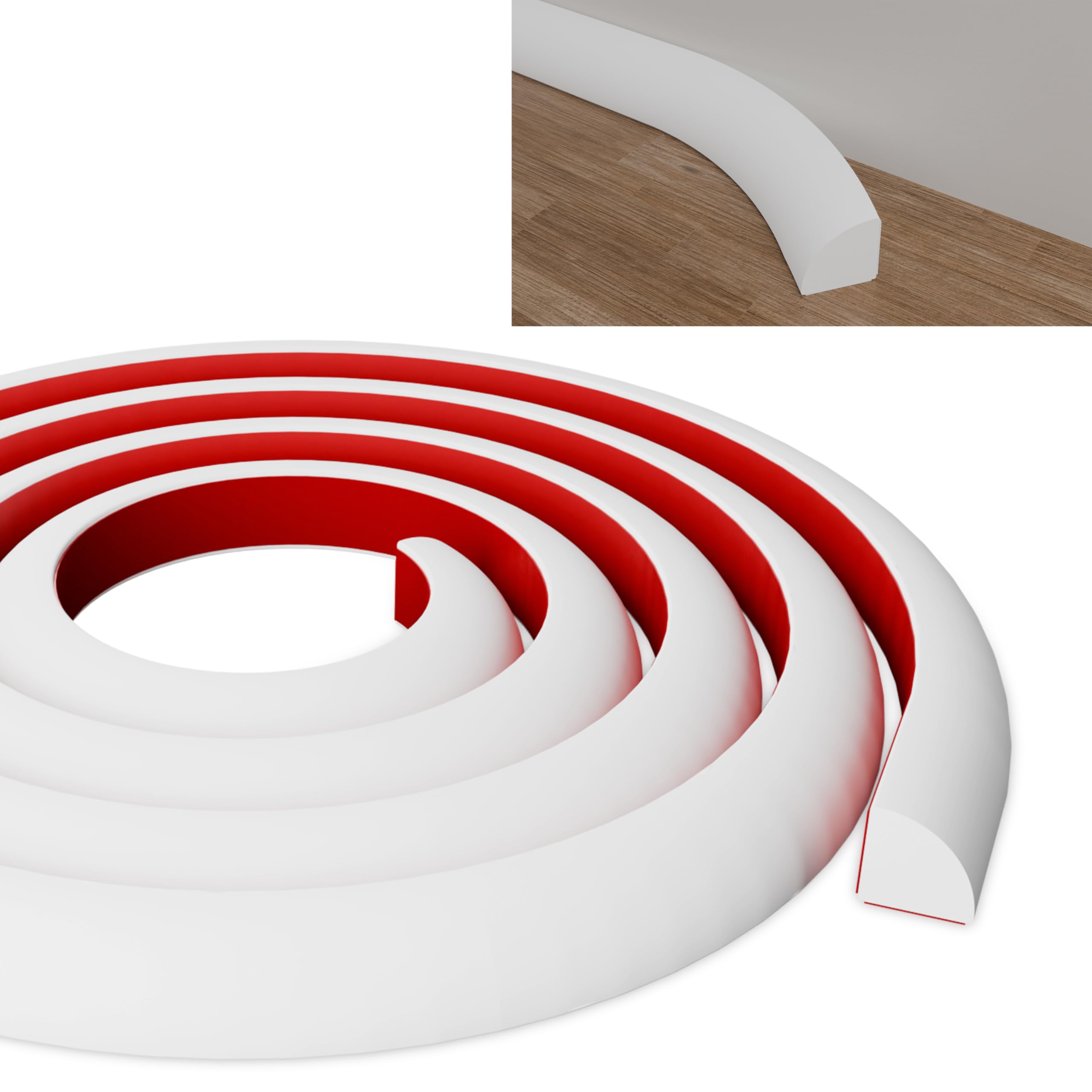

How To Choose The Best Bathtub Floor Molding
Buying trim for a tub edge is really three decisions in one: how wide a gap you need to hide, what material will survive constant splash, and whether the adhesive will hold where the tub curve turns. Get those right and installation takes minutes with scissors. Get them wrong and you are re-gluing a strip every few weeks.
Match the profile height to your actual gap
A quarter round molding sits in the corner where two surfaces meet and hides the seam, so its height has to be tall enough to vanish the crack. The 3/4 inch by 3/4 inch trims cover wider, uneven gaps left by floating floors and thick tile. Slimmer 0.6 inch profiles work when the gap is tight and you want a low, subtle edge. Measure the widest point of your gap first, because a trim shorter than the gap just floats over it and traps dirt underneath.
The Risunpet 3/4 in x 10 ft White runs a true 0.75 inch in both directions, and the 240-inch Risunpet below uses the same 0.75 inch by 0.75 inch profile for larger gaps and uneven edges where smaller trims may not fully cover.
Rubber, silicone, or foam: what survives a wet bathroom
Rubber and silicone are the two materials worth considering here, because both stay flexible and resist water without turning yellow. A stiffer rubber trim holds a straight line cleanly but can fight you on a tight curve. A softer silicone trim bends around the tub apron more easily but can feel flimsier. The trap is foam-core trim — it looks like rubber, feels light, and then collapses under a splash. Check the listing says rubber or silicone, not foam.
Stick, then reinforce
Every strip on this list is peel and stick, and every one of them benefits from extra adhesive at the joints. Clean the surface with alcohol and let it dry, warm the strip with a hairdryer in cold rooms, and press it down within the first few minutes. In wet areas, run a thin bead of silicone or white caulk along the top edge to lock out water. That single step is what separates a trim that lasts from one that lifts.
Quick Comparison
| Model | Best For | Length | Profile | Material | Amazon |
|---|---|---|---|---|---|
| Flexible Quarter Round Molding Trim, 3/4 in x 10 ft, White★ Best Overall | Curved tub aprons and garden tub bases | 120 inches | 3/4″ x 3/4″ | Rubber | Amazon |
| 3/4 Inch Flexible White Rubber Trim, 10 FtDIY Favorite | Odd-shaped trim areas on cast iron tubs | 10 feet | 3/4″ x 3/4″ | Rubber | Amazon |
| Kneelisa Flexible Quarter Round Molding Trim Peel and Stick 236Inch WhiteGreatest Coverage | Small gaps around baseboards and walls | 236 inches | 15mm x 20mm | Silicone | Amazon |
| 3/4 Inch (W) x 118Inch(L) Flexible Quarter Round Molding | DIY backsplash and countertop gaps | 118 inches | 3/4″ x 3/4″ | Silicone | Amazon |
| 236 Inch Peel and Stick Quarter Round Molding Trim | Vanity and toilet corner gaps | 236 inches | 0.6″ gap fill | Silicone | Amazon |
| 19.6′ Flexible Quarter Round Molding, Peel and Stick Shoe Molding | Curved tub bases and shower projects | 19.6 feet | 0.6″ x 0.6″ | Silicone | Amazon |
| 3/4″Flexible Quarter Round Molding Peel and Stick Rubber Trim 13.2Ft Grey | Arcing surfaces and fireplace edges | 158 inches | 3/4″ x 3/4″ | Rubber | Amazon |
| 3/4 Inch Flexible Quarter Round Molding, Peel and Stick Rubber Floor Trim | Large tub-to-floor gaps and wet-area sealing | 240 inches | 3/4″ x 3/4″ | Rubber | Amazon |
In‑Depth Reviews
1. Flexible Quarter Round Molding Trim, 3/4 in x 10 ft, White
Our pick — over 4★ from 650+ verified ratings; the strongest balance of quality and price.
The 10-foot rubber strip that bends around a garden tub base instead of snapping at the curve.
If your tub sits in the middle of the room with a curved apron, this is the trim to start with. At 3/4 inch wide by 3/4 inch high and a full 120 inches long, it covers the standard seam between a tub base and the floor in one continuous run, so you are not piecing strips together around the arch. That length matters here — the same maker’s 240-inch roll exists precisely because wider gaps and longer runs need more material.
The rubber formulation is the reason it survives a bathroom. It is described as waterproof, high temperature resistant, and corrosion resistant, which in plain terms means the constant splash off a shower head will not warp it or bleed its color. It also ships as a commercial grade rating, a step up from the hobby-tier trims aimed at crafters. Cutting is a utility-knife job: score it, flex it, and it separates clean. It is paintable, so you can color-match it to wood trim if bright white clashes with your cabinet. Just check your gap first — it is a 0.75 inch molding, and the maker’s own note says so.
What wins people over is the flexibility. It conforms to curved enclaves and oddly shaped tub bases that rigid wood trim cannot follow, and a single strip runs the whole edge without a joint. The recurring gripe is the release liner — the protective film over the sticky side can be fiddly to start peeling, so set aside a minute and use a fingernail to lift the corner. Adhesion itself is a mixed story across owners: straight, clean runs hold firm for months, while tight corners sometimes need extra glue. The rounded profile also means no sharp lip to catch a wheelchair or walker wheel.
What holds up in a wet bathroom
- 120-inch continuous roll covers a full tub edge with no joints to fail
- Rubber stays soft and flexible so it wraps curved tub aprons cleanly
- Waterproof, heat resistant, and corrosion resistant for constant splash
- Paintable white finish can be matched to surrounding trim
Where to add your own glue
- Release liner is hard to start lifting off the adhesive
- Corners that are not a true 90 degrees may need reinforcing adhesive
- Only comes in white
Best fit for: A curved tub base, a garden tub, or any edge where rigid trim would crack.
Watch this: Buy extra silicone adhesive if your apron turns tightly, because the peel-and-stick backing alone can lift at a sharp bend.
2. 3/4 Inch Flexible White Rubber Trim, 10 Ft
Built for the homeowner staring at an odd, hand-cut corner on an old cast iron tub.
Old cast iron tubs throw curved, irregular trim lines at you, and this is the kind of job where flexible rubber earns its place. The strip runs 3/4 inch wide by 3/4 inch high and 10 feet long, so you get enough to re-line a tub edge and still have offcuts for a sill or a stair nosing. The material is billed as aviation grade and medical grade rubber with waterproof, heat-resistant, and corrosion-resistant behavior — the practical read is that it will not yellow or deform over time. It also will not harden and crack, which is the usual death of cheap trim in a steamy room.
Installation is the standard peel-and-stick routine: clean the surface, cut to size, peel, and press within a few minutes. One buyer’s note that keeps surfacing sums up the honest reality: “This stuff was pretty good on a rounded corner but the double sided tape didn’t have the best adhesion and I had to reattach it with super glue.” That is the recurring theme here — the strip performs on the shape, but the factory tape sometimes needs a partner. Owners describe extra pressure needed around a protruding area, and one found the top edge sits slightly taller on one side than the other, worth checking if you are trying to match existing wood trim.
Where this trim shines is odd shapes and old substrates. It is easy to fit, paintable, and once set it reads like regular wood trim from across the room. The thing to plan for is reinforcement: for a wet tub edge, budget a little extra adhesive or caulk at the joints and corners. It is a DIY-friendly product for someone with a utility knife and patience, not a push-button solution.
Shape over stick: The 3/4 inch profile and rubber body wrap an irregular cast iron tub edge well, and the paintable surface lets it blend with wood trim once dry.
Plan for extra glue: The weak link is the factory tape. Buy a tube of adhesive or caulk alongside it, treat it as a two-part install, and the trim holds.
Reach for this if: You are patching an odd, curved or protruding trim area and want a flexible strip that can be painted to match.
Look elsewhere if: You want a pure press-and-forget stick with zero reinforcement, since this one often needs a dab of extra glue at the corners.
3. Kneelisa Flexible Quarter Round Molding Trim Peel and Stick 236Inch White
A 236-inch silicone roll that hides small gaps all around the bathroom, not just at the tub.
The number that matters here is 236 inches — the longest silicone roll in this batch, enough to run under a vanity, around a baseboard, and along a tub base without splicing. That extra length is the whole point: run one continuous strip under a vanity, around a baseboard, and along a tub base without running out and starting a fresh, mismatched seam. The strip is a slim 15 millimeters wide by 20 millimeters high with a right-angle shape, built to give 90-degree edge coverage with a wider contact face so it does not flick off.
Silicone is the practical choice for a room that gets wiped down constantly, and this one wipes clean with a wet towel and leaves no residue when you pull it off. One caveat the maker flags directly: it does not support painting, so if you need to color-match wood trim, this is not your strip. It also does not want a damp or dirty wall, or a peeling, uneven surface, so prep matters. The included strong adhesive is designed to keep it put, and warming the backing with a hairdryer in colder conditions improves the bond.
Real-world results split by shape, and the pattern is consistent enough to plan around. Running a strip along the edge of a boat floor or a straight baseboard, the bond holds and covers the gap cleanly. On curves and non-90-degree angles, the picture changes — one buyer’s experience was that “adhesive failed on curves/non-90° angles, needed super glue; worked perfectly on straight portions.” Read that as a shape guide, not a defect: this strip excels on long straight runs and small rectangular gaps, and on a sweeping tub curve it wants a dot of reinforcement.
Where the 236 inches pay off
- 236-inch roll covers multiple gaps in one install with material to spare
- Right-angle profile grips the edge with a wide contact face
- Wipe-clean waterproof silicone; comes off with no sticky residue
- Warming the adhesive with a hairdryer boosts the bond in cold rooms
What to plan around
- Curved and non-90-degree corners can lift and need extra glue
- Cannot be painted to match wood trim
- Needs a fully dry, smooth wall, and faces tile-waterline gaps best
Pick this for: Long, straight gap runs where you want one continuous strip and easy wipe-clean upkeep.
The clear limit: It fights sharp curves, so pair it with glue at any corner that is not a clean angle.
4. 3/4 Inch (W) x 118Inch(L) Flexible Quarter Round Molding
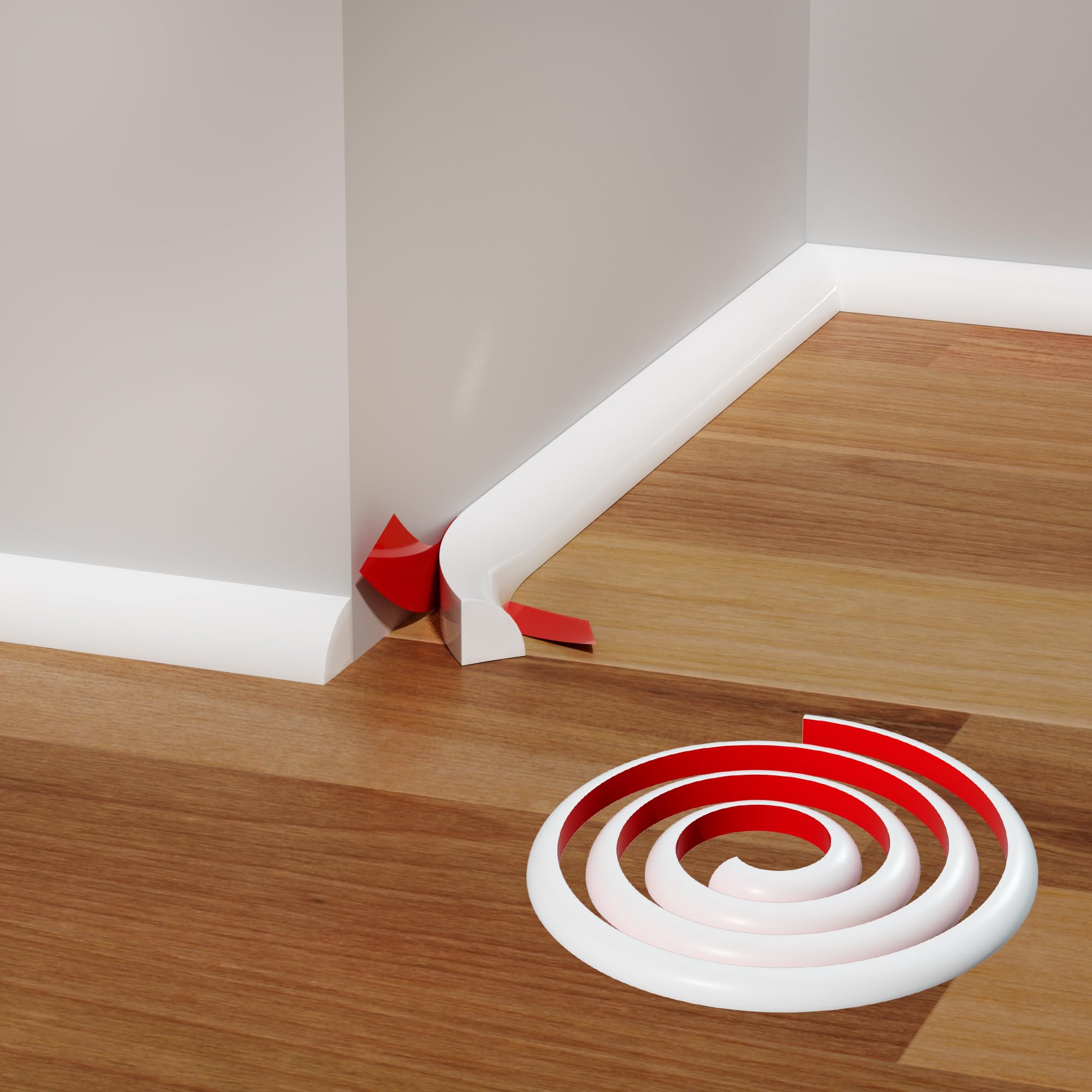
The countertop-gap closer for anyone who does not want to rip out a backsplash.
Picture the classic problem: new quartz countertops installed, a quarter-inch strip of raw tile edge showing above them, and no appetite to re-do the whole backsplash. This trim is built for exactly that. The 118-inch silicone strip runs 3/4 inch wide and 3/4 inch thick, and because silicone stays soft and flexible, it folds into a curved edge or a corner without a saw. It is moisture-resistant and wipes clean with a damp rag, which is why it suits the seam between a countertop and a tub or a tile line.
The functionality is the whole story here. The maker ships it in multiple widths (0.5 inch, 0.6 inch, and 0.75 inch) and lengths (79, 118, 236, 240, and 472 inches), so this is a sizing-first purchase — check the gap before you order. Adhesion is the standard peel-and-stick double-sided strip, and the guidance is specific: peel from the edge only, keep skin oils off the tape, and add extra glue at the joints for long-term hold. Press within minutes and the silicone grabs.
Two honest trade-offs. First, it is a glossy finish, and at least one buyer found it “too shiny for my use against a flat-based paint” — so if your walls are matte, expect a sheen contrast. Second, it is a surface-cover trim, not a structural fix; on a rough, uneven substrate the adhesive has less to bite into. On a smooth tile, quartz, or fiberglass surface, it does the job.
What it solves: A 118-inch flexible strip that folds into counters, tubs, and curved edges, hiding a gap without nails or a saw.
The honest note: It reads glossy, so against flat matte paint the finish contrast is visible, and on a rough or uneven surface the stick is weaker.
Right for: Smooth tile, quartz, or fiberglass edges where a peeled-and-pressed strip hides the seam fast.
Not ideal if: Your surface is textured or your walls are matte, since the shine will stand out and the tape has less grip.
5. 236 Inch Peel and Stick Quarter Round Molding Trim

A 236-inch strip aimed at the ugly gaps you have been staring at for years.
The pitch on this one is speed: cover an unsightly gap between a vanity and a wall in minutes, no renovation. The 236-inch roll is a flat-edge silicone strip listed at 19.67 feet, with a maximum gap fill of 0.6 inches — so it is a good match for the narrow cracks around a toilet base, a vanity, or a countertop seam, and too slim for a wide tub-to-floor gap. It is a trim that hides, not a caulk that seals, so treat it as the finishing layer over a gap, not the waterproofing itself.
The kit deserves a mention, because hidden in the specs is what separates it from the pack: it ships with a two-pack of adhesion promoter plus disposable gloves. That promoter is the difference between a strip that holds and one that pulls away, and it is the reason this trim can grip a smooth or slightly tricky surface. Application is straightforward: clean the spot, apply, and press. It also removes cleanly without leaving sticky residue or lifting paint off cabinets, which makes it a low-risk fix for renters or anyone second-guessing a permanent change.
The honest caveat is the adhesive on the edge piece. The pattern that shows up is the strip pulling away where it wraps an edge and sticking to the removable pull tape instead, with the tape itself being stiff to remove. One buyer even had a strip pull paint off the wall — which, as they noted, “should tell you the great adhesive power,” a reminder that a strong bond cuts both ways. Size it to a smooth, flat surface and it looks clean; expect it to be a little shinier and more synthetic-looking than wooden trim.
Why the kit helps
- Comes with a two-pack adhesion promoter and disposable gloves to prep the surface
- 236-inch roll covers several narrow gaps in one go
- Peels off cleanly with no sticky residue on cabinets or walls
- Flexible, cuttable with scissors or a utility knife
Where the edge fights back
- Adhesive can pull away from the edge piece and stick to the pull tape
- Pull tape is hard to peel off
- Strong bond can lift paint from a weak wall
- 0.6 inch gap fill is too slim for a wide tub seam
Choose it for: Narrow vanity, toilet, or countertop gaps where the included adhesion promoter gives you a shot at a first-time bond.
One thing to note: That strong adhesive can take wall paint with it on removal, so test a hidden corner first if the paint job is fresh.
6. 19.6′ Flexible Quarter Round Molding, Peel and Stick Shoe Molding
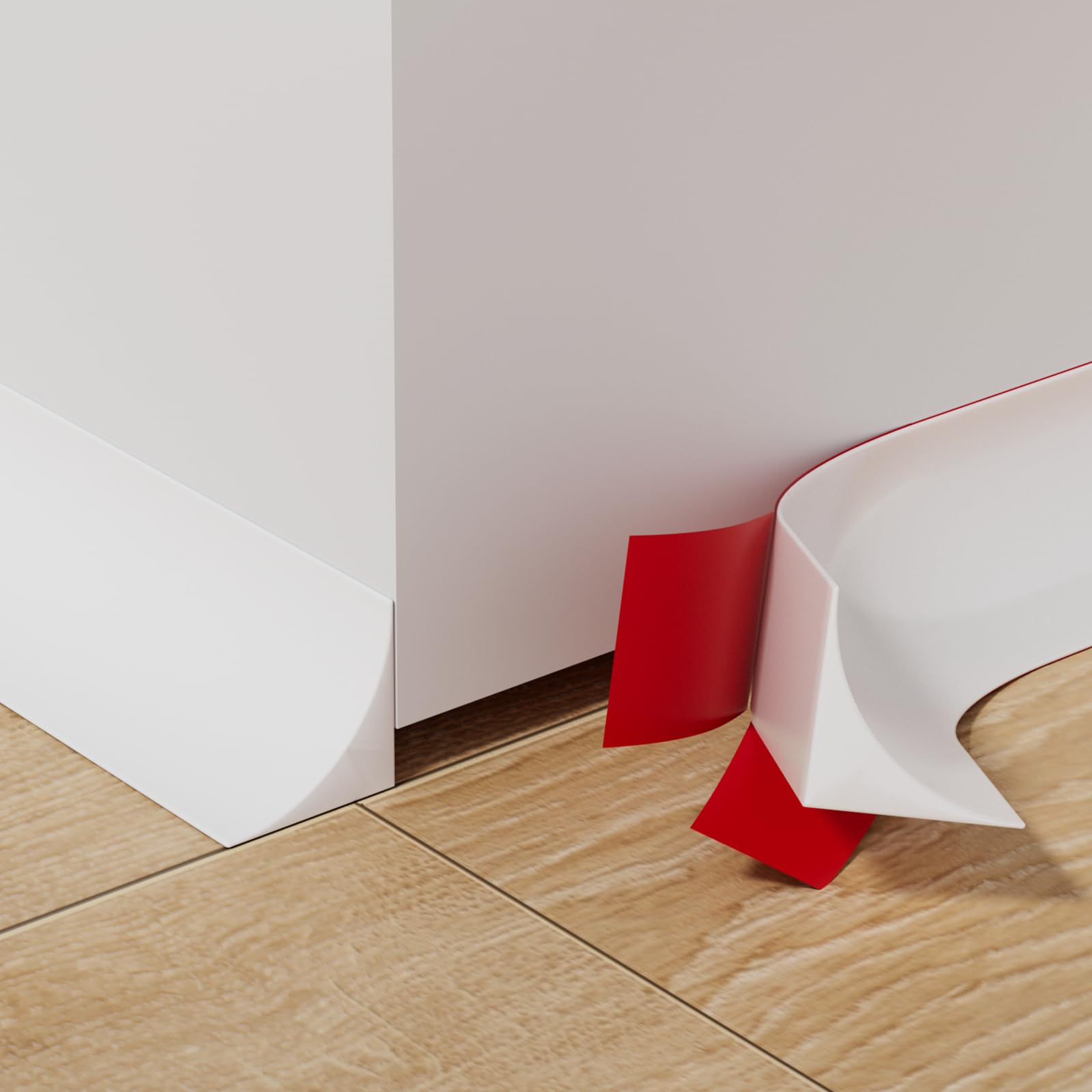
A 19.6-foot flexible roll, with a slim 0.6-inch face, that hugs the base of a curved tub.
For shower and tub projects where the edge is low and subtle, this slim 0.6 inch by 0.6 inch quarter round is the cleaner choice. Instead of a chunky 3/4 inch lip, you get a low-profile strip with two bottom edges at a 90-degree angle, designed to seat into inside corners for a flush, finished look. At 19.6 feet it is one of the longer rolls here, so you can run it around a shower tray, a sink, and a baseboard without splicing.
Silicone is doing the heavy lifting: bendable, waterproof, heat-resistant, and corrosion-resistant, the trio that keeps trim from wilting under steam. The install is the familiar peel-and-stick, with the maker recommending extra glue at the connection point for long-term hold, plus a press within a few minutes of peeling. A hairdryer can help the bond in cooler conditions, and one owner confirmed the trick works on a Jacuzzi step trim, where it adhered well and covered gaps up to about 1/4 inch.
What owners like is the shape around a curve — a special bathroom tub base and other rounded edges are where this profile bends to fit. The straight-line install is genuinely easy: cut with a razor, press, done. The problems show up at tight miters and at the adhesive layer. Trying to make a clean corner cut without miter shears is fussy, and some buyers needed to reinforce the stick with extra adhesive. One noted the included primer is pungent, so ventilate the room, and long-term durability in a splash zone is a fair question to watch.
Curve-friendly and cuttable: The 19.6-foot roll and 0.6 inch profile slip along curved shower edges and low tub bases, and a razor handles the trimming easily.
Reinforce or regret: The recurring issue is hold — several owners added adhesive, so buy a tube of silicone and plan on setting the strip into it at the corners.
Good match for: Shower trays, curved tub bases, and low-profile edges where a slim quarter round looks intentional.
Size check: At 0.6 inch it will not cover a wide gap, so measure first if the seam is meaningfully bigger than a quarter inch.
7. 3/4″Flexible Quarter Round Molding Peel and Stick Rubber Trim 13.2Ft Grey

The rubber trim that feels like real wood until you bend it around a curve.
What sets this one apart is how solid it feels. It lists as 100 percent silicone on the spec sheet, but the owner reaction is a stiff, substantial rubber that does not flop — one reviewer noted they expected it to be “a lot more flimsy but it is actually very solid rubber.” That firmness is what lets it hold a crisp straight line, and it is also why it resists the warping that thin foam-core trim suffers. It runs 158 inches long by 3/4 inch wide by 3/4 inch high in a grey finish, and the L-profile is designed to replace traditional wooden boards with no nails needed.
The use case is arcing surfaces and awkward edges: fireplace surrounds, floating floor edges, bathroom tubs, and countertops. Because the rubber is bendable and corrosion-resistant, and it tears off without damaging the floor, it is a reversible upgrade for a rental or a temporary fix. Cutting is easy — one buyer used a plastic miter box and a butcher knife and got a clean edge. There is no odor, and the smooth surface wipes clean. The manufacturer recommends a silicone reinforcement on both sides in especially wet scenes, so tub edges still want that extra step.
Two caveats worth knowing before you order. One, this is a solid rubber trim and one buyer found it “too large and inflexible” for a very tight radius — the firmness that makes it feel premium is also its limit on a super-tight bend. Two, sizing has been reported as inconsistent: more than one buyer flagged that the width reads narrower than 3/4 inch and that the length ran shorter than labeled. It is a strong, handsome trim, but verify the measurements on arrival before you commit to a precise fit.
Where the firmness wins
- Solid rubber build holds a straight line and resists warping
- Replaces wooden boards without nails; tears off without floor damage
- Easy to cut with a miter box and knife
- Paintable and odor-free with a wipe-clean surface
What buyers ran into
- Firmness makes it awkward on a very tight radius
- Reported sizing runs narrower and shorter than labeled
- Grey is a style choice, not a white-trim match
Great pick if: You want a substantial, wood-look trim for fireplace edges or floating floors and can live with a firm rubber.
Measure on arrival: Reported runs short of the listed length and width, so check the roll against your gap before you cut.
8. 3/4 Inch Flexible Quarter Round Molding, Peel and Stick Rubber Floor Trim

The extra-long roll built for wide tub-to-floor gaps and wet-area edges.
This one is designed for the cracks that smaller trims cannot fully cover. The profile is a full 3/4 inch by 3/4 inch — the chunkiest on this list — and the roll runs 240 inches long, which gives you the reach to cover a wide shower base or a tub that sits over a floating floor with a big, messy seam. The thicker body is the point: it offers extra coverage on uneven edges where a slim strip would leave a shadow line, and it creates a wider barrier to help block water splashes, dust, and debris in high-use rooms.
Its real strength is bridging a floor-to-tub transition. The trim is used to span the gap between a floating LVP floor and a tub edge, cut and pressed into the seam, then gently heated with a hairdryer until soft so it hugs the contour. Owners who did that reported a strong hold and a clean, professional look — and one used a bead of bright white caulk along the top edge, a smart extra step in a wet zone. The adhesive is described as surprisingly strong, and careful placement before you peel the red backing is the key to a straight result.
Specced as rubber, recommended for waterproofing shower and bathtub edges, with a 20-foot unit count. The trade-offs are minor but real. The strong glue means you get one shot at placement, so dry-fit first. The semi-gloss to matte finish looks natural against white vinyl but, in one owner’s experience, hair and dust cling to the surface — not very noticeable, but worth a wipe now and then. It is a patch-and-cover trim, not a replacement for baseboard or a caulk seal.
The wide-gap specialist: A 3/4 inch by 3/4 inch profile on a 240-inch roll covers larger gaps and uneven edges where slim trims fall short, and it blocks water, dust, and debris in the process.
One-shot placement: The strong adhesive means you cannot reposition easily, so dry-fit and mark before peeling the red backing.
Built for: Wide tub-to-floor seams and wet-area edges on floating floors where coverage matters more than a low profile.
Kept honest: It is a cover strip, not a sealant, so run caulk along the top edge if you want real water protection.
Understanding the Specs
Profile Height and Gap Fill
A quarter round molding hides the seam where a tub meets a wall or floor, so its height has to match the gap. The 3/4 inch by 3/4 inch trims cover wider, uneven gaps left by floating floors and thick tile. Slimmer 0.6 inch profiles suit tight seams and low, subtle edges. A 15 millimeter by 20 millimeter strip is a different shape again — narrower but taller, sized for small right-angle gaps around baseboards and vanities. Measure the widest point of your gap and match the profile to it, because a trim shorter than the gap just floats over the opening.
Material and Adhesion
Rubber and silicone are the two materials that hold up in a wet bathroom — both stay flexible, resist water, and avoid the yellowing that cheaper foam-core strips develop. The catch on every peel-and-stick trim is the adhesive. A straight, clean run usually holds for months, while tighter curves and non-90-degree corners tend to need extra glue. Prep the surface with alcohol, warm the strip with a hairdryer in cold conditions, press within the first few minutes, and reinforce the joints with a thin bead of silicone or white caulk. That reinforcement is what turns a temporary cover strip into a lasting one.
FAQ
Will peel and stick bathtub floor molding actually stay put in a wet bathroom?
What size quarter round molding do I need for the gap around my bathtub?
Can I use this molding on a curved bathtub base or garden tub?
Do I need a saw or special tools to install bathtub trim molding?
Can bathtub floor molding be painted to match my wood trim?
Is quarter round trim a replacement for caulk around a tub?
How long does it take for the trim to bond, and can I move it afterward?
Will the adhesive damage my wall or floor if I remove the molding later?
Does this bathtub floor molding work on a shower pan or kitchen countertop gap too?
How do I clean the trim once it is installed on a tub edge?
Final Thoughts: The Verdict
For most bathrooms, the bathtub floor molding winner is the Risunpet 3/4 in x 10 ft White, because its 120-inch rubber strip covers a full tub edge in one run and bends around a curved apron without cracking — the two things that decide whether the fix lasts. If you are patching a wide seam on a floating floor, grab the 240-inch Risunpet rubber trim, whose thick 3/4 inch profile is built for big, uneven gaps. And for a long straight run under a vanity or baseboard, the Kneelisa 236-inch silicone roll gives you the most continuous coverage with easy wipe-clean upkeep. Whichever you pick, clean the surface and reinforce the corners — that step is what keeps the strip stuck through steam, splash, and a splashing toddler.
How We Picked
We do not accept paid placement. Every pick is matched to a real buyer and a real use-case; we do not hands-on test units.
Sources & Methodology
Specifications: manufacturer listings and product documentation. Review insights: verified customer reviews, as of September 2026. Pricing: not shown on this page (it changes often); check the current price via the retailer link.
As an Amazon Associate, KitchPrep earns from qualifying purchases. This does not affect which products we feature.
Related Guides
