
Specs are compiled from manufacturer listings and verified buyer reviews and can change over time — please confirm the key details on the product page before buying.
If termites are eating your house, you have two jobs: find out whether they are actually there, and then stop them. Almost every bait station sold online does only the first job, because it is a detection tool with no poison inside. That single fact is why so many buyers feel let down after a purchase. This guide sorts out which stations detect, which ones kill, and which kits do both without a monthly pest-control contract.
I’m Mohammad Maruf — the founder and writer behind KitchPrep. This guide is built by comparing the manufacturers’ published specifications and the patterns across verified customer reviews, so you get each pick’s real strengths and trade-offs instead of marketing spin.
Some kits arrive pre-loaded and ready to bury, while others are empty shells waiting on a separate chemical purchase. Knowing which is which before you dig is the whole game, and this breakdown of the best termite bait stations covers it.
Our Picks at a Glance

How To Choose The Best Termite Bait Stations
Before you pick a brand, decide if you want a detector or a killer. A monitoring station holds a wood block or a cellulose cartridge (a plant-fiber block) and nothing else, so it tells you termites are present without harming them. A bait station holds an active ingredient such as hexaflumuron or novaluron (insect-growth regulators that stop termites from molting) that the insects carry back to the nest. Many listings look identical but sit on opposite sides of that line.
Decide if you need detection, elimination, or both
If you have never seen termites on your property, a pure monitoring kit is the right starting point because it costs less and shows you whether a problem exists. If activity is already confirmed, you want a system that accepts bait cartridges, or a kit that ships with them. Two products in this list do both jobs in one unit: a pop-up indicator tells you something is feeding, and the stake itself is the killing agent.
Read the ingredient list carefully before you dig. A station described as containing no termiticide will not stop a colony no matter how many you bury. That is not a flaw — it is the design — but it decides what you buy next.
Match the number of stations to your home’s perimeter
Spacing rules are published by the makers and they matter more than the brand name. Radii of 10 feet, 10-20 feet, and 8-10 feet with a 20-foot ceiling appear across these kits, and the pattern is always the same: tighter spacing catches activity sooner. A house with a long foundation line needs more stations than a small footprint, which is why the ten-station and sixteen-count kits exist alongside six-packs.
Check what ships in the box — and what does not
The most common surprise is a missing opener tool. Several systems require a separate key or spider tool to lift the lid and check the cartridge, and it is sold on its own. The second surprise is the auger. A drilling auger in the 2.5 to 2.75 inch range makes short work of the holes, and some kits recommend one without including it. The third is bait. Kits either arrive pre-loaded, include wood blocks only, or include active cartridges with an expiration date worth checking on arrival.
Quick Comparison
| Model | Best For | Stations Included | Bait Included | Spacing Guidance | Amazon |
|---|---|---|---|---|---|
| Advance Termite Bait Monitoring Stations (TBS) 74493★ Best Overall | Whole-perimeter detection on a large property | 10 stations | No termiticide — inspection cartridges and wood blocks only | 2-4 ft from foundation, 10 ft apart | Amazon |
| 6 Pack Termite Monitoring Bait Stations (Trelona Compatible)Budget Starter | Small yards and first-time monitoring | 6 stations | No termiticide — 18 wood blocks included | Around wooden structures and landscape perimeters | Amazon |
| Spectracide Terminate Detection & Killing Stakes | One-step detect-and-kill around the house | 15 stakes | Yes — hexaflumuron active ingredient | 2-3 ft from home, no more than 10 feet apart | Amazon |
| HexPro Termite Monitoring Baiting System | Owners replacing a paid monitoring plan | 10 stations | No — wood monitors only (Shatter bait sold separately) | 8-10 feet, not exceeding 20 feet | Amazon |
| BASF Termite Bait & Monitoring System Home Kit | Tackling a confirmed infestation without a contractor | 10 stations | Yes — 6 Trelona bait cartridges, 0.5% Novaluron | 10-20 feet apart around the perimeter | Amazon |
| Trelona ATBS Annual Bait Stations | Hands-off year-round structural protection | 16 stations | Yes — Trelona bait factory-loaded | 15-20 feet apart around the property | Amazon |
In‑Depth Reviews
1. Advance Termite Bait Monitoring Stations(TBS)-Ten Stations 74493
Our pick — 4.5★ from 550+ verified ratings; the strongest balance of quality and price.
Ten pre-assembled detectors that tell you whether you have a termite problem before you spend a cent on poison.
This is the kit for someone who has never spotted a termite and wants a straight answer. You get a full case: 10 Advance Termite Inspection Cartridges (TIC — the wood-and-cellulose insert the insects chew first), 10 station housings, and 10 wood monitoring blocks. Every unit arrives pre-assembled, so there is no snapping together of parts before you dig. The system contains no termiticide by design, which the maker states outright. You install first, watch for feeding, and only then buy Trelona cartridges from the same brand to slot into the same housings.
Getting the spacing right matters more here than anywhere else on this list. Plan on holes 9 inches deep bored with a 2.75-inch auger (a garden drill bit), then set each station 2-4 feet out from the foundation and 10 feet apart. That spacing is what turns ten units into a genuine perimeter ring instead of ten random sticks. The stations are modest in size — 11.3″L x 7.9″W x 19″H for the shipping case against the compact 3.94″L x 3.94″W x 9.45″H profile of the six-pack below, so you are getting a longer run of identical units rather than a bulkier one.
What wins people over is the price: a professional monitoring round without the recurring bill. Buyers report treating this as a directly comparable alternative to what a pest company installs, and one long-term owner describes a five-year run in which cartridges and wood blocks needed replacing only once, with an inspection each year. The honest catch is twofold. Wood and cartridges rot in wet soil, so a damp yard means more frequent swaps. And the opener tool is sold separately — without it, checking a station is awkward.
Why it earns the top slot
- Ten pre-assembled stations and cartridges in one case — no assembly before digging.
- Detects first, so you buy termiticide only if the wood shows feeding.
- Takes Trelona cartridges from the same brand once activity appears.
- Rated 4.5 out of 5 across 500+ owner reviews.
Where it asks more of you
- Ships with zero poison — expect a second purchase if termites show.
- Opener tool not included; you supply it.
- Wood blocks and cartridges break down faster in soaked ground.
Buy this if: you own a larger property, want a genuine perimeter ring of detectors, and prefer to confirm activity before spending on bait.
Think twice if: you already know termites are in the walls — this kit will not kill a single one until you add cartridges.
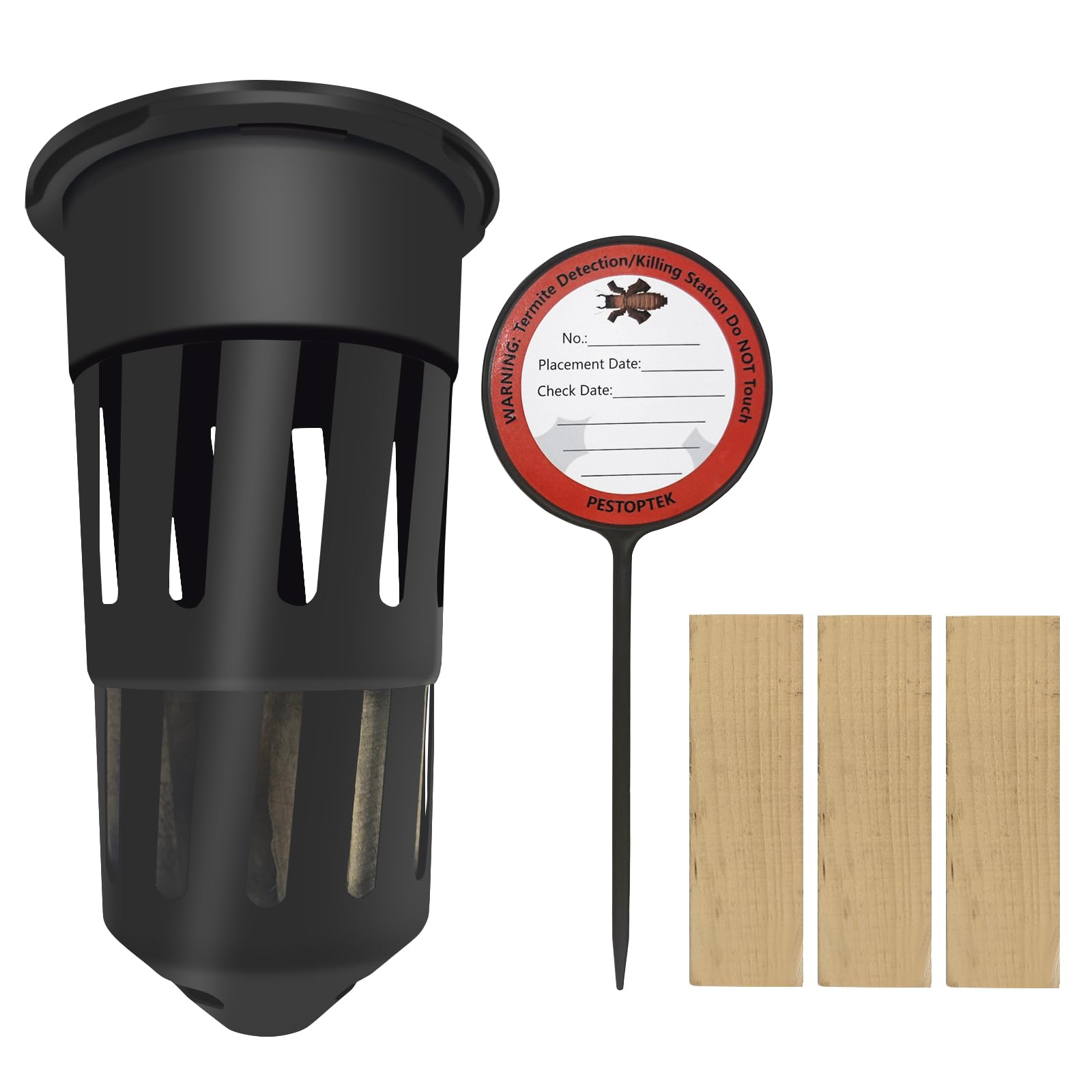
2. 6 Pack Termite Monitoring Bait Stations, Compatible with Trelona Termite Bait
Six snap-together shells with eighteen wood blocks — the cheapest honest way to find out if termites are near.
The standout here is the parts count. Six stations is exactly one-third of the ten-station Advance case above, and the whole box stands 9.45 inches tall by 3.94 inches square per unit, so it disappears into a flower bed. The kit breaks down into 6 bases, 6 outer shells, 6 lids, 18 wood blocks for monitoring, and 6 marker flags to help you find the things again in tall grass. No termiticide is present, and the listing says so plainly — you use this to detect, then add a Trelona or Advance attractant into the space provided.
The build takes the opposite approach to the branded kits on the key question of how you open it. There is no key at all. The reasoning given is that twisting a key disturbs the insects nesting inside and can spoil a later treatment, so the lid simply lifts. That trade-off shows up in the field, though, and the recurring complaint is the lid fit. A few owners find the tops pop free too easily — mowing over one can send the lid airborne — so it is worth pressing each into the soil below blade height and flagging its position.
Setup is a three-step job: drop the base into the outer shell, add a wood block, put the lid on. Owners mention an easy, well-packaged build that fits together without fuss, and the moisture-proof design is meant to survive seasons of wet ground with individual parts replaceable if one fails. The verdict: a low-risk first step if your yard is small and your only question is whether termites are around.
Small footprint, small risk: six stations and eighteen blocks give you a real answer about termite presence for a fraction of what a full perimeter kit costs, and everything snaps together without tools or keys.
Reach for it if: you want the lowest-cost way to test a backyard or garden edge for activity before committing to a bigger system.
Look elsewhere if: you are covering a long foundation line, because six stations at 10-foot spacing will not wrap a large home.
3. Spectracide Terminate Termite Detection & Killing Stakes, 15 Count

One stake that raises a flag when termites feed and poisons them while they do it.
Two jobs, one stick. The pop-up indicator on each stake rises the moment something starts eating, so you never have to pull a station to check it, and the stake itself carries hexaflumuron — an active ingredient that kills the insects working the bait. That combination is genuinely different from the empty monitoring shells above, and it is why this kit sits in a league of its own for anyone who wants to skip straight to treatment. You get 15 stakes with locator shields, a digging tool, and an instruction booklet.
Placement is tight and specific: 2 to 3 feet off the house, no more than 10 feet apart. The ground tool is a hand-cranked drill, and its handle can be dropped into a power drill to bore the holes faster — a detail that turns a long afternoon into a short one. Where this kit really separates from the branded systems is approachability. There is no cartridge to buy, no opener tool to order, no auger to source. You drive the stake and move on.
The trade-off is worth understanding before you buy, and the maker is upfront about it. Hexaflumuron here works fast rather than slow, so it kills foragers near the stake instead of being carried deep into the nest the way a slow-acting bait is. One buyer makes exactly this point after reading the label — used this way, the stake behaves more like a monitor than a colony killer, and true elimination means a slow-acting station system or an expert. Add the practical gripe that the bases can break under a mower and stakes can rise in soaked ground, and you have a kit best suited to dry, manageable, well-marked ground.
The honest read: fast-acting poison and a pop-up flag for a low outlay, with no extra parts to buy — but colony-wide elimination is not what this stake is built to deliver.
Pick it if: you want the simplest possible detect-and-treat stake, no cartridges, no keys, no monthly service bill.
skip it if: your ground stays wet or sits under a mowing line, where the popping stakes and brittle bases cause false alarms.
4. HexPro Termite Monitoring Baiting System 10 stations no bait

A no-drill, no-trench perimeter system built for the owner who is done paying a monitoring fee.
Ten stations that go straight into the soil around the foundation — no drilling through floors, no trenching around the house. Each one holds a wood monitor and nothing else until you need it. When termites show up, you swap in Shatter bait, which is sold on its own. The maker leans on the environmental angle: low toxicity to birds, fish and plants, and low potential for groundwater contamination when used per the label. If staying gentle on the yard matters to you, that is the pitch.
Spacing guidance is the most forgiving on this list. The recommendation is 8-10 feet apart, allowed to stretch up to 20 feet only where soil access is restricted — worth knowing if a driveway or patio blocks a straight run. In areas of known activity, auxiliary stations can be installed and baited right away. Monitoring is meant to be visual and regular: monthly, every other month, or quarterly, swapping the wood monitor when it is badly damaged by other insects or fungal decay.
Two practical notes before ordering. First, do not plant these in soil treated with liquid termiticide or in lawn you have just sprayed, and avoid spraying the stations directly — the manufacturer’s own guidance. Second, there is no opening tool in the box, which shows up in owner notes. On the upside, buyers have used Sentricon bait cartridges as a direct fit, which opens up a supply route the listing does not spell out. One owner puts it simply: buy the system once and skip the recurring pest-control charge.
The value argument: ten stations with a 20-foot spacing ceiling and Sentricon-compatible housings give an existing bait supply something to live in, without a service contract attached.
Go for it if: you already buy your own bait cartridges and just need sturdy housings around the foundation.
Pass if: you want the whole job handled in one box — this arrives with monitors only and no tool.
5. BASF Termite Bait & Monitoring System Home Kit
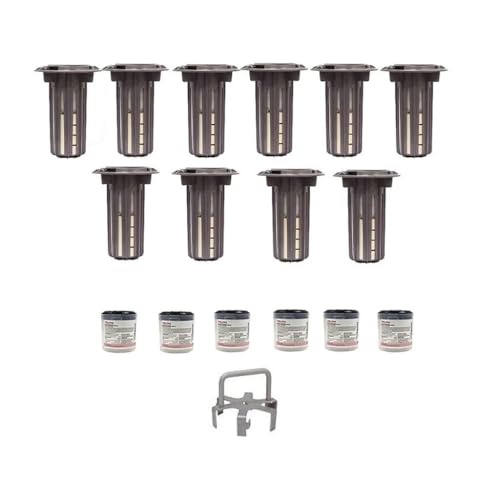
The whole job in one box — detect on day one, kill the colony the week you find it.
Everything the single-purpose kits make you buy in stages shows up together here: 10 Advance bait stations pre-loaded with a wood base and an inspection cartridge, 6 Trelona bait cartridges with 0.5% Novaluron for colony elimination, and 1 access tool. Seventeen pieces in total. Trelona cartridges carry a formulation the maker describes as having more bait for longer-lasting control, and the inspection cartridge contains a cellulose matrix (a plant-fiber blend) that termites find more appealing than the wood in your walls — which is the entire principle behind a bait system working at all.
The install rhythm is deliberate. Stations go 10-20 feet apart around the perimeter, and the maker recommends a drilling auger to make the holes, though it is not in the kit. You leave the units in monitoring mode, check them after roughly two to three months, and only when you see feeding do you drop in a bait cartridge. That staggered approach is what separates this from a spray.
What wins people over is the price against a service contract. The common thread is that this is the same class of gear a company installs, minus the recurring bill. One buyer priced it as an identical setup to a national service plan at a fraction of the cost. Two caveats worth planning around: the supplied auger struggles in hard clay, so a sharper bit helps, and the tablets can swell in heavy rain, meaning the detection cartridges want replacing around every six months.
What you are really buying: a complete detect-and-destroy system from a single brand, tool included, with the bait cartridges already in the box for the moment you need them.
Best for: the owner ready to move from watching to treating, with ten stations, six bait cartridges, and the opener all arriving together.
Not for: hard-clay yards where the included auger stalls — budget for a better bit before you dig.
6. Trelona ATBS Annual Bait Stations
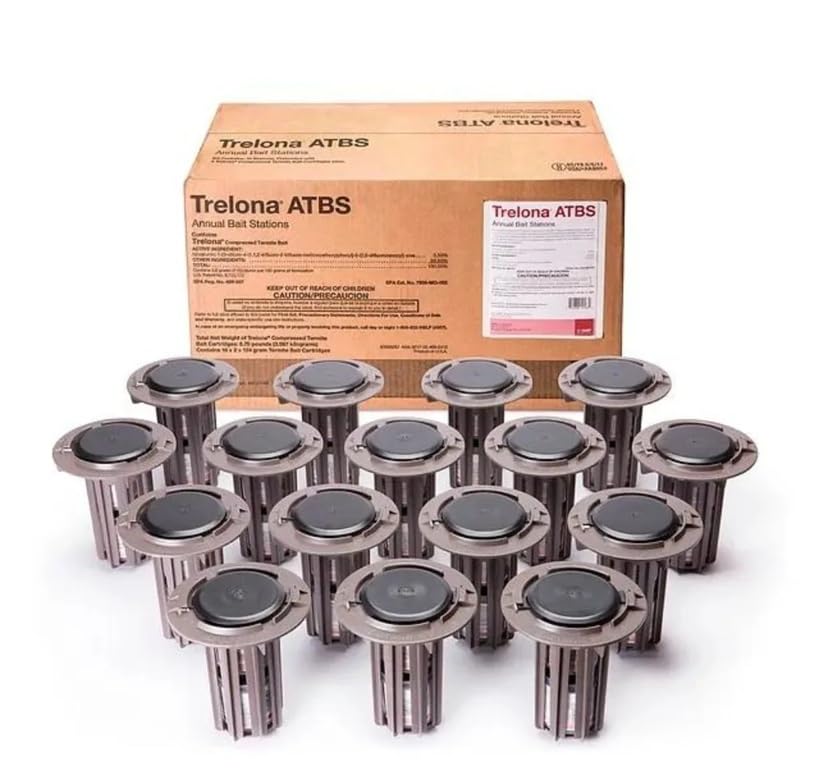
Sixteen factory-loaded stations that protect the structure year-round without a single bait change.
The largest count here, and the one that asks the least of you afterward. Sixteen stations, packed 3″L x 6″W x 7″H each, with a 20-foot maximum spacing range stated by the maker. Unlike the wood-and-sensor systems above that need their poison swapped once activity is spotted, these ship always-active, so the chemical is working before — and whether or not — you ever see a termite. That is the core difference from every monitoring-only kit in this guide.
Installation is the part owners talk about most, and the pattern is consistent: it goes faster than expected. Set them 15-20 feet apart with a drill and a 2.5-inch auger, and there is no assembly to do first. New homeowners replacing neglected stations on a property report the units feeling sturdy in the ground and going in without drama. Because the bait is loaded at the factory, checking intervals are longer than a cartridge system demands — you are inspecting, not refilling.
The honest limits are worth stating plainly. The maker notes that competing insects, floods, alternative food sources and cold weather can all alter how completely the structure is protected, so no station ring is a guarantee. And an occasional unit turns up with older bait inside it, which a careful owner will check on arrival. For a hands-off perimeter where you would rather inspect four times a year than service cartridges, this is the top of the range.
The hands-off option: sixteen pre-loaded stations, a 20-foot spacing ceiling, and no cartridge-changing routine — the least maintenance of any pick here.
Choose this if: you want the widest coverage and the fewest check-ins, and you would rather pay once than service bait all season.
Only hesitation: the loaded bait can arrive dated, so confirm the freshness of what is inside each station when the box lands.
Understanding the Specs
Monitoring versus bait — the one distinction that decides everything
A monitoring station holds wood or a cellulose insert and no poison. It exists to answer a yes-or-no question: are termites here? A bait station holds an active ingredient such as hexaflumuron or 0.5% Novaluron, which the insects pick up and carry back toward the nest. Beware listings that blur the two, because a box marked “no termiticide included” will never reduce a colony no matter how many you bury. Ask yourself before buying which of the two jobs you actually need done this season.
Spacing, depth and the soil you are digging into
Every maker publishes a spacing rule, and they cluster around the same figures: 10 feet for the Advance TBS case, 2 to 3 feet off the home and no more than 10 feet apart for Spectracide, 8-10 feet for HexPro, 10-20 feet for the BASF kit, and 15-20 feet for the Trelona ATBS. Tighter spacing finds activity sooner; a 20-foot ceiling exists only where soil access is restricted. Two soil conditions change the equation — liquid-treated ground, where stations should not be planted until any spray has dried, and hard clay, where an auger bit can stall. Boring a hole about 9 inches deep with a 2.5 to 2.75 inch auger is the pattern across the kits that publish a method.
FAQ
Do termite bait stations actually kill termites or just detect them?
How far apart should I space termite bait stations around my house?
What is an inspection cartridge and when do I swap it for bait?
Do I need a special tool to open and check the stations?
Can I install these myself or do I need a pest control company?
How long do the bait stations last before they need replacing?
Should I put bait stations in soil that has been sprayed or treated?
Is a monitoring-only station a waste of money if I already have termites?
What can stop a bait station system from protecting my home completely?
Final Thoughts: The Verdict
The strongest pick for most homes is the Advance Termite Bait Monitoring Stations (TBS) 74493, because it hands you ten pre-assembled detectors and a 10-station perimeter for the price of one professional visit — the crowd favorite here at 4.5 stars across 500+ owners. If termites are already confirmed and you want the bait in the same box, the BASF Home Kit is the smarter single order with 6 Trelona cartridges inside. And if what you want most is the least maintenance possible, the Trelona ATBS gives you sixteen factory-loaded stations that keep working between inspections.
How We Picked
We do not accept paid placement. Every pick is matched to a real buyer and a real use-case; we do not hands-on test units.
Sources & Methodology
Specifications: manufacturer listings and product documentation. Review insights: verified customer reviews, as of September 2026. Pricing: not shown on this page (it changes often); check the current price via the retailer link.
As an Amazon Associate, KitchPrep earns from qualifying purchases. This does not affect which products we feature.
Related Guides
