
Specs are compiled from manufacturer listings and verified buyer reviews and can change over time — please confirm the key details on the product page before buying.
Pulling up old carpet is the easy part. The glue left behind on your concrete or hardwood is the real job — and the wrong remover turns a weekend project into a week of scraping. This guide covers which adhesive removers actually soften carpet glue, which ones only work on mastic or tape residue, and how to match the formula to the surface under your feet.
I’m Mohammad Maruf — the founder and writer behind KitchPrep. This guide is built by comparing the manufacturers’ published specifications and the patterns across verified customer reviews, so you get each pick’s real strengths and trade-offs instead of marketing spin.
Most failures come down to one mismatch: a water-based formula poured onto a solvent-hungry adhesive, or a gel left too thin to stay wet. Read on for the picks that handle each situation, plus how to judge coverage and dwell time before you buy any adhesive remover for carpet glue.
Our Picks at a Glance

How To Choose The Best Adhesive Remover for Carpet Glue
The single biggest mistake is buying a remover before you know whether your glue is carpet adhesive, mastic, or tape residue. Carpet adhesive, mastic, and tape residue are three different jobs, and a formula built for one often does nothing to another. Before you spend anything, scrape up a quarter-sized chip of the glue and note whether it crumbles dry or smears like tar.
Match the formula to the glue, not the price tag
Water-based removers lift latex, acrylic, and pressure-sensitive carpet adhesives without harsh fumes. They are the safest choice indoors and the ones you can use around kids and pets once the area dries. Solvent-based formulas cut through black mastic and decades-old cutback adhesive, but they need real ventilation. If your glue is a soft yellow carpet adhesive, start water-based. If it is black and tar-like, you likely need a heavier solvent.
Read the coverage rate before you commit
Coverage is where budgets quietly break. A gallon that spreads across roughly 200 square feet is a very different purchase from a gel that covers closer to 50 square feet per gallon on carpet tape. Measure your room, then divide by the stated coverage rate to see how many containers you actually need. Buying one gallon short on a 1,000 square foot basement means a second order and a stalled project.
Plan for dwell time and ventilation
No remover works the second it touches glue. Some soften mastic in one to two hours, while stubborn carpet adhesive can need overnight dwell time under a plastic drop cloth. Buy a cheap plastic sheet and a floor scraper at the same time. Ventilation matters too — even a low-odor formula benefits from an open window and a box fan.
Quick Comparison
| Model | Best For | Form | Stated Coverage | Odor Profile | Amazon |
|---|---|---|---|---|---|
| Blue Bear 500MR Bean•e•doo Mastic Remover★ Best Overall | Big mastic and tile jobs | Liquid | ~125 sq ft per gallon | Unscented | Amazon |
| Flex Tape Adhesive RemoverCompact Pick | Small tape and spot jobs | Spray, 12 oz | — | Strong aroma | Amazon |
| Krud Kutter AR01 Clear Adhesive Remover | Hardwood padding and final cleanup | Liquid | 200 sq ft per gallon | Mild odor | Amazon |
| Bostik Ultimate Pre-Soaked Adhesive Remover Towels | Wiping tools and finished floors | Pre-moistened towels | — | Mild citrus | Amazon |
| Max Strip Floor Adhesive Remover | Carpet and tile glue on concrete | Gel | — | Citrus | Amazon |
| Sentinel Formula 626 Carpet and Sheet Vinyl Adhesive Remover | Large carpet glue floors | Liquid | — | Low odor | Amazon |
| 626 Carpet Adhesive Remover | Small vinyl and tile adhesive patches | Liquid | ~70 sq ft per gallon | Low odor | Amazon |
In‑Depth Reviews
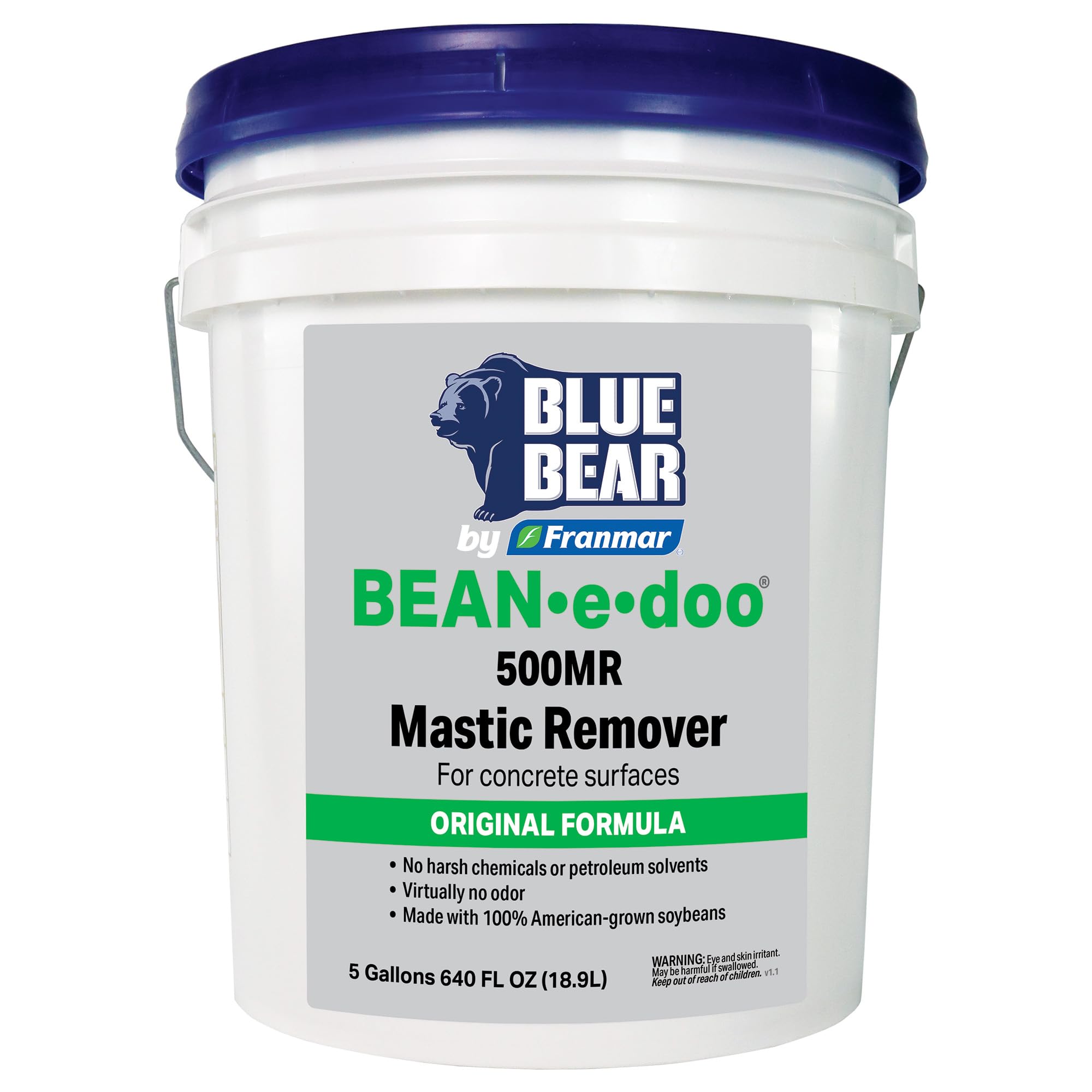
1. Blue Bear® 500MR Bean•e•doo Mastic Remover –Professional Soy-Based Adhesive Remover for Carpet, Tile & Asbestos Mastics – Low-Odor, Non-Toxic, Safe for Schools & Hospitals – 5 Gallon
Our pick — over 4★ from 200+ verified ratings; the strongest balance of quality and price.
The five-gallon soy-based workhorse built for floors nobody else could strip
That is a big bucket, and it earns the size. Blue Bear’s remover is made with soy ester instead of petroleum distillates, which means almost no odor and no mineral spirits smell filling the house. It carries less than 3% VOC — volatile organic compounds, the fumes that make solvent removers unpleasant — so you can run it indoors without a respirator.
What wins people over is how it handles the worst-case floor: black tar-like mastic from decades ago. Reviews describe softening that 1950s cutback within hours and clearing thicker residue on a second coat, leaving concrete tile-ready. The pail covers roughly 125 square feet per gallon on horizontal surfaces, and cleanup works with Blue Bear Emerge and water. Soy-based also means biodegradable, which matters on a job that produces pails of oily sludge.
Here is the catch, and it is a real one. The same formula that eats mastic did nothing for one buyer on carpet adhesive — four hours of dwell time, zero removal. If your floor is yellow carpet glue rather than black mastic, this is the wrong bucket. It also needs mechanical help: a hard-bristle scrubber or a rented floor buffer and plenty of absorbent. This is a mid-range-to-premium investment meant for a whole-room job, not a spot fix.
What it does brilliantly
- Soy ester formula with less than 3% VOC and no petroleum distillates
- Softens black and asbestos mastic in about 1–2 hours, vinyl and acrylic mastics in about 4–8 hours
- Roughly 125 sq ft of coverage per gallon on horizontal surfaces
- Biodegradable and made for indoor use where fumes would be a problem
Where it asks more of you
- Not formulated for carpet adhesive — mastic jobs only
- Requires scrubbing and absorbent, so plan the labor
- The five-gallon pail is a serious commitment for a small room
Buy it if: you are stripping black mastic or asbestos-era adhesive from concrete and want a low-odor, soy-based formula that works indoors.
Look elsewhere if: your floor is yellow carpet glue — this formula was never designed for it.
2. Flex Tape Adhesive Remover (12 oz)
The pocket-size spray for tape and spot cleanup, not whole rooms
Reach for this one when the job is small and specific: leftover tape, tar spots, permanent marker on a hard surface. It is a fast-acting spray in a 12 oz can that wipes clean without sticky residue, and it works across a spread of surfaces. For a quick carpet-tape touch-up, that portability is the whole appeal.
The honest read is that effectiveness is the most-discussed topic on its review page, and the feedback splits — some buyers call it a charm, others say the tape never budged. That is not a defect, it is a formula that lives and dies by the adhesive it meets. Results also ran messy for some: oily residue that demanded switching to clean towels partway through. If you buy it, test it on a small hidden patch of glue before committing.
It is the entry-level pick here, which makes sense for a 12 oz can that lives in a toolbox for occasional rescues rather than a five-gallon floor strip. Sized against the Krud Kutter gallon, the can is minute — a spot tool, not a project tool.
Where it fits: tape removal, tar spots, and quick touch-ups on a hard surface where a whole bottle of liquid would be overkill.
Where it stalls: wide carpet glue fields. The can runs dry long before a room is done, and the strong aroma needs a fan.
Good for: a small tape or residue job you want done this afternoon with minimal supplies.
Not for: anyone pulling glue off a full floor — that calls for a gallon, not a can.
3. Krud Kutter AR01 Clear Adhesive Remover with Mild Odor, 1 Gallon

The gallon that gets carpet padding off hardwood without a paint-thinner headache
Krud Kutter is the value play, and the number that sells it is coverage: 200 square feet per gallon, the widest of any pick here. It is a water-based formula — biodegradable, non-flammable, non-toxic, and non-abrasive — so no harsh fumes while you work indoors. For carpet padding gummied to a hardwood floor, buyers describe soaking it about 15 minutes and sliding a 6-inch putty knife under the mess. A buyer summed it up simply: it is “the best product to effectively remove carpet glue” off cement.
Set it against the Flex Tape can and the difference is plain. A 12 oz spray tackles a drawer of tape residue; a gallon of this handles a whole floor. The gallon runs far longer on a room-wide job, and the mild odor means you are less likely to need the fan.
Know its limit before you pour. This is a thin liquid built for cleanup and light adhesive, not thick cured floor adhesive — buyers report it shines at the final wash and at spot removal but falls flat on heavy glue. If your floor still has a thick bed of cured adhesive, this will strip the residue around it, not the mass itself.
Pick it when: you want one gallon to cover a lot of floor, strip padding off hardwood, or finish-clean after the heavy scraper work.
Pass it by when: the adhesive is thick and fully cured — it is a wash, not a demolition crew.
4. Bostik Ultimate Pre-Soaked Adhesive Remover Towels
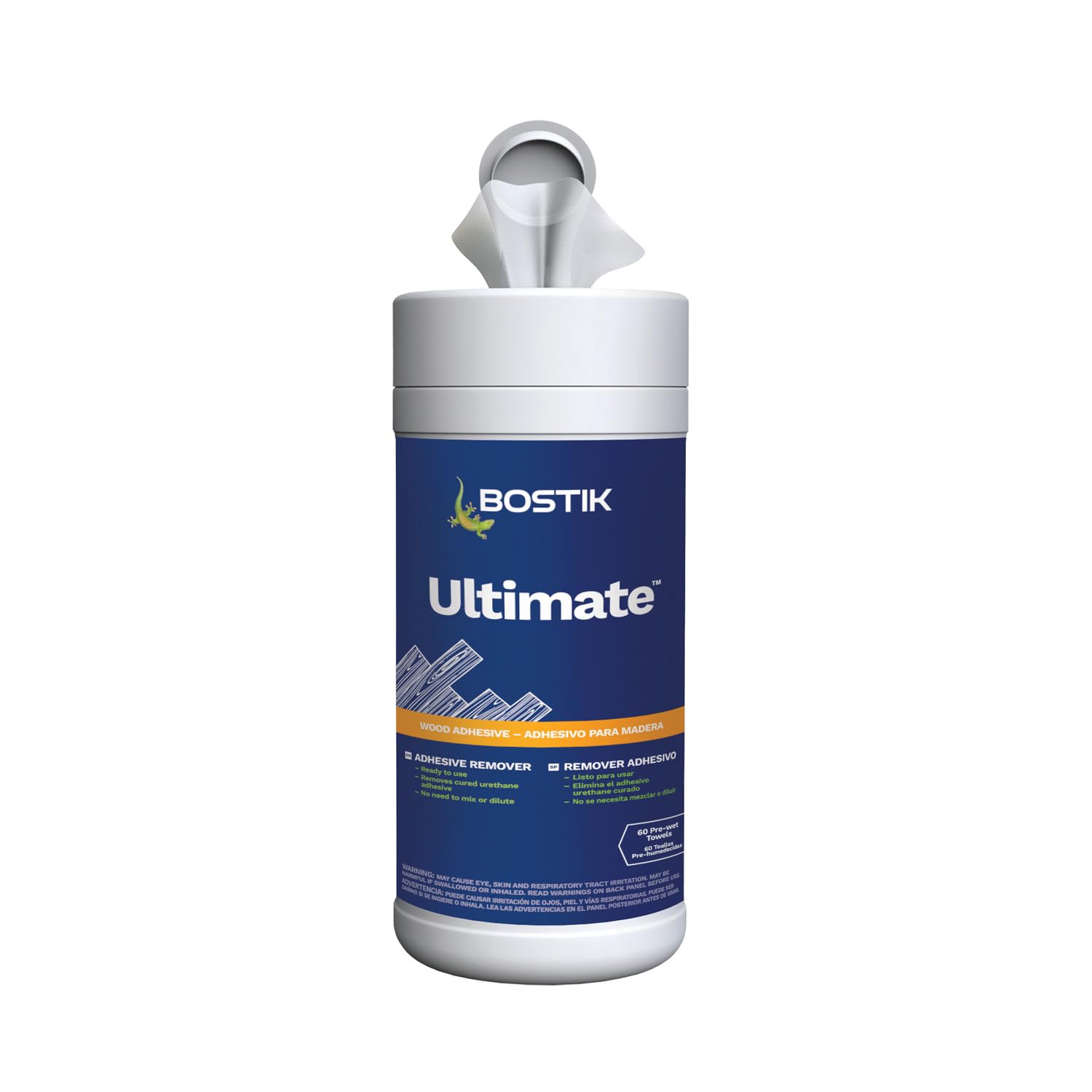
Not a remover you pour — a wipe you grab when glue lands where it should not
These towels are a different tool entirely, and that is their strength. Pre-moistened and ready to use, they wipe away adhesive, caulk, and sealant residue from wood, tile, vinyl, and laminate without the measuring and pouring a liquid demands. Made in the USA and low-odor, they were built for the messy middle of a flooring install — the moment a trowel, a plank edge, or a trim piece picks up a smear of urethane adhesive.
Where they shine is on finished surfaces and tools, because the formula gently lifts sticky spots without scratching or dulling pre-finished hardwood, LVP, or engineered wood. Buyers around engineered-floor installs lean on them for exactly that: cleanup without the risk to a finished face. One buyer even reported lifting ink spatter from a three-year-old hardwood floor that other products could not touch, with a scrub and a 2–3 minute dwell.
Understand what they are not. These are wipes, not a gallon of remover — they will not strip a floor of adhesive. They also leave an oily residue that is slippery underfoot, so a dish-soap-and-water follow-up is the finishing step, which some buyers learned the hard way on a slick floor.
The case for the towels: a low-odor, made-in-the-USA wipe that protects finished floors and cleans tools mid-install without mixing anything.
Where they stop: full-floor adhesive removal. Keep a liquid remover on hand for the big fields and save these for the spots.
Reach for these if: you are installing or repairing flooring and want to wipe trowels, planks, and trim clean without a bucket of chemicals.
Skip them if: your job is stripping glue from a whole subfloor — wipes will run out fast.
5. Max Strip Floor Adhesive Remover, Carpet & Mastic Glue Stripper, 1 Gal

A clinging citrus gel that dissolves carpet glue on concrete and wood
Max Strip is the pick for a genuine carpet-glue job, and the gel form is why. Where a thin liquid runs down an incline and pools uselessly, this stays where you brush it and keeps working on vertical and uneven surfaces. It is built to strip mastics, construction adhesives, carpet and tile glues, and Liquid Nail in usually a single application, and it contains no methylene chloride or NMP — two harsh stripping chemicals many buyers want to avoid.
Odor is a citrus note, and the company markets it as low-fume, which matters when you are sealed in a bedroom pulling up glue. Ease of use is the thing buyers most like about it — the process is simple: shake well, brush or pour it on, then check every 90 minutes and scrape when the glue has let go. It is powerful enough for painting contractors yet pitched at DIYers.
Be patient with the clock. This gel rewards a long dwell time — reviews describe leaving it overnight or four to six hours and finding the glue “came off like butter,” while short dwells on a thin coat dried out and did nothing. Some buyers need two coats, and the coverage on stubborn carpet tape can be tighter than you would hope, so buy more than you think you need. This is a premium-priced tool meant for the tough job, not a light touch-up.
Reasons installers keep reaching for it
- Gel consistency clings to uneven and vertical surfaces instead of running off
- No methylene chloride or NMP in the formula
- Works on carpet glue, tile glue, mastic, and construction adhesive
- Apply, wait, and scrape — a simple no-fuss process buyers rate highly
Reasons to budget for patience
- Needs a long dwell — often overnight or 4–6 hours — to work
- Tough carpet tape can call for a second coat and more product
- Messy and labor-intensive, with glue turning to sticky jelly
It is the one for: the person pulling up real carpet glue who wants a no-methylene-chloride gel that stays put and works on the first overnight soak.
Think twice if: you want same-hour results — this formula is a slow, patient stripper.
6. Sentinel Formula 626 Carpet and Sheet Vinyl Adhesive Remover, 5 Gallons
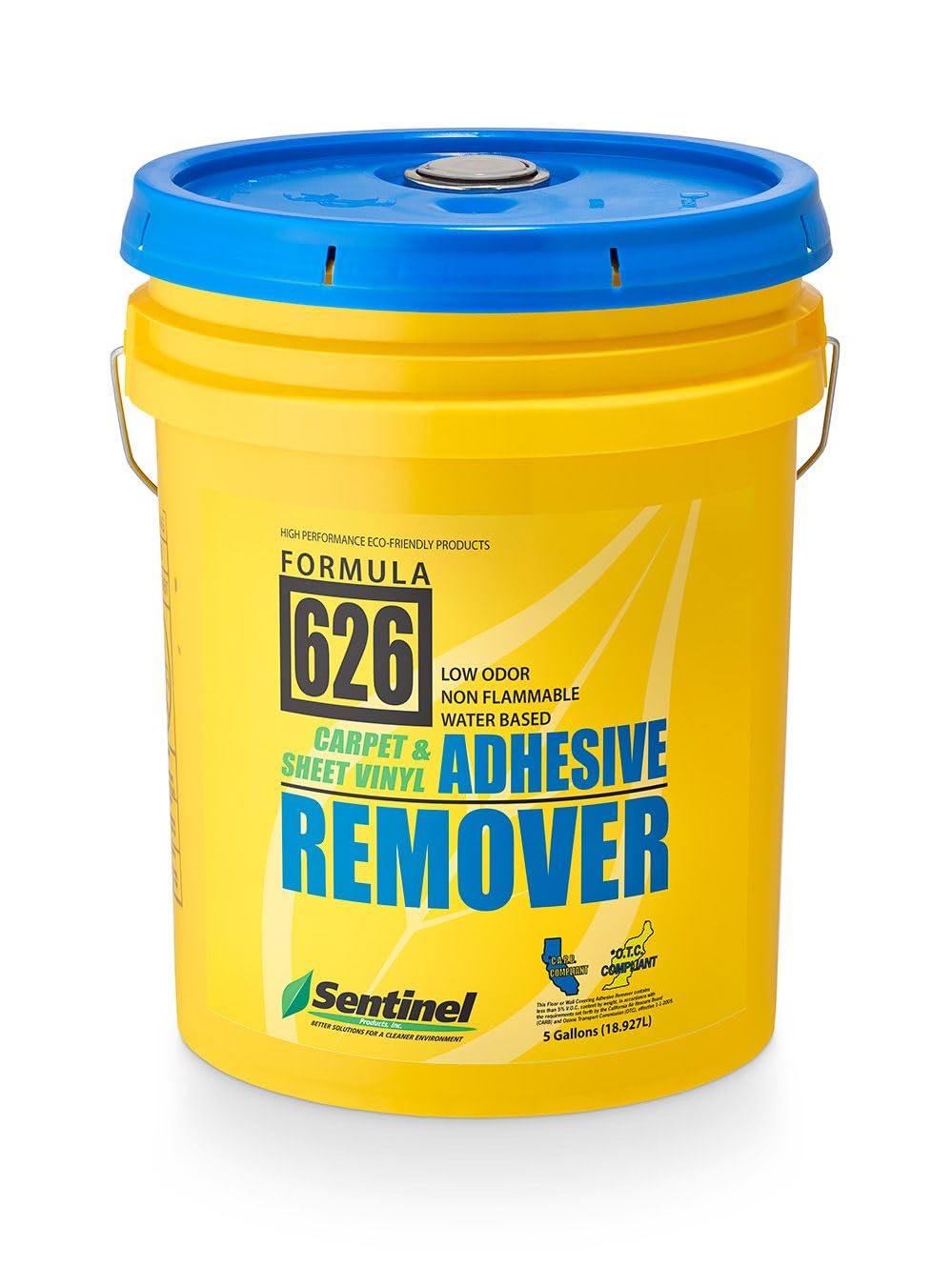
Five gallons of biodegradable remover for large carpet and vinyl floors
The appeal here is scale. A five-gallon pail of biodegradable remover designed for carpet adhesive and vinyl decal residue means fewer refills on a big job, and it is marketed for fast removal on floors. On a job that covered a brown carpet adhesive field, buyers describe spreading it generously with a deck brush, letting it sit about 90 minutes, and pulling the glue up easily with a 4-inch scraper — about four gallons going down across 550 square feet.
The technique reviewers repeat is to give it time and cover it with a plastic drop cloth. The buyers who got the easiest results applied it overnight under a plastic drop cloth and pulled the glue off the next day with far less effort. Left only one to two hours, the same product struggled. On an uneven mosaic surface, one job needed applying, covering, wire-brushing, mopping, and repeating three times — the formula worked, but the labor did not disappear.
Go in with realistic expectations. This one has a following for the easy jobs and honest gripes on the hard ones, and a few buyers found it would not release their particular glue at all, which points back to the golden rule: match the chemistry to the adhesive. Treat it as a large-job pick where the overnight-soak method suits your schedule and your floor is a brown carpet or vinyl adhesive.
What the pail buys you: five gallons of biodegradable remover and far fewer refills on a room-sized carpet or vinyl strip — best when you can leave it working overnight under plastic.
The reality check: it wants time and covering to perform, and it is not a universal solvent for every glue out there.
Worth buying when: you have a large floor of brown carpet or vinyl adhesive and can let a covered application sit overnight.
Not the one when: your glue is an oddball the label never promised to touch.
7. 626 Carpet Adhesive Remover
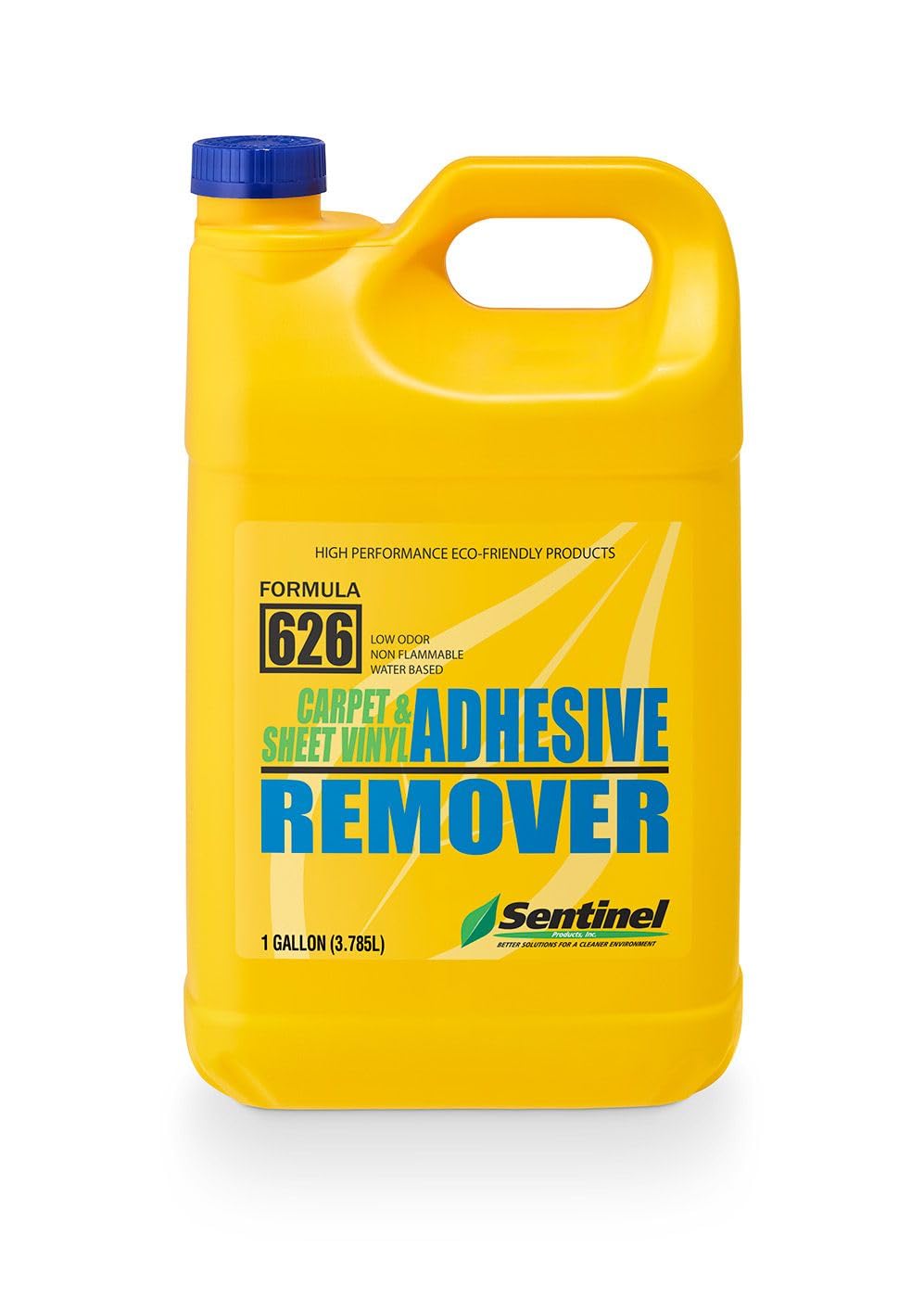
A low-odor water-based remover best matched to the right adhesive
This is the entry-level gallon, and its selling points are real: a water-based, non-flammable, low-odor formula that is biodegradable and covers roughly 70 square feet per gallon. It is aimed at latex, acrylic, and pressure-sensitive adhesives, and it lists yellow interior carpet glue, carpet-square adhesive, sheet vinyl adhesive, and vinyl plank adhesive as targets, on concrete, terrazzo, ceramic, and vinyl tile or wood.
Here is the crucial nuance that decides everything with this product. The buyers who succeeded had glue that matched the label — one cleared linoleum adhesive after stripping the sheet’s top layer, noting it “doesn’t smell” and is less harsh than other products. Where it came up short, the mismatch was usually the culprit: concrete carpet glue that a poured-on application barely softened. Reviewers keep repeating the same method: pour it over the carpet, soak it overnight, then pull, rather than pouring onto already-exposed glue.
Set it beside the Max Strip gel and the trade-off is the form. This liquid runs down inclines and off vertical surfaces, so it belongs on flat floors, whereas the gel clings. If your surface is uneven or sloped, the gel wins. On a flat concrete slab with the right glue, this inexpensive gallon does the job.
A fit for you if: you have a flat floor with latex or acrylic carpet adhesive and want the lowest-cost low-odor gallon to soak it overnight.
Better left on the shelf if: your glue is an unknown type or your surface slopes — you risk the running-liquid problem.
Understanding the Specs
Coverage rate
This is how many square feet one gallon or container will treat, and it is the number that tells you how many to buy. A remover rated around 200 square feet per gallon spreads much further than one at roughly 70 square feet per gallon, so the same room can need one container or several. Measure your floor area first, divide by the coverage figure on the label, then buy a little extra for second coats.
Dwell time
Dwell time is simply how long the remover must sit on the glue before it will let go. It varies widely — mastics can soften in about one to two hours, while stubborn carpet adhesive often needs overnight, covered with a plastic drop cloth to stop it drying out. Applying a remover and scraping immediately is the most common reason people think a product failed.
Formulation and odor
Water-based removers lift latex and acrylic carpet adhesives with low fumes and often a biodegradable formula, which suits indoor work. Solvent-based removers cut heavier black mastic but need real ventilation. VOC content — the measure of fume-producing compounds — is worth checking; a soy or water-based formula can carry a fraction of the fumes of a petroleum solvent.
Liquid versus gel
The form decides where the remover will actually work. A thin liquid is easy to pour and spread across a flat floor, but it runs down inclines and off walls. A gel stays where you brush it, so it holds on uneven concrete and vertical edges. Match the form to your surface: flat slab favors liquid, sloped or rough favors gel.
FAQ
Why did the remover barely touch my carpet adhesive?
How long should I leave the remover on before scraping?
Will these removers damage hardwood floors?
Is a gel better than a liquid for carpet glue removal?
Do I need ventilation if the remover says low odor?
How much remover do I need for a whole room?
Can these removers get adhesive off my tools and trowels?
What is the difference between low-VOC and solvent-based removers?
Will the removed glue leave a sticky film behind?
Final Thoughts: The Verdict
For most floors, the adhesive remover for carpet glue winner is the Blue Bear 500MR Bean•e•doo Mastic Remover because its soy-based, less-than-3%-VOC formula eats the black and asbestos mastics that break every other remover — just be sure your glue is mastic, not carpet adhesive. If your floor is genuine yellow or brown carpet glue, grab the Max Strip Floor Adhesive Remover, whose clinging citrus gel dissolves carpet and tile glue without methylene chloride or NMP. And for a wide hardwood-job cleanup with the best coverage per gallon, the Krud Kutter AR01 is the efficient choice. The one thing that decides your whole project is matching the formula to your glue — scrape up a chip, note whether it crumbles dry or smears like tar, and buy accordingly.
How We Picked
We do not accept paid placement. Every pick is matched to a real buyer and a real use-case; we do not hands-on test units.
Sources & Methodology
Specifications: manufacturer listings and product documentation. Review insights: verified customer reviews, as of September 2026. Pricing: not shown on this page (it changes often); check the current price via the retailer link.
As an Amazon Associate, KitchPrep earns from qualifying purchases. This does not affect which products we feature.
Related Guides
