
Specs are compiled from manufacturer listings and verified buyer reviews and can change over time — please confirm the key details on the product page before buying.
If you’re shopping for a 20 mil crawl space vapor barrier, the short answer is this: buy a true 20 mil polyethylene roll only if you want the plastic to still be intact in ten years. Most crawl space liners fail at the seam, the fold, or the spot where a sharp rock pokes through. The four rolls below are the ones worth your money, and they differ in three ways that actually matter: how much floor they cover, how heavy the roll is to drag under a house, and whether the plastic is plain film or string-reinforced.
I’m Mohammad Maruf — the founder and writer behind KitchPrep. This guide is built by comparing the manufacturers’ published specifications and the patterns across verified customer reviews, so you get each pick’s real strengths and trade-offs instead of marketing spin.
What follows is a plain-English breakdown of coverage square footage, roll weight, and tear resistance, plus an honest note on the one measurement quirk that trips up first-time installers. In short, here is how to pick the right 20 mil crawl space vapor barrier for your own dirt floor.
Our Picks at a Glance
How To Choose The Best 20 Mil Crawl Space Vapor Barrier
A crawl space liner is not a plastic tarp. It is a moisture barrier that sits between damp soil and the floor joists above your head, and it stays there for years. That means the buying decision is really three decisions: thickness, coverage, and tear resistance. Get those three right and the install is a weekend job. Get them wrong and you’ll be back under the house next spring patching holes.
Thickness: Why 20 Mil And Not 6 Mil Or 10 Mil
Mil is a thousandth of an inch, so 20 mil plastic is 0.02 inches thick. That is roughly twice the thickness of the 10 mil sheeting sold in most hardware stores. The payoff is simple: a thicker film shrugs off gravel, concrete fragments, and tool drops that would punch straight through a thinner liner. One buyer walks directly on this liner without worrying about punctures or wear.
Coverage: Match The Roll To Your Square Footage
Crawl space liner is sold by the roll, and every roll lists a width and a length. Multiply them and you get square feet of coverage. A 10’x30′ roll covers 300 square feet. A 10’x50′ roll covers 500. A 12’x100′ roll covers 1,200. Measure your crawl space’s length and width first, add extra for the walls and for overlap at the seams, and then choose the roll that gets you there with the fewest cuts.
Reinforcement: Plain Film Vs String Reinforced
Standard 20 mil polyethylene is a smooth sheet of film. String reinforced plastic laminates a woven scrim inside the film, so a tear hits the scrim and stops instead of running. If your crawl space floor is gravel, crushed rock, or littered with concrete, reinforcement is the upgrade that keeps the liner intact during and after install.
Weight: What A Heavier Roll Tells You
A heavier roll means more plastic, and more plastic means more resistance to puncture. It also means you are dragging more weight under a low ceiling. Weigh that trade-off honestly before you order the biggest roll on the page.
Quick Comparison
| Model | Best For | Roll Size | Coverage | Weight | Amazon |
|---|---|---|---|---|---|
| White 20 Mil Plastic Sheeting, 10×30′★ Best Overall | First-time DIY encapsulation | 10′ x 30′ | 300 sq. ft. | 26.5 lb | Amazon |
| Crawl Space Vapor Barrier, 20 Mil, 10’x50′ | Mid-size crawl spaces | 10′ x 50′ | 500 sq. ft. | 47.9 lb | Amazon |
| Farm Plastic Supply Dura Skrim 20 Mil | Rough, rocky ground | 6′ x 35′ | — | 27 lb | Amazon |
| Whitecap Woven Vapor Barrier 20 Mil | Whole-house encapsulation jobs | 12′ x 100′ | 1,200 sq. ft. | 80 lb | Amazon |
In‑Depth Reviews
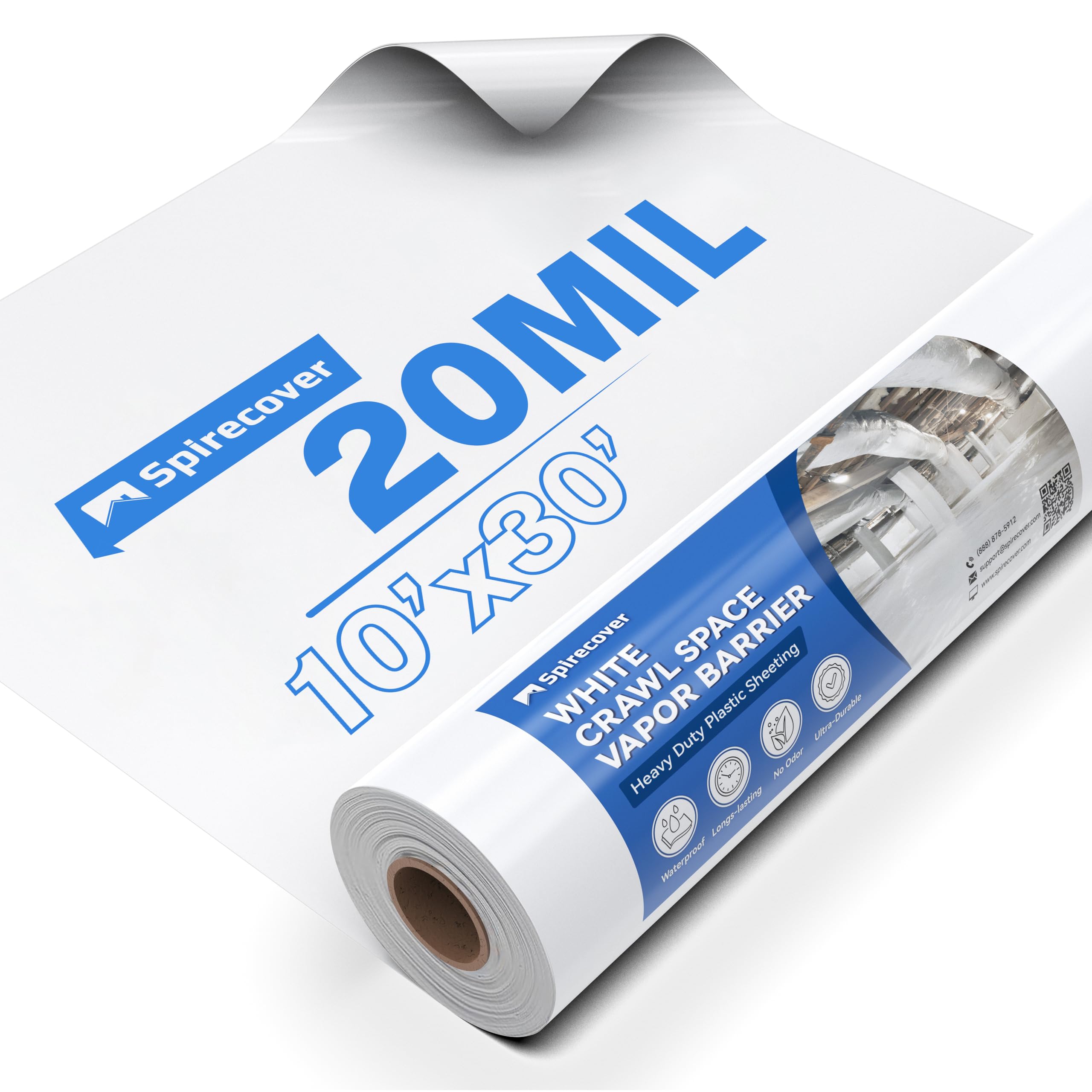
1. White 20 Mil Plastic Sheeting, 10×30′, Crawlspace Vapor Barrier
Our pick — over 4.5★ from 150+ verified ratings; the strongest balance of quality and price.
The roll that covers a 300-square-foot crawl space without a single seam cut.
If you have a small to mid-size crawl space and you want the job done in one afternoon, this is the roll to buy. It measures 10 feet wide by 30 feet long, which lays out 300 square feet of floor in one continuous sheet.
The film itself is a true 20 mil polyethylene, not a recycled blend, and it’s sold for exactly the jobs you’d expect: crawl space encapsulation, steam barriers, painting drop cloths, and general moisture blocking. It rolls onto the dirt smooth and flat because it ships wound onto a roll in a carton rather than folded into a bundle, so you spend less time fighting creases. Buyers describe it as substantial and easy to cut and roll out.
What wins people over is simply the quality of the material — it’s the most-praised attribute of this roll by a wide margin, and durability follows right behind. Thickness, vapor protection, and value all show up as recurring positives too. Worth knowing: the review pages carry a recurring note that the actual width comes in slightly under the advertised 10 feet, so if you’re laying four panels side by side, plan for a little extra overlap. And at 26.5 pounds, this roll is the lightest in this group — noticeably less to drag through a low hatch than the 47.9-pound 10’x50′ roll above.
What Earns It First Place
- True 20 mil polyethylene made from entirely new material, not recycled stock
- 10′ x 30′ sheet covers 300 square feet in one unrolled piece
- 26.5 pounds — the lightest roll here, easy to maneuver through a narrow hatch
- Shipped on a roll in a carton, so it lies flatter with fewer fold creases
The Honest Catch
- Actual width can measure just shy of 10 feet, so allow overlap between panels
- 300 square feet won’t cover a large or unusually shaped crawl space on its own
- Small folds can arrive with a pinhole that needs a patch of tape
Buy this one if: your crawl space is roughly 300 square feet or smaller and you want a genuine 20 mil film light enough for one person to handle.
Order a longer roll instead if: you’re covering a wide floor and would rather not tape multiple panels together.
2. Crawl Space Vapor Barrier, 20 Mil Vapor Barrier, 10’x50′, White Plastic Sheeting
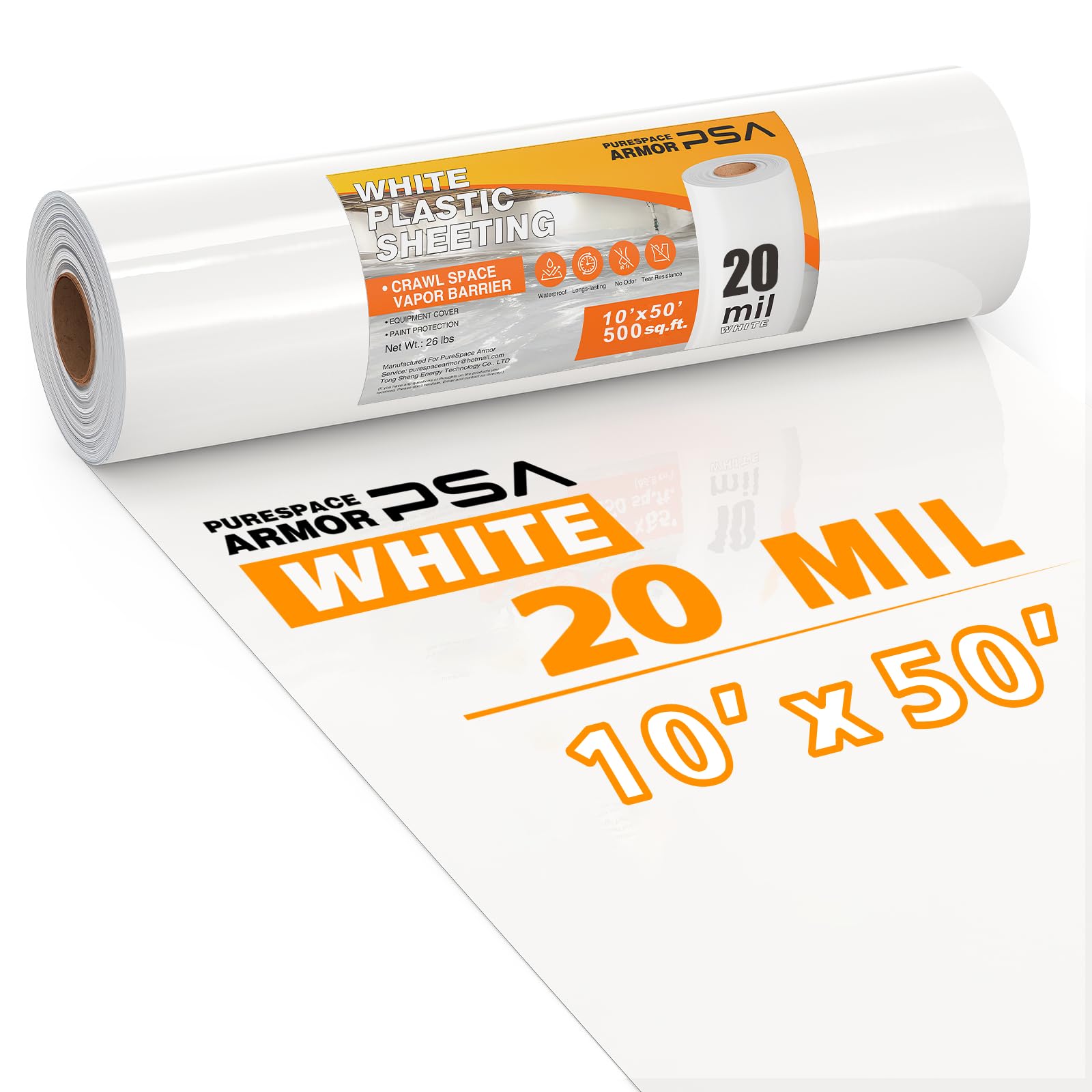
Double the square footage of the smaller roll, for a crawl space that runs long under the house.
Five hundred square feet is the number that separates this roll from the 10’x30′ pick above — that’s 67 percent more length, running 50 feet against 30 feet. If your crawl space is long and narrow rather than square, that extra run is what lets you pull one continuous sheet from one end of the house to the other instead of taping two shorter rolls together at the middle.
It’s engineered from low-density polyethylene at 0.02 inches thick, and the maker positions it as thicker and more durable than a standard 14 mil vapor barrier. The roll carries real heft at 47.9 pounds, which is 81 percent more weight than the 26.5-pound roll above — a fair signal that there’s more plastic in the box, though it also means a two-person job to get it down the hatch. Buyers praise the material quality most, with durability and thickness close behind, and the white surface brightens a dark, dirt-floored space enough to see what you’re doing.
Here’s the trade-off worth weighing: a handful of owners describe the film as thick but potentially brittle, and at least one roll arrived with a small hole at a fold corner that was sealed with duct tape and covered over. That’s a packaging-and-handling issue rather than a material one, and it’s the kind of thing you check the moment the box lands in your driveway. Also note that some reviews on this listing describe a 12 mil product rather than the 20 mil roll, so confirm the size variant reads “20 Mil 10’x50′” before you hit buy.
What the math says: 500 square feet of true 20 mil film makes this the sensible pick for a full-length crawl space, and the white color does genuine work — it turns a cave into a space you can inspect with a flashlight.
Check before you buy: verify the variant says 20 Mil, because this listing also carries reviews written against a thinner sheet, and inspect the fold corners for pinholes on arrival.
Reach for this if: you need one long 50-foot run and don’t want seams in the middle of the job.
Think twice if: you’ll be working solo in a tight hatch — 47.9 pounds is a genuine two-person lift.
3. Farm Plastic Supply – Dura Skrim String Reinforced White Plastic Sheeting – 20 Mil – (6′ x 35′)

Scrim-threaded plastic that refuses to let a puncture turn into a tear.
Every other roll on this list is plain film. This one laminates a woven scrim between layers of polyethylene, which changes how it fails. On smooth film, a puncture from a sharp rock becomes a rip that keeps running. On Dura Skrim, the tear hits the reinforcement grid and stops dead, leaving the rest of your installation intact. That’s the entire reason to pay more for this 6′ x 35′ roll instead of a bigger plain sheet.
It’s built for exactly the crawl spaces that ruin ordinary plastic — dirt floors scattered with gravel and concrete fragments. It’s also treated with UV inhibitors, so it holds up under sunlight in a vented or open crawl space in a way that untreated film won’t. Reviewers roll it out in 30-degree weather and find it easy to handle, and one buyer patched existing crawl space holes with it.
Reviewers praise the sheet quality most, with durability right behind — buyers report it’s very thick and hard to tear. The one quirk to know: this roll is actually two 6-foot sheets glued together into a single panel, so you’ll have a joined seam running down the middle. The general verdict from owners is that the sheet quality more than makes up for the join, especially for anyone walking directly on it.
Where it wins: punctures stop at the scrim instead of zippering open, which is precisely what you want over a rocky floor you can’t fully rake clean.
What to plan around: the 6-foot width means more panels and more overlap for a wide crawl space, and there’s a factory seam where the two sheets are joined.
Pick it if: your floor is gravel, crushed rock, or concrete rubble and plain plastic has failed you before.
skip it if: you want the widest single sheet and the fewest panels — a 10-foot-wide roll lays down more floor per pass.
4. Whitecap – Woven Vapor Barrier – 20 Mil (12′ x 100′), Thick Plastic Sheeting
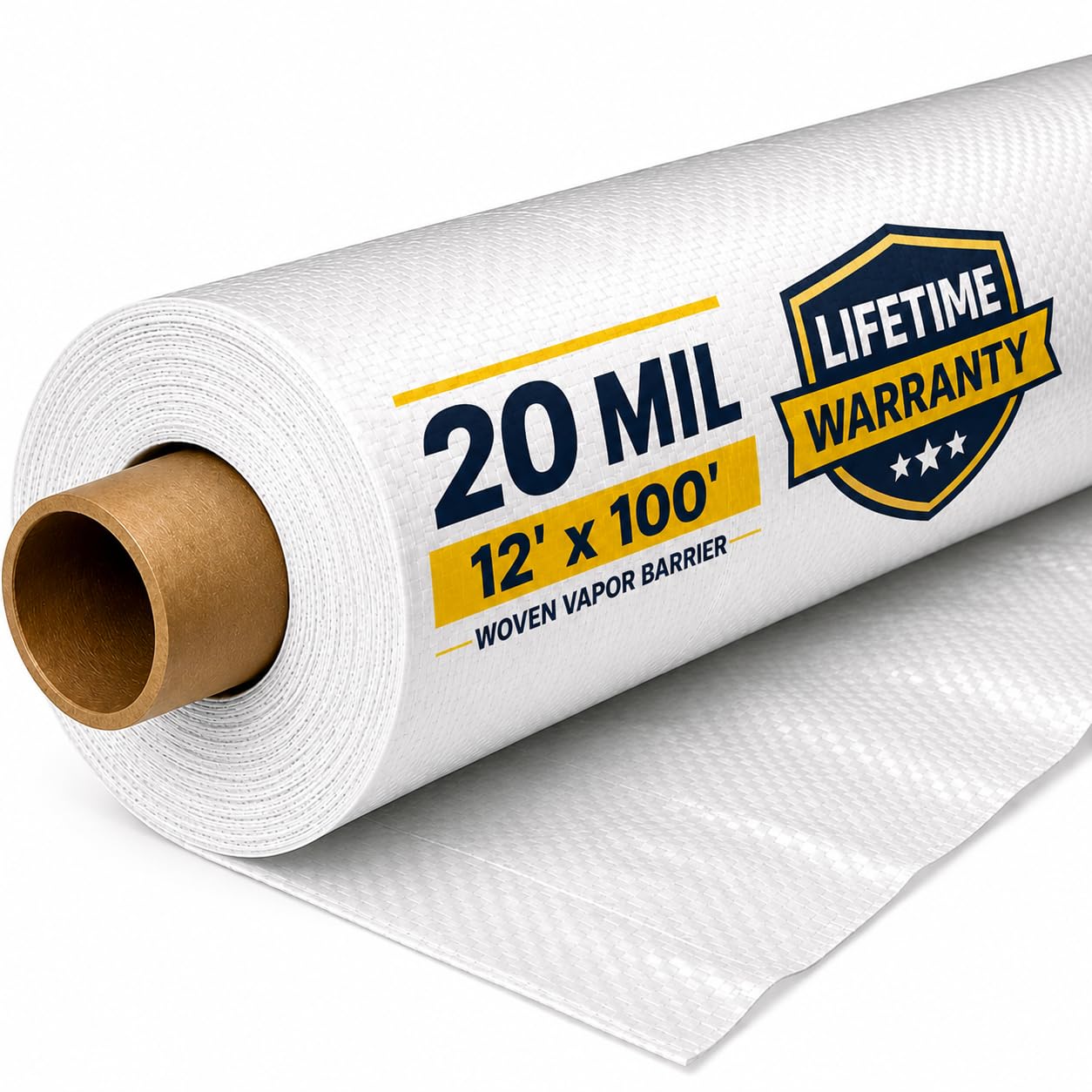
Twelve hundred square feet of woven plastic in one roll, for whole-house encapsulation work.
This is the roll you buy when you’re encapsulating an entire crawl space rather than patching one. It runs 12 feet wide by 100 feet long and lays down up to 1,200 square feet per roll, which is far more floor per sheet than anything else here — the 10’x50′ roll covers 500 square feet, so this one gives you a single unbroken sheet where that roll would need taped joints. Fewer seams is the real prize: every seam is a place moisture can find its way up.
The plastic is woven polyethylene, with interlaced strands that resist tearing and punctures better than standard smooth sheeting. It’s sold for crawl space encapsulation, basement moisture barriers, construction drop cloths, temporary floor protection, and landscape ground cover. Owners installing it under hundred-year-old houses with concrete fragments on the floor report the woven sheet surviving where a previous unreinforced liner came out punctured. The bright white surface also gets consistent praise — it reflects what little light there is, so spotting standing water or debris during a check is far quicker.
Buyers single out the build quality most, with durability right behind, and the thickness and value both read as positives. Weigh the logistics before you order, though: this roll tips the scale at 80 pounds, which is the heaviest here by a wide margin, and getting it through a low hatch really does take help. Measure your square footage first — if your crawl space is closer to 500 square feet, the 10’x50′ roll above covers it with far less plastic left over.
Why it’s the big-job pick: 1,200 square feet per roll means fewer seams across a large floor, and the woven construction shrugs off concrete fragments that puncture plain film.
The real-world cost: 80 pounds of roll is a two-person job to maneuver, and you’re buying more material than a small crawl space needs.
Choose this if: you’re encapsulating a full-size crawl space or basement and want the fewest possible seams in the floor.
Look at the smaller rolls if: your space is compact — the 10’x30′ and 10’x50′ options cover the same ground without leftover material.
Understanding the Specs
What 20 Mil Thickness Actually Means
Mil is a measure of thickness, and one mil equals a thousandth of an inch. So 20 mil plastic is 0.02 inches thick. That’s roughly twice the thickness of ordinary 10 mil sheeting and far beyond the flimsy 6 mil drop cloth sold in paint aisles. The practical result is a liner that resists punctures from gravel, concrete fragments, and dropped tools long enough to stay sealed for years. Thinner film works fine until something pokes it, and once a crawl space liner is torn, ground moisture finds the gap.
Square Footage And Why Roll Size Matters More Than You Think
Every roll lists a width and a length, and multiplying them gives you the coverage in square feet. A 10’x30′ roll gives 300 square feet, a 10’x50′ roll gives 500, and a 12’x100′ roll gives up to 1,200. Wide rolls mean fewer seams, and fewer seams mean fewer weak points where vapor can rise. Run a tape measure along your crawl space floor before you order. Add extra for the walls and for overlap where panels meet, and buy the roll that reaches your number with the least cutting.
FAQ
Is 20 mil thick enough for a crawl space vapor barrier?
How many square feet does a 10×50 roll of 20 mil plastic cover?
What is the difference between plain and string reinforced vapor barrier?
Do I really need 20 mil instead of 12 mil or 14 mil plastic?
Can I walk on a 20 mil crawl space vapor barrier after installation?
How do I install a crawl space vapor barrier so it actually stays sealed?
Will a white vapor barrier really brighten my crawl space?
Should I cover the entire crawl space floor or just part of it?
How heavy is a 20 mil vapor barrier roll and can one person install it?
Final Thoughts: The Verdict
For most crawl spaces, the 20 mil crawl space vapor barrier to buy is the White 20 Mil Plastic Sheeting, 10×30′ because 300 square feet of genuine new-material film in a 26.5-pound roll is the easiest way for one person to get a real barrier on the dirt. If your crawl space runs long under the house, step up to the Crawl Space Vapor Barrier, 20 Mil, 10’x50′ for 500 square feet in a single run. And if your floor is rocks and concrete fragments, the Farm Plastic Supply Dura Skrim is the reinforced sheet that stops a tear in its tracks.
How We Picked
We do not accept paid placement. Every pick is matched to a real buyer and a real use-case; we do not hands-on test units.
Sources & Methodology
Specifications: manufacturer listings and product documentation. Review insights: verified customer reviews, as of September 2026. Pricing: not shown on this page (it changes often); check the current price via the retailer link.
As an Amazon Associate, KitchPrep earns from qualifying purchases. This does not affect which products we feature.
Related Guides
