
Specs are compiled from manufacturer listings and verified buyer reviews and can change over time — please confirm the key details on the product page before buying.
Buying 1-inch stainless steel tubing is really a test of one thing: does the metal arrive the size it claims? The three numbers that decide whether your project works are the outside diameter (the width across the tube), the wall thickness (how thick the metal ring is), and the length you actually receive. Get the wall too thin and the tube dents under a clamp. Get the length short and you are ordering again. This guide lines up eight real options, sorts out which metal grade survives weather and salt, and points you to the pick that fits how you plan to cut, weld, or bolt it.
I’m Mohammad Maruf — the founder and writer behind KitchPrep. This guide is built by comparing the manufacturers’ published specifications and the patterns across verified customer reviews, so you get each pick’s real strengths and trade-offs instead of marketing spin.
Wall thickness is the number most first-time buyers ignore, and it is the one that decides whether the tube holds its shape. The picks below cover fabrication, exhaust, railings, and repair work, so you can match the tube to the job — this breakdown of 1-inch stainless steel tubing covers the finishes worth trusting.
Our Picks at a Glance

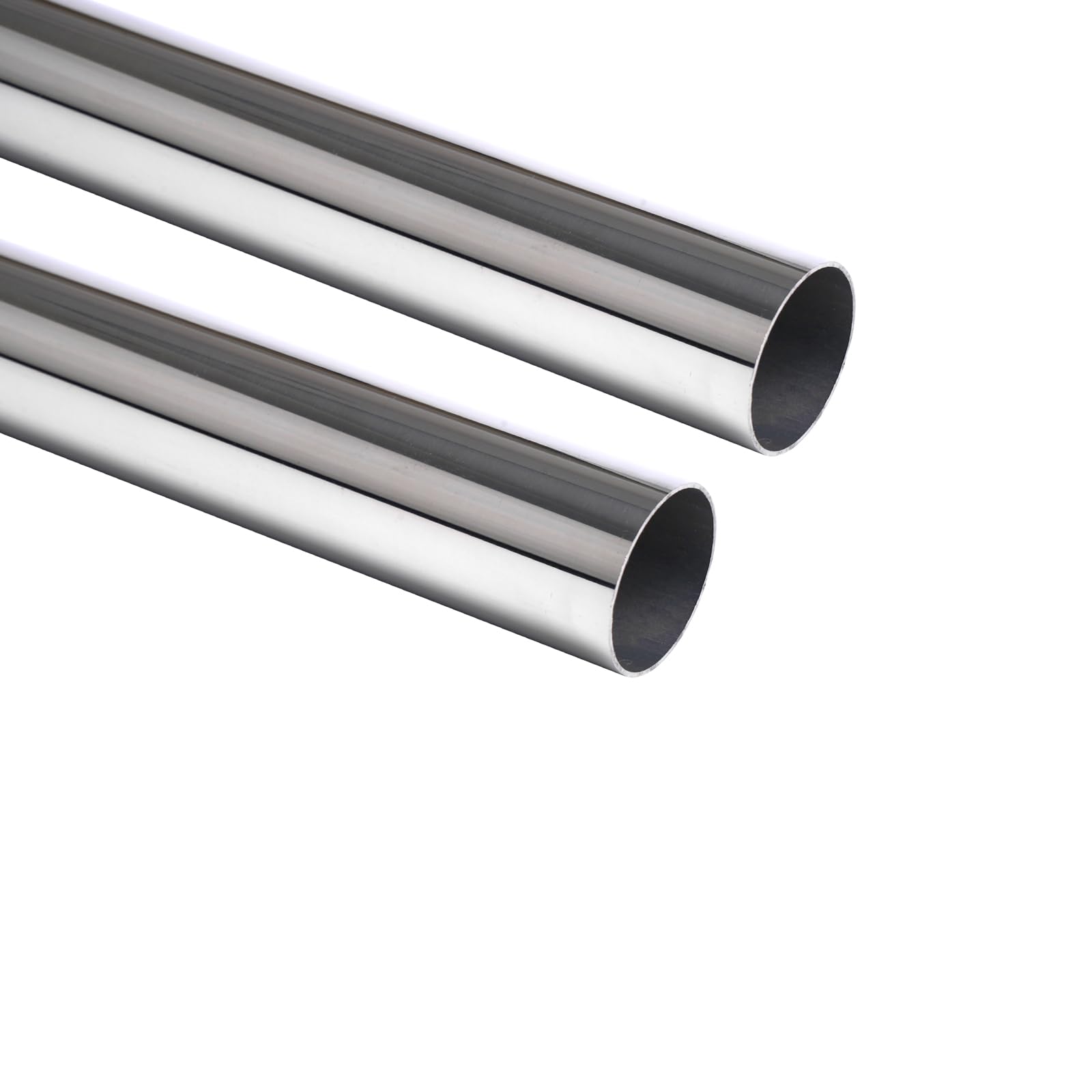
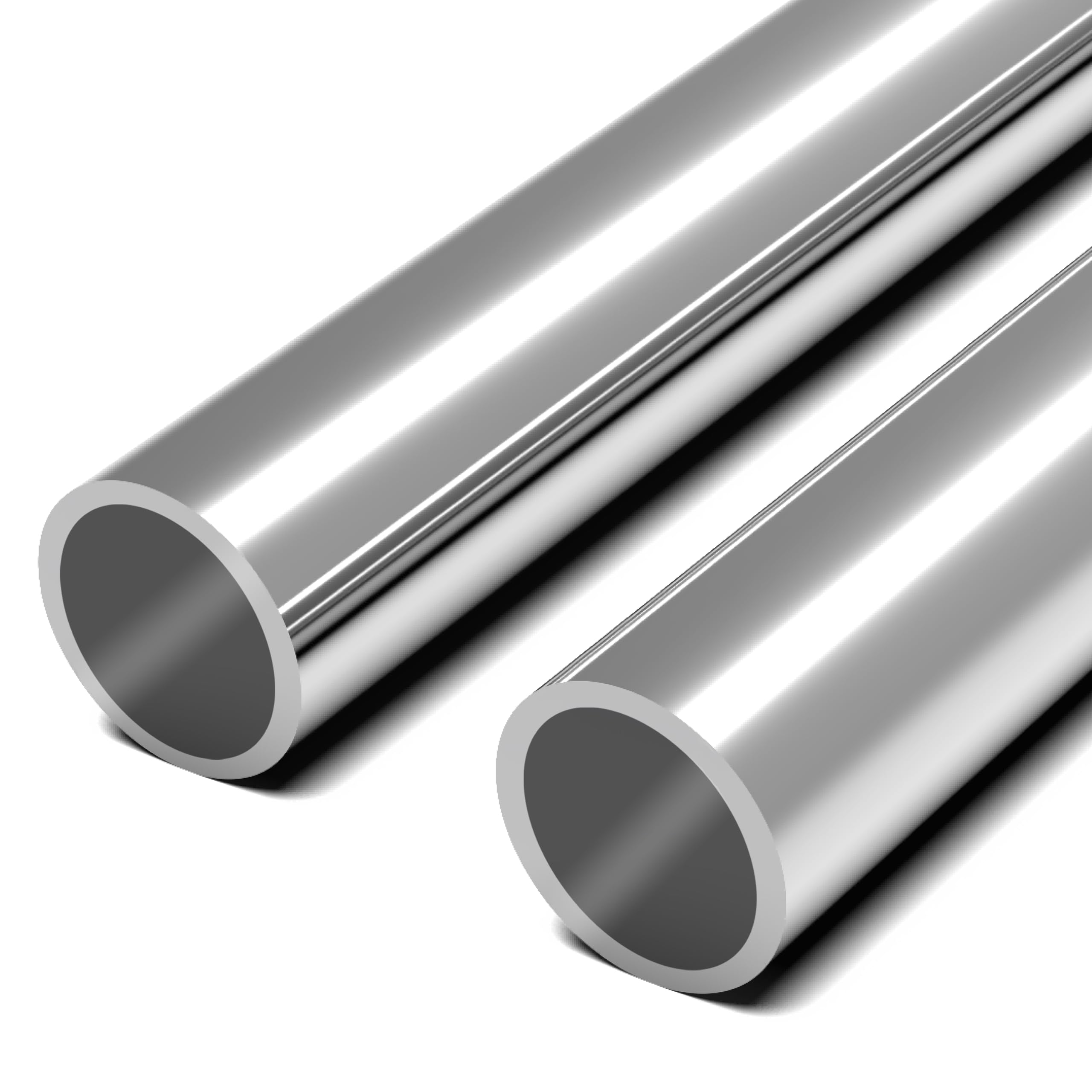
How To Choose The Best 1-Inch Stainless Steel Tubing
Four specs decide whether your tubing fits the job: the outside diameter (the width across the tube), the wall thickness (how thick the metal ring is), the length you receive, and the steel grade. Here is what each one actually means when you are standing at the workbench.
Outside Diameter And Why Tolerances Matter
A “1 inch” tube is not always 1.000 inches across. Many of these tubes are produced on the metric system, so a 25mm outside diameter can land just under a true inch. That gap matters when you are sliding the tube into a 1-inch fitting or a clamp that was machined to exact size. If your connector has a tight bore, check the listed outside diameter before you buy.
Wall Thickness Decides Strength
Wall thickness is the thickness of the metal ring you see when you look at the cut end. A thicker wall resists bending and denting better, which matters for railings, exhaust extensions, and anything load-bearing. A thinner wall cuts and shapes more easily, which suits light brackets and decorative work. Match the wall to the load the tube has to carry.
304 Versus 316 Stainless Steel
Both grades resist rust, but they are not built for the same environment. Grade 304 handles indoor projects, most automotive work, and general fabrication. Grade 316 adds better resistance to salt and harsh coastal air, which is why it shows up in marine repair and boat work. If your tube lives near salt water, the higher grade is worth the step up.
Quick Comparison
| Model | Best For | Outside Diameter | Wall Thickness | Length | Amazon |
|---|---|---|---|---|---|
| Tynulox 1″ OD 304 Stainless Steel Tube, 305mm★ Best Overall | Precision spacers and small fittings | 1 inch | 1.5 mm | 12 inches | Amazon |
| Vigorous 1″ OD x 1 Ft. Welded 304 TubeBest for Extensions | Cheater bars and light fabrication | 1 inch | 0.065 inches | 1 foot | Amazon |
| Yluvaok 2Pcs 304 Tubing 1″ OD x 16″Longer Reach Pick | Longer runs in tight spots | 1 inch | 0.05 inches | 16 inches | Amazon |
| Hicarer 2 Pack 316 Tubing, 16 Gauge | Boat and coastal repair | 0.98 inches | 0.06 inches | 12 inches | Amazon |
| Zepkouel 2 Pack 1″ OD 304 Pipe, 20 Inch | Tig welding and longer frames | 1 inch | 0.06 inches | 20 inches | Amazon |
| Hicarer 2 Pcs 1″ Od 304 Tubing 24 Inch | Towel racks and cymbal risers | 0.98 inches | 0.06 inches | 24 inches | Amazon |
| Top Hardware 304 Stainless Tubing, 48″ | Handrails and long frames | 1 inch | 0.062 inches | 48 inches | Amazon |
| Top Hardware Premium 316 Stainless Tubing, 48″ | Saltwater handrails and flag poles | 1 inch | 0.062 inches | 48 inches | Amazon |
In‑Depth Reviews
1. Tynulox 1″ OD 304 Stainless Steel Tube, 1.5mm Wall, 305mm Length (Pack of 2)
Our pick — over 4.5★ from 300+ verified ratings; the strongest balance of quality and price.
The thickest wall here, built for cut-to-size spacers and fittings that have to stay round.
If your job is cutting short pieces and threading them onto bolts, the wall is the whole game — and this tube leads the field. It measures 1.5 mm at the wall, which is visibly beefier than the 0.05 inches on the Yluvaok tubing and the 0.065 inches on the Vigorous tubes, so it resists denting when a clamp bites down. Each tube runs 12 inches long with a 1-inch outside diameter, and you get two of them in the pack.
Owners put these to work as bushings and spacers along #14 wood screws, cutting them down to length and sliding them on. The metal holds up outdoors without showing rust, and the tubes arrive straight rather than bowed — a real problem when long thin stock ships loose in a box. That stiffness, plus the straight, rust-free tubes, is what reviewers keep coming back to.
Watch the sizing tolerance. These tubes are made to metric specs, so a “12 inch” tube can measure closer to 30cm (about 11.8 inches). One buyer put it plainly: “these are 30cm not a full 12 inches.” If your build has zero slack, measure the tube when it arrives before you cut.
What earns the top spot
- 1.5 mm wall beats the 0.05-inch and 0.065-inch walls on the other budget picks for stiffness
- Two 12-inch tubes per pack, so you get a spare without a second order
- Polished 304 surface wipes clean and stands up to outdoor mounting without surface rust
- smooth construction cuts and threads cleanly with standard tooling
Where it asks a little patience
- Metric production means the length can land near 30cm instead of a true foot
- A thin minority report surface rust or imprecise sizing from the start
- Short 12-inch stock rules out long uninterrupted runs
Reach for this if: you are cutting short spacers, bushings, or fittings and want the stiffest wall in the budget tier.
Look elsewhere if: your run needs more than a foot of unbroken tube — step up to the 48-inch pieces below.
2. Vigorous 1″ OD x 1 Ft. Welded 304 Stainless Steel Tube (2 Pcs)
A short welded tube that bends without cracking — the pick for wrench bars and exhaust add-ons.
You get two 1-foot tubes with a 1-inch outside diameter and a 0.065-inch wall. That wall is the thickest in this roundup, beating the 0.06-inch walls on the Hicarer and Zepkouel pieces, though it comes in a shorter length than most. Welded construction means the seam is fused rather than drawn smooth, so the metal flexes under load instead of splitting.
Buyers find clever uses for this tube. Some slip it over a wrench handle as a cheater bar for extra leverage. One owner fitted it as an exhaust extension and reported it kept his machine cooler, with the fit snapping right on. The finish arrives clean and bright out of the wrap, and the wall thickness gives it enough heft that it does not feel like foil in your hand.
Consider the length before you commit. At 1 foot, each tube runs shorter than the 16-inch Yluvaok pair and much shorter than the 48-inch Top Hardware stock, so long runs are out. Think of it as stock for small, stiff jobs rather than a span.
Short and stubborn: the welded seam and 0.065-inch wall make these the toughest little tubes in the budget bracket — ideal where something has to take a push without folding.
Fit to task: buy them for a specific extension or leverage job, not for a run that needs reach.
Good match for: exhaust add-ons, leverage bars, and small brackets that need a stiff, short section.
Wrong tool for: anything spanning more than a foot — the 20-inch and 48-inch picks carry that load better.
3. Yluvaok 2Pcs 304 Stainless Steel Tubing 1″ OD x 16″
Sixteen inches of tube for the jobs where a foot falls short and a full run is overkill.
Pick these up for the length. At 16 inches each, they out-reach the 12-inch Hicarer pieces by a third, and the pair arrives with a 1-inch outside diameter and a smooth smooth inner wall. That smooth bore matters when fluid or a sliding part passes through, because there is no raised weld seam to catch on the inside of the tube.
Builders use these for structural bits that need a bit more span — one owner framed a skateboard stand out of them, and another bent them into a bait-catching hoop. The surface stays bright and smooth, and the 304 metal takes a thread or a weld without fuss. Two tubes per order also means you can trim one and keep the other whole while you work out the length.
The 0.05-inch wall is the thinnest in this lineup. At 0.05 inches it is the thinnest in this lineup, so it flexes more easily than the 1.5 mm Tynulox stock — great for shaping, less ideal for a load-bearing span. Note too that the length comes from metric production, so treat “16 inches” as an approximate figure.
Where it shines: that extra four inches of reach over the 12-inch tubes solves a real problem for frames and hoops, and the smooth inside keeps sliding parts moving freely.
Know before you buy: the thin 0.05-inch wall is built for shaping and light structure, not for holding heavy weight.
Best pick when: you need modest extra length and a clean, weld-ready surface for a light-to-medium project.
Think twice when: the tube is load-bearing — that thin wall is the limiter.
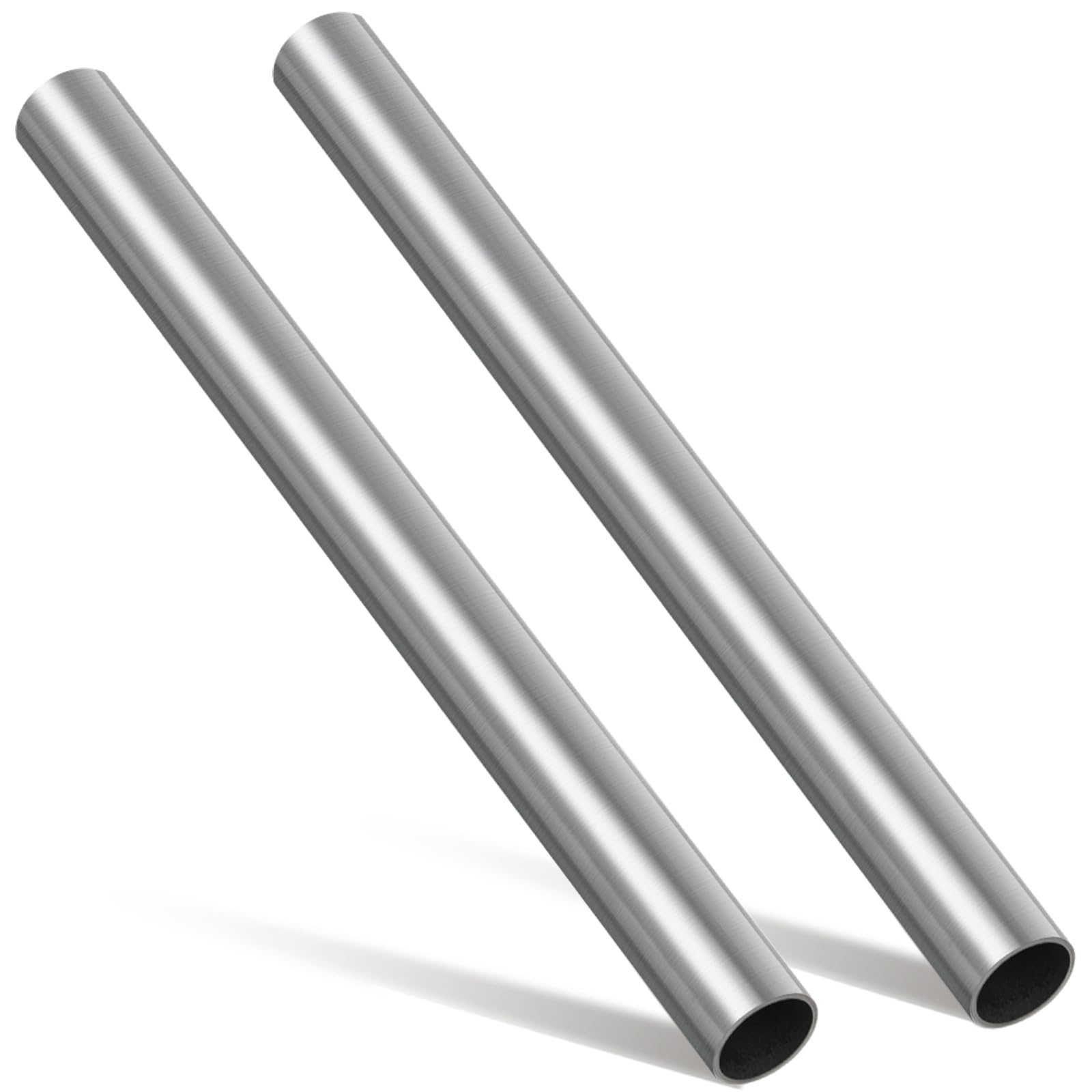
4. Hicarer 2 Pack 316 Stainless Steel Tubing, 1″ OD, 16 Gauge (1.5mm Wall), 12 Inch
The grade to grab when salt air is in the picture and standard steel will not cut it.
This is the 316 entry in the budget bracket, and that alloy is the whole point. Grade 316 stainless resists salt and harsh coastal conditions better than the 304 metal used across most of this list, which is exactly what you want for boat parts and anything living outdoors near the water. Two 12-inch tubes land in the pack, each with a 16 gauge (1.5 mm) wall and an outside diameter of 0.98 inches.
The marine crowd is who this is built for. Buyers repair boat Bimini hardware with it and describe the piping as sturdy and the size as spot on. The polished surface and bendable temper mean you can curve it to a frame without it snapping, and the metal takes a drill or a weld cleanly. The 1.5 mm wall gives it enough stiffness for railings, frames, and handrails without turning brittle.
Two numbers to check before ordering, because they differ slightly from the other picks. The outside diameter is listed at 0.98 inches rather than a full inch, so confirm your fitting tolerates the difference. And the length runs from metric tooling, so expect a hair under the stated 12 inches.
What wins buyers over: the 316 alloy itself — salt-water toughness with a polished, bendable finish that shapes to a frame without cracking.
The small print: that 0.98-inch outside diameter sits just shy of a true inch, so measure your connector first.
Buy this for: coastal and boat repairs where standard 304 would start to pit over time.
Skip if: you want a full 1.000-inch diameter for a machined fitting — this runs marginally under.
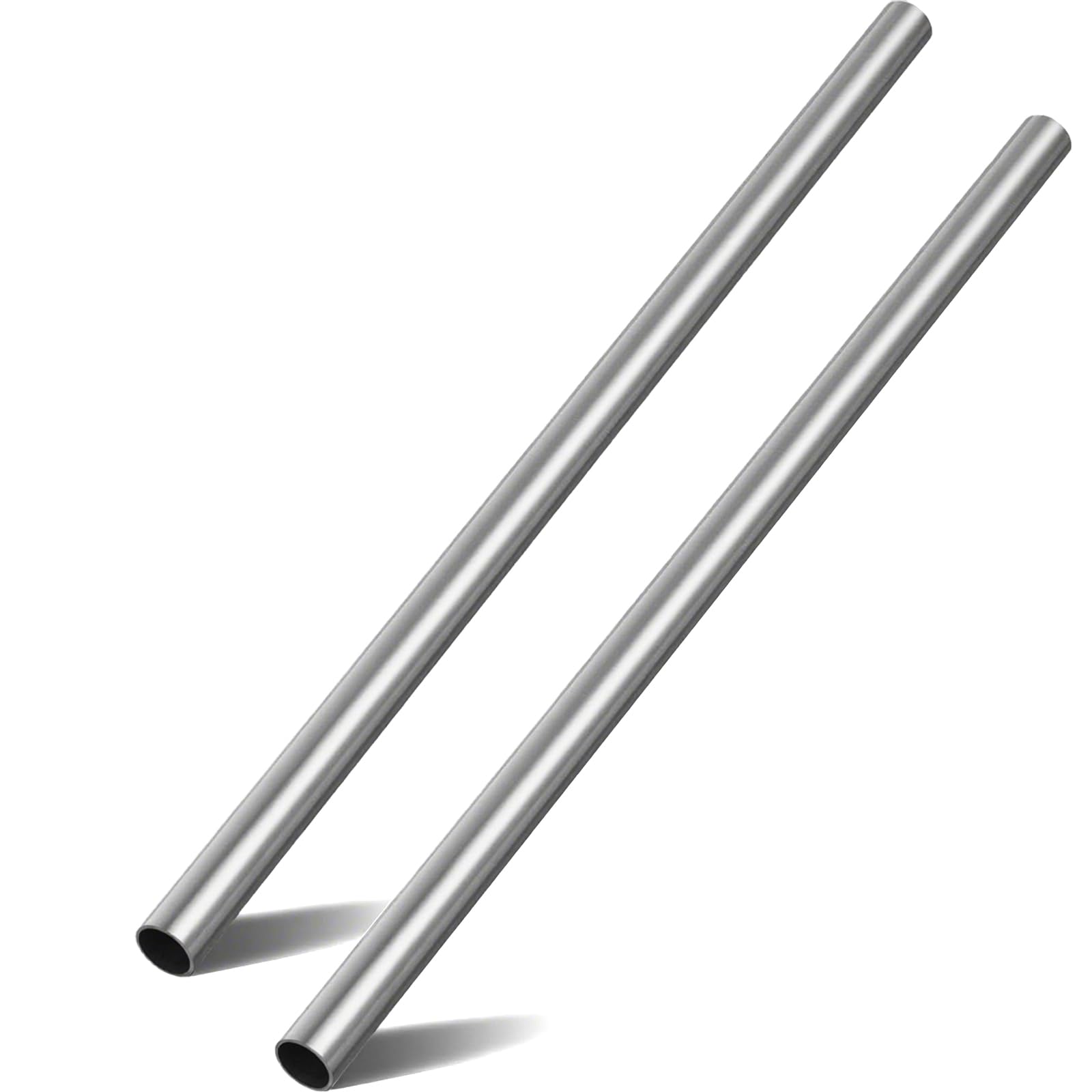
5. Zepkouel 2 Pack 1″ OD 304 Stainless Steel Pipe, 20 Inch, 1.5mm Wall
Twenty inches of polished 304 that tig welders keep coming back to.
Two 20-inch tubes in 304 stainless, a 1.5 mm wall, and a polished finish that arrives looking like a mirror. That 20-inch length splits the difference between the short 12-inch stock and the long 48-inch pieces, and it is enough to cut down into two or three usable sections without wasting much. The material is corrosion-resistant, cuts and welds without drama, and holds its shine once it is installed.
Welders get good results with it — one owner runs it for tig welding and calls the quality great. It also turns up in surprising places, like one buyer who threaded it into the internal cooking rig for a porchetta, and the polished surface is bright enough that a couple of owners just enjoy looking at it. At 20 inches, it welds cleanly and arrives mirror-bright for a mid-tier price.
The one snag is the diameter claim. This is sold as 1 inch, but at least one buyer pushed back hard: “This tubing is NOT 1 inch as advertised…it is 25mm.” If your fitting is machined to a true inch, measure before you cut, because the real size follows the metric standard.
Reasons it earns a spot
- 20-inch length gives you useful cutting room between the 12-inch and 48-inch picks
- Polished 304 surface arrives mirror-bright and stays that way
- Tig-weld friendly, with buyers reporting clean welds
- Two tubes per pack for the price of many single-tube options
The honest snag
- Diameter runs metric, so it can land closer to 25mm than a true inch
- Not long enough for a full uninterrupted handrail span
Ideal for: welders and fabricators who want a shiny, weldable 20-inch section with room to trim.
Not for: a setup that needs an exact 1.000-inch fit — verify the metric size first.
6. Hicarer 2 Pcs 1″ OD 304 Stainless Steel Tubing, 24 Inch, 16 Gauge

Two full two-foot lengths — the pick for racks and rails that need real span.
These come as a pair of 24-inch tubes, doubling the reach of the 12-inch picks without stepping up to the 48-inch price tier. Each runs 304 stainless with a 16 gauge (1.5 mm) wall and a 0.98-inch outside diameter, and each one can be threaded, welded, or cut to fit. For a project that needs two matching uprights, that in-pack pair is the practical win — no mismatched second order.
The finish is bright and smooth, comfortable to handle, and it does not discolor over time the way cheaper metal can. Owners have bent them into custom double towel racks, spaced two apart to hold bars, and used them as heavy-duty replacements that they rate better than the original hardware. The wall thickness is enough to keep the tube stiff while it stays easy to modify with standard tools.
The metric caveat applies again, so plan for it. The diameter is listed at 0.98 inches rather than a full inch, and the length is produced to metric spec, so a fitting that needs an exact one inch will want measuring before assembly.
The case for the pair: two matched 24-inch tubes solve the brackets-and-rails job without a second purchase, and the 16 gauge wall keeps them rigid while staying easy to cut.
Factor in: the 0.98-inch diameter — fine for most brackets, tight for a machined one-inch bore.
Great for: towel racks, rails, and matched uprights that benefit from two equal-length tubes.
Be careful with: any joint machined to a strict inch — this runs a touch under.
7. Top Hardware 304 Stainless Steel Tubing, 1″ OD, 48 Inch, Satin Finish
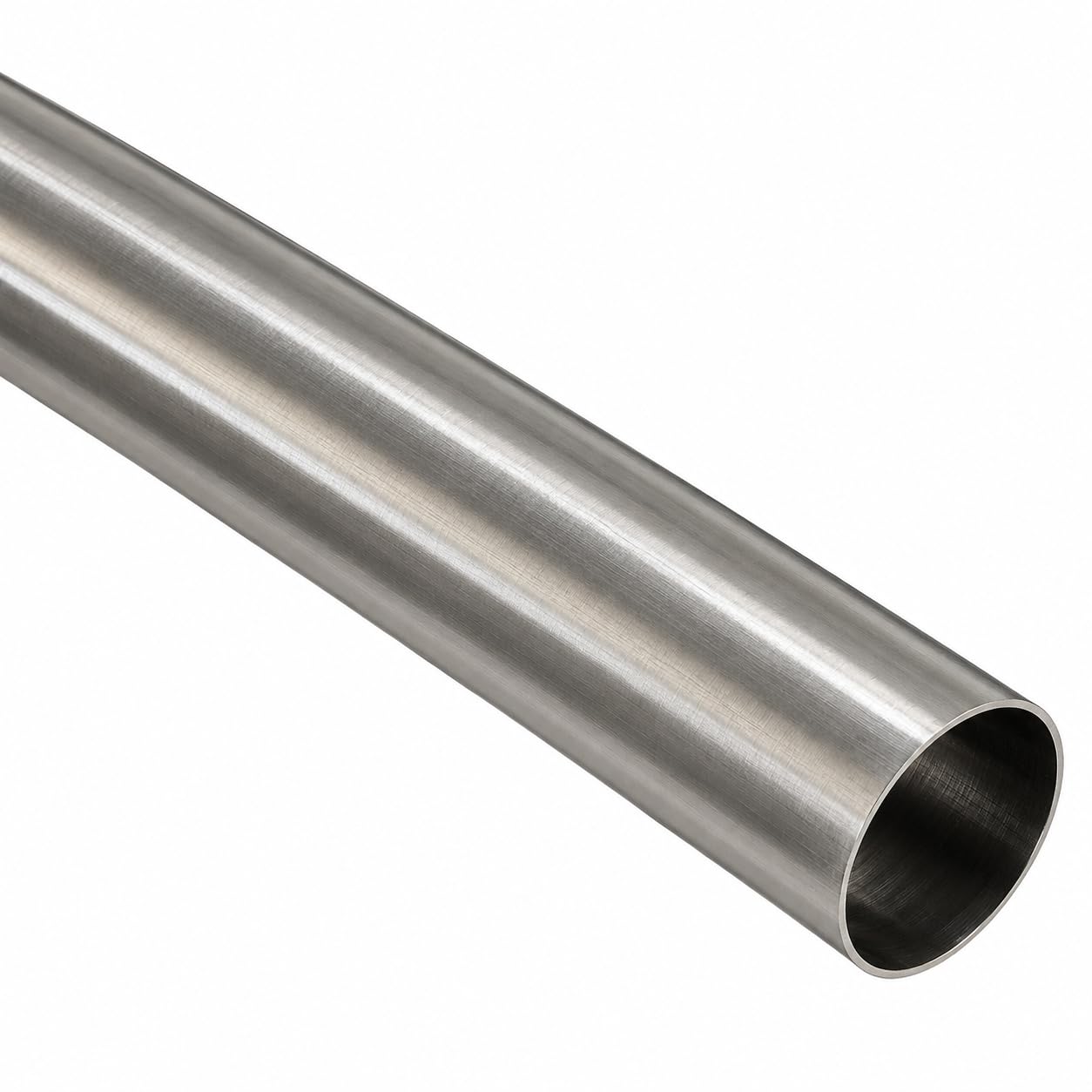
A full four feet of brushed 304 for handrails and frames that need one clean run.
At 48 inches, this is the long-form option for anyone building a handrail, a furniture frame, or a shop fixture that cannot be pieced together from short sections. It carries a true 1-inch outside diameter and a 0.062-inch wall in high-grade 304 stainless, and the brushed satin finish gives it a clean, architectural look without a single spot of polish needed. The uniform wall and standard outside diameter mean it mates flush with common brackets, flanges, and elbows.
Repair work is where this tube tends to save the day. Owners have cut it to replace a peeling microwave handle and a dented oven handle, cutting to length and chamfering the ends for a factory look. It arrives straight, which matters because long stock can bow in transit, and the brushed surface matches better than many original parts. Fabricators building custom pieces rate the dimensions as accurate.
One thing to plan around: it does not cut like soft metal. The wall is thick enough that a pipe cutter takes slow, steady pressure rather than a quick crank, so budget a little time for clean cuts. The 304 grade handles most indoor and outdoor jobs, though a saltwater setting favors the 316 option below.
Where it delivers: one uninterrupted four-foot length with a true 1-inch diameter and a finish that needs no polishing — a straight, accurate piece for rails and frames.
Give it time: the material is hard, so cut slowly with a pipe cutter for clean square ends.
Pick this when: you need a single long rail or frame member with an accurate 1-inch diameter and a ready-made satin finish.
Look to the 316 version instead when: the piece lives in salt air.
8. Top Hardware Premium 316 Stainless Steel Tubing, 1″ OD, 48 Inch, Satin Finish
Four feet of 316 grade — the long tube built for salt air and heavy outdoor duty.
This tube matches its 304 sibling at 48 inches long and 1-inch outside diameter, but upgrades the metal to grade 316 stainless. That alloy change is the entire reason to pay more: 316 resists rust and corrosion in demanding indoor and outdoor environments better than standard 304, which is what you want on a sailboat, a seaside railing, or a flag pole taking weather year-round. The wall runs 0.062 inches with a clean brushed satin finish.
Owners use it for exactly that kind of outdoor punishment — solar mounts on a sailboat, a flag pole, and a replacement oven handle on a range where the finish matched better than the original part. The tube measures a true 1-inch outside and 7/8 inside, so a smaller pipe slides inside to stiffen it for a rigid run. The heavy-duty shipping box keeps it straight in transit, which is no small thing for a four-foot length.
Treat the cutting as real work. The metal is hard, and owners note you need a pipe cutter and a slow hand rather than brute force. Pair that with the premium grade and this is the tube you buy when the environment, not the price tag, drives the decision.
Why step up to it
- Grade 316 metal for better salt and corrosion resistance than the 304 picks
- True 1-inch outside diameter with a 7/8-inch bore, so thinner pipe slides inside for stiffening
- Brushed satin finish matched an original range handle better than the factory part
- Ships in a heavy-duty box that keeps the four-foot length straight
Before you order
- Hard metal that needs a pipe cutter and steady, slow pressure to cut
- Premium grade sits at the top of the price range in this lineup
Built for: sailboat hardware, coastal railings, and flag poles where salt air would wear down standard steel.
Not the cheapest route: if your project stays dry and indoors, the 304 version handles it for less.
Understanding the Specs
Outside Diameter and Tolerances
The outside diameter is the width measured across the tube from edge to edge. Many of these tubes are made on metric tooling, so a tube sold as 1 inch can actually measure around 0.98 inches, or 25mm. That small gap matters when a connector or clamp was machined to a tight one-inch bore. If your fitting is precise, check the listed diameter before you buy rather than assuming the rounded label is exact.
Wall Thickness and Load
Wall thickness is how thick the metal ring is at the cut end — the thicker the ring, the stiffer the tube. A 1.5 mm wall resists denting and bending better, which suits railings and anything carrying weight. A thinner wall like 0.05 inches shapes and cuts more easily, which helps decorative and light structural work. Match the wall to the load the tube has to carry.
FAQ
Will a 1-inch stainless steel tube fit a 1-inch connector or clamp?
What is the difference between 304 and 316 stainless steel tubing?
How thick should the wall be for a load-bearing tube?
Do these tubes arrive cut to an exact length?
Can I weld or thread 1-inch stainless steel tubing?
How do I cut 1-inch stainless steel tubing without damaging it?
Why does my 1-inch tubing measure slightly under an inch?
Is 316 stainless steel worth it over 304 for a boat project?
Can I bend 1-inch stainless steel tubing by hand?
What length of 1-inch tubing should I order for a handrail?
Final Thoughts: The Verdict
For most people shopping for 1-inch stainless steel tubing, the Tynulox 1″ OD 304 tube is the smart pick — its 1.5 mm wall out-stiffens the thin-walled options, it comes two to a pack, and the polished 304 handles outdoor jobs without surface rust. If you want extra reach without a big jump in price, the Zepkouel 20-inch 304 pipe gives welders a shiny, tig-friendly section with room to trim. And for salt air, boat hardware, or a coastal railing, the Top Hardware 316 tube is the one to reach for — that upgraded alloy is the whole reason it earns its place at the top of the range.
How We Picked
We do not accept paid placement. Every pick is matched to a real buyer and a real use-case; we do not hands-on test units.
Sources & Methodology
Specifications: manufacturer listings and product documentation. Review insights: verified customer reviews, as of September 2026. Pricing: not shown on this page (it changes often); check the current price via the retailer link.
As an Amazon Associate, KitchPrep earns from qualifying purchases. This does not affect which products we feature.
Related Guides
