
Specs are compiled from manufacturer listings and verified buyer reviews and can change over time — please confirm the key details on the product page before buying.
If your baseboards are scuffed, cracked, or missing in places, you can fix the whole room in an afternoon without owning a nail gun. Peel-and-stick base trim molding rolls out like tape, cuts with a utility knife, and presses straight onto the wall. This guide separates rolls that hold their bond from ones that sag within weeks, and matches trim height, roll length, and material to your floor.
I’m Mohammad Maruf — the founder and writer behind KitchPrep. This guide is built by comparing the manufacturers’ published specifications and the patterns across verified customer reviews, so you get each pick’s real strengths and trade-offs instead of marketing spin.
You will see the difference between flexible vinyl that bends around corners and stiff polystyrene that lines up dead straight. Match the trim to your wall, not the other way around. Here is how to pick the right base trim molding the first time, without wasting a roll on the wrong surface.
Our Picks at a Glance


How To Choose The Best Base Trim Molding
Every peel-and-stick trim roll lives or dies on one thing: what surface you press it onto. A roll that grips painted drywall for months can slide off a painted block wall in weeks, and that has nothing to do with the brand. Pick your wall type first, then pick the trim.
Match the trim to your wall, not the photo
Smooth, sealed, dust-free surfaces are where self-adhesive vinyl holds best — painted drywall, tile, glass, metal, and sealed wood all work. Painted cinder block, raw concrete, and anything with texture or flaking paint need a different plan. For those, plan on adding construction adhesive or a brad nailer, because the peel-and-stick backing alone is doing less work than the listing implies.
Height and length decide your coverage
Trim height sets how much wall the strip covers, and it also hides uneven floors. A 4-inch strip is the everyday residential size. A 6-inch strip covers more gap and more damage, but it reads visually heavier in a small room. Length is the other half of the math: a 40-foot roll finishes a typical room with offcuts to spare, while a 20-foot roll can run out before you reach the doorway.
Toe design, corners, and clean edges
Many rolls include a toe — a thin flexible lip at the bottom that tucks against the floor and blocks dust. The trade-off is real: that lip has no adhesive on it, so on a floor that is not perfectly flush, it can ride up. For corners, flexible vinyl bends with heat from a hair dryer, while rigid polystyrene needs a miter cut. Neither is harder — they are just different jobs.
Quick Comparison
| Model | Best For | Trim Height | Roll Length | Material | Amazon |
|---|---|---|---|---|---|
| Storystore Wall Baseboard Trim★ Best Overall | Big rooms, quick DIY | 4 inches | 40 feet | Rubber | Amazon |
| LSGCQ Vinyl Baseboard Molding TrimBest Value | Basements and garages | 4 inches | 20 feet | Polyvinyl Chloride | Amazon |
| COUKIU Flexible Baseboard Molding TrimBest for Curves | Curves and uneven floors | 4 inches | 20 feet | Vinyl | Amazon |
| Kikerike Vinyl Baseboard Molding Trim | Long garage walls | 3 inches | 40 feet | Polyvinyl Chloride (PVC) | Amazon |
| POPAKAN Peel and Stick Baseboard Trim | Covering big wall gaps | 6 inches | 20 feet | Vinyl | Amazon |
| FCSOTSPS Baseboard Trim | Bathrooms and tile | 4 inches | 20 feet | Rubber | Amazon |
| Art3d High Impact Baseboard Wall Molding | Straight, paintable finishes | 3.2 inches | 37.3 feet | Polystyrene | Amazon |
| Mohawk White Vinyl Cove Wall Base | Whole-floor installs | 4 inches | 120 feet | Polyvinyl Chloride Type I | Amazon |
In‑Depth Reviews
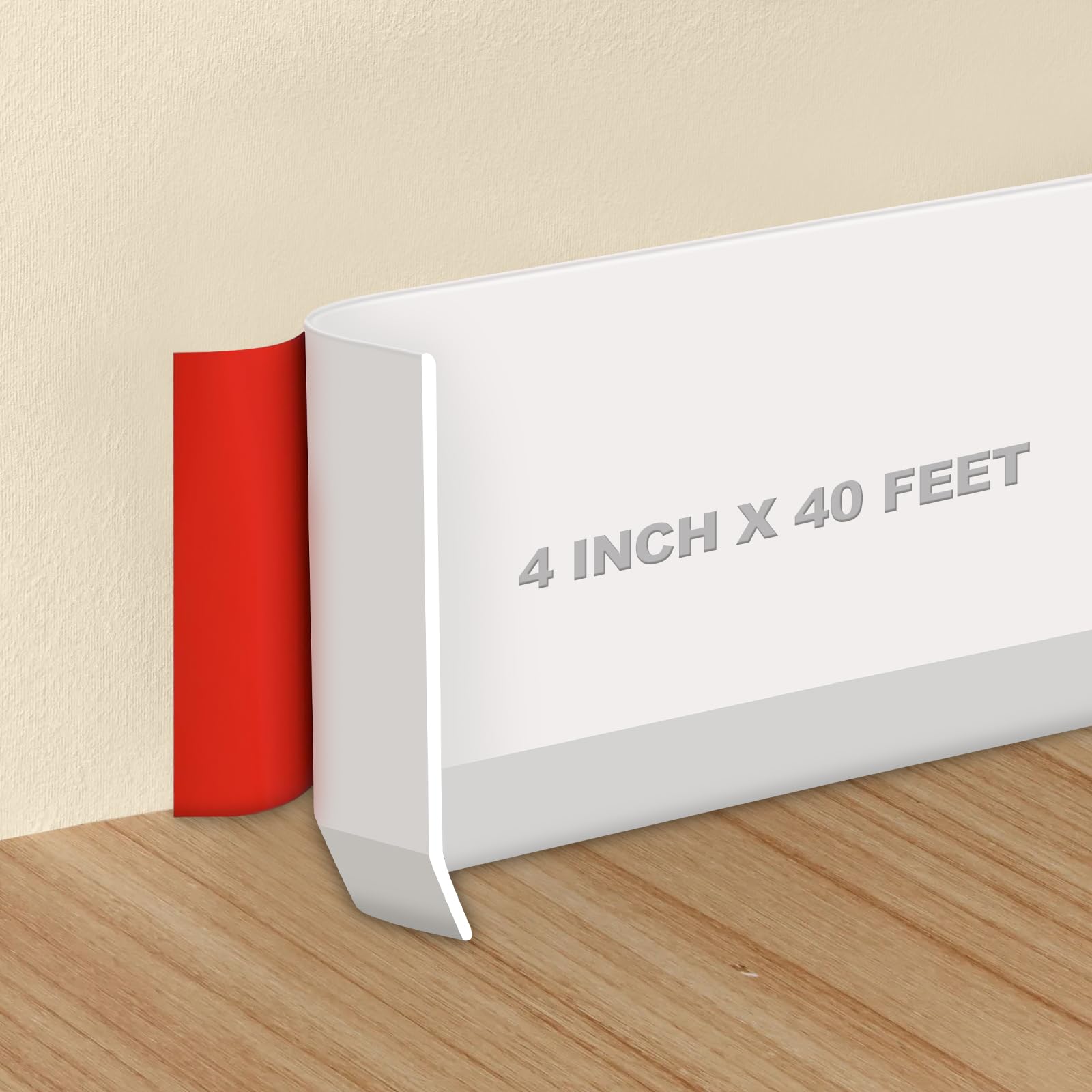
1. Storystore Wall Baseboard Trim 4 Inch x 40 Feet, Flexible Self-Adhesive Rubber Baseboard for Walls, Peel and Stick Wall Molding Trim
Our pick — 4.5★ from 200+ verified ratings; the strongest balance of quality and price.
The roll that finishes a whole room and forgives you while you learn.
Forty feet is the number that makes this the strongest all-round pick. That is double the length of the LSGCQ roll, so a standard bedroom or hallway finishes on one roll instead of running short near the doorway. At 4 inches tall and 3.2 ounces, the strip is light enough to handle one-handed up a ladder.
You can bend this trim around door casings without it cracking, because it is made of rubber. That same rubber is what makes the adhesive behave. Owners describe a bond that sticks firmly but still lets you lift and re-seat a strip when you get the line wrong — the single biggest reason a first-time install ends up looking straight instead of wavy. The most common praise centers on how easy the whole job is; a well-known use is covering water stains on base cabinets rather than replacing them, as buyers report: “This was the perfect option to cover water stains on my base cabinets and look good.”
What owners keep coming back to
- 40 feet on one roll covers a typical room plus offcuts
- Repositionable adhesive means a crooked strip can be lifted and re-set
- Rubber body bends around corners instead of splitting
- Cuts to size with a box cutter, no saw required
Where it needs care
- Thin profile, so bumps and uneven wall surfaces telegraph through the finished face
- The paper backing can be fiddly to peel free on the first strip
Reach for this: if you want one roll to cover a normal room and you value the ability to fix a crooked strip without wasting it.
Think twice if: your walls are lumpy under the paint — the flexible face shows every ridge, so smooth the surface first.
2. LSGCQ Vinyl Baseboard Molding Trim 4 Inch Self-Adhesive Vinyl Wall Base
The gray roll that turns a rough garage wall into something that looks intentional.
This is a 20-foot roll billed for both residential and commercial use, and the buyers who love it are usually working in basements and garages. The toe design at the bottom is the standout feature — that thin lip blocks dust and snow-melt from creeping behind the wall base. One garage owner used it specifically to keep snow from infiltrating onto sheetrock and reported it “worked well,” with the honest caveat that long runs need patience rather than speed.
Where it stands apart from the Storystore roll above is adhesion on stubborn surfaces. The tape here holds hard once it is down, and the soft vinyl will not crack when you flex it. The catch is that “once it is down” is the whole story — this trim does not want to be repositioned, so you want to line each section up in small increments before pressing. It also struggles on painted cinder block, where owners mention it peeled away after a few weeks even though it held fine on drywall.
The color is a warm gray rather than a bright white, and that is a genuine dividing line. Some buyers call it perfect for coordinating with tile; others wished it read brighter against white walls. Either way, cleaning is easy — a wet rag handles scuffs on the soft vinyl surface.
Where it earns its place: for a garage, basement, or utility wall where you want dust blocked and you are not chasing a bright white match.
One habit to build: clean and dry the wall completely, then press in short sections. On painted block, plan on extra adhesive.
Pick this one when the room is rough-and-tumble and gray suits the space — the toe lip does real work against dust and moisture.
Look elsewhere if you need it to grip painted cinder block on its own, because that surface is where it gives up.
3. COUKIU Flexible Baseboard Molding Trim, 4 Inch x 20 Feet Self-Adhesive Vinyl Wall Base Cove Base, Peel and Stick Rubber Wall Base Moulding Trim(S100, White)
A brighter, thicker strip for walls that wander instead of running straight.
The 0.08-inch thickness is the headline here, and it is noticeably more substantial than a paper-thin roll. That extra body means it hides small wall imperfections better, and it makes a room look finished at a glance. It arrives as a 20-foot roll with a scraper included, so you have the pressing tool in the box instead of hunting for a credit card edge.
What wins people over is the color read. Owners describe it as genuinely bright white, which is the thing this trim was picked for — pale walls and trim get an obvious lift, and customers note it looks smooth once it is pressed down properly. The shape is equally forgiving: this bends through curves and recessed walls without needing a miter cut (an angled cut where two pieces meet), and it covers floor gaps ranging from narrow slivers up to meaningfully wider ones.
On a clean, dust-free wall the tape holds well; on a greasy or powdery surface it pulls away from the baseboard within weeks. Plan on sanding, washing, and drying before you peel anything, and test with a dark cloth to confirm the surface is truly clean.
The white you actually wanted: if your trim has to match existing bright white caulking or a fresh paint job, this is the one to start with.
The catch: it is a 20-foot roll, so a large room may need two — measure before ordering.
Best for: painted drywall and smooth surfaces where a bright white, flexible strip needs to follow a curved or uneven wall.
Not ideal if: you are covering a long, straight run on painted block, where the adhesive needs help.
4. Vinyl Baseboard Molding Trim 3 Inch x 40 Feet Peel and Stick Baseboard Trim Flexible PVC Cove Base Moulding Self-Adhesive Trim for Garage Bathroom Cabinet Floor Walls, White
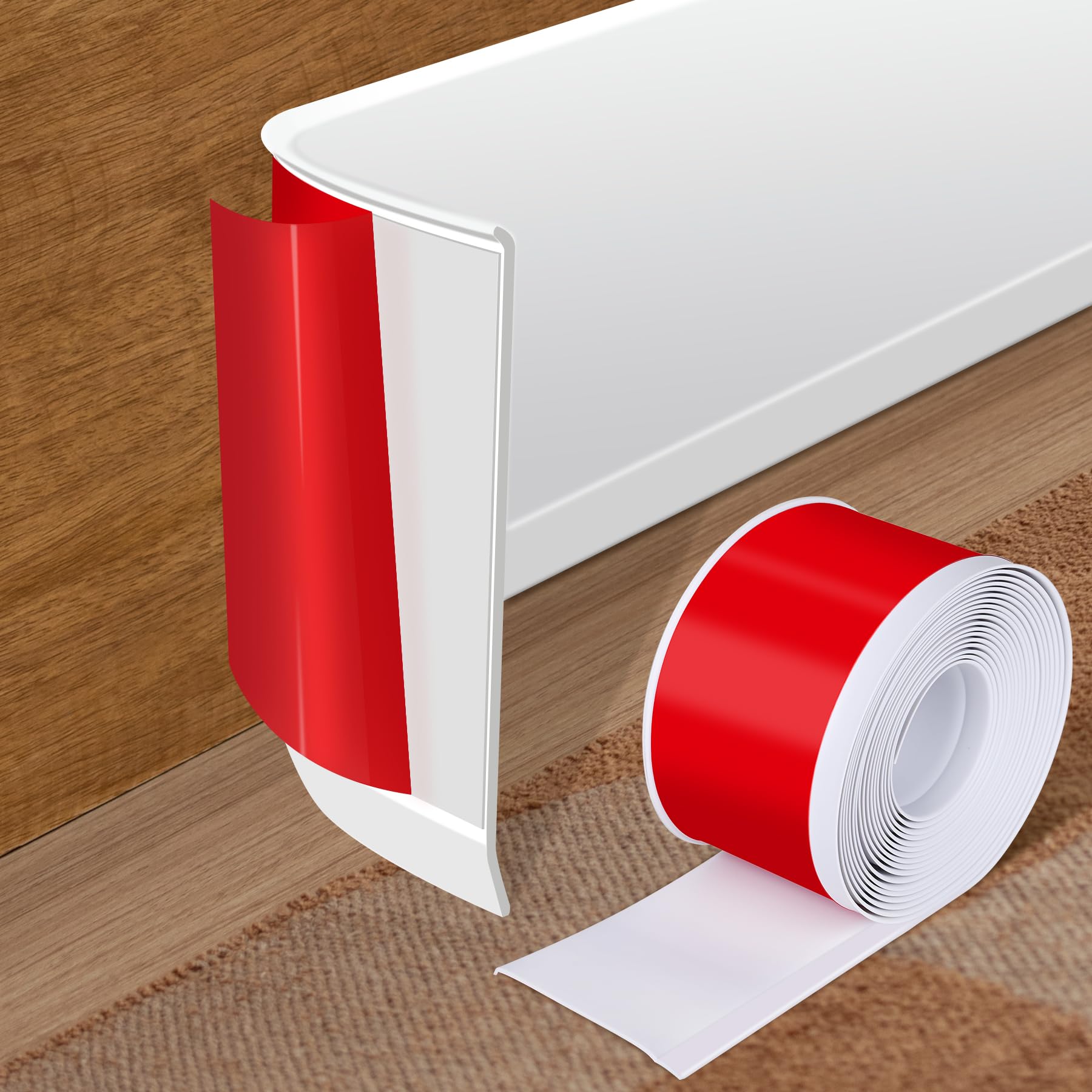
Forty feet of waterproof, cut-to-anything trim for garages and workrooms.
Forty feet at a 3-inch height is a real amount of wall, and the waterproof, moisture-resistant PVC surface is built for damp rooms like kitchens and bathrooms. It is rated for commercial use as well, so a shop or retail space is fair game. The 0.06-inch body is flexible enough to bend around masonry bumps and block wall imperfections, which is exactly the kind of surface where a rigid board would need a lot of caulk.
Owners put it to work in varied places — closing the gap between a cement floor and a wood wall in a framed garage, and lining the bottom of a slider in an RV remodel. In both cases the flexibility around posts mattered, with no puckering at the curves. Cutting is straightforward with a knife or scissors, and a hair-dryer trick warms the material for tighter bends.
The adhesive is the weak link, and it is worth knowing before you buy. Warm, uninsulated spaces are the problem — a Texas garage wall saw the trim begin to peel, and a few owners ended up adding glue after sections lifted within days. On cooler, well-prepped indoor walls it holds fine. If your wall runs hot in summer, budget for construction adhesive at the ends and corners.
The practical call: buy this for coverage and flexibility, then reinforce the peel-and-stick with a bit of glue on hot or outdoor-facing walls.
skip it if: you want a pure no-tools install in a space that bakes in the sun all day.
Worth it for long garage, bathroom, and utility runs where you need waterproof material and enough length to finish the job.
Plan around the heat — in uninsulated or sun-facing walls, add adhesive so it stays put.
5. Peel and Stick Baseboard Trim 6″ x 20 ft, Vinyl Baseboard Molding White
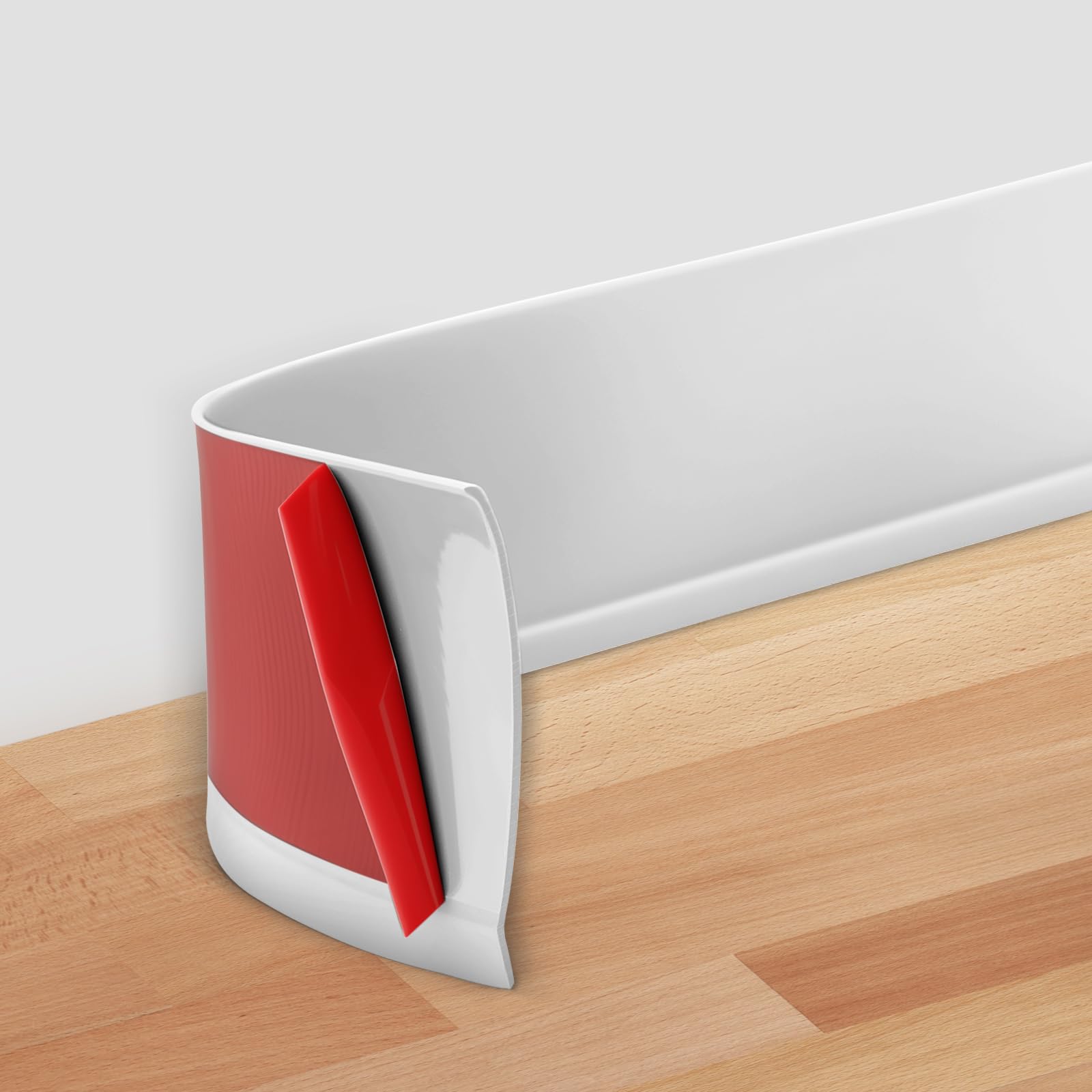
Six inches of wall coverage for rooms where the gap or the damage is simply too tall.
This is a 6-inch wide strip, which is half again the height of the 4-inch rolls and the reason it earns a spot here. If your floor gap is wide, or the wall behind the baseboard is stained or chewed up well above the floor line, extra height hides problems that a shorter strip leaves exposed. The vinyl is durable, flexes into bends, and the surface wipes clean with a damp cloth.
Owners apply it in places you might not expect — one used it inside a horse trailer to keep shavings out of the tack area and found it “pretty sticky” and effective. Another closed off the base of a bathroom door to hide imperfections. The pattern-free white finish takes paint fine if you want a custom color later, and the smooth surface makes cleanup quick.
One sizing note is worth saying plainly: the listed 6-inch width includes the bottom toe flap, so the installed height that actually covers the wall runs shorter than the number on the label. Measure the gap you are covering before you cut, and leave a little extra to tuck. The thin backing is also easier to peel with a little heat from a hair dryer if it fights you in a cold room.
Where the width pays off: tall floor gaps, stained wall bottoms, and door thresholds where a 4-inch strip leaves a visible line above.
Do this first: measure the finished height you need — not the label width — before cutting to length.
Choose this when the mess you are covering is taller than a standard baseboard and you want it gone in one pass.
Check the math first if you are matching an existing 4-inch trim line, since the extra height will stand proud of it.
6. Baseboard Trim,4Inx 20Ft Flexible Baseboard Molding Trim
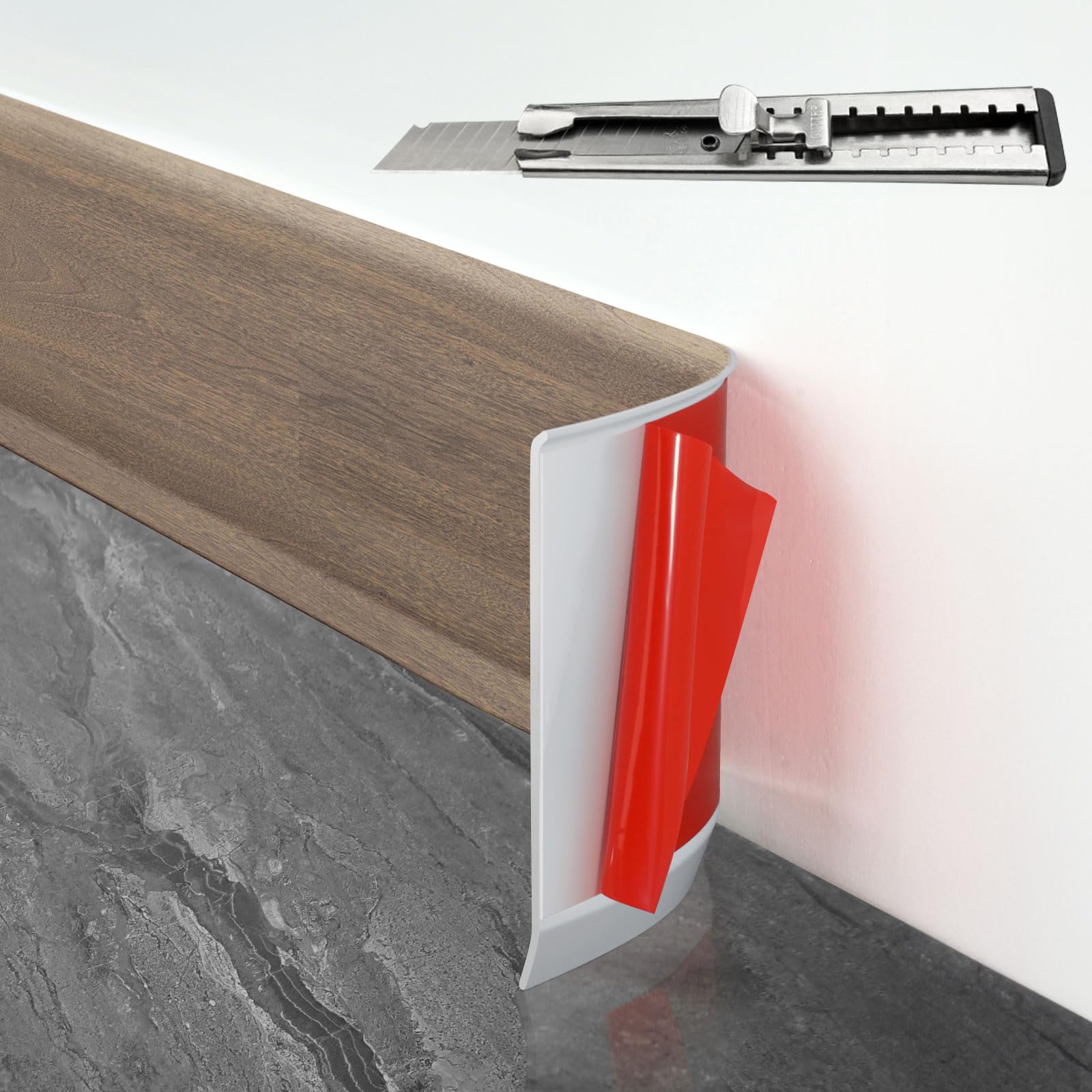
The bathroom specialist that grips tile hard enough to stay put through humidity.
What this roll is known for is adhesion, and it earns the reputation on the hardest surface in the house: ceramic tile. Reviewers point out it holds firm to tile without peeling or sagging back, even in a bathroom that sees daily steam. It arrives with a utility knife in the box, which is a small thing that matters when you are ready to start and realize you have nothing to cut with.
The material has a scratch-resistant treated surface and a big toe design that hides cracks and blocks dust behind the wall base. A buyer replaced a moldy strip behind a toilet with this and found the adhesive genuinely sticky and cleanup easy. Another pointed out that once it is down, it stays down — the flip side being that pulling it up later can lift paint or tile edge with it.
Corners are the one spot to plan for. Outside corners are hard to score and fold cleanly because the material resists a crisp crease, and a heat gun or hair dryer helps. Cutting also takes a sharp blade rather than a kitchen knife. Neither is a defect, but both are things to know before you start on a long run.
The tile story: for a bathroom, laundry room, or kitchen backsplash line where the wall is glazed tile, this is the pick with the proven bond.
Do the prep right: clean the tile thoroughly — some owners used a solvent wipe — because the same grip that holds it also means removing it later is a chore.
The right pick for tile and glazed surfaces where a weaker backing would slide off, and the utility knife in the box gets you started the day it lands.
Not for anyone who might want to lift the trim and reposition it — the bond is committed, not forgiving.
7. Art3d High Impact Baseboard Wall Molding Trims, Skirting Board, White

Not a peel-and-stick roll at all — it is stiff, paintable, and looks like real trim.
This is the pick for people who do not want vinyl. It ships as 8 pieces, each measuring 56 inches long and 3.2 inches wide, covering roughly 448 inches — about 37.3 feet — in total. The material is high-impact polystyrene, which is stiffer and holds a straight line far better than flexible rolls, and it is paintable and resistant to moisture, warping, and cracking.
The finish is what you notice. Buyers repeatedly say it reads like wood rather than plastic, and that it gives a room the look of a much pricier trim. It cuts cleanly with a chop saw or coping saw, and a basic adhesive in a caulk tube or a few nails holds it. Since you paint and install it rather than peel and press, there are no nail holes to fill in the finished look, and the flat back takes construction adhesive well.
The trade-offs are honest ones. There is no sticky backing, so you supply your own adhesive — the strongest points reviewers raise are about its look and how easy it is to work with, and the caveats cluster around the fact that it is hollow, so miter cuts can chip slightly and the ends need a 45-degree cut rather than a flat square. It is also the most structural piece on this list, so it suits someone willing to measure and glue, not a quick peel-and-press job.
The look you get: a stiff, paintable, moisture-resistant baseboard that photographs like genuine wood trim.
The catch to know: no adhesive included, and the hollow core means you should miter corners rather than butt them.
For the finish-focused renovator who wants a trim that looks installed by a pro and does not mind gluing or nailing rather than peeling.
Not the quick fix if you wanted zero tools — this one wants a saw and adhesive.
8. Mohawk White Vinyl Cove Wall Base 4in x 120ft Roll

A 120-foot roll for the whole floor — but it does not stick itself.
This is a glue-down product, not a peel-and-stick one, and knowing that up front saves a lot of frustration. The 120-foot roll at 4 inches tall covers an entire floor of a home, which is what makes it worthwhile for a full renovation rather than a single-room touch-up. The flexible vinyl is easy to cut and manipulates around wall contours, so uneven walls are not a problem.
Because there is no adhesive backing, you install it with liquid nail or a brad nailer, and owners who did exactly that report it holds beautifully. A garage install earned a “sturdy and durable” verdict, and a bathroom user who glued it with liquid nail said it looked amazing and loved the color. The thickness sits in a middle band — not chunky, but not paper-thin — and the material takes a brad nailer without tearing out.
The piece to weigh is that a flexible lip at the bottom can ride up unless your floors sit flush against the wall, so on a floor with gaps under the trim, plan to anchor it down. For a full-floor job that is a manageable step; for a quick patch it is more work than a self-adhesive roll.
Where the length wins: whole-floor and multi-room installs where one 120-foot roll beats buying several shorter ones.
The setup you need: adhesive or a brad nailer on hand — there is no sticky backing to fall back on.
The right call for a whole-house project where you are gluing or nailing anyway and want one continuous material across every room.
Only if you are set up to install it properly — the no-adhesive-backing detail is the deciding factor here.
Understanding the Specs
Trim height and roll length
Trim height is how much wall the strip covers from the floor up. A 3-inch strip is a lean, low-profile look and best for tight gaps; a 4-inch strip is the everyday residential size; a 6-inch strip covers big gaps and stained wall bottoms but reads heavier in a small room. Roll length is the other half of the equation. A 20-foot roll handles a short run, while a 40-foot roll finishes a typical room, and a 120-foot roll is aimed at a whole floor. Measure the room perimeter, add a little for corners and offcuts, then pick your length — running out two feet from the door is the most common DIY headache.
Material and adhesive
Flexible vinyl and rubber bend around curves and door casings and hold a toe lip against the floor; they do not hold a razor-straight line as crisply. High-impact polystyrene is stiff, paintable, and lines up dead straight, but it is hollow and needs gluing or nailing rather than peeling. On the adhesive side, self-adhesive rolls hold well on smooth, sealed surfaces — painted drywall, tile, glass, metal, and sealed wood — but they lose their grip on painted block, raw concrete, or dusty walls. On those surfaces, plan to add a construction adhesive or a brad nailer, and treat the sticky backing as a helper rather than the whole bond.
FAQ
Will peel and stick base trim molding stick to a painted block wall?
How much wall does a 40-foot roll of base trim actually cover?
What is the difference between flexible vinyl trim and rigid polystyrene trim?
Does the listed width include the bottom toe flap?
How do I install base trim molding on an outside corner without puckering?
Why did my self-adhesive trim peel off after a few weeks?
Can I use vinyl base trim molding in a bathroom or garage?
Do I need a saw to cut base trim molding?
Can I paint vinyl or polystyrene base trim molding?
Final Thoughts: The Verdict
For most rooms, the base trim molding winner is the Storystore Wall Baseboard Trim because its 40-foot roll covers a whole room and its repositionable adhesive lets you fix a crooked strip without wasting it. If you are lining a bathroom or tiled wall and want the strongest bond, reach for the FCSOTSPS Baseboard Trim with the utility knife in the box. And for a stiff, paintable finish that looks like real wood, the Art3d High Impact Baseboard is the one to grab. Whatever you choose, clean and dry the wall first — surface prep decides whether the trim stays put more than the brand does.
How We Picked
We do not accept paid placement. Every pick is matched to a real buyer and a real use-case; we do not hands-on test units.
Sources & Methodology
Specifications: manufacturer listings and product documentation. Review insights: verified customer reviews, as of September 2026. Pricing: not shown on this page (it changes often); check the current price via the retailer link.
As an Amazon Associate, KitchPrep earns from qualifying purchases. This does not affect which products we feature.
Related Guides
