
Specs are compiled from manufacturer listings and verified buyer reviews and can change over time — please confirm the key details on the product page before buying.
Your utility usually will not set a meter unless the socket, the main disconnect, and the box all match what its rulebook asks for. That is why the strongest pick here is the Square D RC816F200C: a 4-jaw ringless socket, a factory 200 amp disconnect, and a NEMA 3R enclosure in one box most utilities accept as-is. Next come three specs: feed type (overhead or underground), socket style (ring or ringless), and spare breaker slots. Every box below is rated 200 amps with a disconnect built in.
I’m Mohammad Maruf — the founder and writer behind KitchPrep. This guide is built by comparing the manufacturers’ published specifications and the patterns across verified customer reviews, so you get each pick’s real strengths and trade-offs instead of marketing spin.
Jaw count can decide whether your utility connects the box at all, and most service areas now require ringless sockets. Spare slots decide whether you can add an air conditioner later without a second panel. The real test of any 200 amp meter base with disconnect is whether it passes inspection the first time.
Our Picks at a Glance


How To Choose The Best 200 Amp Meter Base with Disconnect
Every box here runs the same 200 amp service, so amperage will not separate them. What separates them is socket style, disconnect arrangement, and spare slots left after the main breaker takes two.
Match the socket to your utility, not the listing
A ringless socket covers the meter blades with a solid front plate, so no separate metal ring holds the glass in. Many power companies now require that style before they will set a meter; other utilities still install the ring mount. Call your utility with the model number before you buy — a mismatch here means a box that sits in the yard unusable. Four jaws (four pressure connections that grip the meter’s blades) feed a standard single-phase residential service. A socket built for a fifth jaw is what a utility may want if it plans to add a separate voltage connection later.
Decide overhead versus underground before you dig
Overhead feed lands the service drop on a hub fitting on top of the enclosure, and the wires come down the mast. Underground feed brings the conductors up through the bottom instead. Some units handle both with a simple reconfiguration; others are overhead-only and need an adapter.
Count the slots you will actually need
A 200 amp main breaker eats two slots the moment it lands. Plan an air conditioner, a detached shed circuit, and room to grow, and a box with only a handful of spaces runs out fast. Feeding a workshop subpanel from here means planning the slot count now, because adding spaces later means a second panel and another permit.
Quick Comparison
| Model | Best For | Max Current | Circuits | Enclosure | Amazon |
|---|---|---|---|---|---|
| Square D RC816F200C★ Best Overall | Whole-house upgrade with a few outdoor circuits | 200 A | 16 | NEMA 3R, 4-jaw ringless | Amazon |
| Siemens MM0202B1200Compact Pick | Tight-space installs that want the disconnect at the meter | 200 A | 16 | Outdoor, ring mount | Amazon |
| Siemens MC2040B1200SMost Breaker Room | Big houses running overhead feed | 200 A | 40 | NEMA 3R, ring type cover | Amazon |
| ABB TSM420CSCUP | Compact service that has to clear utility rules | 200 A | 4 | NEMA 3R, galvanized steel, ring | Amazon |
| Outdoor Meter Socket Load Center | Budget service rebuilds with a check with the inspector first | 200 A | 8 | Metal, overhead or underground | Amazon |
| MIDWEST R281CB1 | Mobile homes and ag service with a horn bypass | 200 A | 4 | NEMA 3R, G90 galvanized steel | Amazon |
| Square D SC42M200PS | Maximum future capacity in one enclosure | 200 A | 42 | Surface mount, solar-ready | Amazon |
In‑Depth Reviews
1. Square D RC816F200C Homeline 200-Amp Main Breaker 8-Space 16-Circuit Outdoor CSED
Our pick — over 4.5★ from 300+ verified ratings; the strongest balance of quality and price.
The four-jaw ringless box that gets a homeowner out of the utility’s rulebook and into a finished service.
One enclosure does both jobs here. The meter sits behind a ringless cover on the left, and a factory main breaker disconnect sits on the right, so the power can be cut without anyone stepping inside. The four-jaw socket (four pressure connections that grip the meter’s blades) and the 200 amp rating cover a standard single-phase residential service, and the 16 circuits give you room to spread out. That 4.7-star score across 300+ ratings is why it holds the top spot.
Owners describe the install as uneventful, and the extra circuits come up again and again as the reason this box beats simpler sockets — an air conditioner and a shed feed without punching a second hole through the wall is exactly the scenario it was built for. It is the most widely used box of this group for that reason.
The honest limit is the slot count. Buyers report that its 8 spaces are not enough for a whole-house service on their own — this box is engineered to feed an indoor subpanel, not to replace one, and lower-amp systems need their own separate main disconnect added downstream. If you are planning a 30- or 40-circuit spread, the Siemens MC2040B1200S below carries 40 circuits where this one carries 16. Square D’s plug-on socket also takes a plug-on secondary surge arrestor (a snap-in surge protector) without any extra wiring, and the aluminum bus wants care with screw torque.
Main breaker included
- Ringless 4-jaw socket (a cover plate instead of a removable ring) fits what most utilities now demand at the service drop
- Factory 200 amp main breaker disconnect means the whole service can be killed at the meter, which the fire department and your electrician both want
- Plug-on design and a surge arrestor that plugs straight in, so install time stays short
- 16 circuits leave real headroom for outdoor loads like an AC unit
Only eight spaces
- 8 spaces is a subpanel-feeding layout, not whole-house capacity
- Rated 120/240Vac single phase, so it is the wrong box for a three-phase service
- An exterior mounting screw can fight back during install, and the screws are aluminum
Small subpanel jobs: you want the most proven single-box service entrance for a home that feeds a separate indoor panel and values a clean, code-friendly install.
Need many circuits: your plan needs 30-plus circuits under one cover — step up to the MC2040B1200S instead.
2. Siemens MM0202B1200 200-Amp Meter Main Combination
A tape-measure hero: this box slips into the tight wall space where a bulkier meter main will not fit.
At 18 inches long by 17.5 inches high and 26.6 pounds, this is the smaller footprint option of the two Siemens units here. That compact body is not vanity sizing — it is what lets the box sit on a narrow wall where a full-width meter load center would crowd the trim or overhang the studs. Inside, the single-phase layout gives you 200 amps with a copper bus and 16 circuits for spreading loads out.
Owners hooked it up with underground conduit where the ring mount matched what the power company wanted. The layout separates the utility-sealed metering half from the homeowner’s breaker half, so the fire department and your electrician can each reach a disconnect without breaking a seal. For scale, a 27kW generator added to one of these with the copper mains shows it holds up under load.
Nail down the socket style before the meter gets set. A ring-mount socket like this one is what the utility wants in some areas and a hard no in others — at least one owner had to pull this box and swap it for a ringless type because the power company refused the ring. The fix is a phone call, not a new box: confirm ring or ringless with your utility before you order. One buyer received a unit that arrived with a damaged interior from rough transit and sealed it back up with adhesive, still calling it worth buying again — rare, and clearly a shipping event rather than a design fault.
Meter and main combined: 18″L x 6.5″W x 17.5″H is a genuinely slimmer profile than the 14″ x 30.5″ face of the MC2040B1200S, so on a cramped service wall this is the one that goes in without reworking the siding.
Tight service spots: space is tight, your utility accepts a ring mount, and you want a compact single-box service with a copper bus and 16 circuits.
Check utility rules: the socket style — ring versus ringless is the one detail that can send this box back.
3. Siemens MC2040B1200S 200 Amp 20 Space 40 Circuit Overhead Meter Load Center Combination
Forty circuits in a single service box means never telling a homeowner no to one more dedicated line.
If you are tired of filling panels, start here: 20 spaces and 40 circuits is the largest breaker count among the Siemens pair — ten times the 4 circuits of the ABB TSM420CSCUP. The 200 amp rating, NEMA 3R outdoor enclosure, and 22,000 AIC rating (the fault current — the surge current from a short — this box can safely interrupt) cover a full residential service. It mounts on a surface and takes a padlock on the door for service-lockout security.
Owners mention the real draw is value — this box delivers the space of a premium panel without the premium price tag. Owners describe it as the perfect service disconnect panel with room to spare for additional circuits. That is the whole pitch: add a hot tub, an EV charger, a subpanel feed, and you still have empty slots on the wall.
Two spec details to catch before ordering. It is built for overhead feed only, so an underground service needs a different unit or an adapter. And at 33.8 pounds it is the heaviest box on this list — set your mounting hardware and get a hand before lifting it up the wall. Users who wanted a large knockout on the bottom to route conduit noted that option is not there, so plan your cable entry around the layout.
Twenty spaces forty circuits: the enclosure and RX-type hub fittings (the collar the service drop lands in) are set up for the wires to come down a mast on top.
The genuine question is if you need this much capacity now or will need it in five years. In a home that will grow — and homes almost always grow — the 40-circuit count is the one that stops a second panel project down the road.
Overhead service runs: an overhead-fed service where you want maximum spare breaker capacity and padlocking on the enclosure in one purchase.
Underground feed needed: your feed is underground, or you do not need more than a handful of circuits.
4. ABB TSM420CSCUP 200A MeterLoad Center with 4 Breaker Spaces

The box that lets you put your main disconnect right at the meter and satisfy the utility rule in one move.
Here is a compact 200 amp outdoor meter load center with a ring-type socket and a factory main breaker already installed — 4 spaces and 8 circuits of branch capacity on top of the meter base. The galvanized steel enclosure carries a NEMA 3R rating, so it stands up outdoors, and the tin-plated copper bus resists corrosion in the weather. Best of all, it is rated for both overhead and underground feed, so you are not locked into one service style.
Owners describe it as easy to configure for either overhead or underground power feeds. The following comes from the safety angle: putting a main breaker at the meter pan means fire and utility crews can kill the whole service from outside, instead of reaching for a panel inside the house. Where a utility rule demands an indoor panel near the meter, this box sidesteps that entirely — one owner called it something that should be the minimum standard.
Where it sits on this list is cost and capacity together. The 4-space count is the smallest here by a wide margin — if your service plan needs more than four circuits, the Siemens MC2040B1200S with its 40 circuits is a different class of box entirely. But the ABB delivers the meter-plus-disconnect concept more economically, which is exactly why contractors pick it for straightforward residential services.
The honest caveat: 4 spaces is a hard ceiling. Use it for a subpanel feed and a couple of dedicated circuits, plan accordingly, and you will be happy. Try to run a whole house off the branch spaces alone and you will be adding a second panel.
Few dedicated loads: homeowners who want a compliant meter-plus-disconnect combo for a compact residential service on either overhead or underground feed.
Large panel wanted: you need more than a handful of branch circuits from the same box.
5. Outdoor Meter Socket Load Center, 200A
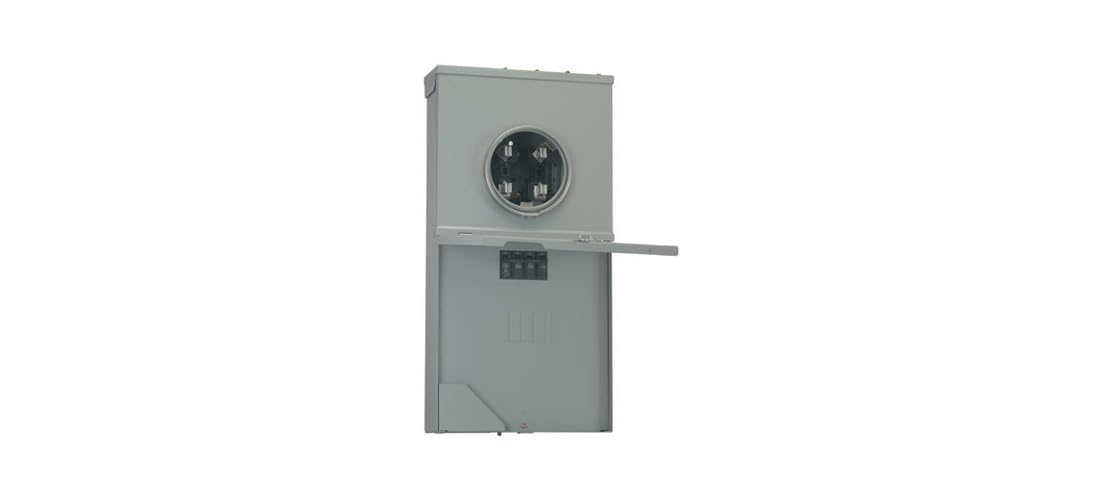
A no-frills 200 amp combo for the buyer rebuilding an existing service on a budget.
This is the entry-level option: a 200 amp outdoor meter socket load center with 8 circuits and a metal enclosure. It is built to take either an overhead drop or an underground feed, so it suits the service rebuild that does not need dozens of spare slots to do the job.
What owners like is the consolidated savings — as more than one electrician has pointed out, one box carrying the meter socket, the 200 amp disconnect, and the enclosure costs less than buying those three pieces separately. It installs cleanly either way you feed it; on the overhead side, plan on a 2-inch hub fitting to land the drop.
This is also the box on the list where you check your local inspector before you buy, not after. Some customers note it clearing permit and some report the opposite in their jurisdiction — that is the reality of meter socket approvals. The authority having jurisdiction (your local inspection office) makes the final call, and a box that passes in one county can be refused a town over. Confirm the model with both the inspector and the power company. One buyer suspected water exposure on arrival, which is a shipping and storage issue to inspect for cheaply in the first minute.
Buy this if you are cost-conscious, know your local code will accept it, and want the meter and disconnect in one enclosure. If you have any doubt about approval, the small premium on a Square D or Siemens box buys confidence.
Outdoor meter setups: a solid budget choice when you have already confirmed local acceptance and just need a 200 amp meter base with a disconnect in one box.
Indoor installation: the price for checking with your authority having jurisdiction first.
6. MIDWEST R281CB1 200A Metered Service Entrance Load Center
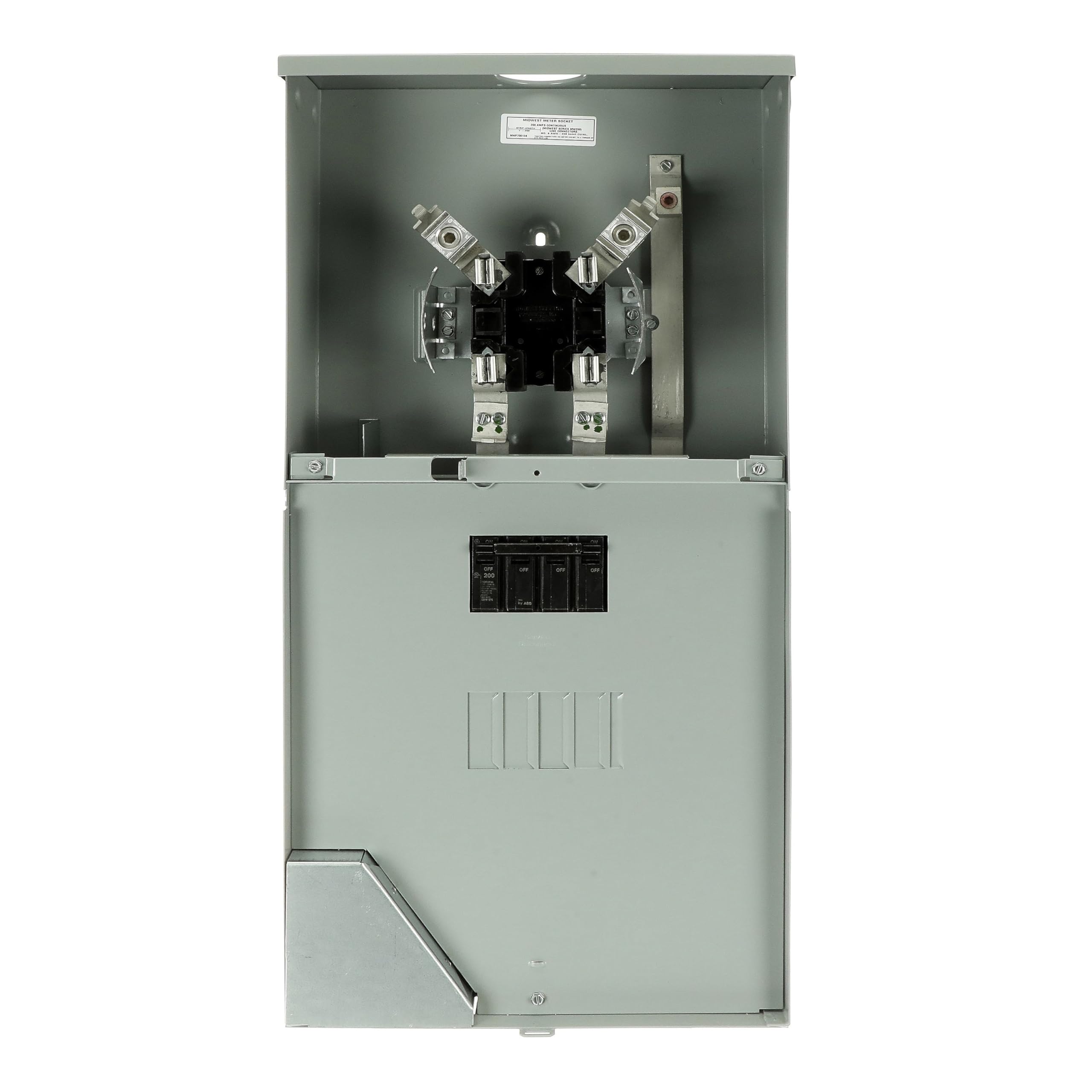
A mobile-home and farm-friendly service entrance with a horn bypass and hardened steel enclosure.
Midwest’s R281CB1 is a 200 amp metered service entrance set up for 120/240 VAC single-phase service. It uses a horn bypass (a jaw arrangement that keeps the meter powered while the disconnect is open) and a ringless socket in a NEMA 3R rated G90 galvanized steel enclosure, so weather and rough use are handled. It is meant for the places a fixed indoor panel cannot easily reach — single-family homes, mobile homes, outdoor living areas, and agricultural buildings, where the service box has to stand up on its own.
Reviewers point out it passing inspection cleanly, and it gets bought a second time by people who liked it on the first home. That repeat-purchase signal is the strongest endorsement a service box gets, because a working install is a returning buyer. The wired loop feed lugs, segregated meter compartment, and factory ground lug shorten the install, and the removable post doors with rolled edges make wiring it out less of a knuckle-bruiser.
One honest note owners raise: check with your power supplier about the fifth jaw before you buy. Some utilities require the extra jaw for service configurations this ringless socket does not ship with. If you need it, confirm whether it can be added or whether that utility wants a different model entirely. That is a ten-minute call that saves a return shipment. Padlock provisions and locking hasps are also standard, which helps on remote properties where you want the branch side secured.
Ringless socket design: the solid front plate is what makes this box acceptable to utilities that reject ring mounts, and combined with the built-in horn bypass it suits service entrance jobs where either feed style needs to be managed without cutting power to the metering side.
Ringless meter setups: mobile homes, second properties, and agricultural service where a weatherproof 200 amp box with a horn bypass and ringless socket needs to pass inspection on its own.
Confirm local codes: whether your utility wants a fifth jaw this socket does not include.
7. Square D SC42M200PS Homeline 200 Amp 42-Space 42-Circuit Solar-Ready Combination Meter Socket and Main Breaker Load Center
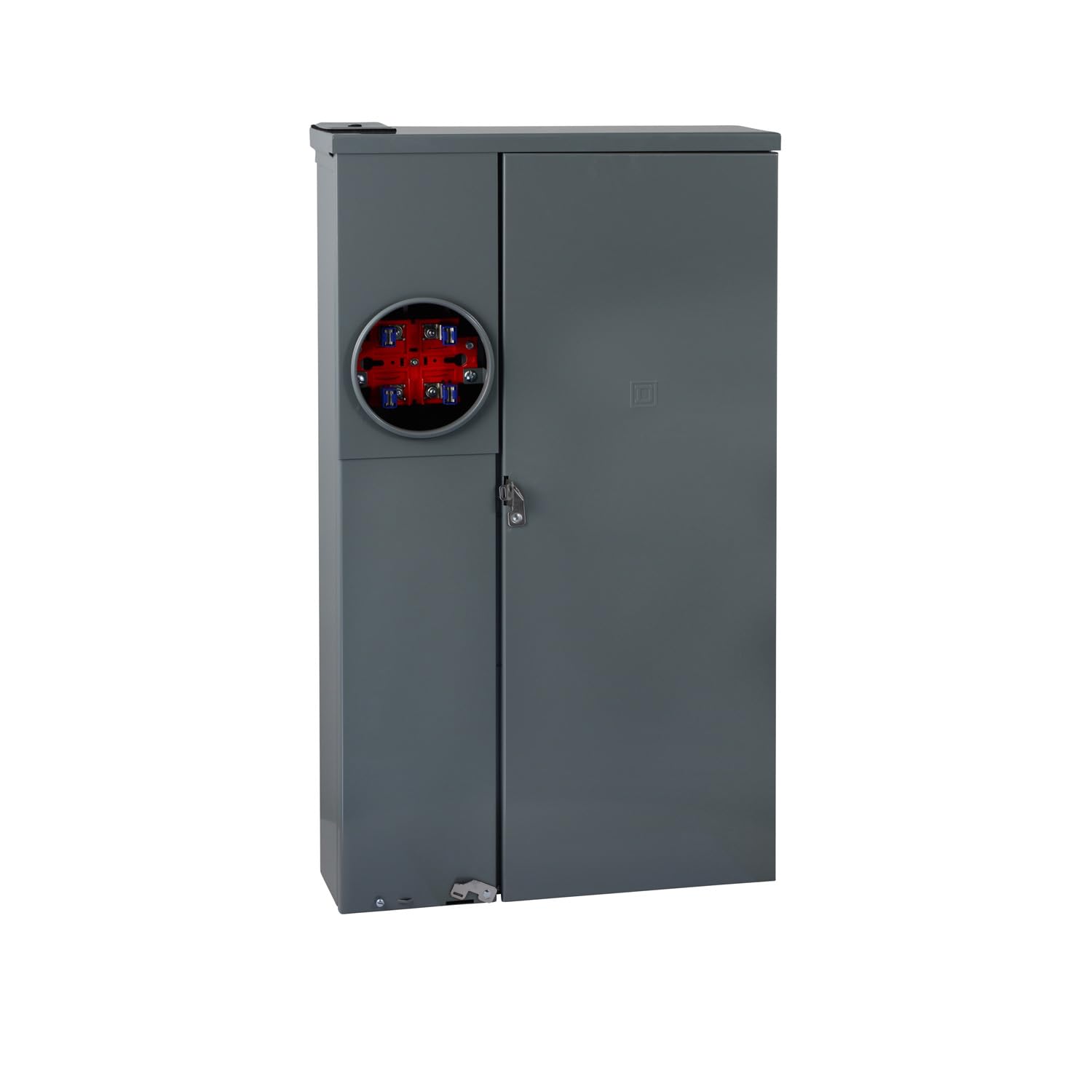
All forty-two circuits in one box — the pick for the buyer who never wants to open the door on a full panel again.
Every space here is a circuit: 42 spaces and 42 circuits in one enclosure, with a fully distributed neutral bar for plug-on neutral breakers and field-installed CT provisions. It also accepts the SR69064A sub-feed lug kit for solar connections ahead of the main. The 200 amp main breaker is factory-installed, and the box is EUSERC-compliant like its smaller sibling.
What sells people on this configuration is consolidation. All the branch breakers live in one place with the service disconnect, instead of splitting across a panel and a separate meter base — the layout electricians prefer when there is room for it. It installs fast, and current-carrying terminals hold firmly once torqued. Shoppers say a missing green bonding ground screw on delivery — a small hardware miss, not a design flaw, and easily sourced before install day. Everything else holds: the latching, the alignment, the Square D parts compatibility.
If you are comparing this against the SC3042M200PS above, the difference is slot capacity. This one is 42 spaces; that one is 30 spaces with 42 circuits. Buy the one that matches the load count you are planning, not the one that happens to cost less that week.
Whole house wiring: a large home, an EV, a workshop subpanel, and a solar interconnect all wanting to land in a single enclosure with room to spare.
Small service upgrades: check the box for the green bonding ground screw on arrival and pick it up if it is missing.
Understanding the Specs
Amperage rating and service capacity
You get 200 amps of continuous service on every box here, which is the standard for modern residential electrical service — enough for an all-electric home, an EV charger, an air conditioner, and a workshop on top of everyday loads. Amperage will not separate these boxes; they all clear the same bar. Circuit count is what matters, because a 200 amp service is only as useful as the branch spaces it feeds.
Meter socket jaws and ring style
A ringless socket covers the meter blades with a solid front plate; a ring-style socket holds the glass in with a separate metal ring. Four jaws are the standard connection for a residential single-phase service. A fifth jaw is a utility-specific addition, and whether your power company requires one is the single most common reason a box gets returned — confirm the jaw count and ring style with your utility before ordering.
Feed type: overhead versus underground
Overhead feed lands the service drop on a hub fitting on top of the enclosure and runs down a mast; underground feed comes in through the bottom of the box. Some units handle both, sometimes with an adapter. Choose based on how your utility delivers power to your property, since this is not something you change after the trench or mast is already built.
Enclosure rating and disconnect placement
NEMA 3R is the outdoor rating for weather-resistant enclosures, so you want that on anything mounted outside. The disconnect — a factory main breaker — sits in the box so the whole service can be cut from outside at the meter, which is where fire, utility, and emergency crews want to reach it. A box with the disconnect integrated in the service entrance device cuts down on separate parts and keeps the whole install within a tighter footprint.
FAQ
What is a 200 amp meter base with disconnect used for?
Do I need a ringless or a ring style meter socket?
How many circuits do I actually need from the box?
Can I install one of these myself or do I need an electrician?
Does overhead versus underground feed change which box I buy?
What does NEMA 3R mean on a meter base?
Which of these is best for a solar installation?
Should I match the meter base brand to my circuit breakers?
How long will one of these boxes last?
Do I need a permit to replace a meter base with disconnect?
Final Thoughts: The Verdict
For most residential service upgrades, the 200 amp meter base with disconnect winner is the Square D RC816F200C because it combines a ringless 4-jaw socket, a factory 200 amp disconnect, and a plug-on secondary surge arrestor in one NEMA 3R enclosure that most utilities accept without question. If you want maximum future capacity in a single box, grab the Siemens MC2040B1200S, which carries 40 circuits where the winner carries 16. And if solar is in the plan for a new build, the Square D SC3042M200PS is the one that does the metering, the main disconnect, and the solar pre-wire all in one enclosure. Confirm the socket style and feed type with your utility and inspector first — that call is what decides whether your
Related Guides
