
Specs are compiled from manufacturer listings and verified buyer reviews and can change over time — please confirm the key details on the product page before buying.
A raccoon can chew through thin wire in one night, and a snake slides through anything wider than its head — which is why the wire itself, not the brand, decides whether your coop holds. The short answer: 19 gauge hardware cloth with 1/2 inch square openings (19 gauge means the wire’s thickness, and lower gauge numbers mean thicker wire) is the roll to buy. It is thick enough to resist chewing, and the half-inch gaps are tight enough to stop snakes.
I’m Mohammad Maruf — the founder and writer behind KitchPrep. This guide is built by comparing the manufacturers’ published specifications and the patterns across verified customer reviews, so you get each pick’s real strengths and trade-offs instead of marketing spin.
Below you will find seven rolls that all clear the 19 gauge bar, sorted by what they actually do best — a 48 inch x 100 foot roll for big jobs, a black-coated roll for hiding a fence in plain sight, and a 24 inch x 50 foot roll for small plots — so you can pick the right 19 gauge hardware cloth the first time and never pull staples back out of a coop wall.
Our Picks at a Glance

How To Choose The Best 19 Gauge Hardware Cloth
Three numbers settle almost every purchase: the gauge, the opening size, and the roll’s total square footage. Get those wrong and you are pulling staples back out of a coop wall on a Saturday.
Gauge Is Your Chewing Barrier
Gauge is the wire’s thickness, and the number runs backwards — a lower number means thicker wire. So 19 gauge gives you a wire that holds its shape when a raccoon paws at it. It will not sag between staples the way thinner cloth does.
Thinner cloth flexes under pressure, and that flex is exactly what a determined animal exploits. That is why every roll on this list is 19 gauge. Nothing here is lighter.
Openings Decide Which Animals Get Through
A 1/2 inch opening means each square hole in the mesh measures half an inch across. That gap is small enough to shut out snakes, chipmunks, gophers and squirrels. Standard chicken wire, with its wide hexagons, does not do that job.
Smaller openings also stiffen the whole sheet, so the mesh resists bending when you lean on it. That matters on a garden fence you brush past all season.
Coating Controls How Long It Lasts Outdoors
Hot-dip galvanizing after welding means the entire finished mesh — welds included — gets dunked in molten zinc. Every joint rusts slower as a result, which is what makes underground burial practical.
Vinyl-coated rolls add a black outer jacket over galvanized steel. The jacket hides the fence visually. Several owners also mention it is gentler on bare hands than raw galvanized wire.
Quick Comparison
| Model | Best For | Roll Size | Mesh Opening | Wire | Amazon |
|---|---|---|---|---|---|
| Nueve Deer Hardware Cloth 1/2” 48” x 100′★ Best Overall | Big runs and ground burial | 48 in x 100 ft | 1/2 in square | 19 gauge, hot-dip galvanized | Amazon |
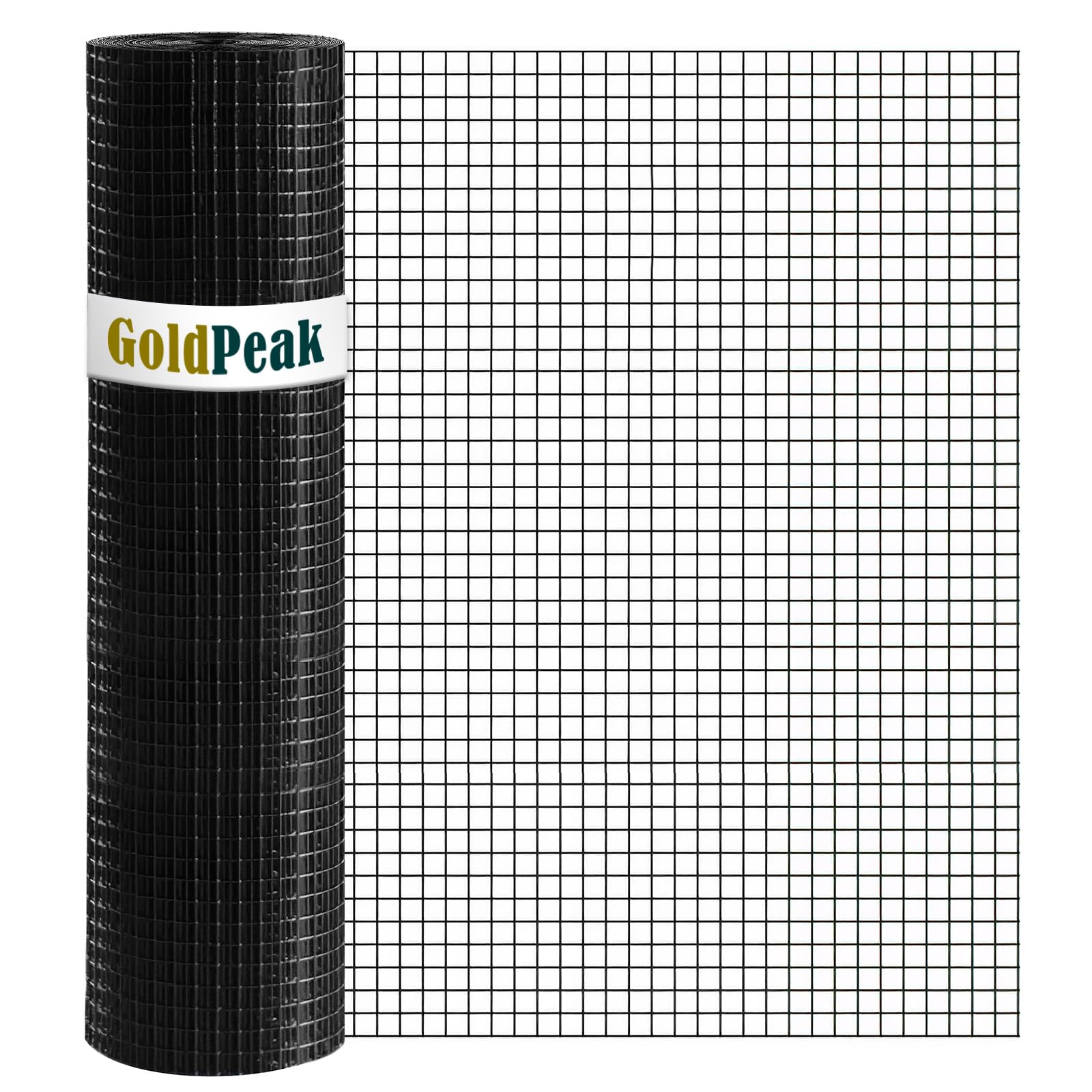
| GoldPeak Black Hardware Cloth RollDisappears From View | Fences you want to disappear | 36 in x 50 ft | 1/2 in x 1/2 in | 19 gauge, vinyl-coated steel | Amazon |
| Black Hardware Cloth 48 x 100 Ft 19-Gauge | Coops, rabbit runs, tree guards | 48 in x 100 ft | 1/2 in openings | 19 gauge, vinyl-coated | Amazon |
| SANZEUS Hardware Cloth 48in x 100ft | Long fence lines on a budget | 48 in x 100 ft | 1/2 in x 1/2 in | 19 gauge, double galvanized | Amazon |
| Gartist Hot-Dip Galvanized Hardware Cloth | Reptile-heavy gardens | 48 in x 100 ft | 1/2 in x 1/2 in | 19 gauge, double galvanized | Amazon |
| Trenk Galvanized Hardware Cloth Roll | Raised beds and buried barriers | 36 in x 50 ft | 1/2 in openings | 19 gauge, hot-dipped galvanized | Amazon |
| Salmut Galvanized Hardware Cloth 2 ft x 50 ft | Small jobs and quick patches | 24 in x 50 ft | 1/2 in openings | 19 gauge, hot-dip galvanized | Amazon |
In‑Depth Reviews
1. Hardware Cloth 1/2” Chicken Wire Fencing 48” x 100′ 19-Gauge
Our pick — over 4.5★ from 800+ verified ratings; the strongest balance of quality and price.
One 100-foot roll that wraps a whole coop run without a splice in the middle.
The Nueve Deer earns this spot on width alone: a 48 inch wide, 100 foot long roll of 19 gauge steel, so you cover a full coop wall in a couple of passes instead of piecing panels together. Set it beside the Salmut roll and the gap is plain — 48 inches wide against 24, and 100 feet long against 50.
The galvanizing is where it pulls ahead of the cheaper rolls. Hot-dip galvanizing after welding means the finished mesh goes into molten zinc, so the welded joints get coated, not just the flat strands. The maker states 15% more weld area and 10% more zinc coverage than standard mesh, aimed at the welded joints where cheap cloth rusts first. The maker also says every roll is hand-inspected four times, with a published defect rate under 0.1% for welding flaws, poor galvanizing and broken wires. Buyers who buried it for gopher and vole barriers report it still looked like new a year on.
The catch is handling. The 19 gauge wire holds its shape well, which is the point, but the cut edges are genuinely sharp and the roll carries real weight. Gloves come in the box, and you should wear them.
What earns the top spot
- 48 in x 100 ft means far fewer seams — the Salmut roll of the same gauge is half the width and half the length
- Hot-dip galvanized after welding, with 15% more weld area and 10% more zinc coverage than standard mesh, per the maker
- Burial-rated: owners run it underground for gopher and vole barriers and report no rust problems
- The maker reports four manual inspections per roll and a published defect rate under 0.1% for galvanizing faults
What to know before ordering
- Edges are sharp straight off the roll — the included gloves are not a courtesy, they are necessary
- It is a big, heavy commercial-grade roll, which is overkill for a small patch job
Buy this if: you are fencing a full coop run, a long garden perimeter, or trenching a buried barrier and want to avoid splicing rolls together.
Think twice if: your project is one small bed or a single window screen — you would be paying for footage you will never unroll.
2. GoldPeak Black Hardware Cloth Roll 1/2 inch 36in. x 50ft. 19 Gauge
A black jacket that hides the fence and softens the wire against your hands.
This roll wins its place on the coating: galvanized steel wire wrapped in black vinyl, which is two layers of rust defense plus a finish that stops reflecting light. Standing back from a finished run, owners repeatedly describe it as looking like it is not even there — unlike the bright silver Nueve Deer, which announces itself as a metal grid from twenty feet away.
That coating does real work. It takes the bite out of the wire, so pulling a panel into position is easier on bare hands than raw galvanized mesh. The 1/2 inch squares stiffen the whole panel. Owners running it around coops report it holds predators out better than the wide-hexagon chicken wire it replaced.
Two honest notes. A couple of long-term users question whether the wire is a true 19 gauge, describing it as lighter than they expected — worth knowing if you are defending against something with real bite force rather than small burrowers. And the half-inch squares are too tight for hog ring clips, so plan on stapling instead. At 36 inches wide and 50 feet long, it also covers less ground than the 48 x 100 rolls above.
Where it shines: the black coating is a genuine two-for-one — better rust protection plus a fence your neighbors will not notice from the street.
The trade-off to weigh: if you need maximum coverage per roll, the wider 48 inch rolls on this list give you more square footage per pass than this 36 inch width.
Reach for this if: the fence sits in a visible spot and you want it to read as landscaping rather than hardware.
Look elsewhere if: you are hanging panels with hog ring clips — the half-inch openings will not take them.
3. Black Hardware Cloth 1/2 Inch 48 x 100 Ft 19-Gauge
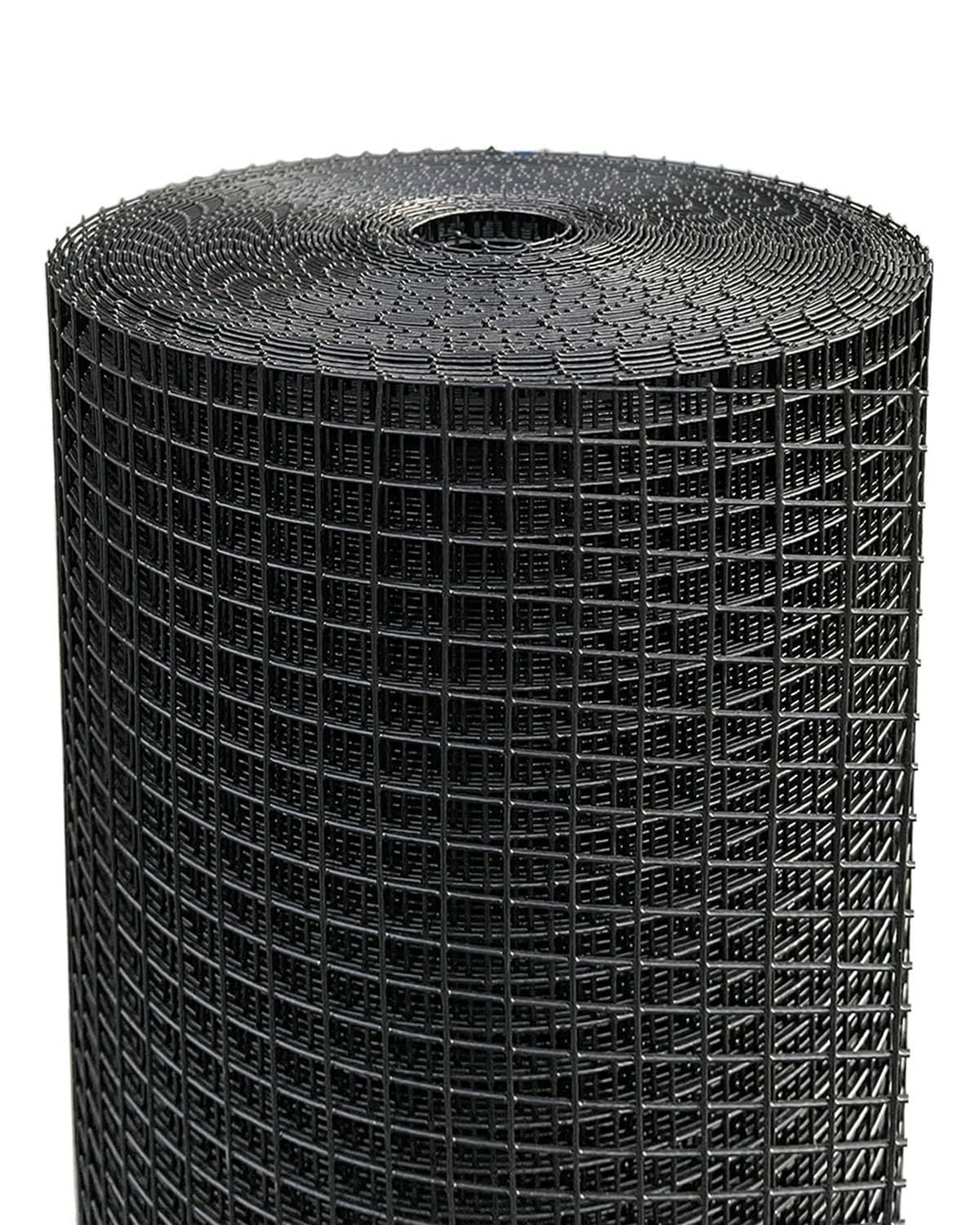
The full-size roll that still keeps a low profile against dark fencing and shadows.
Take the GoldPeak’s black finish and stretch it to a 48 inch by 100 foot roll, and you get this one — the same galvanized steel core under a black vinyl jacket, with more than twice the coverage per roll. Every extra inch of that width and every extra foot of that length is footage you do not have to patch together with a join. For a long run or a big garden perimeter, that saves a whole afternoon.
Owners put this one on rabbit runs, chicken coops and tomato fences. The black coating keeps earning its keep, staying nearly invisible from a distance — in one account from thirty to fifty feet out. The 1/2 inch openings add enough rigidity that a fence panel will not bow when you lean on it, which matters for a garden barrier you brush against all season. Most buyers cut it with aviation snips without much trouble.
The part worth knowing before you order: the roll is heavy, and owners handling it one-handed will not enjoy the process. The vinyl coating also hides surface rust from view, so you cannot easily inspect the wire underneath as the years pass. That is a fair trade for the finish, but a trade nonetheless.
What owners keep coming back to: the combination of a large roll and a finish you barely see — the two things they wanted most, delivered together.
One thing to plan for: order it with a second pair of hands available for the unroll.
Best suited to: a long fence line where you want the coverage of a 48 x 100 roll without a bright silver grid on show.
Not the one for: anyone repairing a single small panel, where the roll’s bulk is more hassle than help.
4. SANZEUS Hardware Cloth, 48in x 100ft 1/2in Mesh, 19GA Chicken Wire Fencing
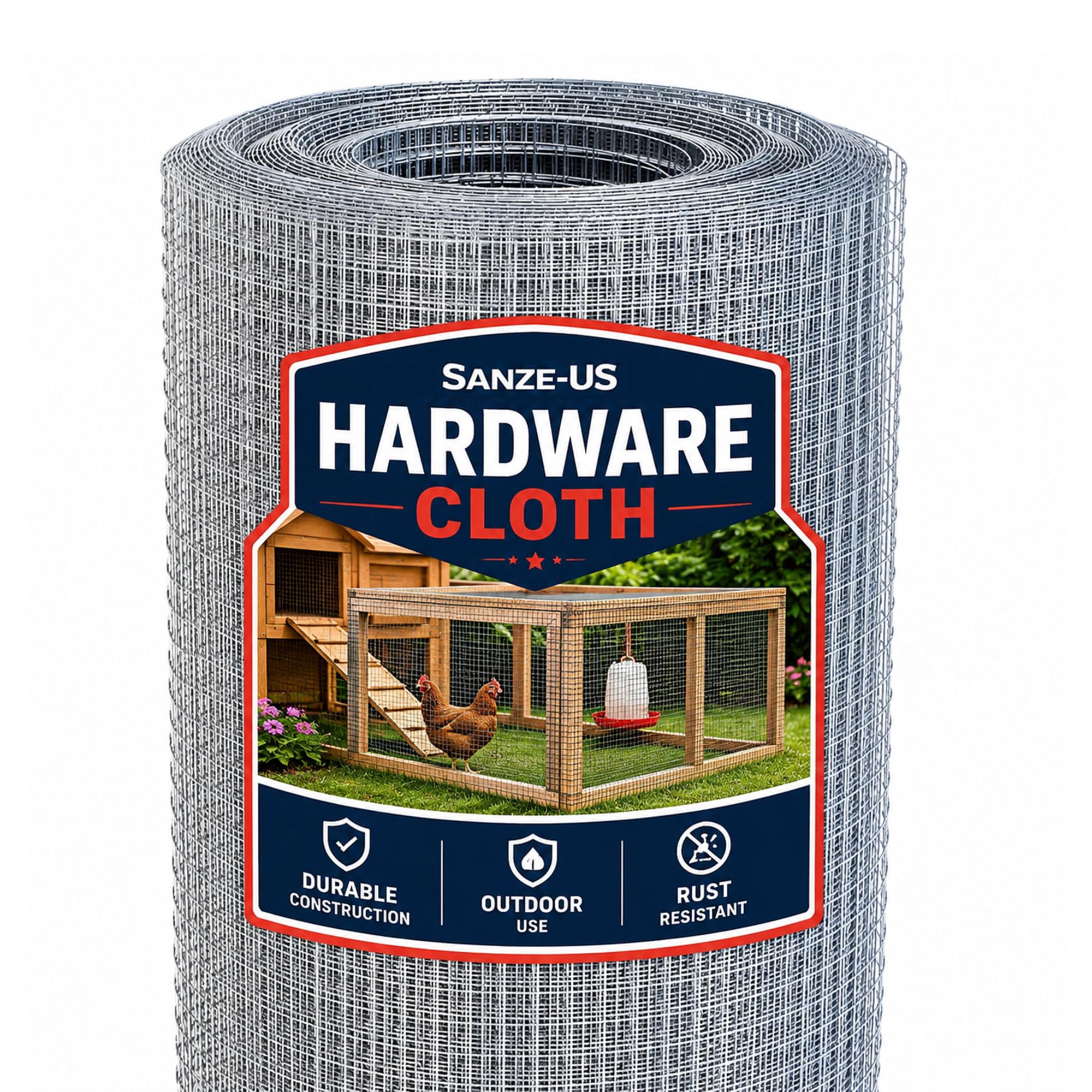
Full 48 x 100 coverage with every weld point galvanized, not just the flat wire.
Sanzeus goes after the weak point directly: welded wire rusts first where the wires cross, so this roll is hot-dip galvanized after welding. The maker describes it as double galvanized, meaning the finished mesh gets the zinc treatment at the joints as well as along the strands.
Buyers use it for chicken pens and raised planter liners, and the recurring theme in the feedback is how much mesh you get for what you pay. That is 48 inches by 100 feet of 1/2 inch mesh, enough to line a bed or wrap a coop section quickly. It also arrives wrapped in film inside a paper box — a packaging upgrade the maker added because heavy wire rolls tend to dent in transit, and the detail that stops a lot of these orders from arriving bent.
The consistent gripe is thickness. Some buyers expected a beefier wire and found this one thinner than they pictured — worth a moment’s thought if you are reinforcing a coop against something with real determination. For pest exclusion, run fencing and soil sifting, the feedback is almost uniformly positive.
What makes it a strong value
- Galvanized after welding, so the wire joints — the usual rust point — are coated too
- 48 in x 100 ft gives real coverage for a large run or a long fence line
- Film-wrapped inside a paper box specifically to reduce shipping dents on heavy rolls
- Cuts and shapes easily with wire cutters or snips
The honest caveats
- Some owners expected a heavier wire than they received
- Delivery delays have been reported here and there, though the roll itself arrived fine when it did land
Worth grabbing if: you want maximum square footage of galvanized-after-welding mesh and your main opponents are burrowers, birds and small mammals.
Pass on it if: you need a wire you can lean on hard or defend against heavy chewing — you will want a beefier-feeling gauge for that.
5. Gartist 1/2 in 48″x100′ Hardware Cloth, Hot-Dip Galvanized After Welding
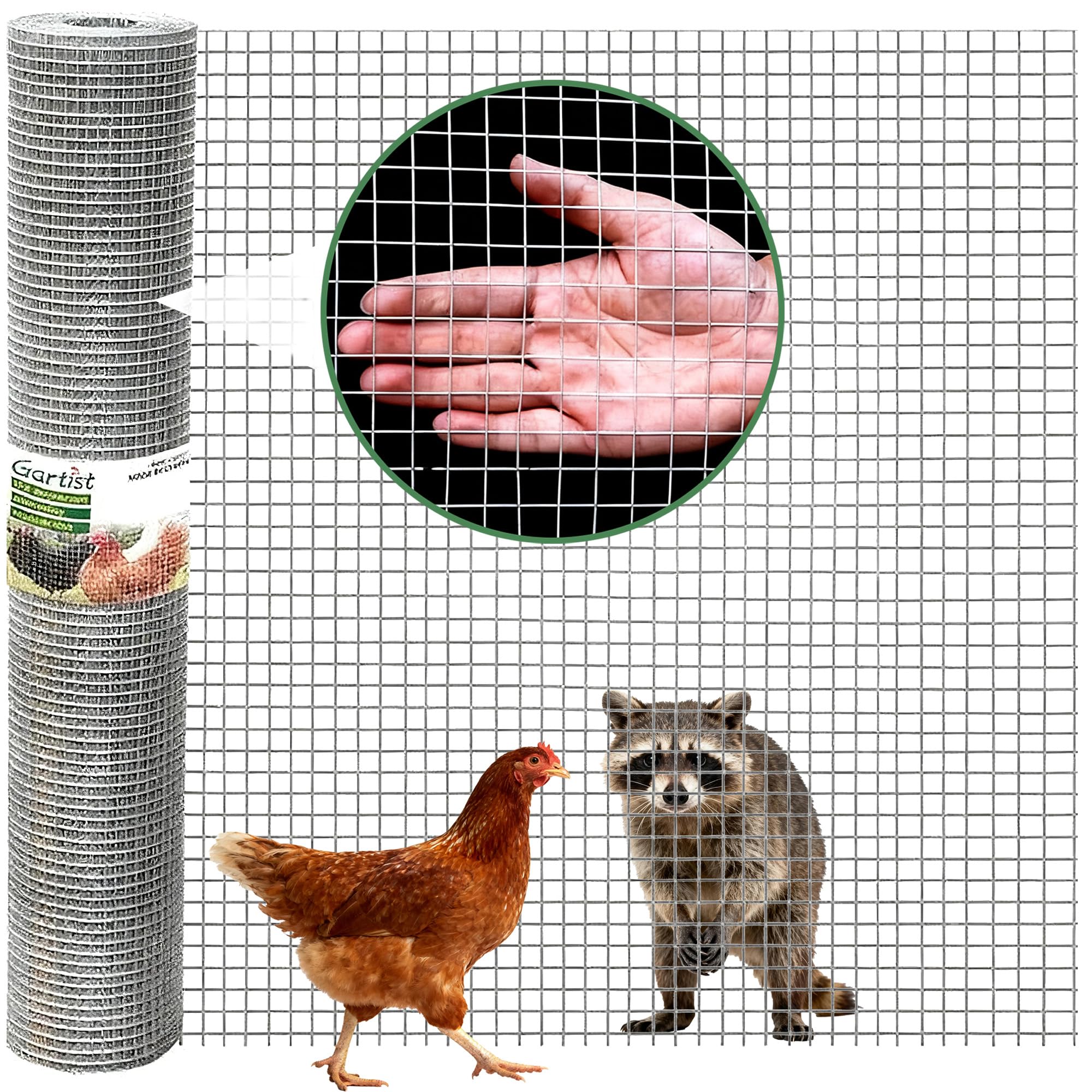
A double-galvanized roll aimed squarely at snakes, raccoons and foxes.
The Gartist makes the list for who it stops. Its 1/2 inch square openings are sized to shut out reptiles — raccoons, foxes, snakes, opossums, squirrels — where the wider openings on other rolls leave a gap a snake can use. The maker recommends digging a shallow trench and burying the fence two to three feet down for the best protection.
The build backs that up. Galvanized wire is welded into mesh first, then the finished roll is hot-dipped in zinc — two trips through the galvanizing process, producing a waterproof, rust-resistant sheet meant to live outdoors. At 48 inches wide and 100 feet long, it covers the same ground as the Nueve Deer and the SANZEUS rolls. Gardeners using it around chicken coops and raised beds consistently describe it as sturdy in place, and buyers report the roll unrolls without a fight.
Two things to check before ordering. Feedback on size runs mixed, with some buyers finding the roll narrower than the advertised 48 inch width, so measure your space and confirm the panel covers it. Some users also report the galvanized coating rusting faster than expected — a reasonable trade given the price, but one to weigh if the fence will sit in persistent moisture.
The genuine selling point: double galvanizing plus an opening size chosen specifically to beat back reptiles, which is a more targeted job than the general-purpose rolls above.
What to verify first: measure your fence line before ordering and confirm you have enough width for the bury depth you want.
Pick this when: snakes and raccoons are your actual problem and you plan to trench the bottom edge into the ground.
Look at alternatives when: you need a roll where every inch of the advertised width is guaranteed — the feedback here suggests some rolls run narrow.
6. Trenk Galvanized Hardware Cloth Roll 1/2 inch 36 x 50 Ft 19 Gauge
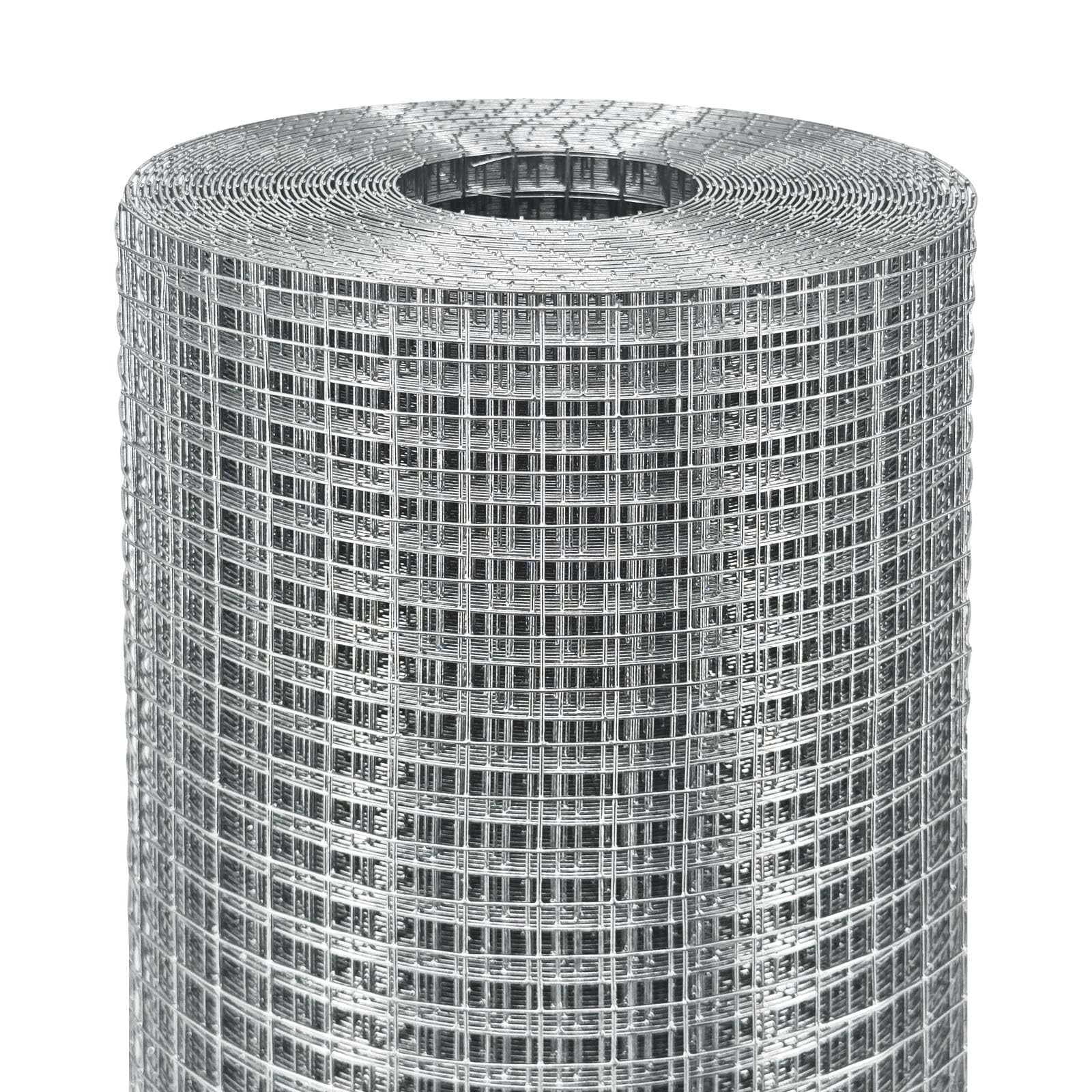
The roll gardeners bury under raised beds to stop gophers cold.
If your problem is underground, reach for this one. The maker states the Trenk has a 10% larger welding area and 15% more zinc coating than comparable mesh — exactly what you want in a barrier that spends its life under soil. The wire is galvanized annealed steel, hot-dipped for corrosion resistance, and the maker explicitly rates it for underground use over many years.
Owners use it as a liner beneath raised beds to block gophers and moles. The feedback describes mesh that stays flat and keeps a clean arc when unrolled, so you are not fighting a coil that wants to curl back on itself. The 1/2 inch openings work well for root barriers, and the 50 foot length lines several beds. One long-term buyer with eight-by-four beds noted there was enough overhang to tuck the mesh under the metal bed edges for a clean, secure finish.
Just one thing to keep on your radar. Most owners mention sturdy, well-made mesh, but an occasional roll arrives defective with weak or broken sections — a batch issue rather than the norm, and one worth checking over on arrival before you start cutting. The 36 inch width is also narrower than the 48 inch rolls above, so work out your bed dimensions first.
Why gardeners like it
- Rated for underground burial — ideal as a gopher and mole barrier under raised beds
- The maker cites a 10% larger weld area and 15% more zinc coating than comparable hardware cloth
- Lies flat and holds a consistent arc when unrolled, so panels go up cleanly
- Multiple inspections per roll targeting poor welds, weak galvanizing and broken wires, per the maker
What to check first
- Width is 36 inches, so calculate your bed dimensions before ordering
- A rare roll has arrived with weak sections — inspect it before you start the install
The right choice for: garden beds where the threat is coming up from below, and you want mesh engineered to stay buried.
Skip the upgrade only if: your project is above ground and a wider roll would save you more seams.
7. Salmut Galvanized Hardware Cloth 1/2 in. x 2 ft. x 50 ft. 19-Gauge
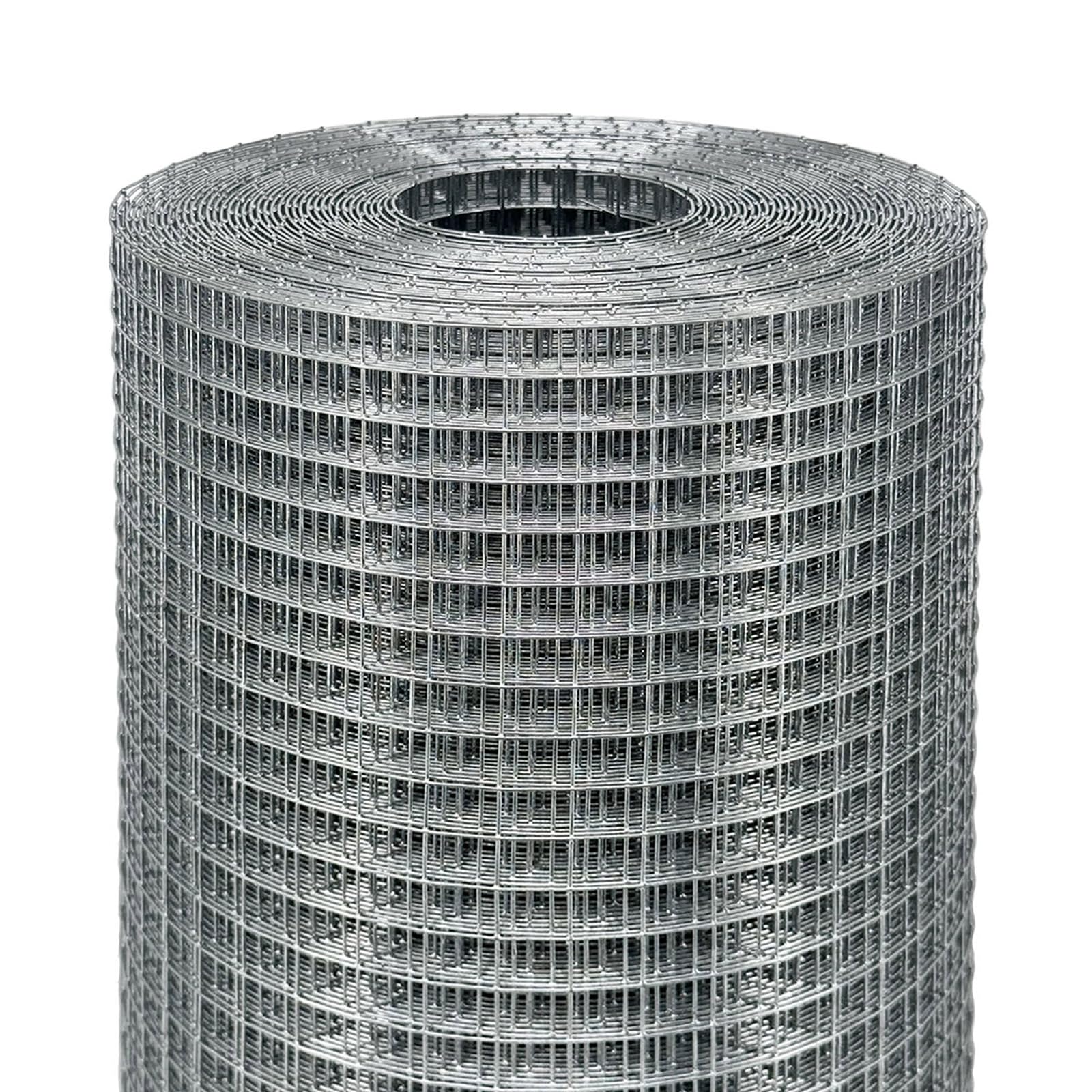
The narrow roll for patching gaps and wrapping runs without unrolling a monster.
Not every job needs a hundred-foot roll, and the Salmut is the one for the rest. At 24 inches wide and 50 feet long it is half the width and half the length of the Nueve Deer, so it fits smaller gaps, wraparound coop skirts and quick repairs without wrestling a wide roll into a tight corner. Same 19 gauge thickness, same 1/2 inch openings.
It arrives hot-dip galvanized for rust and corrosion resistance and packed in a sturdy carton to survive the trip. A pair of gloves is in the box — a small but appreciated detail given how sharp this stuff is. Customers note it works well reinforcing the upper section of a run and keeping rabbits and squirrels out, with the mesh staying true to shape when cut rather than twisting into a mess.
The one downside is nearly universal to hardware cloth, but note here: the top and bottom edges are very sharp. The gloves are the difference-maker. If you would rather work bare-handed, plan on starting this job somewhere you will not mind a scrape.
The case for it: a manageable size and thickness for the small, awkward jobs a 48 inch roll makes harder.
Where it falls short: if your fence line is long, you will burn through the 50 feet fast and end up wishing you had a bigger roll.
Best for: small patches, coop top covers and short skirt barriers where a full-size roll is overkill.
Not ideal if: your project runs longer than fifty feet in a straight line — the two large rolls at the top of this list will serve you better.
Understanding the Specs
Gauge and Mesh Opening
Gauge is the wire’s thickness, and lower numbers mean thicker wire. At 19 gauge, the wire resists bending under paw pressure and does not sag when stapled. Pair that with a 1/2 inch opening — half an inch across each square — and you have mesh that keeps small mammals, snakes and burrowers out while staying rigid enough to hold its shape. Wider openings in thinner wire, the classic chicken wire profile, flex and tear under a determined animal.
Coating and Roll Size
Hot-dip galvanizing after welding coats the finished mesh including the welds, so the joints rust slower than on pre-galvanized cloth. Some rolls add a vinyl jacket over galvanized steel for a second layer of rust protection plus a finish that hides the fence. Roll size is the number that decides how much work you do: wider and longer rolls mean fewer seams and joins, while narrower, shorter rolls suit small patches and patching jobs.
FAQ
What does 19 gauge mean on hardware cloth?
Will a 1/2 inch mesh keep snakes and chipmunks out?
Can I bury hardware cloth underground?
Is hardware cloth better than chicken wire for a coop?
What is the difference between the galvanized and black vinyl coated rolls?
How do I stop the sharp edges cutting me?
What width and length roll should I buy for a chicken run?
Can I cut hardware cloth with scissors?
Do I need to dig a trench to install hardware cloth as a barrier?
Final Thoughts: The Verdict
If you are fencing a full run, lining raised beds, or trenching a barrier, the Nueve Deer Hardware Cloth 48” x 100′ is the safest single pick — hot-dip galvanized after welding, 19 gauge, and a 48 inch by 100 foot roll that covers serious ground without a splice. Want the black finish that hides the fence in plain sight? Grab the Black Hardware Cloth 48 x 100 Ft, which gives you the same full-size coverage with a low-profile look. And for small patches, coop top covers or short skirts where a full roll is more than you need, the Salmut Galvanized Hardware Cloth 2 ft x 50 ft is the one to reach for.
How We Picked
We do not accept paid placement. Every pick is matched to a real buyer and a real use-case; we do not hands-on test units.
Sources & Methodology
Specifications: manufacturer listings and product documentation. Review insights: verified customer reviews, as of September 2026. Pricing: not shown on this page (it changes often); check the current price via the retailer link.
As an Amazon Associate, KitchPrep earns from qualifying purchases. This does not affect which products we feature.
Related Guides
