
Specs are compiled from manufacturer listings and verified buyer reviews and can change over time — please confirm the key details on the product page before buying.
If you need to carve a bedroom out of a studio, hide a water heater, or block a west-facing window at 4pm, a foldable bamboo screen does the job without a single nail in the wall. The catch is that bamboo dividers look identical in photos and behave nothing alike in a living room. Some stand rock-solid on carpet, some wobble the moment a cat brushes past, and one rolls up like a window blind. This guide sorts the real differences.
I’m Mohammad Maruf — the founder and writer behind KitchPrep. This guide is built by comparing the manufacturers’ published specifications and the patterns across verified customer reviews, so you get each pick’s real strengths and trade-offs instead of marketing spin.
Height, panel count, and how tightly the bamboo is woven decide whether a screen actually blocks sightlines or just suggests them. Below, nine panels are ranked by what they genuinely do well, so you can match one to your room and your budget. The shortlist below starts with the widest screen here — 106.3 inches across — for covering a full patio door in one piece.
Our Picks at a Glance

How To Choose The Best Bamboo Room Divider
Think about what you need the screen to do before you look at color. A divider that creates a dressing corner and one that separates a home office from a kitchen need different heights and different panel counts. Get those two numbers right and the rest is finish and folding.
Match the height to the space you are trying to hide
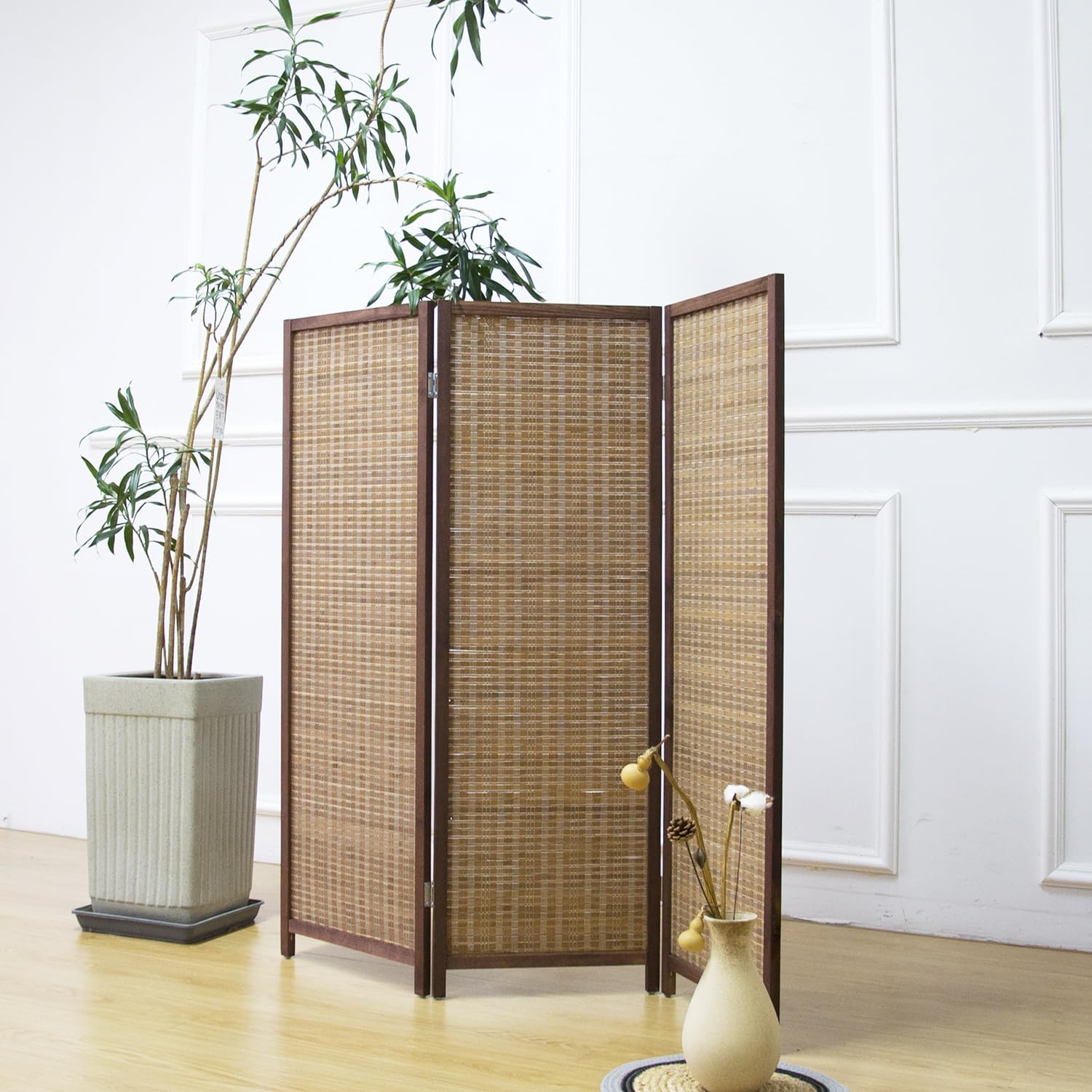
A screen only conceals what it physically stands in front of. If you want to block a seated person from view, a tall panel around six feet works; if you are screening a low window or a pet station, a shorter four-foot screen does the job without dominating the room. The Furnnylane short divider stands 47.2 inches tall, which is exactly the point — it tucks into window sills and corners where a tall wall of bamboo would feel heavy.
Count the panels against the width you need to cover
Panels hinge together, so more panels mean a wider wall and more ways to fold it into an L or zigzag shape. A four-panel screen gives you a compact footprint for small rooms, while a six-panel model stretches into a genuine partition. Width is the number that decides whether you cover a doorway or just decorate beside it — and more panels also mean more folding flat when the screen goes into storage.
Decide how much privacy you actually want
Woven bamboo lets air and some light pass between the sticks, so it reads as a soft visual barrier rather than a solid wall. If you need to stop silhouettes showing through backlighting, look for a tightly woven panel or plan to layer something behind it. A screen described as blackout or light-blocking will hide more than a decorative panel with a printed design on it.
Quick Comparison
| Model | Best For | Height | Panels | Weight | Amazon |
|---|---|---|---|---|---|
| Dkeli 6 Panel Bamboo Mesh Divider★ Best Overall | Privacy that blocks patio glare | 71″H | 6 | 27.3 lb | Amazon |
| Furnnylane 3 Panel Short DividerBest for Small Spaces | Small corners and window sills | 47.2″H | 3 | Under 8 lb | Amazon |
| JOSTYLE 6-Panel Folding ScreenBest Wide Coverage | Hiding utility fixtures fast | 70.9″H | 6 | — | Amazon |
| vidaXL Bamboo Partition Wall | Rolling away when not needed | 64.96″H | 6 | — | Amazon |
| PawlaBay 4 Panel Bamboo Screen | Carving a bedroom out of a studio | 67″H | 4 | Under 15 lb | Amazon |
| Legacy Decor 6 Panel Woven Screen | Large shared rooms and clinic use | 71″H | 6 | — | Amazon |
| HOMSCREENER Hand-Made Bamboo Divider | Splitting into two separate screens | 67″H | 6 | — | Amazon |
| Furnnylane 6 Panel Bamboo Divider | Renters who rearrange often | 67″H | 6 | Under 21 lb | Amazon |
| MyGift Cherry Blossom Divider | Decorative statement piece | 68.9″H | 4 | 9.7 lb | Amazon |
In‑Depth Reviews
1. Dkeli 6 Panel Bamboo Mesh Room Divider, 72 Inches High
Our pick — 4.5★ from 900+ verified ratings; the strongest balance of quality and price.
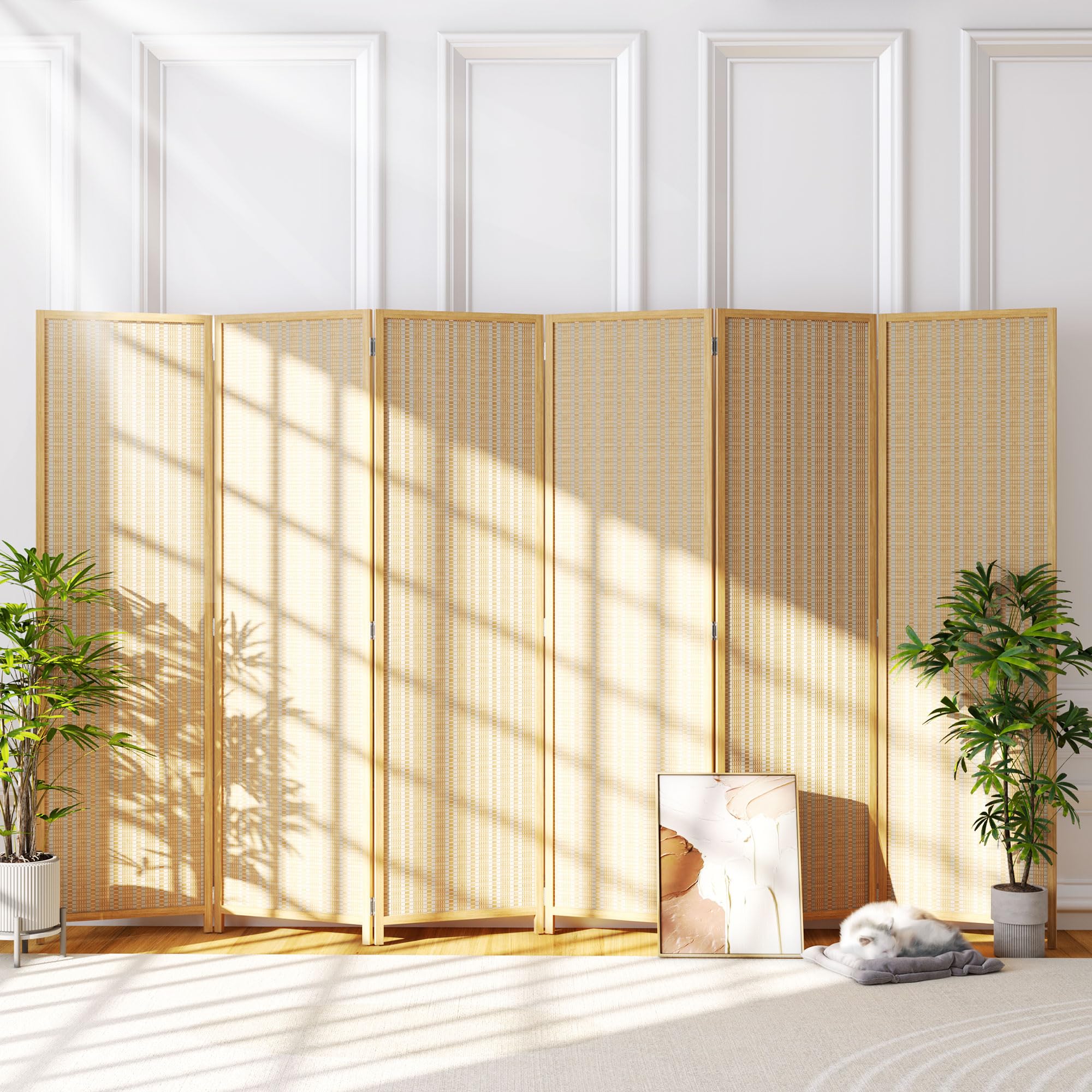
The widest screen here at 106.3 inches, built to block glare from a full patio door.
Start with the size, because this is the widest divider in the group: unfolded it measures 106.3 inches across and 71 inches tall. That is more than double the width of the Furnnylane 3-panel short screen, which stretches to 46.1 inches wide by 47.2 inches high. If you are trying to cover a full patio door or split a long room, that extra span is the whole reason to pick this one — you are not buying a second screen to fill a gap.
Each of the six panels stands 72 inches high and 17.7 inches wide, and the whole thing weighs 27.3 pounds. Heavy enough to stay put on carpet, light enough that one person can drag it across a room and refold it flat for storage. The frame is bamboo and pine, hand-finished by carpenters, with stainless steel hinges joining the panels and tightly woven wicker strips that block nearly all light.
What wins people over here is the build. The craftsmanship draws by far the most praise of any trait on this screen — owners call it sturdy and well made, and plenty single out the quality by name. The look lands too: it reads better in person than on a product page, the natural color sits easily in most rooms, and the price feels honest for what arrives. The honest split is on privacy — the weave cuts light well, but it is not a solid door, and backlit silhouettes can still show through.
Where it earns its keep
- Widest coverage in the lineup at 106.3″W x 71″H — one screen covers a full opening
- Hand-finished bamboo and pine frame with stainless steel hinges
- 27.3 lb keeps it grounded but still movable by one person
- Folds completely flat for storage between seasons
What to weigh first
- Woven panels cut light but are not fully opaque
- The black finish is the only option for this six-panel build
- At 27.3 lb it is a two-trip job to carry up stairs
Buy it when: you need to block a bright window, a patio door, or a whole side of a room and want the screen to stay standing once you set it down.
Look elsewhere when: you want a screen that disappears into the decor rather than dividing it — this one is large and it knows it.
2. Furnnylane 3 Panel Short Bamboo Divider, 3.95 FT Tall
47.2 inches tall and under 8 pounds — sized for a window sill, light enough to move with one hand.
Three panels, 47.2 inches tall, 46.1 inches wide when fully expanded, and each panel 47.2″H x 15.35″W. That size is deliberate — it fits under a window, into a study corner, or across a narrow aisle without eating the room. Next to the Dkeli above, it is the size of about one of that screen’s panels doubled, which is precisely why it works in apartments where a six-foot wall would feel like a second door.
Under 8 pounds, and it arrives fully assembled. You unfold the W-fold, set it down, and you are done. The frame is solid pinewood with reinforced hinges and non-slip base mats, and the bamboo panels are hand-sanded with no chemical adhesives or paints. Folds back down into a compact shape that slides into a closet or under furniture.
The thing everyone raves about is simple: it does what a divider is supposed to do. Functionality is the single most-praised trait on this screen, well ahead of anything else, with build quality trailing it. The flexible hinges swing both directions, so you can angle it however the corner demands. An occasional unit picks up a slight wobble on thick carpet — the kind of thing one owner put down to floor placement rather than the hinge itself.
Size does the work: at 47.2″ tall this screen hides what sits low — a pet station, a cluttered corner, a floor-level storage pile — without blocking the light in the rest of the room.
Setup cost: zero. No tools, no instructions, no assembly time to lose a weekend to.
Reach for this if: your space is tight and you need a compact, portable screen you can tuck away the moment guests arrive.
Think twice if: you need full standing privacy — at 47.2 inches tall, a standing adult is visible over the top.
3. JOSTYLE 6-Panel Folding Bamboo Privacy Screen, 6 ft
Six panels spanning 118.5 inches, fully assembled with no tools required.
Here is the number that separates this from every four-panel screen on the list: 118.5 inches wide and 70.9 inches tall when open, with each panel measuring 19.8 inches across. That is a genuine partition wall rather than a decorative accent. Six panels also gives you more fold shapes, so you can zigzag it around a corner instead of parking it in a straight line.
Bamboo and wood throughout, stainless steel hinges that let the panels unfold in either direction, and a strong wooden frame that stands freestanding without wall mounting. It arrives ready to use — no installation, no hardware to hunt down. When you are done with it, the whole screen folds flat into a compact column for storage.
The look is the headline. Appearance draws far more praise than any other trait on this divider, with value and everyday function following behind. Owners use it in utility rooms to hide furnaces and water heaters, in garages, and as an instant room divider on moving day. The recurring caveat is privacy: the woven bamboo is somewhat transparent, so bright light behind it will still read through. A few also mention small splits in the wood at the hinge drill points over time, which is worth knowing if you plan to swing the panels daily.
Best matched to: anyone covering a wide opening — a furnace alcove, a garage corner, a long studio — who wants it done in the time it takes to open the box.
Not your screen if: you need a solid blackout barrier rather than a woven one.
4. vidaXL Bamboo Partition Wall, Brown, 165 x 250 cm
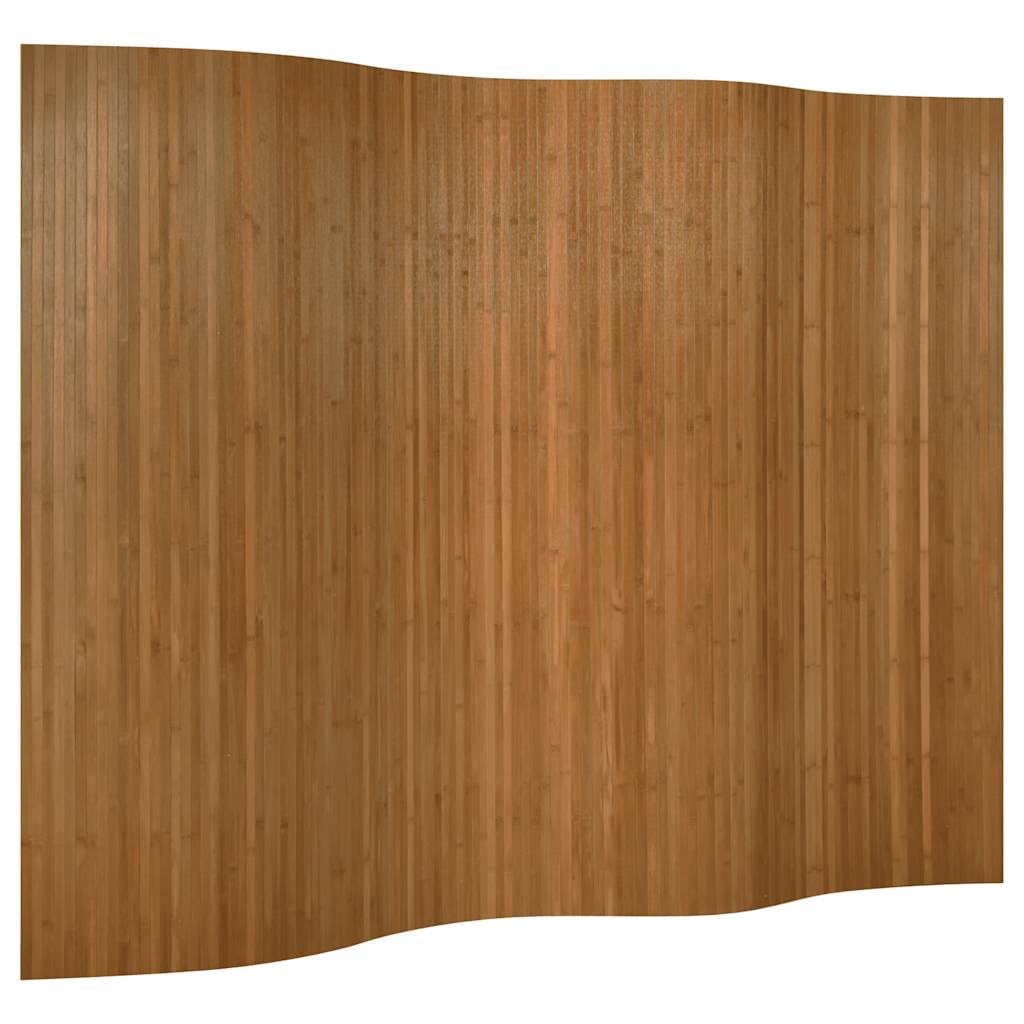
A slatted bamboo partition that rolls up like a window blind when not in use.
This one behaves differently from the folding screens above. Instead of hinged panels that creak open, the vidaXL is a slatted bamboo partition that rolls up when you do not need it, stands 64.96 inches tall, and blends into neutral interiors without shouting. Bamboo is naturally breathable and low-odor, and the slat construction wipes clean with a cloth.
It reads best as a light-blocker rather than a full wall. Owners have set it in a serpentine pattern to cut the sun from a specific window in a Florida room, then simply rolled it up when the glare passed. Others use it in front of a window or as a soft separator between zones in an open plan. The material is wood-finished and neutral enough to sit alongside most decor schemes.
Where this screen asks for patience is stability. Several buyers report it standing a little loosely and moving when bumped, and a couple note the backing differs from the bamboo face. Given its lighter build, it treats hardwood and tile more kindly than deep carpet. It also arrives as a roll rather than a rigid frame, so it is closer to a fabric screen in feel than the folding partitions above.
Why buyers keep it: it hides sunlight and low sightlines without becoming a permanent fixture — the roll-up design means the screen lives in a closet most of the year.
The honest catch: it is not built for high-traffic corners, so treat it as a light-duty sun screen rather than a wall.
This suits you if: the sun through one window is the problem and you want something that takes up almost no room the rest of the time.
skip it if: you need freestanding rigidity or a full wrap-around partition that stays up year-round.
5. PawlaBay 4 Panel Bamboo Room Divider Screen, 5.6 FT
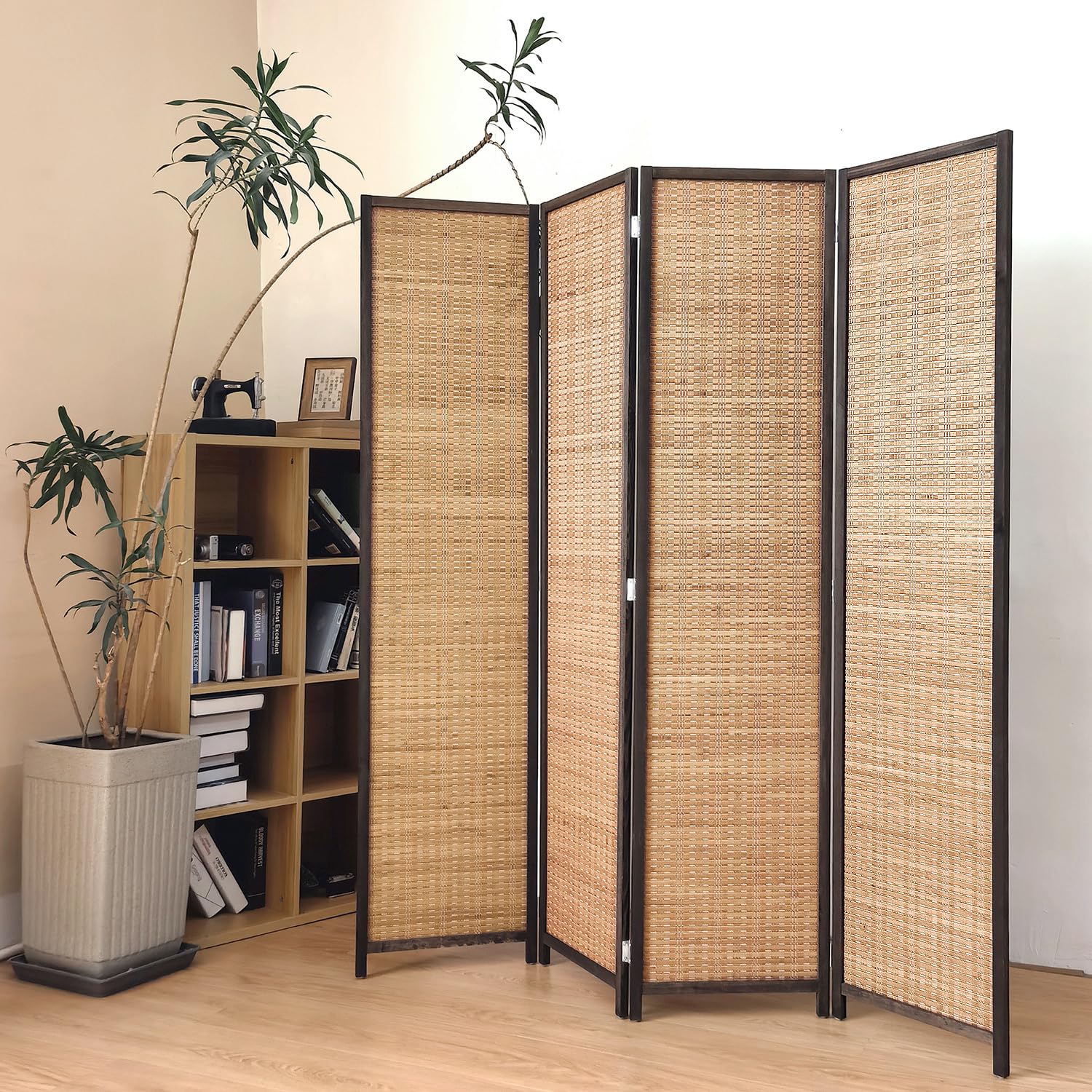
Four panels, 67 inches tall and 61.5 inches wide, that split a studio into two zones with no assembly.
Full size when open: 67 inches tall by 61.5 inches wide, with each of the four panels measuring 67″H x 15.38″W. That is a screen tall enough to give a seated desk worker real separation from a living area, but narrow enough to unfold in the middle of a studio. It arrives fully assembled — unfold the W-fold accordion frame and place it. Under 15 pounds, so moving it from the bedroom side to the kitchen side is a one-person job.
The frame is hand-finished pinewood with reinforced hinges and non-slip base pads, and the woven bamboo panels add strength. No chemical paints, no synthetic glues, no toxic fittings. The whole thing folds down compactly for storage between uses.
What buyers praise most is quality — it is the single most-mentioned trait on this screen, with privacy coming in second. Owners describe it as sturdy, full height, and standing well once placed, and one describes converting a studio into something that feels like a one-bedroom setup. One catch worth flagging in advance: the divider is freestanding, so it needs a slight angle when you unfold it — open it completely flat and it can tip. Treat the hinge angle as part of the setup, not an afterthought.
Why this earns its place
- 67″ x 61.5″ covers a genuine room split at 5.6 feet tall
- Fully assembled — no tools, no instructions, no downtime
- Under 15 lb keeps repositioning easy
- Woven bamboo panel with a hand-finished pinewood frame
Worth knowing before you buy
- Must be set at a slight angle to stand safely — fully flat, it can topple
- Panel build is on the lighter side of sturdy
- Four panels mean a narrower span than the six-panel screens above
Made for: studio and loft dwellers who need a freestanding wall between two functions and want it standing in seconds.
Not ideal for: anyone who will unfold it completely flat against a wall — this one wants an angle to stay upright.
6. Legacy Decor 6 Panel Woven Bamboo Screen
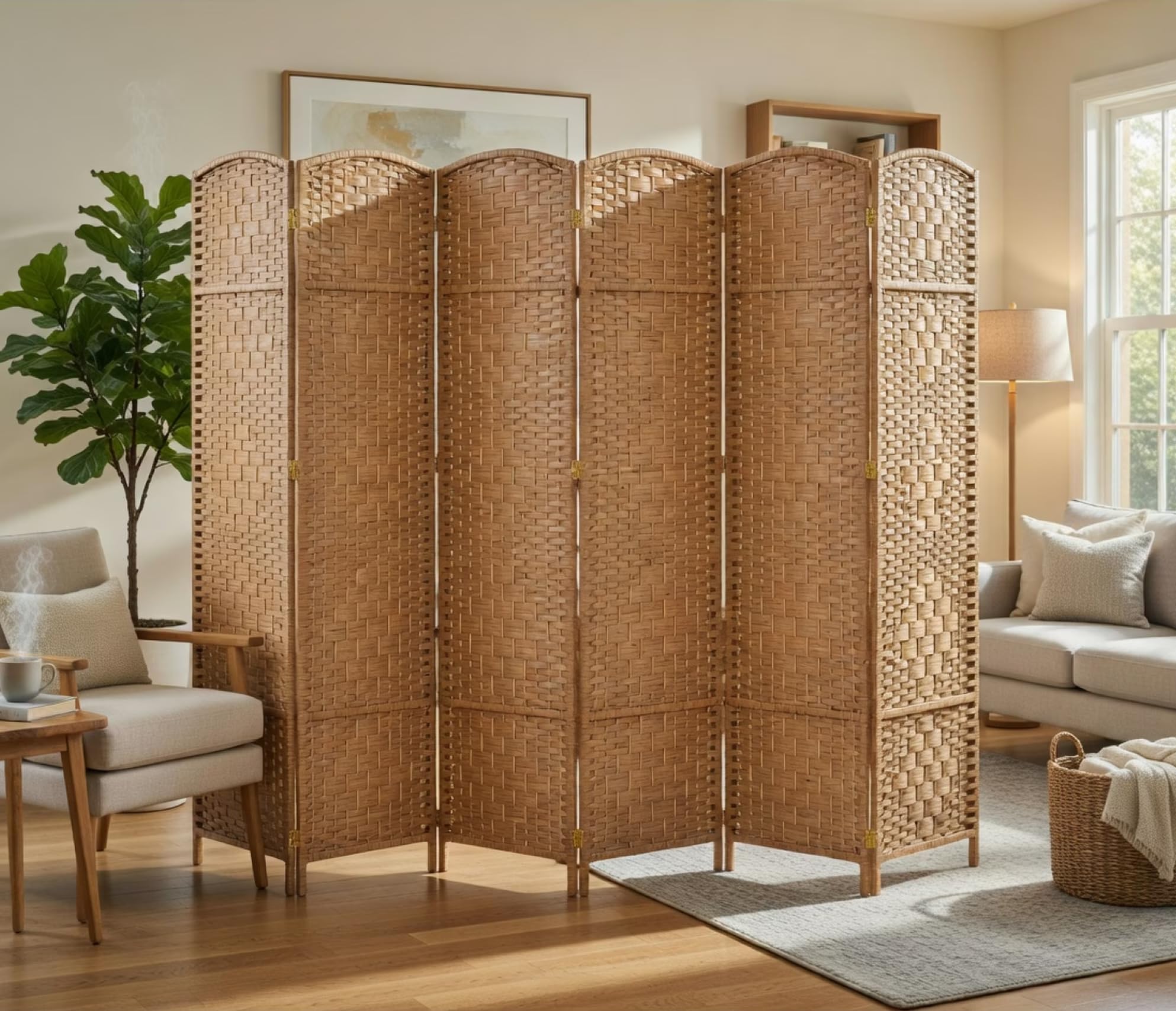
Six hand-woven bamboo panels spanning 104 inches on a Paulownia hardwood frame.
Six panels, 71 inches high, 104 inches wide, with a 3-inch leg height that lifts the weave off the floor. The frame is warp-resistant Paulownia hardwood, and the diamond-weave panels are handcrafted from natural bamboo fibers. It is free standing, needs no assembly, and folds flat when you want it out of the way — the same fold-flat trick the JOSTYLE uses, but on a hardwood frame rather than pine.
What owners notice first is the look — appearance is by far the most-praised aspect on this screen, well ahead of the second-place trait, everyday function. It works as a virtual meeting backdrop as easily as a room divider, and buyers screen cat litter boxes and open closets with it. The light, portable build makes it easy to reposition on a whim. The weave is the catch: it is not total privacy, and owners describe needing to drape something behind it if they want to block silhouettes fully.
Sturdiness splits opinion here. Some call it sturdy and worth the price; others describe it as flimsier than the photos suggest. For a large shared room — a clinic, a school office, a warehouse-style studio — the 104-inch width is hard to match at this level, and that span is usually the deciding factor.
The right call for: wide, light-filled spaces where you want the screen to look intentional rather than utilitarian.
Look past it if: you need a privacy wall that holds up to daily bumping — this one is built light.
7. HOMSCREENER Hand-Made Natural Bamboo Room Divider
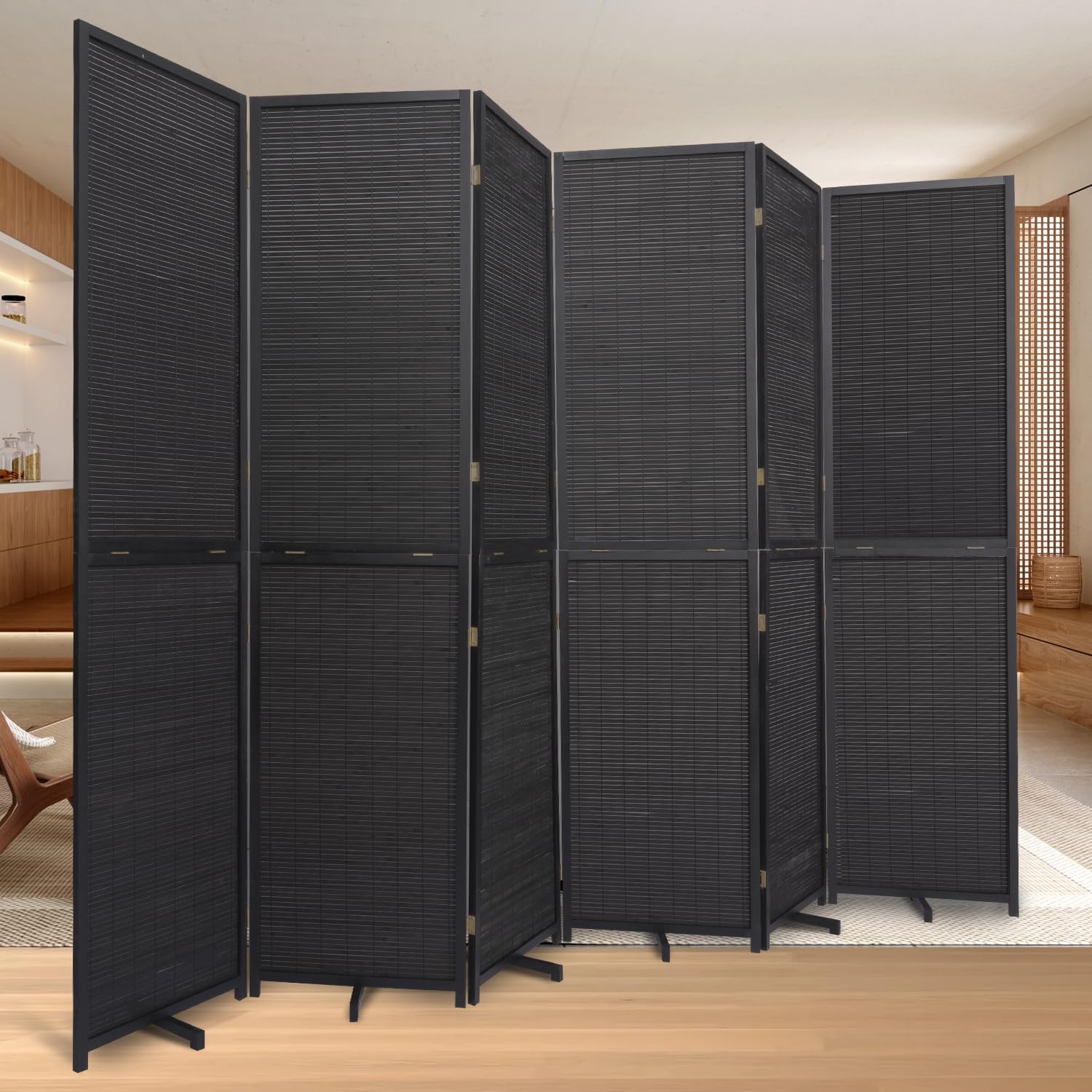
Six panels that detach at a link into two independent half-screens — the only split design on this list.
Six panels, 67 inches high by 106 inches wide when fully unfolded. The unusual part is the hardware: the panels detach at a link so the divider breaks into two independent half-screens. That means you can conceal one litter box across the room while the other half wall comes apart to hide a puppy hutch, or split it into two narrower partitions for opposite ends of a studio. Made entirely from natural bamboo, handcrafted, and tightly woven to block nearly 90% of light.
Smooth brass hinges let you set multi-angle positions to match any corner, and the lightweight build goes wherever you need it. When it is not in use, the whole thing folds flat into a 4-foot column. Pre-assembled with hardware and a guide, with setup running about 20 minutes if you follow the directions.
Assembly is where this one asks for attention. The instructions are thin, several owners mention misreading the pole orientation on the first pass, and — in one case worth naming — a unit turned up with parts that did not fit as shipped. When it goes together cleanly, owners call it sturdy and effective for privacy: it hides what sits behind a desk and fits into tight apartment corners without drilling. The scoring reflects that hit-or-miss assembly experience rather than a bad screen.
The unique value: the 2-in-1 split means one purchase covers two separate privacy problems in one home.
Small print: budget extra time for the setup, use the listing photos to orient the poles, and keep the included tool handy for the first tighten.
Trust it for: flexible coverage where one large screen and one small screen are both needed — pet corners, art studios, split living zones.
Give it a pass if: you want a zero-tools, zero-thinking setup — this one rewards patience during assembly.
8. Furnnylane 6 Panel Bamboo Divider, 5.6 ft Tall

Six panels, 67 inches tall, that stay standing on hardwood without a wobble.
Sixty-seven inches high, 92.1 inches wide, 15.35 inches per panel — big enough to separate a dining area from a living room, small enough to partially fold into a studio corner. Hand-sanded solid pinewood frame, reinforced metal hinges, non-slip base pads, and a bamboo panel that is smooth to the touch and splinter-free. Under 21 pounds, so one person can move it without help.
The dimension that keeps it planted is easy to miss: the 3/4-inch square bamboo framing extends out as 2-inch legs, and each leg gets a furniture glide. Owners using it on hardwood report the glides slide smoothly and the screen holds without tipping when a cat or a kid brushes past. It arrives fully assembled — unfold, extend, done.
Value is the headline here — it is the most-praised trait on this divider, with build quality just behind. Buyers see it as the sensible mid-tier pick for apartment living, splitting a staff area from a patient waiting spot, or shaping a home office out of a corner. The one hinge limitation to plan around: the hinges swing one direction only, so you cannot fold it into quite as many layouts as the dual-direction screens above. The other thing owners flag is the chrome hinge finish against the darker wood, which reads as a visual clash to some eyes.
Why renters pick this one
- 67″ x 92.1″ of coverage from a no-assembly screen
- Under 21 lb, movable by one person
- 2-inch leg extensions with furniture glides on hardwood floors
- Natural bamboo and pinewood with no paints or synthetic glues
The trade-offs to weigh
- One-way hinges limit how many fold shapes you can make
- Chrome hinge finish stands out against the darker frame
- Woven panels are not fully light-blocking
Pick this when: you are renting, you rearrange furniture often, and you need a screen that installs itself and stays upright on smooth floors.
Skip when: you want to fold the divider into wraparound or L-shaped configurations — the one-way hinges stop short of that.
9. MyGift 4-Panel Cherry Blossom Folding Bamboo Divider

The one you actually want on show when the screen is not doing anything.
Four panels, 68.9 inches high by 63 inches wide, 0.7 inches thick, 9.7 pounds. That weight is the lightest of any screen here, and it lands in a bamboo frame wrapped around painted panels of cherry blossoms and lotus flowers. Where the Dkeli leads with a solid woven wall, this one leads with the artwork — the finish is a design printed onto the bamboo rather than a raw weave.
Six feet of height gives you real separation when you need it, and the tightly spaced bamboo slats provide the privacy. Folded flat, the panels stack together for storage. It arrives assembled. This is the divider that works as a photographic backdrop, a Feng Shui-inspired corner piece, and a room splitter at once.
The painting and finish are the feature everyone raves about — appearance is far and away the most-praised trait on this screen, with sturdiness trailing. Buyers describe the construction as feeling like a much pricier piece, and it survives being knocked against walls. The color note is worth naming: the cherry blossom print leans orange on several panels rather than the pink you might expect, so check the finish against your room palette before ordering.
Perfect for: anyone treating the divider as decor first and a partition second — bedrooms, studios, and photo backdrops where the print carries the room.
Wrong pick if: you need maximum width, solid blackout, or a cherry-blossom pink that matches a specific shade — the color runs warm.
Understanding the Specs
Panel count and overall width
The number of panels hinges together to set the widest span a divider can cover. A four-panel screen is compact and portable; a six-panel screen stretches into a real partition. The width matters more than the panel count alone — a six-panel screen at 92 inches wide covers a doorway, while a three-panel screen at 46 inches covers a corner. Pick the width to match what you are hiding, then let the panel count tell you how easily it folds.
Height and coverage
A screen only hides what physically sits behind it. Standing height around 67 to 72 inches blocks a seated or standing person from view; a shorter screen around 47 inches is meant for window sills, pet stations, and low clutter. Bamboo dividers tend to hit human height because that is what real privacy calls for — but if the thing you are hiding is on the floor, a shorter divider is the better fit.
Woven versus painted bamboo panels
Tightly woven bamboo strips block most light and let a little air move through, so a woven screen reads as a soft barrier. Painted panels with a printed design give you the artistic look without the depth of a weave. If your priority is hiding silhouettes from strong backlighting, the weave density is the spec to check; if you want the screen to look good in daylight, the finish and pattern matter more.
Weight, hinges, and stability on your floor
Heavier screens stay put on carpet; lighter screens move easily but can wobble. A screen with stainless steel or metal hinges and non-slip base pads stands best on smooth surfaces, and one with leg extensions and glides sits quietly on hardwood. The width-to-weight ratio matters — a wide, light screen on thick carpet will rock more than the same screen on tile. Check whether the hinges swing one way or both, since that determines how many fold shapes you can build.
FAQ
How many panels do I need for a bedroom divider?
Will a bamboo dividers block out all light?
Do I need tools to set up a freestanding bamboo room divider?
Is a taller divider better for privacy than a wider one?
Will a bamboo divider stand on carpet?
Can I split a six-panel screen into two smaller dividers?
How do I keep a bamboo divider from folding flat and tipping over?
Can I use a bamboo divider outside on a patio or balcony?
What is the difference between a woven bamboo screen and a printed bamboo screen?
How do I store a bamboo room divider when I am not using it?
Final Thoughts: The Verdict
For most rooms, the bamboo room divider that covers the widest span with the least fuss is the Dkeli 6 Panel — 106.3 inches wide, 71 inches tall, hand-finished bamboo, and a wide enough span to close off an entire patio door in one piece. If you are squeezing a screen into a small apartment instead, grab the Furnnylane 3 Panel at 47.2 inches tall and under 8 pounds. And for a divider that doubles as wall art, the MyGift Cherry Blossom is the one to reach for. Start by measuring the height and width of what you actually want to hide — that number points to your screen before anything else does.
How We Picked
We do not accept paid placement. Every pick is matched to a real buyer and a real use-case; we do not hands-on test units.
Sources & Methodology
Specifications: manufacturer listings and product documentation. Review insights: verified customer reviews, as of September 2026. Pricing: not shown on this page (it changes often); check the current price via the retailer link.
As an Amazon Associate, KitchPrep earns from qualifying purchases. This does not affect which products we feature.
Related Guides
