
Specs are compiled from manufacturer listings and verified buyer reviews and can change over time — please confirm the key details on the product page before buying.
If you are staring at a rounded drywall corner with a saw in your hand and no idea where to cut, you already know the problem: that curve refuses to meet a straight run of baseboard, and a normal 45-degree miter (a diagonal cut that joins two pieces at an angle) simply will not close. A corner block solves it. It is a small shaped piece that caps the end of each baseboard run at the corner, so you cut both boards straight and let the block hide the joint. The right block depends on three things — your baseboard’s thickness, its height, and whether your wall corner is square or rounded (bullnose, a curved corner instead of a sharp 90-degree angle).
I’m Mohammad Maruf — the founder and writer behind KitchPrep. This guide is built by comparing the manufacturers’ published specifications and the patterns across verified customer reviews, so you get each pick’s real strengths and trade-offs instead of marketing spin.
Baseboard corners are one of those small jobs that turn a straight-cut board into a finished room, and picking the right block depends on two measurements. This guide walks through the options for baseboard corner blocks.
Our Picks at a Glance

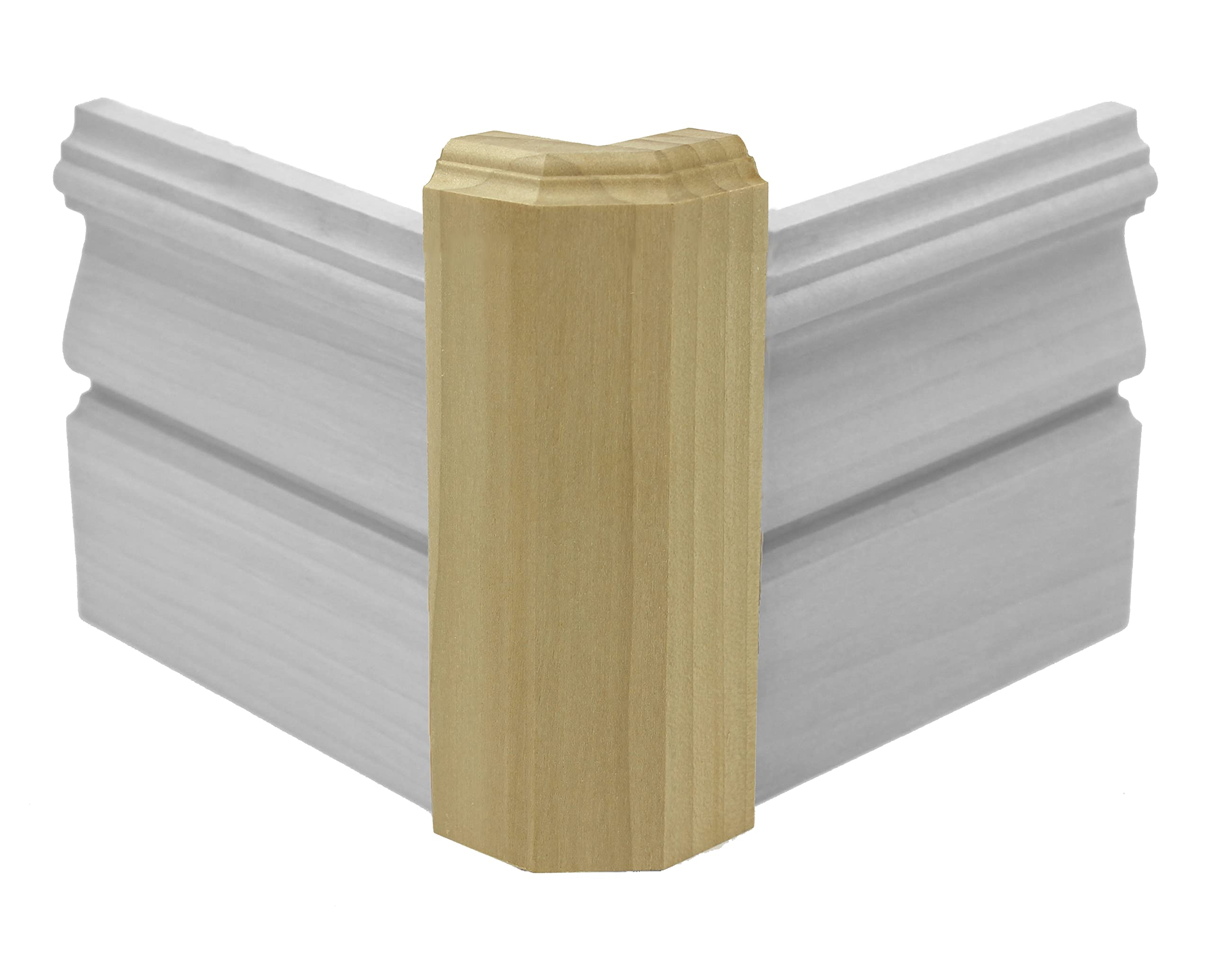
How To Choose The Best Baseboard Corner Blocks
Before you order anything, put a tape measure on two things: the thickness of your baseboard (how far it sticks out from the wall) and its height (how tall it stands from the floor). Get those two numbers and most of the guesswork disappears, because a corner block only looks clean when its face sits flush with the board it meets.
Match the thickness first
Thickness is the number that ruins the most projects. A block built for 3/4 inch baseboard will stick out past a thin 5/8 inch board, and a block built for thin boards will sit recessed against a thick one. You either match the thickness exactly or you sand the block down. The blunt rule: measure thickness and height, buy the block that matches both, and only reach for sandpaper if nothing lines up.
Square corners versus rounded bullnose
A standard outside corner is a clean 90-degree turn, and a plain square block handles it. A bullnose corner is the rounded, curved drywall corner common in newer homes, and it needs a block with a matching rounded back so it wraps the curve instead of floating off it. Buy the wrong one and the block floats off the curve, leaving a gap you cannot fill cleanly.
Wood and nails, or plastic and peel-and-stick
Pine blocks are the traditional route: you prime them, paint them, and fasten them with wood glue and finishing nails, which means they can be sanded and reshaped to fit odd walls. Self-adhesive plastic blocks skip all of that — you peel the backing and press them on, which is faster but leaves you no room to adjust once the adhesive grabs.
Quick Comparison
| Model | Best For | Material | Fits Baseboard Thickness | Block Height | Amazon |
|---|---|---|---|---|---|
| 5.5″ x 3/4″ Rounded Outside Bullnose Corner Baseboard Molding and Trim Block★ Best Overall | Thick standard baseboards on rounded corners | Pine | Up to 3/4 inch | 5.5 inches | Amazon |
| Poplar 1 3/4″ x 1 3/4″ x 6″ Square Outside Corner Base BlockBest for Staining | Square corners and stain-grade finishing | Poplar | Up to 3/4 inch | 6 inches | Amazon |
| ReliThick 8 Pcs 5.5″ x 3/4″ Rounded Outside Bullnose Corner Block | Bulk bullnose coverage for a whole room | Pine | Up to 3/4 inch | 5.5 inches | Amazon |
| 5.5″ x 5/8″ Rounded Outside Bullnose Corner Baseboard Trim Block | Thin 5/8 inch baseboards on bullnose corners | Pine | Up to 5/8 inch | 5.5 inches | Amazon |
| Baseboard Corner Protector, Self Adhesive 2.1inch 3 Inside + 3 Outside Corners | Flexible PVC baseboard and cove base runs | PVC | Designed for 2.1 inch baseboards | — | Amazon |
| Self Adhesive 4 Inch Baseboard Corner Blocks, White, 6-Piece Set | Peel-and-stick 4 inch flexible molding | Plastic | Declared 4 inch width trim | 4 inches | Amazon |
| COUKIU Self Adhesive 4 Inch Baseboard Corner Blocks, White, 6-Piece Set | Quick cosmetic corners on 4 inch wall base | Plastic | Declared 4 inch width trim | 4 inches | Amazon |
In‑Depth Reviews
1. 5.5″ x 3/4″ Rounded Outside Bullnose Corner Baseboard Molding and Trim Block. Pine. Fits Standard 3/4″ Rounded Bullnose Corners. (10)
Our pick — 4.5★ from 70+ verified ratings; the strongest balance of quality and price.
Ten solid pine blocks that turn a curved bullnose wall into a straight-cut joint.
This is the block that solves the most common modern-home headache — the rounded bullnose corner that a standard miter can never close. It fits baseboards up to 3/4 inches thick and 5.5 inches tall, and it is built for the standard ¾ inch radius rounded bullnose corner found in newer construction. Because it is solid pine, it arrives ready to prime, paint, and install, and you can sand it back if your wall is slightly off. The pack of ten gives you a full house’s worth of corners in one order. What wins people over is consistency: reviewers repeatedly describe corners coming out flush and matching an existing run of trim without fuss.
The recurring gripe — and it is a small one — is the angle. A few buyers find these blocks are not a true 90 degrees from the start, so a bit of filler and light sanding closes the joint. That is normal for natural-wood trim and it is why pine is the friendlier pick than a rigid plastic block: you can work it into shape with a sanding block in minutes. The flip side is that anyone expecting a press-on, zero-effort install should look at the self-adhesive options below instead. This is a cut, glue, nail, and paint job.
Wall thickness is the matchup to watch. The block is built for 3/4 inch thick baseboards and stands 5.5 inches tall, and the height can be cut down to match a shorter baseboard. If your existing baseboard is thinner or shorter than that, you either trim the block to height or sand the face flush — which a wood block takes easily and a plastic one does not.
What buyers keep coming back for
- Solid pine you can prime, paint, sand, and reshape to fit odd walls
- Built for the standard ¾ inch radius rounded bullnose corner
- Fits baseboards up to 3/4 inches thick and 5.5 inches tall, and the height cuts down to shorter runs
- Ten blocks in the pack covers a whole home’s outside corners
Where it needs a little extra work
- Not always a true 90-degree angle from the start — filler and sanding close the gap
- One buyer found the face thinner than the listed 3/4 inch and had to match it against a thicker board
- A cut-glue-nail-and-paint job, not a peel-and-stick shortcut
Reach for this if: your home has rounded bullnose corners and a standard-thickness baseboard that needs a wood block you can finish to match.
Look elsewhere if: you want a no-tools, peel-and-stick corner — the PVC connectors further down suit that better.
2. Poplar 1 3/4″ x 1 3/4″ x 6″ Square Outside Corner Base Block, Trim (1)
The square-corner block that eliminates miters and takes a stain like a floorboard.
For a plain 90-degree outside corner where you want the wood to blend into a stained floor or a painted run, this poplar block is the cleanest route. It measures 6 inches tall, which is the tallest block here, so it covers more of the corner and gives you more room to hide any gap. It is made by Bonneville Manufacturing in the USA. The listing calls it paint grade, but poplar takes clear finish and stain beautifully — buyers who clear-coated theirs were surprised how good they look, and one described re-trimming an entire house with these making the corners much easier and staining them to match the floor.
The whole point is ditching the miter saw. On a square corner you cut both baseboard runs straight, glue and nail the block, and the block itself forms the corner. Buyers who used wood glue and a few finishing nails (small nails with tiny heads you can hide with filler) said the corners came out smooth and the install was easy. That combination of glue plus finishing nails is the standard method for wood blocks like this, and it is why they sit tighter than an adhesive strip can.
Here is the honest limit: this is a single square block, so it will not wrap a rounded bullnose wall. If your corner is curved, you need the bullnose unit above. And it fits baseboards up to 3/4 inch thick by 5 1/2 inches tall, so if your baseboard is thinner than that, you will see a step at the joint unless you plane the block down.
What stands out: The stain-friendly poplar face and the 6-inch height give you a block that reads as intentional trim rather than a patch — and buyers regularly call the craftsmanship beautiful.
The catch to plan for: It is a square-corner block only, sold as a single or in sets, so count your corners before you order.
Confident verdict: The pick for square corners where a stained or clear-finished block is the finish you want, and it beats the pine bullnose unit above on stainability rather than on fit.
Think twice if: your corners are rounded, because this block cannot follow a bullnose curve.
3. ReliThick 8 Pcs 5.5″ x 3/4″ Rounded Outside Bullnose Corner Non-Sticky Baseboard Molding and Trim Block Pine (Natural Wood)
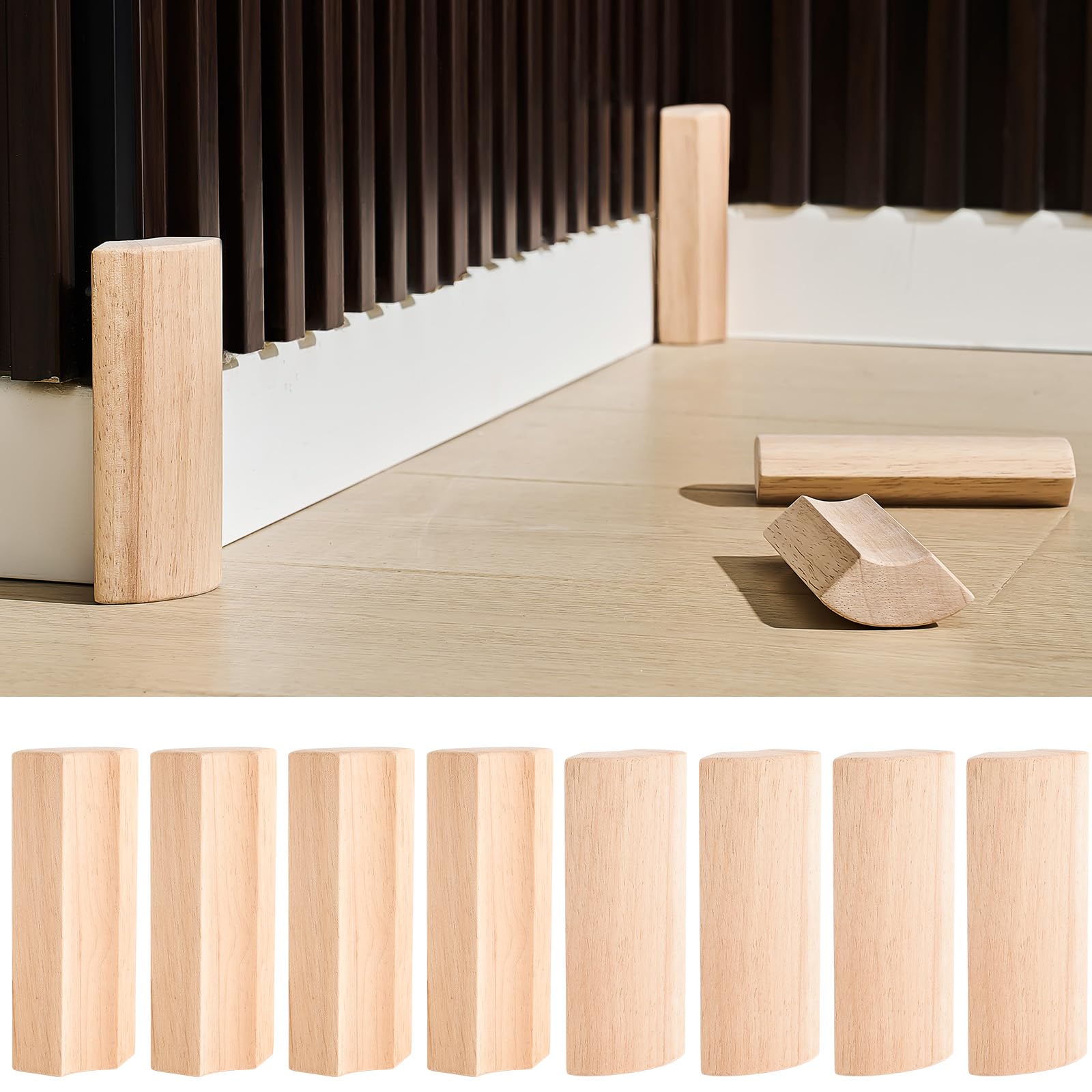
Eight bullnose pine blocks — enough to get through a whole run of rounded corners.
Each block stands 5.5 inches tall and fits baseboards up to 3/4 inches thick, and the height cuts down to match a shorter run. The pine face is smooth and takes primer and paint directly, and the listing notes you get eight blocks in one package. Buyers using them on rounded wall corners said they fit exactly what they needed, and a weekend re-trimmer called them well made and thick.
Two things come up honestly. These are non-sticky blocks, so you fasten them the traditional way — wood glue or nails, glue being the safer choice to avoid splitting pine. And because pine is a natural material, an occasional block carries a knot; a couple of buyers ran into that, and it is the kind of thing that matters less once primer and paint go on. The blocks ship as natural wood, so plan to paint them rather than leave them bare.
One buyer’s project note is worth repeating for anyone fitting a shorter baseboard: the blocks ran taller than a 4 1/4 inch base, so they cut them down to 4 3/4 inches and rounded the tops to match. That is the workflow — buy tall, cut to your wall, and finish. The block’s rounded back matches vinyl bullnose beads as well as standard rounded drywall corners.
The case for the eight-pack
- Eight blocks in one package covers a full room’s rounded corners
- Fits baseboards up to 3/4 inches thick and 5.5 inches tall, cut down to match shorter boards
- Smooth pine you can glue, nail, and paint
- Rounded back matches vinyl bullnose beads as well as drywall corners
Details to know before ordering
- Non-sticky — you supply the glue or nails, and glue avoids splitting the pine
- An occasional block arrives with a knot, which paint hides
- Sold as bare natural wood, so budget time to prime and paint
Best for: anyone with several bullnose corners to do in one go and a paint brush ready.
skip it if: you wanted an adhesive block for a single tricky corner — the peel-and-stick picks lower down cover that.
4. 5.5″ x 5/8″ Rounded Outside Bullnose Corner Baseboard Trim Block. (6)
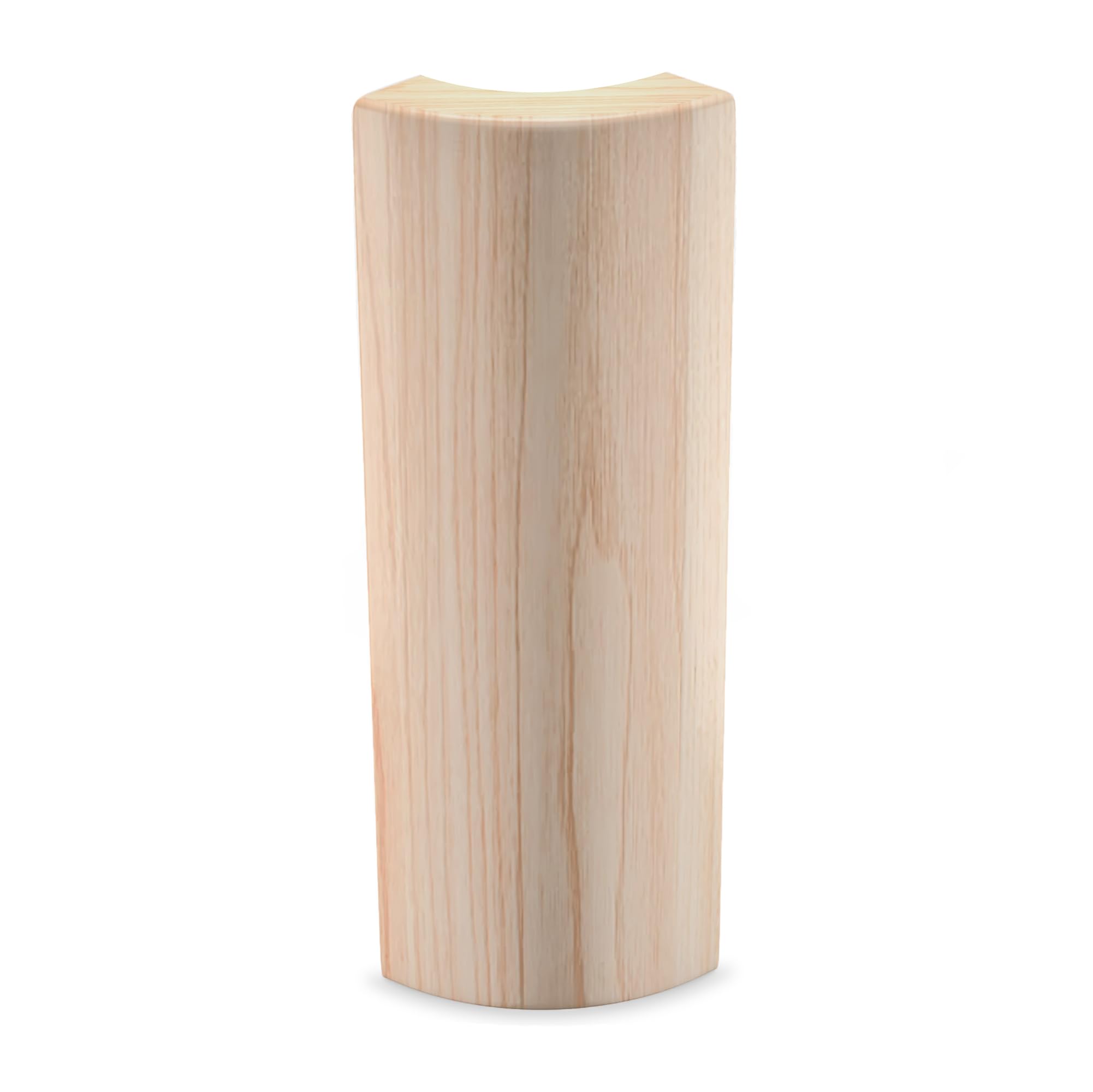
The thin-baseboard bullnose block — built for the 5/8 inch board the thick blocks ignore.
Thin baseboard is where most bullnose blocks let you down, and this one is purpose-built for it. It fits baseboards up to 5/8 inches thick and 5.5 inches tall, so on a slim board it sits flush where a 3/4 inch block would visibly protrude. It is made of pine, arrives individually packaged to prevent damage, and is ready to prime, paint, and install. Buyers hunting for a way to mesh thin baseboard onto bullnosed corners said it solved the problem, and the six-pack covers a typical room.
Where this shines is farmhouse-style trim. One buyer used it on a 1×6 MDF baseboard and the blocks made the bullnose corners without any trimming, with a little wood putty filling the joints. The height can be cut down to match a shorter run, so you are not locked into 5.5 inches if your board is shallower.
The honesty part: a small number of owners found the inside radius a touch generous for their specific bullnose, with a couple of the blocks reading as slightly acute rather than a clean 90 degrees. On a builder-standard bullnose most fit cleanly but they may need a blend at the back. This is also pine wood, so it wants primer and paint — a stained run is better served by the poplar block above.
The fit advantage: The 5/8 inch thickness is the detail that matters — it is the rare bullnose block matched to thin baseboard, which keeps the face flush instead of stepping out.
Worth knowing: Natural pine, so plan on priming and painting, and expect the odd block to need a small blend at the back edge.
Pick this if: your baseboard is the thin 5/8 inch profile and you have bullnose corners to finish.
Not the one for: thick 3/4 inch boards, which belong with the ten-pack bullnose block at the top of the list.
5. Baseboard Corner Protector, Self Adhesive 2.1inch(Width)3 Inside + 3 Outside Corners-Connector Rubber Moulding Trim (White)
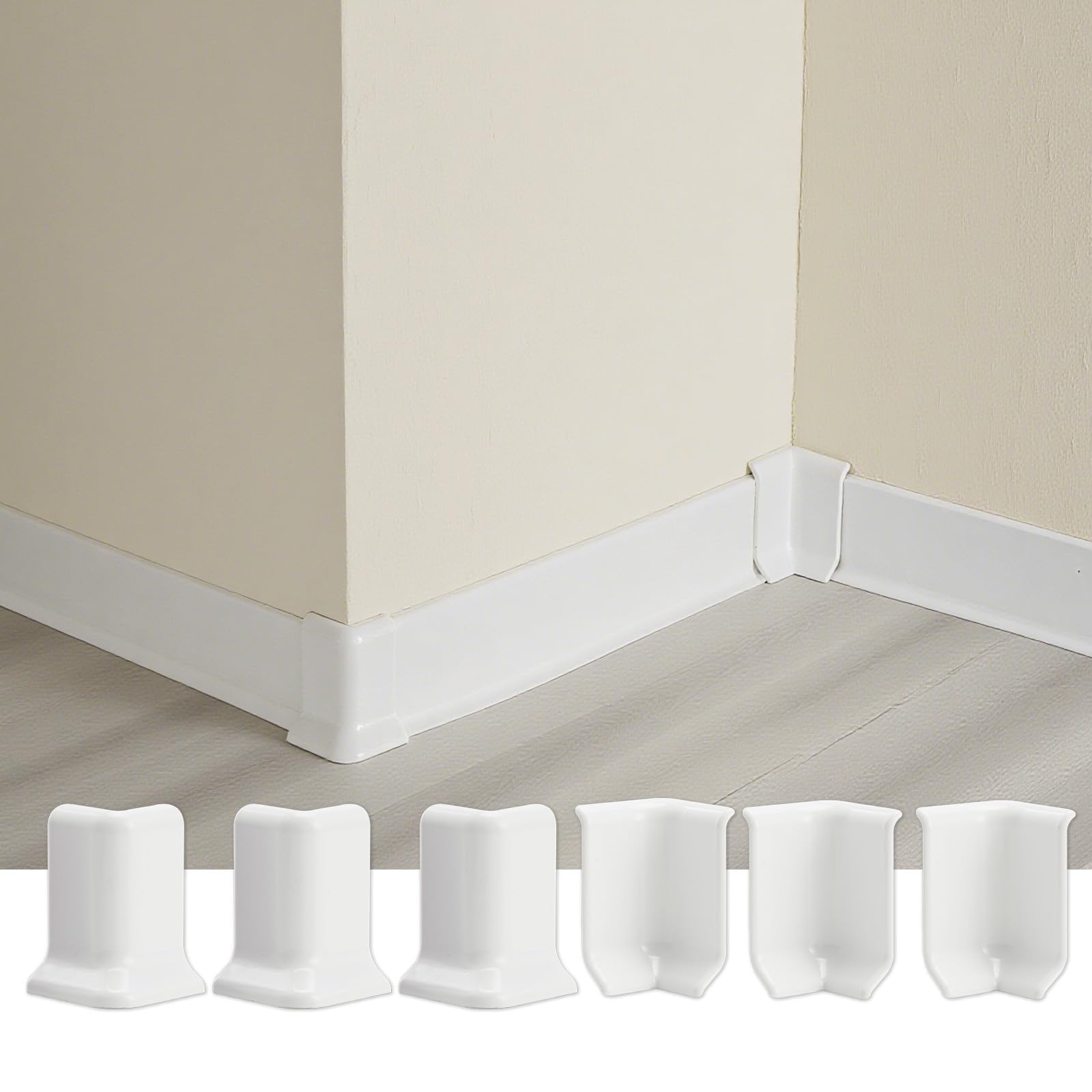
Six white PVC connectors that glue-stick flexible cove base around a corner in minutes.
This set skips wood and nails entirely. You get three inside corners and three outside corners, each a white PVC connector sized for 2.1 inch baseboards, and the whole thing installs by peeling a backing and pressing it on — no screws, no drilling. It is the route for flexible cove base or rubber molding, and it matches white wall base with no color discrepancy. What buyers praise most is how easy the strips are to install and cut, and that the finished run reads as intended trim rather than a repair.
That combination — sticks to painted wood and metal, cuts with a knife — is what makes it a two-minute corner.
Two honest notes. Adhesive blocks give you almost no second chance; once the strip grabs, repositioning is limited, so dry-fit before you press. And the long-term hold of the adhesive on a strip like this is simply not something anyone can promise in advance. This block is sized for 2.1 inch trim and matches this maker’s own baseboard line, so if you are using a different brand, measure first.
Why it earns its spot: The peel-and-stick PVC format turns a corner into a two-minute job, and the six-piece mix of inner and outer corners covers a full perimeter.
The one to weigh: Adhesive placement is close to permanent once set, so a wrap or cove base with an odd angle is better handled by a wood block you can sand.
Right for: flexible cove base, rubber molding, and quick cosmetic corners where you want no tools.
Wrong for: rigid painted wood baseboards, which need the pine blocks above and a nail gun.
6. Self Adhesive 4 Inch Baseboard Corner Blocks, White, 6-Piece Set

The popular peel-and-stick six-pack that finishes a 4-inch flexible baseboard run.
This is the best-known of the adhesive sets, and it exists to do one job cleanly: cap the corners of a 4 inch flexible baseboard trim so you never touch a miter saw. You get three inner and three outer corners in white plastic, and they install by peeling the backing and pressing the block onto the corner joint. The look is the selling point — buyers describe a polished, finished result, and the whole appeal is a professional edge without cutting angles.
It also does a bit of double duty. Buyers using it on plastic baseboards found the blocks helped hold the run in place as well as cap it, and a few used them to close gaps between lower cabinet molding where there was nothing to nail into. If your gap is awkward and hidden, that is exactly the kind of spot these handle.
Be honest about two things. The adhesive is the most-discussed mixed point — some buyers found it firm, others found it needed a dab of glue to stay put, especially where nothing behind it held the block. And these are custom-shaped for a 4 inch wide baseboard with a toe kick, so a different brand’s 4 inch trim may leave a gap you adjust at the kick. Match the profile before you buy, and add a little adhesive to any corner that feels loose.
What it does well
- Finishes a 4 inch flexible baseboard corner with no miter cuts
- Three inner and three outer corners in one white six-piece set
- Clean, polished look that buyers consistently like
- Can help hold a plastic baseboard run in place as well as cap it
Where it is fussy
- Adhesive is hit-or-miss — a dab of extra glue saves a loose corner
- Shaped for one maker’s 4 inch trim, so other brands need a gap check
Where it fits: flexible 4 inch baseboard and hidden gaps you want to cover quickly.
Where it falls short: long runs that need a strong, permanent grab — a wood block and nails will hold better over time.
7. COUKIU Self Adhesive 4 Inch Baseboard Corner Blocks, White, 6-Piece Set

A quick cosmetic corner for 4-inch wall base — easy to install, honest about its limits.
This is the budget route to a finished corner on 4 inch wall base, and it does the job when the goal is a clean look rather than a structural joint. You get three inner and three outer corners in white plastic, installed by tearing off the protective film, and the maker color-matched them to its own S100 baseboard line. The part buyers like best is how quick the install is — no hands-on skill required, just cut the baseboard at the corner, press the block on, and move on.
It also has a practical use beyond pretty corners. Buyers capped 4 inch rubber toe kicks (the recessed base of a cabinet) in a historic building and reported a quick, clean, finished result, and one buyer stuck the blocks on baseboards to stop a dog from chewing the edges — they stuck well and did not look bulky. That is a genuinely useful second job for an adhesive corner.
The fit is where you need to be realistic. It is tailored to 4 inch wall base with toes, so a different brand’s 4 inch trim may not land perfectly, and a few buyers found the adhesive on some pieces needed help from glue on hand. That is the trade for the low price and the no-tools install — match the profile, keep a tube of adhesive nearby, and these finish a job fast.
What it gets right: A fuss-free peel-and-stick corner for 4 inch wall base, and the low-fuss install is the whole point.
The practical catch: The maker’s own trim matches perfectly; other brands may leave a gap, so dry-fit before pressing, and add adhesive where a piece feels loose.
Grab these if: you want a cheap, fast cosmetic corner on 4 inch wall base and don’t mind a dab of extra glue.
Pass if: you need a corner that also holds a thick baseboard in place — the wood blocks up top are the sturdier choice.
Understanding the Specs
Thickness — the number that decides the fit
Thickness is how far the block sticks out from the wall, and it has to match the baseboard it meets or you get a visible ridge at the joint. A block built for a 3/4 inch board will step out past a 5/8 inch one. When the two do not match, a pine block can be sanded or planed down to sit flush, which is why wood blocks are the more forgiving choice on an old or uneven wall.
Height — cut to match, or buy to match
Height is how tall the block stands, and most pine blocks are sold tall and cut down on site. The standard blocks here stand 5.5 inches, and the poplar block stands 6 inches, and a shorter baseboard simply means trimming the block to the board’s height with a fine saw. Adhesive PVC connectors are a set size you cannot trim, so measure carefully before choosing the stick-on route.
Inside corner versus outside corner
An inside corner is where two walls meet in a nook — the back side of a room. An outside corner is where the wall juts into the room, and this is the corner where miters fail most often. Most sets here include three of each, which matters because a single room rarely needs only one type. Count your inside and outside corners before ordering so you do not come up short.
Wood versus adhesive PVC
Wood blocks — pine or poplar — are primed, painted, or stained and fastened with glue and finishing nails, and they can be sanded to fit. Adhesive PVC connectors are white, peel-and-stick, and installed in minutes without tools, but they cannot be reshaped and the adhesive is the point that most often needs a backup. Choose wood for a finish that lasts on painted trim, and PVC for a fast, cosmetic corner on flexible or rubber base.
FAQ
How do I know whether I need an inside or outside corner block?
Will a 3/4 inch bullnose block work on a 5/8 inch baseboard?
What is a bullnose corner and why does it need its own block?
Can I install these corner blocks without nails or a nail gun?
Do I need to cut the corner blocks to height before installing?
What is the difference between pine and poplar corner blocks?
How do I measure my baseboard for the right corner block?
Why did my self-adhesive corner block come loose?
Can I paint or stain pine corner blocks to match my trim?
Final Thoughts: The Verdict
For rounded bullnose corners on a standard-thickness baseboard, the winner is the 5.5″ x 3/4″ Rounded Outside Bullnose Corner Baseboard Molding and Trim Block — it is the crowd favorite at 4.5 stars across 70+ owners, and the solid pine can be sanded to fit a wall that is nearly, but not quite, square. If you want a block you can stain to match a floor, grab the Poplar Square Outside Corner Base Block. And for a fast, no-tools corner on flexible or rubber base, the Baseboard Corner Protector self-adhesive set is the one to reach for. Match your thickness first, and any of them will finish a corner without a single miter cut.
How We Picked
We do not accept paid placement. Every pick is matched to a real buyer and a real use-case; we do not hands-on test units.
Sources & Methodology
Specifications: manufacturer listings and product documentation. Review insights: verified customer reviews, as of September 2026. Pricing: not shown on this page (it changes often); check the current price via the retailer link.
As an Amazon Associate, KitchPrep earns from qualifying purchases. This does not affect which products we feature.
Related Guides
