
Specs are compiled from manufacturer listings and verified buyer reviews and can change over time — please confirm the key details on the product page before buying.
If your baseboard heater has gone orange with rust or the front panel is dented and grimy, a slip-on cover fixes the whole look in minutes without tearing out the heater. The trick is measuring your existing backplate correctly before you buy, because a cover that misses the height or depth tolerance will not sit flush — and that is the single most common reason these get returned. Below are the eight covers worth your attention, separated by heater type and size.
I’m Mohammad Maruf — the founder and writer behind KitchPrep. This guide is built by comparing the manufacturers’ published specifications and the patterns across verified customer reviews, so you get each pick’s real strengths and trade-offs instead of marketing spin.
Steel and plastic covers solve the same problem in very different ways, and the material you pick decides whether the cover still looks new after a few heating seasons. Here is what actually separates a good cover from a frustrating one, so you can buy the right size the first time with these baseboard radiator covers.
Our Picks at a Glance


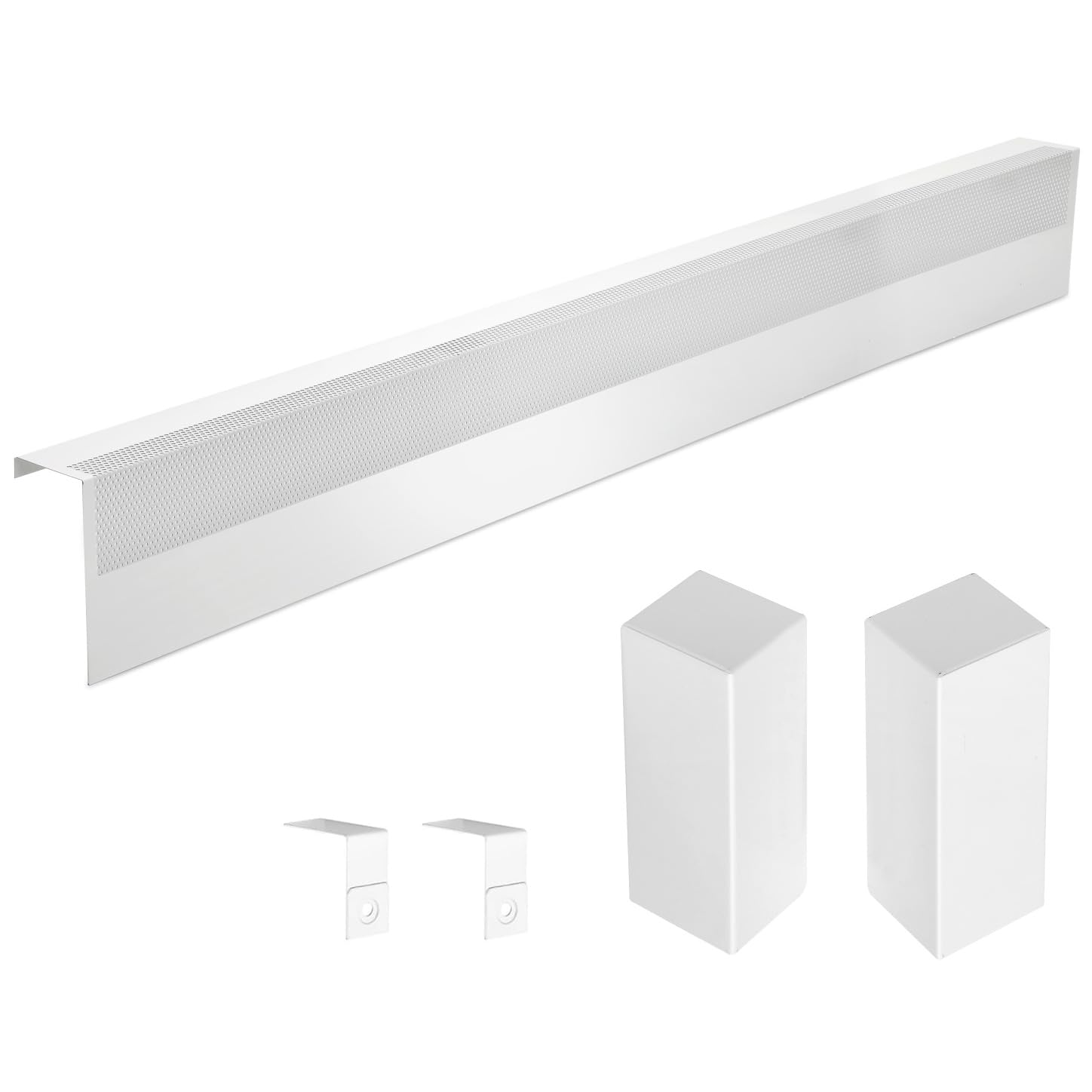
How To Choose The Best Baseboard Radiator Covers
Three things decide whether a cover works in your room: the measurements of your existing heater, the material the cover is made from, and whether your heater runs hot water or electricity. Get those right and installation is a ten-minute job.
Measure The Backplate, Not The Room
The number that matters is the distance from the floor to the top of your existing backplate. A cover built for standard-height heaters will not clear a tall one. Measure the depth from the backplate to the front of the heating element too, plus the height of the element itself. Write those three numbers down and compare them to the cover’s stated fit range before ordering.
TALL Units And Overage Sizing
Some homes have oversized or high-output baseboard heaters that sit taller than the standard profile. These need a cover explicitly built for the taller footprint. Ordering a standard cover for a tall unit leaves the top of the element exposed and the end caps floating off the wall.
Steel Versus Plastic
Plastic panels snap together fast and cost less, but plastic can warp when it sits over a hot element for a full heating season. Steel covers — especially galvanized steel with a powder-coated finish — hold their shape and resist corrosion far longer. The trade-off is weight and a slightly higher cost, which is usually worth it if you plan to leave the cover on for years.
Hydronic Versus Electric Heaters
Hot-water hydronic systems run cooler at the surface, so almost any cover works. Electric baseboard heaters produce much higher surface temperatures, and some plastic covers are not rated for them at all. Check the listing’s stated use before you buy, and pick a steel cover with generous vent slots if you have electric heat.
Quick Comparison
Every cover below is measured the same way so you can scan length, material, and heater type at a glance.
| Model | Best For | Length | Material | Heater Type | Amazon |
|---|---|---|---|---|---|
| NeatHeat TALL 6ft★ Best Overall | Oversized tall heaters | 6 ft | Steel | Hydronic | Amazon |
| neatheat 6ft Front CoverBest Value | Budget multi-room refreshes | 6 ft | Plastic | Hydronic | Amazon |
| Redants 4 FTTop Performer | Tool-free rust hiding | 4 ft | 24-gauge steel | Hydronic / electric | Amazon |
| Ceelpeopar 4FT | Precise fit matching | 4 ft | 24-gauge steel | Electric / radiator | Amazon |
| Gandeer 4 ft Steel | Bathroom hydronic systems | 4 ft | Stainless steel | Hydronic | Amazon |
| SDSNTE 3 Ft | Compact bathroom runs | 3 ft | 21-gauge steel | Hydronic / electric | Amazon |
| Jeevony BHC4 | Electric heater coverage | 4 ft | Galvanized steel | Electric | Amazon |
| Baseboarders Basic Series | Long-term hydronic upgrades | 4 ft | 22–24 gauge steel | Hydronic | Amazon |
In‑Depth Reviews
1. *TALL*NeatHeat TALL 6ft Baseboard Heat Cover
Our pick — over 4.5★ from 300+ verified ratings; the strongest balance of quality and price.
The long steel cover built for tall, oversized baseboard heaters most panels cannot reach.
If your bathroom heater stands taller than the usual profile and standard covers leave its top edge exposed, this is the one built for that exact footprint. The 6-foot length runs the full run of a long wall, and it goes on with no special tools — you cut it, paint it if you want, and set it in place.
The finish matters more than people expect. Most owners talk about the metal staying crisp while their old heater’s rust pockmarks disappear, and one summed up the whole appeal: “why aren’t the metal baseboards made this way? easy install, quick clean up and the design prevents spills from penetrating the metal underneath.” That last point is the real win — spills and moisture stay off the metal element, which is how rust keeps coming back on bare panels.
The catch is measuring. This is a TALL model, and the buyer who reviewed it flagged that their unit was the extra tall size — so read the measuring guide before ordering rather than guessing from the photo. Two smaller housekeeping notes: it is not for electric baseboard heaters, and the manufacturer says never to clean it with bleach or bleach-based products, because bleach can yellow the finish.
What owners keep praising
- Slips over the old panel with no special tools — cut, paint, and set it in minutes
- Built specifically for high-output, oversized heaters that standard covers cannot span
- The design keeps spills and moisture off the metal underneath, so rust stops returning
- Cutting it to size takes under ten minutes by the maker’s own description
Where it needs care
- It is a TALL model — measure your heater first or it will not line up
- Not rated for electric baseboard heaters
- Bleach-based cleaners will yellow the finish over time
- A textured wall behind it can leave gaps at the top of the end caps
Made for: someone with a tall, high-output hydronic heater on a long wall who wants the rust gone and the profile hidden for good.
Think twice if: you have electric baseboard heat or a standard-height panel — the taller sizing will overshoot it.
2. neatheat 6ft Baseboard Front Cover
At just 2 pounds, this plastic panel weighs about a quarter of what the heavy steel Redants model does.
That 2-pound figure versus the Redants’ 8.13 pounds tells you most of the story here — this is the lightest cover in the group by a wide margin. It snaps together piece by piece and can be trimmed with ordinary household tools, so you do not need a workshop to fit it. For a rental, a flip, or a quick cosmetic refresh across several rooms, that combination is why so many buyers come back to order more sizes. As one put it: “Much better than the original baseboards that came with the house 28 years ago.”
Functionality is the thing owners talk about most, and it holds up — the heat gets through and the panel stays put. It is also the easiest to wipe clean, with a depth of just 3 inches so it tucks close to the wall.
Here is the honest part: this is plastic, and it is not meant for electric heat. Heat warping is a real note among a handful of owners, and fit is hit-or-miss depending on which brand of baseboard you have underneath. If you have an unusual backplate profile, measure carefully, because the panel only clips onto the common shapes.
What wins people over: the plastic clips together fast, cuts with everyday tools, and refreshes a wall of ugly baseboard without any metalwork or hiring help.
The trade-off to know: it is a plastic panel for hot-water systems only — over an electric element, warping is the risk some owners noted.
Reach for this: if you want the cheapest way to cover several long hot-water baseboard runs and prefer a lightweight panel you can trim yourself.
Keep looking: if you have electric baseboard heat or a non-standard backplate height that this one-size panel will not clip onto.
3. Redants 4 FT Baseboard Heater Covers with Left and Right Endcaps
The galvanized steel cover that slides straight over the old plate in about three minutes.
The pitch is simple: slide it on, snap the end caps, done. The 24-gauge powder-coated steel is the reason it holds up — the maker says it will not chip, yellow, or corrode after seasons of hot-water use, and will replace it if it fails under normal use. At 8.13 pounds it has real heft, and that weight is exactly why it does not dent the way a thin panel can.
Inside the fit window, owners call it a clean, tool-free upgrade. One described “no more digging Q-tips out of the heat register” in the bathroom — the cover simply hides the whole messy element. Another confirmed it went straight over the existing radiator cover with an easy install and a great look. What stands out most in the feedback is the appearance: people keep saying it looks better than expected, and the metal-not-plastic feel is a running theme.
The catch is sizing and finish. It is built for hydronic (hot-water) systems — on an electric model the control knob ends up hidden, and you have to pop off an end cap to reach it. It only fits units under 7½ inches from floor to backplate top and under 3¼ inches of element depth, so anything outside that window will not work. There are also reports of factory scratches on arrival, which is worth knowing if a flawless panel matters to you. And keep in mind this is a single-room fix, not a whole-house project.
Standout quality: heavy 24-gauge galvanized steel with a powder-coated finish — the weight of this cover is a feature, not a flaw, because it resists the dents that thin panels take.
Good match for: a hot-water baseboard in a bathroom or single room where you want the whole run hidden behind one solid steel panel.
Look elsewhere if: your heater exceeds 7½ inches floor-to-backplate or 3¼ inches element depth, or if you run electric and need quick access to the knob.
4. 4FT Baseboard Heater Cover for Baseboard Heating
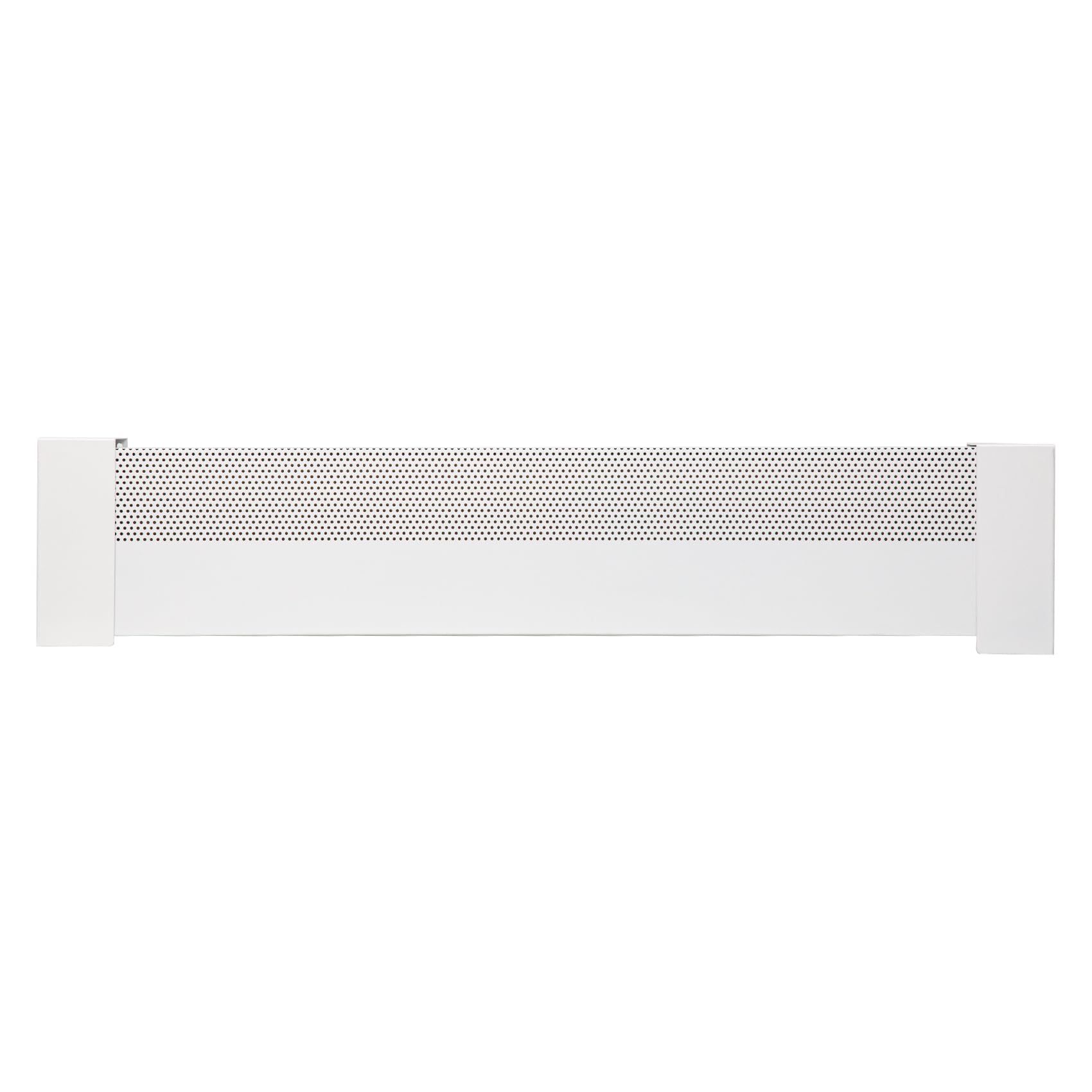
The cover that tells you exactly what it fits, published ranges and all, so you can measure before you buy.
Most listings make you guess. This one spells out the window: the distance from the floor to the top of your existing backboard should sit between 7½ and 9½ inches, the measurement from the bottom of the heating element to the top of the backplate should be between 5 and 6¾ inches, and the depth from backplate to the front of the element needs to stay under 3¼ inches. If your numbers land inside those ranges, this cover fits — and the maker says plainly that if they do not match, this is not the right cover for you. That honesty saves a return.
The build is 24-gauge galvanized steel for the cover and 22-gauge steel for the end caps, wrapped in a white enamel coating that the maker describes as rugged, moisture and corrosion resistant. Installation runs in three steps: pull the old end cap and cover plate, snap the new end caps onto the panels, then press the assembly onto the original backing plate. Owners call it super easy, and note the design helps keep debris out. One buyer’s verdict: it took old heaters and made them look new.
And as with any slip-on cover, a backplate outside the published range is a hard stop, so get the tape measure out first.
Pick it when: you want a cover whose stated fit numbers actually match your backplate, and you would rather measure once than gamble.
Rethink if: your floor-to-backboard height falls outside 7½ to 9½ inches — this one will not sit right.
5. Gandeer 4 ft Steel Baseboard Heater Cover with End Caps

A stainless-steel set — not plastic — with white baking paint that has been tested for thickness.
If the word that keeps coming up in your head is “rust,” stainless is the material to chase. This set uses quality stainless steel with a white baking paint finish, and the maker states it has been tested for thickness and reliability to hold up over the long term. The 4-foot, 48-inch panel comes with a left and right end cap so the whole run gets closed off in one purchase.
Fitting is the strong suit here. Installation is a slide-on job — pull the old plate, slide the new cover onto the element, snap the bottoms into place, and set the end caps — and the maker notes special tools may only be needed if you want to cut it to an exact length. Owners repeatedly describe it going “right over the original heater” and looking clean and beautiful, with the quality and fit both drawing praise. A common reaction is being genuinely impressed after trying other types. The white finish suits a bathroom wall well, which is why it is such a natural fit near a toilet or tub where moisture lingers.
The honest caveat is cost. Owners call it a bit pricey and slightly overpriced for what it is, even while rating the quality highly. It is also sized for heaters under 4 feet, so a longer run means buying more than one. Finally, check the length before ordering — this is a 4 ft cover, not a 6 ft one.
Why it earns its spot: stainless steel plus a tested white baking paint finish makes this a sensible pick for a damp bathroom where rust is the whole reason you are shopping.
Budget note: it sits at a premium price for a single 4-foot run, which is the one thing owners flag.
Great for: a single 4-foot hydronic run in a bathroom where you want stainless steel instead of plastic and want the end caps included.
Not ideal if: you are covering a long wall — this only spans 4 feet, so you will need to order more than one.
6. SDSNTE 3 Ft Steel Baseboard Heater Cover with End Caps

A short 3-foot steel cover whose 21-gauge body is thicker than the alternatives it is priced against.
Short runs — a powder room, a hallway stub, a small bathroom — often leave a 4-foot cover looking oversized. This one is 3 feet, or 36 inches, and it still ships with the end caps. The steel is 21-gauge with 16-gauge endcaps, coated in white stoving varnish, and the maker states its thickness and durability surpass other baseboard heater covers, and the 21-gauge body with 16-gauge endcaps backs that up.
Installation needs no tools at all. You take off the old cover, slip the new one onto the heating element, and attach the end caps. Owners who replaced a rusted radiator describe it fitting perfectly and covering the mess, with a striking before-and-after once it is on. Appearance is what people notice most — the panel makes a space look updated compared to the old high-back plate, and the single-panel construction keeps airflow moving around the element while blocking direct contact, which matters if you have kids or pets brushing against it.
Measure first, because this one is strict on size. It fits only if your baseboard heater is under 3 feet long, under 8½ feet tall, and no wider than 3¼ inches. One buyer found it would not work with a wall-hung unit even though it looked great, which is the classic case of a cover not matching the heater’s mounting style. If your heater matches the compact profile, though, it is a quick and tidy fix.
Suits: a short 3-foot hydronic run where a 4-foot cover would overhang, and you want steel with thicker endcaps for the money.
Check first: your heater must be under 3 feet long, so a longer run needs a different size entirely.
7. Jeevony 4Ft Galvanized Steel Baseboard Heater Cover with End Caps, BHC4
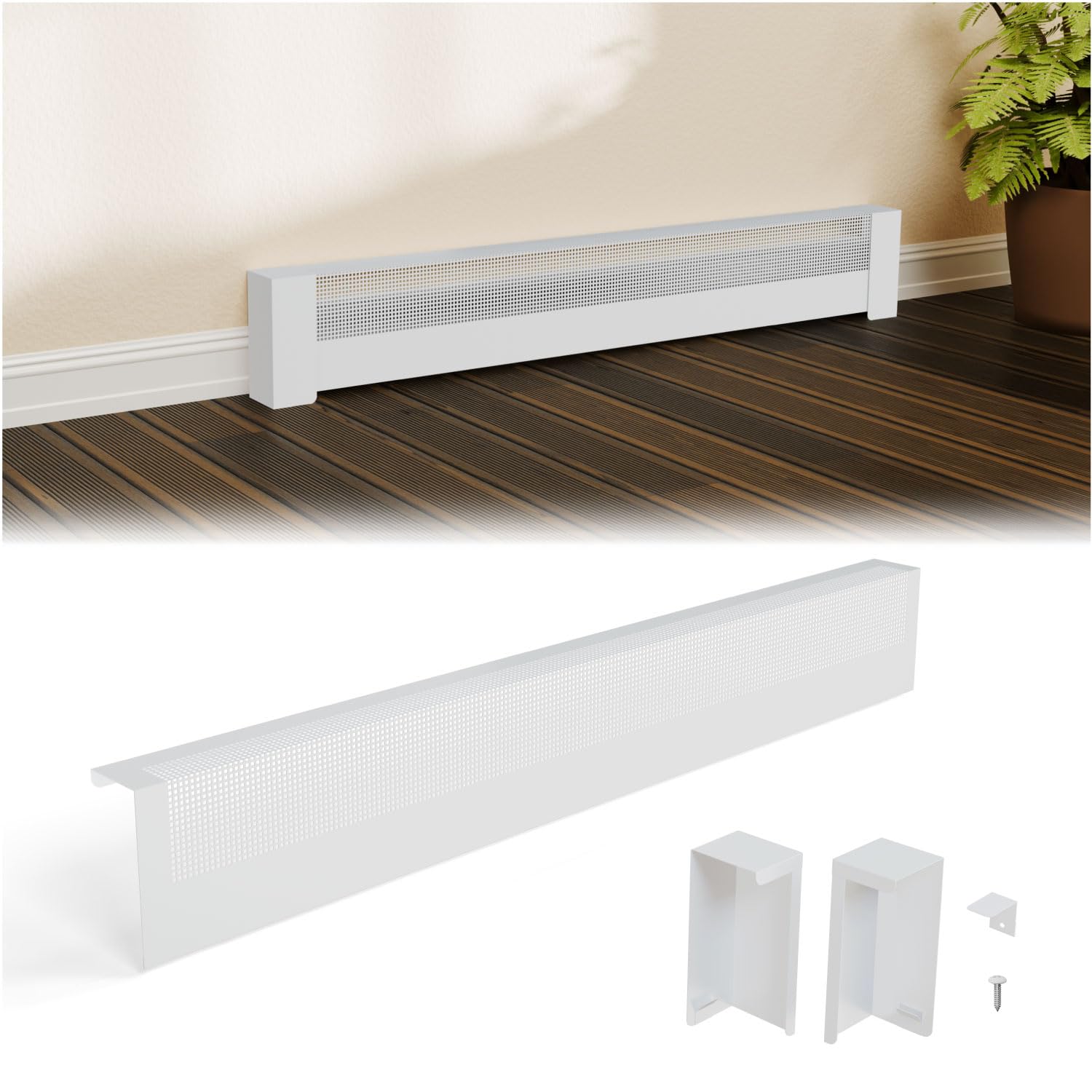
The 4-foot cover whose vents were widened on purpose so electric heaters can breathe.
Most covers warn you off electric baseboard heat. This one leans into it. The ventilation holes were tune to increase heat dissipation area, which disperses the heat instead of trapping it — that bigger opening is what lets this cover sit over an electric element without smothering it. It carries a 2-year rust protection guarantee.
The materials match the ambition: premium galvanized steel with a white powder-coated finish for a smooth, durable surface, and the maker states it outperforms other covers on rust resistance and high-temperature endurance, which matters because electric elements run hotter. That endurance claim is the point here — electric heaters run hotter, so the finish has to hold. The 4-foot, 48-inch kit includes left and right end caps and slides on without a professional.
Owners are steadily working through their homes with these. One is on room three and counting, calling it easy to install and great-looking; another upgrades a bathroom and loves the result. There is a real caution the maker states plainly: exercise care when fitting on electric baseboard heaters, since they generate higher surface temperatures. And if you need internal corner connectors, external corner connectors, or extenders to join runs, buy those separately — the kit does not include them.
The electric-friendly choice: widened vent slots let hotter electric elements disperse their heat rather than baking the panel, backed by a 2-year rust protection guarantee.
Plan your corners: connectors and extenders for joining multiple runs are not in the box, so add them if your layout turns a corner.
Choose it if: you have electric baseboard heat and want a steel cover explicitly built to let that higher-temperature element vent properly.
Add to cart too: corner connectors or extenders if your run joins another — they are not included.
8. Baseboarders Basic Series 4 ft Galvanized Steel Slip-On Cover
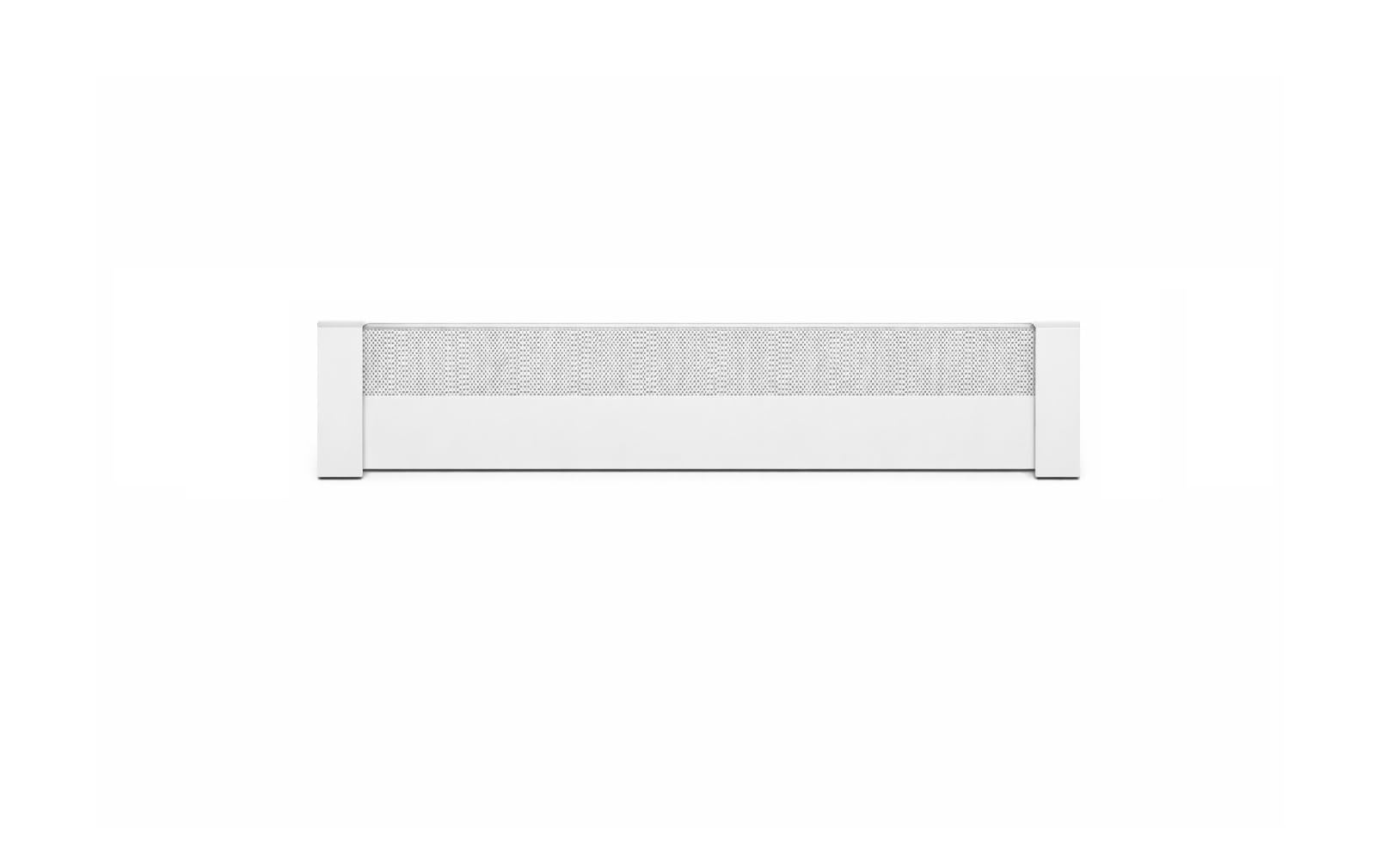
The 4-foot set with a Lifetime Rust Protection Guarantee behind its 22–24 gauge steel.
When you want to do this once and stop thinking about it, the lifetime guarantee is the draw. This 4-foot, 48-inch kit ships with left and right end caps and is made from heavy-duty 22–24 gauge galvanized steel — the maker states it is stronger and more dent-resistant than thinner or plastic competitors, and that it resists warping, cracking, and brittleness under heat, unlike plastic. The maker states the conductive metal surface improves energy efficiency over insulating plastic covers because it does not trap heat.
Installation is genuinely trivial. It slides on over your existing backplate with no tools, no contractors, and no dismantling, and the maker notes you can often finish in minutes. It is built for hydronic (hot-water) systems. For 3–5 foot sizes the maker recommends 2 brackets, and 3 brackets for 6 and 7 foot runs, so you have support where you need it. Owners describe a solid, not-flimsy panel that fits properly and transforms an old rusted vent — one that took a 70-plus-year-old cast-iron heater a contractor would not paint and covered it clean. A little care with the end caps helps, too, since they can take a moment to snap on. Keeping it clean is just a damp cloth.
Two honest notes. This is the most premium-priced cover here, and that cost is the thing owners question most — some call it pricier than they expected for the size, while still ranking the quality and fit highly. It is also hydronic-only, so if you run electric heat, look at the Jeevony above instead.
Worth it for: a hot-water system where you want the longest rust protection on offer and the easiest slip-on install for a clean, permanent-looking upgrade.
Size carefully: it comes in 3 to 6-foot options, so measure your run and buy the length that matches rather than the most you can afford.
Understanding the Specs
Gauge Of Steel
Gauge measures how thick the metal is, and lower numbers mean thicker, sturdier steel. A 21-gauge steel body with 16-gauge endcaps, like the SDSNTE, is thicker than a 24-gauge panel. Thicker steel resists dents and holds its shape better over a heating season, which is why it tends to cost more and look newer for longer.
Galvanized Versus Plastic
Galvanized steel is coated to resist corrosion, so it stands up to heat and moisture without rusting or warping. Plastic panels are lighter — the neatheat 6ft weighs just 2 pounds — and cheaper, but over hotter elements plastic can warp. If you have an electric baseboard heater, steel with generous vent slots is usually the safer match.
Vent Slot Size And Airflow
The vent holes let heat escape from the element and rise into the room. Wider slots, like the tune vents on the Jeevony, disperse heat better and suit higher-temperature electric heaters. Narrow vents work fine on cooler hydronic hot-water systems, keeping airflow moving around the element while blocking direct contact.
Hydronic Versus Electric Fit
Hydronic (hot-water) baseboard runs cooler at the surface, so most covers fit and function there. Electric baseboard heaters get much hotter, and some covers — especially plastic panels — are not rated for them at all. Always check the listing’s stated heater type before buying, and note that on some covers an electric heating knob ends up hidden and must be reached by popping off an end cap.
FAQ
How do I measure my baseboard heater for a cover?
Will a cover work with an electric baseboard heater?
Can I cut a baseboard cover to a shorter length?
Do I need to buy the end caps separately?
Will a cover block heat from reaching the room?
How do I clean a baseboard radiator cover?
What is the difference between galvanized steel and stainless steel covers?
Can I paint a baseboard cover to match my walls?
Do I need tools to install a slip-on baseboard cover?
Why are some baseboard covers more expensive than others?
Final Thoughts: The Verdict
For most people with a tall hydronic heater, the baseboard radiator covers winner is the NeatHeat TALL 6ft because it is built for the oversized footprint ordinary panels cannot span, and it installs with no special tools. If you want the lightest, cheapest way to refresh several hot-water runs, grab the neatheat 6ft Front Cover. For an electric heater that needs a cover built to vent the extra heat, the Jeevony BHC4 is the one to reach for. And if you want to do this once, the Baseboarders Basic Series backs its steel with a lifetime rust guarantee. Measure your backplate, match the heater type, and any of these eight will hide the rust and tidy the room for good.
How We Picked
We do not accept paid placement. Every pick is matched to a real buyer and a real use-case; we do not hands-on test units.
Sources & Methodology
Specifications: manufacturer listings and product documentation. Review insights: verified customer reviews, as of September 2026. Pricing: not shown on this page (it changes often); check the current price via the retailer link.
As an Amazon Associate, KitchPrep earns from qualifying purchases. This does not affect which products we feature.
Related Guides
