
Specs are compiled from manufacturer listings and verified buyer reviews and can change over time — please confirm the key details on the product page before buying.
If your wall curves, you need moulding that bends without cracking — rigid wood and MDF (medium-density fibreboard, a pressed wood sheet) simply cannot wrap a rounded corner. Every pick below flexes, so the real question is if you want peel-and-stick vinyl you can install this afternoon or stain-grade trim you cut and nail like real wood. One quick note: this list uses flexible, human-like matching for bendable material that conforms to curved or rounded walls, so not every pick is the exact number you searched. The nearest same-type size serves the same purpose.
I’m Mohammad Maruf — the founder and writer behind KitchPrep. This guide is built by comparing the manufacturers’ published specifications and the patterns across verified customer reviews, so you get each pick’s real strengths and trade-offs instead of marketing spin.
Rounded corners punish cheap trim, so the bending radius (the tightest curve a strip can follow without cracking) matters more than color here. That single number tells you whether a moulding wraps your curved island or snaps at the first turn — so base moulding for rounded corners depends on radius and material.
Our Picks at a Glance

How To Choose The Best Base Moulding for Rounded Corners
The whole game with curved walls is whether the trim can follow the bend. A straight board will gap, pop, or split the moment your wall turns. So before you look at color, look at how far the piece can flex and how you plan to attach it.
Bending radius is the first number to check
Bending radius is the tightest curve the moulding will wrap without kinking or cracking — think of it as the smallest circle the trim can hug. A minimum radius of 6 inches handles a soft rounded corner, while a 16-inch minimum means the piece only wants gentle curves. If a listing gives no radius, assume it will fight a sharp turn.
Rigid wood and MDF baseboard have no flex at all, which is why they show up with gaps on curved walls. Flexible polyurethane and self-adhesive vinyl are the two families that actually bend — and they attach in completely different ways.
Peel-and-stick versus cut-and-nail
Peel-and-stick vinyl trim is the weekend-friendly route: you clean the wall, measure, cut, peel the backing, and press. It is a great fit for a rental, a bathroom, or a quick gap cover, and it needs no nails, glue, or saw. The catch is that the adhesive grabs hard, so placement has to be right the first time.
Stain-grade or paint-grade flexible moulding is the finish-carpentry route. You cut it with normal woodworking tools, fasten it with adhesive and nails or brads, then paint or stain it to match your existing trim. It looks like real wood once finished and takes a curved drywall room further toward a built-in look.
Width and height for the gap you are covering
Measure the gap between your floor and wall first. A slim shoe moulding that sits low along the base covers a small seam, while a taller base moulding covers more wall and hides deeper imperfections. If in doubt, a slightly taller piece is more forgiving on an uneven floor.
Quick Comparison
| Model | Best For | Material | Coverage / Size | Attachment | Amazon |
|---|---|---|---|---|---|
| Storystore Wall Baseboard Trim | Fast peel-and-stick updates | Rubber / Vinyl | 4 in x 40 ft | Peel and Stick | Amazon |
| Flexible Moulding Oak Grain WM126 | Trimming curved stairs | Polyurethane | 1/2 in x 3/4 in, 8 ft | Cut and nail | Amazon |
| Oak Yellow Wall Molding Trim | Color-matched wood-look trim | Rubber | 3 in x 20 ft | Peel and Stick | Amazon |
| Peel and Stick Rubber Baseboard Molding | Wide coverage gaps | Vinyl | 6 in x 20 ft | Peel and Stick | Amazon |
| Flexible Base Moulding WM623 | Curved kitchen islands | Polyurethane | 9/16 in x 3-1/4 in, 8 ft | Cut and nail | Amazon |
| FLEXTRIM Flexible Flatstock WM1X6 | Custom curved builds | Flexible Polyurethane | 3/4 in x 5-1/2 in, 8 ft | Cut and nail | Amazon |
| FLEXTRIM Flexible Flatstock WM1x8 | Wide arches and columns | Flexible Polyurethane | 3/4 in x 7-1/2 in, 8 ft | Cut and nail | Amazon |
In‑Depth Reviews
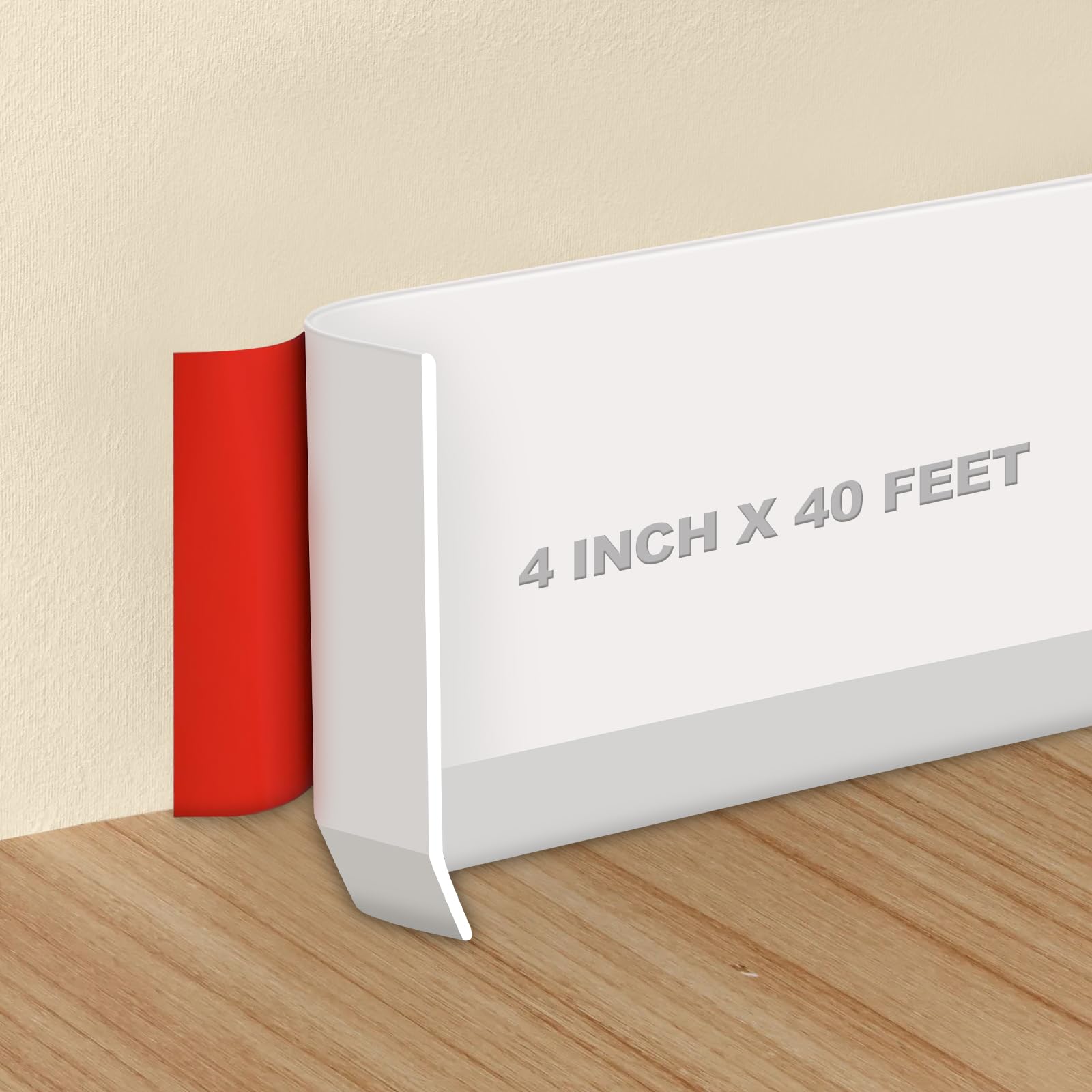
1. Storystore Wall Baseboard Trim 4 Inch x 40 Feet, Flexible Self-Adhesive Rubber Baseboard
The rolling 40-foot coil that lets a first-timer wrap a curved wall in one afternoon
If you want the shortest path from bare wall to finished base without owning a single power tool, this is the one to start with. It rolls out 4 inches tall and 40 feet long, so one box covers a full room’s perimeter — no glue gun, no nails, no saw. You clean the wall, measure, cut, peel the red backing, and press. It holds 4.5 stars from more than 200 owners, and the peel-and-stick backing is what makes it a beginner-friendly pick.
What wins people over most is how quickly it goes up and how well the adhesive grips in tough spots. The vinyl backing holds even in a humid bathroom, so it will not lift the way some stick-on trim does. It also cuts cleanly with a box cutter, and being just 3.2 ounces it is light enough to handle without wrestling a heavy roll. Because it is flexible rubber, it curves around a rounded corner instead of gapping — the exact problem rigid wood baseboard creates.
The honest catch is thickness: the material is thin, so it telegraphs bumps and uneven spots behind it, and it wants a solid surface underneath. Over a drywall gap it can push inward and look a little bowed. Corners are the other place to slow down. As owners put it, one noted that it “works well except corners are difficult,” so take your time trimming and test-fit the bend before you commit the adhesive.
Where it earns its place
- Forty feet of coverage in one roll, so a whole room is a single purchase.
- Peel-and-stick backing installs with no glue, nails, or tools.
- Flexible rubber conforms to rounded corners and uneven floors.
- Adhesive holds in humid rooms, so it stays put in a bathroom.
Before you order
- Thin material shows bumps and hides less than a rigid baseboard.
- Needs a solid surface behind it — a drywall gap can bow it inward.
- Corner trimming takes care to avoid an awkward bend.
Go for it if: you want a fast, tool-free update on a curved wall or a rental you plan to leave as-is.
Slow down if: your wall has a deep drywall gap behind it — a heavier trim will sit flatter there.
2. Flexible Moulding – Stain Grade – Oak Grain – Flexible Base Shoe Moulding – WM126 – 1/2″ X 3/4″ – 8′ Length
A bendable oak-grain shoe that finishes the curve your table saw cannot follow
Curved stair returns and arched openings are where straight shoe moulding gives up, and this is the piece that solves them. It bends like a belt, with a minimum radius of 6 inches, so it wraps a curved stair tread or a rounded transition smoothly. The oak grain is designed to take stain, and once stained or painted it looks like real wood rather than plastic trim. That styling is the whole point for a homeowner matching an existing hardwood floor.
Owners lean on this one for tricky curved runs and it earns its keep. It cuts, sands, and shapes with standard woodworking tools, so you finish it the same way you would any trim. Take a curved staircase volute — one buyer used it to trim the rounded base and fastened it with a trim nailer. It takes paint well and handles outdoor use, and the moisture-proof material holds up to heat and cold without warping or cracking. Weighing in the low single ounces, it handles easily without a tiring heft on long runs.
Two things to plan for. Staining is fussier than painting — an oil-based stain can look muddy no matter how many coats, and a water-based stain is the better road. Size is also worth a second look: a slim 1/2 inch by 3/4 inch shoe is smaller than standard wood baseboard, so match it against your existing trim before you buy a long bundle.
Why it works on curves
- Bends like a belt to wrap stair volutes and curved transitions.
- Oak grain takes stain to look like real wood once finished.
- Moisture proof and handles heat and cold without warping or cracking.
- Cuts, sands, and shapes with standard woodworking tools.
The trade-offs
- Staining is fiddly — a water-based stain works better than oil-based here.
- The slim 1/2 in x 3/4 in profile is smaller than standard baseboard.
Reach for this if: you are finishing a curved stair, arch, or transition and want the trim to stain toward a real wood floor.
Look elsewhere if: you need a full-height baseboard, since this slim shoe sits low along the base.
3. Oak Yellow Wall Molding Trim 3 Inch x 20 Feet, Bendable Waterproof Wall Baseboard Molding Trim
The oak-toned peel-and-stick roll for buyers who want the look without the carpentry
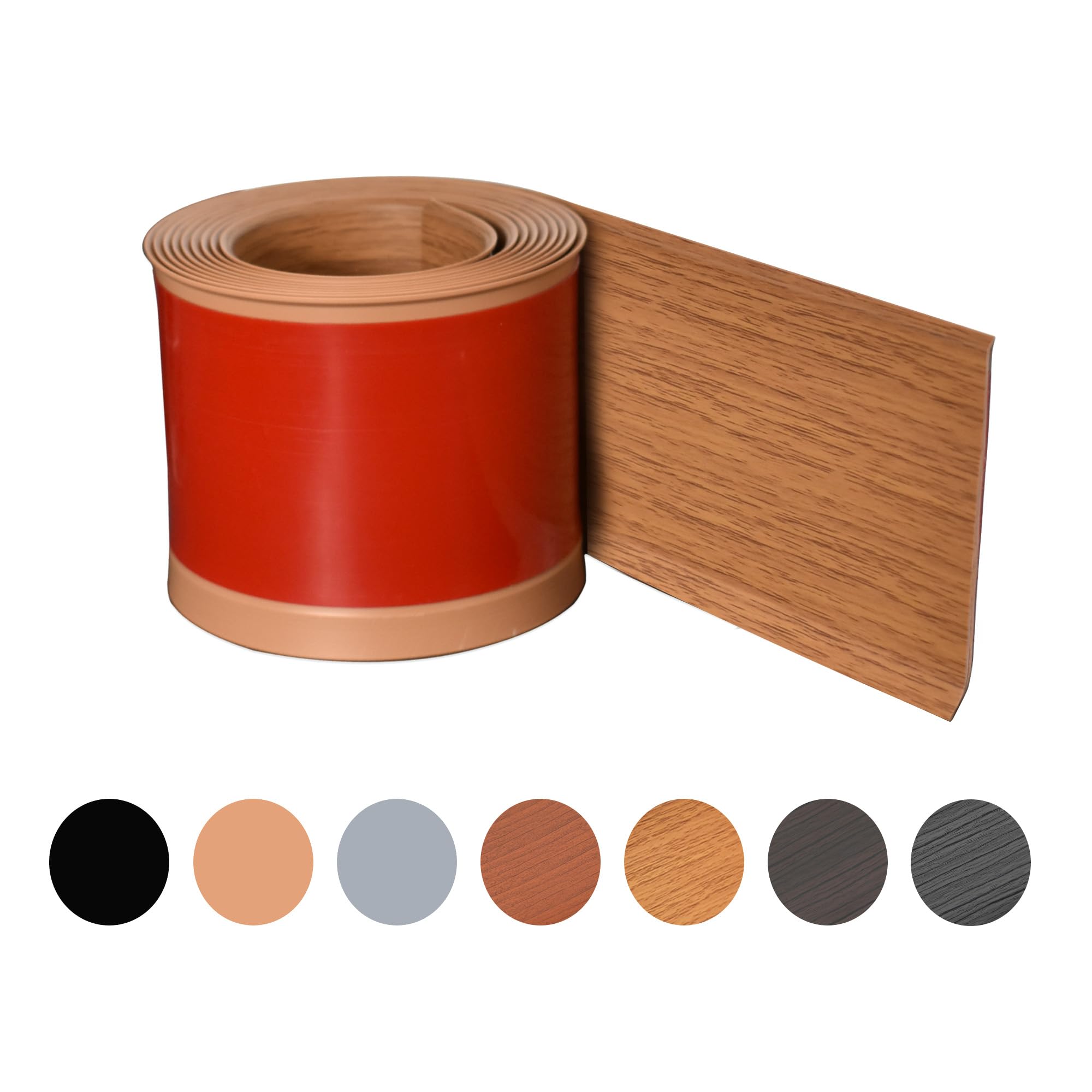
If an RV or a rental needs a warm wood tone fast, this roll delivers it in oak yellow with a self-adhesive backing. It is 3 inches wide and 20 feet long, with a 0.07-inch thickness that gives it a firmer feel under the hand than flimsier peel-and-stick. The bottom angle seals against the floor to keep water and dust off the wall, which is why it suits a bathroom or kitchen. It also comes in ten, twenty, and forty-foot lengths and eight colors if you need to match a bigger patch. And being just 1.6 ounces, it is the lightest roll in this list — a full roll carries easily in one hand.
What people like most is the finish and the simple installation. The oak tone matches what buyers expect from the swatch, and it is easy to cut with a sharp blade and press into place. It hides an ugly spot under a kitchen cabinet or replaces a missing baseboard without any paint. It works best on smooth surfaces like finished wood, drywall, or ceramic tile, and on those it wipes clean and resists wear.
Buyers report mixed results on adhesion and quality, so go in with clear eyes. Some owners say the stick is strong and the material is thick; others find it does not conform on tighter turns. The recurring note is that it does not bend for sharp corners — one buyer covering a 50-foot cable snake found exactly that — so plan on it handling gentle curves and use a separate piece or an angle cut at a tight turn.
Where it shines: Warm oak tone from the start, a waterproof floor seal, and a length that reaches 20 feet in one piece — no painting or staining step at all.
The honest read: Treat this as a gentle-curve and straight-run trim. For a sharp rounded corner you will want to mitre it or combine it with a more supple shoe moulding.
Worth it when: you are covering a straight or softly curved run and want the natural wood look without cutting and finishing.
Think twice if: your priority is a tight inside or outside corner, where a bendable shoe moulding does the job better.
4. Flexible Moulding – Flexible Base Shoe Moulding – WM126 – 1/2″ X 3/4″ – 12′ Straight

The tall, wide roll for covering gaps and blemishes that a slim baseboard leaves exposed
When the floor is uneven or the wall gap is deep, a short shoe moulding will not hide it — you need height. This white roll stands 6 inches tall and runs 20 feet long at 0.08-inch thick, giving it the widest profile in this line-up. The extra height covers scratches, blemishes, and an uneven floor line, and the vinyl surface is specially treated to block new scratches. It comes with a scraper, a scribing tool, and an instruction manual, so a non-professional can install it without buying extra glue.
The self-adhesive backing is the strong suit here, and it is a demanding one. It grabs hard once it touches the wall, and across hundreds of owner reviews the adhesive draws mixed reports. On a painted wall it can pull a layer of paint or drywall if you try to peel it back, so the first placement has to be deliberate. On the plus side, once it is set it stays, and it wipes clean. It adheres well to cement, tile, plastic, metal, glass, and smooth wall, and it flexes easily around a curved wall.
The honest trade-off is that it arrives coiled. Because it ships in a roll, some runs are hard to flatten, and one reviewer noted that even warming and straightening did not fully fix it. A quick pre-flatten under a weight before you peel the backing goes a long way.
What it gets right
- Six-inch height hides deep gaps and blemishes a slim trim cannot.
- Comes with a scraper, scribing tool, and instructions.
- Flexes around a curved wall and fits many surface types.
What to watch
- The strong adhesive is unforgiving — it can lift paint if repositioned.
- It ships coiled, so a pre-flatten helps on long runs.
Best pick if: your gap or blemish is tall and you need to cover more wall in one pass on a curved surface.
Not your fit if: you expect to reposition it a few times — the grab is meant to be one-and-done.
5. Flexible Moulding – Flexible Base Moulding – WM623 – 9/16″ X 3-1/4″ – 8′ Length

The full-height flexible base that wraps a curved kitchen island like it was milled for it
For a curved kitchen island or a rounded entry wall, you want a base moulding tall enough to look built-in and flexible enough to hug the bend. This one runs 9/16 inch thick by 3-1/4 inches tall, holds a 6-inch minimum radius, and bends like a belt. It is paint grade, so once painted it takes on the look of real wood and matches a standard baseboard. Curved drywall is where it does its best work, and owners mention it bends around tight 90-degree curves without the fuss of a notch-and-bend workaround.
It is built for outdoor use as well as indoor. The polyurethane is moisture proof and handles extreme heat and cold without warping or cracking, so a covered porch or a humid bathroom is fair game. It cuts and miters with a regular saw like wood, so you finish it with the tools you already own. At 9 pounds for the length, it comes in a solid, substantial strip that holds its shape on the wall.
Two practical notes stand out. Color starts a little yellowish, so it wants three to four coats of paint for full coverage — a primer coat helps. And if you bend it after painting, the finish can crack, so paint after it is fastened, not before.
What owners value
- Wraps tight 90-degree curves and curved drywall cleanly.
- Matches standard baseboard once painted, so it blends in.
- Moisture proof and holds up to heat and cold indoors or out.
- Cuts and miters on a regular saw like wood.
What to plan for
- Needs three to four paint coats, and painting after bending avoids cracks.
- Runs higher in cost than a plain straight board.
Made for this: a curved kitchen island, rounded entry wall, or any spot where you want full-height base trim that looks milled to the curve.
Not for you if: you want a zero-finishing install — this is paint grade and expects a few coats.
6. FLEXTRIM Flexible Flatstock #WM1X6 – 3/4 inch Thick x 5-1/2 inch Wide and 8 feet Long

A wide, thick flexible board for arches and curved jambs that stock trim cannot reach
Round exterior windows, arched jambs, and custom curved builds are the jobs that call for a wide flexible board rather than a slim shoe. This FLEXTRIM flatstock is 3/4 inch thick and 5-1/2 inches wide, in an 8-foot length, and it bends like a belt to a 12-inch minimum radius. That minimum radius is the number to check first — it means gentle, sweeping curves, not tight corners. It is made in the USA from durable flexible polyurethane and installs with normal woodworking tools and construction adhesive, no special tooling.
Owners push it into places wood cannot go. It solved a round exterior window install; it built the curved member of a half-round porch arch; it covered a tricky curved transition that had resisted other products. The waterproof polyurethane will not rot, swell, or deteriorate in harsh weather, so owners use it heavily on exterior projects. With its wide face, it also covers more surface in one pass than a narrow moulding would.
Two sizing cautions come up. It ships in a light tan, so plan to paint or finish it to match the surrounding trim. And because it is a thick, wide, dense board weighing 20 pounds in the length, it is a heavier piece to handle and fit — measure twice and dry-fit the curve before adhesive. One buyer had to thin it down to 1/2 inch because a longer 1/2-inch piece was not available, so check your target thickness against your gap.
Where it delivers
- Bends to a 12-inch radius for gentle arches, curved jambs, and round windows.
- Waterproof polyurethane will not rot, swell, or deteriorate outdoors.
- Installs with normal woodworking tools and construction adhesive.
Before you buy
- Ships in light tan, so it needs paint or finish to match.
- Heavy at 20 pounds and, at a 12-inch radius, unsuited to tight curves.
The right board for: arched openings, round windows, and curved jamb extensions where a wide face is needed and the curve is gentle.
The wrong board for: a tight 6-inch corner — you need a smaller radius than this offers.
7. FLEXTRIM Flexible Flatstock #WM1x8: 3/4 x 7-1/2 inch net Size – 8 feet Long

The broad, seven-and-a-half-inch flex board for sweeping curves and grand architectural arches
When the project is architectural — a kiva fireplace surround, a wide arched jamb, a curved column casing — you need surface area, and this is the widest pick here. It is 3/4 inch thick and 7-1/2 inches wide in an 8-foot length, with a 16-inch minimum radius that makes it a gentle-curve specialist. Made in the USA from flexible polyurethane resin, it handles interior and exterior use and will not warp, rot, or crack in moisture or temperature swings. It also bends like a belt to wrap curved walls, stairways, round columns, and arched jambs.
The material is friendly to shape and finish. Warm it in the sun and it turns pliable enough to twist and shape by hand, cuts cleanly with a utility knife, and takes spackle, putty, sanding, and paint to a smooth finish. Construction adhesive works on wide faces; brad nails can help but leave ripples if overdone, so heavy nailing on this thick stock is not the answer. Counting against the price it is money-saving in one real way: buyers split a single piece on a table saw to get two strips from one board.
Two limits to weigh. At 29 pounds and 3/4 inch thick, it is a heavy, substantial board that takes some muscle to handle and fit. And 16 inches is the loosest radius in this list — this board wants wide, open curves, not tight turns. Over-flexing a split piece can also snap it, so mind the bend.
Where it earns the width: Broad faces for arches, columns, and fireplace features, in a waterproof resin that finishes like wood and can be split into two strips.
Where it stops: The 16-inch radius and 29-pound heft mean it is for big, gentle curves — not a tight corner or a light one-hand job.
Choose this for: large architectural curves and wide arches where a broad, flat face is the whole point.
Pass if: your curve is tight or you want a lighter board to work with — a smaller-radius trim fits you better.
Understanding the Specs
Minimum Bending Radius
Minimum bending radius is the tightest curve a trim will wrap without kinking or cracking — the smaller the number, the sharper the curve it can follow. A 6-inch radius handles a rounded corner or a curved cabinet base, while a 12-inch or 16-inch radius is for wide, sweeping curves on arches and columns. Always match this number to the tightest curve in your room, because a board that cannot reach your radius will fight you, gap, or split. If a listing gives no radius, assume the piece is not built for a real bend.
Peel-and-Stick vs Cut-and-Nail
Peel-and-stick trim uses a factory adhesive you press onto the wall — clean, measure, cut, peel, and press. It suits a curved wall you want finished quickly and needs no tools, but the grab is strong, so first placement matters. Cut-and-nail flexible moulding works like wood: you cut, fit, fasten with adhesive and nails or brads, then paint or stain to match. It takes more time and tools but delivers a finished, built-in look. Choose peel-and-stick for speed and rentals, cut-and-nail for a permanent, paintable finish.
FAQ
Will flexible base moulding actually bend around a rounded corner?
How do I measure the radius of my rounded wall before buying?
Does peel-and-stick base moulding stay put on a curved wall?
Can I paint or stain flexible moulding, or does it come finished?
What width base moulding do I need to cover my floor-to-wall gap?
Why does my flexible trim arrive curled and hard to flatten?
Is FLEXTRIM polyurethane better than wood for curved baseboard?
What is the difference between a 6-inch and a 16-inch minimum radius?
Can I use flexible flatstock moulding outdoors?
How do I join two pieces of flexible moulding on a long curve?
Final Thoughts: The Verdict
For most curved-wall jobs, the base moulding for rounded corners to beat is the Storystore Wall Baseboard Trim, because the peel-and-stick rubber goes up with no glue or tools and bends to cover a rounded run in one afternoon. If your curve is a kitchen island or a rounded entry wall and you want a painted, built-in look, the Flexible Base Moulding WM623 reaches a 6-inch radius at full base height — and if you want an even longer run with fewer seams, its 12-foot sibling, the FLEXTRIM #623, is the one to reach for. And for wide exterior arches and round windows, the FLEXTRIM Flexible Flatstock WM1X6 is built for the job. Match the minimum radius to your tightest curve, and the right pick installs clean the first time.
How We Picked
We do not accept paid placement. Every pick is matched to a real buyer and a real use-case; we do not hands-on test units.
Sources & Methodology
Specifications: manufacturer listings and product documentation. Review insights: verified customer reviews, as of September 2026. Pricing: not shown on this page (it changes often); check the current price via the retailer link.
As an Amazon Associate, KitchPrep earns from qualifying purchases. This does not affect which products we feature.
Related Guides
