
Specs are compiled from manufacturer listings and verified buyer reviews and can change over time — please confirm the key details on the product page before buying.
If you want the short answer: for most homes, the battery that makes the most sense is the one that pairs a big, safe lithium pack with an inverter that can run your fridge, internet, and lights through a blackout. The hard part is that “battery storage” means two very different things on Amazon — a bare lithium battery bank you wire into your own system, or a complete all-in-one box with the inverter already inside. Buy the wrong one and you either double-buy hardware or end up with a box you cannot expand.
I’m Mohammad Maruf — the founder and writer behind KitchPrep. This guide is built by comparing the manufacturers’ published specifications and the patterns across verified customer reviews, so you get each pick’s real strengths and trade-offs instead of marketing spin.
Whole-home storage lives or dies on three numbers — usable kilowatt-hours, inverter output, and whether the battery can talk to your inverter. Below you get both kinds of kit, sorted so you can match one to your house instead of guessing. It is the pick I would hand a first-timer starting a battery storage for home build.
Our Picks at a Glance
How To Choose The Best Battery Storage for Home
Start with the job you want done. A battery that keeps your Wi-Fi router and a few lamps alive during a two-hour outage is a completely different purchase from a bank that runs a whole house overnight. Figure out your must-run list first, then buy capacity to match it.
Capacity In Kilowatt-Hours, Not Amp-Hours
Kilowatt-hours (kWh) is the honest way to compare batteries, because it multiplies voltage by amp-hours into one usable energy number. A 48V 100Ah pack and a 12V 400Ah pack can hold the same energy, but only one of them was built to feed a home inverter efficiently. When you read “5.12kWh,” that is roughly enough to carry a few essential circuits for a while — not the whole house on a summer afternoon.
Battery-Only Or All-In-One
Battery-only units are for people who already own an inverter or plan to buy a specific one. All-in-one kits bundle a pure sine wave inverter (one that produces smooth, appliance-safe AC power) with the battery, plus an MPPT charge controller that squeezes the most watts out of solar panels. If you have neither inverter nor panels yet, the kit saves you a compatibility headache.
Communication And Certification
Closed-loop communication over CAN or RS485 ports lets the battery report its state of charge to the inverter instead of the inverter guessing. Certifications matter for permits too — a battery listed to UL9540 or UL1973 has been tested for electrical safety and thermal runaway behavior, which some local inspectors ask to see before they approve an install.
Quick Comparison
| Model | Best For | Energy Capacity | Rated Output | Inverter Included | Amazon |
|---|---|---|---|---|---|
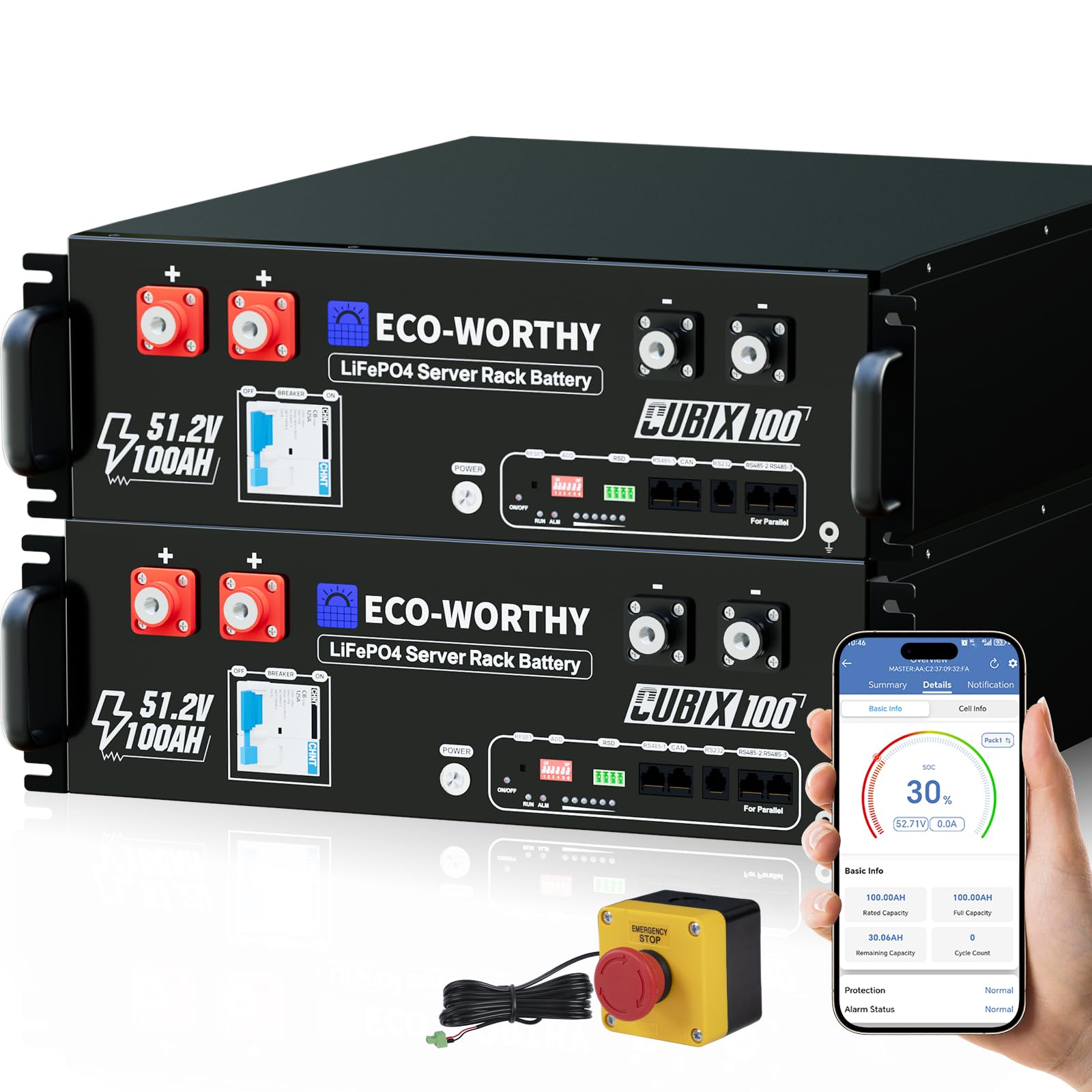
| ECO-WORTHY Cubix100 48V 200Ah (2 Pack)★ Best Overall | Building or expanding a solar bank | 10.24kWh | — | No | Amazon |
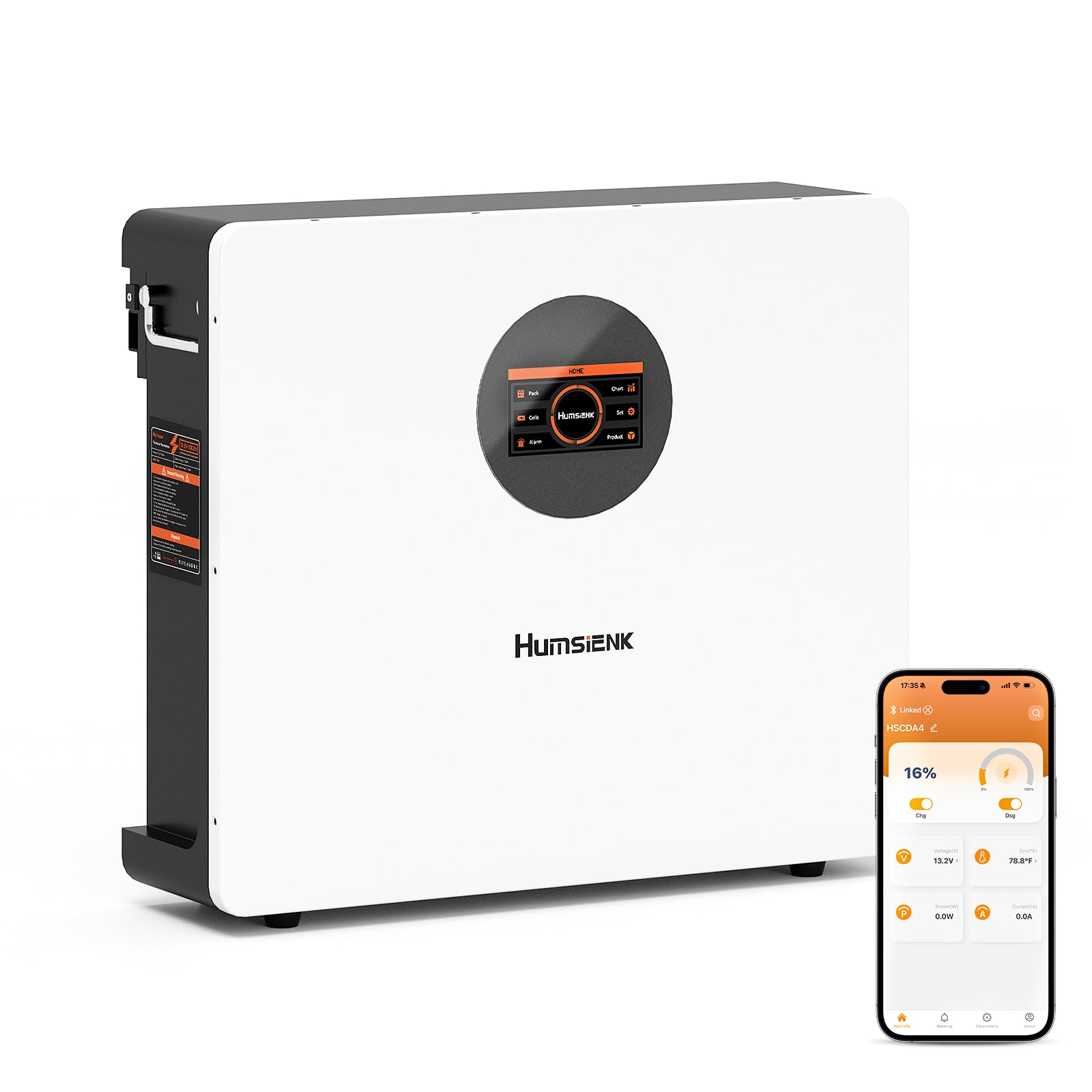
| 48V 100Ah LiFePO4 Bluetooth Wall-MountedBest for Tight Spaces | Wall-space-saving single battery | 5.12kWh | — | No | Amazon |
| ECO-WORTHY 5120Wh + 5000W Inverter | Small essentials backup | 5120Wh | 5000W | Yes | Amazon |
In‑Depth Reviews
1. ECO-WORTHY Cubix100 48V 200Ah LiFePO4 Battery (2 Pack 48V 100Ah)
Our pick — over 4.5★ from 300+ verified ratings; the strongest balance of quality and price.
Two rack batteries that together store 10.24kWh and come pre-certified for the parts of the country that check paperwork.
This is the pair I would point a solar-curious homeowner at first. It is two 48V 100Ah LiFePO4 packs — lithium iron phosphate cells, the chemistry that tolerates deep daily discharge far better than lead-acid — wired as one 10.24kWh bank. Three separate certifications back it up: UL9540, UL1973, and a spot on the California Energy Commission list, which matters if you ever want a rebate or a permit sign-off.
Closed-loop communication is where this beats a plain battery. The CAN and RS485 ports (the small data cables that let the battery hand its state of charge to your inverter) plus built-in Bluetooth and Wi-Fi put the whole bank’s health on your phone through the ECO-WORTHY app. If you ever grow past 10.24kWh, the sky is fairly open — the system parallels up to 32 units toward 163.8kWh.
What sways owners is the build. The casework earns the most praise by a clear margin, with well over a hundred buyers singling it out — the rack is drilled and tapped properly, hardware comes included, and it rolls on wheels. Buyers report Sungold 10kW inverters feeding a three-bedroom off-grid home for a month without a hiccup. It weighs 200 pounds at the rack, so line up a second pair of hands before delivery day.
Where This Two-Pack Earns Its Keep
- 10.24kWh combined, expandable to 163.8kWh across 32 parallel units
- Three key North American safety listings — UL9540, UL1973, CEC
- Bluetooth, Wi-Fi, CAN and RS485 all onboard for app monitoring
- Grade A LiFePO4 cells with a 10-year limited warranty
Honest Reading On The Gripes
- 200 pounds of rack battery — no solo lifting
- App gives basic readings only; it skips time-left and charge-time estimates
- Arrives in separate boxes on separate days, so plan the install around two deliveries
Who it fits: first-time solar builders and anyone expanding an existing 48V bank who wants a certified, monitored pair from the start.
Where it lands short: if you want a finished all-in-one that includes the inverter and only needs one delivery to unpack.
2. 48V 100Ah LiFePO4 Lithium Battery Bluetooth with Active Balancing & Wall-Mounted
Bolts flat to a garage wall for 5.12kWh — and at 104 pounds it saves your back exactly what it saves on floor space.
If floor space is the constraint, this is the shape you want. It hangs on two included wall hooks with brackets, screws, and 2AWG power cables in the box, so a single 5.12kWh pack disappears against a wall instead of eating a rack footprint. The maker’s own numbers put it 60% lighter and 30% smaller than four 12V 100Ah lead-acid batteries doing comparable work.
Weight is where the two battery-only picks split hard. This one lands at 104 pounds, while the Cubix100 two-pack above tips the scale at 200 pounds — nearly twice the heft for the doubled capacity, which is the trade you make for a rack-mounted footprint rather than a wall panel. Same family of decision, very different delivery day.
What wins people over here is the battery’s construction — quality is the most-discussed thing in the feedback, with eight separate notes on it and six more on outright performance, and the recurring story is simple: it goes in, it works, and it keeps working. Owners mention a 7,000W inverter feeding smoothly off one unit, and a second pack running an off-grid shed. The headroom is real too — up to 15 units in parallel, up to 76.8kWh, with CAN and RS485 ports that play nice with Victron, Pylontech, Growatt, and Deye inverters.
The balancing edge: a 3A active-balancing BMS with a 125A circuit breaker in a metal case — the active side moves charge between cells to keep them even instead of just bleeding off the strong ones.
The thing to accept: the wall form factor caps each unit at 5.12kWh, so a whole-home bank means several of these hung side by side.
Reach for this if: your wall is the only free real estate you have and you want a monitored, expandable single pack.
Pass it by if: you want to be finished with one purchase — this is a building block, not a finished system.
3. ECO-WORTHY 48V Home Backup Power, 5120Wh LiFePO4 Battery, AC 5000W Inverter
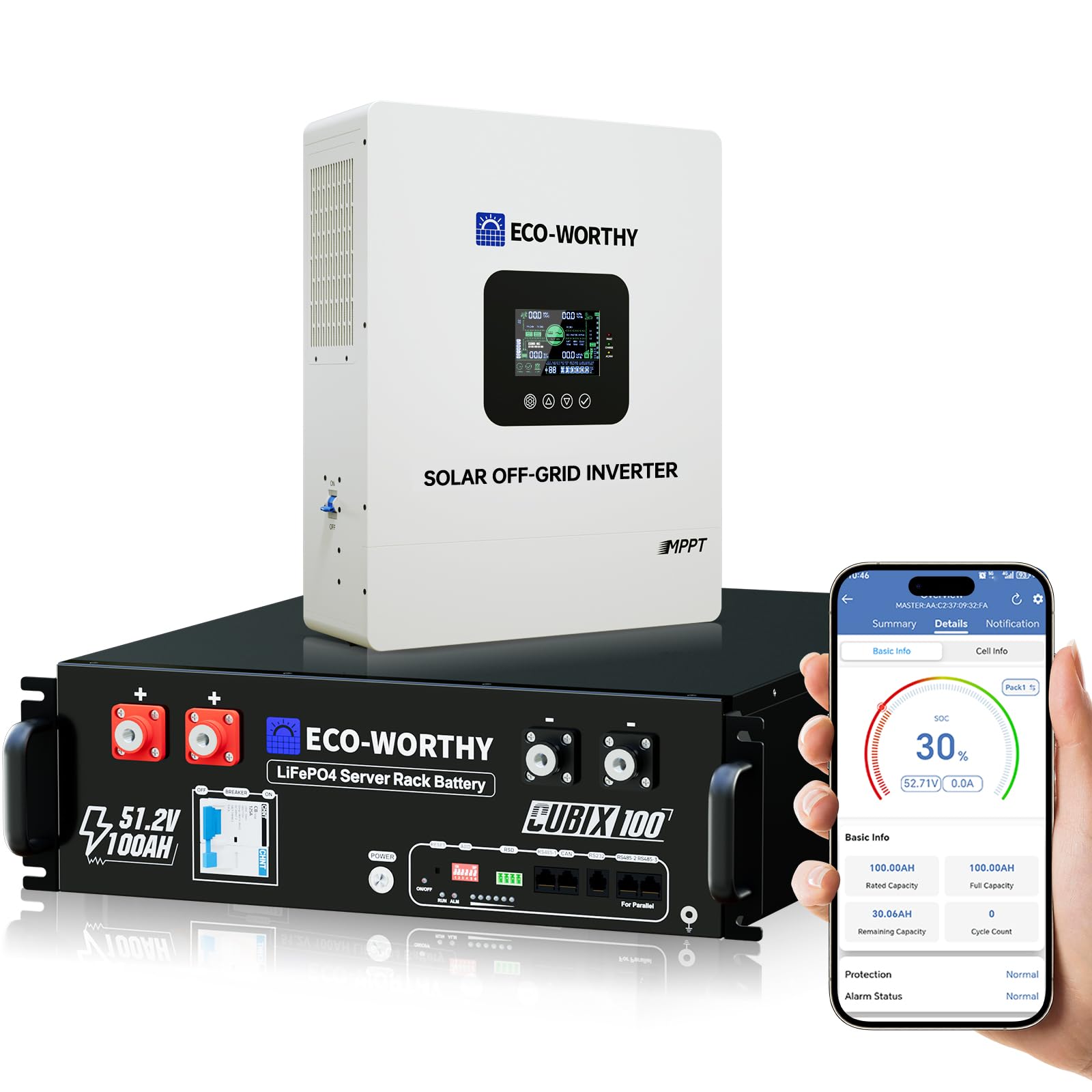
One battery plus a 5000W inverter in a single box — the shortest path from boxes on the floor to backup power.
Skip the matching game entirely with this kit. One 51.2V 100Ah LiFePO4 battery and one 5000W pure sine wave inverter arrive together for 5120Wh of storage and 5000W of output, so your fridge, router, and lights stay on when the grid drops. The inverter is actually three devices in one: a 5000W pure sine wave inverter (clean AC power that appliances tolerate), a 100A MPPT controller (the part that harvests solar), and a battery charger rated up to 100A combined.
Reliability is the headline in owner feedback, and it is not a small sample — a month of continuous running is the kind of mileage that separates a real system from a toy. The battery and inverter pair over closed-loop CAN and RS485, and the ECO-WORTHY app tracks status over Bluetooth and Wi-Fi. Both pieces carry UL1973 and UL1741 testing plus California Energy Commission compliance.
Start small, grow wide: run one inverter today, then parallel up to 6 for a claimed 30kW of AC output, and bank as many as 32 batteries for 163.84kWh total. Two or more inverters in parallel also add 208V and 240V output alongside the standard 120V.
The honest friction: the manual has been called contradictory in places, and a couple of owners hit fan or communication snags that support sorted out. Budget a slow, careful read of the instructions before you energize anything.
Best first system: someone who wants a matching battery and inverter to arrive at once and will expand later.
Look elsewhere if: you need enough stored energy to ride out a multi-day outage from day one — 5120Wh covers essentials, not the whole house.
4. ECO-WORTHY Powermega 48V 314Ah LiFePO4 Battery, 16.1kWh Energy Storage
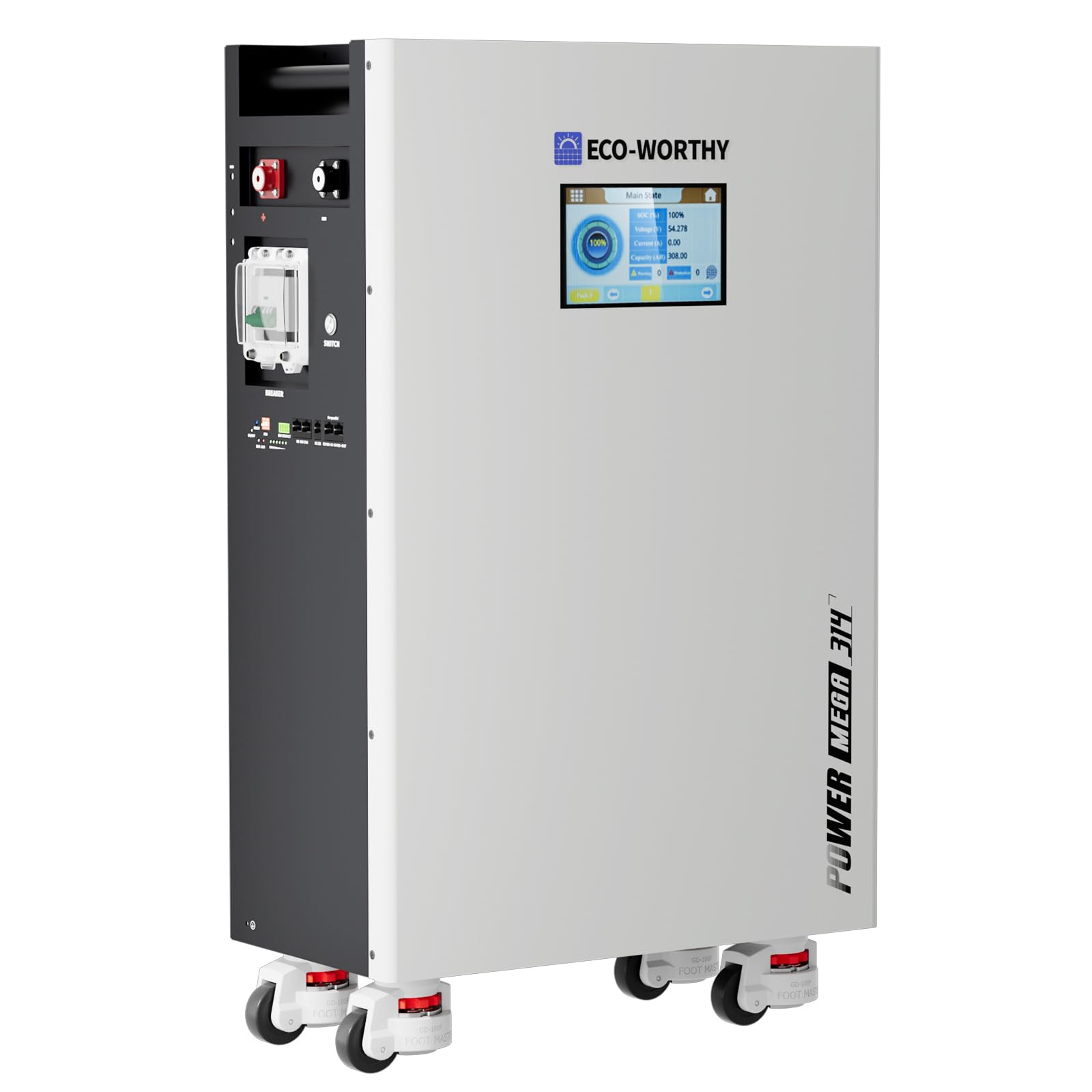
16.07kWh in one cabinet, with fire suppression built in and a 7-inch touchscreen on the front.
A single 48V 314Ah battery holding 16.07kWh is roughly thr>Closed-Loop Communication
Closed-loop communication means the battery and inverter trade data over CAN or RS485 cables instead of the inverter inferring charge level from voltage alone. It tends to keep state-of-charge readings closer to reality and makes parameter setup cleaner. Nearly every pick here supports it, and it is one reason these packs pair cleanly with major inverter brands.
Cycle Life And Depth Of Discharge
Cycle life counts how many charge-and-discharge rounds a battery completes before its capacity fades, and depth of discharge (DoD — how far down you drain it each cycle) changes that count. The higher-end packs here claim 6000+ cycles or 9,000+ cycles at 80% DoD, which speaks to a daily-use battery rather than an occasional one. Treat those as the maker’s figures and weigh them alongside the warranty length.
FAQ
How many kWh do I need to back up my house?
Can these batteries run my air conditioner?
What does closed-loop communication actually do?
Is UL9540 different from UL1973 certification?
How much does a home battery bank weigh?
Can I add batteries later to expand capacity?
Do I need a permit to install a home battery?
How long do LiFePO4 home batteries last?
Can I use these batteries off grid without solar panels?
What size inverter do I need for a whole home panel?
Final Thoughts: The Verdict
For most homes starting a solar or backup build, the answer is the ECO-WORTHY Cubix100 48V 200Ah two-pack — it delivers 10.24kWh with the UL and CEC listings inspectors ask for, and it expands to 163.8kWh as your needs grow. If wall space is your only free real estate, the 48V 100Ah wall-mounted battery hangs out of the way at 5.12kWh per unit. And when you need one order that runs the whole house, the Powermega 314Ah system with the Liber 10KP inverter pairs 16.1kWh of storage with a 10kW hybrid inverter. Whichever way you go, buy the battery and inverter as a matched family and read the manual before you energize anything.
How We Picked
We do not accept paid placement. Every pick is matched to a real buyer and a real use-case; we do not hands-on test units.
Sources & Methodology
Specifications: manufacturer listings and product documentation. Review insights: verified customer reviews, as of September 2026. Pricing: not shown on this page (it changes often); check the current price via the retailer link.
As an Amazon Associate, KitchPrep earns from qualifying purchases. This does not affect which products we feature.
Related Guides
