
Specs are compiled from manufacturer listings and verified buyer reviews and can change over time — please confirm the key details on the product page before buying.
If the power goes out during a storm, your main sump pump stops and your basement starts filling — a water-powered backup pump solves that by using your home’s city water pressure instead of electricity. It needs no battery, no charger, and no generator, and it keeps pumping as long as your municipal water supply keeps flowing. The trick is picking the right flow rate and lifting height for your pit, because those two numbers decide whether it keeps up or falls behind.
I’m Mohammad Maruf — the founder and writer behind KitchPrep. This guide is built by comparing the manufacturers’ published specifications and the patterns across verified customer reviews, so you get each pick’s real strengths and trade-offs instead of marketing spin.
Below you’ll find the flow rates, lifting heights, and installation realities that actually matter, plus the standouts worth your money. Every pick here is a fully mechanical water-powered backup sump pump.
Our Picks at a Glance
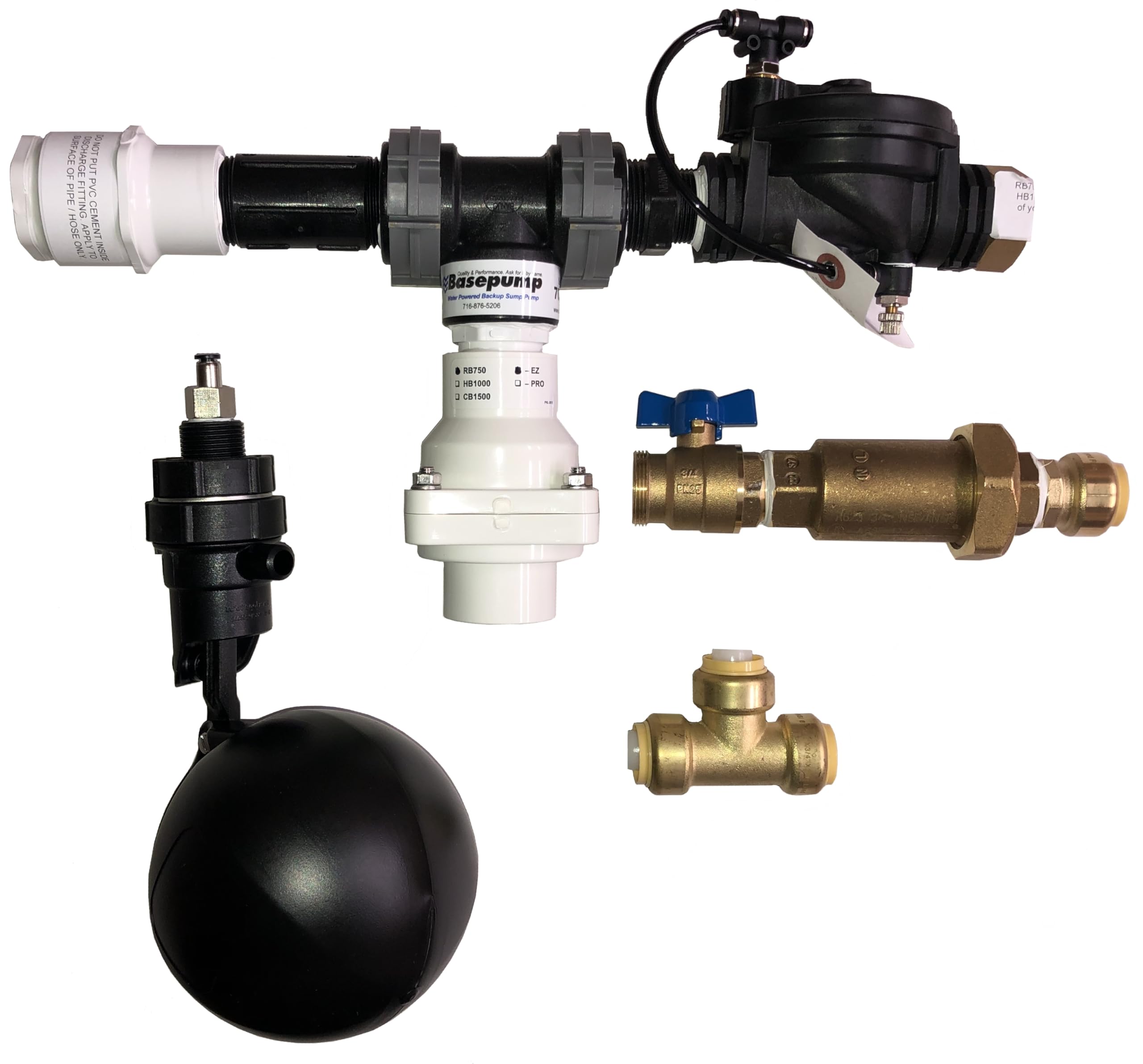

How To Choose The Best Water-Powered Backup Sump Pump
A water-powered backup pump is a mechanical device that spins no motor and holds no charge. Instead, it uses the pressure in your home’s municipal water line to force water through a venturi — a narrow, funnel-shaped passage that speeds up the flow and creates suction. That suction pulls water up out of your sump pit and pushes it out through a discharge pipe, all without a single watt of electricity. Because it runs on water pressure alone, it works during a blackout for as long as your city water keeps flowing.
Start With Your Flow Rate Requirement
Flow rate is measured in gallons per minute, or gpm — the volume of water the pump can move out of your pit each minute. A higher gpm means the pump empties your pit faster. Your primary pump moves water quickly, so a backup that moves too slowly can fall behind during a heavy rain event. This is the single number that decides whether a backup truly protects you or just buys time. A pump rated at 15 gpm will empty a typical pit noticeably slower than one rated near 20 gpm or above, and in a storm every minute counts.
Then Check Your Lifting Height
Lifting height — also called head height — is how high the pump can push water upward before it loses its pushing power. Water-powered pumps have a maximum lifting height, usually measured in feet, and if you exceed it the pump simply cannot move the water. Check the vertical distance from your pit floor to where the discharge line exits your home. If your ceiling mount sits 10 feet above the pit, the pump needs enough lifting capability to reach it, or you will need to remount the unit closer to the sump.
Confirm Your Municipal Water Pressure First
Water-powered pumps depend on your incoming city water pressure, so verify it before you buy. Most models are designed to run on pressures in the range of roughly 40 to 80 psi — pounds per square inch, the force your water line delivers. Too little pressure and the venturi cannot create enough suction to lift water. Test your pressure with a simple gauge on an outdoor spigot or laundry tap before installation, because a pump that underperforms is almost always a pressure problem, not a defective unit.
Plan For The Hidden Installation Costs
The pump itself is only part of the job. Many water-powered systems require a dedicated discharge line and a separate backflow preventer to keep sump water from ever mixing back into your drinking supply. Some models build that protection in, others do not. Local plumbing codes may also require a licensed plumber for the water connection, so budget for that possibility. A unit that includes its own backflow prevention can save you a separate purchase and a second trip to the hardware store.
Quick Comparison
| Model | Best For | Flow Rate | Max Lifting Height | Weight | Amazon |
|---|---|---|---|---|---|
| RB750-EZ Premium Water Powered Backup Sump Pump System★ Best Overall | All-around best | 15 gpm | 15 feet | 6 pounds | Amazon |
| Star Basement Sentry (STWB140)Compact Value | Compact budget pick | 20 gpm | — | 5.9 pounds | Amazon |
| Zoeller 540 FLEX Water-Powered Backup Sump Pump System | High-flow mid-range | 20 gpm | — | — | Amazon |
| RB750 Water Powered Backup Sump Pump | Proven reliability | 15 gpm | 15 feet | 6 pounds | Amazon |
| RB750-AVB with Back-flow Prevention Vacuum Breaker and Water Alarm | Built-in backflow safety | 7.5 gpm | — | — | Amazon |
| SumpJet® Water Powered Backup Emergency Sump Pump with NightEye® Wireless Alarm | Premium compact build | 19.8 gpm | — | 8 pounds | Amazon |
| HB1000-PRO Premium High-Volume Water Powered Backup Sump Pump | Top-tier high volume | 23 gpm | 15 feet | 8 pounds | Amazon |
In‑Depth Reviews
1. RB750-EZ Premium Water Powered Backup Sump Pump System
Our pick — over 4.5★ from 100+ verified ratings; the strongest balance of quality and price.
The all-rounder that moves 15 gallons a minute and wakes the whole house at 85 decibels.
If you want one backup pump that does everything well without a fuss, this is the pick. It moves up to 15 gallons per minute — the volume of water pushed out of your pit each minute — which is enough to keep up with most household flooding emergencies. It relies entirely on your municipal water pressure, so there is no battery to go flat, no charger to plug in, and no generator to fire up. It activates on its own the moment your primary pump falls behind or the power cuts out.
The clever part is the internal venturi, a funnel-shaped passage that speeds water up to create the suction pulling water out of your pit. Because there are minimal moving parts, it runs quietly and rarely needs maintenance. The 85 dB high water alarm — roughly the volume of a garbage disposal — sounds if water climbs past normal levels, giving you warning before the basement floods. It also mounts to your ceiling joists, which lets you keep a sealed radon cover on the pit. Buyers report it clears 14 inches of water in about 50 seconds.
Where It Earns Its Keep
- Set-up is the standout — it ships with a back-flow preventer, shutoff valve, Shark-bite fittings and pipe hangers, so the parts list is short.
- 15 feet of maximum lifting height clears most basement ceilings without extra plumbing gymnastics.
- No electricity, no batteries, no generator — it just needs your city water line to stay pressurized.
What To Keep In Mind
- It pumps slower than a primary electric pump, so it is a safety net, not a replacement.
- A few owners hit a small leak at the black valve past the shutoff, usually fixed by tightening the internals.
- Verify your water pressure first — one owner wished they had checked before buying and would have sized up for faster pumping.
Grab this if: you want a proven, well-equipped backup for power outages and primary pump lag, and you have decent city water pressure.
Think twice if: your pit fills fast in a storm or your water pressure runs low — check your PSI before you commit.
2. Star Basement Sentry Water Powered Backup Sump Pump System (STWB140)
A compact, budget-leaning backup that claims 20 gallons a minute and takes up almost no space.
If your sump pit is cramped or your budget is tight, the Star Basement Sentry is the one to look at. It is rated at up to 20 gallons per minute, which is faster on paper than the RB750-EZ’s 15 gpm, and the brand claims it moves about 2 gallons of sump water for every 1 gallon of supply water it uses. That said, some owners mention it does not pump fast enough for their setup, so treat the flow number as a ceiling, not a guarantee. You can mount it horizontally in rafters or vertically inside the basin, and it needs a pit at least 18 inches wide by 22 inches deep.
The weight story here is impressive for what it does. At 5.9 pounds, it is fractionally lighter than the RB750-EZ’s 6 pounds, and both are easy for one person to hold overhead while mounting. It uses water only when needed, turning on when water rises past normal in the pit and shutting off once it drops back down, which keeps your water bill in check.
The recurring gripe is the water line hookup — it can drip unless you seal it properly. Owners recommend wrapping plenty of Teflon tape and thread sealant on the connection. On the plus side, Star’s customer service earns genuine praise; one buyer had a defective unit replaced quickly after a single call. It carries a 2-year limited warranty.
Tight-space winner: if your pit is small or your rafters are the only mounting option, this fits where bigger units will not.
Reach for this if: you have a snug pit, a modest budget, and want a light unit up in the rafters.
Look elsewhere if: you need proven high flow in a heavy flood — some owners found it too slow for their volume.
3. Zoeller 540 FLEX Water-Powered Backup Sump Pump System
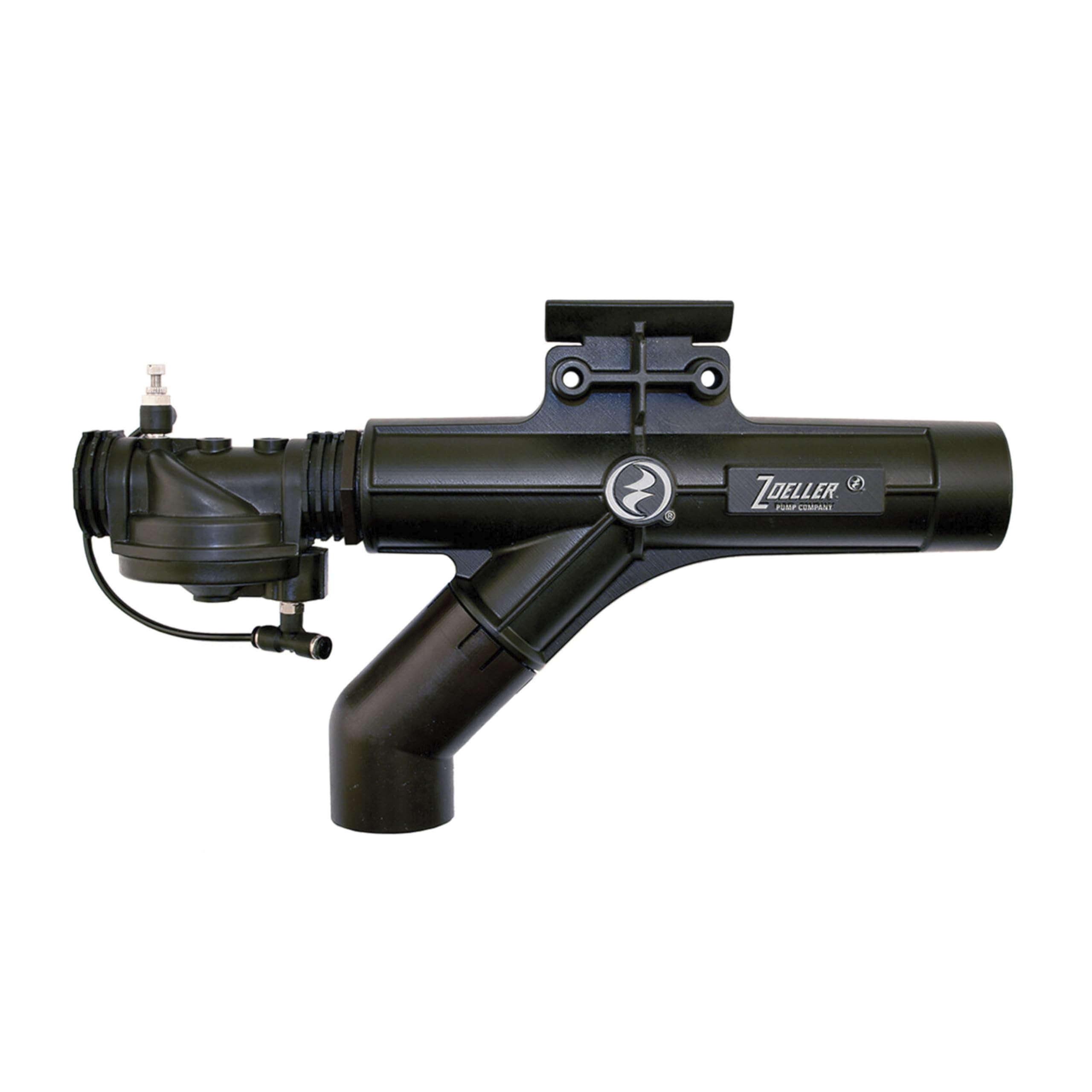
A branded high-flow option that swaps water for electricity at up to 20 gallons a minute.
Zoeller’s 540 FLEX is the pick for buyers who want a brand name they trust in the pit. It is rated at up to 20 gallons per minute and uses municipal water pressure between 40 and 80 psi — pounds per square inch, the force in your water line — to push out up to 2 gallons of sump water for every 1 gallon of supply water. It can mount overhead or in the ceiling joists, and it fits small sump pits as small as 18 inches by 22 inches, so cramped spaces are not a dealbreaker. It also works with any brand of primary pump.
The size is where it differs sharply from the RB750-EZ. At 15.5 inches by 13.5 inches by 5.5 inches, the Zoeller takes a much bulkier footprint than the RB750-EZ’s slim 18 by 4 by 6 inches, so check your rafter clearance before you commit. The upside is real durability: it is made of non-corrosive materials and backed by a 3-year limited warranty, the longest in this roundup.
Functionality is where the honest caveat sits. Some owners say it works great and others report it not working at all from the start, and installation often takes half a day. One DIYer found a rafter mount could not lift water 10 feet and had to remount it near the sump with only about 2 feet of suction distance to make it work. Mount it low, give it a short suction run, and the odds favour you. And do not skip the separate backflow preventer and 1-1/2 inch discharge pipe, which some setups require.
Brand-name confidence: the 3-year warranty and non-corrosive build give this one the longest coverage of the group.
Best for: buyers who want a recognised name, a longer warranty, and 20 gpm flow.
Heads up: plan for a half-day install and a low mount if your rafter lift falls short.
4. RB750 Water Powered Backup Sump Pump

The older twin of the top pick, and quietly the most reviewed unit on this list.
Here is the RB750-EZ’s sibling: same 15 gallons per minute flow rate, same 15 feet of maximum lifting height, same 6-pound weight, same no-electricity design. So why does it land at number four? The build material changes from plastic to polypropylene, and the parts bundle shifts to a simpler mounting hardware, check valve, and water alarm kit. It runs quietly, has no moving parts to wear out, and delivers the same 85 dB high water alarm as the EZ model.
What really separates this one is its track record. It has the largest review pool of any pump here, and owners consistently report flawless operation and easy installation. Customers note it pumps nearly as fast as their main pump and runs quieter than expected. One long-term owner reports it empties a typical pit load in about 30 seconds of run time.
The recurring caution is the plastic fittings. Do not over-tighten the 3/4 inch nipple, because it can deform the rubber washer and cause a leak. A few owners recommend fitting a shutoff valve before the backflow preventer rather than after it, and adding a small flexible coupling to dampen vibration. None of that is a flaw in the pump — it is basic plumbing patience.
The crowd pleaser: this is the most owner-verified model here, with a large review pool backing its reliability.
Pick this if: you want the same core RB750 platform as the top pick with a proven, large owner base behind it.
Note: the plastic fittings reward a gentle hand — overtighten and you will be chasing a drip.
5. RB750-AVB with Back-flow Prevention Vacuum Breaker and Water Alarm

The one with backflow protection already built in, so you can skip a separate check valve.
If keeping your drinking water safe from sump water is your top priority, this is the model to pick. It has an integrated atmospheric vacuum breaker, a valve that stops sump water from ever siphoning back into your drinking supply — something several competitors make you buy and install separately. It also keeps the same no-battery, no-electricity promise as the rest of the RB750 family, but you trade flow for that convenience: it is rated at up to 7.5 gallons per minute, roughly half the top pick’s 15 gpm. Owners running a moderate load — one with a 12-foot vertical lift — report about 750 gallons per hour at strong water pressure.
Every part on this unit can be repaired or replaced individually, which means a future failure might just need one component instead of a whole new pump. That is a real long-term saving. It ships with detailed instructions, most of the install parts, and the 85 dB water alarm.
The catch is the flow. It moves about half the water the higher-rated models do, and one owner running a staged setup during a hurricane concluded it could not keep up on its own and bought a generator for extra insurance. If your pit fills fast, want the higher-flow options above. The AVB model also needs a new 1 inch drain line and a 4 to 5 hour install with basic plumbing and woodworking skills. Owners still describe the setup as fun to assemble with half-inch sweated copper pipe.
Code-friendly pick: the built-in vacuum breaker saves a separate backflow purchase and keeps your potable supply protected.
Rank it first if: built-in backflow safety and repairable parts matter more to you than raw speed.
Size it carefully: at 7.5 gpm it will not keep pace with a fast-filling pit, so match it to your volume.
6. SumpJet® Water Powered Backup Emergency Sump Pump with NightEye® Wireless Alarm

A Liberty Pumps unit that arrives fully assembled and pumps 19.8 gallons a minute.
Liberty Pumps builds this one to a premium standard, and it shows in the flow figure. It is rated at 19.8 gallons per minute, roughly a third faster than the top pick’s 15 gpm, and it accepts inlet supply pressures all the way from 20 psi to 100 psi — a much wider tolerance than most units, which are tuned for the 40 to 80 psi range. It comes fully assembled, so what shows up is a unit, not a pile of loose fittings.
Because it is compact and self-contained, it is one of the easier premium units to tuck into a tight pit. The two-year Liberty Pumps warranty covers factory defects in materials and workmanship. One owner ran it through a full seven-day post-hurricane outage and reported the basement stayed dry, noting a standard battery backup would have died long before the week was up.
Two honest caveats. First, water consumption is real — a backup that runs for days on municipal water will show up on a water bill, and one owner flagged exactly that. Second, the alarm has been a point of friction. Owners have found it sensitive to condensation on the probe, and it can start sounding when your main sump pump kicks in, which is more annoying than useful. If the alarm gives you trouble, a some prefer the version without it and add a separate alarm on their own terms.
Wide-pressure tolerance: running anywhere from 20 to 100 psi makes this a great fit if your water pressure is on the low or unpredictable side.
Ideal for: buyers who want a self-contained premium unit with a high flow rate and forgiving pressure range.
Weigh the alarm: the attached water sensor can be finicky, so decide if you want it built in.
7. HB1000-PRO Premium High-Volume Water Powered Backup Sump Pump

The biggest mover in the roundup, rated at a full 23 gallons per minute.
When flow rate is the deciding factor, nothing here beats the HB1000-PRO. It delivers up to 23 gallons per minute, the highest figure on this list, and that gap over the top pick’s 15 gpm means it clears a fast-filling pit noticeably quicker. It runs entirely on municipal water pressure with no electricity, battery, charger, or generator, and it includes a back-flow preventer, shutoff valve, Shark-bite fittings, and pipe hangers — most of what you need in the box. It ships with 15 feet of maximum lifting height and the 85 dB high water alarm.
The performance story is what owners talk about most. Reviewers point out it runs much faster than expected, and one noted it evacuates water quicker than their old battery backup. Several also flag the kit’s completeness, saying the PRO version includes extra equipment that would cost more to assemble separately at a hardware store. One owner with zero plumbing experience self-installed it in four hours using YouTube and the included instructions.
Two honest trade-offs. First, you pay for the convenience: more than one owner notes the kit is pricier than sourcing the Ts, fittings, and PVC separately, so if you enjoy plumbing and want to save money, you could build a parts list from scratch. Second, plan for extras — most installs still want a 1-1/4 inch PVC, 3/4 inch PEX, and a tee or adapter. Expect anywhere from 2 to 8 hours depending on how tight your access is.
Why It Tops The Flow Chart
- 23 gpm is the highest flow here — noticeably quicker than the 15 gpm of the RB750 platform.
- The kit ships with back-flow preventer, shutoff valve, Shark-bite fittings, and pipe hangers.
- Matches the top pick’s 15 feet of lifting height, so ceiling or radon-compatible mounting stays easy.
Where It Asks More Of You
- You pay a premium for the pre-gathered fittings that sourcing your own PVC and Ts would avoid.
- Expect extra PVC, PEX, and a tee on top of the kit, plus a 2 to 8 hour install.
- Verify your water pressure beforehand — like every water-powered unit, low PSI means weak suction.
Buy it if: your pit fills fast or you want the fastest water-powered backup here, and you value a kit that arrives ready to plumb.
skip it if: price matters more than flow and you would rather source fittings yourself.
Understanding the Specs
Flow Rate (gpm)
Flow rate, measured in gallons per minute, tells you how much water the backup moves out of your pit each minute. It matters because a backup is only useful if it can keep up when your primary pump quits during a storm. Lower-gpm units like the 7.5 gpm RB750-AVB are fine for slow-filling pits, while higher-flow units near 20 gpm and up are better for basements that take on water fast.
Maximum Lifting Height
Lifting height is the maximum vertical distance the pump can push water upward, usually measured in feet. It matters because where you mount the pump — ceiling, rafters, or pit floor — depends on it. If you exceed the lifting height, water will not move no matter how strong your water pressure is. Owners who mounted a rafter unit too high sometimes had to remount it low near the sump to get enough suction.
Municipal Water Pressure
These pumps run on your home’s city water pressure, and every model is designed for a target range. Most need roughly 40 to 80 psi — pounds per square inch — to create enough suction, though some accept as little as 20 psi or as much as 100 psi. Test your pressure before buying, because an underperforming pump is almost always a pressure problem, not a defect.
Backflow Preventer and Discharge Line
A backflow preventer or vacuum breaker stops sump water from ever siphoning back into your drinking supply, and some local codes require it. Some pumps build it in, while others make you buy and install a separate check valve. A dedicated discharge line is also often required. These extras add to the install time and cost, so factor them in before you commit.
Water Alarm
The high water alarm is the audible alert that sounds when water rises past normal levels in your pit. Most units here use a 85 dB alarm — about the loudness of a garbage disposal — so you hear it from another room. It is a low-cost early warning that buys you time to act before water reaches your finished floor.
Material and Moving Parts
Water-powered backups are made of plastic or polypropylene and are designed with few or no moving parts, which is why they need little maintenance and run quietly. Repair-friendly units let you replace individual parts rather than the whole pump if something fails, which stretches the lifetime value of the unit.
FAQ
Will a water-powered backup pump work during a power outage?
Do I need a certain water pressure for these pumps to work?
How fast will a water-powered backup pump drain my sump pit?
Can I install a water-powered backup sump pump myself?
Will one of these work with my existing sump pit and primary pump?
Do I need a backflow preventer with a water-powered backup pump?
How much water does a water-powered backup pump use from my supply?
Is a water-powered backup better than a battery backup pump?
What maintenance does a water-powered backup pump need?
Will these pumps work in a sump pit with a radon mitigation cover?
Final Thoughts: The Verdict
For most homes, the RB750-EZ is the backup worth buying — it moves 15 gallons a minute, lifts water 15 feet, ships with nearly every part you need, and holds 4.7 stars across 100+ buyer ratings. If raw speed matters most, the HB1000-PRO tops the group at 23 gpm. And for a small pit or a tight budget, the Star Basement Sentry fits where the bigger units will not, and it is the lightest at 5.9 pounds.
How We Picked
We do not accept paid placement. Every pick is matched to a real buyer and a real use-case; we do not hands-on test units.
Sources & Methodology
Specifications: manufacturer listings and product documentation. Review insights: verified customer reviews, as of September 2026. Pricing: not shown on this page (it changes often); check the current price via the retailer link.
As an Amazon Associate, KitchPrep earns from qualifying purchases. This does not affect which products we feature.
Related Guides
