
Specs are compiled from manufacturer listings and verified buyer reviews and can change over time — please confirm the key details on the product page before buying.
Here is the short answer every woodworker wants: the Yost Vises M9WW Rapid Action Woodworking Vise is the smartest buy on this page. It holds the highest score with the largest body of owner feedback, and its flip-lever quick release means you are not spinning a handle for twenty seconds between cuts. A vise is the clamp you touch on every project, so jaw width and opening matter more than any other bench spec.
I’m Mohammad Maruf — the founder and writer behind KitchPrep. This guide is built by comparing the manufacturers’ published specifications and the patterns across verified customer reviews, so you get each pick’s real strengths and trade-offs instead of marketing spin.
Below you will find nine bench vises with their real jaw widths, throat depths, and the honest trade-offs owners hit during installation. Whether you are building your first bench or upgrading a tired face vise, this guide ranks the best woodworking bench vise for every shop and every budget.
Our Picks at a Glance


How To Choose The Best Woodworking Bench Vise
A bench vise holds the board so both your hands stay on the plane. It decides whether a board stays put while you plane it and whether a dovetail joint lines up square. Buy the wrong jaw width and you will be notching the bench or clamping in two passes for years.
How wide do you actually need the jaws
Jaw width means the measurement of the clamping faces themselves. A 7-inch vise handles almost all furniture work, while a 9-inch gives you extra room for wide panels and door stiles. If your bench is a standard 3-inch slab, a 9-inch vise sometimes forces you to notch the underside to fit.
Jaw opening, by contrast, is how far the front jaw travels from the back jaw. A wider opening lets you hold thicker material or clamp a workpiece diagonally. The two numbers are different, and a vise with a big jaw width can still have a modest opening.
Quick release is the feature that decides how often you reach for the vise
A quick-release lever disengages the main screw so the front jaw slides freely instead of grinding through thread. Push the lever toward the handle, slide the jaw to your stock, release, and one turn of the handle locks it. Without that lever you are cranking the handle the whole distance every time you change a workpiece.
Check the listing carefully here. Two vises on this page are missing the feature sellers claim in the description — the findmall and the HFS. That mismatch is the single most common source of one-star reviews on the category.
Throat depth and bench dogs
Throat depth is the distance from the top of the jaws down to the top of the guide bars — basically the vertical space your hands and tools get under the workpiece. Deeper throat depth gives you clearance for sawing and planing. A bench dog is a small retractable peg on top of the vise jaw that pairs with a bench stop to hold long boards without clamping them at all.
Quick Comparison
| Model | Best For | Jaw Width | Jaw Opening | Quick Release | Amazon |
|---|---|---|---|---|---|
| Yost Vises M9WW★ Best Overall | Wide panels and heavy stock | 9″ | 10.25″ | Yes | Amazon |
| Eclipse EWWQR7Top Performer | Bench vice plus tail vice in one | 7″ | — | Yes | Amazon |
| Wilton 78AMost Versatile | Tapered and irregular parts | 4″ x 7″ | 10″ | Yes | Amazon |
| findmall 9″ Front Vise | Budget bench builders | 9″ | — | Not actually fitted | Amazon |
| HFS(R) 9″ Bench Vise | Cheap face or tail vise duty | 9″ | — | Not actually fitted | Amazon |
| Yost Vises M7WW | Standard furniture benches | 7″ | 8″ | Yes | Amazon |
| Groz 39020 Front Vise | Shop-built bench kits | 7-1/8″ | 8-1/4″ | No | Amazon |
| Shop Fox D4327 | Trim bench slabs | 7″ | 8″ | Yes | Amazon |
| Groz 9″ Rapid Action 39012 | Serious cabinetmakers | 9″ | 13-1/2″ | Yes | Amazon |
In‑Depth Reviews
1. Yost Vises M9WW Rapid Action Woodworking Vise
Our pick — over 4.5★ from 550+ verified ratings; the strongest balance of quality and price.
The nine-inch iron jaw that swallows door stiles whole and still flips open with one thumb push.
If you clamp wide panels, door stiles, or full-width joinery, the M9WW is the pick. Its jaw width is 9 inches (22.86 cm) across the clamping faces, so wide boards sit flat and stable. The jaw opening travels 10.25 inches (26.035 cm), letting you grip thick stock without repositioning. The throat depth is 4 inches (10.16 cm) — that is the vertical working room under the jaw, so your hand and saw get clearance instead of knuckle scrapes. The body is cast iron rated at 30,000 PSI (pounds per square inch, a measure of how much pressure the metal can take before it deforms).
Owners consistently praise the build. Buyers report the vise “installs easily on 4 inch bench slab with relief cut and 4 lag screw holes,” and owners mention it feels like a lifetime fixture rather than a weekend find. Several long-term owners say a light maintenance routine keeps the screw and guides working for decades — the cast iron and steel construction means there is nothing plastic in the load path to fatigue. The bench dog (a metal peg that pops up to hold work against a bench stop) slides into position when you loosen the finger bolt on the front, so long stock can be held against a bench stop without clamping the whole board.
Plan for the install. This vise weighs about 32 pounds, so lifting it under a bench while lining up four lag screw holes is a genuine two-person job — several owners note flipping the bench upside down makes it simpler. The cast iron is also fragile in transit; inspect the box before the courier leaves, because cast corners chip if the package lands hard. And note the handle travel: with wooden face plates added, the T-bar handle stays vertical when the vise is fully closed, which keeps your knuckles clear of the bench edge.
What earns the top spot
- 9-inch jaw width with 10.25-inch opening swallows wide panels and door stiles in one bite.
- The quick-release lever disengages the screw so the jaw slides free instead of cranking.
- 30,000 PSI cast iron body with chrome plated steel T-bar handle and steel guide rails.
- Position the bench dog by loosening the finger bolt — long boards get held without clamping.
What you should know about
- About 32 pounds means mounting is a two-person chore, not a solo one.
- Cast iron ships fragile — inspect the box on arrival, not next weekend.
- Some customers note a slight right-side gap that disappears once you tighten down.
The fit: Buy this if your bench sees wide panels, door frames, or joinery that swallows a seven-inch jaw.
The trade: A 9-inch vise on a 3-inch bench slab may require notching the underside, and the weight demands help on install day.
2. Eclipse Professional Tools EWWQR7 7″ Quick Release Woodworking Vise
A single cast iron body that works as a face vise and a tail vise without you buying two tools.
Cabinetmakers and joinery-focused woodworkers get the most from this one. The Eclipse EWWQR7 is a 7-inch vise (178 mm jaw width) made from grey cast iron, a material the maker chose for its shock-absorbing qualities — so mallet blows and chisel taps soak into the body instead of ringing back into your wrist. The main screw and slide rods are steel with a single-start thread (a screw that advances one thread per turn, giving strong holding force). The adjustable front stop doubles as a dog, so the vise works as both a standard vise and a tail vise in one tool.
The quick-release trigger is the headline feature, and it is the aspect owners praise most — pulling the trigger frees the jaw to slide open or shut without touching the screw at all. Buyers specifically call out how easily the unit mounts to the bottom of a work surface, and several note the casting and machining are cleaner than the price suggests. The tommy bar (the handle you turn to tighten) is engineered to bend before the vise itself becomes overstressed, which is a real safety design for anyone who overtightens out of habit.
The trade-off is the casting finish. A few owners mention raw metal on the back of the body that needed light grinding before the vise sat flush, and shimming was required to mount it square on some benches. It also arrives with heavy packing grease that needs wiping down. None of that stops it being a serious tool — 856 ratings, 4.6 stars — but budget a couple of shop hours for fitting rather than assuming bolt-and-go.
The straight answer: For the money, this is one of the strongest combinations of cast iron mass, quick release, and dual-purpose bench dog that a hobby or small professional shop can buy. Two predrilled holes get it mounted to the underside of the bench quickly.
The honest catch: Expect a bit of fitting work. The casting backside often needs touching up, and a shim or two underneath is common before it sits perfectly square.
Reach for this if: You want a face vise and a tail vise in a single cast iron body with a reliable trigger release.
Look elsewhere if: You are unwilling to spend an evening fitting and shimming — some owners found the casting needed cleanup first.
3. Wilton Woodworking Vise, 4″ x 7″ Jaw, 10″ Max Jaw Opening, Rapid-Action
The vise that grips tapered work nothing else will hold, thanks to a jaw that pivots ten degrees.
Irregular parts — tapered legs, angled rails, odd-shaped offcuts — are where the Wilton 78A earns its spot. The front jaw pivots 10 degrees so it can close flush against an off-square face, and that jaw is removable if you want a wider flat clamping surface. The jaw measures 4 inches by 7 inches, the maximum opening reaches 10 inches, and the vise ships with a set of magnetic maple jaw inserts that protect finished stock from iron bite. It is backed by Wilton’s lifetime warranty against manufacturing defects.
The U-channel rail design is another detail serious users appreciate — the rail covers the screw and guides so dust and shavings cannot pack into the threads. Several owners describe removing the front jaw entirely and using it as a full-width bench dog when holdfasts or bench stops are doing the clamping. The quick-release mechanism is smooth and reliable, and one long-term user notes their first Wilton survived three-plus decades in a school shop before it was retired.
Budget for weight. This vise lands around 30 pounds and reviewers point out the mounting hole sizes are tight for standard lag bolts, so a bit of drilling or filing may be needed before the lag screws seat properly. The pivoting jaw is genuinely handy for tapered stock but adds a small fiddle factor for everyday square clamping — a couple of owners find it easier to leave it fixed unless they need the pivot.
Why this earns a look
- Self-centering jaw holds oddly shaped stock without shimming or shims.
- Front jaw pivots 10 degrees and can be removed for full-width clamping.
- Magnetic maple jaw inserts protect finished work; genuine maple instead of plywood.
- 10-inch maximum opening handles wide or diagonal pieces.
- Covered U-channel rail keeps shavings out of the screw and guides.
What to plan around
- Around 30 pounds — mounting is genuinely a two-person job.
- Mounting holes run tight for standard lag bolts, so light drilling or filing may be needed.
The buy: This is the one for taper-heavy shop work — chair legs, angled joinery, oddball offcuts — where the pivoting jaw does what a fixed vise cannot.
The caveat: It is a precision tool, not a starter vise. If your work is all square stock, you are paying for a feature you will not often touch.
4. Yost Vises M7WW Rapid Action Woodworking Vise

The proven seven-inch balance — enough width for real joinery, lean enough to mount solo.
Most furniture benches only need a seven-inch vise, and this is the one to buy when the nine-inch feels like overkill. The M7WW shares its blueprint with the M9WW above — same 30,000 PSI cast iron, same chrome plated steel T-bar handle, same rapid action lever — but shrinks the jaw to 7 inches (17.78 cm), the opening to 8 inches (20.32 cm), and the throat depth to 3 inches (7.62 cm). The single-start thread on the main screw and the steel guide rails keep the sliding jaw tracking square under load, so your cuts stay straight even on long boards.
Owners put this vise firmly in the “buy it and forget it” category. Shoppers say the build quality justifies the price and that the rapid action is not a gimmick — one buyer of the seven-inch version says the quick release saves time every single job compared to cranking a screw the full distance. It has the highest review tally of any Yost on this page, and its 4.6-star average holds up over hundreds of ratings. The retractable bench dog on the moving jaw, adjustable by loosening the front finger bolt, extends the vise’s usefulness beyond simple clamping.
Two fit notes worth hearing before you buy. First, the vise body height is about 2.5 inches, which means it may require chiseling a small relief into a 3-inch bench top before it sits flush — plan for that if your bench is thick. Second, the mounting surfaces are cast rather than machined, so they come with a few degrees of draft angle from the mold. That is normal for cast iron and does not affect the jaw alignment, but it does mean your mounting strategy should account for a small toe-in. Bolt it down with four lag screws and the cast iron body will outlast the bench top.
The standout: Rapid-action lever disengages the screw for instant jaw travel, then one turn of the T-bar locks stock down hard. That is a major time saver over a traditional screw vise, and it is the same mechanism that earns the nine-inch version its praise.
What to know going in: Expect to chisel a shallow relief into a thick bench top and to work around some casting draft on the mounting pads.
If this fits you: Standard-depth benches, furniture-scale clamping, and a builder who wants top-tier casting without the nine-inch premium.
Skip if: You regularly clamp panels wider than seven inches — you need the M9WW instead.
5. Groz Woodworking Front Vise, 7-1/8″ Jaw Width, 39020

A hardware kit for bench builders — no jaw faces included, just the iron and the screw that make yours work.
If you are building a bench from scratch and planning to fit wooden jaw faces yourself, this kit is designed for exactly that. The Groz 39020 front vise hardware kit uses a cast iron body and a cast iron handle socket with precision rolled threads, and it ships with a turned wooden handle sized for spindle operation. The jaw width measures 7-1/8 inches, the jaw opening reaches 8-1/4 inches, and the twin guide rods keep the jaws parallel under clamping pressure. It is a fraction of the weight of the bigger vises at 9.4 pounds, which makes it much easier to handle during the build.
Owners who pair it with a shop-built bench report strong, smooth clamping. Buyers report that the twin guides really do keep the jaw square under pressure, so stock stays aligned during planing, sawing, and glue-ups — you can add your own beech or maple jaw faces to match your bench. The low mass is a genuine advantage for anyone finishing a bench in a small shop or working in a tight bench-building space, and the iron structure resists rusting under a normal shop environment.
The honest limitation: the kit assumes you already know what you are doing. There is no mounting template and no hardware list included, so you will be working out the mounting layout from scratch. One owner closes their review with: “Great Vise but no fitment information had to work it out!” — which sums up the experience. The wooden handle ends also occasionally come loose and a couple of owners re-glued them. Neither is a defect; both mean this vise suits someone comfortable improvising hardware.
Where it shines
- Light 9.4-pound kit is far easier to install solo than full vises.
- Precision rolled threads and twin guide rods keep jaws square under load.
- Cast iron body and cast iron handle socket take heavy clamping force.
- Includes the turned wooden handle, ready for custom jaw faces of your choice.
What fits looser
- No template and no hardware list — you supply the mounting layout.
- Wooden handle ends occasionally come loose; a dab of glue fixes it.
- Not a bolt-and-go vise; expect shop time for fitting.
The right buyer: A bench builder who wants quality iron hardware and plans to fit custom wooden jaws anyway.
The wrong buyer: Someone who wants a turnkey vise — the missing template and hardware list make this a builder’s tool, not a beginner’s first purchase.
6. Groz 9″ Rapid Action Woodworking Vise, 39012
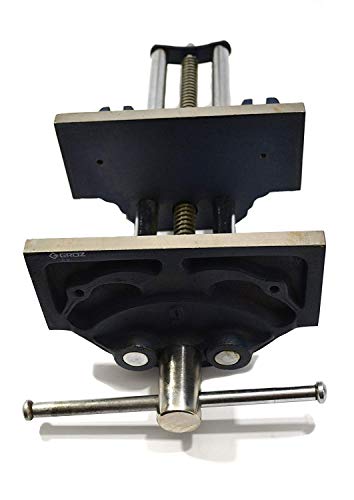
A 13-1/2-inch opening that slides to the workpiece instead of making you crank to it.
For a serious cabinetmaker or furniture builder, the wide opening is the spec that matters. The Groz 39012 carries a 9-inch jaw width and a 13-1/2-inch jaw opening, and the entire front jaw slides freely the moment you turn the handle counterclockwise one rotation. That single turn disengages the screw; one turn clockwise re-engages it to clamp. On a 13-1/2-inch opening that saves you a full arm-motion cycle every single clamp-and-release, which adds up fast across a day of joinery work.
The construction suits that pace. The body is close-grained grey cast iron at 30.3 pounds, designed to absorb planing, sawing, chiseling, and mallet work without flex or chatter — real weight in the cast iron matters because chatter is what telegraphs through your chisel into a joint. The main screw uses buttress threads (a sawtooth-shaped thread that grips hard in one direction) on accurately machined housings, which produce smooth, responsive adjustment and high holding force in the clamping direction. The jaws are machined with a TOE-IN feature: the tops meet first when you tighten, pulling the jaw parallel under load and clamping evenly down the full depth of boards, panels, and door stiles.
Wall to wall, this is the vise that most rewards long-term bench work. The alignment and tightness draw a range of opinions on the review pages — many owners say the jaws are perfectly aligned and clamp tight, a few report the jaws are not parallel or tightening feels difficult. Those accounts point to variance rather than a design flaw, and the vise is backed by Groz’s standard product support. If you get an aligned unit, you get a professional-grade tool. If you don’t, the maker’s warranty process handles it.
Why the price makes sense: The buttress thread, the toe-in jaw machining, and the close-grained cast iron body are all features you pay for in a vise that will see daily cabinetmaking work. Jaw faces also accept an optional wooden liner to protect finished stock.
The honest note: Cast alignment can vary unit to unit — most arrive dead-on, but a small number need backing service to make right.
Worth buying when: Your workbench is your job — joinery, glue-ups, and hand-tool work every single day.
Overkill when: You are a weekend hobbyist who clamps a few boards a month; the 7-inch Yost gives you 90% of this experience for less commitment.
7. Shop Fox D4327 7-Inch Quick Release Wood Vise

Built for a standard two-and-a-quarter-inch bench slab, with a quick release you can operate one-handed.
If your workbench top is on the thinner side, this vise was sized for exactly that. The Shop Fox D4327 has a mounting height of 2-1/4 inches, which means it mates cleanly to a workbench top of that thickness — unlike the deeper Yost bodies that need a relief cut in thicker slabs. The jaw width is 7 inches, the maximum jaw opening runs 8 inches, and the vise body weighs 21 pounds. It is cast iron and comes with the quick-release lever plus a retractable bench dog on the moving jaw.
Owners who get it mounted squarely love it. The precision-ground faces grip cleanly, the quick release is fast enough to make you wonder why you ever cranked a vise, and installation on a matching bench is straightforward. Several users describe wanting to mortise the bottom into the bench to make the extension dog usable — a step worth doing at the build stage if you plan to work with long stock against bench stops. It is a solid, no-drama vise that does its job quietly for years.
The friction points are minor but real. The quick-release mechanism draws both admiration and criticism in owner accounts — most love it, a smaller group reports it slipping or requiring careful reassembly. If you disassemble the vise to lighten it for mounting, note the orientation of the release mechanism carefully before you take it apart. Metric screws for wooden face plates are also not specified in the instructions, and one buyer needed several trips to the hardware store to find the right diameter and pitch. Both issues are solvable in an afternoon.
Why this one works
- 2-1/4-inch mounting height mates to thin bench slabs without relief cuts.
- 7-inch jaws with 8-inch opening cover most furniture work.
- Quick release operates one-handed and moves stock fast.
- Cast iron body at 21 pounds is manageable for solo mounting.
Where the trade lives
- Quick release gets mixed accounts — a few owners mention slipping.
- Metric face-plate screws are unspecified in the instructions.
- The retractable dog only works if you mortise the vise base into the bench.
Buy it for: A standard-thickness bench top where a deep-body vise would need cutting in — the 2-1/4-inch mounting height is the whole reason to pick it.
Reconsider if: You have a thick slab bench; the Yost M7WW handles the same jaw size without the mounting-height constraint.
8. HFS(R) 9 Inch Woodworking Bench Vise

Cheap iron and a nine-inch guide rod — solid for the price, but not everything the listing claims.
This is the pick for a first bench build on a tight budget. The HFS(R) 9-inch vise is all-iron construction with a paint coating to resist rust, and the 9-inch guide rod gives the tool enough reach to handle wide stock. It mounts to the underside of a workbench and accepts a custom wooden handle (many owners cut their own from a piece of hardwood dowel). At the price it fills a real gap for hobbyists who want a face vise without committing premium money.
Owners who get a good unit report strong holding power and smooth jaw movement. Several describe building a wooden block to compress against the bench as a mounting aid, and a couple run two of these side by side on the same bench. The iron construction holds up better than the price suggests, and for a hobbyist working weekend projects it delivers the basics reliably. The 4.2-star average across roughly ninety ratings reflects a mix of happy and disappointed buyers rather than a consistently flawed product.
Two things to know before buying. First, the listing describes a pull-up handle quick release — the release mechanism that lets the jaw slide freely — but a substantial share of customers note the feature does not actually function as advertised, and at least one owner notes the seven-inch version lacks it entirely. Buy this expecting a screw-drive vise. Second, mounting hardware is inconsistent; a few units arrive with only a partial hardware set. Verify the contents on arrival and source your own lag screws as a backup.
The real value: Solid iron construction, wide 9-inch guide rod reach, and a mounting footprint that suits a simple bench build — genuinely useful for the money.
The catch worth hearing: Do not buy this for the quick release. Treat it as a screw-drive vise and verify the mounting hardware on arrival.
Suits: A budget bench build where basic clamping matters more than a quick-release lever.
Skip when: Quick release is a must-have for your workflow — the M7WW or the Eclipse delivers that reliably at a higher tier.
9. findmall 9 Inch Woodworking Front Vise
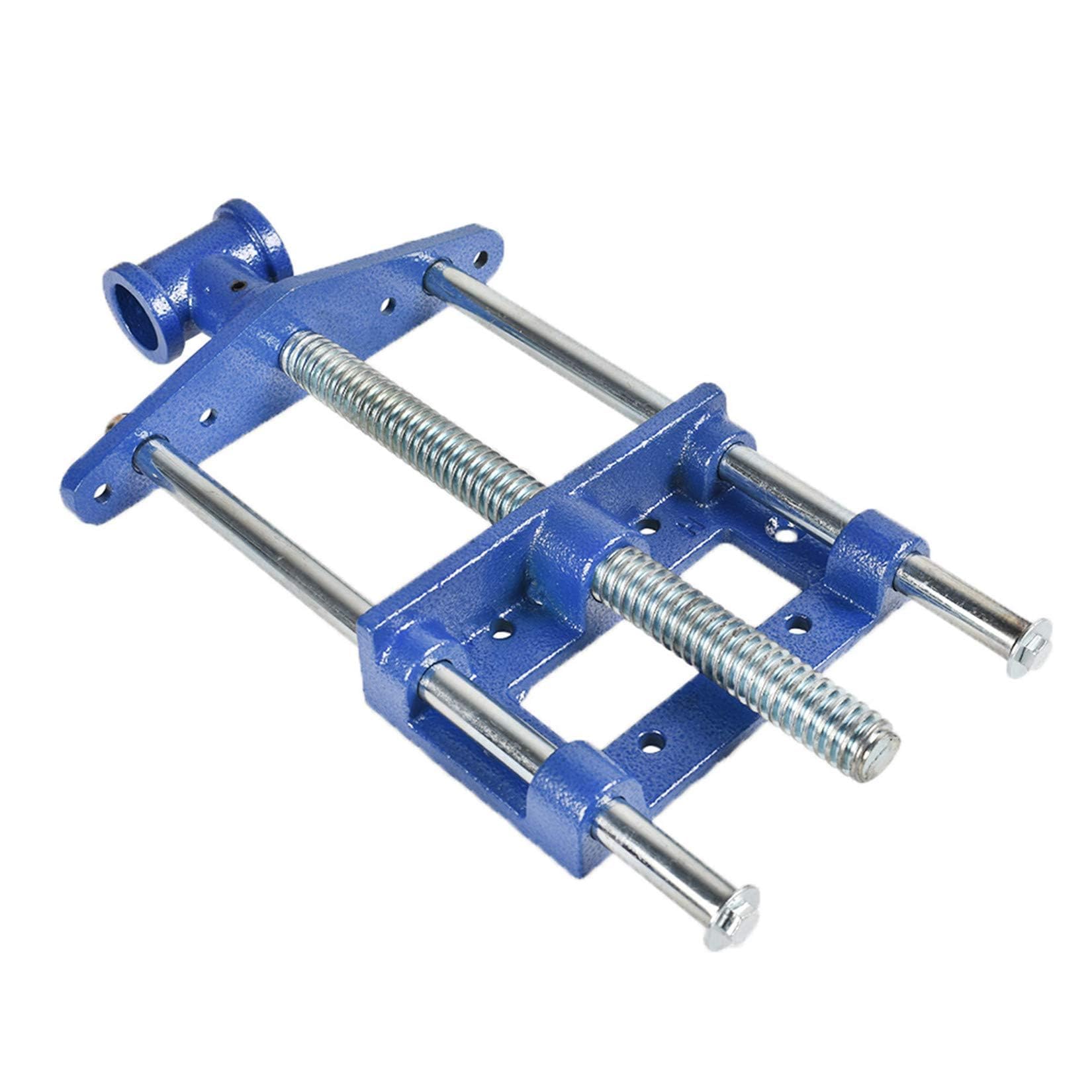
An all-iron front vise that gets the job done at hobbyist money — as long as you read the listing carefully.
For a hobbyist woodworker building out a starter bench, this vise covers the basics. The findmall 9-inch front vise is all-iron structure with a paint coating to slow rusting, and the 9-inch guide bar gives the jaws a wide reach for a budget-priced tool. The mounting design attaches to the underside of a workbench, and the wood-and-iron material mix makes it light enough for one person to position during installation.
Buyers who take the time to plan the install end up happy. The consistent message across owner accounts is simple: this vise rewards patience. Measure twice, mark carefully, and the mounting is no harder than any other front vise. Several owners compare it favorably to a local wood-supply version that cost far more, and one sums it up well: “This vice is of the same quality and is considerably lower priced.” For a hobby woodworker who wants reliable clamping without a premium outlay, that math is hard to argue with.
Two limitations are worth naming. First, the listing describes a pull-up quick-release handle, but the feature is not actually fitted — several reviewers point out the screw drives the jaw directly with no release lever, and the manufacturer’s own listing is inconsistent on the point. Second, the box small parts — mounting bolts, washers, nuts — have been reported as sometimes incomplete, with some units arriving with only a partial hardware set. Neither issue makes the vise unusable. Both mean: treat it as a screw-drive vise with a sourcing-your-own-hardware plan.
What works well
- All-iron structure with paint coating resists rust under a normal shop environment.
- 9-inch guide bar gives wide jaw travel for the price.
- Straightforward bottom-side mounting; no exotic hardware required.
- Patience during install pays off — owners who planned the layout report reliable clamping.
What fits loosely
- No working quick-release mechanism despite what the listing says.
- No mounting template or installation instructions included.
- Hardware set has been reported incomplete on some units.
Pick it for: A build-it-yourself starter bench where the vise is a straightforward screw-drive tool and you are comfortable sourcing your own hardware.
Pass on it when: You want a documented install or a genuine quick release — the M7WW and Eclipse both deliver those without surprise.
Understanding the Specs
Jaw Width vs Jaw Opening
Jaw width is the measurement across the clamping faces — the number stamped on the box, like 7 inches or 9 inches. Jaw opening is the maximum travel between the two jaws, which is how thick a workpiece can be. A 9-inch vise with a 10.25-inch opening swallows deeper stock than a 7-inch with an 8-inch opening. Match jaw width to your bench size and opening to the thickest stock you plan to clamp.
Quick Release and Rapid Action
A quick-release lever, also called rapid action, disengages the internal nut from the main screw so the front jaw slides freely instead of cranking. Push the lever toward the handle, slide the jaw to your stock, release, and one turn of the handle locks it. On a vise with a wide opening this saves substantial time every clamp cycle. Check the listing carefully — some budget vises describe the feature but do not actually include it.
Throat Depth and Working Clearance
Throat depth is the distance from the top of the jaws down to the top of the guide bars. It determines how much vertical room your hands and tools get under the workpiece. The Yost M9WW offers 4 inches (10.16 cm), the M7WW gives 3 inches (7.62 cm). Deeper throat depth means more clearance for sawing and planing, but also a taller vise body that may not fit a thin bench slab.
Bench Dogs and Face Versus Tail Vises
A bench dog is a retractable metal peg that rises from the top of the vise jaw or the bench. Paired with a bench stop across the top, it holds long boards with no clamping at all. A tail vise (or a vise with a dog) handles the far end of the board; a face vise handles the main clamping work. Some vises on this page — the Eclipse and the Wilton — serve both roles in one body, which saves bench real estate.
FAQ
Will a 9-inch vise fit on my workbench?
Do I need a quick release on a woodworking vise?
What is the difference between jaw width and jaw opening?
Can I mount a woodworking vise to a metal bench?
Is a 7-inch vise enough or do I need 9 inches?
How long will a cast iron woodworking vise last?
Should I add wooden jaw faces to my vise?
What hardware do I need to install a woodworking vise?
Can a woodworking vise double as a tail vise?
Are woodworking vises shipped with instructions and templates?
Is cast iron or steel better for a workbench vise?
What mounting height should I look for on a bench vise?
Can I use a woodworking vise for metalworking too?
Final Thoughts: The Verdict
The woodworking bench vise that earns the top spot is the Yost Vises M9WW — 9-inch iron jaws, a 10.25-inch opening, and the rapid-action lever that turns clamping into a one-second move instead of a crank cycle. It holds the highest rating on this page with the largest body of owner feedback, and that combination of cast iron weight and quick-release precision is what separates a vise you tolerate from one you rely on. If you only want a seven-inch body for a standard bench, the Yost M7WW delivers that same rapid action at a lighter weight and a friendlier commitment. For a hobbyist bench built on a tight budget, the HFS(R) 9-inch vise does the basics well as long as you buy it expecting a screw drive and not the quick release the listing implies. And if irregular tapered parts are the majority of your work, the pivoting jaw on the Wilton 78A is the only one on this page built for it.
If you are still on the fence, the fastest way to settle it is to measure your bench slab and your thickest regular workpiece. A 3-inch bench and 2-inch stock point straight at the M7WW; a 9-inch working width and thick panels point at the M9WW. Bolt it down properly, add wooden jaw faces, and keep the screw greased — that is the maintenance ritual that keeps a cast iron vise honest for decades.
How We Picked
We do not accept paid placement. Every pick is matched to a real buyer and a real use-case; we do not hands-on test units.
Sources & Methodology
Specifications: manufacturer listings and product documentation. Review insights: verified customer reviews, as of September 2026. Pricing: not shown on this page (it changes often); check the current price via the retailer link.
As an Amazon Associate, KitchPrep earns from qualifying purchases. This does not affect which products we feature.
Related Guides
