
Specs are compiled from manufacturer listings and verified buyer reviews and can change over time — please confirm the key details on the product page before buying.
If you live in a mobile home, your breaker box is the one electrical part you cannot afford to get wrong. A 200 Amp breaker box for a mobile home must be rated for manufactured housing, built to sit outside in the weather, and sized so your electrician can actually land the service conductors inside it. The four panels below all carry a genuine 200 Amp main and a weather-rated outdoor enclosure — the difference depends on how many circuits they hold, how much room is left for wiring, and whether they work as a service entrance or a subpanel.
I’m Mohammad Maruf — the founder and writer behind KitchPrep. This guide is built by comparing the manufacturers’ published specifications and the patterns across verified customer reviews, so you get each pick’s real strengths and trade-offs instead of marketing spin.
The four here split cleanly into two jobs: load centers that hold a lot of circuits, and metered service entrances built to sit at the pole. Read the specs carefully, because the wrong layout means a return trip to the supply house — and this breakdown of the 200 amp breaker box for a mobile home makes that choice obvious.
Our Picks at a Glance

How To Choose The Best 200 Amp Breaker Box for a Mobile Home
A mobile home panel is not the same animal as a stick-built house panel. It is usually mounted outside on a pole or the side of the structure, so the enclosure has to handle rain, snow, and summer sun without rusting through. And because manufactured homes use a specific service layout, the panel has to be rated for that job rather than for a standard residential installation.
Spaces and circuits are not the same number
A “space” is a slot where a full-size breaker snaps in. That is different from a “circuit,” which counts the actual breakers the panel accepts. Many full-size breakers take one space but serve one circuit, and tandem breakers can split one space into two circuits in panels designed to allow it.
This matters more than anything else on the spec sheet. A panel with 8 spaces and 16 circuits looks generous on paper, but if every slot is filled with a full-size breaker, you are back to 8 circuits in practice. Count your real loads — water heater, dryer, range, air handler, well pump, and the lights — before you commit.
Match the enclosure to where it lives
NEMA 3R is the rating you want outdoors. It means the enclosure sheds rain and sleet and resists ice damage, which is exactly what a pole-mounted panel on a mobile home faces every winter. Galvanized steel outlasts painted steel in that environment.
Service-entrance versus subpanel is the other split. Some panels are built only to sit at the service point where the meter and utility feed land. Others have feed-through lugs and can pass power onward to a second structure, an outbuilding, or a workshop.
Quick Comparison
| Model | Best For | Circuits | Spaces / Enclosure | Item Weight | Amazon |
|---|---|---|---|---|---|
| PN Series 200 Amp 8-Space 16-Circuit Main Breaker Plug-On Neutral Trailer Panel★ Best Overall | Whole-home mobile home service | 16 | 8-space, NEMA 3R outdoor | — | Amazon |
| ABB 200A Outdoor Main Breaker Load Center, 8-Space 16-Circuit | Feeding RV sites and outbuildings | 8 | 8-space, NEMA 3R outdoor | 28 pounds | Amazon |
| SIEMENS W0404MB1200CT 200 Amp Outdoor Trailer Panel | Round-for-round swap on an existing service | 4 | 4-space, outdoor rated | 21.5 pounds | Amazon |
| MIDWEST 200A Metered Load Center, Service Entrance, 4 Space | Meter plus service disconnect in one | 4 | 4-space, NEMA 3R | — | Amazon |
In‑Depth Reviews
1. PN Series 200 Amp 8-Space 16-Circuit Main Breaker Plug-On Neutral Trailer Panel Outdoor with Copper Bus
Our pick — over 4.5★ from 150+ verified ratings; the strongest balance of quality and price.
Sixteen circuits and four inches of bending space — the mobile home panel that actually fits the wires
Here is the panel to buy if you want your electrician out of the crawlspace in one trip. The PNW0816B1200TC gives you 16 circuits across 8 spaces — double the circuit count of the SIEMENS W0404MB1200CT’s 4, a straight 4.0x gap — and it does it in a footprint of 24.8″L x 15.8″W x 5.3″H. Compare that layout to the MIDWEST R281CB1, which measures 6.5″L x 29.3″W x 15″H — a 3.8x difference in overall envelope — and the PN Series shape is clearly built around wiring access rather than meter real estate.
What buyers keep coming back to is the build quality. The Siemens plug-on neutral system skips the pigtail wire for every arc-fault and GFCI breaker you install, so you save a pigtail and a few inches per breaker. Over 4 in. of wire bending space means the service conductors do not fight you. Two factory-installed ground bars are already inside the can, so you are not ordering extras on the same trip. The copper bus resists corrosion and pitting that aluminum bus bars develop over decades of outdoor service.
This panel is built to live outdoors. It has a NEMA Type 3R enclosure (an outdoor rating that sheds rain and holds up to ice) and a 22,000 AIC interrupt rating (the amount of fault current the main can safely shut down). That matters on a pole-fed manufactured home where the utility transformer sits close. Buyers report running it as a mid-service junction feeding solar, and the feed-through lugs are what make that possible: “I had to move 3 breakers so this box held them well and then I could put the interconnected in the main meter box and it worked out well.”
What it earns its price on
- 16 circuits across 8 spaces — nearly 4x the circuit slots of the 4-circuit Siemens trailer panel above
- Over 4 in. of wire bending space, so stiff service conductors land without a wrestling match
- Two factory-installed ground bars and a copper bus, ready to wire straight out of the carton
- Plug-on neutral eliminates the pigtail on every AFCI and GFCI breaker, cutting install time
Where it falls short
- Not the panel for a 400A pass-through to a second disconnect — the service conductors need to bend hard to fit, and the layout gets tight quickly
- Add-on circuits push the space budget fast; plan the load schedule before you buy, not after
The right call for: anyone wiring a manufactured home with real loads — range, dryer, well pump, and lighting — who wants one panel that covers the whole service without tandem gymnastics.
Look elsewhere if: you need a metered service entrance with the meter can built in, because this is a load center only.
2. ABB 200A Outdoor Main Breaker Load Centers, 8-Space 16-Circuit
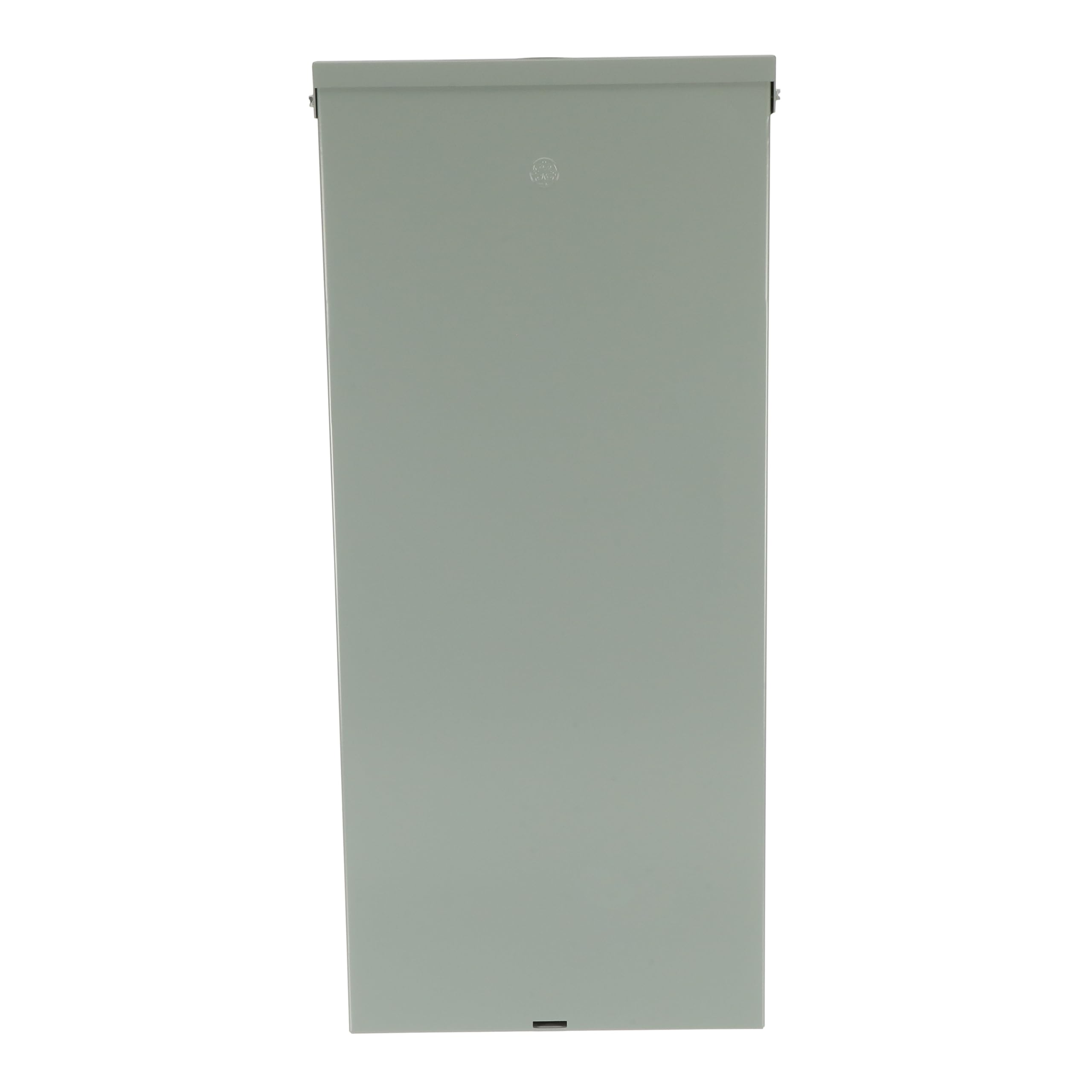
The heavy-steel option — 28 pounds of load center that feeds three RV sites from one can
At 28 pounds this ABB TM820RCUFLP is the heaviest panel of the four — 6.5 pounds more steel than the 21.5-pound SIEMENS W0404MB1200CT, a 30% difference in the metal you are hanging on the pole. That weight is the galvanized NEMA 3R enclosure and the copper bus bar inside it, not padding. It is built for the same harsh outdoor service a mobile home sits in, and the UL listing plus ANSI certification are stamped on the unit, not claimed in a footer.
This panel earns its keep behind the meter base. The 200 Amp feed-through lugs let you take service in and continue it out to a second building, a workshop, or a set of RV pedestals without adding a second enclosure. Owners mention exactly that layout in the field: “In my case w installed it as a 200 amp subpanel off of a 400 Amp meter base.” That single review describes a job most mobile home setups cannot do with a 4-circuit trailer panel — the ABB has the lugs for it.
The trade-off here is physical, not electrical. The factory-installed main breaker makes the panel plug-in and quick to land, and the 1-phase, 3-wire, 120/240V layout with 22K AIC interrupt matches what most manufactured home services expect. The catch: the neutral hookup sits lower than the hot lugs inside the can, so the replacement neutral needs roughly four extra inches of conductor. Flag that lower neutral position for your electrician before the cut, not after — it is the one install detail that separates the ABB from a plug-and-play panel.
Field-proven for feed-through: the 200A lugs turn this into a distribution hub for a workshop, outbuilding, or a small row of camper pedestals rather than a dead-end panel.
Measure your conductors first: that lower neutral position is a real install detail, and adding those four inches of extra wire is a five-minute task if you plan it — an hour of rework if you do not.
Best when the panel has to feed onward: buy this if power leaves the box to serve more than one structure.
Skip if you only need basic service: a dead-simple 4-circuit trailer swap does not need this much steel.
3. SIEMENS W0404MB1200CT 200 Amp Outdoor Trailer Panel, Gray
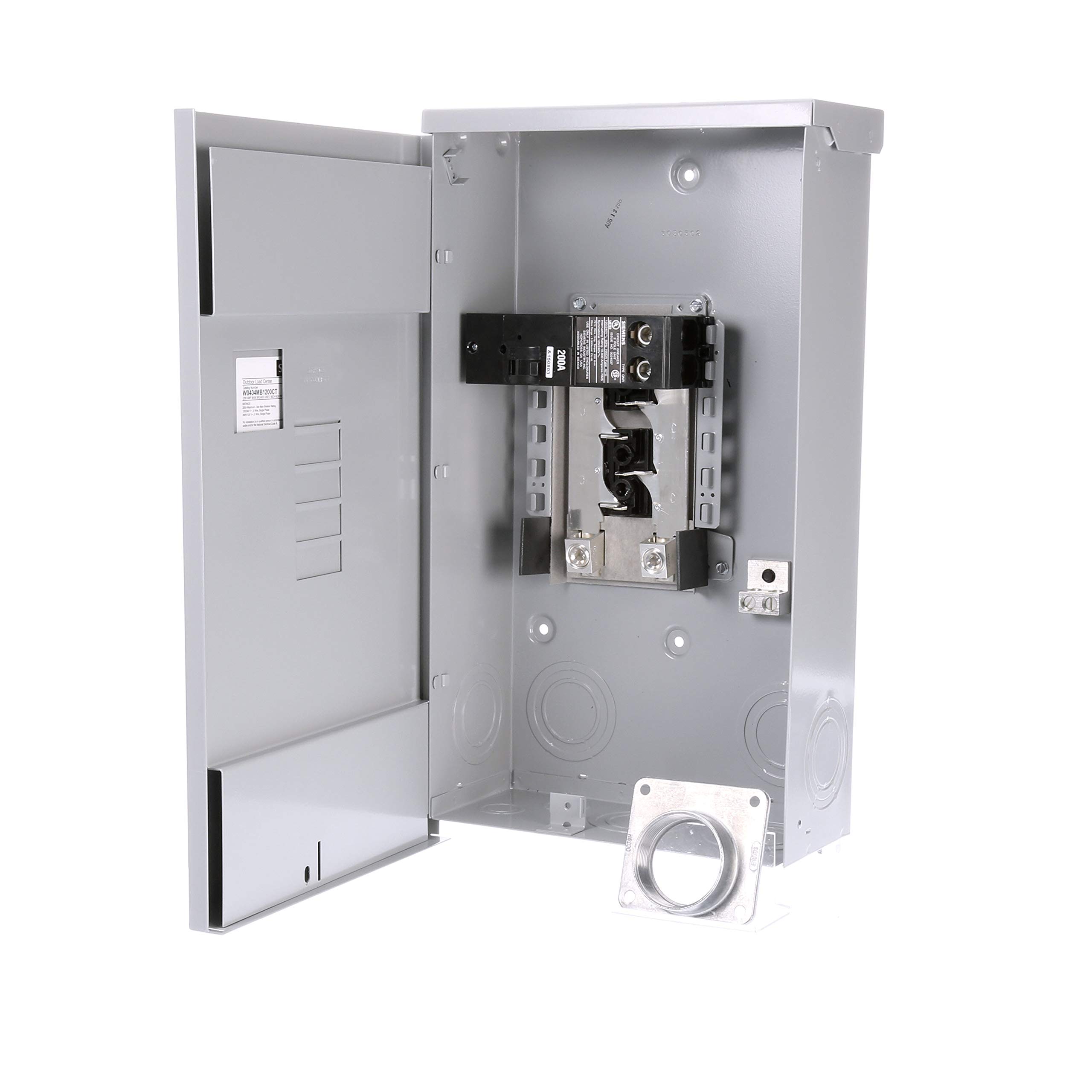
Four spaces, one purpose — the direct replacement panel for an existing trailer service
If your old trailer panel has died and you need the same shape back on the wall, this W0404MB1200CT is the panel that drops into place with the least fuss. It carries 4 breaker spaces against the PN Series panel’s 16 circuits — a straight 4.0x reduction — and it weighs 21.5 pounds. That is the lightest of the four by a clear margin, which matters when you are hanging it on a pole by yourself in the wind.
What wins people over is simply that it works when it arrives. It comes with a factory-installed 200 Amp main breaker already seated, feed-through lugs for passing power onward, and an outdoor-rated enclosure that handles the pole position on a manufactured home without complaint. The function is the headline: it replaces an old outdoor trailer panel with a modern one and does the same job, which is what most buyers are actually shopping for here.
The catch is the door sticker. Customers note that Siemens marks this unit “Suitable Only For Use As Service Equipment” and the neutral bar cannot be isolated — no bonding screw — which means you cannot convert it into a subpanel. The ground points are also limited inside the can; owners have re-used the ground lug from the old box rather than adding new ones here. Neither point is a defect if you are doing the same service-entrance swap the panel was designed for. Both points matter if you were planning to repurpose it.
The reason it goes in clean
- Factory-installed 200 Amp main means no breaker-sourcing before the install
- Feed-through lugs and 4 spaces fit a standard trailer service footprint exactly
- 21.5 pounds — lightest of the four, easy to hoist solo on a pole mount
Know before you buy
- Neutral bar is not isolatable — this is a service-entrance panel, not a subpanel
- Ground points are sparse inside the can; plan for that with the old ground lug
Ideal for the direct swap: an existing mobile home service panel that needs the same physical shape back on the wall.
Wrong pick if: you need more circuit room or a subpanel conversion, because the sticker and the neutral bar will not allow it.
4. MIDWEST 200A Metered Load Center • Service Entrance • 4 Space • NEMA 3R
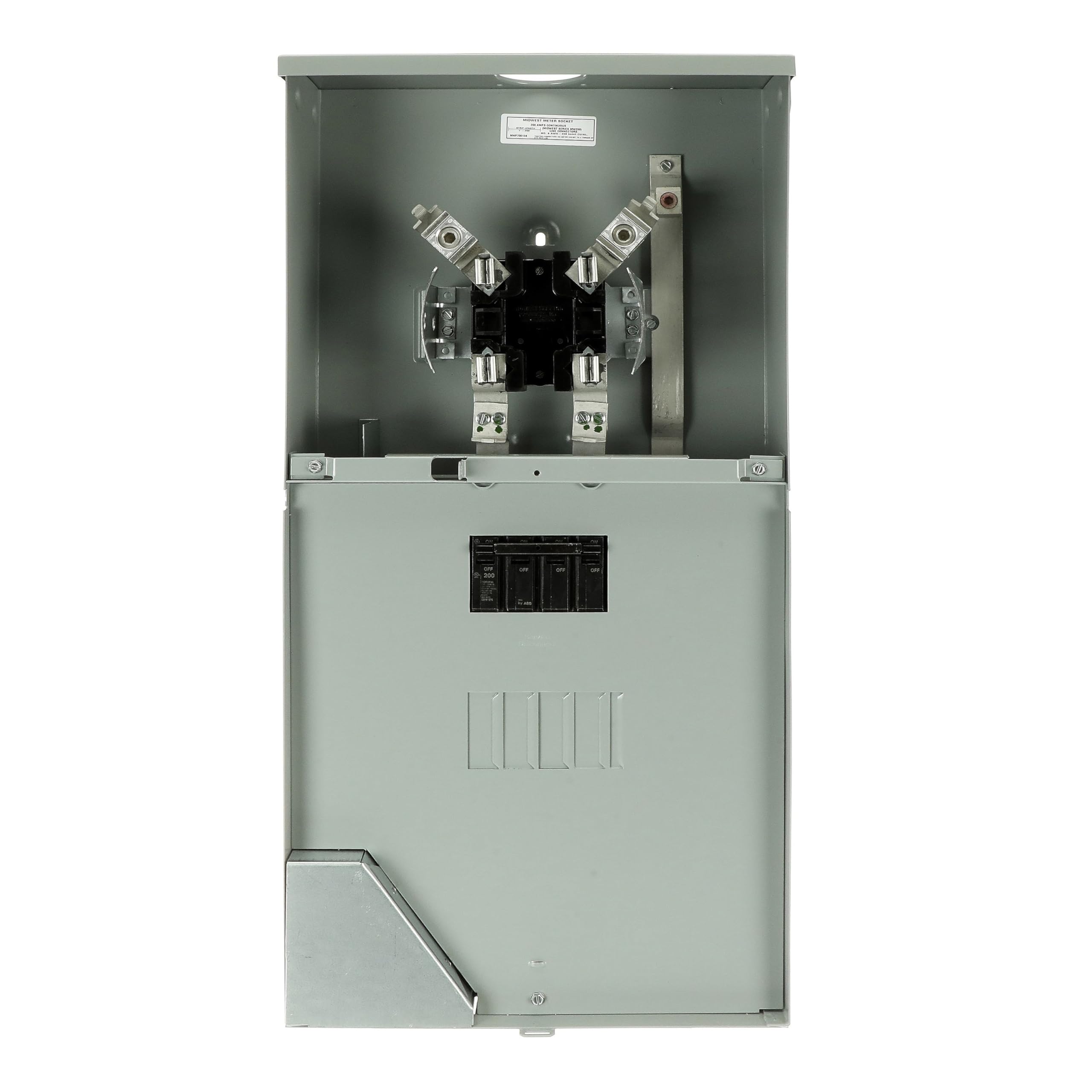
Meter can and service disconnect in one can — the combo for a fresh pole-top install
The R281CB1 is not a load center with a meter added on. It is a metered service entrance, which means the meter socket and the service disconnect live inside the same G90 galvanized steel enclosure (a rust-resistant coated steel box). Its 6.5″L x 29.3″W x 15″H body is a 3.8x difference in overall envelope against the PN Series panel — long and shallow where the load center is deep and compact — because the meter compartment takes up real estate the load center does not have. The 4-space, 4-circuit layout is the trade-off for having both functions in one box.
The build specs here are aimed at the pole installer. A horn bypass disconnect comes standard so the utility can pull the meter and work without killing power to the whole property. Padlock provisions and locking hasps keep uninvited hands out. Removable post doors and rolled edges mean no sharp metal biting your forearms while you land the service conductors. Segregated meter compartments, wired loop feed lugs, and a factory-installed equipment ground lug round out what you need for a single-family service drop — mobile homes and outdoor living included.
The one field check buyers flag is the fifth jaw. Not every utility requires it, but some do, and this is a service-entrance unit where the utility’s approval is the gate to turning the lights on. Confirm the requirement with your power company before ordering, and confirm the unit you receive matches that spec. That single check is the difference between a clean install and a callback.
One-can service entrance: meter socket, main disconnect, and 4 breakers in the same NEMA 3R enclosure — fewer boxes on the pole and fewer landing points for your electrician.
The one thing to verify ahead of time: if your utility insists on a fifth jaw in the meter socket, check that this unit matches their requirement before the install, not during it.
Reach for this if: you need a fresh service entrance at the pole with the meter and the disconnect combined.
Do not pick it if: your old panel is still doing its job and you just need replacement breaker space — no meter work, no combo box.
Understanding the Specs
Circuit Spaces vs. Circuit Count
A “space” is one slot in the panel where a full-size breaker sits. A “circuit” counts the breakers the panel is rated to carry. A panel listed as “8-space, 16-circuit” holds 8 full-size breakers, or up to 16 if you use tandem breakers in the slots the panel permits. The number that limits your build-out is spaces, not circuits. If your load schedule only needs 8 branch circuits, an 8-space panel fits. If it needs 14, that panel cannot get you there, no matter what the circuit count says on the box.
NEMA 3R — the Outdoor Enclosure Rating
NEMA 3R is the weather rating you want on a mobile home panel. It means the enclosure resists rain, sleet, and ice damage when mounted outdoors — which is where manufactured home panels typically sit, often on a pole. NEMA 3R enclosures are usually made from galvanized or G90 galvanized steel, chosen for corrosion resistance because a painted-steel can will show rust at the seams within a few seasons. Only NEMA 3R matters here; a NEMA 1 panel is indoor-only and will not survive a pole mount.
FAQ
What does a 200 Amp breaker box for a mobile home actually mean?
Can I use a 200 Amp breaker box for a mobile home as a subpanel?
What is NEMA 3R and why does it matter for a trailer panel?
What is the difference between 8-space and 4-space breaker panels?
How do I know if I need a metered panel instead of a load center?
What does feed-through lugs do on a mobile home panel?
Will a 200 Amp panel work with a 400 Amp meter base?
Do I need a fifth jaw in the meter socket for a 200 Amp panel?
What is the 22 K AIC rating on these panels?
Final Thoughts: The Verdict
For most mobile home services, the 200 amp breaker box for a mobile home that covers the widest range of real load schedules is the PN Series 200 Amp 8-Space 16-Circuit Main Breaker Plug-On Neutral Trailer Panel — 16 circuits across 8 spaces, over 4 in. of wire bending space, a plug-on neutral rail, twin factory ground bars, and a NEMA 3R copper-bus can whose galvanized steel body outlasts the painted enclosures that rust at the seams. If power leaves the box to feed a shop, an outbuilding, or camper pedestals, grab the ABB 200A Outdoor Main Breaker Load Center — its 200A feed-through lugs and 28-pound galvanized body are built for that pass-through job. And if you are replacing an old outdoor trailer panel with the exact same footprint, the light SIEMENS W0404MB1200CT drops in with the least fuss, provided you are keeping it as a service entrance and not converting it to a subpanel.
Three of the four panels in this guide carry identical 4.6-plus ownership records, and any one of them will get a manufactured home back on the grid. The reason the PN Series leads is simple: it is the only one of the four that gives you 16 circuits, a plug-on neutral rail, twin ground bars, and a copper bus in an outdoor-rated can — a combination that survives the second and third electrical loads you will want to add later without a panel swap.
How We Picked
We do not accept paid placement. Every pick is matched to a real buyer and a real use-case; we do not hands-on test units.
Sources & Methodology
Specifications: manufacturer listings and product documentation. Review insights: verified customer reviews, as of September 2026. Pricing: not shown on this page (it changes often); check the current price via the retailer link.
As an Amazon Associate, KitchPrep earns from qualifying purchases. This does not affect which products we feature.
Related Guides
