
Specs are compiled from manufacturer listings and verified buyer reviews and can change over time — please confirm the key details on the product page before buying.
If you want floors that stay clean without you ever touching a dustbin, the answer is an auto-empty robot vacuum — one whose docking station sucks the dirt out of the robot for you. That single feature is what separates a chore from a hands-off routine. This guide covers self-emptying models across every budget tier, from value picks that still hold weeks of debris to premium units that wash and dry their own mops.
I’m Mohammad Maruf — the founder and writer behind KitchPrep. This guide is built by comparing the manufacturers’ published specifications and the patterns across verified customer reviews, so you get each pick’s real strengths and trade-offs instead of marketing spin.
Every robot here empties its own bin into a sealed base station, so the only thing you handle is a bag every few weeks. Suction, navigation, and mop care vary wildly — and that is exactly where the right pick lives for your home. Here is how to sort the best auto robot vacuum cleaner for your floors.
Our Picks at a Glance

How To Choose The Best Auto Robot Vacuum Cleaner
The whole point of an auto-empty robot is that you stop thinking about dirt for weeks at a time. Everything else — suction, mops, maps — is about how well it cleans while you are not thinking about it. Here is what to weigh before you buy.
Start with the dirt you actually have
A house with two shedding dogs needs one thing above all: a dust path that hair cannot clog. Models with anti-tangle brushes and high-airflow suction — like the ones here rated 15,000Pa and up — move hair straight into the dock instead of wrapping it around a roller you then have to cut free with scissors. If your home is mostly hard floors, a lower suction figure cleans fine, and you can put that money toward a better mop instead.
Navigation decides how often you rescue it
LiDAR navigation (a spinning laser that measures the room and draws a map) is the line between a robot that cleans every corner and one that bumps around a coffee table for an hour. A mapped robot also lets you set no-go zones (areas it must never enter, like a cable nest) and no-mop zones (bare floor it should skip while mopping). If you want to schedule a clean of the kitchen only, you need the map.
The base station is half the product
An auto-empty dock holds a sealed bag that catches the dust the robot dumps in. Capacity is quoted in liters, and bigger is not automatically better — a 2.7L to 3L bag typically covers weeks rather than months, depending on how much your floors shed. Some docks go further and wash the mop with hot water and dry it with warm air, which keeps a wet pad from turning musty between runs.
Quick Comparison
| Model | Best For | Suction | Battery Life | Auto-Empty Bag | Amazon |
|---|---|---|---|---|---|
| Tikom L8000 Plus★ Best Overall | First auto-empty robot | 6000Pa | 150 minutes | 3 liters | Amazon |
| iRobot Roomba 105 ComboBest for Allergies | Allergen sealing | — | 100 minutes | — | Amazon |
| roborock Q7 M5+Top Pet Pick | Pet-hair households | 10000Pa | 150 minutes | 2.7 liters | Amazon |
| dreame L40 Ultra Gen 2 | Corner and edge cleaning | 25,000Pa | 231 minutes | — | Amazon |
| eufy C28 | Roller mop washing | 15,000 Pa | 140 minutes | 3 liters | Amazon |
| roborock Qrevo S Pro | Low-profile furniture | 18,500Pa | 180 minutes | 2.7 liters | Amazon |
| ECOVACS DEEBOT T90 PRO Omni | Scrubbing stuck-on mess | 30,000Pa | 200 minutes | 4 liters | Amazon |
| eufy E25 | Multi-floor homes | 20,000 Pa | 24 months | 3 liters | Amazon |
| dreame X50 Ultra | Door thresholds and rugs | 20,000Pa | 180 minutes | — | Amazon |
In‑Depth Reviews
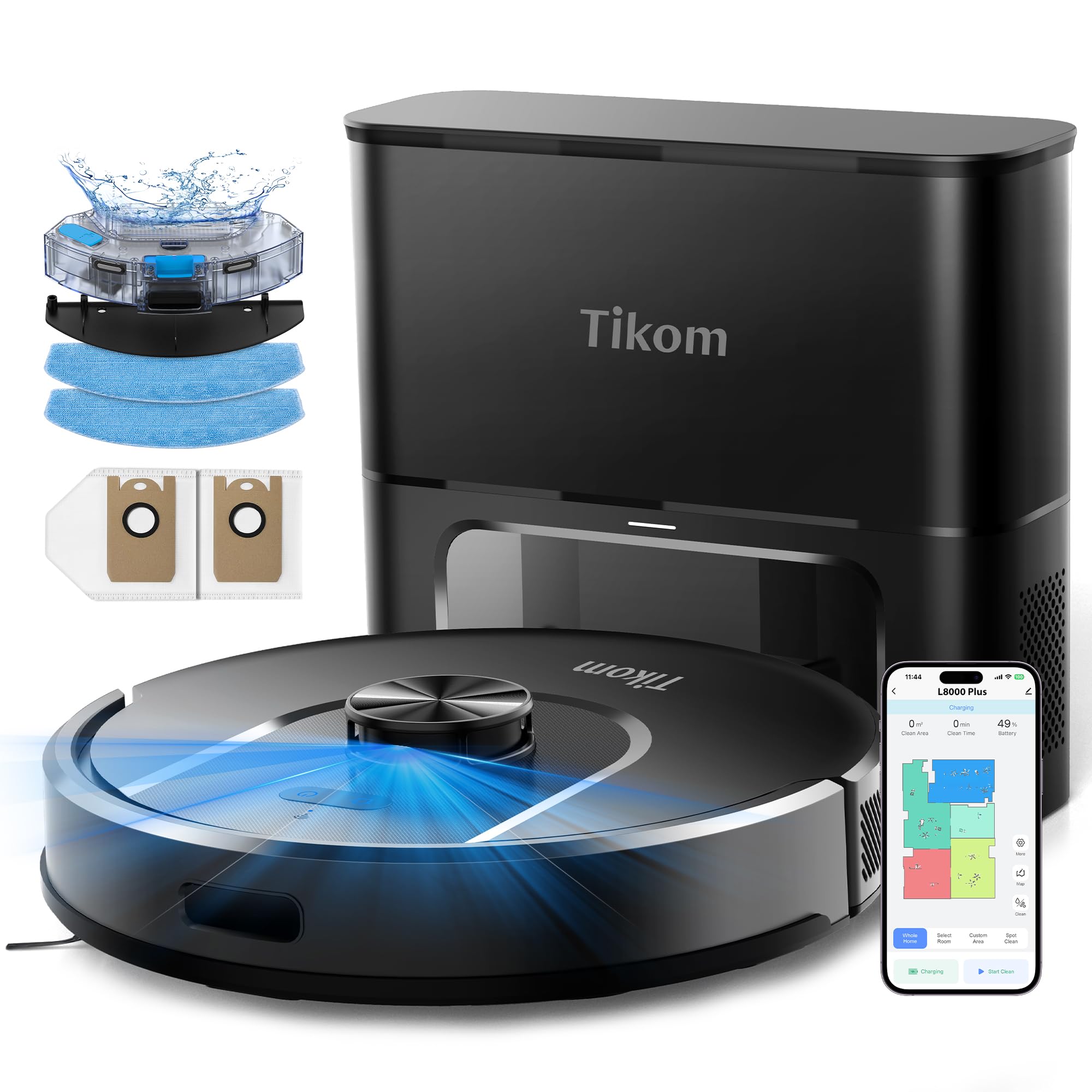
1. Tikom Robot Vacuum and Mop with Self-Emptying Base
Our pick — 4.5★ from 550+ verified ratings; the strongest balance of quality and price.
The value pick that quietly outruns pricier robots on the clock.
If you keep the suction in its gentle mode, this one runs for 150 minutes on a charge — that is 50% longer than the iRobot Roomba 105 Combo, which tops out at 100 minutes. For a two-bedroom flat that means one pass, start to finish, without a mid-clean trip back to the charger. When the battery does dip, the robot returns to its dock and picks up exactly where it stopped rather than starting the map over.
Suction climbs to 6000Pa (pascals — the unit of pulling force) and automatically rises when it rolls onto carpet, which is enough to lift pet hair and deep-seated grit. The 3L bag in the self-emptying base holds weeks of debris, so the daily job of dumping a dustbin just disappears. LiDAR navigation scans in 360° and builds a map you can split into no-go zones and no-mop zones, and it remembers up to five floor plans if you carry it between levels.
What wins people over across the review pages is how much of the routine it removes — hair, dust, and crumbs disappear, the app schedules it, and the base handles the rest. That said, treat the dust path gently: the portal from the robot to the bag can clog with hair over time, and setting the map to dodge rugs while mopping takes patience. The voice prompts are also best ignored in favor of the app. Pet households with a heavy shedder may want the roborock Q7 M5+ instead, since its 10000Pa figure is the higher of the two.
The case for buying it
- 150 minutes of cleaning per charge — 50% longer than the Roomba 105 Combo’s 100 minutes
- 6000Pa suction that boosts automatically on carpet
- 3L self-empty bag means weeks between dustbin duty
What to plan around
- The dust portal can clog with hair, so check it monthly
- Mapping rugs as no-mop zones is fiddly to set up
Go this way if: you want a genuine hands-off robot without paying premium money, and your home is mostly hard floor with some carpet.
Look elsewhere if: you have a very heavy shedder and want maximum raw pull — the 6000Pa rating trails the higher-suction models further down this list.
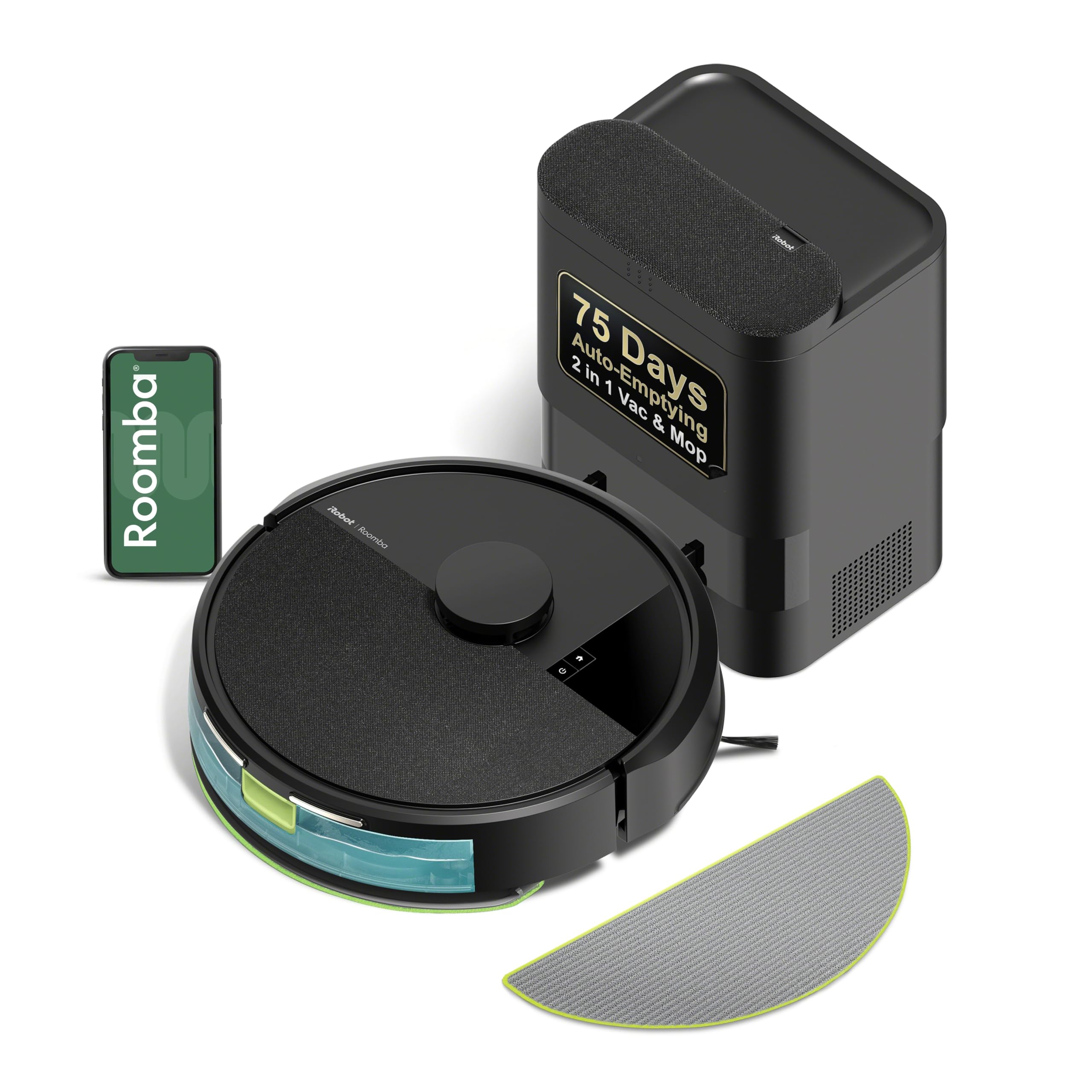
2. iRobot Roomba 105 Combo Robot Vacuum & Mop with AutoEmpty Dock
The one that keeps the dust inside the bag instead of in your air.
Emptying a robot vacuum is the moment most people give up on them — a cloud of fine dust puffs back into the room. This one sidesteps that entirely. Its AutoEmpty dock uses a sealed bag the maker says traps 99% of allergens as small as 0.7 microns — the scale of pollen and fine dust — so nothing escapes when the dock sucks the bin dry. You drop the full bag in the trash, slide in a fresh one, and you are done for weeks.
Cleaning headroom comes from the multi-surface brush and edge-sweeping brush rather than a suction number, with the maker claiming 20% better edge and corner cleaning. The microfiber mop pad runs off a micro-pump that keeps it evenly wet, and a SmartScrub mode delivers twice the scrubbing depth for dried-on kitchen spots. On the navigation side, ClearView LiDAR draws a map and steers around obstacles, and stair sensors keep it from driving off a landing.
The detail that matters on a mopping day: this model detects carpet and lifts clear of it automatically, so rugs stay dry without you setting up a single zone. Owners consistently praise how much pet hair and dust it pulls up, and the flip side is honest — several find it less convincing on truly deep carpet cleaning, and it is audible while it works. One busy parent of four in an 1,880 sq ft home called it “life-changing; highly recommended.” At 100 minutes of runtime it is the shortest-lived pick here, which matters if your layout is large.
Where it earns its place: if allergies or fine dust are the reason you are buying, the sealed-bag design is the standout feature — it is the cleanest emptying routine in this lineup.
Loud and short on stamina: the 100-minute runtime runs well behind the Tikom’s 150 minutes and the roborock Q7 M5+’s 150 minutes, so bigger homes will see it recharge mid-job.
Suits you best: allergy-conscious homes and anyone who hates the dust-puff moment of emptying a bin by hand.
Not the one for: deep-carpet households who need maximum extraction — the mixed feedback on heavy carpet cleaning is the tell.
3. roborock Q7 M5+ Robot Vacuum and Mop with Self-Empty Base
Built so long hair and pet fur never get a chance to wrap the brush.
Hair wrap is the quiet killer of robot vacuums — you notice it when the brush stops turning and the cleaning stops with it. This one is engineered around that problem. The JawScrapers main brush and the side brush are designed to resist winding, and the maker targets 0% hair tangling even with long-haired breeds. For a home with a shedding dog and a long-haired human, that is the difference between a robot that runs daily and one that gets taken apart weekly.
Suction sits at 10000Pa, which is a clear step above the Tikom L8000 Plus’s 6000Pa and pairs with a 2.7L sealed dust bag in the RockDock Plus that holds pet hair and debris for weeks. PreciSense LiDAR maps rooms in real time and plots efficient passes rather than wandering, and the Roborock app adds scheduled cleans, spot cleaning, no-go zones around pet bowls, and live battery monitoring. Mopping runs alongside with three water-flow settings, and the 150-minute battery matches the Tikom’s figure.
Owner experience is strongest on performance and cleaning, particularly on hard floors, where it lifts fine dust that a standard vacuum leaves behind. Be realistic about the tall stuff: the dust bin fills quickly on large open areas, so a 1,200 sq ft run can need a mid-job empty unless you set room-by-room auto-empty tasks. Bags can fill in about a week with heavy debris, which is fast. Rollers also want their covers seated precisely, and if emptying fails, a hidden pin-hole reset brings it back to life.
The honest math on the bag: a 2.7L bag sounds generous until you see heavy-shedding days — expect to swap bags closer to weekly than the multi-month dream.
Reach for this if: shedding hair is your main enemy and you want the anti-tangle build plus real 10000Pa pull.
Think twice if: your floor plan is wide open and mostly carpet — budget for frequent bag changes and occasional manual bin empties.
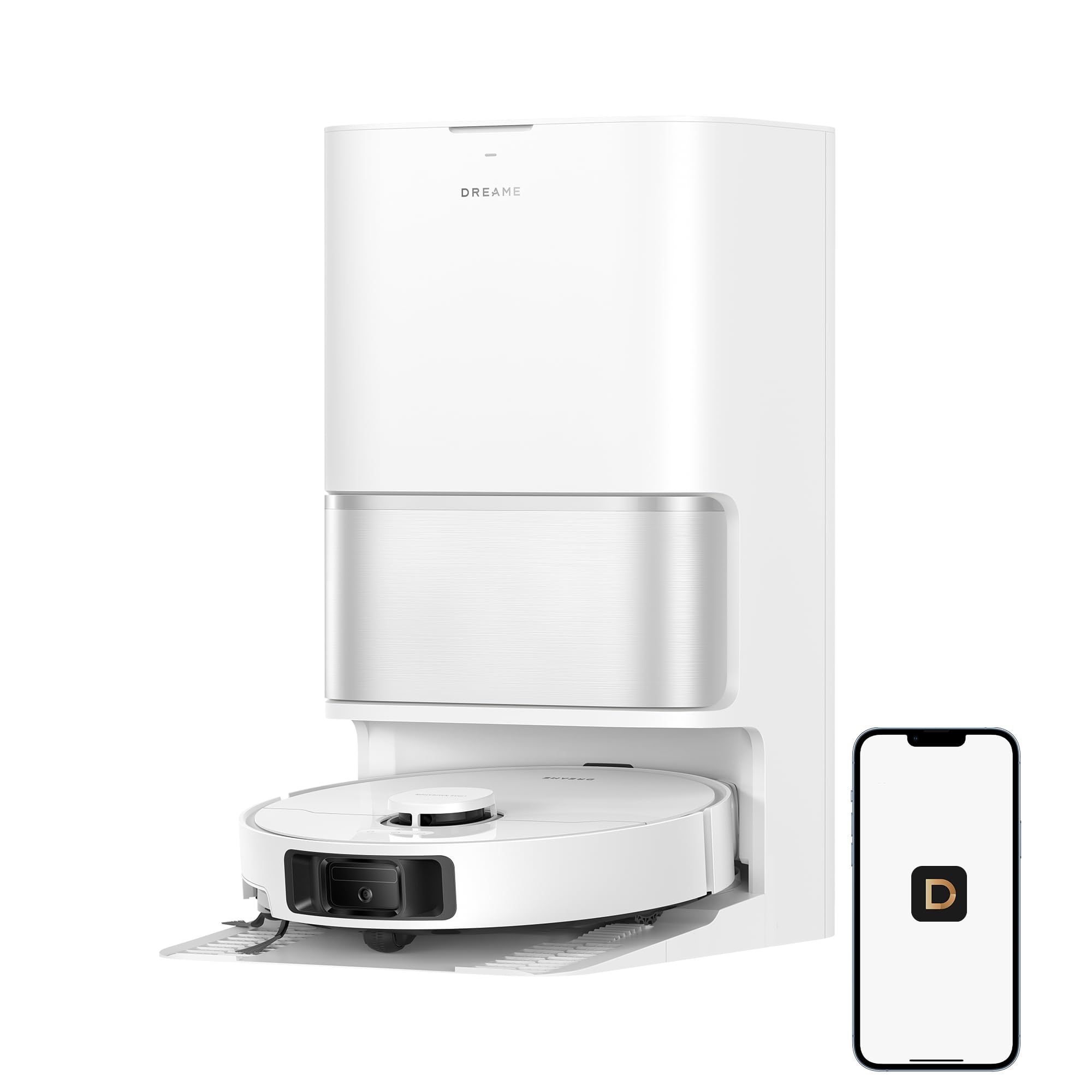
4. dreame L40 Ultra Gen 2 Robot Vacuum and Mop
The marathon runner that keeps going when the others have docked to charge.
Runtime is where this model separates itself. The 231-minute figure in Quiet Mode towers over the 100 minutes of the Roomba 105 Combo and outlasts the 180-minute roborock Qreo S Pro. For a whole-home pass on lower power, that is essentially one uninterrupted session — no mid-job pause, no second half starting after the battery refills. The 5,200mAh battery supports off-peak charging too, so you can let it top up when electricity draws are lower.
Suction reaches 25,000Pa across five levels, pulling deep dirt out of carpet fibres and lifting it off hard floors. The real trick is the reach: the side brush and the mop both extend outward to sweep corners and slip under furniture, tackling the areas that flat-sided robots roll straight past. Four carpet modes cover avoidance, suction boost, intensive cleaning, and a 0.41in mop lift that keeps rugs dry. Smart Pathfinder and 3DAdapt handling help it dodge shoes and clutter on the way round.
Buyers report the mopping outperforming an old Roomba on the same floors, with pet bowl areas and tile edges coming up cleaner and the app showing a cleaning trail you can follow. The trade-offs are worth knowing up front. It is taller than a couch clearance in some set-ups, so measure your furniture gaps. And while the base station retains the automatic cleaning-solution filling function, you need to buy the filling module separately to use it — the base is not complete for that feature from the start.
Why it holds its spot
- 231 minutes in Quiet Mode — the longest run in this group
- Extendable brush and mop that reach corners and under-furniture zones
- 0.41in mop lift keeps carpets dry during cleaning
Worth knowing first
- Too tall for some couches — check your clearance before buying
- Automatic solution filling needs a module you purchase separately
Your match if: you have a large floor plan and want one robot to cover it in a single quiet pass.
Pass on it if: your furniture sits very low — the height will stop it reaching underneath.
5. eufy C28 Robot Vacuum Cleaner and Mop Combo

A spinning roller that scrubs and rinses itself instead of dragging a dirty pad.
Most robot mops wipe the floor with a wet pad and smear whatever they just picked up across the next tile. This one works differently. The HydroJet roller is 28cm wide, carries 24 water ports, and spins at 270 RPM — about nine rotations a second — so it scrubs continuously and rinses itself as it goes. A built-in scraper pushes the lifted dirt into a separate tank, keeping the roller clean through the run, which is what stops paw prints and sticky spills from being spread around instead of removed.
The DuoSpiral brush is built for pet homes, designed to handle hair up to 30cm (11.8in) long without wrapping the roller. Suction is 15,000 Pa with an automatic boost when it hits carpet. Naviation runs on privacy-safe LiDAR that works without a camera, avoiding obstacles of 3×3×3cm and larger, and the mop lifts 10.8mm to clear short carpets. On the maintenance front, the All-in-One Station empties into a 3L bag, washes the mop, dries it with 50°C hot air to keep mould away, and collects the wastewater, covering about 95% of upkeep for up to 75 days.
The list of things this dock does hands-free is long, and for pet owners that is the entire appeal. It is worth being clear about one point though: it is a roller that stays wet and rotates, not a spinning flat mop, and long-pile or thick rugs are outside its comfort zone. On sealed hard floors it is exactly the right tool.
The one feature to pay for: a self-scrubbing, self-rinsing roller is the biggest jump in mopping quality on hard floors at this tier.
The limitation to accept: deep or long-pile carpet is not where a roller mop shines.
Pick this up if: your home is hard floor throughout and you want scrubbing, not wiping, plus a dock that washes and dries the mop for you.
Leave it be if: wall-to-wall thick carpet is your reality — the roller design is aimed at hard surfaces.
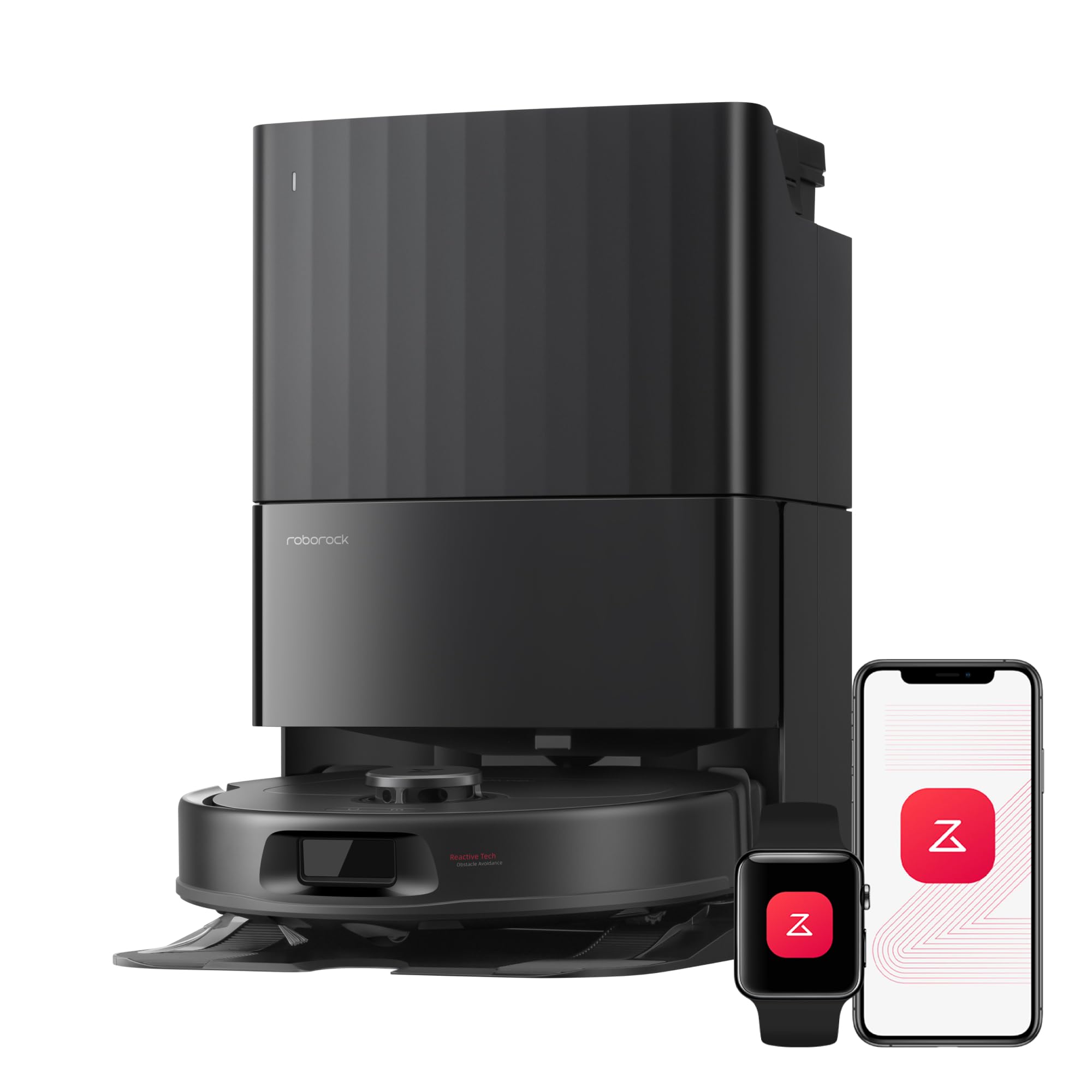
6. roborock Qrevo S Pro Robot Vacuum and Mop
Slides under beds and sofas that block taller robots entirely.
A 3.8-inch body height is the number to fix on here. That low profile lets it glide under beds and sofas that the dreame L40 Ultra Gen 2 and the dreame X50 Ultra cannot reach, pulling dust out of the hidden spaces you never clean by hand. Suction runs at 18,500Pa to lift dust, crumbs, cat litter, and pet hair from hard floors and carpet, with a five-level adjustment to dial the pull up or down per room.
The dock takes care of far more than emptying. It pushes dust into a sealed 2.7L bag that lasts 7–9 weeks, washes the mops at 167°F high temperature to refresh them after use, then dries them on 113°F warm air so they are ready and not damp for the next run. Anti-tangle thinking runs through the hardware too — a zero-tangle side brush, an all-rubber main brush, and an easy-clean omnidirectional wheel work together to cut hair wrap in pet homes. Smart obstacle detection avoids shoes, toys, and chair legs while the mop lifts 10 mm over carpet, and the AI-powered SmartPlan 2.0 adjusts settings based on layout, floor types, and cleaning history. It runs at a 55 dB noise level.
The sticky point is the app: per-room cleaning settings are tedious to set, and some find they will not save, reverting on the next run. That is an annoyance to live with, not a cleaning failure.
Worth it if: you have low-clearance furniture and want covered ground plus a dock that washes and dries the mops for you.
Consider alternatives if: you rely on per-room app routines — the settings-save quirk will test your patience.
7. ECOVACS DEEBOT T90 PRO Omni Robot Vacuum and Mop
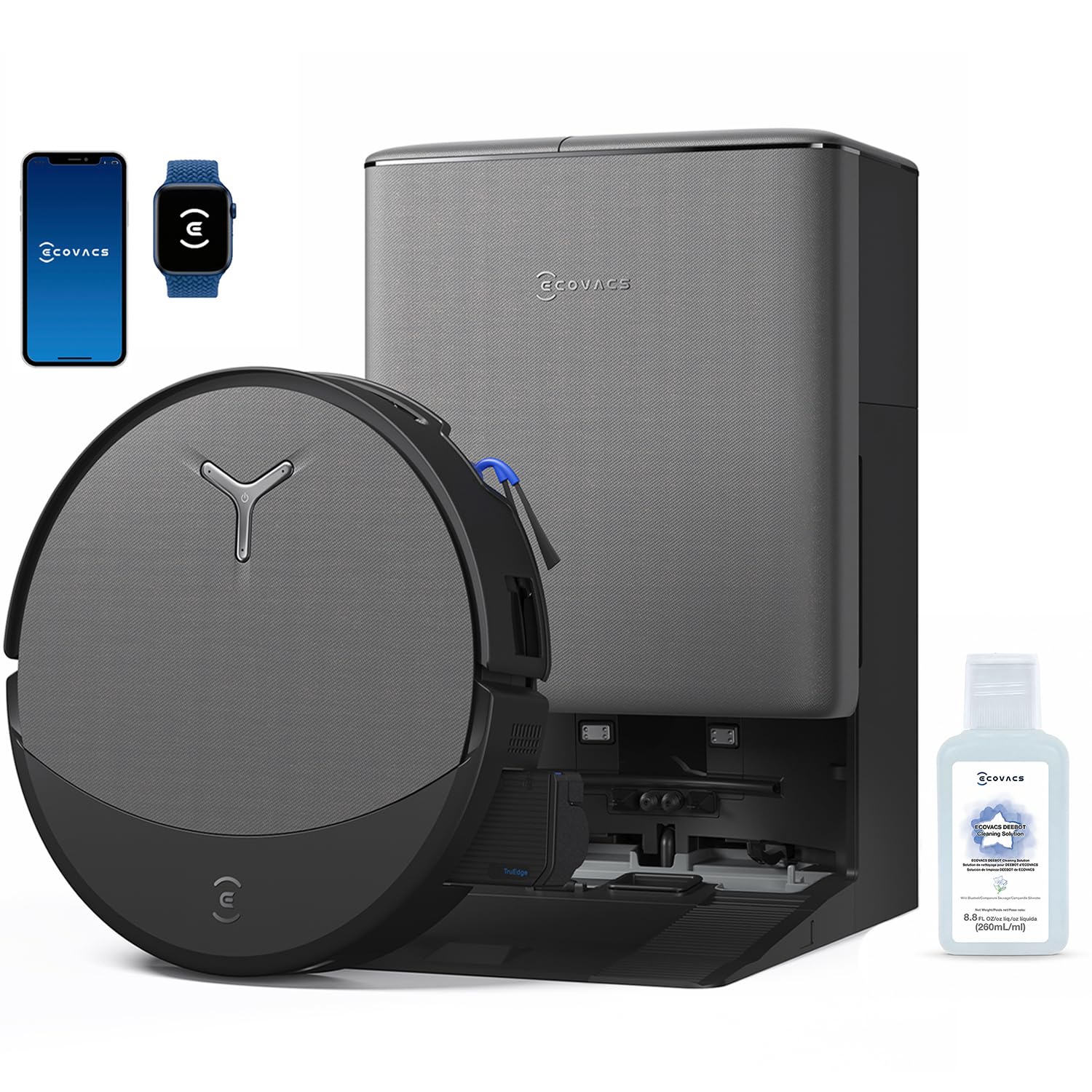
The suction king here, with a roller that scrubs instead of smearing.
30,000Pa is the highest suction figure in this lineup — it beats the 25,000Pa of the dreame L40 Ultra Gen 2 and the 20,000Pa of the dreame X50 Ultra. High-airflow suction at that level lifts dust, pet hair, and crumbs in one pass rather than needing a second sweep, which is exactly what you want on a busy carpeted floor. Where pad-style mops wipe and push mess around, this uses the OZMO Roller 3.0 — a 10.6-inch self-washing roller that scrubs under pressure with fresh water in real time, so it is always mopping with clean water and not re-spreading what it removed.
Edge coverage comes from TruEdge 3.0, which extends the roller 0.6 inches beyond the body to run along baseboards and into corners where a side brush cannot scrub. Carpet care is handled with a 0.6-inch roller lift and a Carpets First mode that vacuums carpet with a dry roller before mopping hard floors. ZeroTangle 4.0 guides hair into the suction path to reduce wrap, and PowerBoost charging tops the battery during wash cycles so multi-room runs go longer. The OMNI station auto-adjusts the mop wash up to 167°F by room and soil level, then dries the roller with 145°F hot air. Battery life is 200 minutes, and the base holds a 4L capacity — the largest dock capacity here.
What buyers respond to most is the mopping: floors come up clean without being left soaking wet, and it dries fast even in a humid apartment. The caveats are practical. The base station is large and it is not bagless, so you are swapping sealed bags rather than dumping a bin. There is no mop-only mode, so a dry-floor-only pass is not on the menu, and it has been known to scrape a baseboard or get stuck under a very low table.
Strengths in practice
- 30,000Pa suction — the highest pull in this lineup
- Self-washing roller mops with clean water in real time
- 4L base capacity, the largest dock here
Trade-offs to own
- No mop-only mode for dry-floor-only cleaning
- Large base station footprint to accommodate
The right call if: you want maximum suction and roller-scrub mopping in one machine and have space for a big dock.
Rethink if: you need a dry-only pass or have a shallow spot for the base — both are real constraints.
8. eufy E25 Robot Vacuum and Mop Combo

Remembers up to five floor plans and switches between levels on its own.
Homes with more than one level are where robot vacuums usually fall apart — carry it upstairs and the map is lost. This one remembers up to five floor plans and auto-switches between them, which means stair-heavy houses can actually run it floor by floor without re-building a map every time. The HydroJet system refreshes the roller mop twice per second with clean water, so each pass starts clean rather than dragging yesterday’s dirt around, and it claims to handle tough stains like coffee and sauce.
Suction is 20,000 Pa, which lifts deeply embedded dirt and pet hair out of carpet fibres and pulls dust from grout lines. The DuoSpiral anti-tangle brushes cut fur wrap for pet households, and a CornerRover arm extends to scrub baseboards and tight corners. The all-in-one station empties dust into a 3L bag that lasts about 75 days, self-washes the roller mop, hot-air dries it at 50°C, and auto-refills the water tank. It lifts the mop 10.8mm over carpets, climbs thresholds up to 21mm, and runs 125 minutes in vacuum-plus-mop standard mode at ≤61dB. Setup is tool-free, ready in about 5 minutes, with Alexa, Google Assistant, and Siri support.
Read the spec sheet closely on this one though, because it is the pick with the biggest warning label in the group. It requires eufy’s own cleaning solution, which is not stocked in stores or on Amazon — it ships only from the maker’s site, and the base station warns if you skip it. There are also reports of it getting stuck under low furniture and spinning in loops, and the mixed reliability feedback means it is best suited to tidy homes where you can clear cables and obstacles first.
Where it delivers: the five-floor memory plus 20,000 Pa suction and a 3L self-empty bag make multi-level homes genuinely manageable.
The big caveat: the required cleaning solution is only sold through the maker’s own site, and getting stuck under low furniture is a recurring gripe.
Best fit: multi-floor homes that want a self-emptying dock, a self-washing roller mop, and 20,000 Pa of pull.
Not ideal if: you want a single solution that works everywhere with no special consumables — the branded soap requirement is a real hurdle.
9. dreame X50 Ultra Complete Robot Vacuum with Self-Cleaning & Emptying

The one that steps over door tracks and thresholds instead of getting stuck.
Thresholds and door tracks stop most robots cold — they bump, back up, and either give up or leave a dirt line across the join. This one solves it with robotic retractable legs that raise the body over obstacles up to 2.36in, so it crosses between rooms and over door rails without needing a rescue. Shock absorbers soften the landing and cut down the noise as it does it.
When it needs to get low, VersaLift navigation drops its height to 3.5in so it can slip under furniture, while an AI camera with LED guidance steers precisely through tight spots. Suction reaches 20,000Pa Vormax from a sixth-generation TurboForce motor, enough for cat litter, crumbs, and larger pickup. The DuoBrush system handles long hair up to 11.8in by flinging it into the air duct rather than wrapping the roller, and the brush and mop both extend to reach corners and low spaces. Five carpet modes let you remove the mops, avoid carpets, or boost suction. Battery life is 180 minutes, and the included kit is generous: two DuoBrushes, three side brushes, five dust bags, four filters, cleaning solution, and fourteen mop pads.
Owners moving up from earlier Dreame models notice the difference with multiple dogs — hair goes in without roller tangles and without hand-emptying the bin. Two things to weigh. The complete software picture is uneven: recurring software faults have caused dropped tasks and the robot staying put instead of docking, which is a real risk on a premium purchase. And the kit’s magnetic mop pad setup had issues on some early units.
Designed for you if: your home has door thresholds, rugs, and multiple pets — the retractable legs and 20,000Pa pull handle all three.
The risk to weigh: software reliability has not been flawless for every buyer, and this is the highest-spend pick in the lineup.
Understanding the Specs
Suction in Pascals (Pa)
Suction is measured in pascals, the unit of pulling force — think of it as how hard the robot pulls air toward itself. On hard floors, almost any figure here cleans well. On carpet, higher pascals matter because the robot has to pull grit up out of pile rather than just off a flat surface. The models here run from 6000Pa up to 30,000Pa, and the ones with an automatic carpet boost raise their pull the moment they detect a rug.
Navigation: LiDAR versus random
LiDAR is a spinning laser that measures walls and furniture to build a map of your home. A mapped robot cleans in ordered rows, remembers each room, and lets you set no-go and no-mop zones. A robot without mapping wanders and re-covers ground, which is why mapped models finish an area faster and leave fewer missed patches. If you want per-room scheduling, the map is the feature that makes it possible.
Auto-empty bags and dock capacity
An auto-empty dock pulls the robot’s dustbin contents into a sealed bag so you never touch loose dirt. Capacity is quoted in liters, and a larger bag generally means longer between changes. Some docks go further with self-washing and hot-air drying of the mop, which keeps the pad from staying damp and musty between cycles. That is the split between a basic base and a fully self-maintaining station.
Mop lifting and carpet care
Mop lift is the height the wet pad rises when it reaches carpet, measured in millimeters or inches. Without enough lift, a wet pad brushes a rug and leaves it damp. Models here lift anywhere from 10mm to 0.6 inches depending on the design, and some add a Carpets First mode that vacuums rugs dry before switching to mopping the hard floors — which keeps rugs from getting cross-contaminated.
FAQ
What does an auto-empty robot vacuum actually do differently?
Will an auto-empty robot vacuum work on carpet?
How long do the dust bags last before I swap them?
Do these robots need Wi-Fi to run?
How often do I need to clean the brushes and rollers?
What is the difference between a roller mop and a pad mop?
Can these robots climb over thresholds and rugs?
How long does the battery last on these models?
Do I need a no-go or no-mop zone in the app?
Final Thoughts: The Verdict
The auto robot vacuum cleaner that makes the most sense for a first hands-off setup is the Tikom Robot Vacuum and Mop with Self-Emptying Base, because it pairs 150 minutes of runtime with a 3L self-empty bag and 6000Pa carpet-boosting suction. Shedding pets change the math though — if hair tangles are your daily problem, the roborock Q7 M5+ adds 10000Pa suction and anti-tangle brushes built for exactly that fight. And for the single most powerful pick, the ECOVACS DEEBOT T90 PRO Omni leads the group on raw suction at 30,000Pa with a self-washing roller mop. Match the robot to the dirt you actually have, and the floors stop being your problem.
How We Picked
We do not accept paid placement. Every pick is matched to a real buyer and a real use-case; we do not hands-on test units.
Sources & Methodology
Specifications: manufacturer listings and product documentation. Review insights: verified customer reviews, as of September 2026. Pricing: not shown on this page (it changes often); check the current price via the retailer link.
As an Amazon Associate, KitchPrep earns from qualifying purchases. This does not affect which products we feature.
Related Guides
