
Specs are compiled from manufacturer listings and verified buyer reviews and can change over time — please confirm the key details on the product page before buying.
You want a screened 10×10 tent that keeps mosquitoes off your dinner table and still lets the evening air through — without a wrestling match at setup. The answer depends on one thing most buyers get wrong: a screen tent is not the same as a regular pop-up canopy with netting thrown in. Real screen tents seal top to bottom with a floor or a tight mesh skirt, and that is the difference between a bug-free patio and a nightly swatting session.
I’m Mohammad Maruf — the founder and writer behind KitchPrep. This guide is built by comparing the manufacturers’ published specifications and the patterns across verified customer reviews, so you get each pick’s real strengths and trade-offs instead of marketing spin.
Get those three right and the shortlist writes itself. This breakdown of the 10×10 tent screen picks covers heavy-duty steel frames, featherweight camping versions, and every zipper in between.
Our Picks at a Glance
How To Choose The Best 10X10 Tent Screen
Three specs decide whether a screened 10×10 tent feels like a peaceful outdoor room or a nightly battle with bugs. Nail these three and everything else is preference.
Mesh Coverage and Panel Count
A screen tent only works if the mesh is continuous and fine. Look at how many wall panels the mesh covers and whether the doors zip shut on both sides. Mesh that only covers the front leaves gaps at the seams, and that is exactly where the mosquitoes get in. Tight-weave mesh keeps out even the smallest insects while still letting air move through, so the space stays cool instead of stuffy.
Frame Weight Versus Frame Strength
Steel frames with thicker tubing hold up in wind but make the tent heavier to carry and set up. Fiberglass and aluminum poles shave off a lot of carry weight, which matters if you haul the tent to a campsite instead of leaving it on a patio. Decide up front whether you carry the tent or leave it in one spot — that single choice cuts the list in half.
Setup With One Person or Two
Some frames use a spring-loaded pop-up mechanism that opens without tools, and some are a genuine two-person job. If you camp solo or set up while your partner watches the kids, a true pop-up frame saves real frustration. If the tent lives on a deck, a two-person frame with a stronger top is worth the extra hands.
Quick Comparison
| Model | Best For | Floor Area | Weight | Height | Amazon |
|---|---|---|---|---|---|
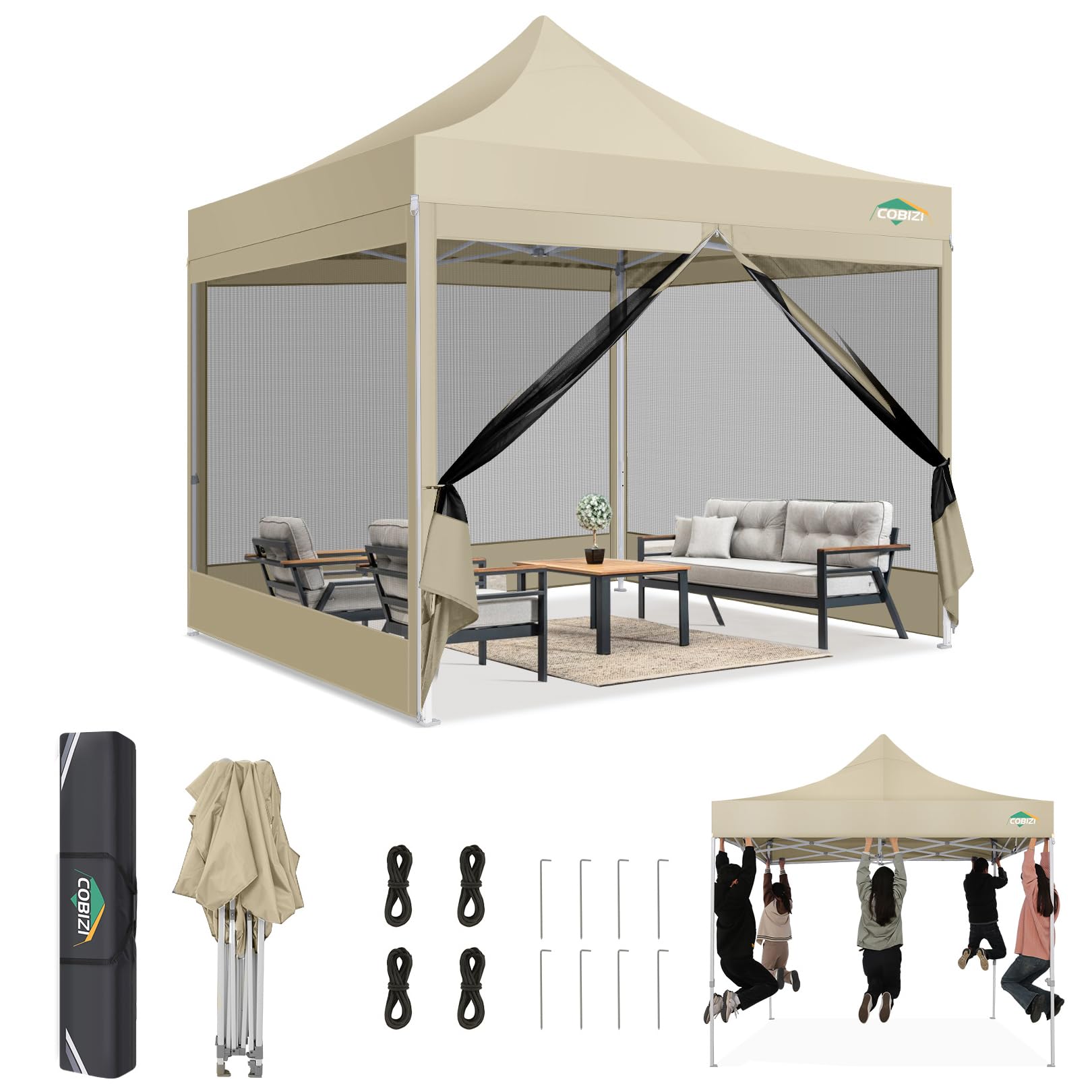
| COBIZI 10×10 Heavy Duty Pop Up Canopy Tent with Mosquito Netting Sidewalls★ Best Overall | Big gatherings, heavy-duty use | 100 ft² | 52 pounds | 96″ | Amazon |
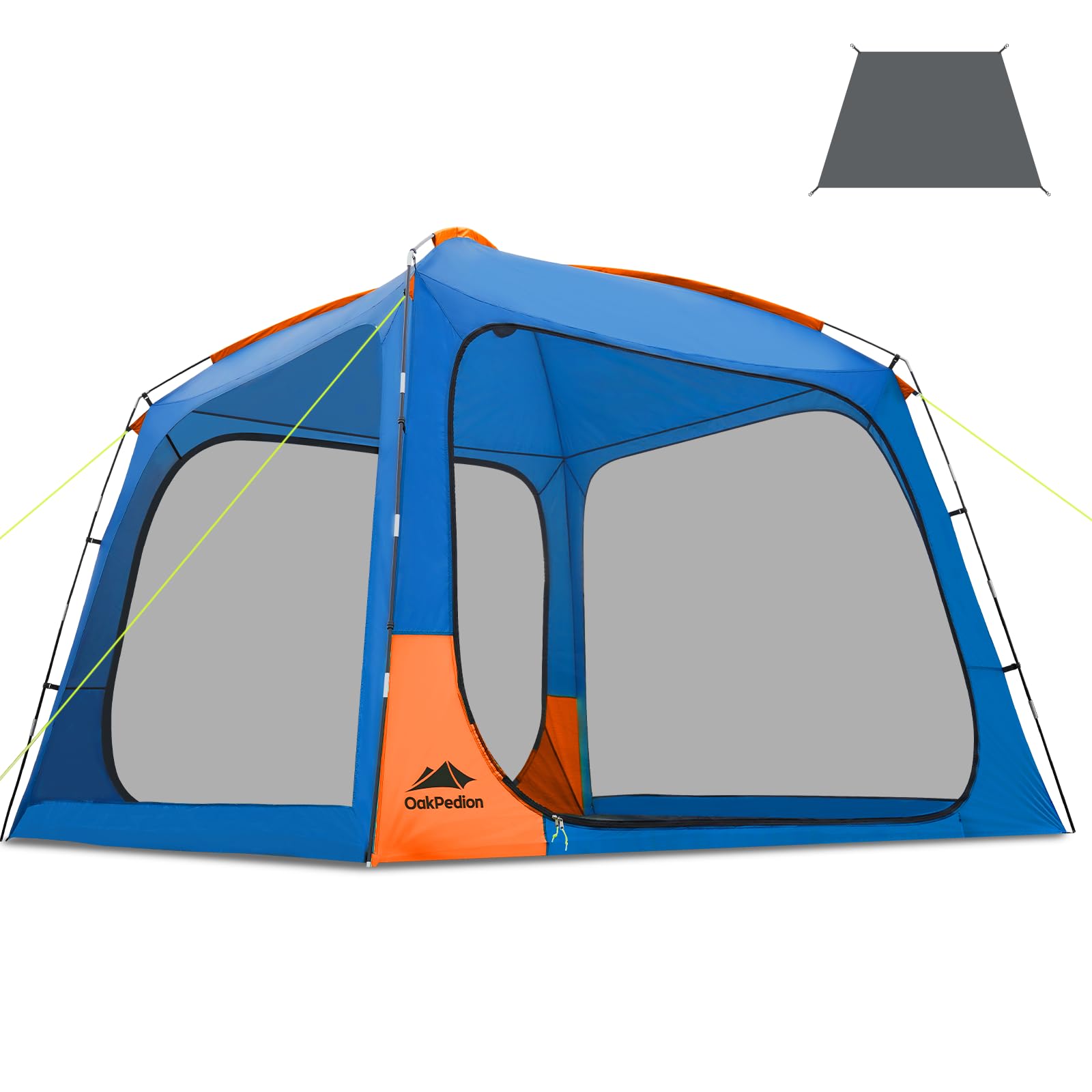
| 10 X 10ft Screen House Room for CampingFeatherweight Pick | Backyard bug-free sitting | 100 ft² | 14 pounds | 86.4″ | Amazon |
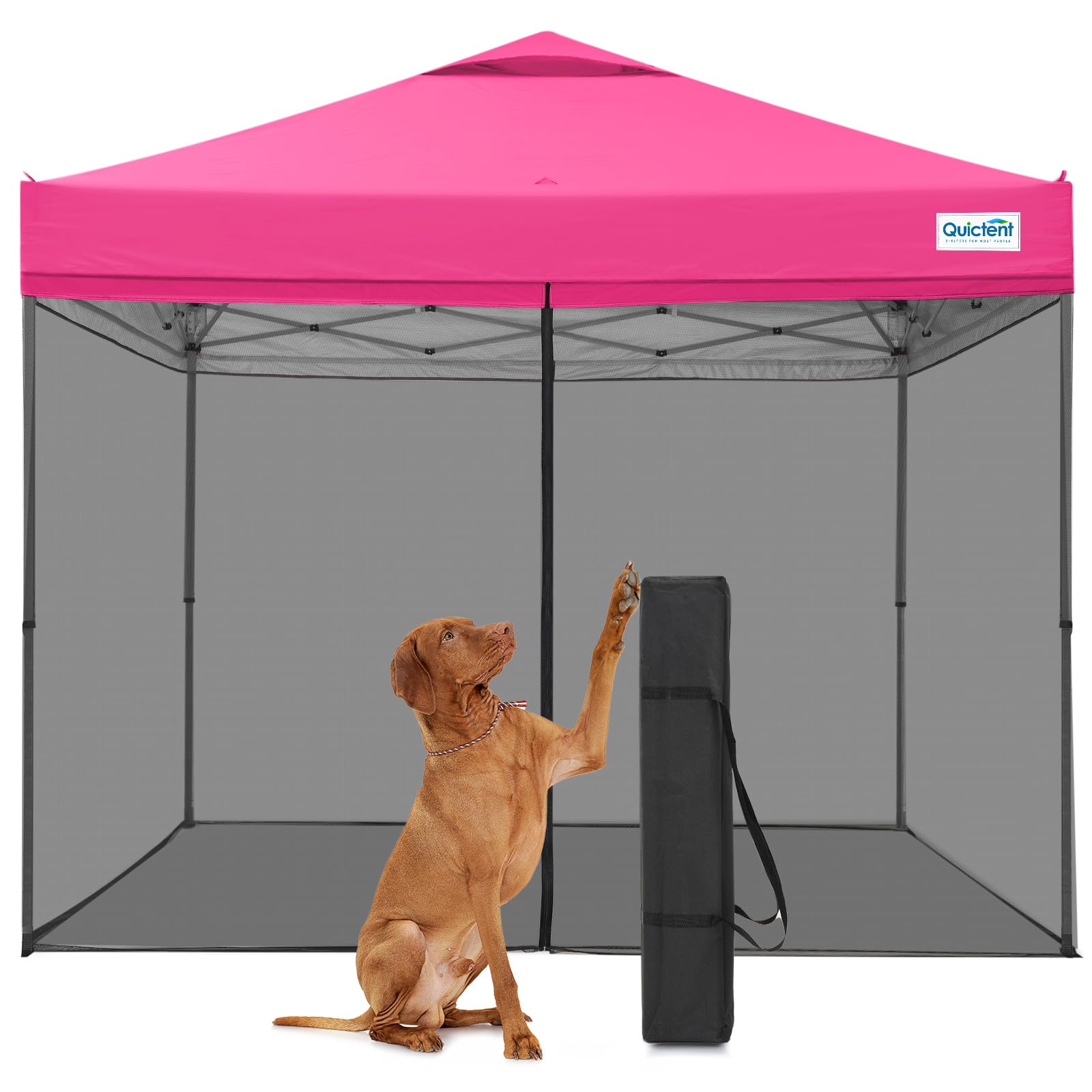
| Quictent 10×10 Pop Up Screened Canopy Tent with NettingBest for Tall Spaces | Patio and camp shelter | 100 ft² | — | 105″ | Amazon |
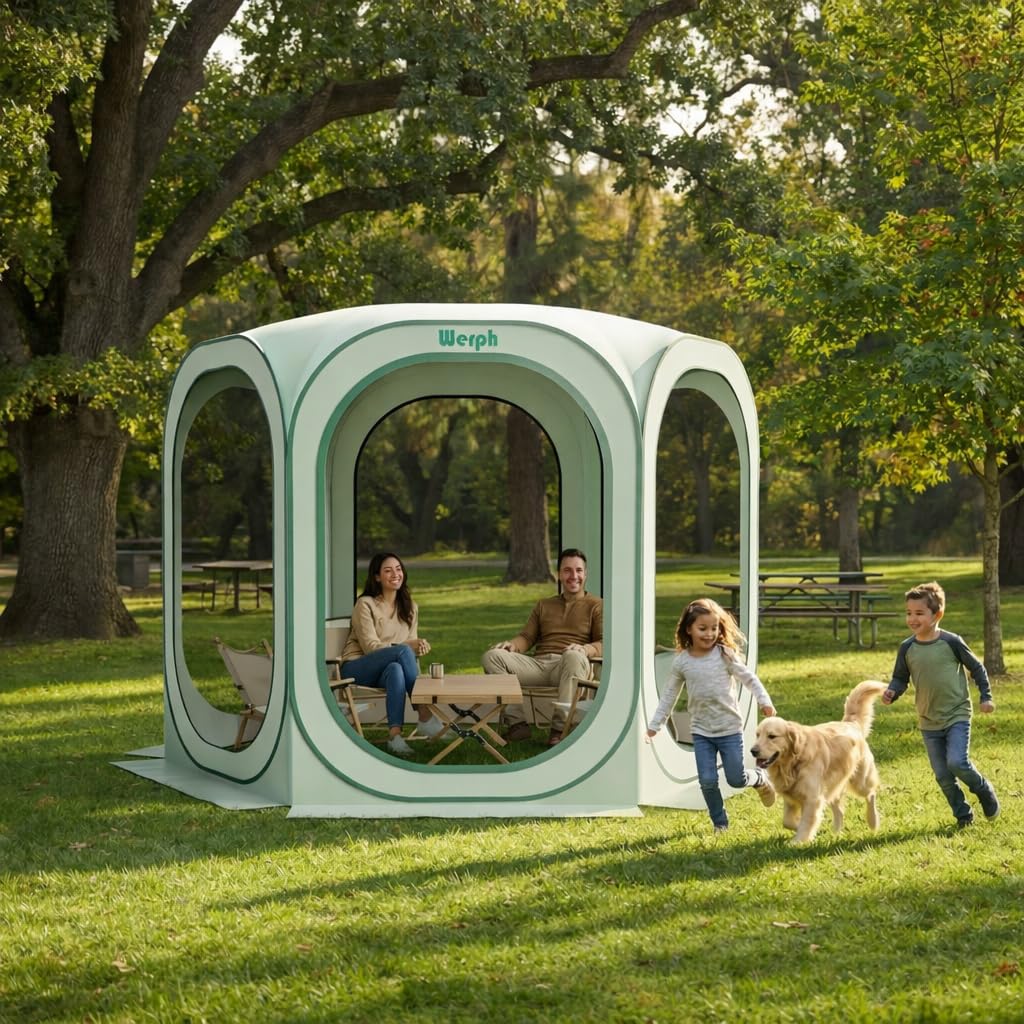
| Werph 10×10 Pop Up Screen Tent | Day-to-night patio lounging | 100 ft² | 17.4 pounds | 90″ | Amazon |
| Outsunny 10′ x 10′ Pop Up Canopy Tent with Netting | Markets, fairs, events | 100 ft² | 33.9 pounds | 102.25″ | Amazon |
| MASTERCANOPY 10×10 Pop Up Gazebo Screen Room with Netting | Fast campsite cover | 96 ft² | — | 90″ | Amazon |
| COOS BAY 10×10 Pop Up Canopy with Netting | Budget camping canopy | 64 ft² | — | 103.5″ | Amazon |
| Pop-Up Screen Tent 10×10 FT by Mars Explo | Backyard BBQ shelter | 100 ft² | — | 90″ | Amazon |
| Aoxun 10x10ft Pop Up Gazebo Screen Tent | Versatile backyard hub | 100 ft² | 33.1 pounds | 90″ | Amazon |
In‑Depth Reviews
1. COBIZI 10×10 Heavy Duty Pop Up Canopy Tent with Mosquito Netting Sidewalls
Our pick — over 4★ from 350+ verified ratings; the strongest balance of quality and price.
The full-truss steel frame that shrugs off wind while the mesh walls keep the bugs out
The COBIZI is what you buy when the tent needs to hold up around a crowd, not just shade one person. Its frame uses a full truss structure — that means cross-bracing in every side wall of the frame, not just the corners — with a 32mm tube diameter (32mm is roughly 1.25 inches across, noticeably beefier than the pencil-thin poles on lightweight tents). The center pole is rated to 400 pounds, so the frame stays planted when several people lean on it.
That build comes at a cost in pounds, and it is the one spec you should weigh before buying: 52 pounds. Compared to the OakPedion screen house at 14 pounds, this is 3.7 times the heft — the kind of weight you move with two people and a cart, not one hand over your shoulder. In exchange you get a canopy that will not wobble in a breeze, and owners consistently report it stays steady where cheaper frames sway.
The top is 420D Oxford fabric — a thick, tightly woven polyester measured in denier (D), where higher numbers mean heavier cloth — and it blocks 99% of UV rays. PU coating plus taped seams keep rain out, and the four mesh sidewalls zip and velcro off, so you can open one side for airflow or button it all up at dusk. It adjusts to 88, 92, or 96 inches with a thumb latch that clicks audibly when it locks. Buyers report the first setup takes time but that later setups are quick because you leave the fabric on the frame.
The honest trade-off is twofold. A handful of long-term owners note the fabric can wear under constant sun, so storing it when not in use stretches its life. And the compact carry bag is fine for the frame but the bundle is simply heavy to move alone. Neither is a reason to skip it — it is a reason to know what you are buying.
Where the COBIZI earns its keep
- Full-truss alloy steel frame with a 400-pound center pole — stable under a crowd
- 420D Oxford top blocks 99% of UV rays with PU coating and taped seams for rain
- Four removable mesh sidewalls zip and velcro off, so you choose full cover or open airflow
- Three height settings at 88, 92, and 96 inches with an audible-latch thumb system
- 1080D Oxford carry bag included — heavier cloth than the canopy top itself
What you trade for that sturdiness
- 52 pounds packed — a genuine two-person lift, not a solo carry
- First-time assembly has a learning curve before it becomes quick
- Fabric needs to come down in strong wind or heavy rain per the maker
The pick for a busy backyard: choose this if you host often, want one tent that stays put, and can store it covered between uses.
Wrong fit: if you need to toss it in a car trunk alone, the weight will wear on you fast — the lighter OakPedion below suits that instead.
2. 10 X 10ft Screen House Room for Camping, Screened Mesh Net Wall Canopy Tent, UPF 50+
At 14 pounds it is a fifth of the COBIZI’s weight — the tent you actually carry to the park
If the COBIZI above is the heavyweight, this OakPedion screen house is the carry-everywhere answer: 14 pounds versus 52 pounds, a 3.7-times weight gap that changes who can set this up alone. It measures 10x10x7.2 feet (the 7.2 feet is the peak height, tall enough for most adults to stand under), with 100+ feet of activity range and room for 6-8 people. Three people can put it up in about 10 minutes by slotting the stability poles into the ceiling and connecting the base.
The top is 185T polyester — the “T” is a thread count, and 185T is a fine, tight weave — rated UPF 50+ to block UV rays. A removable floor panel adds a layer between you and damp grass, and two zippered doors seal shut for bug-free evenings. The mesh walls keep air moving, so the interior does not turn into a sauna on a warm afternoon. Owners with a 7-month pregnancy assembled it solo in 20 minutes and kept it up two weeks for mosquito-free sitting.
Two aspects deserve a fair look. The poles are the light kind that keeps the weight down, and the durability of that lightweight hardware is the mixed note here — buyers love the quality and setup, but some report snapping poles. That is the weight-saving trade: this is a seasonal-use tent, not a leave-it-up-forever frame. The removable floor also attaches with four corner hooks and wants sandbags or weights to stay tucked flat.
The weight math that wins: 14 pounds vs 52 pounds means one determined adult can manage this where the heavy COBIZI needs two. For a first bug-free backyard season, that portability is the whole appeal.
Where it comes up short: the lightweight poles are the weak link — treat the tent as fair-weather gear and stake it down before a storm rolls in.
Grab this if: you move your screen tent between patio, park, and camping trips and value carry weight above wind-shedding heft.
Look elsewhere if: you want one tent to stand outdoors through a full storm season — the heavier steel frames handle that better.
3. Quictent 10×10 Pop Up Screened Canopy Tent with Netting
A vented roof and 105-inch peak that shed rainwater and give you headroom to spare
The Quictent’s standout number is its 105-inch peak height — the tallest on this list, topping the COBIZI’s 96 inches and the Werph’s 90 inches. That extra headroom matters if you are setting up drums, a fold-out table with tall chairs, or simply want to stop ducking. It sets up in two steps with no tools, and the folding frame, roof cover, and two netting panels all pack into the included carry bag.
Where this one thinks ahead is water. The roof has a vented design that moves air and adds stability in wind, and leak-proof drainage holes on all four sides stop water from pooling and sagging the canopy. The alloy steel frame is powder-coated, and the fabric is water-resistant with mesh walls and a UV-blocking top. Owners running a summer camp used one as a moth-observation tent and reported the insect netting held up and the tarp stayed waterproof.
Here is the counterweight: the zippers and the poles are the two places quality gets uneven. The leaning mesh doors see the most wear, and if you go in and out constantly, the zipper is the part that ages fastest — plan on treating the doors gently. One buyer found it too flimsy for a single person to raise and wanted stronger posts. Call it a fair-weather tent for light and steady use rather than daily hard handling.
Quictent strengths worth noting
- 105-inch peak — the highest roofline of the group for true walk-in comfort
- Leak-proof drainage holes on all sides prevent water buildup and roof sag
- Vented roof boosts airflow and adds stability in breezy conditions
- Two-step, no-tools setup suits solo organizers and quick event coverage
Know before you buy
- Zippers are the wear point — heavy daily traffic shortens their life
- Construction feels light; one buyer found it too flimsy for solo assembly
Made for: anyone who wants maximum headroom and active rain drainage on a patio or at a camper pad.
Think twice if: you expect to raise it single-handed on every outing — a sturdier, heavier frame serves that better.
4. Werph 10×10 Pop Up Screen Tent, Mosquito Net Gazebo, UV Resistant, Green
Six mesh panels that wrap the whole space and a top hook for your evening lantern
For pure bug defense, the Werph leans hard on mesh coverage. It uses a 6-panel B3 fine mesh design — six separate mesh sections wrapping the frame so bugs meet netting at every angle, not just the front. Two large zippered doors open from either side, which means you can walk in from the deck and your guests can enter from the yard. It pops open in one second with no assembly, and a carry bag makes it portable.
The build is Oxford fabric with a water-resistant roof and double-stitched zippers. Support poles are on the thicker side for wind resistance, and the gently sloped top uses fiberglass poles to shed rain while adding headroom. It fits 4-6 people with room left for bean bags or a table. A built-in top hook lets you hang a camping lantern, so the tent works after sunset when the bugs come out for their second shift.
The recurring gripe is durability around the poles and the rooftop. Owners love the quality, bug protection, and spacious interior, but the same durability question keeps surfacing — some note the support poles can give in a storm and the tent should come down before real weather arrives. There is also no built-in floor here, so you add a ground tarp if you want a dry, sealed base. Treat it as a fair-weather screen room and it delivers.
What owners rave about: the mesh does its one job brilliantly — keeping even the smallest insects out while air flows freely, which owners with pets and evening dinners lean on most.
Set your expectations: this is a three-season, fair-weather tent. Add a tarp for the floor and take it down ahead of heavy wind, and you will get good service from it.
Reach for this if: bug prevention is your top priority and you want full 360-degree mesh plus a lantern hook for evenings outside.
skip it if: you want a built-in floor and a frame that stays up in a serious storm — that is not what this one is set up to do.
5. Outsunny 10′ x 10′ Pop Up Canopy Tent with Netting Carry Bag Beige
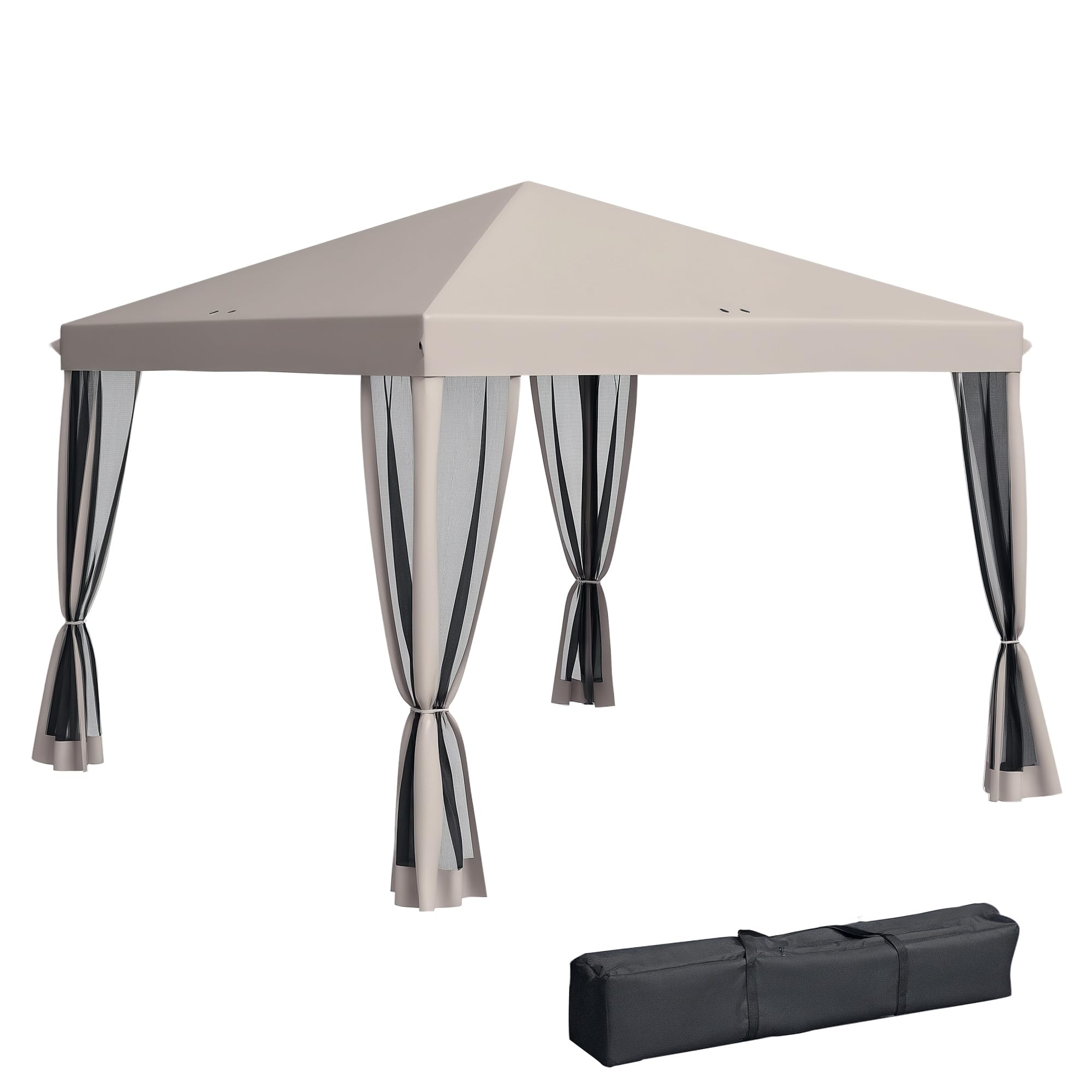
The market-stall workhorse with four mesh walls and a tall 8.7-foot center
If you sell at markets, set up at fairs, or need a vendor booth that keeps bugs off your goods, the Outsunny is built for that rhythm. It throws 100 square feet of shade — room for 10 people seated — with an 8.7-foot center height and 6.5-foot valance headroom (the valance is the hanging fabric edge around the top). That vertical room gives you space to hang signage and move product while four mesh sidewalls keep the winged intruders out. It uses lightweight Oxford fabric with drain holes to shed sun and rain, and it comes with stakes and guy ropes.
The frame is alloy steel and the whole thing weighs 33.9 pounds — mid-pack, lighter than the 52-pound COBIZI but far heavier than the 14-pound OakPedion. Setup runs with two people, since the maker lists a two-person setup. The mesh sides let you stay cool and still enjoy the breeze. In light rain owners have found it leak-free, and it fits 4-5 people with chairs comfortably.
The weak spots to know are the frame legs and the carry bag. Legs can bend in a mild wind, so stake it down properly and bring it in when gusts pick up. The thin carry-bag handles and zipper have a short life even when the canopy itself holds up. Neither dims what the canopy does — it stands, shades, and seals off bugs — but they are worth a mental note.
Why event sellers like it
- 100 square feet of shade seats 10 people — real booth capacity
- 8.7′ center height and 6.5′ valance headroom for signage and movement
- Four mesh sidewalls keep bugs off you and your products
- Lightweight Oxford top with drain holes sheds sun and rain in light conditions
Where it falls short
- Frame legs flex in a mild wind — anchor it well and pack it in when gusts rise
- Included carry bag is thin; handles and zipper are the first to wear
Best for: market sellers, fair vendors, and family events where space and bug-free shade both matter.
Not ideal for: leaving up in gusty weather or expecting the bag and legs to last years — a stronger frame would be wiser there.
6. MASTERCANOPY 10×10 Pop Up Gazebo Screen Room with Netting Beige

A no-assembly gazebo that pops up in 45 seconds and comes ready to use
The MASTERCANOPY’s claim to fame is speed: no assembly required, up in 45 seconds from the start. It measures 90 inches high and 140 inches hub-to-hub (hub-to-hub means across the widest point of the frame), giving 6-8 people room to gather.
The roof uses 210 denier poly-oxford fabric with a heavier 600 denier panel in the center section, and it carries a UV 50+ rating to block sun rays. Tight-weave mesh panels keep insects out and let air circulate. The frame is fiberglass — light enough to move easily. The package includes 11 deluxe tent stakes, wind ropes, and a carry bag, so it is a complete setup with no side panels to attach separately.
Two honest notes. The maker states the roof is not intended for heavy rain and should be put away in rainy days to extend its life — so this is a shade-and-bug tent, not a storm shelter. And while it pops up fast, taking it down has been uneven for some owners. The mesh panels themselves are praised for keeping things bug-free and cozy, and the fast, tool-free raise is exactly what you want when you arrive at a campsite after dark.
The speed advantage: no assembly and a 45-second pop-up make this the fastest path from car to bug-free shelter on this list.
Fair warning: keep it out of heavy rain per the manufacturer, and budget a little practice on the takedown — raising is the easy half.
Pick this if: you want the quickest setup possible and use it mainly for shade and bug protection on dry days.
Pass if: you need a tent rated to stand up to heavy rain or a full 100-square-foot floor.
7. COOS BAY 10×10 Pop Up Canopy with Netting, Slant Leg Shelter, Light Blue

Slant-leg canopy with a flame-resistant top and a huge following of happy campers
Two numbers set the COOS BAY apart at this tier. First, its top is CPAI-84 certified flame resistant — CPAI-84 is the industry standard for flame resistance in camping fabrics — and rated UPF 50+ to block UV rays. Second, it uses a slant-leg design (the legs angle outward from the frame, which is what keeps the packed size small) and folds into a compact bundle with a carry bag. The three-position adjustable legs let you level the shade on uneven ground.
The frame is powder-coated rust-resistant steel, and complete mesh sidewalls attach with a velcro system that goes on and off quickly. The one caveat on the numbers: this canopy is listed at 64 square feet of shade, smaller than the 100 square feet of the tents around it. On a standard 10×10 patio or picnic table, the mesh still fits and blocks the bugs — owners in one case fit a table, chairs, a hammock, and a cat inside — but do not expect the full square footage of the others.
On setup, the honest picture is that this is a nice-to-have-a-hand unit rather than a solo one for many buyers. It can be done alone in about 20 minutes by a determined person, but the snaps and locks go faster with two. The weak point owners flag is durability: the frame legs and canopy are the parts that age, and the tent rewards you for packing it away after each season instead of leaving it up year-round.
What this budget pick gets right
- CPAI-84 certified flame-resistant canopy top — a safety spec many budget tents skip
- UPF 50+ sun protection with a powder-coated rust-resistant steel frame
- Full velcro mesh sidewalls go on and off fast, keeping bugs out while air flows
- Slant-leg design folds compact with a three-position height adjustment for uneven ground
Where it gives ground
- 64 square feet of coverage is less than the 100 square feet of the full-size tents here
- Solo setup is possible but slow — a second pair of hands makes it much quicker
- Frame durability is the long-term question if you leave it out through every season
Good match for: budget-conscious campers and tailgaters who want UV and flame-resistance specs and value a compact folded size.
Look elsewhere if: you need the full 100 square feet of shade or want a frame built to survive years outdoors without cover.
8. Pop-Up Screen Tent 10×10 FT by Mars Explo, Outdoor Screen House with Mesh Walls
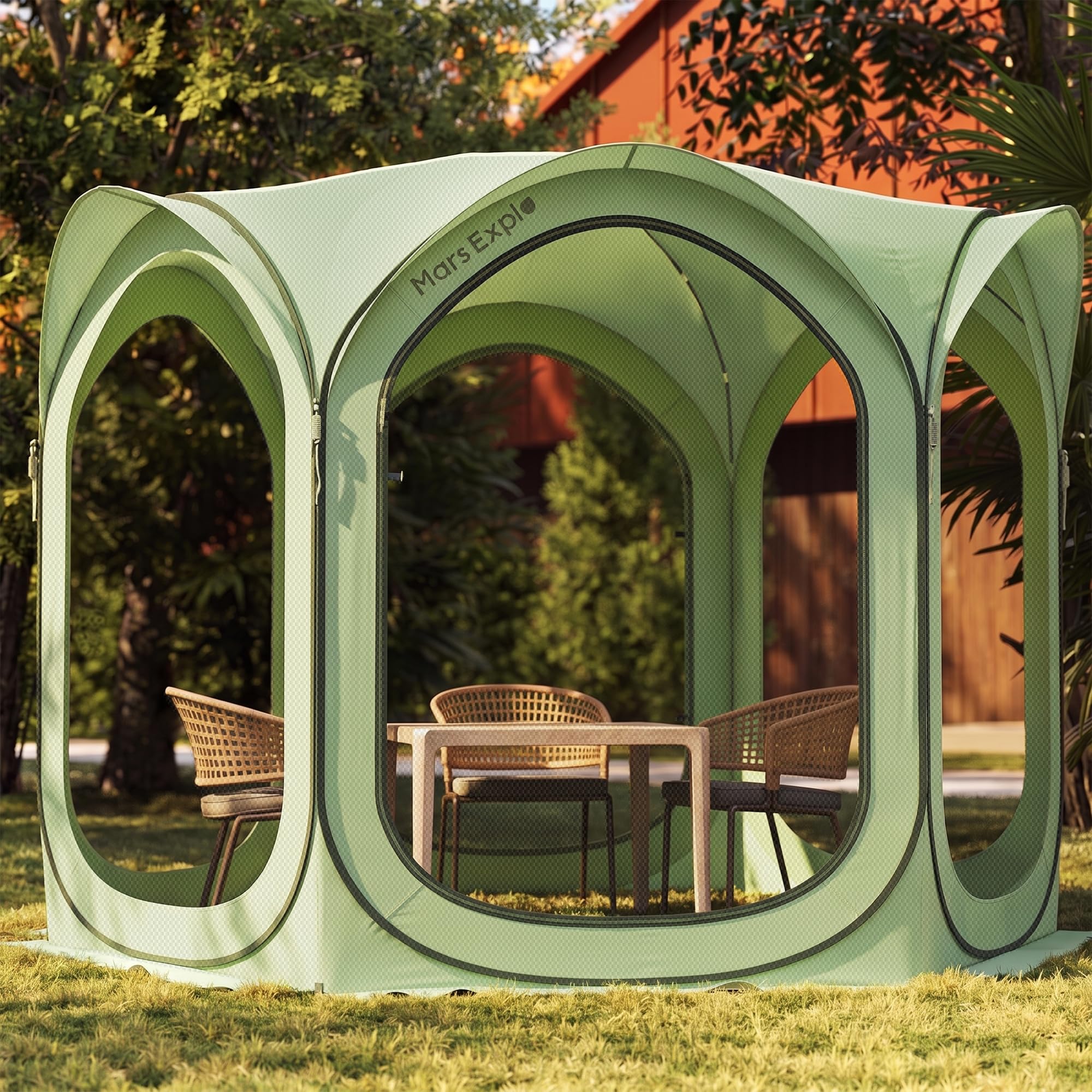
A spring-loaded frame a single person can raise in a minute, with mesh that stays cool
The Mars Explo tent is built around one promise: setup you can do alone in about a minute, thanks to a spring-loaded pop-up mechanism. It folds down to roughly the size of a laptop and rides in a carry bag, so it stays easy to store between trips. The 360-degree breathable mesh uses silver-coated B3 fine mesh with a UPF 50+ rating, keeping the interior cool and shaded while the air keeps moving.
The shell is heavy-duty 300D Oxford fabric with a rust-resistant steel frame and a fiberglass-reinforced roof. Double-stitched seams, dual-sided zippers, and adjustable door curtains round out the everyday details. It includes sandbags, stakes, and guylines for anchoring, and the maker rates the solid steel main frame for wind resistance up to a set limit — it is not recommended for use in winds exceeding 24 mph. There is also a top hook for a lantern and support for optional LED light strips, plus a patented extended eave (a US design patent) that adds shaded coverage and a distinctive overhang look.
The mixed notes center on how the tent holds up over time and how the closures operate. Some owners find the fabric sturdy with smooth zippers and plenty of room — two cots fit comfortably, and one family of six used theirs for picnics and stargazing. Others report the screens can tear and the zippers can be stiff to use. In windy gusts the tent can lift if you have not weighted it, so use the included sandbags. Treat the mesh gently and stake it well, and the fast setup earns its keep.
The setup win: a spring-loaded frame that goes up solo in about a minute is the reason to buy this one — no wrestling, no second person needed.
The catch to plan around: weight the corners with the supplied sandbags and keep it below its wind limit, or a gust can tip it and the mesh is thin enough to need care.
Suits: solo campers and backyard hosts who want a minute-long setup and a cool, light-filled mesh interior.
Steer past if: you want heavyweight mesh that survives rough handling or plan to leave it up in strong wind.
9. Aoxun 10x10ft Pop Up Gazebo, Camping Gazebo Screen Tent, Brown
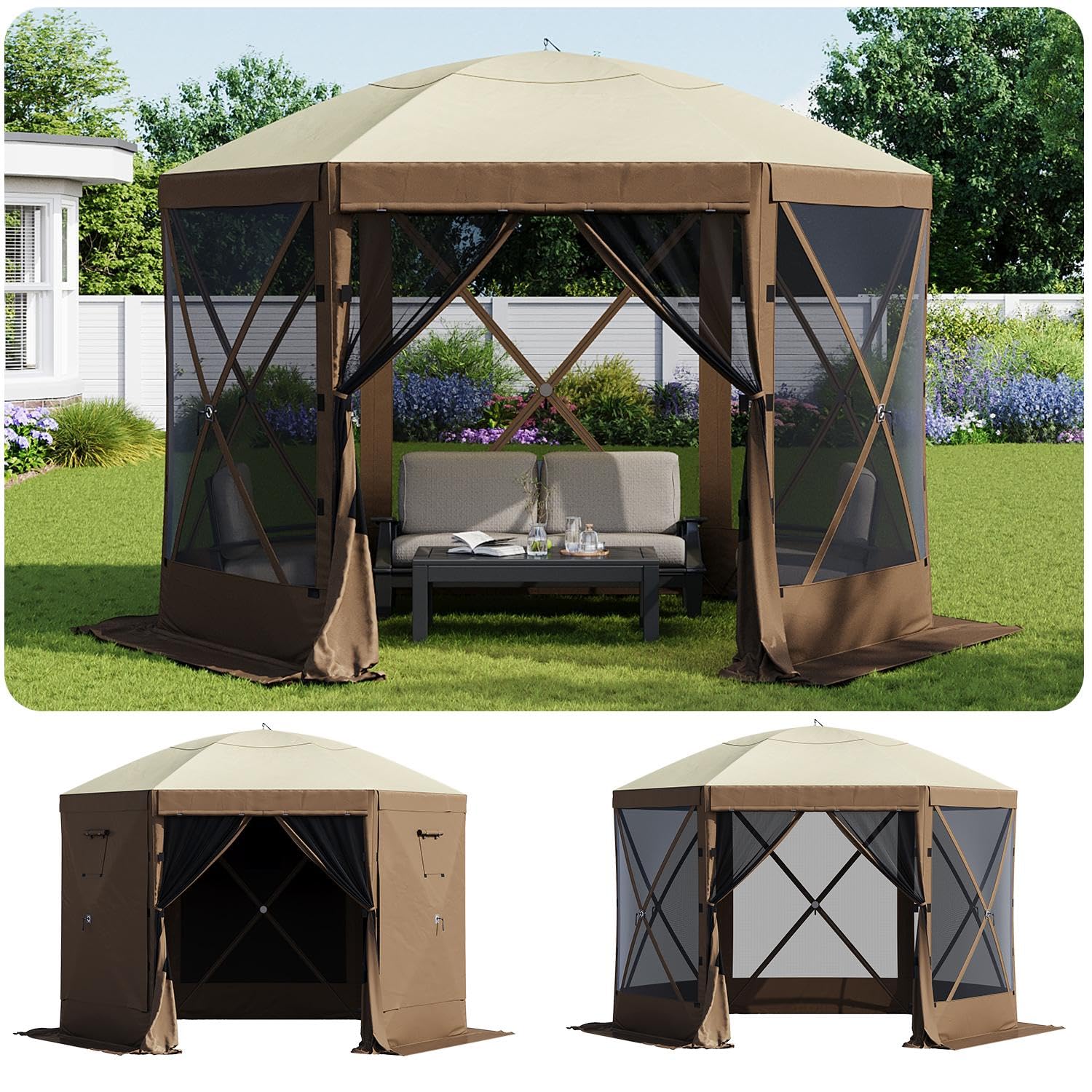
Six detachable wind cloths turn this gazebo into a fully private screened room
The Aoxun’s trick is flexibility. It ships with 6 wind cloths — two of which have windows — and all of them detach, so you slide them on for privacy and wind protection or peel them back for airflow. The main body is thickened 300D Oxford fabric with fine polyester mesh that blocks over 99% of harmful UV rays and creates a fully bug-free zone. It pops up with no tools, folds into the included carry bag, and sits on sturdy fiberglass poles with reinforced windproof ropes and luminous ground stakes (they glow so you can find them at night).
The hexagonal shape and double-sided zipper make it feel more like a gazebo than a plain canopy. Weighing 33.1 pounds, it is mid-pack — heavier than the 14-pound OakPedion but lighter than the 52-pound COBIZI. Owners mention it goes up fast; one notes it took under 10 minutes and a 15-year-old assembled it alone, while others highlight the spacious interior, solid workmanship, and looks. It handles wet, cold conditions and small gatherings well, and it packs back into its bag without a fight.
The one recurring tweak is the zippers. Owners find them functional but on the lighter side — the kind that works fine with normal use but is not built for constant rough tugging. Beyond that single note, this is a well-rounded tent that covers backyard BBQs, beach days, garden parties, and camping stays. If you want one screened 10×10 tent that adapts to different weather, the detachable wind cloths give you more configurations than a fixed-mesh design.
Aoxun’s flexible-strength setup
- 6 detachable wind cloths (2 with windows) let you toggle privacy, wind block, or airflow
- 300D Oxford fabric with fine polyester mesh blocks over 99% of UV rays
- Fiberglass poles, reinforced windproof ropes, and luminous ground stakes for stability
- Heavier-duty double-sided zipper and a hexagonal footprint for a gazebo feel
Small print to weigh
- Zippers work fine normally but are not built for constant hard tugging
The flexible choice for: anyone who wants one 10×10 tent that adapts to backyard BBQs, garden parties, and camping through changing weather.
Second-guess it if: you plan to open and close the doors hundreds of times a season — this is not the heaviest zipper of the group.
Understanding the Specs
Denier and Fabric Weight (D and T)
Fabrics are graded by denier (D) or thread count (T), where higher numbers mean a denser, heavier cloth. A 420D or 300D Oxford top is built to take sun and rain; a 185T polyester top is lighter and easier to carry. Heavier cloth resists ripping and holds its shape over a season, while lighter cloth keeps the packed weight down.
UPF and UV Blocking
A UPF rating tells you how much UV radiation the fabric stops. UPF 50+ blocks the vast majority of UV rays in most fabrics, and one tent here blocks over 99% of harmful UV rays. Higher UPF keeps the inside noticeably cooler and reduces sun exposure on long afternoons outdoors. This matters more if the tent faces full sun without tree cover.
Mesh Coverage and Panel Count
The panel count is how many separate mesh sections cover the frame, and it decides whether bugs get a free path in. Six mesh panels or a 360-degree design seals the whole space, while fewer panels leave seams and rear gaps. Tighter mesh weaves keep the smallest insects out. Fuller mesh coverage generally means more airflow, not less.
Frame Weight Versus Stability
Frame weight signals how the tent behaves in wind and how easily you can move it. Steel frames with thicker tubing stay planted but run heavy, while fiberglass and aluminum frames drop the carry weight but flex more in gusts. A center pole’s rated weight capacity tells you how much load the frame is built to bear. Pick steel if the tent stays put, fiberglass or aluminum if it travels.
FAQ
What size is a 10×10 screen tent in real feet?
How many people does a 10×10 screen tent fit?
Will a screen tent keep out mosquitoes and no-see-ums?
Can one person set up a 10×10 pop up screen tent alone?
Do these screen tents come with a floor?
Is UPF 50+ enough sun protection for a screen tent?
How do I keep a screen tent from blowing over in wind?
Screen tent vs regular pop up canopy — what is the difference?
Can these 10×10 tents handle rain?
What is the difference in weight between a steel and fiberglass frame screen tent?
Final Thoughts: The Verdict
For most people hunting a screened 10×10 tent, the 10×10 tent screen winner is the COBIZI 10×10 Heavy Duty Pop Up Canopy Tent because its full-truss steel frame and 400-pound center polecapacity keep it planted while the 420D Oxford top blocks 99% of UV rays, and its four removable mesh sidewalls seal out bugs. If carrying weight matters more than raw sturdiness, the 10 X 10ft Screen House Room for Camping is the one to grab — at 14 pounds versus the COBIZI’s 52 pounds, it is a 3.7-times-lighter tent that an adult can raise alone. And for a backyard hub you can reconfigure with the weather, the Aoxun 10x10ft Pop Up Gazebo Screen Tent and its six detachable wind cloths give you the most setup options of the group. Whichever you choose, match the frame weight to how you actually camp or host — a tent that fits your setup gets used far more.
How We Picked
We do not accept paid placement. Every pick is matched to a real buyer and a real use-case; we do not hands-on test units.
Sources & Methodology
Specifications: manufacturer listings and product documentation. Review insights: verified customer reviews, as of September 2026. Pricing: not shown on this page (it changes often); check the current price via the retailer link.
As an Amazon Associate, KitchPrep earns from qualifying purchases. This does not affect which products we feature.
Related Guides
