
Specs are compiled from manufacturer listings and verified buyer reviews and can change over time — please confirm the key details on the product page before buying.
If you want the short answer, get the WEIZE 10×10. It’s the one that snaps together with a single press, and it’s the model that folds back into a wheeled bag without a wrestling match. Everything else on this list is a variation on that same idea, priced for a different kind of buyer.
I’m Mohammad Maruf — the founder and writer behind KitchPrep. This guide is built by comparing the manufacturers’ published specifications and the patterns across verified customer reviews, so you get each pick’s real strengths and trade-offs instead of marketing spin.
Pop-up canopies look identical in photos, which is exactly why buyers get burned. This breakdown separates the frames that survive a gust from the ones that end up in a neighbor’s yard, so you can pick a backyard shade tent that holds its ground.
Our Picks at a Glance
How To Choose The Best Backyard Shade Tent
Most buyers start by hunting for the biggest square footage they can find. That’s the wrong first question. In a backyard, the canopy that fails you is never the one that was too small — it’s the one that lifted off its feet or tore at the attachment point the first time a storm rolled through. So start with the frame, work back to the fabric, and pick your size last.
Focus on the frame before anything else
The frame decides whether your canopy survives a season. Look for a steel or alloy steel truss (a criss-cross bracing structure that spreads force across the whole leg instead of one corner) rather than a bare tube. Powder coating matters too — it’s the rust-proof finish that keeps a frame from seizing up after a wet summer. The gap between a good canopy and a frustrating one usually lives right here, not in the color of the fabric.
Denier tells you how tough the fabric actually is
Denier is the thread weight of woven polyester — a higher number means thicker, heavier yarn. A 150D top is light and packs small; a 500D top is noticeably denser and stands up to more sun exposure over time. One buyer on this list specifically wanted a heavier denier back and would have rated the product higher for it, which tells you the number is worth checking before you buy.
Match the setup to who is actually setting it up
Be honest about this one. If you’re setting up alone every weekend, a one-push center-lock canopy (a single button on the hub that locks every leg at once) is worth prioritizing over a slightly larger model you need two people to raise. If you set up once and leave it, size and wind protection matter more than a two-minute setup.
Quick Comparison
| Model | Best For | Coverage | Frame Material | Packed / Setup Size | Amazon |
|---|---|---|---|---|---|
| WEIZE 10×10 Pop Up Canopy★ Best Overall | Best Overall | 100 sq ft | Alloy Steel | 45″ x 11.2″ x 8.5″ | Amazon |
| VIVOHOME 10x10ft One Push CanopyTough Fabric Pick | Tough Fabric Pick | 100 sq ft | Carbon Steel | 120″ x 120″ x 112.8″ | Amazon |
| ABCCANOPY 10×10 with 2 SidewallsBest Fabric Quality | Best Fabric Quality | 100 sq ft | Alloy Steel | 120″ x 120″ x 114.2″ | Amazon |
| Quictent 10×10 with 4 Sidewalls | Most Versatile | 100 sq ft | Alloy Steel | 120″ x 120″ x 104″ | Amazon |
| Pone·vora 10×10 Vented Roof Canopy | Best Vented Roof | 100 sq ft | Metal | 120″ x 120″ x 102″ | Amazon |
| SANWAY 10×10 One Push Canopy | Best Solo Setup | 100 sq ft | Metal | 118″ x 118″ x 108″ | Amazon |
| Yaheetech 10x10ft with Solar LED Lights | Best for Evenings | 100 sq ft | Alloy Steel | 116.93″ x 116.93″ x 113.39″ | Amazon |
| GDY 10×10 with 4 Sidewalls | Best Enclosed Space | 100 sq ft | Alloy Steel | 46.46″ x 8.27″ x 8.27″ | Amazon |
| easierhike Beach Canopy 10×10 | Best Lightweight Carry | 100 sq ft | Aluminum | 120″ x 120″ x 79″ | Amazon |
In‑Depth Reviews
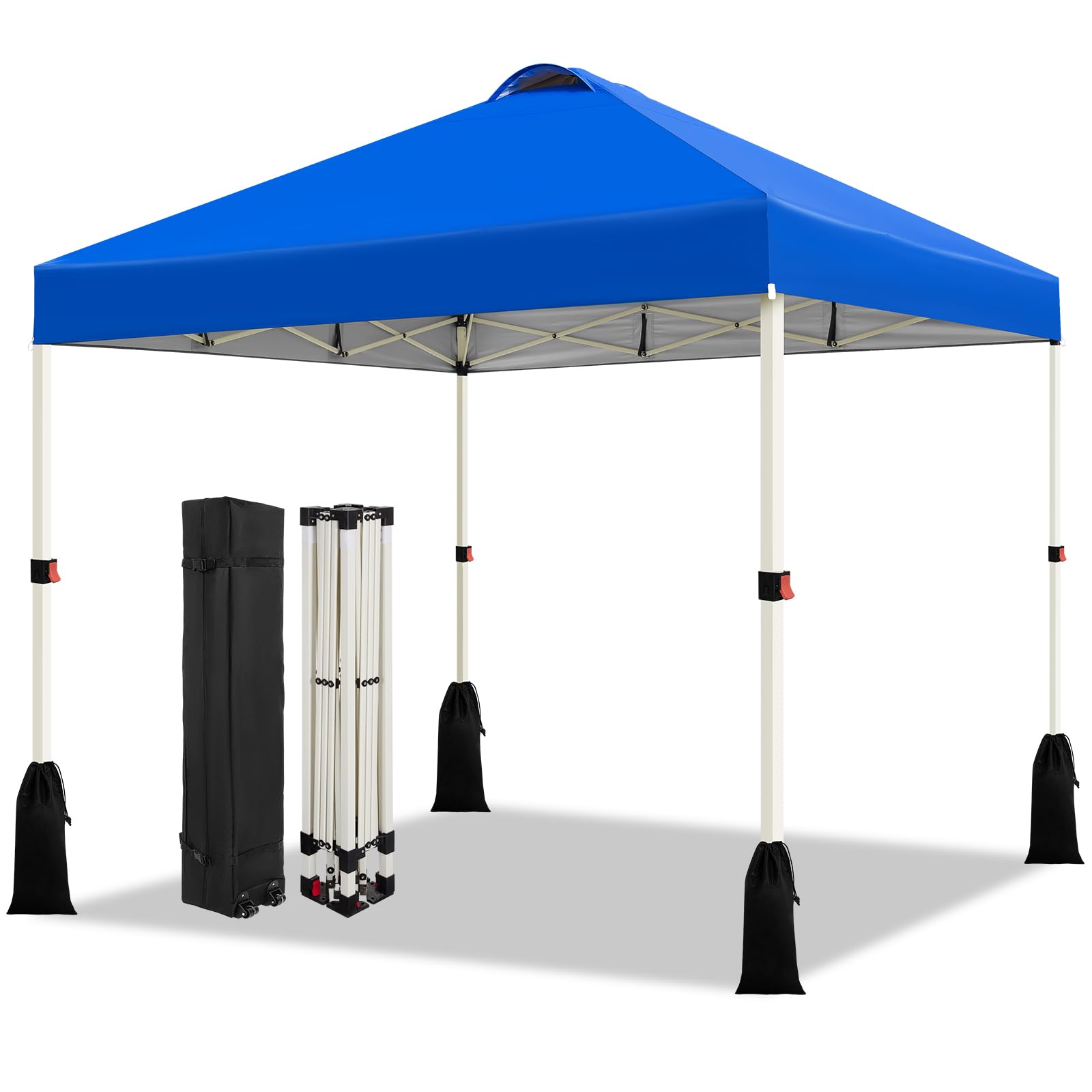
1. WEIZE 10×10 Pop Up Canopy Tent, 1-Button Push Setup, Blue
Our pick — over 4★ from 500+ verified ratings; the strongest balance of quality and price.
One press of the hub locks all four legs — this is the setup nobody argues about.
This is the canopy for the family that hosts the same BBQ every summer weekend and doesn’t want to spend twenty minutes fighting a frame first. The whole thing runs on a one-button central locking mechanism — press the hub in the middle and all four legs snap into their locked position at once, no tools and no second set of hands required. Two people get it standing in seconds, and the legs slide to three heights: 8.9 ft, 9.3 ft, and 9.6 ft, so you can raise it above a tall guest instead of ducking all evening.
The frame body is alloy steel rather than basic tube, with reinforced bolts and a fully pre-assembled structure — nothing to bolt together on arrival. The alloy steel frame is rated to support 140 lbs evenly, and the peaked roof sheds rain instead of letting it pool. For coverage, you get 100 square feet, which the maker rates for up to 10 people, and the absence of overhead crossbars means you get open headroom rather than a bar at eyebrow level.
Where it wins on portability is the packed size and the wheels. It folds to 45″ x 11.2″ x 8.5″ with the fabric still attached, which drops straight into a car trunk, and the carry bag has wheels that roll across grass, gravel, and sand. Four sandbags, four guy ropes, and eight spikes all live in one dedicated pocket, so you’re not hunting through the garage for anchors at the last minute.
The 150D polyester top has a silver-coated underside and carries a UPF 50+ rating (a sun-protection score where 50+ is the highest tier), blocking 95% of the sun’s glare. That 150D fabric (a mid-weight woven polyester) keeps the whole thing light and easy to pack. But buyers report one recurring gripe: they’d trade some of that lightness for a thicker weave. The sandbags also ship empty, so plan to fill them before your first windy day.
Solo-Setup Winners
- One-button hub locks all four legs in a single press
- Three height settings from 8.9 ft to 9.6 ft
- Wheels on the carry bag roll over grass, gravel, and sand
- Four sandbags, four guy ropes, and eight spikes included in one pocket
Worth Knowing Upfront
- 150D fabric is the lighter option here — owners mention they’d prefer a heavier weave
- Sandbags arrive empty and need filling before a windy day
The one to buy: solo hosts, market sellers, and anyone who values setup speed over a slightly heavier canopy top.
Think twice if: your site sits exposed to constant high wind — the lighter fabric and empty sandbags mean you need to anchor down properly every time.
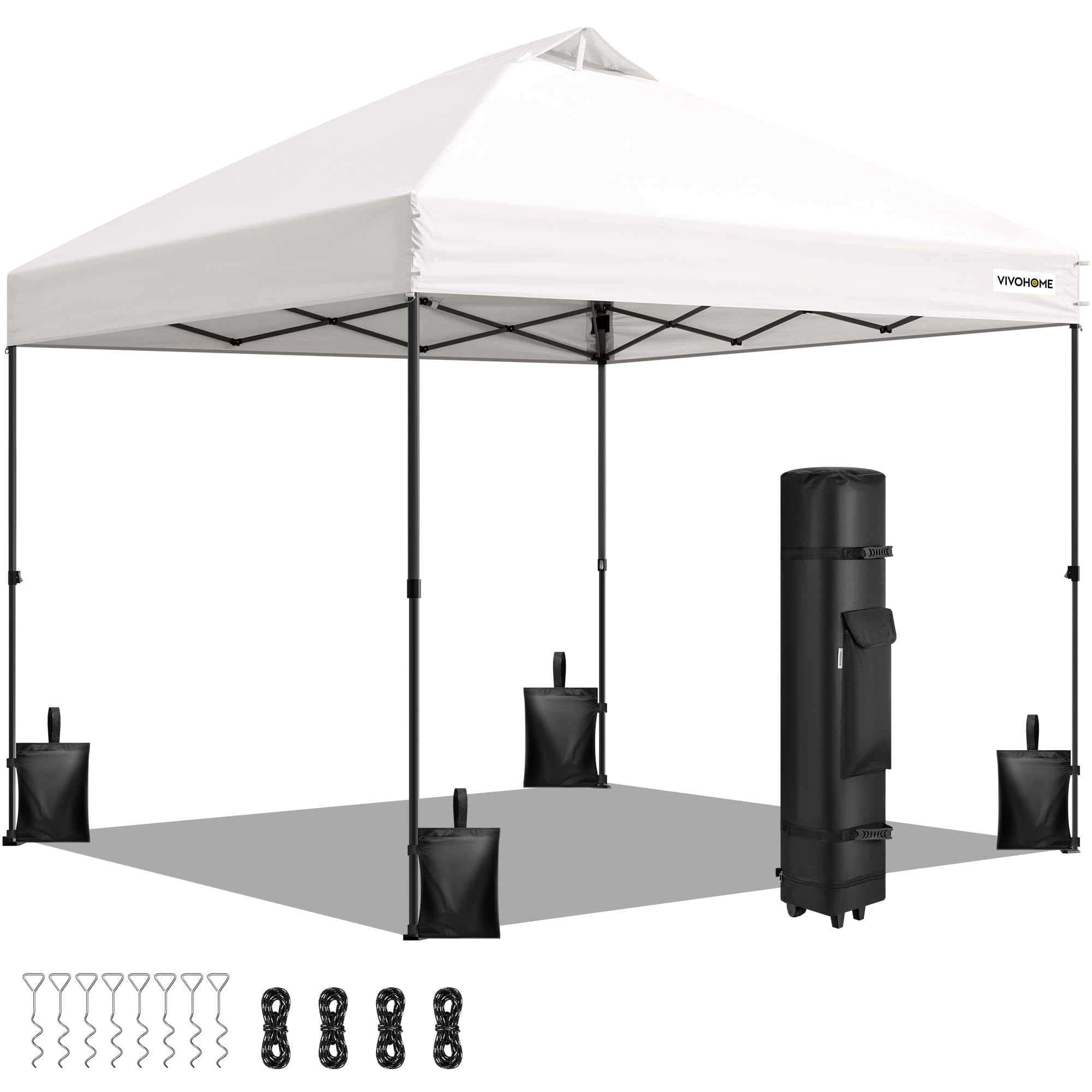
2. VIVOHOME 10x10ft Pop Up Canopy Tent One Push Setup
Steeper roof slope and waterproof strips — built for the buyer who’s tired of puddles on the canopy top.
Rain pooling — water collecting on top until the canopy sags or collapses — is the slow killer of any canopy. This one fights it with a steeper slope, a longer top, and waterproof strips that push water off instead of letting it sit. The top is 150D Oxford fabric (a woven polyester that’s denser and more weather-tight than basic tent cloth), and it stands on a carbon steel frame with crossbars and a triangular support structure. That geometry spreads the load across the frame during a gust instead of concentrating it at one joint, so the frame holds up better in wind.
Setup works off a push-button mechanism, and the maker says two people can raise or lower it in minutes. There’s a height-adjustment button for dialing in the roofline, and the frame tops out at 112.8 inches — taller than the WEIZE above, which matters if you’re hanging banners or stringing lights underneath.
The extra hardware is where this one earns its place. You get air vents, wind ropes, sandbags, spiral ground stakes, and Velcro straps, plus hooks running along the frame for attaching signs or decorations. That vent does double duty: it pushes hot air out of the peak and reduces the lift that turns a canopy into a kite in a gust.
The water resistance is the honest catch here — some customers note it shrugs off ordinary rain, while others say it doesn’t hold up to a heavy downpour. Pair that with the fact that it needs a second person to raise comfortably, and this becomes the canopy for someone who sets up once, weights it well, and doesn’t intend to move it.
The rain-first choice: if your backyard holds water or your site gets afternoon storms, the steeper roof and waterproof strips are the whole reason to pick this over a flat-top canopy.
Where it needs help: factor in a second person for setup, and treat heavy rain as something you’d rather take the canopy down for.
Reach for this if: you want a taller frame with reinforced triangle bracing and you always have a helper on setup day.
Look elsewhere if: you set up alone every time, or your site sees sustained heavy rain rather than passing showers.
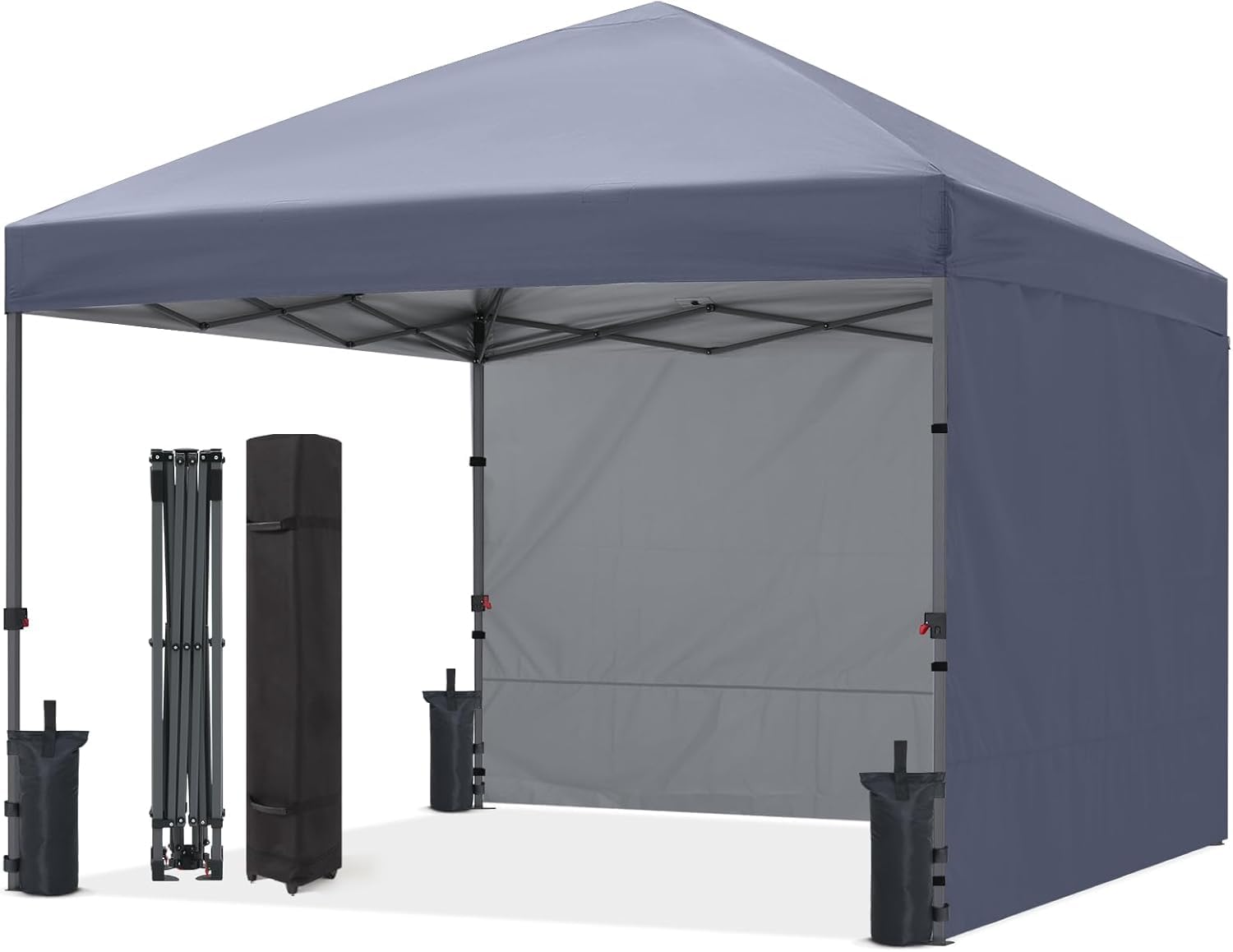
3. ABCCANOPY 10×10 Pop Up Canopy Tent, 2 Sidewalls, Gray
The thickest canopy cloth on this list, wrapped around a commercial-grade full truss frame.
Denier is the fabric number that separates a canopy that lasts from one that fades and tears, and this one sits at the top of this list at 500D polyester. That’s a substantially denser weave than the 150D and 210D tops elsewhere here, and it’s rated UPF 50+ with waterproof properties on top of that. If you’ve had a canopy die on you after two summers, this is the number to pay for.
The frame is where it gets serious — a commercial-grade full truss structure with a cross-truss design, engineered specifically for wind protection. That’s a big step up from a basic pop-up frame, and it’s the reason this model weighs 28 pounds and takes 10-15 minutes to set up even with the pre-assembled frame doing most of the work. You press the central button, adjust the height, and you’re done — but this isn’t a two-minute job.
You get two sidewalls rather than four, which is the right call for a backyard. Two walls cut afternoon glare and block wind without turning the canopy into a sealed box, and they pop on or off depending on which direction the sun and breeze are coming from. The 10 ft x 10 ft x 9.4 ft footprint holds 100 square feet of shade and seats 4-5 people in chairs with room for a small table.
The honest trade-off is weight and setup effort. At 28 pounds with a full truss frame, one person can lift or roll it using the wheeled bag, but it’s not a canopy you’ll casually move across the lawn alone. Buyers describe the setup as easy but tight, with two people making it noticeably smoother.
Built for the long haul: 500D cloth, a full truss frame, and two removable sidewalls make this the pick for someone who wants one canopy to last several seasons rather than replacing a cheap one annually.
The honest caveat: this is the heaviest-feeling setup here — tight enough that a helper makes setup much smoother, and the two sidewalls cover only two sides rather than all four.
Best for: buyers who want maximum fabric durability and wind bracing and don’t mind a longer setup window.
skip it if: you need a quick-grab canopy for solo weekend moves — the weight and truss frame make it a stay-put setup.
4. Quictent 10×10 Pop Up Canopy Tent with 4 Sidewalls
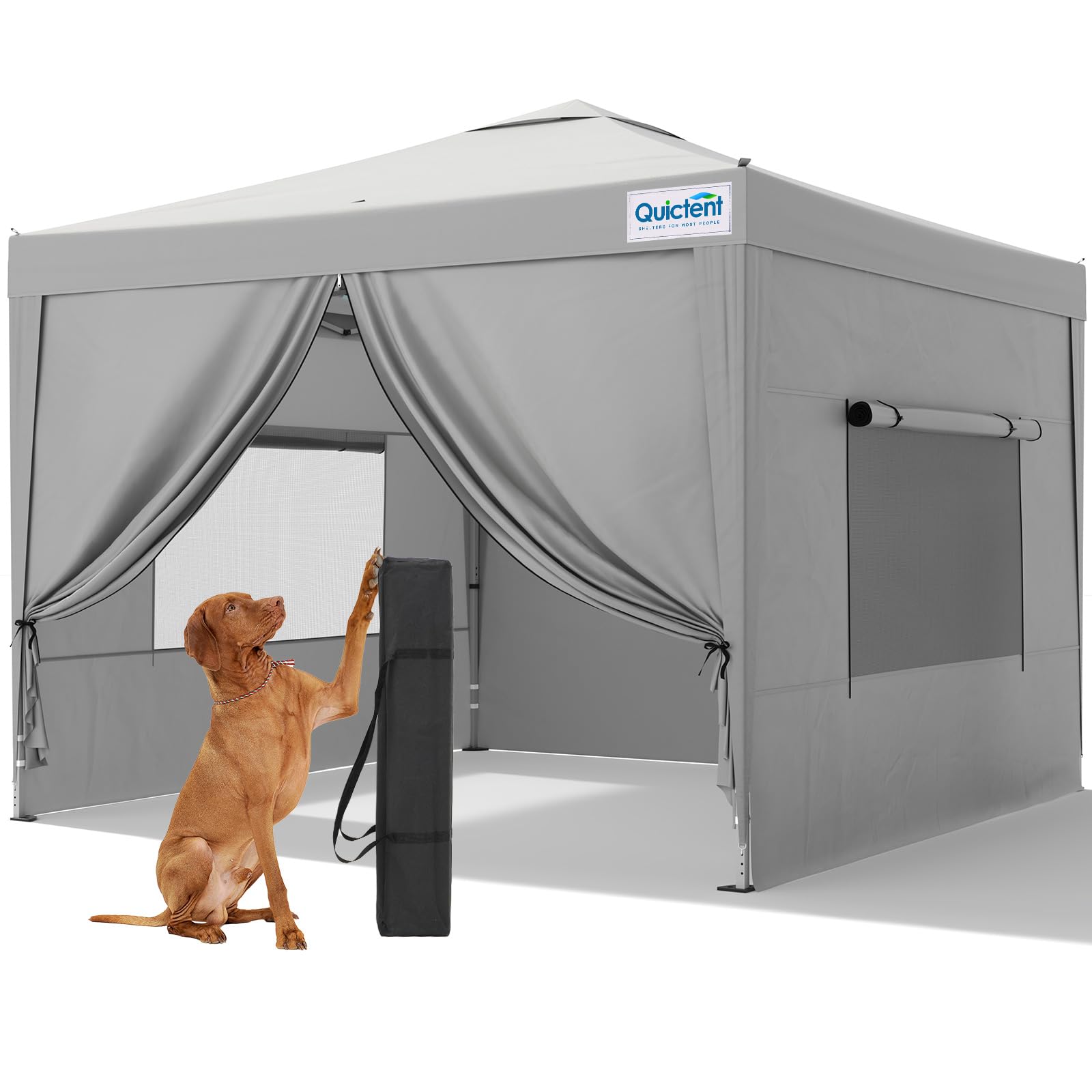
Four mesh sidewalls with roll-down covers — shade, breeze, and privacy from one frame.
This is the pick for anyone who wants the canopy to do more than throw shade. It ships with four removable sidewalls, each with a mesh window for airflow and a built-in fabric cover that rolls down when you want full privacy or wind blocking. In the afternoon you open the covers; at dusk you drop them. That flexibility is the whole reason to consider it over a basic open-frame canopy.
The roof is 210D silver-coated Oxford fabric with UPF 50+ UV protection, and the top is vented to push hot air out of the peak. Drainage holes in the roof keep rain from pooling. You get three adjustable heights — 96″, 100″, and 104″ — and the canopy covers 10×10 ft for 8-10 people, with a footprint that’s rated for patios, camping, outdoor dining, and hot tub privacy.
Around the edges it’s a tight package: a set of stakes and ropes, a carry bag, and the folding frame all come included, and the canopy folds down compact enough to fit a car trunk. The maker notes plainly that this is a temporary setup — heavy rain or severe storms mean taking it down, which is worth taking at face value rather than as a flaw.
Where it asks a little patience is the frame hardware. Several buyers flag the plastic hinges and screws as the weak link, and gusts can lift an unstaked unit and damage those connectors. If you anchor it every time and treat it as a seasonal canopy rather than a permanent structure, it performs the way it’s designed to.
Privacy plus airflow: the mesh walls with roll-down covers do two jobs a single canopy top can’t — keep the breeze coming while blocking the neighbors’ view.
Anchor discipline needed: the plastic hinges and connectors are the part to protect, so always run the stakes and rope, and plan to take it down before storms.
Pick this if: you want four-sided flexibility, a vented roof, and mesh windows — ideal for backyard events and camping.
Not for you if: you want to leave it up all season regardless of weather — this one is explicitly a temporary setup.
5. Yaheetech 10x10ft Pop Up Canopy Tent with Built-in Solar LED Lights

Seventeen LED lights in the frame — a canopy that keeps working after the sun goes down.
The feature that defines this canopy is the 17 built-in LED lights strung along the frame, powered by a solar panel on the top or by a power bank (which you’d supply yourself). A remote controls the brightness and the on/off switch, so you can dim the lights down for evening conversation or crank them up to read and cook by. This is the canopy for the family that hosts guests after dark, not just at noon.
Owners of this one are vocal about how good it looks when lit — the white top catches the glow and reads clean and elegant rather than camping-basic. Setup is quick, with extra room here compared to the WEIZE above: the legs telescope from 8.8 ft to 9.4 ft in 4-inch increments, which is a finer adjustment range for dialing in the roofline against uneven ground. The frame uses larger 4″ x 4″ feet, and the canopy packs down into a roller bag with two rubber handles.
The stability hardware is genuinely thorough — 12 ground stakes, four sandbags, and four guy lines, better than most canopies at this size ship with. The white top looks sharp, but the same surface that stays cool can also look bare in bright sun with only a single overhead panel.
Here’s the trade-off worth naming plainly. This is the lightest-covered canopy of the bunch in the wind — the fabric and poles lean toward the lighter end of the category, and reviewers point out it performs best with the anchors run at every corner. Setting it up with a helper is the smart move; the frame pairs well with the 15-minute, two-person setup most buyers here describe.
Evening entertainer: the 17 solar LEDs and remote dimming turn a daytime shade canopy into a usable night space, which is genuinely rare in this category.
Weight the wind decision: lighter construction and stake-dependent stability mean this is a canopy to anchor thoroughly before a gusty day.
For the night host: pick this if you want a canopy that lights itself and pairs with a backyard party after sundown.
Not this one if: your site is exposed to steady wind — the fabric and pole weight favor a sheltered yard or a thoroughly anchored setup.
6. SANWAY 10×10 Pop Up Canopy Tent, One Push One Person Setup
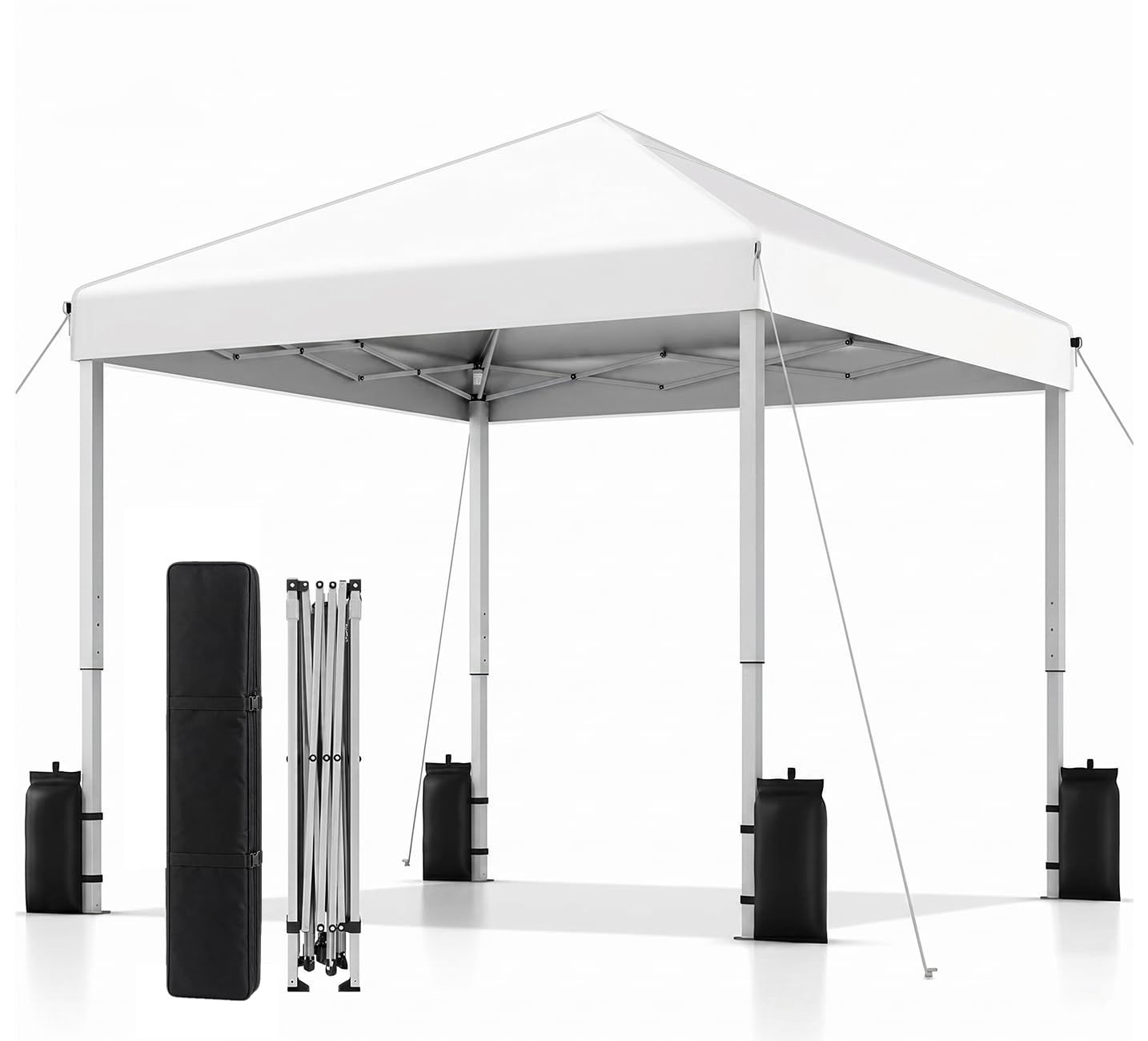
One push, one person — and a top fabric that blocks 99% of UV rays.
You can set this canopy up alone in seconds — it arrives pre-assembled and opens with a single-click mechanism, no tools and no second set of hands needed. That’s the whole pitch for a solo buyer. You get setup speed comparable to the WEIZE above, but with a heavier 210D silver Oxford top instead of a 150D one, so the fabric resists tearing and sun damage longer. The 210D silver Oxford top is also rated to block 99% of UV rays while staying flame-retardant.
The frame is a corrosion-resistant steel truss with protective foot pads and four sandbags for anchoring on windy days. Legs adjust from 5.8 to 8.9 feet with three height options, and the roof is a high-peak design with a vented top that sheds rain quickly. Around the edge, you get 100 square feet of coverage rated for up to 10 people and no overhead crossbars, plus a carry bag for packing it away.
Where the frame matters most: the stake-and-rope system held firm in 20mph winds, the rating this canopy is built around. Owners credit the silver coating on the underside for keeping the interior cool even in direct sun. It also carries a 2-year manufacturer warranty, the longest coverage on this list.
The one honest note: a few shoppers say that raising it works better with a helper despite the one-push promise. It’s still simple, but if you’re small and reaching the center hub alone, budget for a little patience on the first setup.
Longest warranty here: a 2-year manufacturer warranty backs a canopy that already stands firm in 20mph winds.
Caveat worth knowing: the one-push setup is a genuine solo option, but reviews note that two people make it noticeably easier on the first attempt.
Go with this if: you want one-push solo setup and a heavier UV-blocking top in the same canopy.
Consider elsewhere if: you’d rather not deal with any setup friction — the promise is one person, but a helper smooths the first go.
7. GDY 10×10 Pop Up Canopy Tent with 4 Sidewalls
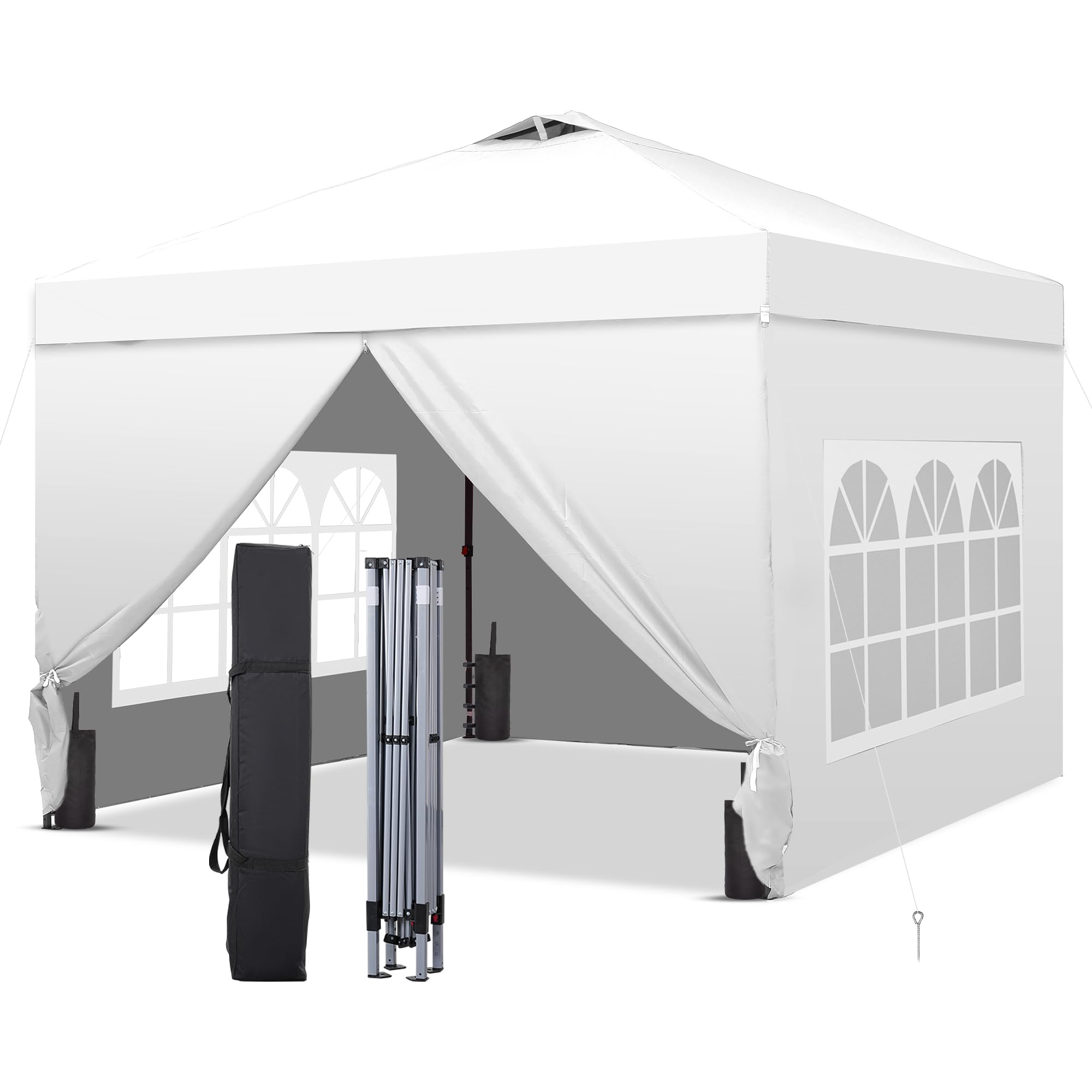
Four detachable walls that turn a shade canopy into a room for hosting afternoon events.
Four detachable sidewalls turn a canopy into a space you can walk into rather than just stand under. This GDY package puts those four walls on a 10×10 frame, covering 100 square feet of shade and rated to block 99% of UV rays. According to the maker, that’s enough shade to spend an afternoon inside without worrying about sun, wind, or rain. Setup is four steps: stretch the frame legs, attach the top, press the button to adjust height, tie off the walls.
There are three adjustable heights so you can match the roofline to your event, and the frame is alloy steel with rust-proof powder coating rated to resist chipping and peeling over time. Steel feet with anchor holes and push-button sliders round out the hardware. At 46.46″ x 8.27″ x 8.27″ packed, it stows compactly with a carry case that holds the whole set.
The honest part is sturdiness. Some buyers report this frame stands up well in wind, while others find it leans flimsy — which usually comes back to anchoring. Treat the four sandbags as required equipment rather than optional, and this performs like a proper enclosed shelter. The walls also take a bit of care to line up evenly; setting the top level with the legs locked before attaching anything makes the alignment much easier.
Appearance gets mixed notes too — some buyers love the bright windows, and the fabric runs slightly thin compared to heavier-denier canopies like the ABCCANOPY above. If you need a blackout-level shelter, look at a denser weave. If you want a bright, open, four-walled space for a party, this fits the bill.
Room, not just roof: four detachable walls plus 99% UV blocking give you a shaded space guests can actually sit inside.
Anchor it right: sandbag use is essential, and the lighter fabric than the ABCCANOPY means wind protection depends entirely on proper weighting.
Good match for: backyard events, weddings, and shaded seating where you want walls between you and the sun.
Better to skip if: you need a canopy that shrugs off storms unaided — this one leans on sandbags and careful staking every time.
8. Pone·vora 10×10 One Push Pop Up Canopy Tent with Vented Roof
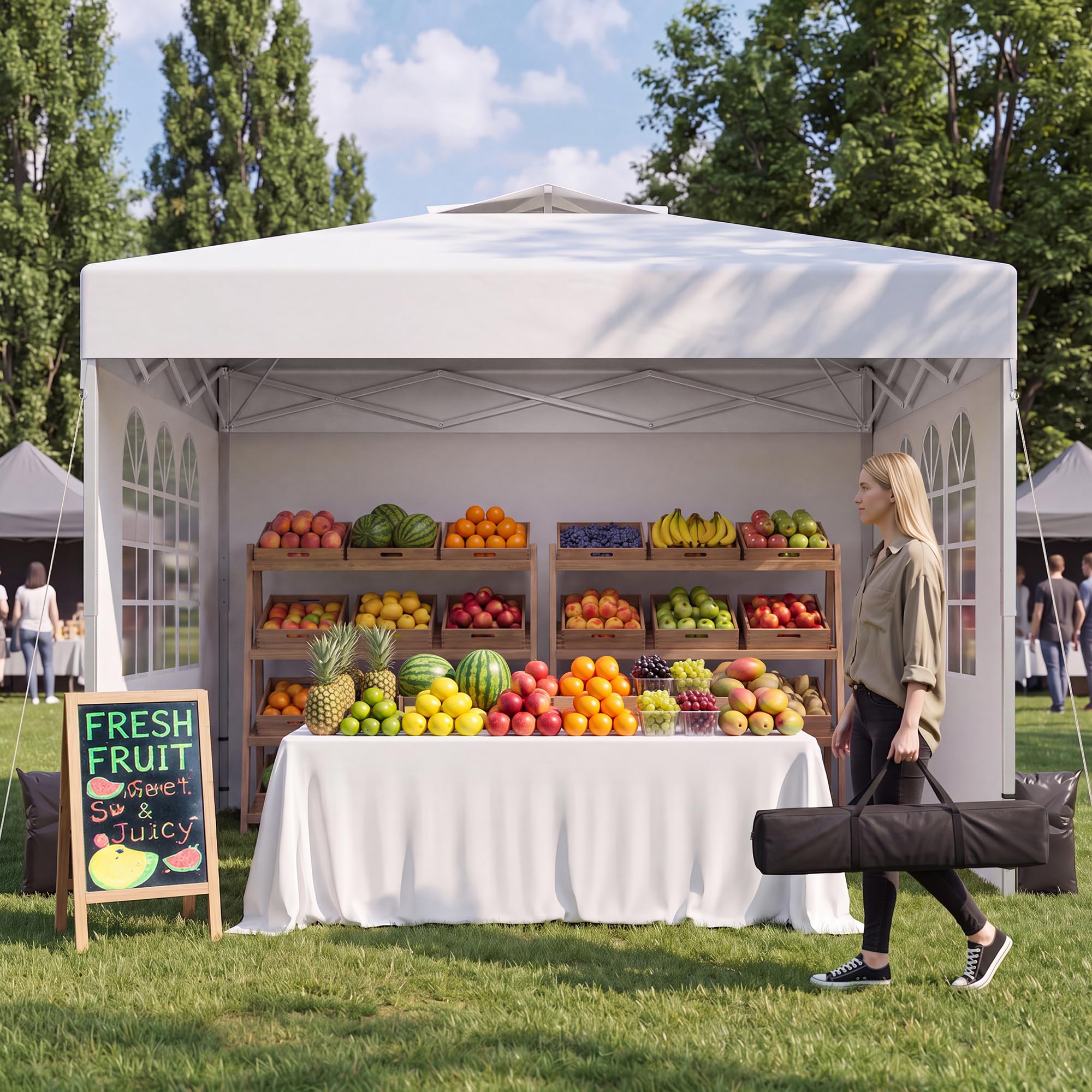
Double airflow vents in the roof and windows in the walls — a canopy built for hot afternoons.
Heat buildup is the enemy in a backyard canopy, and this one fights it on two fronts. The roof has a vented design with double airflow vents, and the walls incorporate windows that let natural light and cross-breezes through. The fabric is 210D high-density with UPF 50+ protection and sealed seams, so rain stays out at the stitching rather than finding its way through.
You get three adjustable heights, so you can raise or lower the shade for BBQs, beach days, or camping. Setup runs on the same one-push center lock as several canopies here, and the maker says it takes about five minutes. The frame is rust-resistant powder-coated steel held with M5 bolts (a specific fastener size worth remembering if you ever need replacements). It carries a 2-year limited warranty, matching the SANWAY above as the longest coverage here.
Coverage is 100 square feet rated for up to 10 people, and the whole thing folds into the included carry bag at a size that fits most car trunks. Owners speak highly of the covered space for gatherings — the 10×10 size draws the most praise, followed closely by how solid the frame feels in wind.
The one thing to check on arrival is the canopy color and leg hardware. A small number of buyers received a lighter gray top than the white shown, and one found a leg peg that wouldn’t hold its position. That’s rare, but inspect the frame before your event rather than the morning of.
Cooler by design: double roof vents plus wall windows mean the hot air at the peak has somewhere to go instead of settling over your guests.
Double-check on unboxing: a handful of units arrive with a slightly different top color or a stubborn leg peg, so test the frame before your event.
Ideal for: summer afternoons when heat under the canopy matters as much as shade over it.
Look past it if: you want a full four-wall enclosure — this one uses three sidewalls and leans on open airflow.
9. easierhike Beach Canopy Tent with Sidewalls 10x10FT

Aluminum poles and a stretchy fabric top — the canopy that packs down to almost nothing.
This is a different animal from the pop-up canopies above. Instead of a rigid frame that snaps together, it’s built on aluminum poles with a grooved ring at the top that locks onto a bungee cord. That build keeps the whole setup light enough to carry onto a beach or a grassy patch without a wheeled bag. Four tension cords balance it internally, and the stretchy material shrugs off the kind of buffeting that would stress a rigid frame.
One pole even has a built-in storage pouch for towels, sunglasses, or a phone, which is a nice practical touch on a beach-specific design. The side wall, attached with grippy anti-slip Velcro, blocks the low sun that arrives during early morning or late afternoon. Setup is fast once you know the sequence: one person can raise it in under five minutes, and two people can cut that down to under three. The trick owners share is stretching the fabric first, filling the corner sandbags, and raising the poles last.
Wind performance gets the most attention from owners, and it’s genuinely mixed by design intent. Light to moderate beach wind is where it thrives — the stretchy material absorbs gusts rather than fighting them. But strong, sustained wind is where this one comes up short. If you’re heading somewhere exposed, this is a fair-weather canopy, not a storm shelter.
Another honest note from owners: the aluminum poles are pointed at the bottom, which bites into sand well but doesn’t hold the same way on hard-packed grass or dirt. This one is happiest at a beach, a sandy yard, or soft ground. On a hard surface you’d want to set it up with the staked feet and rope, and expect a fussier anchor.
The lightest carry here: aluminum poles and a stretchy top mean this packs into a small bag and sets up in under five minutes alone.
Fair-weather companion: excellent in light coastal breeze, but it isn’t built to face strong, sustained wind the way a truss-frame canopy is.
Made for: beach trips, sandy yards, and any spot where you carry the canopy in rather than roll it.
Wrong fit if: you need a permanent backyard canopy that holds up in strong, steady wind — this one is a lightweight seasonal option.
Understanding the Specs
Canopy Fabric Denier (D)
Denier is the weight of the polyester thread used in the canopy top, measured in grams per 9,000 meters of yarn. A higher number means thicker, heavier yarn and a fabric that resists tearing and sun damage for longer. A 150D top is light and packs small, so it suits buyers who move the canopy often. A 210D top is a middle ground with better durability. A 500D top is dense and long-wearing, weighing more and folding larger. If you’ve never thought about fabric weight before, the practical version is this: choose the highest denier you’re willing to carry.
Wind Rating and Frame Construction
A canopy’s ability to stay put is a combination of frame design and how you anchor it. A truss frame (criss-cross bracing between the legs) spreads force across the structure so a gust loads many joints instead of one. A vented roof also helps — hot air and pressure escape through the top, which reduces the lift that would otherwise turn the canopy into a sail. Then you anchor: stakes for grass, sandbags for hard or sandy ground, and guy lines for open exposure. Even the best truss frame here will move if it’s left unstaked, and that’s true across the category.
FAQ
Does a one-push canopy actually set up with one person?
How much wind can a 10×10 canopy handle?
Is 150D fabric strong enough compared to 500D?
Can I leave a pop-up canopy up overnight?
How many people fit under a 10×10 canopy?
Do I need to fill the sandbags before setup?
Will a 10×10 canopy fit in a car trunk?
Does UPF 50+ mean the canopy blocks all the sun?
Final Thoughts: The Verdict
For most backyards, the backyard shade tent winner is the WEIZE 10×10 Pop Up Canopy — the one-button setup and the wheeled bag make it the easiest canopy on the list to live with, and the 150D fabric keeps it light enough for a single person to move. If you want the toughest fabric and don’t mind the extra weight, grab the ABCCANOPY 10×10 with 2 Sidewalls, whose 500D cloth and full truss frame are built for the long haul. And for a backyard that comes alive after dark, the Yaheetech 10x10ft with Built-in Solar LED Lights turns the same footprint into an evening space with 17 solar-powered lights. Whichever you choose, run the stakes and fill the sandbags — that’s the single habit that separates a canopy that lasts from one that ends up in the neighbor’s yard.
How We Picked
We do not accept paid placement. Every pick is matched to a real buyer and a real use-case; we do not hands-on test units.
Sources & Methodology
Specifications: manufacturer listings and product documentation. Review insights: verified customer reviews, as of September 2026. Pricing: not shown on this page (it changes often); check the current price via the retailer link.
As an Amazon Associate, KitchPrep earns from qualifying purchases. This does not affect which products we feature.
Related Guides
