
Specs are compiled from manufacturer listings and verified buyer reviews and can change over time — please confirm the key details on the product page before buying.
If you sit at a desk for ten hours straight, the chair under you decides how your lower back feels by dinner. This guide covers eleven ergonomic office chairs that are actually built for that kind of marathon sitting — the ones with real lumbar adjustment, breathable mesh backs, and cushions that don’t flatten by hour three. The short answer: the MOLENTS mesh chair is the one most buyers should start with, and the rest of this page explains why, plus which pick fits your body and your desk.
I’m Mohammad Maruf — the founder and writer behind KitchPrep. This guide is built by comparing the manufacturers’ published specifications and the patterns across verified customer reviews, so you get each pick’s real strengths and trade-offs instead of marketing spin.
Long hours in the wrong seat show up as stiffness in your lower back and pressure under your thighs. The picks below are ranked by how well they hold up over a full working day, so you can match one to your height and your desk. Here is what separates a genuinely supportive 10- to 12-hour office chair from a seat that only feels fine for the first hour or two of work.
Our Picks at a Glance

How To Choose The Best 10- to 12-Hour Office Chair
A 10- to 12-hour office chair has to do three jobs at once: hold your lower back in its natural curve, keep air moving behind you, and let you shift position without losing support. Most chairs in this range get one of those right. The picks below are the ones that manage all three, and knowing which lever does what makes the choice much faster.
Lumbar Support Is the Whole Ballgame
Lumbar support is the cushion or panel that presses into the inward curve of your lower back. On a fixed chair it sits in one spot and only fits one body shape. The chairs worth owning for ten-hour days let you move that support up and down and often in and out — two numbers matter: how much vertical travel and how much horizontal depth. More travel means the pad can actually reach your curve instead of hovering above or below it, which is the difference between support you feel and a bump digging into your spine.
Seat Depth and Height Decide the Fit
Seat depth is the distance from the front edge of the cushion to the backrest. If it is too deep, the front edge digs into the back of your knees; too shallow and your thighs hang unsupported and your lower back slides off the lumbar pad. Seat height, meanwhile, sets whether your feet rest flat on the floor. Chairs with a sliding or adjustable seat depth let you tune both independently, which is rare and genuinely useful if your legs are shorter or longer than average. Legs dangling off the floor all day is among the most common comfort failures in a long-sitting chair.
Mesh, Foam, and Weight Capacity
A mesh back keeps air moving behind you so you don’t heat up over a ten-hour stretch; a foam seat cushion needs enough density to resist compressing flat under your weight. Weight capacity tells you how strong the base, gas lift, and frame really are. If you are on the heavier side, pick a chair rated comfortably above your own weight rather than right at it, and check the seat width too — a wider seat spreads pressure so you are not fighting the edges.
Recline and Armrest Motion for Shifting Position
Nobody holds one posture for ten hours. A backrest that locks into several recline angles lets you lean back for calls or reading without losing support, and a tilt-tension knob lets you set how hard it is to lean back. Adjustable armrests that move up, forward, back, and inward take weight off your shoulders while you type. More independent adjustments — lumbar travel, seat depth, armrest motion — mean the chair adapts to you at hour ten instead of you adapting to it.
Quick Comparison
| Model | Best For | Weight Capacity | Recline Range | Lumbar Adjustment | Amazon |
|---|---|---|---|---|---|
| MOLENTS Ergonomic Office Chair★ Best Overall | All-day desk work | — | 90°–120° | Up, down, forward, back | Amazon |
| Marsail Ergonomic Office ChairBest Value | Budget value | 300 lbs | Recline | 2.4″ height range | Amazon |
| QLTPLUS Flip-Up Armrest ChairBest for Tight Desks | Tight desks and studies | 350 lbs | Tilt and rock | Adjustable lumbar cushion | Amazon |
| Magic Life Dual Lumbar Chair | Tall and heavy users | 350 lbs | 125° | Dual-zone, forward/back | Amazon |
| naspaluro Ergonomic Office Chair | Big and tall users | 350 lbs | Recline with footrest | Adjustable lumbar | Amazon |
| GABRYLLY Chair with Footrest | Recline and breaks | 300 lbs | 90°/110°/135° | 3″ vertical, 1.6″ horizontal | Amazon |
| ProtoArc EC200 | Adjustable seat depth | Under 220 lbs | 90°/105°/120°/130° | 2.36″ height, 0.8″ depth | Amazon |
| GABRYLLY Big and Tall Chair | Larger frames | 350 lbs | 90°–120° | Double back design | Amazon |
| Desktronic SitPro | Premium multi-setting fit | — | Recline with tilt tension | Adjustable lumbar support | Amazon |
In‑Depth Reviews
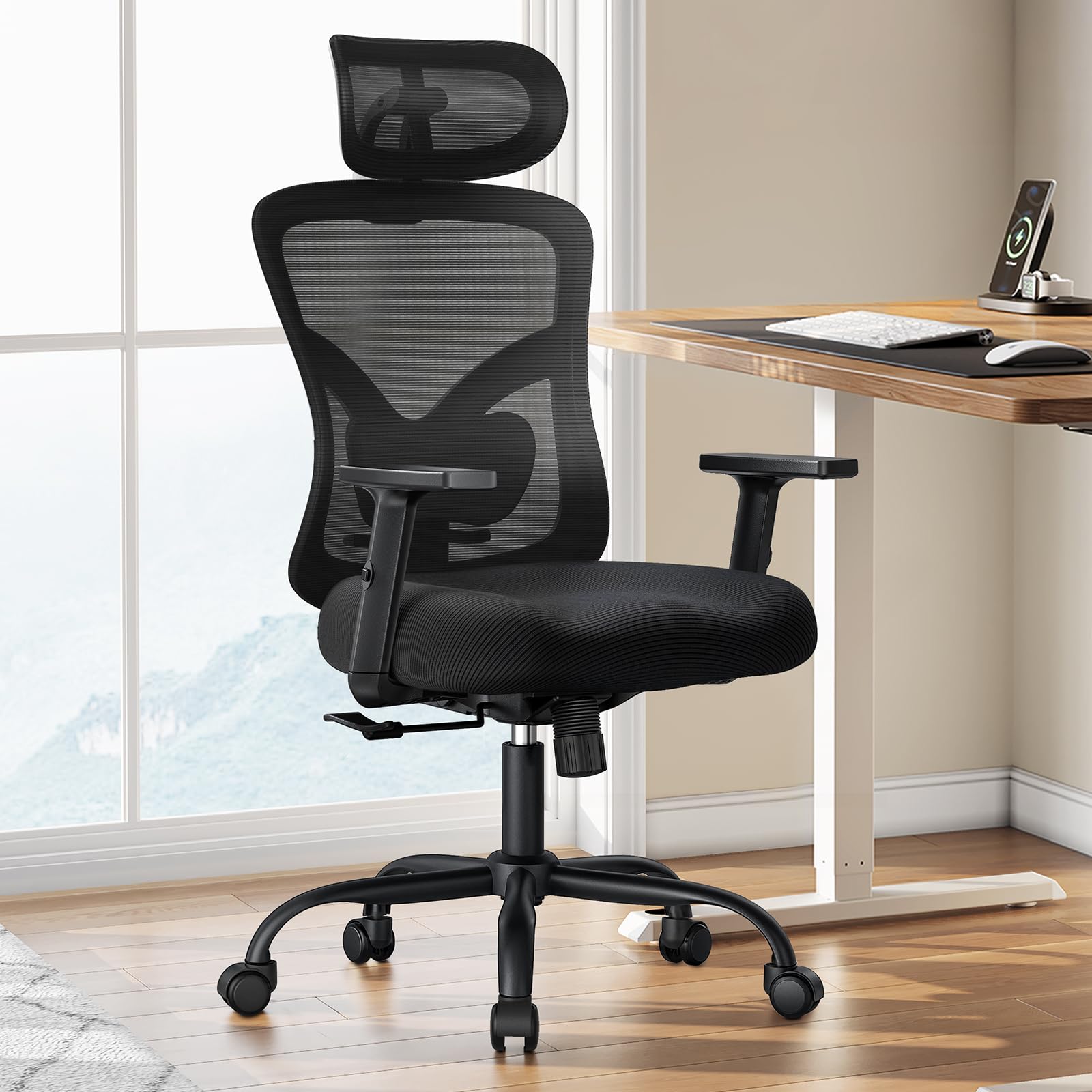
1. MOLENTS Ergonomic Office Chair, Mesh Desk Chair with BIFMA X5.1 Certification
Our pick — over 4.5★ from 350+ verified ratings; the strongest balance of quality and price.
The lumbar pad you can chase in four directions is what separates this from the pack.
Most chairs with lumbar support give you one fixed bump in one spot. This MOLENTS chair moves that pad up and down and forward and back, so you can dial it into the exact inward curve of your lower back instead of accepting wherever the factory put it. Over a ten-hour workday, four-way lumbar travel is the difference between a pad that meets your curve and one that digs into your spine. The mesh back is a skin-friendly premium mesh, and the seat adds a wide 19.8-inch cushion so your hips are not wedged against the armrests.
The frame passes BIFMA X5.1 — that is an independent furniture-durability standard, meaning the chair is tested for repeated leans and rolls rather than just assembled and shipped. What wins buyers over most is how solid it feels: the build quality is the standout, with owners describing it as stiff and creak-free even after heavy daily use. Buyers report it holds up for a 6-foot-plus, 200-pound-plus frame with a roomy seat and taut mesh, and the tilt tension runs strong rather than floppy. The backrest reclines through three positions from 90° to 120°, which covers upright typing through to a leaning-back call, and the 3D armrests slide forward, back, and rotate so they meet your elbows instead of boxing them in.
One build note to plan for: when you assemble it, the base legs are packed inside the seat bag, so don’t panic if a part looks missing. Assembly is straightforward on the manufacturer’s own estimate — one person, roughly 15 minutes — with the manual and tools included. Buyers also flag that the armrest panels slide and rotate by design; if you strongly prefer a fixed armrest, that motion will feel loose rather than useful. The seat height spans 19.5 to 23.3 inches from the floor, and the chair fits a range of heights rather than one build — a real plus for a household sharing one desk chair.
Breathable mesh back
- Lumbar pad moves up, down, forward, and back — genuine four-way tailoring for a long sit
- BIFMA X5.1 durability certification on the frame, not just a marketing claim
- Breathable premium mesh back and a wide 19.8-inch seat cushion
- Three-position backrest recline from 90° to 120°
Armrests fixed height
- Base legs ship packed inside the seat bag, so check the parts list carefully first
- The 3D armrests deliberately slide and rotate — some prefer a locked panel
- Taller or shorter users may want a different gas lift than the stock one
Long desk days: anyone logging ten-hour days who wants their lower back supported exactly where they need it.
Tall user fit: you want armrests that stay put, since this one is built to move on purpose.
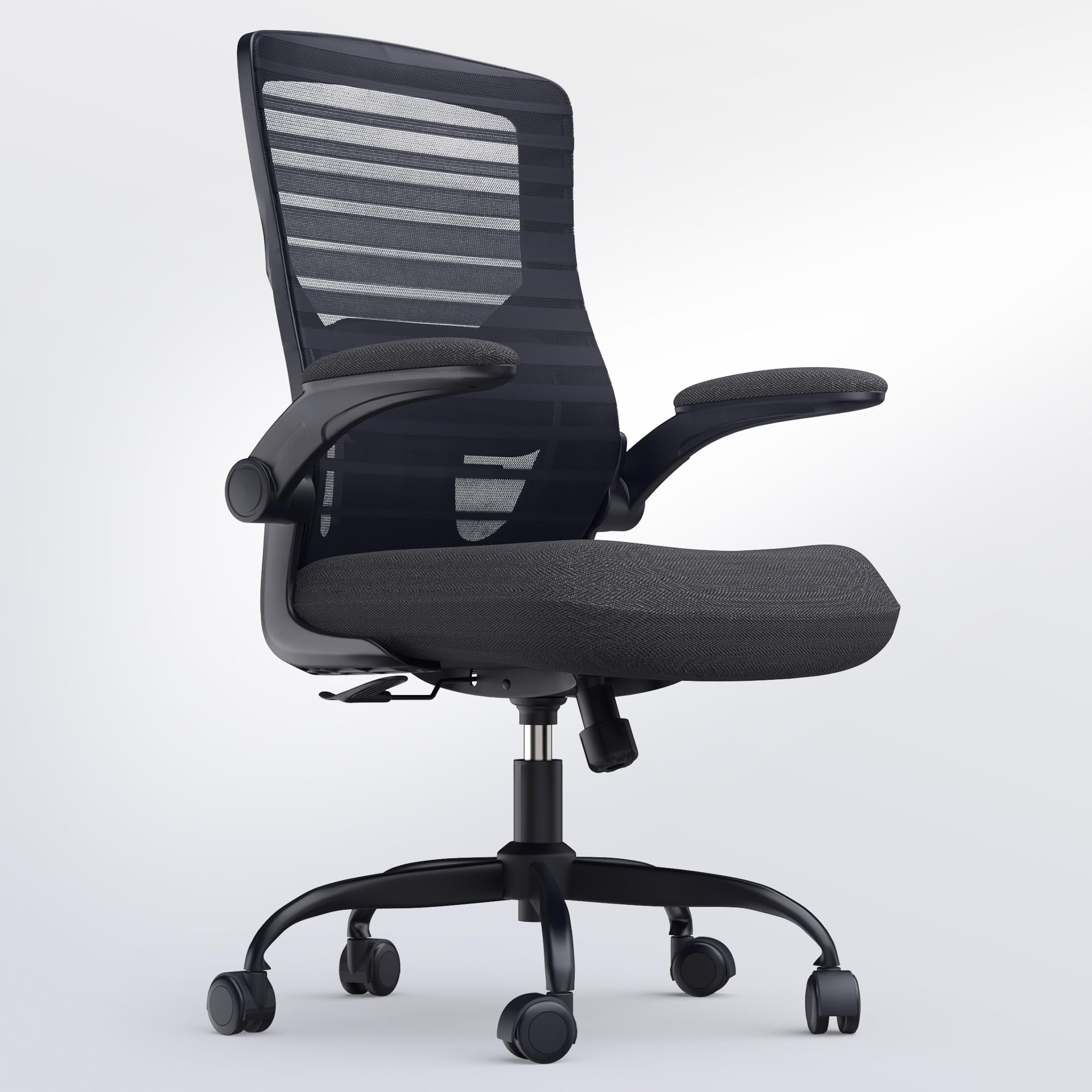
2. Marsail Ergonomic Office Chair with Lumbar Support and 2D Headrest
A padded headrest and 3.15-inch foam seat at an entry-level price point.
If your budget is the tightest on this page, this is where the value sits. The Marsail gives you a 2.4-inch height-adjustable lumbar pad, height-adjustable armrests, and a 2D headrest with 45° of tilt and 2.8 inches of height travel so you can rest your neck instead of letting it hang forward. The seat cushion is a 3.15-inch thick high-density natural sponge — thicker than many chairs cost twice as much, and buyers consistently call the seat and back the best part of the chair.
The foundation is solid for the class: a Class 3 gas lift, a metal base, 360° PU swivel casters, and support up to 300 lbs. Owners mention an easy 30-minute assembly and sturdy, comfortable daily use for work-from-home duty. The adjustability is where it earns its keep — seat height, arm height, headrest, and lumbar all move, and the chair suits shorter users especially well, with buyers around 5’2″ and 5’7″ noting it fits them comfortably. What wins people over is the quality-to-price ratio; the build feels far more expensive than the tier suggests.
Here is the honest catch: the lumbar support is genuinely mixed. Some owners say it supports the whole back perfectly, while others find it lands too high or too low and can aggravate pressure for certain body shapes — so if you are taller or your lower back curve sits unusually high, try to check the fit. The armrests also flex under weight and the padded arm surfaces are on the thin side, a few owners adding aftermarket pads. Assembly runs closer to an hour for some, and the foam seat softens after several hours of continuous sitting. None of that sinks the chair at this price — it just means the balance is a shorter-to-average user who wants strong value and does not need a marathon-grade seat cushion.
Two-way lumbar pad: a thick 3.15-inch seat, a tilting headrest, and full height adjustability, all at the lowest tier here.
Seat foam thin: the lumbar placement is the make-or-break — the 2.4-inch range helps, but body shape decides whether it lands right for you.
Lower back relief: you are a shorter or average-height user who wants a padded, adjustable chair without spending big.
Heavyweight users: you are taller than average or sit for twelve unbroken hours, since the lumbar fit and thin arm pads are the compromises.
3. QLTPLUS Office Desk Chair with 4″ Molded Foam Cushion and Flip-Up Armrests
Flip the arms up and it tucks clean under a tight desk.
If your desk is shallow or shared, the flip-up armrests here are the feature that solves your problem: fold them up and the chair slides almost flush under the desk, freeing floor space without you giving up comfort. Underneath sits a 4-inch thick molded memory-foam cushion designed to spread your weight and stay comfortable for 8+ hours, and the chair carries a 350 lbs capacity on a reinforced metal base with durable casters. For a long sitting stretch, that thick seat is the part you feel most.
The back is a contoured mesh design with an adjustable lumbar cushion that customers note cups the lower back properly, and there is an adjustable tilt-and-rock function with its own tension setting so you can move with the chair instead of fighting it. Assembly is genuinely quick here — reviewers point out around 20 minutes with clear, pictured instructions and even included gloves, and the whole thing feels sturdy rather than flimsy. The look also punches above its tier; shoppers say it reads like a more expensive chair, and the upholstery shrugs off cat scratches and spills.
The one caveat on this chair: a shorter user may find their feet do not quite reach the floor at the lowest setting, though the company will send a shorter gas cylinder if you ask. One reviewer also warned not to overtighten the bracket bolts, since over-tightening locks the flip-up arms in place and stops them folding. Beyond that, the recurring view is that this is an unusually solid chair for the money — well packaged, no cut corners, and backed by a 5-year warranty that owners rate highly for customer service.
All-day sitting: small-home-office and shared-workspace users who need a chair to disappear under the desk when the day ends.
Napping breaks: if you are on the shorter side, request the shorter gas cylinder so your feet rest flat on the floor.
4. Magic Life Ergonomic Office Desk Chair with Dual Lumbar Support and 4.3″ Thick Seat
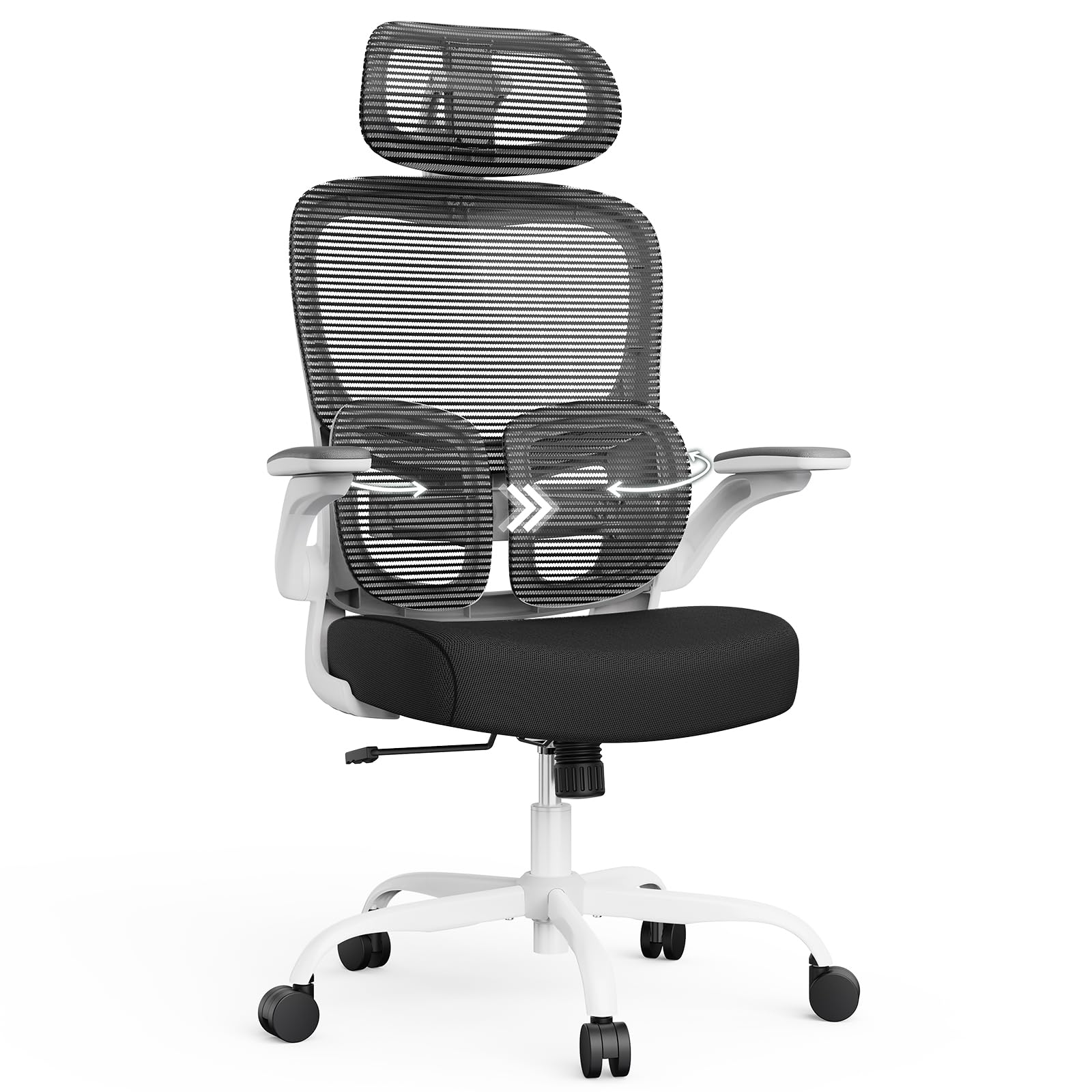
Two lumbar zones and a 4.3-inch seat give a tall frame somewhere to land.
Taller users get let down by chairs that run short in the back and shallow in the seat. This Magic Life chair answers both: a 4.3-inch extra-thick high-density foam seat that resists the bottomed-out feeling over a long day, and a 20.1″ x 20.5″ seat area that fits roughly 5’1″ to 6’5″ with a 17.7″ to 21.7″ adjustable seat height. The dual lumbar support uses two independent zones that cradle the lower back from both sides, and a rear knob lets you push the support forward or backward for a more personal fit.
What wins people over is the adjustability stacked on top: a 3D-adjustable headrest you can fine-tune for neck support, padded flip-up armrests with a leather-finish surface that fold up to save space, and a 125-degree recline for leaning back between tasks. The high-back breathable mesh keeps air moving instead of trapping heat, which matters over a ten-hour stretch. Reinforced load-bearing parts and a stable five-star base carry up to 350 lbs, and a lifetime warranty backs the frame. Assembly is helped by a T-handle hex tool, illustrated instructions, and step-by-step video guidance.
The honest trade-off is size and weight. Buyers consistently note this chair is larger than typical and has real heft to it — great if you want a planted, big-and-tall feel, less ideal in a cramped room or for a smaller user. A couple of owners also found the assembly screws a little tight and recommended hand-threading them before reaching for power tools. Size that against the value and it stays a strong pick: the seat depth and 4.3-inch cushion are genuinely tough to top at this price, and second-time buyers confirm it holds up.
Dual lumbar panels: 5’1″ to 6’5″ compatibility plus a 4.3-inch foam seat means larger adults are not squeezing into a chair built for someone smaller.
Narrow seat width: it takes up real space and carries noticeable weight — allocate room for it.
Petite frames: you are tall or heavy-set and want a deep seat, a tall back, and dual lumbar zones that actually reach you.
Broad shoulders: your office is tight — this chair wants the footprint of a big-and-tall design.
5. naspaluro Ergonomic Office Chair with Footrest and 350 lbs Capacity
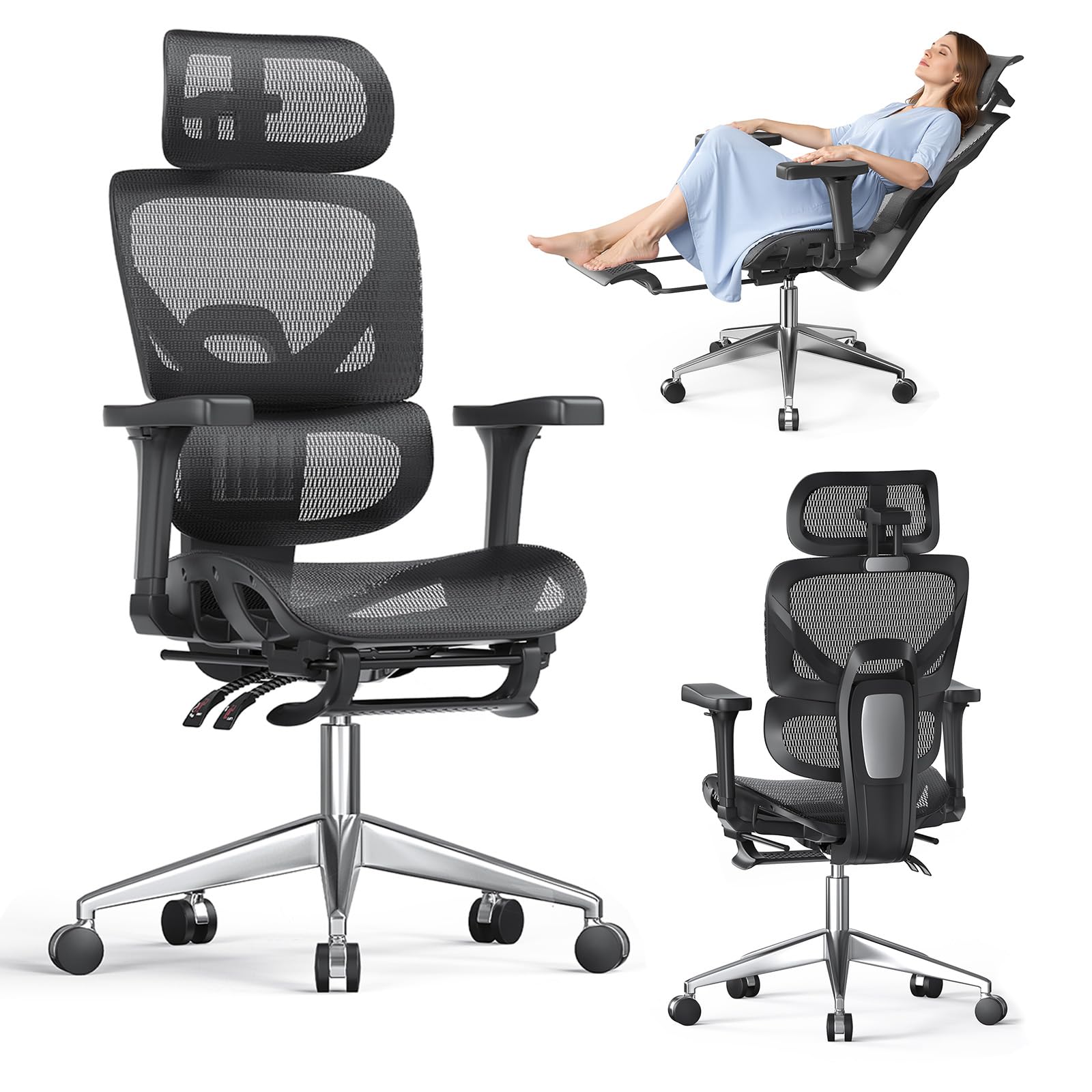
A pull-out footrest turns the chair into a rest stop between tasks.
This naspaluro chair is built around switching modes. The high back wraps around your upper body when reclining, and a hidden pull-out footrest improve your legs so you can stretch out mid-day without leaving the desk. Every key part adjusts to your body — lumbar support moves up and down to target your lower back’s curve, a 3D headrest tilts, raises, and lowers to support your neck, and 3D armrests move in height, width, and angle to line up with your shoulders. Over a ten-hour day, that range of positions — upright, reclined, legs up — is what keeps you from stiffening in one posture.
For bigger users, the numbers back it up: a 350 lbs capacity and a build aimed at a 5.5 to 6.5 ft height fit, so a large frame gets stable support rather than a chair that groans under them. The breathable mesh keeps air moving to cut sweat on long sits, and PU silent wheels roll quietly across floors in a shared office or home study. The seat height adjusts so your feet rest flat, which is the groundwork for keeping your posture straight through the afternoon.
The recurring gripe is the armrests. Owners note they move in every direction and wish there were a locking button, and the plastic on the armrests is the weakest material on an otherwise acceptable build — a fit issue if you brace hard on your arms while working. Instructions also draw mixed feedback, with some wanting more clarity. Set those aside and the everyday verdict is warm: buyers call it an outstanding pick for its price tier, quick to assemble, and comfortable enough for work and gaming stretches with the footrest getting steady praise for leg stretching.
Recline and rest: you want work-and-rest flexibility and belong to the big-and-tall range that needs the 350 lbs support.
Tight spaces: the armrests — they roam freely and have no lock, so they suit typing more than heavy leaning.
6. GABRYLLY Ergonomic Office Chair with 3D Arms and 3-Stage Tilt
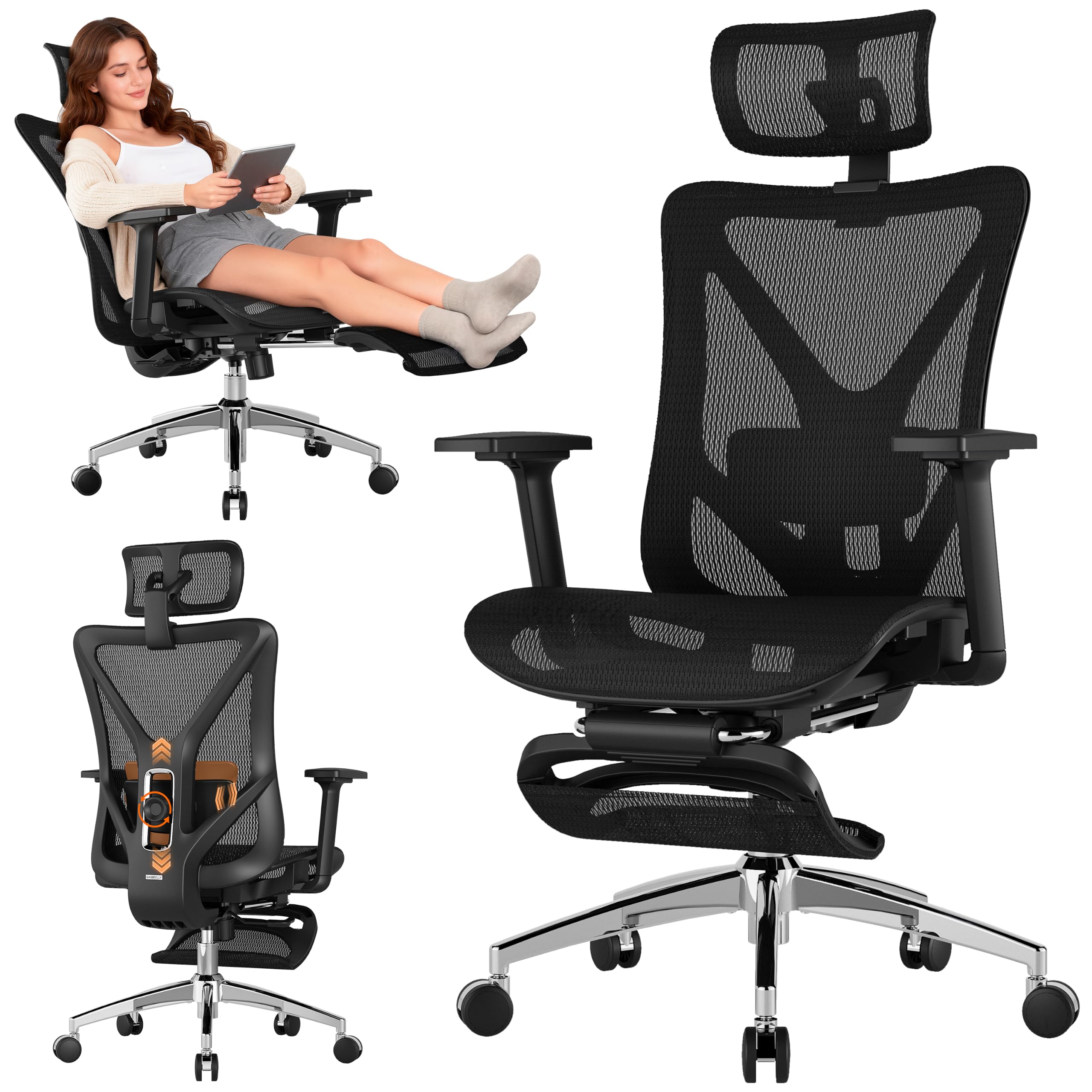
Recline to 135° and throw out the 18.1-inch steel footrest for a real break.
This chair is the one for people who want the option to genuinely lie back. It reclines through three locked positions — 90°, 110°, and 135° — and when you drop the back, a retractable steel footrest extends up to 18.1 inches for stable leg support. That turns a desk into a nap station between meetings. If your definition of surviving a twelve-hour day includes a proper mid-day rest, this is the pick that delivers it.
The rest of the ergonomics hold their own. Lumbar support adjusts two ways — 3 inches vertically and 1.6 inches horizontally — and is tested by SGS and BIFMA, with support up to 300 lbs. The 3D armrests move up and down, front and back, and in and out to take strain off your shoulders and wrists, and a large mesh headrest adjusts in height, angle, and bracket for neck comfort. The oversized steel base with 27.5-inch legs keeps the chair stable even when you are fully reclined on the footrest, and the all-mesh design keeps air flowing.
The known weak point is the wheels. Roller performance is the most-cited downside, with buyers finding the stock casters don’t glide smoothly and do better on some floors than others — the good news is the support team will send upgraded nylon casters on request, and buyers report that fixes the roll. The armrests are also hard plastic and the mesh seat can feel scratchy on bare legs for some, both solvable with aftermarket covers. Beyond those, the chair’s size is what everyone raves about; it fits tall users, including a 6’2″ frame, with adjustable height and head support, and assembly is easy enough that owners helped by a child managed it fine.
Movie marathons: long-session workers who want a chair that reclines to 135° and has a footrest for real breaks without leaving the desk.
Six foot plus: the stock wheels roll poorly from the start — ask support for the upgraded casters.
7. ProtoArc EC200 Ergonomic Office Chair with Adjustable Seat Depth
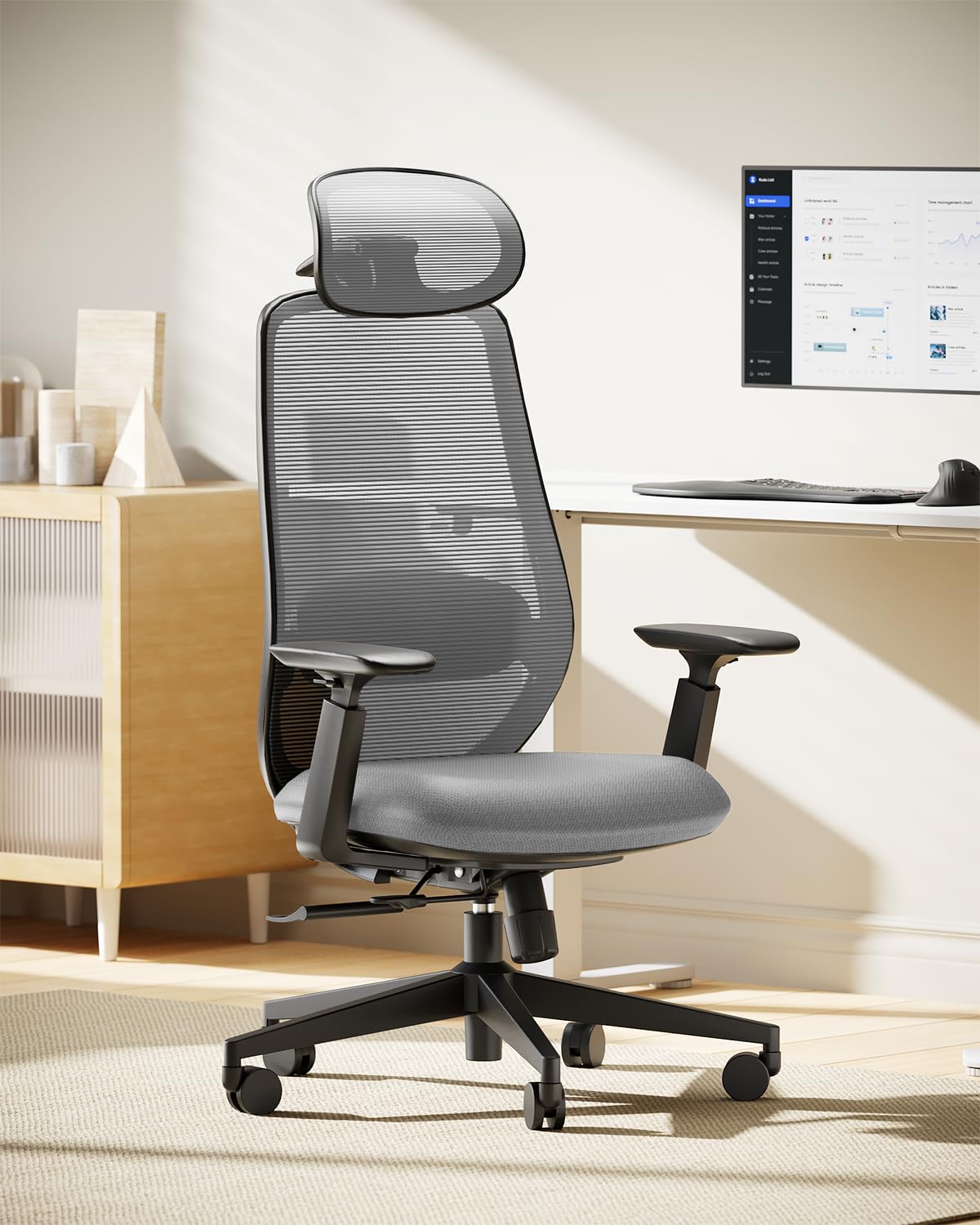
A seat that slides in five positions keeps short legs from dangling.
Most chairs force your thighs to accept whatever depth the cushion happens to be. The EC200 lets you slide the seat itself — five positions with 1.97 inches of travel — so you can push the cushion forward for long legs or pull it back for short ones and keep your back against the lumbar pad. The chair is calibrated for users 5’4″ to 6’0″ and under 220 lbs, a specific range that keeps the whole geometry — arm height, lumbar, headrest — landing where it should.
Support is a three-point system: adjustable lumbar, a high-tension mesh back, and a 3D headrest. The lumbar moves 2.36 inches up and down and 0.8 inches in and out to fill your lower-back curve whether you sit upright or recline. The seat uses 55D high-density foam — a firmness rating meant to resist collapsing and bottoming out over years of use — and the whole chair is backed by BS EN 1335, BIFMA X5.1, and a TÜV-tested Class 4 gas lift, which are independent safety and durability standards rather than in-house checks. A four-stage recline locks at 90°, 105°, 120°, and 130°, so you can match the angle to working, reading, calls, or relaxing.
The honest limitation is the fit range. Buyers confirm the lumbar is excellent for most, but it is mixed for others who find it does not sit low enough; and crucially, if you are very tall, this chair is simply too small — a 6’4″ buyer returned it for that reason. So treat the 5’4″ to 6’0″ and 220 lbs window as real, not approximate. Within that window, owners mention no pain after 8+ hours, a phenomenally adjustable lumbar, and a build that feels better than the no-name competition. Assembly runs under an hour with detailed, labeled instructions.
Adjustable seat depth: sliding seat depth is uncommon in this tier, and it is the single best remedy for dangling legs and knee pressure on a long sit.
Assembly fiddly: this chair is built for a specific body range — outside it, you are fighting the geometry.
Long thighs: you are between 5’4″ and 6’0″ and under 220 lbs, and want seat depth you can slide to match your legs.
Quick setup fans: you are notably tall — this seat runs small and a 6’4″ frame is out of its design window.
8. GABRYLLY Ergonomic Office Chair, Big and Tall Mesh Chair with 3D Armrests

A chair sized up for larger frames, with a double-layer back for support.
This GABRYLLY is built expressly for bigger bodies. It supports up to 350 lbs on an upgraded steel base, with a recommended height fit of 5’5″ to 6’3″ and a wide frame — roughly 30.3″ wide, 26″ deep, and 46.7″ to 50.4″ tall, with a 20.5″ x 20.5″ seat. If standard chairs feel like they are squeezing your shoulders, this is the one that gives you room to spread out without the frame giving way.
The back uses a double-layer mesh design meant to resist wear and deformation, with a lumbar system that owners say keeps their posture in check through long work-and-gaming stretches. The 3D armrests rotate a full 215° and adjust up, down, front, back, and inward, so you can set them to your desk and shoulders instead of bending around fixed arms. A 3D headrest adjusts in height and angle across three modes to take load off your neck, and the backrest locks into three tilt positions for a pressure-free lean. Cleanup is simple — the mesh wipes down and holds its shape. Assembly takes about 25 minutes with the included tools, and a 2-year warranty covers parts through the manufacturer’s support team.
A few honest notes on living with it: customers note the casters can be stubborn on carpet, and a handful find the armrests don’t come in as close to the body as they would like. The seat height maxes out for some taller sitters. And although the headrest adjusts, one buyer found it sat too far back to use comfortably. None of those change the verdict for the right person — buyers describe it as well packaged, easy to assemble, and comfortable through 8+ hours of daily use, with the customer service drawing frequent praise for shipping replacement parts and upgraded wheels quickly.
Large builds: larger and taller users who need a wide, 350 lbs-rated frame that does not buckle and an armrest that rotates 215° to fit them.
Small rooms: the stock casters struggle on thicker carpet, so plan on smoother flooring or ask support for the blade wheels.
9. Desktronic SitPro Ergonomic Office Chair with 9 Adjustable Settings
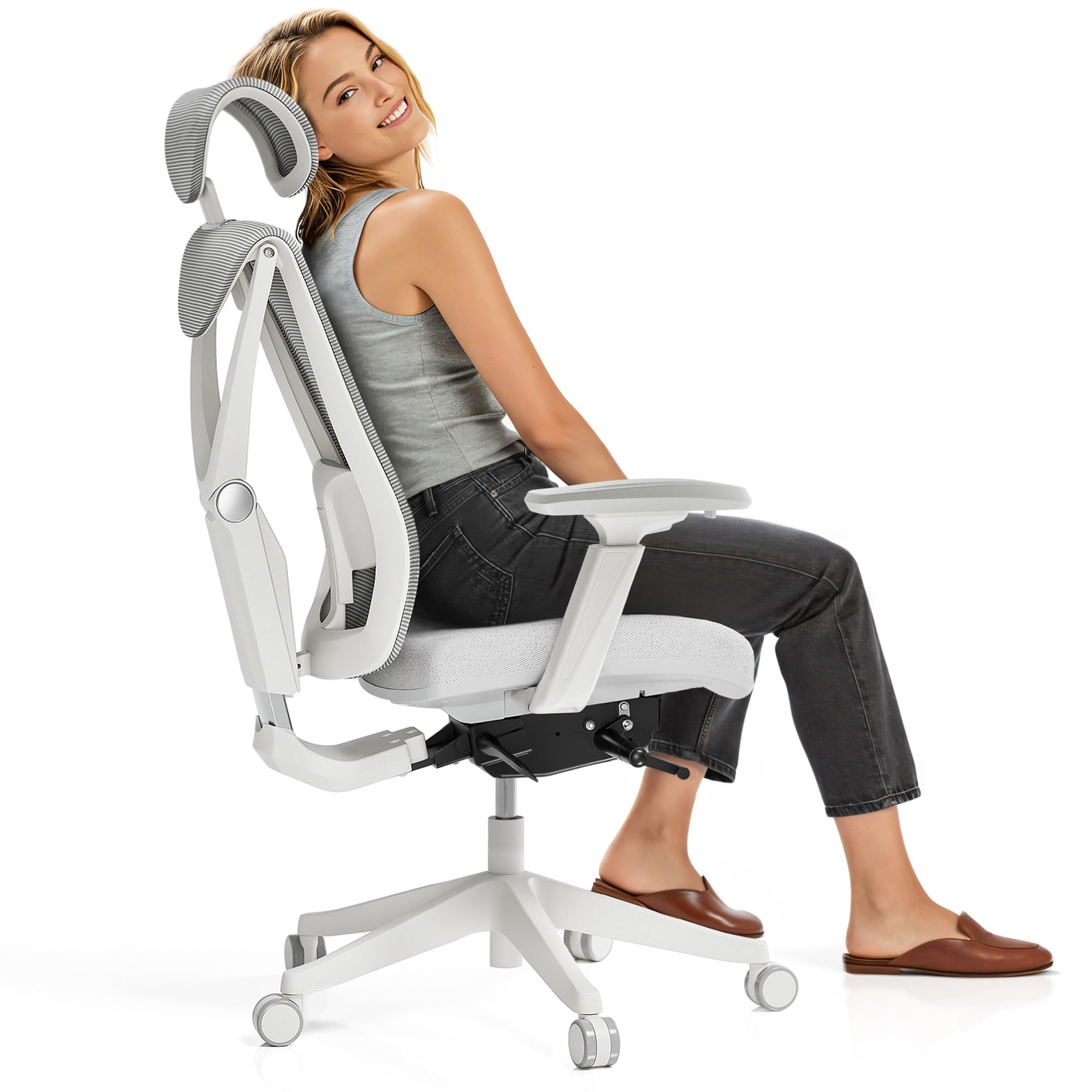
Nine settings, a BIFMA-certified frame, and a 48-pound build that will not wander.
At the top of the pile is the Desktronic SitPro, a premium-tier chair built around giving you nine independently adjustable settings: seat height, seat depth, lumbar support, headrest, 4D armrests, recline angle, and tilt tension. That is more knobs to turn than a standard ergonomic chair, and the point is precision — you dial the chair into your exact body rather than meeting it halfway. The breathable mesh back keeps constant airflow so you stay cool across a long session.
The wide, contoured seat is designed to spread your weight and relieve pressure from your legs and lower body, staying comfortable from your first hour to your last. The frame is BIFMA-certified for safety and durability, built on an alloy-steel frame with a swivel base and 4D armrests, and the whole chair weighs 48 pounds — a heavy, planted build rather than a light one that wobbles. It ships with all hardware and an illustrated guide, and the maker says it assembles in under 30 minutes. Dedicated support is dispatched directly by Desktronic.
This is the premium pick, so the honest note is simply to weigh what you are paying for. The value is in the breadth of adjustment and the certified, weighty construction — features the mid-range picks on this list cannot match. If you sit for a living and want maximum fine-tuning plus a chair that feels structurally solid, that is exactly where the extra spend goes. It arrives with a limited pool of buyer feedback compared with the mainstream picks above, so treat the long-term picture as unproven for now, even as the design intent is clearly the most configurable here.
Nine adjustments: nine independent adjustments including 4D armrests and seat depth, on a BIFMA-certifiedalloy-steel frame.
Price premium: the review pool is thin, so durability over years is less proven than the GABRYLLY picks.
Fine tuning: you sit for a living and want the most independently tunable chair here on a certified, heavy-duty frame.
Budget buyers: it is the premium spend of the list, and the smaller feedback pool means the long-term story is still being written.
Understanding the Specs
Adjustable Lumbar Support
Lumbar support is the padding or panel that presses into the inward curve of your lower back while you sit. If it is fixed, it only ever fits one body shape — push it too high and it digs into your mid-back, too low and it misses your curve entirely. That is why the travel numbers matter: a spec like “2.4 inches of height adjustment” or “3 inches vertical and 1.6 inches horizontal” tells you how far the support can move to reach your specific spine. For a 10- to 12-hour day, dialing that pad to the right spot is what keeps the constant forward pressure off your lower back instead of letting it build up into end-of-day stiffness. Look for both vertical and depth adjustment if your chair needs to fit more than one person.
Weight Capacity and Frame Build
Weight capacity is the maximum load the base, gas lift, and frame are built to handle. It is a shortcut to how strong the whole chair really is — a chair rated to 350 lbs has heavier-duty load-bearing parts and a sturdier base than one rated to 220. If your own weight sits close to a chair’s limit, pick one rated well above it, because running a chair at its edge every day is what wears the mechanism out early. Also glance at the base material — metal or steel bases, a rated gas lift like a Class-3 or Class-4 cylinder, and certifications such as BIFMA or BS EN 1335 signal a chair that has been durability-tested rather than just assembled. For long-sitting chairs, this is the spec that decides whether the seat still feels planted after a couple of years.
FAQ
How much lumbar adjustment do I actually need for a 10-hour sitting day?
Will an office chair rated to 350 lbs be more durable for daily use?
Does seat depth adjustment really matter if I am average height?
Is mesh better than foam for sitting twelve hours straight?
What height range should I check before buying a big and tall chair?
Do reclining positions and tilt tension help with long work sessions?
How long does an ergonomic office chair take to assemble?
What is 4D or 3D armrest adjustment and do I need it?
Why do some office chairs need a different gas lift cylinder?
Final Thoughts: The Verdict
For most people working long days, the winner is the MOLENTS Ergonomic Office Chair because it pairs four-way lumbar adjustment with a BIFMA-certified frame and a wide, breathable mesh seat — the combination that keeps your lower back supported through hour ten. If seat depth precision matters to you, the ProtoArc EC200 slides its cushion to fit legs of any length, and for the widest possible range of adjustments, the CabeVibe C3 gives you 15 ways to dial it in. And if you want the option to genuinely recline and stretch out during breaks, the GABRYLLY chair with footrest drops to 135° and throws out a steel footrest. Whichever you choose, check the seat height range and weight rating against your own body first — that single check is what makes a long-sitting chair feel custom instead of merely adequate.
How We Picked
We do not accept paid placement. Every pick is matched to a real buyer and a real use-case; we do not hands-on test units.
Sources & Methodology
Specifications: manufacturer listings and product documentation. Review insights: verified customer reviews, as of September 2026. Pricing: not shown on this page (it changes often); check the current price via the retailer link.
As an Amazon Associate, KitchPrep earns from qualifying purchases. This does not affect which products we feature.
Related Guides
